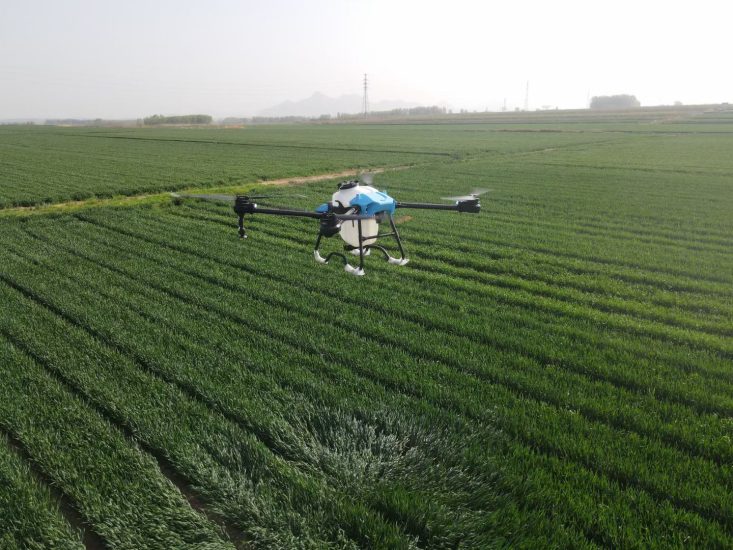


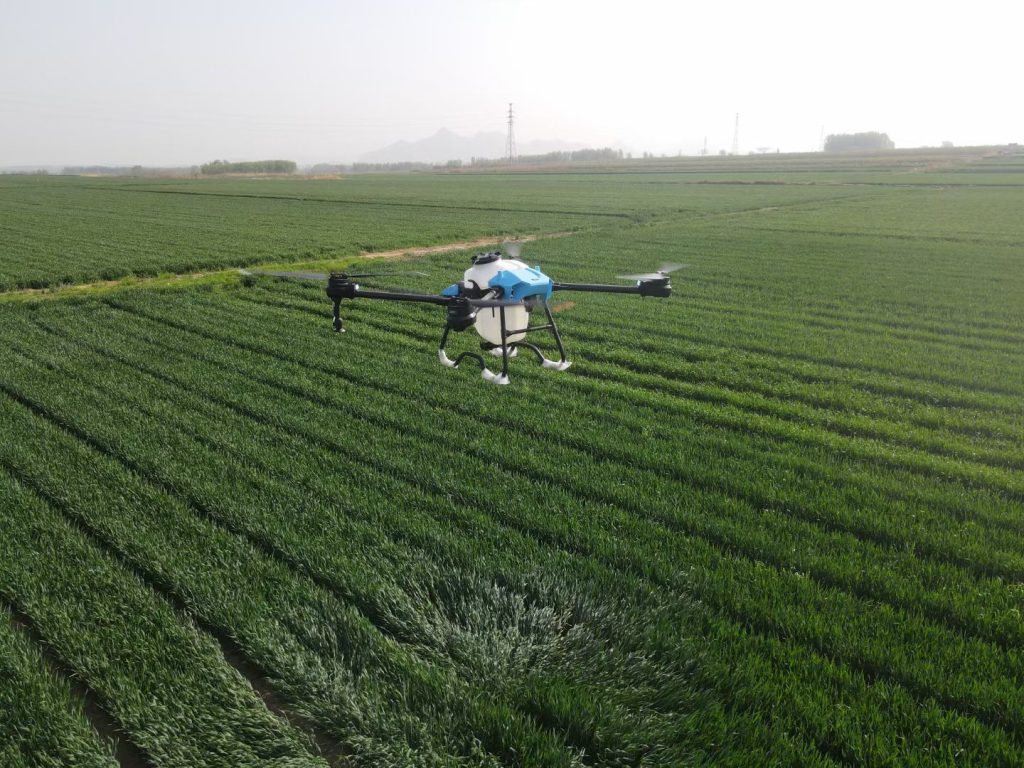
Buying agricultural drones from China can look simple from the outside.
Search for a manufacturer, compare prices, choose a model, make payment, and arrange shipping.
In reality, an international agricultural drone purchase involves much more than finding a low factory price.
The buyer needs to determine whether the drone actually matches the intended farming application, whether the supplier can consistently manufacture the product, whether the quoted configuration is complete, whether batteries and spare parts are included, whether the product can be legally imported and operated in the destination market, and whether the manufacturer can provide support after delivery.
This becomes even more important when the purchase is not one drone for personal testing, but a commercial order for:
- A large farm
- An agricultural service company
- A distributor
- An agricultural equipment dealer
- A private-label brand
- A government or commercial project
- A regional drone business
The purpose of this guide is not to tell buyers simply to “find a Chinese supplier.”
The real objective is to help you build a purchasing process that reduces the risk of buying the wrong agricultural drone from the wrong supplier.
Why Buy Agricultural Drones From China?
China has a large manufacturing ecosystem for drones, electronics, batteries, motors, flight-control systems and agricultural equipment.
For international buyers, this can create several advantages.
A Chinese manufacturer may be able to provide:
- Multiple payload configurations
- Agricultural spraying systems
- Fertilizer spreading systems
- Mapping configurations
- Different battery options
- OEM manufacturing
- ODM development
- Private labeling
- Custom packaging
- Spare parts
- Production at commercial quantities
However, “made in China” does not automatically mean that every supplier offers the same quality.
The buyer still needs to evaluate the actual manufacturer.
A useful starting point is MSOEN’s Step-by-Step Guide to Buying Agricultural Drones from China, which recommends defining farm requirements, selecting specifications, evaluating supplier capabilities, checking testing procedures and confirming after-sales support before purchasing.
The Biggest Mistake: Starting With Price
Many international buyers begin the purchasing process with one question:
“How much is the drone?”
Price matters.
But it should not be the first question.
Before comparing prices, determine what you are actually buying.
For example, two suppliers may both quote a “30L agricultural drone.”
But the two products could have different:
- Batteries
- Chargers
- Pumps
- Nozzles
- Flight controllers
- Positioning systems
- Obstacle sensors
- Remote controllers
- Spare parts
- Software
- Accessories
- Warranty terms
One quotation may include a complete operating package.
The other may be only the aircraft.
The lower price may therefore not actually be lower.
Step 1: Define Your Purchasing Requirement
Before contacting Chinese manufacturers, prepare a basic specification sheet.
It does not need to be complicated.
Start with:
Application: spraying / spreading / spraying + spreading
Crop: rice / wheat / corn / soybean / orchard / vineyard / other
Farm size: ______ hectares or acres
Target daily coverage: ______ hectares
Preferred capacity: 20L / 30L / 50L / other
Payload requirement: ______ kg
Destination country: ______
Quantity: ______ units
OEM: yes / no
Private label: yes / no
Spare parts: yes / no
This allows the manufacturer to recommend a configuration instead of sending you a generic catalog.
Step 2: Decide What the Drone Will Actually Do
An agricultural drone can be used for different tasks.
The most common applications include:
- Crop spraying
- Pesticide application
- Herbicide application
- Fungicide application
- Liquid fertilizer
- Granular fertilizer
- Seed spreading
- Crop monitoring
- Precision agriculture
Do not assume one configuration is equally good at every application.
A spraying drone needs an appropriate:
- Tank
- Pump
- Nozzle system
- Flow control
A spreading drone needs a suitable:
- Hopper
- Spreading mechanism
- Material-flow system
A multifunctional platform may require interchangeable systems.
Your first discussion with a manufacturer should therefore begin with the application.
Step 3: Determine the Required Capacity
Capacity should be selected according to your working conditions.
A 20L drone may be suitable for one type of operation.
A 30L or 50L platform may make more sense for larger farms.
A higher-capacity system may be appropriate when refill distance and daily workload are significant.
But a bigger tank does not automatically mean better productivity.
You also need to consider:
- Full-load flight time
- Battery consumption
- Refill time
- Spray width
- Flow rate
- Field layout
- Operator workflow
If you are still deciding between different capacities, the best approach is to calculate how many refill cycles your farm actually needs.
Step 4: Don’t Confuse Tank Capacity With Payload
When a supplier says:
30L agricultural drone
you should ask what the 30L specification actually represents.
When a supplier says:
50KG agricultural drone
you should ask whether 50KG means:
- Maximum payload
- Recommended payload
- Liquid payload
- Total working payload
- Maximum takeoff payload
These terms should not be treated as identical.
For higher-payload buyers, MSOEN’s 50KG Agricultural Drone: Payload, Flight Time and Spraying Capacity provides a useful framework for examining maximum versus recommended payload, flight time and spraying capability.
The buyer should always ask for the manufacturer’s complete weight specification rather than relying on the model name.
Step 5: Ask for the Complete Product Configuration
Before requesting a final quotation, ask the supplier to list everything included.
A complete agricultural drone quotation may include:
Aircraft
- Frame
- Motors
- Propellers
- Flight-control system
- Landing system
Spraying System
- Tank
- Pump
- Nozzles
- Pipes
- Filters
- Flow-control system
Navigation
- GPS/GNSS
- RTK where applicable
- Route planning
- Obstacle detection
- Terrain-following functions where applicable
Power
- Batteries
- Charger
- Charging accessories
Control
- Remote controller
- Communication equipment
- Software
Support
- User manual
- Spare parts
- Training
- Warranty
Do not accept a quotation that simply says:
“30L agricultural drone – USD XXXX.”
You need to know what is included in that number.
Step 6: Request the Technical Specification Sheet
A professional purchasing process should have written specifications.
Ask for:
- Dimensions
- Empty weight
- Maximum takeoff weight
- Payload
- Tank capacity
- Battery specification
- Motor specification
- Propeller specification
- Flight time
- Maximum flight speed
- Operating speed
- Spray width
- Pump flow rate
- Nozzle configuration
- Positioning system
- Controller
- Communication range
- Operating temperature
- Charging requirements
Not every specification will be equally important for every buyer.
But the information allows you to compare suppliers on the same basis.
Step 7: Ask How the Manufacturer Tested the Drone
This is one of the most important questions in the entire purchasing process.
If a supplier says:
“Our drone can spray 100 hectares per day.”
ask:
Under what conditions?
You should request information about:
- Crop
- Application rate
- Tank capacity
- Spray width
- Flight speed
- Flight time
- Number of batteries
- Refill time
- Field size
- Terrain
- Weather
- Operator conditions
A theoretical figure from a product brochure is not the same as a field-tested daily result.
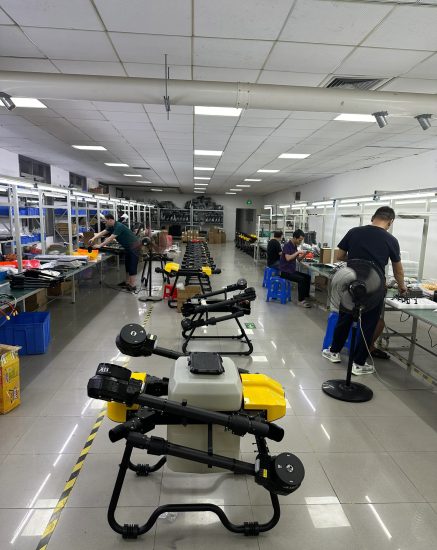
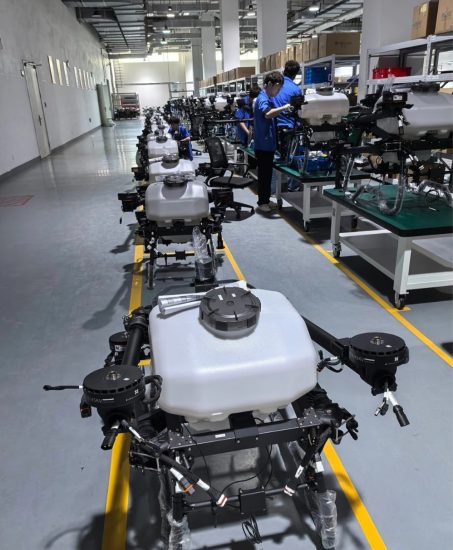
MSOEN’s Agricultural Drone Factory in China: Manufacturing, Testing and Quality Control emphasizes that buyers should look beyond online specifications and understand how the drone is assembled, tested, configured and supported.
Step 8: Check Whether You Are Dealing With a Factory
One of the most important sourcing questions is:
Who actually manufactures the drone?
Some businesses sell products without directly controlling manufacturing.
That does not automatically mean they are unreliable.
But if your purchasing requirements involve:
- OEM
- Private label
- Product customization
- Long-term supply
- Engineering changes
- Large orders
- Spare parts
then direct access to the actual manufacturer can be valuable.
A real manufacturing partner should be able to explain:
- Production process
- Assembly
- Testing
- Quality control
- Customization
- Spare parts
- Production lead time
- Warranty
- Technical support
MSOEN’s China Agricultural Drone Factory: From R&D to Mass Production discusses why R&D, assembly, flight testing, quality control, spare parts and technical support should all be considered when evaluating a factory.
Step 9: Ask About Production Capacity
A supplier may be able to produce one sample.
That does not necessarily mean the supplier can handle your future commercial order.
If you are planning to purchase 50, 100 or 500 units, ask:
- Current production capacity
- Monthly production capability
- Standard lead time
- Peak-season capacity
- Component availability
- Assembly capacity
- Quality-control process
For distributors, this becomes particularly important.
You do not want to build a local market around a product that the supplier cannot consistently replenish.
Step 10: Ask About MOQ
MOQ means:
Minimum Order Quantity
There is no universal MOQ for agricultural drones.
A supplier may accept:
- 1 unit for evaluation
- Small quantities for initial purchases
- Larger quantities for wholesale
- Different quantities for OEM
- Project-based quantities for ODM
MSOEN’s current Agricultural Drone MOQ Guide explains that MOQ can vary depending on whether the order is a sample, standard product, OEM project or ODM development project.
The important question is not:
“What is your MOQ?”
It is:
“What is the MOQ for my exact configuration?”
Step 11: Understand Sample Orders
For a new supplier, a sample order can be a useful risk-control step.
The sample allows you to evaluate:
- Actual build quality
- Flight performance
- Spraying
- Battery operation
- Controller
- Software
- Packaging
- Documentation
- Spare parts
- Supplier communication
A sample also gives your technical team the opportunity to identify problems before a large order.
For distributors, this is especially important.
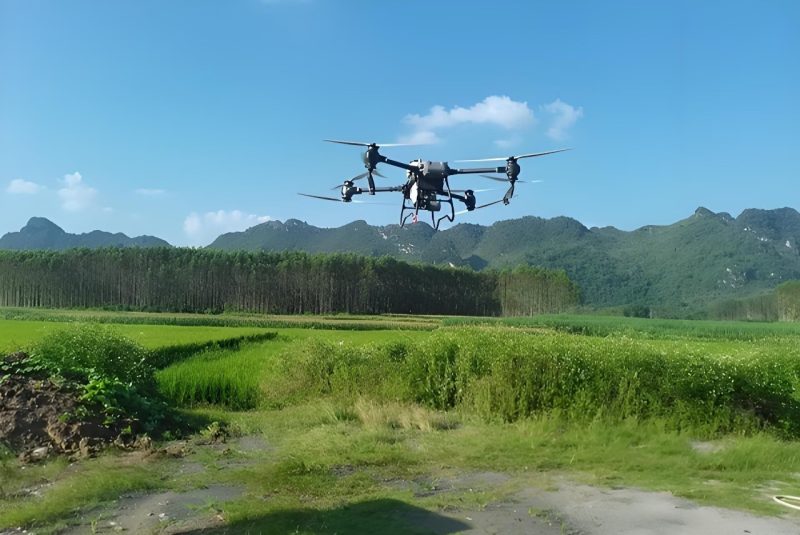
Do not assume that a successful video demonstration is equivalent to your own field test.
Step 12: Test the Drone Under Your Own Conditions
A Chinese manufacturer may test its aircraft in conditions that are different from your market.
Your destination may have:
- Different crops
- Different field sizes
- Different temperatures
- Different wind conditions
- Different terrain
- Different agricultural practices
If possible, evaluate the aircraft under the conditions where you actually intend to sell or operate it.
This can reveal issues that are impossible to identify from a specification sheet.
Step 13: Evaluate Battery Transportation Before Ordering
Agricultural drones frequently use lithium batteries.
This makes international logistics more complicated than shipping an ordinary mechanical product.
Before placing the order, ask the supplier:
- Battery model
- Battery capacity
- Battery quantity
- Packaging method
- Available shipping methods
- Required transport documentation
- Shipping restrictions
- Expected transit time
Do not wait until the drone is finished to ask how the batteries will be shipped.
MSOEN’s current wholesale guide notes that agricultural drone shipments may require special transportation arrangements because lithium batteries are involved.
Step 14: Calculate the Landed Cost
Factory price is only one part of your purchasing cost.
Your total landed cost can include:
Drone price
Battery
Charger
Spare parts
Export packaging
Domestic transportation
International freight
Customs clearance
Import duties
Taxes
Destination delivery
Other applicable charges
The exact cost depends on the destination country and shipping method.
This is why comparing two suppliers using only the product price can produce the wrong conclusion.
MSOEN’s Agricultural Drone Wholesale Price Guide specifically recommends looking at total landed cost rather than factory price alone.
Step 15: Ask for an Itemized Quotation
A good quotation should be easy to understand.
For example:
| Item | Quantity | Unit Price | Total |
|---|---|---|---|
| Agricultural drone | 10 | — | — |
| Battery | 30 | — | — |
| Charger | 10 | — | — |
| Spare parts | 10 sets | — | — |
| OEM packaging | 10 | — | — |
| Shipping | 1 lot | — | — |
This makes it easier to compare suppliers.
If one supplier provides a complete quotation while another gives only a product price, you do not yet have a fair comparison.
Step 16: Compare Suppliers on More Than Price
Create a supplier comparison sheet.
For example:
| Factor | Supplier A | Supplier B | Supplier C |
|---|---|---|---|
| Factory | Yes/No | Yes/No | Yes/No |
| Product | — | — | — |
| Payload | — | — | — |
| Flight time | — | — | — |
| Spray width | — | — | — |
| Battery | — | — | — |
| MOQ | — | — | — |
| OEM | — | — | — |
| Sample | — | — | — |
| Lead time | — | — | — |
| Warranty | — | — | — |
| Spare parts | — | — | — |
| Shipping | — | — | — |
| Total landed cost | — | — | — |
The goal is not necessarily to find the cheapest supplier.
The goal is to find the supplier with the strongest overall fit.
Step 17: Check the Manufacturer’s Quality-Control Process
Ask how the drone is tested before shipment.
Useful questions include:
Is every aircraft flight tested?
Is the spraying system tested?
Are batteries tested?
Is the remote controller tested?
Is the aircraft tested under load?
Is there a pre-shipment inspection?
For commercial buyers, quality consistency is extremely important.
If you are buying 100 drones, you do not want the first five to perform differently from the next 95.
Step 18: Ask About Spare Parts
A drone can become useless because of a relatively small component.
Common spare parts may include:
- Propellers
- Motors
- Pumps
- Nozzles
- Filters
- Pipes
- Connectors
- Landing components
- Electronic components
Ask the manufacturer to recommend an initial spare-parts package.
For distributors, consider keeping commonly needed parts locally.
This can reduce customer downtime.
Step 19: Understand the Warranty
Do not accept only:
“We provide one-year warranty.”
Ask what that actually means.
Clarify:
- Warranty period
- Covered components
- Excluded components
- Battery warranty
- Motor warranty
- Controller warranty
- Shipping responsibility
- Replacement procedure
- Technical support
A written warranty is much more useful than a verbal promise.
Step 20: Ask About After-Sales Technical Support
Agricultural drones are more complex than ordinary agricultural equipment.
The buyer may need help with:
- Software
- Flight settings
- Route planning
- Spraying parameters
- Battery management
- Calibration
- Maintenance
- Troubleshooting
For distributors, after-sales support becomes even more important because the distributor may have to support local customers.
Ask:
Who will provide technical support after delivery?
How quickly can technical problems be handled?
Are manuals and troubleshooting documents available?
Can remote technical support be provided?
Step 21: Decide Whether You Need OEM or Standard Products
Not every buyer needs OEM.
If you are purchasing one or two drones for your own farm, a standard product may be the most practical choice.
OEM becomes more relevant when you are:
- A distributor
- An agricultural equipment company
- A private-label brand
- A regional reseller
- A technology company
- A company building its own product line
OEM may involve:
- Logo
- Packaging
- Manuals
- Product labels
- Accessories
- Color
- Configuration
MSOEN’s Agricultural Drone OEM & ODM Guide for Global Distributors explains the difference between standard purchasing, OEM and ODM projects for international distributors.
Step 22: Understand OEM vs ODM Before Negotiating
These two terms are often confused.
OEM
The manufacturer generally produces an existing platform according to agreed branding or customization requirements.
This can include:
- Brand
- Logo
- Packaging
- Manuals
- Accessories
- Product configuration
ODM
ODM generally involves deeper product development or modification.
It may involve:
- Hardware changes
- Payload changes
- Battery system
- Spraying system
- Software
- Controller
- Product appearance
If you need only your logo and packaging, a full ODM project may be unnecessary.
If you need a substantially different product, ODM may be more appropriate.
MSOEN’s Agricultural Drone OEM and ODM Custom Manufacturing Guide provides further detail on customization, prototypes, testing and production.
Step 23: Check Whether Customization Is Actually Necessary
Customization sounds attractive.
But every modification can introduce:
- Additional engineering
- Testing
- Development cost
- Longer lead time
- Higher MOQ
- Additional quality-control requirements
Therefore, first ask:
Does this customization solve a real market problem?
For example, changing the logo may make sense for a private-label distributor.
Changing the tank capacity may make sense if local farms have different operating requirements.
Changing the software language may make sense for a local market.
But customizing components without a clear business reason may increase cost without creating meaningful value.
Step 24: Check Local Regulations
Before importing agricultural drones, investigate the destination market.
Potential requirements may include:
- Drone registration
- Operator licensing
- Radio-frequency requirements
- Flight restrictions
- Agricultural application regulations
- Import requirements
- Battery transportation requirements
- Insurance
- Local certifications
The manufacturer can provide technical documents, but the importer should confirm the actual legal requirements in the destination market.
Do this before making a large purchase.
Step 25: Request the Documents You Need
Depending on the product and destination, you may need documentation such as:
- Commercial invoice
- Packing list
- Product specification
- User manual
- Battery documentation
- Shipping documentation
- Warranty terms
- Certificate documents where applicable
- Test reports where applicable
Tell the supplier about documentation requirements before shipment.
Last-minute document requests can delay logistics.
Step 26: Confirm Production Lead Time
Ask:
How many days after payment will the order be ready?
But also clarify what the lead time means.
Does it begin:
- After deposit?
- After specification confirmation?
- After packaging approval?
- After OEM artwork approval?
- After sample approval?
OEM projects can take longer than standard products.
Production lead time should therefore be written into the purchase agreement.
Step 27: Confirm Packaging
Agricultural drones contain relatively large and sensitive components.
Ask how the product will be packaged.
Check:
- Outer carton or wooden case
- Internal protection
- Aircraft protection
- Propeller protection
- Battery packaging
- Accessories
- Spare parts
- Shipping labels
Good packaging does not improve the drone’s flight performance.
But it can reduce damage during international transportation.
Step 28: Don’t Place a Large Order Before Testing Communication
Supplier communication itself is a useful evaluation tool.
During the quotation stage, observe:
- How quickly questions are answered
- Whether technical questions receive technical answers
- Whether specifications are clear
- Whether changes are documented
- Whether the supplier understands your application
- Whether the quotation is complete
If communication is already difficult before payment, the situation may become more difficult after delivery.
Step 29: Be Careful With Extremely Cheap Offers
An unusually low quotation deserves investigation.
Ask:
What is included?
What battery is included?
Which controller is included?
Is the charger included?
Are spare parts included?
Is the price for a sample or bulk order?
Is it an OEM price?
Does the product have the same configuration as the competitor’s model?
A low price is only valuable when the products being compared are actually equivalent.
Step 30: Use a Written Purchase Specification
Before making a deposit, prepare a final specification.
For example:
Product: Agricultural spraying drone
Capacity: 30L
Application: Crop spraying
Battery: Specified model and quantity
Charger: Specified model
Controller: Specified model
Spray system: Specified
Navigation: Specified
Accessories: Specified
Spare parts: Specified
Brand: Buyer brand
Packaging: Buyer-approved
Quantity: 20 units
Lead time: Agreed
Warranty: Agreed
This reduces misunderstandings.
What Should You Send a Chinese Manufacturer?
A weak inquiry:
“Send me your best price for agricultural drones.”
A much better inquiry:
We are looking for agricultural spraying drones for the [country] market. The main applications are [crop/application]. Our target capacity is [X]L, and our initial quantity is [X] units. We are interested in [standard/OEM/private label]. Please provide the full specification, battery configuration, charger, spray system, MOQ, sample price, production lead time, warranty, spare-parts options and shipping quotation to [destination].
The second inquiry gives the manufacturer enough information to prepare a useful quotation.
A Practical RFQ Template for Agricultural Drone Buyers
You can structure your request like this:
Product: Agricultural spraying drone
Target market: ______
Crop: ______
Application: ______
Required capacity: ______
Target payload: ______
Quantity: ______
Sample required: Yes / No
OEM: Yes / No
Private label: Yes / No
Battery quantity: ______
Spare parts: Yes / No
Destination: ______
Required documents: ______
Target delivery date: ______
Questions:
- What is the complete configuration?
- What is the recommended operating payload?
- What is the full-load flight time?
- What is the effective spray width?
- What is the application-rate range?
- What is the MOQ?
- What is the sample price?
- What is the bulk price?
- What is the production lead time?
- What warranty is provided?
- What spare parts are recommended?
- Can you provide OEM/ODM?
- Can you arrange international shipping?
This format makes supplier comparison much easier.
When Should You Choose a Chinese Agricultural Drone Factory?
Buying directly from a manufacturer can make particular sense when you need:
- Competitive factory pricing
- Multiple units
- OEM
- Private label
- Product customization
- Spare parts
- Long-term supply
- Technical cooperation
However, the buyer should still verify that the company actually has the manufacturing capabilities it claims.
A factory should be evaluated through evidence such as:
- Production facilities
- Product development
- Assembly
- Testing
- Quality control
- Product documentation
- Spare-parts capability
- Technical support
MSOEN’s Agricultural Drone Manufacturer in China: Products, Factory and OEM Capabilities provides a useful example of the areas international buyers should examine when evaluating a Chinese manufacturer.
When Should You Choose a Standard Product Instead?
A standard model may be better when:
- You need only a few units
- You want fast delivery
- Your requirements are already covered
- You do not need your own brand
- You want to test the market
- You want to reduce development cost
Do not customize a product simply because OEM is available.
First prove that the basic product fits your market.
Then consider deeper customization after gaining actual market feedback.
When Should You Build a Private-Label Agricultural Drone Business?
Private labeling becomes more interesting when you already have:
- Local agricultural customers
- Distribution channels
- Agricultural equipment dealers
- Technical support capability
- Marketing resources
- A defined target market
At that stage, OEM can help you build a recognizable product line without developing an entire drone factory yourself.
MSOEN’s OEM Drone Manufacturing page covers customized UAV manufacturing and private-label production for agricultural and other commercial applications.
The Five Numbers You Should Compare Before Buying
When comparing Chinese agricultural drone suppliers, pay particular attention to these five numbers:
1. Product Cost
What is the actual factory price?
2. Landed Cost
What will the product cost after transportation and applicable import charges?
3. Daily Productivity
How much useful agricultural work can the drone realistically complete?
4. Operating Cost
How much does it cost to operate and maintain?
5. Replacement Cost
What will batteries, pumps, motors and other wear parts cost over time?
The cheapest purchase price does not necessarily produce the lowest total cost.
A Better Way to Evaluate a Supplier
You can score each supplier from 1 to 5.
| Category | Score |
|---|---|
| Product quality | /5 |
| Factory capability | /5 |
| Technical specifications | /5 |
| Testing | /5 |
| Price | /5 |
| OEM capability | /5 |
| MOQ flexibility | /5 |
| Lead time | /5 |
| Spare parts | /5 |
| Warranty | /5 |
| Technical support | /5 |
| Communication | /5 |
This creates a more balanced purchasing decision.
A supplier with the lowest price but weak technical support may score lower overall.
What Should You Do Before Paying the Deposit?
Before making the first payment, confirm:
- Exact product model
- Exact configuration
- Quantity
- Unit price
- Total price
- Battery quantity
- Charger
- Accessories
- Spare parts
- Packaging
- Branding
- Lead time
- Warranty
- Payment terms
- Shipping terms
- Required documents
Everything important should be written down.
What Should You Do Before Final Shipment?
Ask the supplier to confirm:
- Quantity
- Model
- Serial numbers where applicable
- Accessories
- Batteries
- Chargers
- Spare parts
- Packaging
- Documents
- Shipping information
For larger commercial orders, a pre-shipment inspection can provide an additional layer of protection.
What Should You Do After Receiving the Drones?
Do not immediately put every unit into commercial service.
First:
- Inspect the packaging.
- Check the quantity.
- Check the aircraft.
- Check batteries.
- Check chargers.
- Check accessories.
- Check documentation.
- Test the controller.
- Perform a controlled flight test.
- Test the spraying system.
- Record any problems.
- Train operators.
For distributors, keep records for every unit.
This makes future warranty and maintenance work easier.
Buying One Drone vs Buying 100 Drones
The purchasing strategy should change with order size.
One Drone
Focus on:
- Actual performance
- Ease of use
- Reliability
- Support
- Sample testing
5–20 Drones
Focus on:
- Unit price
- Spare parts
- Training
- Warranty
- Delivery
- Consistency
50–100+ Drones
Focus on:
- Production capacity
- Quality consistency
- Supply-chain stability
- Spare-parts inventory
- OEM
- Technical support
- Long-term pricing
- Production planning
The larger the order, the more important the manufacturer’s operational capabilities become.
What Makes a Good Chinese Agricultural Drone Supplier?
A strong supplier should be able to answer questions clearly.
They should be able to explain:
- What the drone can do
- What it cannot do
- Which configuration you need
- What the real operating conditions are
- What is included in the quotation
- What customization is possible
- How the drone is tested
- What spare parts are needed
- How warranty works
- How shipping will be arranged
A supplier who simply sends a price list may not be enough for a serious commercial project.
The Goal Is Not to Find the Cheapest Drone
The goal is to find the lowest-risk agricultural drone purchase that makes economic sense for your application.
That means balancing:
Product performance
Factory capability
Price
Shipping
Quality
Support
Parts
Customization
Regulations
Long-term supply
This is particularly important for distributors.
A distributor’s reputation is ultimately connected to the product being sold to its customers.
Frequently Asked Questions
Is China a good place to buy agricultural drones?
China has a large manufacturing ecosystem for drones and related components, and international buyers can find manufacturers offering standard products, OEM, ODM and private-label solutions. However, suppliers should be evaluated individually rather than assuming every manufacturer has the same capabilities.
How do I find a reliable agricultural drone manufacturer in China?
Start by defining your application and specifications, then compare manufacturers based on production capability, testing, product configuration, quality control, OEM capability, spare parts, warranty and technical support rather than price alone.
Can I buy only one agricultural drone from China?
Some manufacturers may accept one unit as a sample or evaluation order. MOQ depends on the supplier, model and customization requirements. Always ask about the MOQ for the exact configuration you want.
Can I order agricultural drones with my own brand?
Yes, depending on the manufacturer’s OEM capabilities. Private-label projects can involve logos, packaging, manuals, product labels and selected configuration changes.
What is the difference between OEM and ODM agricultural drones?
OEM generally involves producing an existing or agreed platform under the buyer’s brand or specifications. ODM generally involves deeper product development or modification.
Should I buy a sample before placing a bulk order?
For a new supplier, a sample can reduce purchasing risk. It allows you to test actual flight performance, spraying, battery operation, software, packaging and technical support before committing to a larger order.
How should I compare agricultural drone prices from China?
Compare the complete configuration and total landed cost, not only the advertised factory price. Include batteries, chargers, accessories, spare parts, shipping and applicable import costs.
How are agricultural drones shipped from China?
Shipping depends on the destination, product configuration and especially battery requirements. Lithium batteries can affect transportation arrangements, so shipping should be confirmed before production and not left until the final stage.
What should I ask an agricultural drone manufacturer before buying?
Ask about payload, tank capacity, flight time, battery configuration, spray system, spray width, testing, MOQ, lead time, warranty, spare parts, OEM capability and shipping.
Can Chinese manufacturers customize agricultural drones for local markets?
Many manufacturers offer different levels of customization. Possible changes can include branding, packaging, payload systems, spraying systems, battery configurations, software and other product requirements. The exact scope depends on the manufacturer and project.
Final Takeaway
Buying agricultural drones from China should be treated as a sourcing project, not simply an online shopping transaction.
The strongest purchasing process is:
Define the application
→ Determine the required drone configuration
→ Identify suitable manufacturers
→ Compare complete quotations
→ Check factory and testing capabilities
→ Order a sample when appropriate
→ Test the product
→ Confirm OEM requirements if needed
→ Calculate landed cost
→ Confirm shipping and battery arrangements
→ Finalize specifications
→ Place the commercial order
→ Inspect and test after delivery
The biggest mistake is choosing a supplier because its quotation is the lowest.
The better approach is to ask:
Can this manufacturer provide the exact agricultural drone configuration I need, manufacture it consistently, support it after delivery, and supply the product long enough for my business to grow?
For farmers, importers and distributors, that question is much more important than simply asking for the cheapest price.
A reliable Chinese agricultural drone supplier should be able to provide not just an aircraft, but a complete purchasing solution covering product configuration, manufacturing, testing, batteries, spare parts, documentation, shipping, OEM options and after-sales support.
That is the foundation for a successful long-term agricultural drone sourcing relationship.


No comments yet