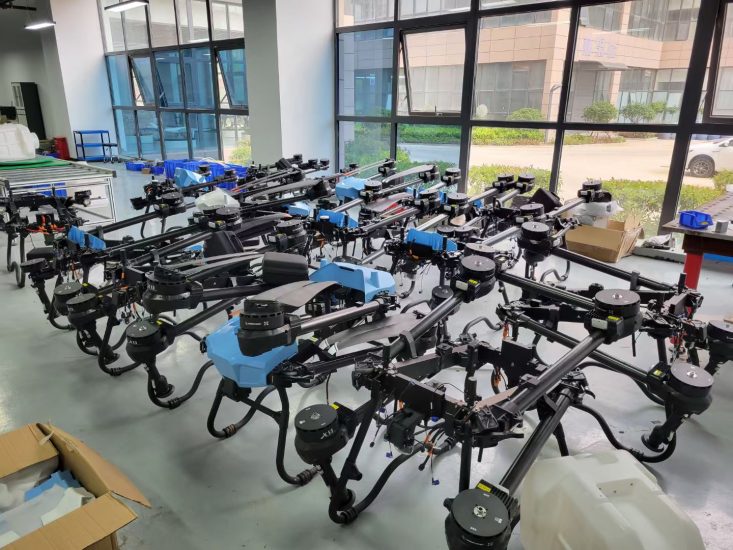


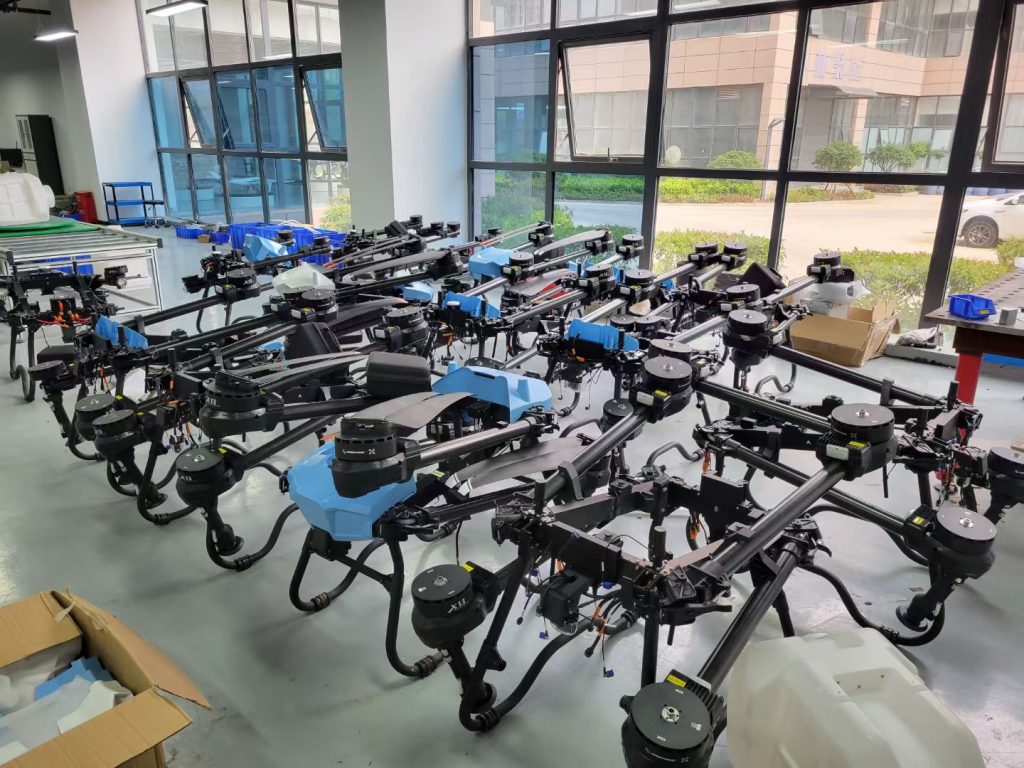
China has become an important manufacturing base for agricultural drone technology, supplying equipment for crop spraying, fertilizer spreading, field monitoring, mapping, and other precision agriculture applications.
For international buyers, however, choosing an agricultural drone manufacturer is not simply a matter of comparing prices. A reliable supplier needs to demonstrate suitable drone designs, manufacturing capability, quality-control procedures, technical support, customization options, and the ability to support international orders.
This guide explains what buyers should look for when evaluating an agricultural drone manufacturer in China, including product capabilities, factory production, OEM and ODM services, quality control, technical specifications, and the purchasing process.
What Is an Agricultural Drone Manufacturer?
An agricultural drone manufacturer develops, assembles, tests, and supplies unmanned aerial systems designed for agricultural operations.
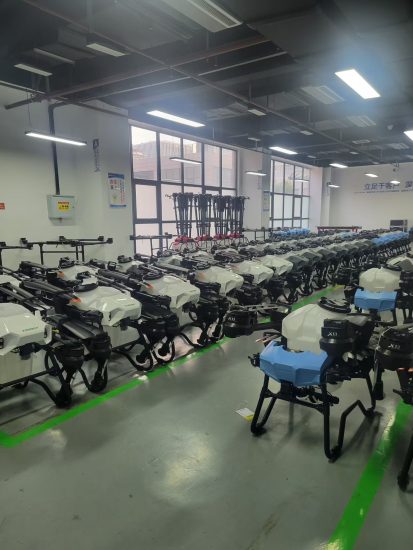
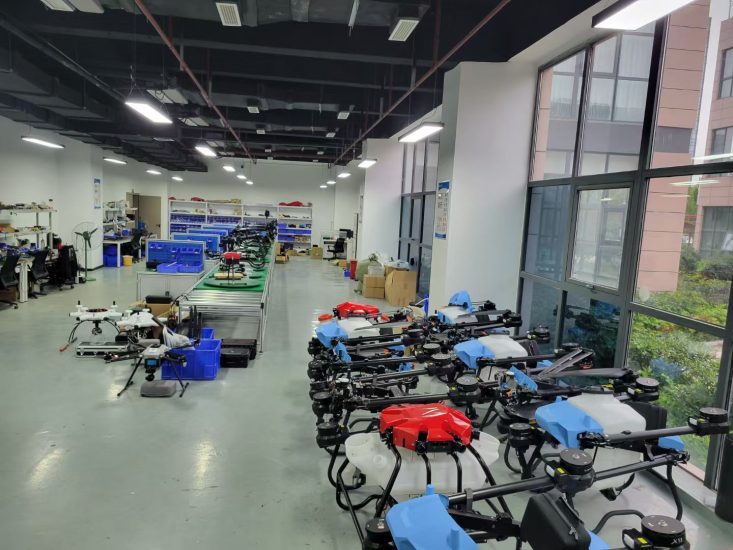
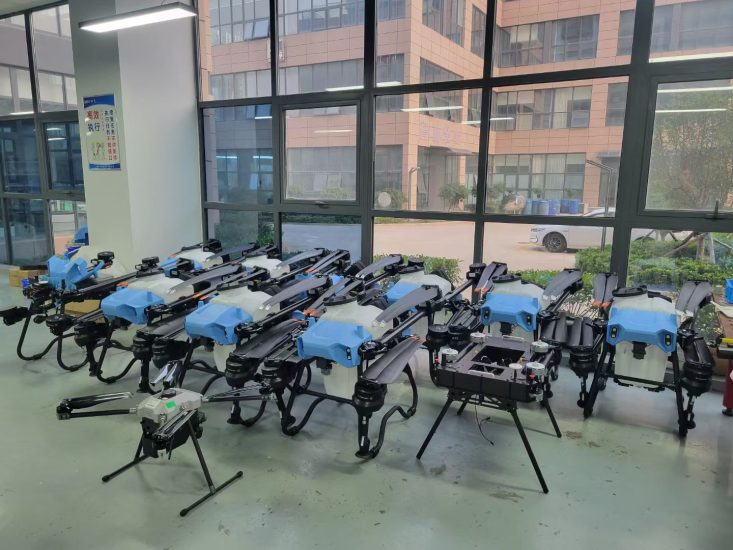
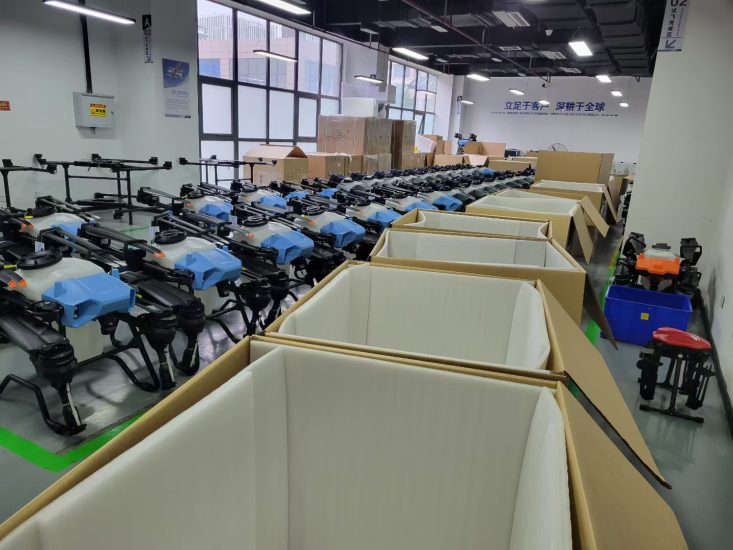
Unlike a trading company that primarily sources products from different factories, a manufacturer can have direct control over important parts of the production process, including:
- Product engineering
- Drone frame assembly
- Flight-control integration
- Spraying system installation
- Spreading system integration
- Battery and power-system integration
- Software configuration
- Quality inspection
- Flight testing
- Packaging and shipment preparation
The actual capabilities vary between manufacturers, so international buyers should verify what is produced in-house and what components are sourced from external suppliers.
For commercial agricultural operations, this distinction can be important because the quality of manufacturing and after-sales technical support can directly affect equipment reliability.
Why Choose an Agricultural Drone Manufacturer in China?
China has a large manufacturing ecosystem covering electronics, batteries, motors, flight-control components, agricultural equipment, precision machinery, and unmanned aerial systems.
This creates several potential advantages for international buyers.
1. Manufacturing Experience
Chinese manufacturers can work with established supply chains for electronic components, motors, batteries, controllers, pumps, nozzles, sensors, and other drone components.
A manufacturer with experience in agricultural applications can also understand the specific requirements associated with spraying and spreading operations.
2. Product Selection
Agricultural drones can be configured for different applications.
Depending on the manufacturer and model, products may include:
- Spraying drones
- Fertilizer spreading drones
- Multi-purpose agricultural drones
- Heavy-payload agricultural drones
- Mapping and surveying UAVs
- Crop-monitoring drones
Buyers can therefore select equipment according to crop type, field conditions, payload requirements, and operating area.
3. OEM and ODM Possibilities
Some manufacturers provide OEM and ODM services for distributors, agricultural equipment companies, and established brands.
Customization may involve:
- Product branding
- Housing and appearance
- Flight parameters
- Spraying configuration
- Spreading configuration
- Battery configuration
- Remote controller configuration
- Packaging
- User manuals
- Software or operational settings
The available customization depends on the manufacturer’s engineering and production capabilities.
4. Competitive Manufacturing Costs
China’s mature industrial supply chain can make it possible to manufacture agricultural drones at different price levels.
However, the lowest purchase price should not automatically be considered the best option.
A better evaluation should consider:
Purchase price + spare parts + maintenance + battery replacement + technical support + expected service life.
A drone that costs less initially but requires frequent repairs may have a higher total operating cost.
Main Types of Agricultural Drones
A professional agricultural drone manufacturer may provide equipment for several different agricultural tasks.
Agricultural Spraying Drones
Spraying drones are designed to distribute agricultural liquids over crops.
Typical applications can include:
- Crop protection
- Foliar spraying
- Orchard spraying
- Rice-field operations
- Vegetable production
- Plantation management
Important specifications to evaluate include tank capacity, flow rate, spraying width, nozzle configuration, flight time, and payload capacity.
The right configuration depends heavily on the crop and operating environment.
Fertilizer Spreading Drones
Spreading drones are designed to distribute granular or solid agricultural materials.
Applications may include:
- Fertilizer spreading
- Seed spreading
- Granular material distribution
- Field nutrient management
Buyers should examine the hopper capacity, spreading width, material compatibility, distribution consistency, and control system.
A larger hopper does not automatically mean better performance. Uniform distribution is often more important than maximum capacity.
Heavy-Lift Agricultural Drones
Heavy-lift drones are designed to carry larger payloads than conventional agricultural UAVs.
They may be used for:
- High-capacity spraying
- Fertilizer spreading
- Specialized agricultural operations
- Transport of agricultural materials
When comparing heavy-lift drones, buyers should examine the actual usable payload, not just the advertised maximum takeoff weight.
A complete evaluation should consider:
- Maximum payload
- Recommended operating payload
- Flight time at working load
- Battery capacity
- Motor configuration
- Operating altitude
- Wind resistance
- Charging requirements
What Should Buyers Check in an Agricultural Drone Factory?
A manufacturer’s website can provide useful information, but serious buyers should go further.
Production Capability
Ask the manufacturer how the drone is produced.
Important questions include:
- Is the drone assembled in-house?
- Which components are manufactured internally?
- Which components are sourced externally?
- How is the flight-control system configured?
- Is every finished drone flight-tested?
- What quality-control procedures are used?
Clear answers are generally more useful than broad claims such as “professional factory” or “leading manufacturer.”
Quality Control
Agricultural drones operate in demanding environments.
They may encounter:
- Dust
- Moisture
- Chemicals
- Heat
- Wind
- Long operating hours
- Repeated battery cycles
Therefore, quality control should cover both individual components and the completed aircraft.
A suitable inspection process may include:
- Incoming component inspection
- Assembly inspection
- Electrical testing
- System configuration
- Spraying or spreading-system testing
- Flight testing
- Final inspection
- Packaging inspection
The exact process varies according to the product.
Flight Testing
Flight testing is particularly important for agricultural UAVs.
A completed aircraft should be checked for basic operational performance before shipment.
Depending on the model, testing may include:
- Takeoff and landing
- Hover stability
- Motor operation
- Flight-control response
- Spraying-system operation
- Spreading-system operation
- Remote-control communication
- Battery performance
Manufacturers should be able to explain their testing procedures rather than simply stating that products are “100% tested.”
Agricultural Drone OEM and ODM Capabilities
For distributors and agricultural equipment businesses, OEM and ODM services can be an important consideration.
OEM Agricultural Drone Manufacturing
Under an OEM arrangement, a buyer may purchase a manufacturer’s existing platform under the buyer’s brand or with agreed customization.
Possible services include:
- Brand labeling
- Custom packaging
- Manuals
- Product documentation
- Color or appearance adjustments
- Configuration changes
The exact scope should be confirmed before an order is placed.
ODM Agricultural Drone Development
ODM projects can involve deeper engineering cooperation.
Depending on the project, customization may involve:
- Drone structure
- Payload system
- Battery system
- Spraying system
- Spreading system
- Controller configuration
- Software functions
- Product appearance
ODM projects normally require more technical communication, development time, testing, and minimum-order planning than standard products.
How to Evaluate an Agricultural Drone Manufacturer in China
International buyers can use the following checklist before choosing a supplier.
1. Product Match
Does the manufacturer actually offer the type of drone required for your agricultural application?
2. Payload
Check the recommended working payload rather than relying only on the maximum advertised figure.
3. Flight Time
Ask whether the stated flight time is measured without payload or under a specific working load.
4. Spraying or Spreading Performance
Look at flow rate, working width, hopper or tank capacity, and distribution performance.
5. Battery System
Check battery capacity, charging method, expected cycle life, charging time, and replacement availability.
6. Factory Capability
Ask for evidence of production, assembly, testing, and quality control.
7. Spare Parts
Confirm whether important replacement parts are available for international customers.
8. Technical Support
Ask how installation, training, troubleshooting, and remote technical assistance are handled.
9. Documentation
A professional supplier should be able to provide suitable product documentation, specifications, operating instructions, and shipping information.
10. Export Experience
International shipping involves more than manufacturing.
The supplier should understand product packaging, export documentation, customs requirements, and destination-market requirements relevant to the transaction.
Questions to Ask Before Ordering
Before placing a large agricultural drone order, international buyers should request specific information.
For example:
What is the recommended operating payload?
This helps distinguish practical working capacity from a theoretical maximum.
How long can the drone operate under normal agricultural conditions?
Request test conditions instead of relying on a single flight-time number.
What is included with the drone?
Confirm whether batteries, chargers, controllers, pumps, nozzles, spreading systems, and other accessories are included.
Are spare parts available?
Ask about motors, propellers, pumps, nozzles, batteries, controllers, and other commonly replaced components.
Can the product be customized?
If you require OEM or ODM services, discuss the exact customization requirements before production.
What technical support is available after delivery?
Clarify remote support, training, troubleshooting, warranty conditions, and spare-parts procedures.
Buying Agricultural Drones from China
The purchasing process should normally begin with a clear technical requirement.
Instead of simply asking:
“How much is an agricultural drone?”
A buyer should provide information such as:
- Intended application
- Crop type
- Required payload
- Spraying or spreading requirement
- Expected operating area
- Target market
- Quantity
- Branding requirements
- Required accessories
- Delivery destination
This allows the manufacturer to recommend a more appropriate configuration.
Step 1: Define the Application
Determine whether the drone will primarily be used for spraying, spreading, monitoring, mapping, or multiple operations.
Step 2: Select the Required Capacity
Choose the payload and tank or hopper capacity according to the actual operating requirements.
Step 3: Compare Technical Specifications
Do not compare suppliers only by price.
Create a specification sheet covering payload, flight time, battery, operating width, control system, dimensions, and included accessories.
Step 4: Verify the Manufacturer
Request factory information, product documentation, testing information, certifications where applicable, and evidence of actual production capability.
Step 5: Test Before a Large Order
For distributors or commercial buyers, a sample or demonstration can help identify technical problems before a larger purchase.
Step 6: Confirm Commercial Terms
Before production, confirm:
- Product configuration
- Quantity
- Price
- Payment terms
- Production time
- Warranty
- Spare parts
- Packaging
- Shipping terms
- Documentation
What Makes a Good Agricultural Drone Manufacturer?
A strong agricultural drone manufacturer should not be judged by one specification or one low quotation.
The more useful question is:
Can this manufacturer consistently supply a suitable product and support it throughout its operating life?
Important indicators include:
- Clear technical specifications
- Consistent product configuration
- Controlled production
- Quality inspection
- Flight testing
- Available spare parts
- Technical support
- OEM/ODM capability
- Transparent communication
- Appropriate export experience
For professional buyers, these factors can be more important than a small difference in the initial purchase price.
Why Work Directly With a Manufacturer?
Buying directly from a manufacturer can provide advantages when the order requires technical communication or customization.
Direct communication can make it easier to discuss:
- Product specifications
- Custom requirements
- Packaging
- Branding
- Spare parts
- Technical issues
- Production schedules
- Quality requirements
It can also reduce unnecessary communication layers between the buyer and production team.
However, buyers should still conduct appropriate supplier verification before placing an order.
MSOEN Agricultural Drone Manufacturing
MSOEN focuses on agricultural drone solutions for professional agricultural applications, including spraying and spreading operations.
The company’s product development and manufacturing approach is centered on practical agricultural requirements rather than treating drones simply as consumer electronics.
For international buyers, the key considerations should include the specific application, required payload, operating environment, battery configuration, spraying or spreading requirements, and after-sales support.
Buyers interested in OEM or ODM cooperation should provide their intended market, target application, required specifications, estimated order quantity, and branding requirements so that the appropriate manufacturing solution can be evaluated.
Final Thoughts
Choosing an agricultural drone manufacturer in China requires more than finding a supplier with a competitive quotation.
A professional evaluation should combine:
Product capability + manufacturing capability + quality control + testing + technical support + spare parts + OEM/ODM capability + export experience.
For agricultural equipment distributors, importers, farm operators, and other commercial buyers, this approach can help reduce purchasing risks and identify a supplier that is suitable for long-term cooperation.
The most important step is to match the drone to the actual agricultural application.
A 30kg-class aircraft, for example, may be appropriate for one operation but unnecessary for another. Similarly, a large spraying tank does not automatically guarantee better field efficiency.
The right agricultural drone is the one whose payload, flight characteristics, spraying or spreading system, battery configuration, reliability, and support structure match the buyer’s real operating requirements.
FAQ
What is an agricultural drone manufacturer?
An agricultural drone manufacturer develops, assembles, tests, and supplies UAVs designed for agricultural applications such as crop spraying, fertilizer spreading, monitoring, and related operations.
How do I choose an agricultural drone manufacturer in China?
Evaluate the manufacturer’s product specifications, factory capability, quality-control process, flight testing, spare-parts availability, technical support, OEM/ODM capabilities, and international shipping experience.
Can agricultural drone manufacturers provide OEM services?
Some manufacturers provide OEM services such as branding, packaging, product configuration, and documentation. The available options depend on the manufacturer’s capabilities and order requirements.
What is the difference between an agricultural drone factory and a trading company?
A factory directly controls some or all of the manufacturing and assembly process, while a trading company may source products from one or more external manufacturers. Buyers should verify the actual production relationship.
What payload should an agricultural drone have?
There is no single payload suitable for every farm. The required capacity depends on the crop, field size, application, operating conditions, and whether the drone is being used for spraying, spreading, or another purpose.
What should I ask about battery life?
Ask how flight time is measured, including payload, weather, operating conditions, battery capacity, and reserve requirements. A flight-time figure without test conditions is difficult to compare accurately.
Can agricultural drones be customized?
Depending on the manufacturer, customization can include branding, packaging, spraying systems, spreading systems, batteries, controllers, software configurations, and other product features.
Do I need to test an agricultural drone before placing a large order?
For commercial or distributor orders, testing a sample or conducting a product demonstration can be useful. It allows the buyer to evaluate actual performance before committing to a larger quantity.
What information should I provide when requesting a quotation?
Provide the intended application, required payload, crop type, spraying or spreading requirements, quantity, destination country, branding requirements, and any special technical specifications.
Are spare parts important when buying agricultural drones?
Yes. Agricultural drones operate in demanding conditions, and components such as propellers, motors, pumps, nozzles, batteries, and other parts may eventually require replacement. Spare-parts availability should therefore be evaluated before purchase.


No comments yet