Walk into almost any vegetable farm during spraying season and you will see the same thing: a fine mist hanging in the air long after the sprayer has passed, puddles of chemical runoff at the edge of the field, and leaves so saturated they are dripping onto the soil below. To the untrained eye, it looks like thorough coverage. To an agronomist, it is waste—expensive, environmentally damaging, and agronomically ineffective waste.
The hard truth is that traditional manual and boom spraying methods only deposit 20% to 40% of applied pesticide onto the target crop canopy. The remaining 60% to 80% ends up in the soil, the air, nearby waterways, or simply evaporates before it can do any good. For a vegetable farmer spending $30,000–$60,000 per season on crop protection chemicals, that means $18,000–$48,000 is literally disappearing into thin air.
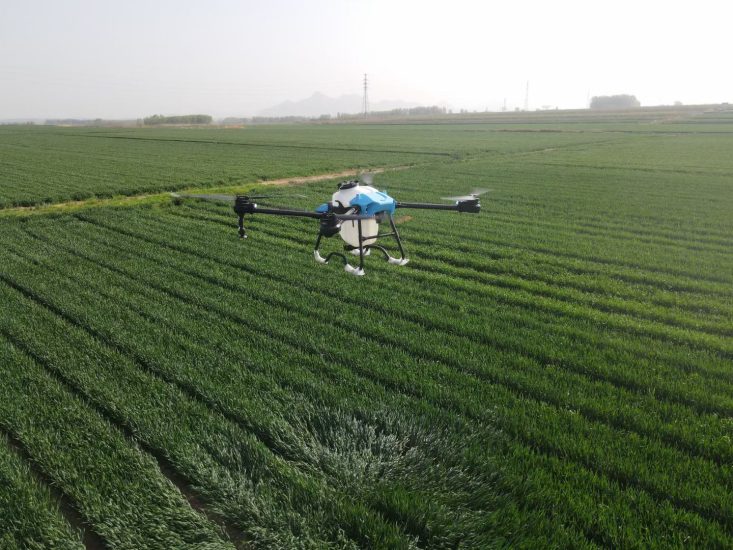
Precision drone spraying technology changes this equation entirely. By combining centimeter-level positioning, variable-rate application, optimized droplet sizing, and targeted airflow, modern agricultural drones routinely achieve 60% to 75% deposition efficiency—meaning every dollar you spend on pesticide actually works for you.
This article explains exactly how that happens, what technologies make it possible, and what it means for your bottom line.
The Real Cost of Pesticide Waste
Before diving into the technology, it is worth understanding just how much waste costs you—not just in dollars, but in crop health and regulatory risk.
Waste Impact Area
|
What Happens
|
Cost to You
|
Chemical runoff
|
Excess spray lands on bare soil and washes into drainage ditches or nearby streams
|
Lost chemical investment + potential environmental fines
|
Drift
|
Fine droplets carried by wind land on non-target areas (neighboring fields, roads, homes)
|
Re-spray costs + liability + neighbor complaints
|
Evaporation
|
Droplets smaller than 50 microns evaporate before reaching the leaf surface
|
Up to 30% of spray volume lost to atmosphere in hot conditions
|
Over-saturation
|
Manual operators spray until leaves drip, assuming “more is better”
|
Wasted chemical + phytotoxicity risk (leaf burn)
|
Uneven coverage
|
Overlap zones get double dose; gaps get nothing
|
Patchy pest control → reinfestation → more spraying
|
The cumulative effect? Most vegetable farmers are applying 30% to 50% more pesticide than necessary to achieve acceptable control. That is money that could go straight to your net profit—if you could eliminate the waste.
How Precision Spraying Technology Works
Precision drone spraying is not a single feature. It is a stack of integrated technologies working together from the moment the drone leaves the ground to the moment it lands.
1. Centimeter-Level RTK Positioning
Every spray mission begins with a GPS/RTK-positioned flight path accurate to within 1–3 centimeters. This eliminates the single biggest cause of waste in manual spraying: overlap and gaps.
-
Manual crews walking through fields cannot see where they have already sprayed. They either overlap (wasting chemical) or leave gaps (requiring re-spray).
-
Drone flight paths are pre-programmed with precise swath widths. The system automatically adjusts for field shape, crop row direction, and no-spray zones.
-
The result: zero intentional overlap, zero missed strips.
2. Variable-Rate Application (VRA)
Not every part of your field needs the same amount of chemical. Edges near tree lines may have higher pest pressure. Low-lying areas may have more fungal disease. Dense canopy zones need more volume than sparse ones.
Modern drone spraying systems support variable-rate application, which adjusts spray output in real time based on:
-
Pre-programmed zones: The pilot maps high-, medium-, and low-pressure areas before flight and assigns different flow rates to each.
-
Crop height sensing: Some systems use downward-facing sensors to detect canopy density and automatically increase or decrease flow rate accordingly.
-
Speed-adaptive pumping: As the drone accelerates or decelerates at field boundaries, the pump automatically adjusts to maintain consistent droplet density per square meter—regardless of flight speed.
Impact: Farmers using VRA report using 15% to 25% less pesticide while maintaining equal or better pest control compared to uniform-rate application.
3. Optimized Droplet Size Control
Droplet size is the single most important factor in deposition efficiency. Here is why:
Droplet Size
|
Behavior
|
Deposition Rate
|
< 50 microns
|
Drifts easily, evaporates in < 3 seconds in hot sun
|
< 20%
|
50–150 microns
|
Good coverage, moderate drift risk
|
40–60%
|
150–300 microns
|
Excellent canopy penetration, minimal drift
|
65–80%
|
> 300 microns
|
Rolls off leaves, bounces on impact
|
30–50%
|
Precision drone sprayers use centrifugal nozzles or pressure nozzles with adjustable orifice sizes to produce droplets in the 100–250 micron range—the sweet spot for vegetable crops. The pilot selects the target droplet size based on:
-
Crop type (leafy greens vs. fruiting vegetables)
-
Pest location (leaf underside vs. stem base)
-
Weather conditions (wind speed, temperature, humidity)
Unlike a manual knapsack sprayer, which produces a wide, uncontrolled range of droplet sizes, the drone delivers a tightly controlled spectrum where 80%+ of droplets fall within the optimal range.
4. Downwash Airflow Targeting
This is where drone spraying has a fundamental advantage over every other method. The drone’s rotors generate a powerful downward airflow—typically 8–15 m/s at canopy level—that does three critical things:
-
Penetrates the canopy: The airflow pushes droplets through the top leaves and down into the lower canopy, reaching the undersides of leaves where aphids, whiteflies, and spider mites live.
-
Reduces drift: The focused column of air carries droplets directly to the target rather than letting them float freely.
-
Increases retention: The airflow creates micro-turbulence around each leaf, helping droplets adhere to both the upper and lower surfaces instead of bouncing off.
Independent field trials on vegetable crops have shown that drone downwash airflow increases deposition on leaf undersides by 3× to 5× compared to manual knapsack spraying.
5. Minimal Water Requirement = Maximum Concentration
Traditional spraying dilutes pesticides in 400–600 liters of water per hectare. This creates several problems:
-
The sheer volume makes it difficult for leaves to absorb the chemical before it runs off.
-
Transporting that much water across fields is logistically expensive.
-
High water volume = high dilution = lower effective concentration at the leaf surface.
Drone spraying uses only 10–30 liters of water per hectare. This higher concentration means:
-
More active ingredient per droplet
-
Less runoff
-
Faster leaf absorption
-
Less total chemical needed to achieve the same pest mortality
Real-World Results: What Farmers Are Seeing
Across commercial vegetable operations that have transitioned from manual spraying to precision drone application, the reported outcomes are consistent:
Metric
|
Before (Manual)
|
After (Drone Precision)
|
Change
|
Pesticide used per hectare
|
100% (baseline)
|
55%–70%
|
↓ 30–45%
|
Deposition efficiency
|
25%–35%
|
60%–75%
|
↑ ~2×
|
Pest control efficacy
|
70%–80%
|
85%–95%
|
↑ 10–20 pts
|
Spray cycles per season
|
12–16
|
8–11
|
↓ 3–5 cycles
|
Chemical cost per season
|
$100 (baseline)
|
$55–$70
|
↓ 30–45%
|
Data compiled from field trials and commercial operations across Asia, Europe, and North America (2022–2025).
The Bottom Line
Precision spraying technology does not just “use less chemical.” It uses the right amount, in the right place, at the right time, in the right droplet size. For vegetable farmers, this means:
-
Direct savings: 30%–45% reduction in pesticide purchases.
-
Better crop protection: More consistent coverage = fewer outbreaks = higher yields.
-
Regulatory peace of mind: Lower drift and runoff reduce the risk of violating local environmental regulations.
-
Sustainability credentials: Using less chemical while maintaining control is a powerful story for buyers and consumers who care about responsible farming.
Every drop of pesticide you buy should protect your crop—not the soil, not the air, and not your neighbor’s fence line. Precision drone spraying is the most effective tool available today to make that a reality.
FAQ
Q: How do I know the drone is actually using less pesticide if I cannot see the spray volume the way I can with a knapsack sprayer?
A: Every professional agricultural drone records spray volume, area covered, and GPS flight path for each mission. You receive a digital spray log showing exactly how many liters were applied to each field. Many systems also provide a coverage heat map that visually confirms even distribution. You can compare this data against your manual spraying records to verify the reduction.
Q: Does using less water mean the pesticide is less effective?
A: Not at all. In fact, the opposite is often true. The key is droplet concentration. With drone spraying, you are applying a more concentrated solution with far less carrier water. As long as the total active ingredient per hectare remains adequate, the higher concentration actually improves leaf absorption and reduces runoff. Agronomists recommend adjusting dilution ratios specifically for low-volume drone application—your pesticide supplier can provide drone-optimized mixing guidelines.
Q: What about systemic pesticides that need to be absorbed through the roots? Does precision spraying still help?
A: Yes. Systemic pesticides still need to reach the leaf surface to be absorbed and translocated through the plant. Precision spraying ensures more of the active ingredient lands on the leaf rather than the soil, where it may bind to organic matter and never reach the plant. Additionally, better coverage means more entry points for systemic uptake across the entire canopy.
Q: Can I use the same pesticides I already have, or do I need special “drone formulations”?
A: Most conventional pesticides used in vegetable farming are compatible with drone spraying. However, some formulations perform better than others in low-volume systems. Suspension concentrates (SC) and emulsifiable concentrates (EC) generally work well. Wettable powders (WP) can clog nozzles if not properly filtered. Your drone equipment dealer or agronomist can review your current chemical inventory and recommend any formulation adjustments.
Q: How do I handle different vegetable growth stages within the same field?
A: This is where variable-rate application shines. You can divide a field into zones based on crop height or growth stage during the mapping phase. The drone then automatically adjusts flow rate and droplet size as it moves between zones. For example, young seedlings might receive 10 L/ha at 150-micron droplets, while mature plants in the same field receive 20 L/ha at 200-micron droplets.
Q: Is there a risk of nozzle clogging with such low water volumes and precise equipment?
A: Yes, nozzle clogging is the most common operational issue in precision spraying. Best practices to prevent it include: (1) using a 100–150 mesh filter when mixing, (2) avoiding wettable powder formulations when possible, (3) flushing the tank and lines with clean water between different chemical types, and (4) inspecting nozzles daily. Most systems include an automatic nozzle-cleaning function that back-flushes the lines at the start and end of each day.
Q: How does precision spraying perform in windy conditions where drift is already a concern?
A: Ironically, precision drone spraying often performs better than manual methods even in light wind. The focused downwash airflow keeps droplets on target better than a knapsack sprayer’s uncontrolled fan pattern. However, for safety and efficacy, most operators pause spraying when sustained winds exceed 10–12 km/h (6–7 mph). Some advanced systems include wind-compensation algorithms that automatically narrow the spray swath and increase droplet size when light crosswinds are detected.
THE END
Support it if you like it




No comments yet