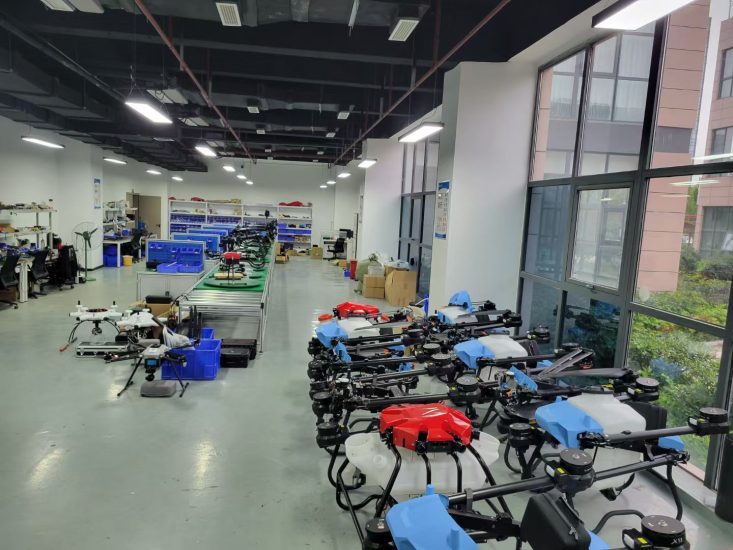


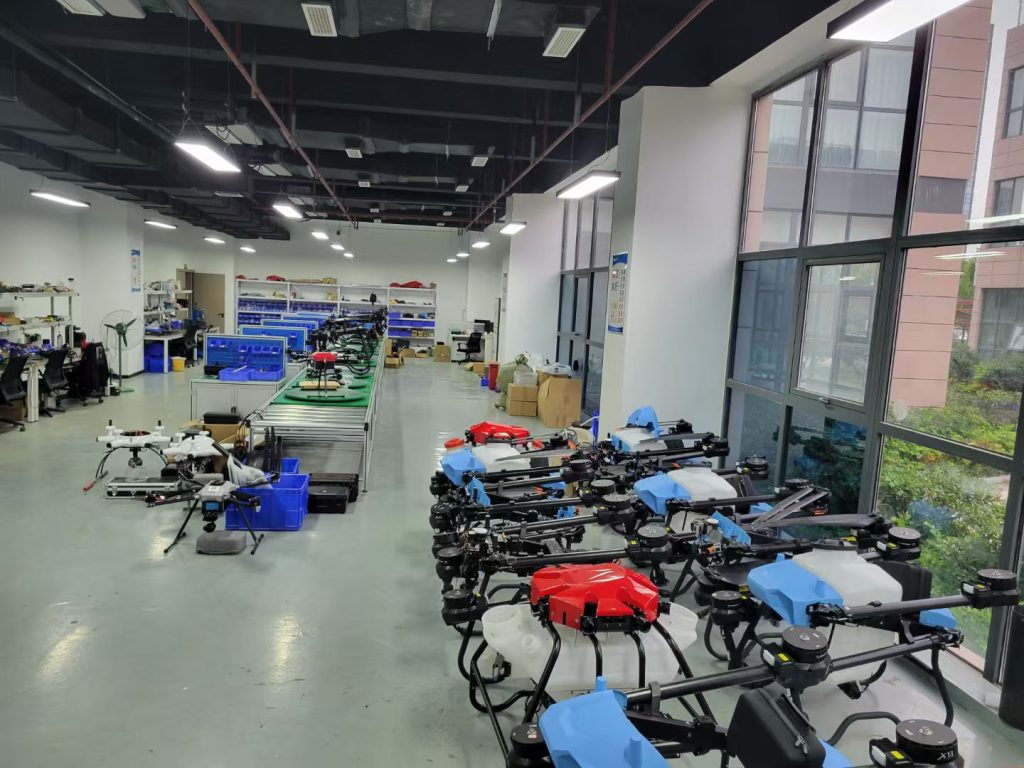
A 50KG agricultural drone is designed for professional farming operations that require high payload capacity, efficient spraying, and reliable performance over large areas.
Compared with smaller agricultural drones, a 50KG-class model can carry a significantly larger payload, reducing the number of refilling and spreading cycles required during field operations.
However, choosing a 50KG agricultural drone should not be based on payload capacity alone. Buyers should also evaluate flight time, spraying capacity, battery performance, motor power, flight control, navigation, and after-sales support.
This guide explains the key specifications international buyers should understand before purchasing a 50KG agricultural drone.
What Is a 50KG Agricultural Drone?
A 50KG agricultural drone is a heavy-duty UAV designed to carry an agricultural payload of approximately 50 kilograms, depending on the specific model and operating configuration.
It can be used for applications such as:
-
Crop spraying
-
Fertilizer spreading
-
Pesticide application
-
Herbicide application
-
Liquid fertilizer application
-
Seed spreading
-
Paddy-field operations
-
Large-scale commercial farming
The actual maximum payload should always be confirmed with the manufacturer because payload performance depends on battery configuration, weather, altitude, flight speed, and operating conditions.
How Much Can a 50KG Agricultural Drone Carry?
The term “50KG agricultural drone” generally refers to a payload capacity around 50 kilograms.
However, buyers should distinguish between:
Maximum payload
and
Recommended working payload
Maximum payload represents the highest load the aircraft may be capable of carrying under specified conditions.
Recommended working payload is usually more relevant for normal commercial operations.
When comparing suppliers, ask for the manufacturer’s recommended operating payload rather than relying only on the headline specification.
50KG Payload vs. 50L Tank Capacity
These terms should not be confused.
A 50KG payload specification refers to the weight the aircraft can carry.
A 50L spraying tank refers to the tank’s volume.
Depending on the density of the liquid being carried, 50L does not always equal exactly 50KG.
For example, water has a density of approximately 1 kilogram per liter, but agricultural chemicals and mixtures can have different densities.
Therefore, professional buyers should ask the manufacturer for both:
-
Tank capacity
-
Maximum payload
This provides a clearer understanding of the drone’s actual capabilities.
How Long Can a 50KG Agricultural Drone Fly?
Flight time varies significantly depending on the payload.
A heavily loaded drone consumes considerably more power than an empty aircraft.
Actual flight time depends on:
-
Payload
-
Battery capacity
-
Motor efficiency
-
Propeller design
-
Flight speed
-
Wind
-
Temperature
-
Altitude
-
Flight route
-
Takeoff and landing frequency
For this reason, buyers should ask manufacturers to provide flight-time data under different payload conditions.
For example:
Operating Condition |
What Buyers Should Request |
|---|---|
Empty |
Maximum flight time |
Partial payload |
Typical working time |
Full payload |
Working flight time |
Spraying operation |
Real operating time |
Spreading operation |
Real operating time |
This is more useful than simply looking at a manufacturer’s “maximum flight time.”
Battery Requirements for a 50KG Drone
A 50KG agricultural drone requires a powerful battery system.
A professional configuration may use high-voltage, high-capacity lithium batteries designed to provide sufficient power for multiple motors.
Important battery specifications include:
-
Voltage
-
Capacity
-
Energy
-
Weight
-
Maximum discharge rate
-
Charging time
-
Cycle life
-
Battery management system
-
Communication system
Buyers should also calculate the number of batteries required for a full working day.
For commercial operations, purchasing additional batteries can help reduce downtime.
How Fast Can a 50KG Agricultural Drone Spray?
Spraying productivity depends on more than tank capacity.
Key factors include:
-
Spray width
-
Flight speed
-
Flow rate
-
Application rate
-
Tank capacity
-
Battery endurance
-
Refilling time
-
Field shape
-
Crop density
A simplified productivity calculation can be based on:
Coverage per hour = Effective spray width × Operating speed × Time
However, real-world productivity will be lower because operators must account for turning, refilling, battery changes, takeoff, landing, and field obstacles.
Therefore, buyers should ask for actual field-test data whenever possible.
Spray Width
Spray width is an important factor when evaluating a large agricultural drone.
A wider effective spray width can increase productivity because the aircraft can cover more ground during each flight.
However, spray width depends on:
-
Nozzle type
-
Nozzle arrangement
-
Flight altitude
-
Spray pressure
-
Droplet size
-
Liquid flow rate
-
Wind conditions
Manufacturers should provide recommended operating parameters rather than simply advertising the maximum theoretical spray width.
Flow Rate
Flow rate determines how quickly the drone can distribute liquid.
For example, a system with a higher flow rate may be suitable for applications requiring higher application volumes.
However, high flow rate does not automatically mean better spraying.
The correct flow rate depends on:
-
Crop
-
Chemical
-
Application rate
-
Nozzle type
-
Flight speed
-
Spray width
The spraying system should be configured around the actual agricultural application.
Centrifugal vs. Pressure Spraying Systems
Different manufacturers may use different spraying technologies.
Pressure Spraying
Pressure spraying systems use pumps to force liquid through nozzles.
Advantages can include:
-
Familiar technology
-
Adjustable flow
-
Multiple nozzle configurations
-
Easy maintenance
Centrifugal Spraying
Centrifugal systems use rotating components to create spray droplets.
Potential advantages include:
-
Adjustable droplet size
-
Fine spray control
-
Flexible application
The best system depends on the target crop and application requirements.
Fertilizer Spreading With a 50KG Drone
A 50KG agricultural drone can also be configured for solid-material spreading.
Possible applications include:
-
Granular fertilizer
-
Seeds
-
Rice
-
Agricultural pellets
-
Other suitable granular materials
The spreading system should be evaluated separately from the spraying system.
Important specifications include:
-
Hopper capacity
-
Spreading width
-
Material flow rate
-
Spreading uniformity
-
Maximum payload
-
Calibration system
A drone designed primarily for liquid spraying may require a separate spreading attachment.
RTK Navigation
For large-scale agricultural operations, accurate navigation can be highly valuable.
RTK positioning can support:
-
Precise route planning
-
Repeatable flight paths
-
Field boundary mapping
-
Accurate positioning
-
Reduced overlap
-
More consistent application
Buyers should confirm whether RTK is included as standard equipment or available as an optional configuration.
Obstacle Avoidance
Large agricultural fields may contain:
-
Trees
-
Utility poles
-
Buildings
-
Greenhouses
-
Power lines
-
Other obstacles
An obstacle-detection system can improve operational safety, but its effectiveness depends on sensor type, detection range, environmental conditions, and software.
Ask the manufacturer for a real demonstration rather than relying only on a specification sheet.
What Motors Are Used on a 50KG Agricultural Drone?
A heavy-duty agricultural drone requires a propulsion system capable of generating sufficient thrust.
The propulsion system generally includes:
-
Motors
-
Electronic speed controllers
-
Propellers
-
Motor arms
-
Power distribution
-
Battery system
The manufacturer should provide appropriate motor and propeller specifications for the target payload.
Buyers should also ask about motor replacement and spare-part availability.
Maintenance Requirements
A 50KG agricultural drone requires regular maintenance because agricultural chemicals, dust, moisture, and repeated heavy loading can affect components.
Important maintenance tasks include:
After Each Operation
-
Clean the spraying system
-
Flush the pipes
-
Check nozzles
-
Inspect propellers
-
Check motors
-
Inspect the frame
-
Check battery condition
Regular Maintenance
-
Inspect electrical connections
-
Check pumps
-
Inspect landing gear
-
Check fasteners
-
Update software when required
-
Test flight-control functions
Following a proper maintenance schedule can help reduce unexpected downtime.
How Much Does a 50KG Agricultural Drone Cost?
The price depends heavily on the configuration.
Factors include:
-
Aircraft structure
-
Motors
-
Batteries
-
Charger
-
Spraying system
-
Spreading system
-
RTK
-
Obstacle avoidance
-
Remote controller
-
Spare parts
-
OEM customization
A basic configuration may cost considerably less than a fully equipped commercial system.
For an accurate quotation, buyers should provide the required payload, application, quantity, target country, battery requirements, and OEM requirements.
How to Choose a 50KG Agricultural Drone Manufacturer
Before purchasing, evaluate the supplier’s:
-
Manufacturing capability
-
Product specifications
-
Flight-test data
-
Battery technology
-
Spraying system
-
Flight controller
-
Quality-control process
-
Spare-parts availability
-
Warranty
-
Technical support
-
OEM capability
-
Export experience
A supplier that can provide detailed technical information and real testing data is generally easier to evaluate than one that only provides marketing specifications.
50KG Agricultural Drone for Commercial Farming
A 50KG-class drone can be attractive to commercial agricultural operators because higher payload capacity can reduce the number of refilling cycles.
Potential benefits include:
-
Higher payload
-
Greater working efficiency
-
Reduced refilling frequency
-
Flexible spraying applications
-
Fertilizer spreading capability
-
Automated flight planning
-
Reduced ground compaction compared with some conventional equipment
However, actual productivity depends on the complete operating system rather than payload alone.
50KG Agricultural Drone FAQ
What does a 50KG agricultural drone mean?
It generally refers to an agricultural UAV designed to carry a payload of approximately 50 kilograms under specified operating conditions.
Can a 50KG agricultural drone spray pesticides?
Yes. A properly configured agricultural drone can be used for pesticide, herbicide, fungicide, and other agricultural liquid applications, subject to local regulations and product instructions.
Can a 50KG drone spread fertilizer?
Yes. With a compatible spreading system, the drone can be configured for granular fertilizer and other suitable agricultural materials.
How long can a 50KG agricultural drone fly?
Flight time depends on payload, battery, weather, speed, altitude, and other conditions. Always request working-flight data at the intended payload rather than relying on maximum empty-aircraft flight time.
Is RTK necessary?
RTK can be valuable for precision agriculture, particularly when accurate and repeatable flight paths are important. Whether it is necessary depends on the specific application.
How many batteries are needed?
The number depends on daily operating requirements, charging speed, flight time, and the number of flights required. Commercial operators may need multiple battery sets.
Is a 50KG drone suitable for small farms?
It can be used, but it may not always be the most economical choice. Smaller agricultural drones may be easier and less expensive to operate for small fields.
What should I request from a manufacturer?
Ask for a complete specification sheet, payload data, flight-time data, spray-system specifications, battery information, videos of actual testing, warranty terms, spare-parts information, and a detailed quotation.
Buyer Checklist
Before purchasing a 50KG agricultural drone, confirm:
-
[ ] Maximum payload
-
[ ] Recommended working payload
-
[ ] Tank capacity
-
[ ] Spreading capacity
-
[ ] Flight time at full payload
-
[ ] Battery voltage and capacity
-
[ ] Charging time
-
[ ] Spray width
-
[ ] Flow rate
-
[ ] Nozzle configuration
-
[ ] RTK availability
-
[ ] Obstacle avoidance
-
[ ] Remote controller
-
[ ] Spare parts
-
[ ] Warranty
-
[ ] OEM options
-
[ ] Production lead time
-
[ ] Export documentation
Conclusion
A 50KG agricultural drone is a high-capacity solution for professional spraying and spreading applications. Its main advantage is the ability to carry a larger payload, potentially improving productivity in large-scale agricultural operations.
However, payload capacity should never be the only purchasing criterion.
International buyers should evaluate real flight time, spraying capacity, battery performance, navigation accuracy, propulsion reliability, maintenance requirements, spare parts, technical support, and total operating cost.
The best 50KG agricultural drone is not necessarily the drone with the highest advertised payload. It is the model that provides reliable performance under the actual working conditions of your farm or agricultural service business.
THE END







No comments yet