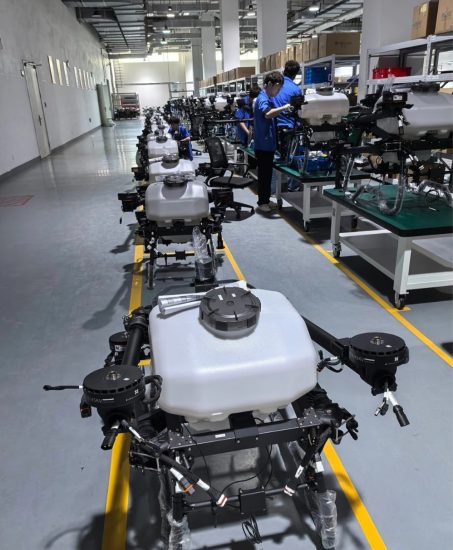


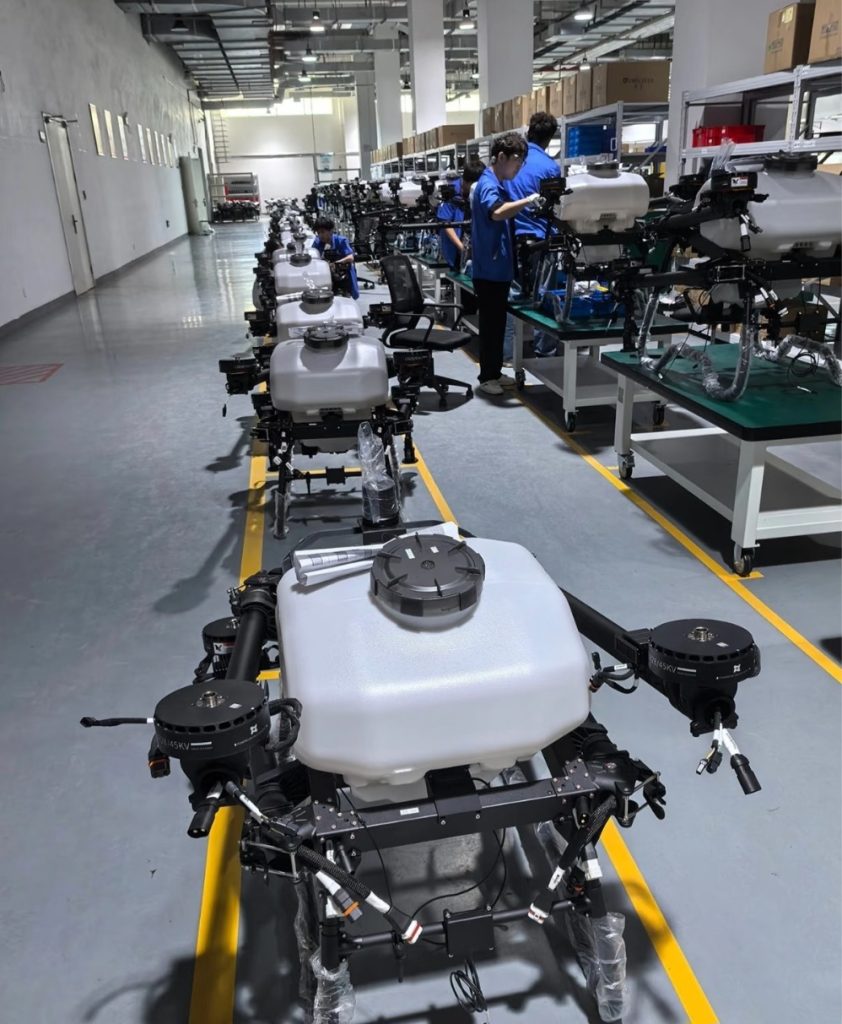
Agriultural drone buyers do not always need a standard product.
A distributor may want its own brand on the aircraft. An agricultural equipment company may need a spraying drone configured for a specific market. A technology business may require a customized flight platform, payload system, battery configuration, or software integration.
This is where agricultural drone OEM and ODM manufacturing becomes important.
OEM and ODM are often used interchangeably, but they represent different levels of customization and manufacturer involvement. Understanding the difference can help international buyers choose the right production model, control development costs, and avoid misunderstandings before placing an order.
This guide explains how agricultural drone OEM and ODM projects work, what can be customized, how prototypes and testing should be handled, and what buyers should consider when selecting a manufacturing partner in China.
What Is Agricultural Drone OEM?
OEM stands for Original Equipment Manufacturer.
In an agricultural drone OEM project, the buyer generally starts with an existing manufacturer platform and requests specific changes or branding.
Typical OEM requirements may include:
-
Company logo
-
Product name
-
Packaging
-
User manuals
-
Labels
-
Accessories
-
Color or appearance
-
Controller branding
-
Product configuration
The aircraft itself may remain largely based on an existing production model.
OEM is often suitable for distributors and businesses that want to launch agricultural drones under their own brand without developing an entirely new aircraft.
What Is Agricultural Drone ODM?
ODM stands for Original Design Manufacturer.
ODM usually involves a deeper level of product development.
Instead of simply branding an existing product, the buyer may request modifications to the aircraft’s design or operating system.
Potential ODM work can include:
-
Airframe modifications
-
Payload redesign
-
Spraying-system customization
-
Fertilizer spreading-system customization
-
Battery configuration
-
Motor and propulsion changes
-
Controller modifications
-
Software adjustments
-
Sensor integration
-
Specialized accessories
An ODM project can therefore require significantly more engineering work than a standard OEM order.
OEM vs ODM Agricultural Drones
The difference can be summarized simply:
Item |
OEM |
ODM |
|---|---|---|
Existing product platform |
Usually |
May be used or redesigned |
Logo |
Yes |
Yes |
Packaging |
Yes |
Yes |
Product appearance |
Possible |
Possible |
Hardware modification |
Limited to moderate |
Moderate to extensive |
Payload customization |
Possible |
More extensive |
Software customization |
Depending on system |
More likely |
Engineering involvement |
Lower |
Higher |
Development cost |
Usually lower |
Usually higher |
Development time |
Usually shorter |
Usually longer |
Best for |
Distributors and private labels |
Customized products and specialized applications |
The exact boundary between OEM and ODM varies between manufacturers, so buyers should define the requested work in writing.
Why Customize an Agricultural Drone?
Customization can solve problems that a standard aircraft cannot.
For example, a buyer may require a particular combination of:
-
Payload capacity
-
Flight endurance
-
Spraying width
-
Flow rate
-
Battery configuration
-
Spreading capacity
-
Controller functions
-
Transport dimensions
A distributor may also need a product that fits its own sales strategy.
Customization can therefore be useful for both technical and commercial reasons.
Agricultural Spraying Drone OEM
Spraying drones are one of the most common platforms considered for OEM projects.
A buyer may want to customize:
-
Tank capacity
-
Pump configuration
-
Nozzle arrangement
-
Spray control
-
Flow monitoring
-
Pipe layout
-
Remote-control interface
-
Accessories
However, changing one component can affect other parts of the aircraft.
For example, increasing the liquid payload changes the aircraft’s total operating weight. That can affect propulsion requirements, battery consumption, flight performance, and structural loading.
For this reason, technical customization should be evaluated as a complete system rather than as an isolated component.
Fertilizer Spreading Drone OEM
Fertilizer spreading drones require a different payload architecture.
Potential customization areas include:
-
Hopper capacity
-
Hopper shape
-
Dispenser design
-
Spreading mechanism
-
Motor configuration
-
Material flow control
-
Remote-control settings
Different fertilizer materials can have different physical characteristics.
Particle size, density, moisture, and flow behavior can influence the spreading system.
A buyer should therefore explain the intended application and material to the manufacturer before finalizing the design.
Heavy Lift Agricultural Drone ODM
Heavy-lift platforms may require deeper engineering consideration.
Increasing payload capacity can affect:
-
Frame strength
-
Motor selection
-
Propeller configuration
-
Battery capacity
-
Power consumption
-
Flight stability
-
Landing system
-
Overall aircraft weight
A specification such as “50 kg payload” should therefore be treated as an engineering requirement rather than simply changing one number in a product listing.
The manufacturer should evaluate the complete system under the intended operating conditions.
What Can Be Customized?
The actual customization range depends on the manufacturer’s engineering capabilities.
Airframe
Possible changes can include:
-
Frame dimensions
-
Arm configuration
-
Landing gear
-
Payload mounting points
-
Structural components
Propulsion System
Possible changes can include:
-
Motors
-
Electronic speed controllers
-
Propellers
-
Power configuration
Any propulsion change should be evaluated together with aircraft weight and payload.
Battery System
Customization may involve:
-
Battery capacity
-
Battery configuration
-
Battery mounting
-
Charging equipment
-
Battery-management requirements
Battery changes can affect aircraft weight and endurance, so testing is important.
Spraying System
Potential modifications include:
-
Tank
-
Pump
-
Nozzles
-
Pipes
-
Flow-control components
-
Spray configuration
Spreading System
Potential modifications include:
-
Hopper
-
Dispenser
-
Spreading mechanism
-
Control settings
Controller
Depending on the platform, buyers may request changes to:
-
User interface
-
Product branding
-
Control functions
-
Display information
-
Remote-control configuration
Software
Software customization can be more complicated than physical branding.
Potential requirements may involve:
-
Flight parameters
-
Payload controls
-
User interface
-
Data handling
-
Navigation-related functions
-
Integration with external systems
The manufacturer should determine whether the requested software change is technically practical before the project begins.
The Agricultural Drone OEM Process
A well-defined OEM project normally follows a structured process.
Step 1: Define the Requirement
The buyer should prepare a clear specification.
Useful information includes:
-
Intended application
-
Target market
-
Payload requirement
-
Flight-time expectations
-
Battery requirement
-
Spraying or spreading system
-
Branding requirements
-
Packaging requirements
The more precise the initial requirement, the easier it is to evaluate the project.
Step 2: Technical Evaluation
The manufacturer reviews the requirements.
At this stage, some requests may be identified as:
-
Standard
-
Customizable
-
Technically difficult
-
Requiring additional development
Not every requested specification can be combined into one aircraft.
For example, maximum payload, long endurance, small size, and low cost can create engineering trade-offs.
Step 3: Select a Base Platform
For many OEM projects, starting with an existing platform can reduce development time.
The manufacturer and buyer can determine which standard model provides the closest technical foundation.
This can reduce unnecessary redesign work.
Step 4: Confirm the Specification
Before production, the buyer and manufacturer should confirm the final specification.
A useful specification document should cover:
-
Aircraft model
-
Dimensions
-
Maximum payload
-
Recommended operating payload
-
Battery
-
Charger
-
Controller
-
Spraying system
-
Spreading system
-
Accessories
-
Branding
-
Packaging
-
Warranty
-
Spare parts
This document becomes an important reference for production and inspection.
Step 5: Prototype or Sample
If the customization is significant, a prototype or sample may be required.
The purpose is to verify whether the proposed configuration works as expected.
The sample can be evaluated for:
-
Physical design
-
Assembly
-
Flight behavior
-
Payload integration
-
Control functions
-
Spraying
-
Spreading
-
Battery performance
A sample approval process can reduce the risk of discovering major problems after mass production begins.
Step 6: Testing
Testing should match the intended application.
For a spraying drone, this can include spraying-system testing.
For a spreading drone, material-discharge testing may be relevant.
For a heavy-lift platform, payload and flight testing become especially important.
The exact testing requirements should be agreed upon before production.
Step 7: Mass Production
After the sample and specifications are approved, production can begin.
A professional manufacturing process should maintain consistency between the approved sample and production units.
Changes to important components or configurations should be communicated to the buyer.
Step 8: Final Inspection
Before shipment, finished units should be inspected according to the agreed specifications.
Depending on the project, inspection can cover:
-
Appearance
-
Assembly
-
Electrical systems
-
Controller
-
Battery
-
Payload system
-
Accessories
-
Packaging
For larger orders, the buyer may also arrange an independent inspection.
Agricultural Drone OEM Packaging
Packaging is an important part of private-label manufacturing.
A buyer may require:
-
Custom product boxes
-
Brand labels
-
User manuals
-
Product stickers
-
Warning labels
-
Accessory packaging
The packaging design should also consider international transportation.
Agricultural drones can contain multiple components, so packaging should protect the aircraft and accessories during handling and shipping.
OEM Minimum Order Quantity
MOQ is one of the first commercial questions buyers should ask.
The minimum order quantity can depend on:
-
Branding requirements
-
Packaging customization
-
Product modifications
-
Component purchasing
-
Production setup
-
Development costs
A standard product with a simple logo may have different requirements from a heavily customized UAV.
Buyers should therefore ask for the MOQ for the exact requested configuration rather than assuming that one MOQ applies to every project.
Agricultural Drone OEM Pricing
OEM pricing is not simply the standard product price plus a logo.
The final cost may include:
-
Aircraft
-
Customized components
-
Engineering
-
Prototype development
-
Tooling
-
Packaging
-
Branding
-
Testing
-
Spare parts
-
Documentation
For ODM projects, engineering and development costs can represent a more significant part of the initial investment.
A detailed quotation should separate major cost items whenever possible.
How to Control OEM Development Costs
Buyers can reduce unnecessary costs by defining priorities early.
Instead of changing every part of an existing aircraft, identify the features that actually matter.
For example:
Essential
-
Payload capacity
-
Battery configuration
-
Spraying system
-
Branding
Optional
-
Appearance changes
-
Custom accessories
-
Advanced software features
This helps the manufacturer focus engineering resources on the most important requirements.
Agricultural Drone OEM Testing
Testing is especially important when a standard product has been modified.
A change in one system can affect another.
For example:
Larger battery → higher weight → higher power demand → different flight performance
Similarly:
Larger liquid tank → higher payload → higher propulsion demand → different endurance
This is why customized agricultural drones should be tested as complete systems.
Quality Control During OEM Production
OEM buyers should establish quality requirements before production.
Possible checkpoints include:
Incoming Inspection
Components are checked before assembly.
Assembly Inspection
Technicians verify mechanical and electrical installation.
Functional Testing
The complete system is powered and checked.
Payload Testing
The agricultural payload system is tested according to the agreed configuration.
Flight Testing
The completed aircraft is tested under appropriate conditions.
Final Inspection
The finished product is inspected before packaging.
Agricultural Drone ODM Development
ODM projects generally require more communication.
The buyer may need to provide:
-
Technical drawings
-
Performance requirements
-
Application information
-
Market requirements
-
Integration specifications
The manufacturer may then develop a proposed technical solution.
The process can involve several design iterations before the final product is approved.
ODM Prototype Development
Prototype development is often one of the most important stages.
The first prototype does not necessarily need to be the final production version.
Testing may reveal issues involving:
-
Weight
-
Balance
-
Heat
-
Power consumption
-
Payload integration
-
Flight stability
-
Structural strength
These findings can lead to design changes before mass production.
Intellectual Property in OEM and ODM Projects
Intellectual property should be discussed before development begins.
The contract should clarify, where applicable:
-
Who owns the customized design
-
Who owns drawings
-
Who owns software modifications
-
Whether the manufacturer can sell the same configuration to other customers
-
Whether the buyer can use the design exclusively
-
How confidential information is handled
The exact legal arrangements depend on the project and the parties involved.
International buyers should obtain appropriate legal advice for important or high-value development projects.
Certifications and Market Compliance
Agricultural drones can be subject to different requirements depending on the destination market.
Potential areas include:
-
Radio equipment
-
Drone operation
-
Battery transportation
-
Product safety
-
Agricultural applications
OEM buyers should identify the destination-market requirements before finalizing the product design.
A manufacturer can provide technical documentation, but the buyer should verify which approvals are actually required for the intended market.
Agricultural Drone OEM for International Distributors
Distributors often use OEM manufacturing to create a differentiated product line.
Instead of competing solely on the standard manufacturer’s product name, the distributor can develop its own:
-
Brand
-
Product range
-
Packaging
-
Marketing materials
-
Sales strategy
-
Customer support system
However, the distributor should maintain accurate technical information.
Private-label branding should not be used to hide important product specifications or limitations.
Agricultural Drone OEM for Agricultural Companies
Agricultural businesses may have specialized operating requirements.
For example, a company working with large farms may prioritize:
-
Larger payload
-
Efficient battery replacement
-
Durable components
-
Simple maintenance
-
Reliable spare-parts supply
Another business may prioritize compact dimensions and easy transportation.
The correct OEM configuration depends on the actual operating environment.
How to Select an Agricultural Drone OEM Manufacturer
Before starting an OEM or ODM project, evaluate the manufacturer carefully.
Manufacturing Capability
Determine whether the company can actually assemble and test the required aircraft.
Engineering Capability
Ask who will handle customization and technical communication.
Product Experience
Review whether the manufacturer has experience with the type of UAV required.
Testing Capability
Ask how customized products are tested.
Production Consistency
Determine how the company maintains the same configuration across production batches.
Spare Parts
Confirm the availability of replacement components.
Technical Support
Ask how international customers receive technical assistance.
Documentation
Confirm which product and technical documents are available.
Questions to Ask an OEM Agricultural Drone Factory
Before signing an OEM agreement, ask:
-
Which existing drone platform is being used?
-
What parts can be customized?
-
What is the MOQ?
-
Is there a prototype fee?
-
Is engineering development charged separately?
-
How long does sample development take?
-
What testing is performed?
-
Can the buyer approve the sample before mass production?
-
How are production changes controlled?
-
What spare parts are available?
-
What packaging options are available?
-
What documentation is provided?
-
What warranty terms apply?
-
How is technical support provided?
-
How are intellectual-property rights handled?
These questions can reveal potential problems before substantial money is committed.
Common Mistakes in Agricultural Drone OEM Projects
Focusing Only on Price
A low initial quotation may not include customization, testing, packaging, or development costs.
Changing Too Many Components
Excessive customization can increase cost and development time without producing meaningful commercial benefits.
Skipping the Prototype
For significant hardware changes, moving directly to mass production can increase risk.
Not Defining Specifications
Verbal agreements can create misunderstandings.
A written specification is much safer.
Ignoring Spare Parts
An aircraft may perform well initially but become difficult to maintain if replacement components are unavailable.
Underestimating Regulations
A product that can technically be manufactured may still require additional approvals or operating permissions in the destination market.
A Practical OEM/ODM Buying Workflow
A straightforward workflow is:
Requirement → Technical Evaluation → Base Platform → Quotation → Specification → Prototype → Testing → Approval → Mass Production → Inspection → Shipment → After-Sales Support
This structure gives both sides clear checkpoints.
When Should You Choose OEM?
OEM may be appropriate when:
-
You want your own brand
-
You need limited customization
-
You want a faster product launch
-
You prefer an existing platform
-
You want to control initial development costs
When Should You Choose ODM?
ODM may be more appropriate when:
-
Existing products do not meet your requirements
-
You need significant hardware changes
-
You require specialized payload integration
-
You need software customization
-
You are developing a differentiated product
The best choice depends on the depth of customization required.
Building a Long-Term OEM Partnership
An agricultural drone OEM relationship can become more valuable over time.
Once a product configuration has been validated, future orders can become easier to manage.
A long-term relationship may include:
-
Product improvements
-
Spare-parts planning
-
New models
-
Packaging updates
-
Additional accessories
-
Market-specific configurations
-
Technical support
For distributors, this can be more valuable than repeatedly changing suppliers based only on the lowest quotation.
Final Thoughts
Agricultural drone OEM and ODM manufacturing gives international buyers more flexibility than purchasing a completely standard product.
OEM is generally more suitable for branding and limited customization, while ODM involves deeper product development and engineering.
The most important principle is to treat the agricultural drone as an integrated system.
Changes to the battery, payload, propulsion system, frame, software, or controller can affect the performance of the complete aircraft.
A reliable OEM or ODM project should therefore follow a clear process:
Define requirements → evaluate the design → confirm specifications → build a sample → test the aircraft → approve the configuration → begin production → inspect the finished products.
For international distributors and agricultural businesses, this approach can reduce misunderstandings and create a stronger foundation for long-term cooperation with a Chinese agricultural drone manufacturer.
FAQ
What is agricultural drone OEM?
Agricultural drone OEM usually means manufacturing an existing drone platform according to a buyer’s branding or specified requirements.
What is agricultural drone ODM?
Agricultural drone ODM involves deeper customization or product development, potentially including hardware, payload, software, battery, or airframe changes.
What is the difference between OEM and ODM?
OEM generally starts with an existing product and focuses on branding or limited modifications. ODM normally involves greater engineering and product-development work.
Can I put my own logo on an agricultural drone?
Yes, private-label branding can be part of an OEM project. The exact options depend on the manufacturer and product.
Can the spraying system be customized?
Depending on the platform, buyers may be able to customize the tank, pump, nozzles, hoses, flow-control components, or other spraying-system elements.
Can a fertilizer spreading drone be customized?
Yes. Potential customization can include the hopper, dispenser, spreading mechanism, motor, and control configuration.
Can a heavy lift drone be customized?
Potentially. Heavy-lift customization may involve the frame, propulsion system, battery, payload mounting, controller, and other systems. Any major change should be evaluated and tested as a complete aircraft.
Do OEM agricultural drones require a prototype?
A prototype is not necessarily required for simple branding changes. However, it can be highly useful when significant hardware or software modifications are involved.
How much does agricultural drone OEM cost?
There is no single OEM price. Cost depends on the base aircraft, customization, engineering, prototype development, packaging, branding, testing, and order quantity.
What is the MOQ for agricultural drone OEM?
MOQ varies according to the manufacturer and customization requirements. A simple private-label order may have different requirements from a heavily customized product.
Can an agricultural drone factory develop a completely new drone?
Some manufacturers may have sufficient engineering capabilities for new product development, while others are better suited to modifying existing platforms. Buyers should evaluate engineering capabilities before starting a full ODM project.
How long does agricultural drone ODM development take?
The timeline depends on the complexity of the design. Simple modifications can be relatively quick, while a new aircraft platform may require multiple prototype and testing stages.
Who owns the customized agricultural drone design?
Ownership depends on the contract. Buyers should clearly define ownership of drawings, software, customized hardware, and other intellectual property before development begins.
Can OEM agricultural drones be sold internationally?
They can be manufactured for international markets, but the buyer must determine whether the product meets the aviation, radio, battery, import, agricultural, and other applicable requirements in each destination market.
What should I ask an agricultural drone OEM manufacturer?
Ask about customization capability, MOQ, prototype costs, engineering fees, testing, production lead time, quality control, spare parts, warranty, documentation, technical support, and intellectual-property arrangements.
THE END


No comments yet