

When purchasing agricultural drones from China, international buyers often begin with product specifications, prices, and payload capacity.
Those factors are important, but they do not tell the entire story.
For agricultural drones, the factory behind the product can have a direct influence on product consistency, assembly quality, testing procedures, spare-parts availability, customization, and long-term technical support.
This is particularly important for distributors and commercial buyers who may purchase agricultural drones repeatedly rather than making a single equipment purchase.
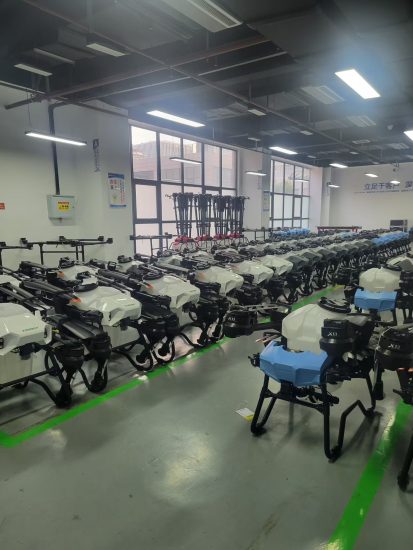
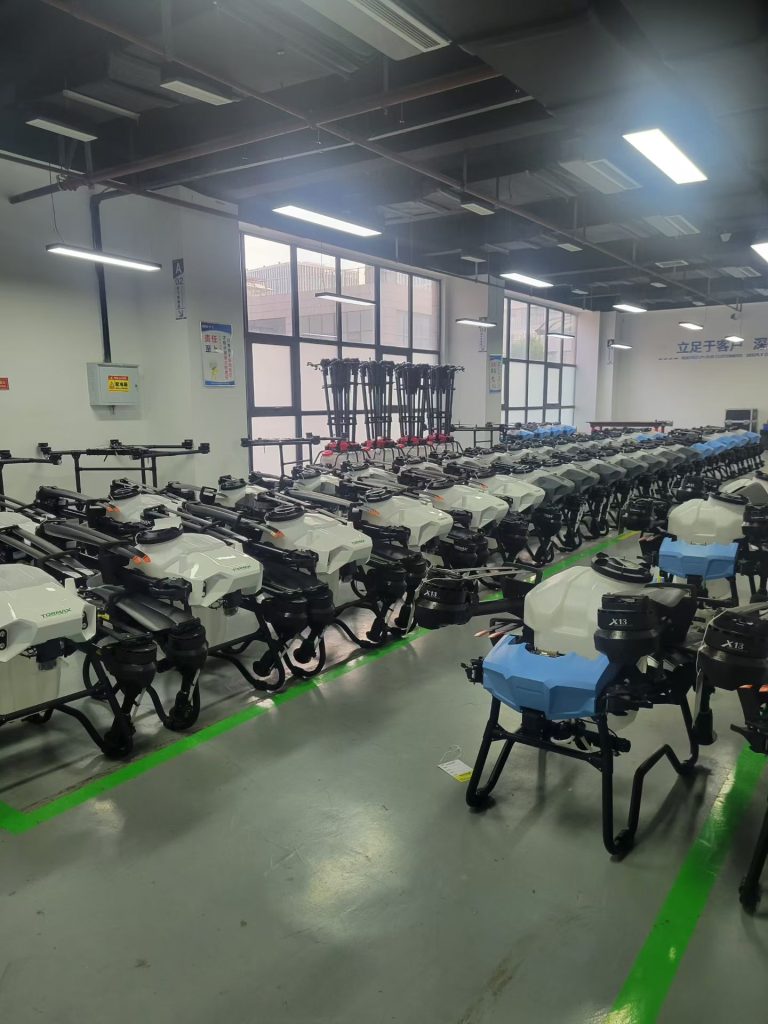
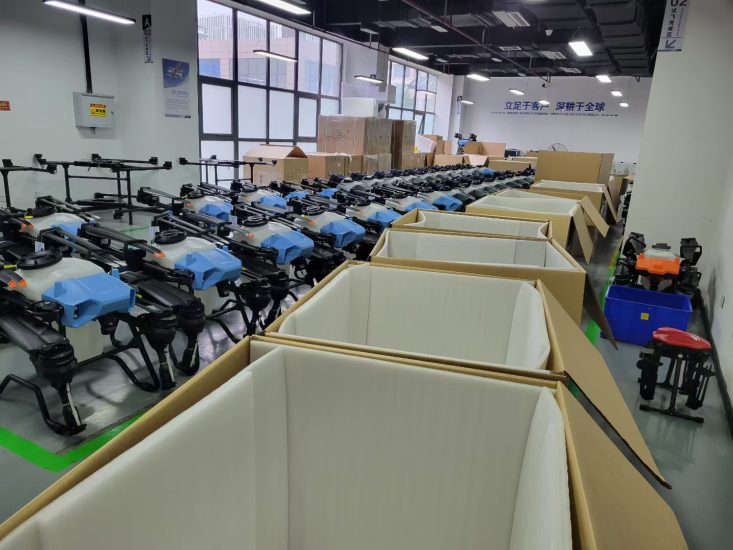
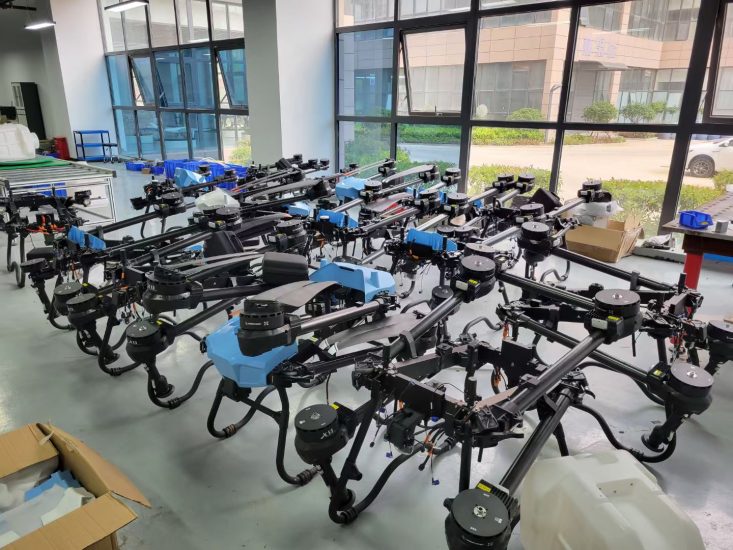
A capable agricultural drone factory in China should be able to demonstrate more than an online product catalog. Buyers should be able to understand how the drones are designed, assembled, configured, tested, packaged, and supported.
This guide explains how agricultural drones are manufactured, what quality-control procedures buyers should look for, and how to evaluate a Chinese agricultural drone factory before placing an order.
What Is an Agricultural Drone Factory?
An agricultural drone factory is a manufacturing facility involved in producing, assembling, testing, or configuring UAV systems designed for agricultural applications.
Depending on the manufacturer, production capabilities may include:
-
Agricultural spraying drones
-
Fertilizer spreading drones
-
Crop protection UAVs
-
Mapping drones
-
Agricultural inspection drones
-
Heavy lift agricultural platforms
-
Customized agricultural UAV systems
A complete agricultural drone is normally made from many integrated systems.
These can include:
-
Airframe
-
Motors
-
Propellers
-
Electronic speed controllers
-
Flight controller
-
Navigation system
-
Battery
-
Charger
-
Remote controller
-
Spraying system
-
Spreading system
-
Sensors
-
Landing system
-
Communication components
The factory’s job is to ensure that these individual components operate together as a complete aircraft.
Why Buy Agricultural Drones Directly From a Factory?
Buying directly from a manufacturer can provide advantages for certain international buyers.
Better Product Communication
Direct communication with the manufacturer can make it easier to discuss:
-
Product specifications
-
Customization
-
Technical requirements
-
Spare parts
-
Packaging
-
Production schedules
OEM and ODM Opportunities
Manufacturers may be able to provide private-label products or customized UAV solutions.
Production Consistency
For repeat buyers, working directly with the production source can make it easier to maintain a consistent configuration across multiple orders.
Technical Support
Direct contact with the engineering or technical team may help resolve product questions more efficiently.
However, buyers should verify that a supplier actually controls its manufacturing and assembly processes rather than assuming that every company describing itself as a factory operates the same way.
How Agricultural Drones Are Manufactured
The manufacturing process varies according to the aircraft design, but a professional production workflow generally involves several stages.
1. Product Design
Before production begins, the manufacturer defines the aircraft architecture.
This can include:
-
Frame dimensions
-
Payload capacity
-
Motor configuration
-
Propeller configuration
-
Battery system
-
Flight controller
-
Navigation equipment
-
Agricultural payload system
The design needs to balance payload, endurance, structural strength, control performance, and operating requirements.
2. Component Selection
An agricultural drone contains numerous mechanical and electronic components.
The manufacturer must select components that are compatible with the intended aircraft configuration.
Typical components include:
-
Motors
-
Propellers
-
Controllers
-
Batteries
-
Pumps
-
Nozzles
-
Hoppers
-
Flight-control equipment
-
Sensors
Component selection can influence both performance and maintenance requirements.
3. Incoming Component Inspection
Before components enter production, manufacturers can inspect them according to internal quality procedures.
Depending on the component, inspection may involve:
-
Physical condition
-
Dimensions
-
Electrical characteristics
-
Compatibility
-
Model identification
-
Functional testing
This stage helps reduce the risk of defective or incorrect components entering assembly.
4. Airframe Assembly
The structural components are assembled according to the product configuration.
Important areas include:
-
Center frame
-
Motor arms
-
Landing system
-
Battery mounts
-
Payload mounting points
The assembly must provide sufficient structural support for the intended aircraft configuration.
5. Propulsion System Installation
Motors, electronic controllers, propellers, and power components are installed and configured.
The propulsion system must be matched to the aircraft’s:
-
Total weight
-
Payload
-
Battery system
-
Propeller configuration
-
Intended operating conditions
For agricultural drones, the propulsion system may need to support repeated takeoffs and flights while carrying agricultural payloads.
6. Flight-Control Integration
The flight-control system is integrated with the aircraft.
Depending on the model, this can include:
-
Flight controller
-
Navigation system
-
Sensors
-
Remote controller
-
Communication equipment
The system must be configured for the specific aircraft rather than treated as an independent component.
7. Agricultural Payload Integration
The payload system depends on the application.
For spraying drones, this may include:
-
Tank
-
Pump
-
Hoses
-
Nozzles
-
Flow-control components
For spreading drones, this may include:
-
Hopper
-
Dispenser
-
Spreading mechanism
-
Drive motor
The payload system needs to work together with the flight-control and power systems.
8. Software and System Configuration
After mechanical and electrical assembly, the drone may require configuration of:
-
Flight parameters
-
Controller settings
-
Navigation functions
-
Payload controls
-
Safety functions
The exact configuration depends on the product.
9. Functional Testing
Before flight testing, the manufacturer can conduct functional checks.
These may include:
-
Power-on testing
-
Motor operation
-
Controller communication
-
Sensor operation
-
Battery operation
-
Pump operation
-
Spreading-system operation
Problems identified at this stage can be addressed before the aircraft proceeds to flight testing.
10. Flight Testing
Flight testing is an important stage of agricultural drone production.
A complete aircraft should be evaluated as a flying system.
Depending on the manufacturer’s procedures, testing may include:
-
Takeoff
-
Hover
-
Forward flight
-
Turning
-
Landing
-
Remote-control response
-
Navigation functions
-
Payload operation
For agricultural spraying drones, the manufacturer may also evaluate the spraying system during operational testing.
Agricultural Drone Quality Control
Quality control should not be limited to checking whether a drone looks good.
A complete quality process can cover the product from incoming components through final shipment.
Component Quality
The manufacturer should have a method for identifying and checking important components.
Assembly Quality
Technicians should verify that mechanical and electrical components are installed correctly.
Electrical Quality
Electrical systems should be checked for proper connections and normal operation.
Software Configuration
The aircraft should be configured according to the correct product version.
Functional Testing
The complete system should be tested before flight.
Flight Testing
The finished drone should be tested according to the manufacturer’s procedures.
Final Inspection
Before packaging, the aircraft should undergo a final inspection.
Why Flight Testing Matters
An agricultural drone is different from a conventional electronic product.
A component can pass an individual inspection and still experience problems after being integrated into the complete aircraft.
Flight testing helps evaluate the interaction between:
-
Motors
-
Propellers
-
Flight controller
-
Battery
-
Frame
-
Navigation system
-
Payload
For this reason, buyers should ask manufacturers whether complete aircraft are flight-tested before shipment.
Spraying Drone Factory Testing
Agricultural spraying drones require additional attention because the spraying system is part of the aircraft’s working function.
Possible checks can include:
-
Pump operation
-
Liquid flow
-
Nozzle operation
-
Hose connections
-
Tank installation
-
Flow-control response
The exact testing process depends on the manufacturer’s product design.
Buyers should ask how the manufacturer verifies spraying performance before delivery.
Fertilizer Spreading Drone Factory Testing
A fertilizer spreading drone requires a different payload system.
Important areas can include:
-
Hopper installation
-
Material discharge
-
Spreader operation
-
Dispenser control
-
Motor operation
-
Flow adjustment
Because different granular materials can behave differently, buyers should discuss the intended material with the manufacturer.
Heavy Lift Agricultural Drone Testing
For higher-payload agricultural platforms, additional attention should be paid to:
-
Structural strength
-
Motor performance
-
Battery demand
-
Payload mounting
-
Flight stability
-
Landing performance
The actual payload should be tested according to the manufacturer’s defined operating conditions.
A maximum payload figure should not automatically be interpreted as the recommended payload for continuous commercial operation.
Factory Quality Documentation
International buyers may want to understand what information a manufacturer can provide regarding quality control.
Depending on the company and product, this may include:
-
Product specifications
-
Inspection records
-
Test procedures
-
User manuals
-
Maintenance documentation
-
Product certificates
-
Warranty documentation
Not every manufacturer will provide the same documents.
The important point is to ask what documentation is available before placing the order.
How to Verify a Chinese Agricultural Drone Factory
A supplier’s website alone does not prove manufacturing capability.
Buyers can ask practical questions.
Ask About the Production Process
Ask:
-
Where are the drones assembled?
-
Which components are assembled in-house?
-
Which parts are sourced externally?
-
Where does final testing take place?
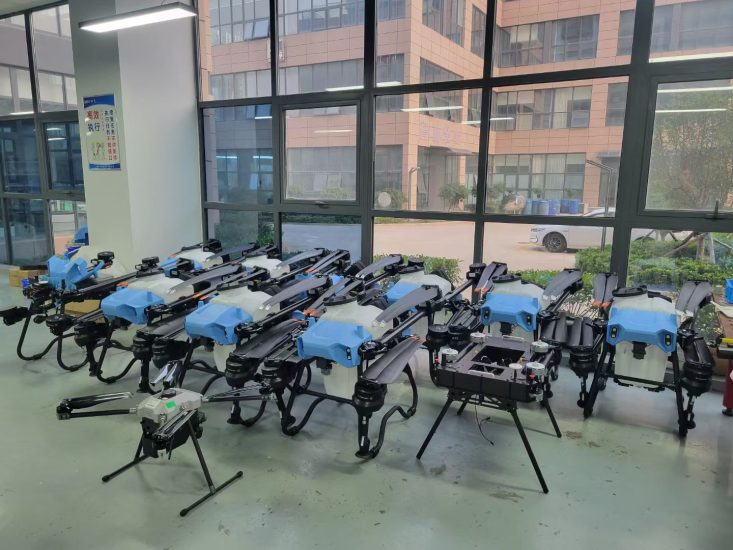
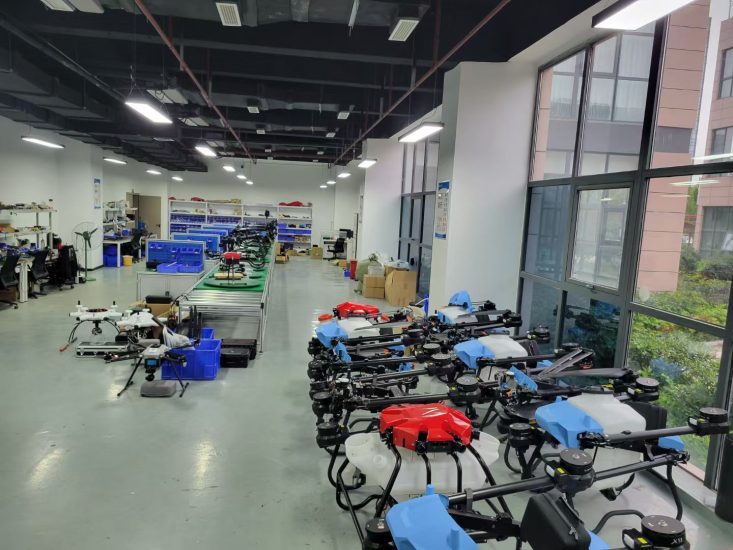
Request Factory Evidence
Where appropriate, buyers can request:
-
Factory photographs
-
Production-area photographs
-
Assembly photographs
-
Testing-area photographs
-
Product inspection photographs
-
Packaging photographs
For larger orders, a factory visit or third-party inspection may also be considered.
Ask About Production Capacity
If the buyer plans repeat orders, determine whether the manufacturer can maintain supply at the expected volume.
Ask About Product Consistency
For distributors, consistent specifications between batches are important.
Ask whether product configurations can change between production batches and how changes are communicated.
Agricultural Drone Factory vs. Trading Supplier
International buyers may encounter both manufacturers and trading companies.
Neither category is automatically good or bad.
The important issue is whether the supplier can provide the capabilities required for the project.
A trading supplier may be useful when it provides:
-
Product sourcing
-
Export services
-
Multi-product procurement
-
Logistics support
A direct manufacturer may be more suitable when the buyer requires:
-
Product customization
-
OEM
-
ODM
-
Engineering communication
-
Factory-level technical support
-
Repeat production
The correct choice depends on the buyer’s requirements.
OEM Agricultural Drone Manufacturing
OEM allows buyers to develop products under their own brand or according to specified requirements.
Possible OEM services include:
-
Logo
-
Labels
-
Packaging
-
Manuals
-
Accessories
-
Product configuration
Before starting an OEM project, clarify:
-
Minimum order quantity
-
Branding specifications
-
Packaging requirements
-
Sample requirements
-
Production schedule
-
Warranty
-
Spare-parts support
A clear specification should be agreed upon before production.
ODM Agricultural Drone Manufacturing
ODM involves deeper customization or product development.
Depending on the project, ODM may include:
-
Airframe changes
-
Payload modifications
-
Battery configuration
-
Spraying-system changes
-
Spreading-system changes
-
Controller configuration
-
Software customization
-
Specialized accessories
ODM projects generally require greater engineering involvement than standard OEM production.
How a Factory Handles Customized Agricultural Drones
A professional customization process may follow several stages.
Requirement Analysis
The buyer explains the intended application and technical requirements.
Engineering Evaluation
The manufacturer determines whether the requested configuration is technically practical.
Design
Engineers develop or modify the product configuration.
Prototype
A prototype or sample may be produced.
Testing
The prototype is evaluated before mass production.
Production
Once the configuration is approved, production can begin.
Quality Control
Production units are inspected according to the agreed specifications.
Agricultural Drone Factory Capacity
Production capacity should be evaluated carefully.
A factory may have the ability to assemble a certain number of drones, but buyers should also consider:
-
Component availability
-
Assembly capacity
-
Testing capacity
-
Battery supply
-
Packaging capacity
-
Production scheduling
For large orders, component supply can become just as important as assembly capacity.
Lead Time and Production Planning
Before ordering, ask for a realistic production schedule.
The timeline may include:
-
Order confirmation
-
Component preparation
-
Assembly
-
Configuration
-
Testing
-
Packaging
-
Shipment
Customized products may require additional time.
Buyers should avoid relying on an estimated delivery date without confirming the actual product configuration and production schedule.
Spare Parts From the Factory
A reliable supply chain should include spare parts.
Common agricultural drone replacement components may include:
-
Propellers
-
Motors
-
Batteries
-
Chargers
-
Pumps
-
Nozzles
-
Hoses
-
Controllers
-
Electronic components
-
Structural parts
For distributors, it may be useful to purchase commonly required spare parts together with the initial order.
After-Sales Support
The relationship with an agricultural drone factory should not necessarily end when the shipment leaves China.
International customers may need:
-
Technical instructions
-
Maintenance guidance
-
Troubleshooting
-
Spare-parts support
-
Product configuration information
-
Software assistance
Before purchasing, ask how technical support is provided.
Packaging for International Shipment
Agricultural drones often include multiple components and accessories.
Packaging should protect:
-
Aircraft frame
-
Motors
-
Propellers
-
Batteries
-
Controller
-
Agricultural payload system
-
Accessories
The manufacturer should understand the packaging requirements associated with international transportation.
Battery transportation may also involve additional shipping requirements depending on the battery type and destination.
Export Documentation
International buyers should clarify which documents will be supplied with the shipment.
Depending on the transaction and destination, documentation may include:
-
Commercial invoice
-
Packing list
-
Product information
-
User documentation
-
Battery-related documents
-
Export documents
Specific requirements vary by destination and shipping method.
Regulations for Agricultural Drones
Agricultural drones can be subject to local aviation and agricultural regulations.
Before importing or operating an aircraft, buyers should verify applicable requirements in the destination country.
Potential considerations can include:
-
Drone registration
-
Operator requirements
-
Radio requirements
-
Flight restrictions
-
Agricultural chemical regulations
-
Battery transportation
-
Import requirements
A manufacturer can provide technical documentation, but local operators remain responsible for complying with applicable laws.
How to Choose the Right Agricultural Drone Factory in China
A practical evaluation can use the following framework.
Category |
What to Evaluate |
|---|---|
Factory |
Actual assembly and production capability |
Engineering |
Product development and customization |
Products |
Spraying, spreading and other UAV systems |
Quality |
Component and assembly inspection |
Testing |
Functional and flight testing |
OEM |
Branding and packaging |
ODM |
Custom product development |
Capacity |
Ability to support repeat orders |
Spare Parts |
Availability and supply |
Support |
Technical assistance |
Documentation |
Product and export documents |
Packaging |
Protection during international shipping |
This approach helps buyers evaluate the complete supplier rather than only the product price.
Questions to Ask Before Visiting or Ordering From a Factory
Before placing an order, ask:
-
Are the agricultural drones assembled in your own facility?
-
Which production processes are handled internally?
-
How are incoming components inspected?
-
How are finished drones tested?
-
Are complete aircraft flight-tested?
-
How are spraying systems tested?
-
How are fertilizer spreading systems tested?
-
What spare parts are available?
-
Can you provide OEM services?
-
Can you develop customized UAV products?
-
What is the normal production lead time?
-
Can you support repeat orders?
-
What technical support is available?
-
What product documentation is supplied?
-
How are products packaged for export?
The answers can provide a much clearer picture of the manufacturer’s capabilities.
What International Distributors Should Look For
Distributors have different requirements from individual farm operators.
A distributor may need:
-
Stable product supply
-
Consistent specifications
-
Competitive wholesale pricing
-
OEM branding
-
Spare parts
-
Marketing materials
-
Technical documentation
-
Training
-
Long-term support
The manufacturer should be evaluated as a potential business partner rather than simply a one-time supplier.
Factory Transparency and Buyer Confidence
Transparency can help reduce uncertainty when sourcing technical equipment internationally.
Useful information can include:
-
Factory photographs
-
Manufacturing information
-
Product specifications
-
Testing procedures
-
Company information
-
Certifications where applicable
-
Warranty policies
-
Spare-parts information
-
Real product images
Manufacturers should avoid making technical or performance claims that cannot be supported by actual product information or testing.
For buyers, evidence is generally more useful than marketing language.
Why Real Factory Evidence Matters for SEO and Buyers
For an agricultural drone manufacturer, the website should not only target keywords.
It should demonstrate expertise.
A strong factory page can show:
-
Product development
-
Assembly
-
Quality inspection
-
Flight testing
-
Packaging
-
Engineering
-
Customer support
This type of information can help both search engines and potential buyers understand what the company actually does.
For a manufacturer website, real evidence is more valuable than simply publishing another generic article about drones.
Building a Strong Agricultural Drone Manufacturing Business
A factory’s value is not limited to its ability to assemble a drone.
Long-term manufacturing capability can include:
Engineering → Production → Testing → Quality Control → Export → Spare Parts → Technical Support → Product Development
When these functions work together, the manufacturer can support customers throughout the product lifecycle.
Final Thoughts
Choosing an agricultural drone factory in China should involve more than comparing prices.
Buyers should investigate how the manufacturer designs, assembles, tests, and supports its products.
The most important areas to evaluate include:
Factory capability + engineering + component quality + assembly + flight testing + agricultural payload testing + OEM/ODM + spare parts + technical support.
A manufacturer that can clearly explain its production and testing process gives international buyers a better basis for making purchasing decisions.
Whether the requirement is an agricultural spraying drone, fertilizer spreading drone, heavy lift agricultural UAV, or customized platform, the factory’s manufacturing capability can have a major influence on the long-term value of the equipment.
For distributors and commercial buyers, the goal should not simply be to find the cheapest agricultural drone factory.
The better objective is to find a manufacturing partner that can provide consistent products, practical technical support, reliable spare-parts access, and the ability to support future orders and customization.
FAQ
What is an agricultural drone factory?
An agricultural drone factory is a production facility involved in manufacturing, assembling, configuring, and testing UAV systems designed for agricultural applications.
How can I verify whether a Chinese drone supplier is a real factory?
Ask about its production process, assembly location, testing procedures, factory facilities, production capacity, and OEM/ODM capabilities. For larger projects, a factory visit or independent inspection may provide additional verification.
What does an agricultural drone factory manufacture?
Depending on the company, it may manufacture or assemble spraying drones, fertilizer spreading drones, mapping UAVs, inspection drones, heavy lift platforms, and customized agricultural drone systems.
Do agricultural drone factories provide OEM?
Many manufacturers can provide OEM services such as branding, labels, packaging, manuals, and selected product configurations. The exact options depend on the manufacturer.
What is ODM agricultural drone manufacturing?
ODM involves deeper customization or product development. It can include changes to the airframe, payload system, battery, controller, software, or other components.
Why is flight testing important?
Flight testing evaluates the complete aircraft after its mechanical and electronic systems have been integrated. It can help identify problems that may not be visible during individual component inspection.
How are agricultural spraying drones tested?
Testing can include checking the tank, pump, hoses, nozzles, flow-control system, electrical components, and complete aircraft operation. The exact procedure depends on the product.
How are fertilizer spreading drones tested?
The factory may test the hopper, dispenser, spreading mechanism, motor, control system, and material discharge. The actual performance can depend on the material being distributed.
What spare parts should an agricultural drone factory provide?
Common spare parts can include propellers, motors, batteries, chargers, pumps, nozzles, hoses, electronic components, controllers, and structural parts.
Can a factory customize an agricultural drone?
Depending on its engineering capabilities, a factory may customize the airframe, payload system, battery configuration, controller, software, accessories, or branding.
What should distributors ask an agricultural drone factory?
Distributors should ask about production capacity, product consistency, OEM branding, spare parts, technical support, warranty, packaging, documentation, production lead time, and future product development.
Is the cheapest agricultural drone factory the best choice?
Not necessarily. The total value of a supplier also depends on product quality, testing, spare parts, technical support, production consistency, and long-term cooperation.
What documents should I request before importing agricultural drones?
Depending on the transaction and destination, buyers may need commercial, packing, product, battery, export, and other applicable documentation. The exact requirements depend on the destination market and shipping method.
Can agricultural drones from China be sold internationally?
They can be sourced for international markets, but buyers and operators must verify the applicable import, aviation, radio, battery transportation, agricultural, and operational requirements in each destination market.
What makes a good agricultural drone factory?
A strong factory should be able to demonstrate appropriate manufacturing capability, engineering support, quality control, complete-aircraft testing, spare-parts supply, technical assistance, and the ability to maintain consistent product configurations.
THE END


No comments yet