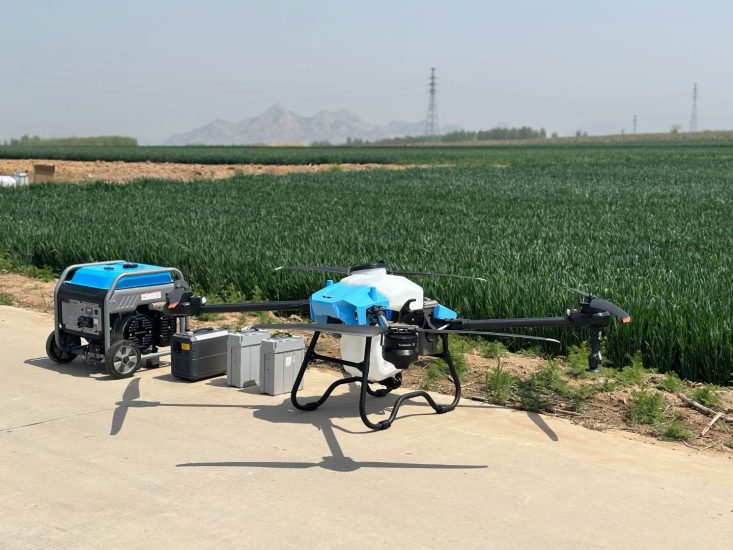


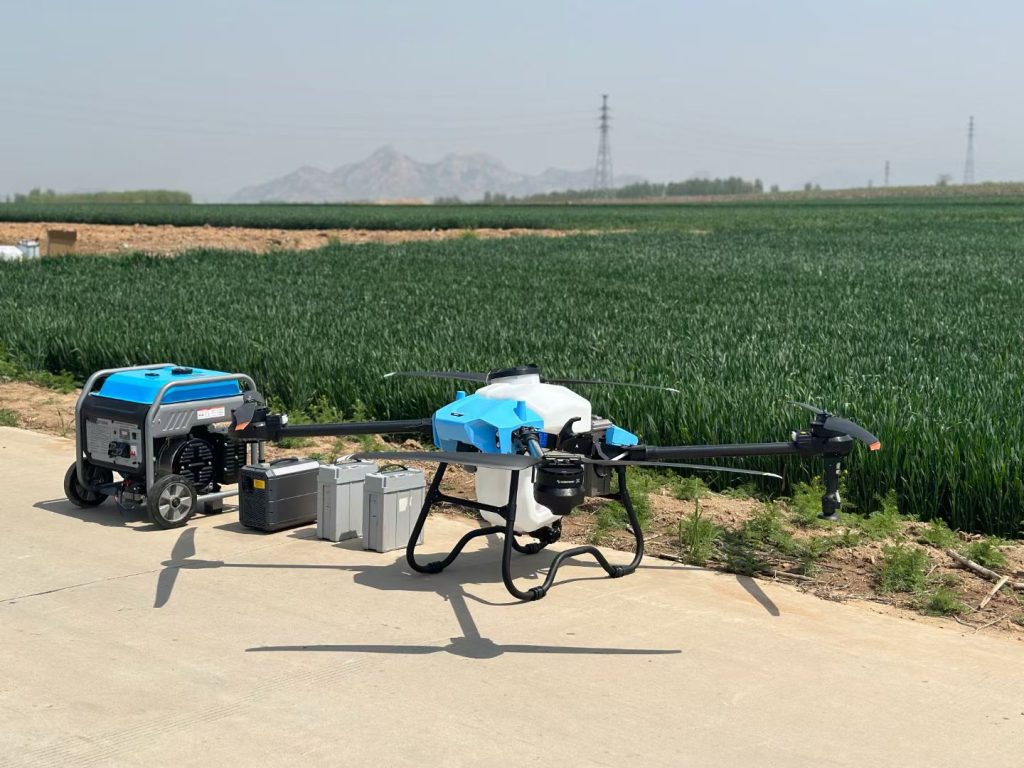
Choosing an agricultural drone is not a matter of finding the drone with the largest tank, the longest advertised flight time, or the highest payload.
The right drone is the one that fits the way your farm actually operates.
A rice farmer working on wet fields has different requirements from a fruit grower working between rows of trees. A large wheat farm has different priorities from a vegetable farm with small and irregular plots. An agricultural spraying contractor may care more about daily output and battery turnaround than a farmer who uses the drone only during certain crop-protection periods.
This is why agricultural drone selection should start with the farm, not the product catalog.
Before choosing a model, you need to understand five things:
What are you spraying?
Where are you spraying?
How much area must you cover?
How often will the drone operate?
What limits your productivity today?
Once these questions are clear, choosing the aircraft becomes much easier.
Don’t Start With the Drone Model
Many buyers begin their search by comparing product names.
They look at:
- Tank capacity
- Maximum payload
- Flight time
- Number of nozzles
- Spray width
- Battery capacity
- Price
These specifications are useful, but they should come later.
The first step is to describe your agricultural operation.
For example:
“I manage 600 hectares of rice and need to complete pesticide applications during a short treatment window.”
This requirement immediately tells a manufacturer more than:
“I need a 30L agricultural drone.”
The first statement describes the business problem.
The second only describes a product specification.
A good manufacturer should be able to work backward from your operating requirements and recommend a suitable configuration.
MSOEN’s current guide to choosing an agricultural drone for your farm follows the same principle: farm size, crop, terrain, spraying requirements, battery capacity, operating cost and support all need to be considered together.
Step 1: Identify the Crop Before Choosing the Drone
Crop type can change the way the drone needs to operate.
There is no universal spraying configuration that is equally effective for every crop.
Rice
Rice fields can create difficult ground conditions for conventional equipment, particularly when fields are wet or flooded.
An agricultural drone can operate above the crop without putting heavy equipment directly into the field.
For rice operations, buyers should pay attention to:
- Stable flight
- Spray uniformity
- Route planning
- Battery endurance
- Application rate
- Field coverage
- Weather conditions
The priority is often efficient coverage over relatively open areas.
Wheat and Corn
Large field crops are generally easier to map and navigate than orchards.
For these applications, buyers may place greater emphasis on:
- Daily coverage
- Spray width
- Flight speed
- Tank capacity
- Battery turnaround
- Refill efficiency
- Automated route planning
If the farm has hundreds or thousands of hectares, the difference between a short and long operating cycle can become significant.
Soybeans and Similar Field Crops
Soybean operations may require repeated crop-protection applications during different growth stages.
For these farms, reliability can become more important than simply maximizing payload.
A drone that can be operated consistently during the required spraying window may be more valuable than a larger aircraft that is difficult to transport or maintain.
Orchards
Orchards are a completely different operating environment.
The aircraft may need to work around:
- Trees
- Branches
- Uneven terrain
- Slopes
- Narrow rows
- Different canopy heights
Here, maneuverability, obstacle detection, terrain following, flight stability and spray performance can become more important than simply increasing tank capacity.
Vineyards
Vineyards can also present narrow operating corridors and uneven terrain.
A drone that is excellent for a large open field may not necessarily be the best choice for vineyard work.
Before buying, check:
- Row spacing
- Terrain
- Crop height
- Required flight altitude
- Spray pattern
- Turning space
The more constrained the field, the more important aircraft maneuverability becomes.
Step 2: Calculate the Area You Actually Need to Treat
Farm size is important, but total farm acreage is not enough.
Imagine two farms, each with 500 hectares.
Farm A consists of several large, continuous fields.
Farm B consists of hundreds of small plots separated by roads, buildings, irrigation channels and trees.
They have the same total acreage.
But their drone requirements can be completely different.
For this reason, calculate:
Total area
Average field size
Distance between fields
Average distance to the refill station
Daily treatment target
Available working hours
These numbers will tell you more than the total farm acreage alone.
The Daily Target Matters More Than the Total Farm Size
Suppose you have 1,000 hectares.
You do not necessarily need to spray all 1,000 hectares in one day.
Perhaps your actual target is 150 hectares per day.
That changes the equipment calculation.
Now consider a commercial spraying contractor with several customers.
The contractor may need to complete:
- 100 hectares Monday
- 200 hectares Tuesday
- 300 hectares Wednesday
In this situation, drone productivity becomes directly connected to business revenue.
The important question becomes:
How much useful agricultural work can the aircraft complete during the available working window?
That includes more than flight time.
It includes:
- Refilling
- Battery changes
- Charging
- Transportation
- Setup
- Cleaning
- Route changes
- Maintenance
A drone with excellent flight specifications can still have poor daily productivity if the supporting workflow is inefficient.
Step 3: Choose Tank Capacity Based on Your Workflow
Tank capacity is important, but it should not be selected independently.
A 10L drone, 20L drone, 30L drone, 50L drone or higher-capacity aircraft can all be appropriate for different operations.
The correct question is:
How much liquid should the drone carry before the next refill?
Consider three situations.
Situation A: Refill Station Is Very Close
If the refill station is next to the field, a smaller tank may be perfectly practical.
The drone can return, refill quickly, and get back to work.
Situation B: Refill Station Is Moderately Far Away
A larger tank becomes more valuable because each refill cycle represents additional travel and downtime.
Situation C: Refill Station Is Far Away
Payload capacity can become a major productivity factor.
A larger aircraft may reduce the number of trips required to the refill point.
However, the larger aircraft also needs adequate battery capacity and propulsion power.
This is why tank capacity should always be evaluated together with battery performance.
Step 4: Don’t Confuse Tank Capacity With Payload Capability
This is one of the easiest mistakes for new agricultural drone buyers to make.
A product may be described as a:
30L agricultural drone
or
50KG agricultural drone
But these descriptions do not necessarily mean the same thing.
You need to distinguish between:
- Tank volume
- Liquid payload
- Maximum payload
- Recommended operating payload
- Empty aircraft weight
- Battery weight
- Maximum takeoff weight
For example, a 50L tank does not automatically mean the aircraft should always operate at its maximum possible load.
The manufacturer should provide a clear operating specification.
For higher-payload agricultural applications, MSOEN’s 50KG Agricultural Spraying Drone Manufacturer provides a useful example of the type of system buyers should examine, including the aircraft, spraying system, navigation, battery and commercial requirements.
Step 5: Look at Full-Load Flight Time
A flight-time figure without a payload is not particularly useful for a spraying-drone buyer.
An agricultural drone is expected to work while carrying:
- Liquid
- Tank
- Pumps
- Spray components
- Battery
- Other equipment
The aircraft therefore needs to be evaluated under realistic working conditions.
Ask the manufacturer:
What is the expected flight time with the normal operating payload?
Also ask:
- What battery is used?
- What is the battery capacity?
- What is the recommended operating payload?
- What flight conditions were used for the test?
- How much reserve battery is recommended?
- How long does battery replacement take?
This is more useful than comparing two empty-aircraft flight-time numbers.
Battery Logistics Can Determine Whether a Drone Is Practical
Imagine you purchase a drone capable of long flights.
But you only have one battery.
The aircraft finishes a flight.
Now the operation stops while the battery charges.
Your theoretical flight time may look impressive, but your actual daily productivity is poor.
Commercial operators therefore need to think about battery rotation.
A practical setup may involve:
Battery in aircraft → used battery removed → replacement battery installed → used battery charged → cycle repeated
The number of batteries required depends on:
- Working hours
- Charging speed
- Battery capacity
- Number of aircraft
- Daily workload
- Available electrical infrastructure
For a professional farm or agricultural service company, the battery system should be considered part of the drone purchase rather than an accessory added later.
Step 6: Check the Spraying System, Not Just the Aircraft
A drone can fly perfectly and still provide poor agricultural results if the spraying system is not suitable for the application.
The spraying system may include:
- Pump
- Nozzles
- Pipes
- Filters
- Flow-control system
- Tank
- Spray boom or nozzle arrangement
Important questions include:
What is the pump flow rate?
How is the flow controlled?
How many nozzles are installed?
What is the effective spray width?
Can the system support different application rates?
Can nozzles be changed for different applications?
The spraying system should be selected according to the crop and treatment requirements.
MSOEN’s guide to choosing agricultural drones for spraying, seeding and fertilizer spreading also separates spraying requirements from spreading requirements, because the two applications can require different hardware and operating parameters.
Step 7: Decide Whether You Need Spraying, Spreading or Both
Some buyers only need pesticide spraying.
Others want one aircraft to perform several agricultural tasks.
Possible applications include:
- Pesticide spraying
- Herbicide spraying
- Fungicide application
- Liquid fertilizer
- Granular fertilizer spreading
- Seed broadcasting
If spraying is your only application, a dedicated spraying configuration may be the simplest solution.
If you need both spraying and spreading, look for a platform that allows the appropriate systems to be changed efficiently.
The advantage is equipment utilization.
Instead of having one machine for spraying and another for spreading, one agricultural drone platform may handle multiple operations.
But the buyer should confirm how quickly the systems can be changed and whether the aircraft is properly designed for both payload types.
Step 8: Consider the Shape of Your Fields
Farm size alone does not tell you whether you need a large drone.
Field geometry matters.
Large rectangular fields
These are generally favorable for automated route planning.
A larger drone may be able to work efficiently with fewer interruptions.
Small irregular fields
A smaller and more maneuverable aircraft may be easier to operate.
Long narrow fields
Turning efficiency becomes important.
Fields separated by obstacles
You may need better navigation and obstacle-detection capabilities.
Hilly farmland
Terrain-following capability and positioning stability become more important.
This is why two farms with the same acreage can require completely different drone configurations.
Step 9: Think About Terrain Before Buying
Terrain affects both safety and productivity.
For flat fields, the drone can often maintain relatively straightforward flight paths.
Hilly farmland creates additional challenges.
The aircraft may need to deal with:
- Elevation changes
- Slopes
- Trees
- Buildings
- Power lines
- Uneven terrain
For orchards, obstacles can be even more complex.
You should therefore evaluate:
- GPS/GNSS
- RTK
- Terrain following
- Obstacle detection
- Route planning
- Return-to-home functions
- Flight-control stability
Do not buy advanced navigation technology simply because it sounds impressive.
Buy it when your actual operating environment requires it.
Step 10: Consider Operator Skill
The aircraft is only one part of the operation.
The person controlling it also matters.
A first-time agricultural drone operator may prefer:
- Easier setup
- Automated route planning
- Clear controls
- Reliable return-to-home
- Simple maintenance
- Good technical documentation
An experienced agricultural service provider may be more interested in:
- Advanced route management
- Fleet operation
- Data recording
- Productivity optimization
- Multiple battery systems
- Higher payload capacity
Before purchasing, consider who will actually operate the drone.
If you are buying a fleet, consider whether all operators can be trained to use the same system.
Step 11: Think About Maintenance Before the Purchase
Agricultural drones operate in a demanding environment.
They may be exposed to:
- Water
- Agricultural chemicals
- Dust
- Mud
- Fertilizer
- Vibration
- Frequent takeoffs and landings
Maintenance therefore needs to be part of the purchasing decision.
Ask the manufacturer:
- Which parts are regular wear items?
- How often should pumps be inspected?
- How often should nozzles be replaced?
- What is the recommended cleaning procedure?
- How are motors checked?
- How are batteries maintained?
- Which spare parts should be kept locally?
A drone that is easy to maintain can be more valuable than one with slightly better headline specifications.
Step 12: Spare Parts Matter More for Commercial Farms
If you operate one agricultural drone for occasional use, a small spare-parts inventory may be enough.
If you operate five, ten or twenty drones, the situation changes.
You may need to keep:
- Propellers
- Motors
- Pumps
- Nozzles
- Filters
- Spray pipes
- Landing components
- Electrical connectors
- Batteries
A commercial fleet should not depend on a single international shipment every time a small component fails.
Ask the manufacturer for a recommended spare-parts package before placing the initial order.
Step 13: Calculate Total Cost Instead of Comparing Purchase Price
The cheapest drone is not necessarily the cheapest system.
Your real cost can include:
Drone
Batteries
Charger
Spare parts
Shipping
Maintenance
Training
Labor
Battery replacement
Downtime
A drone with a higher initial price may be more economical if it provides higher productivity and lower maintenance requirements.
This is particularly important for agricultural contractors whose income depends directly on the amount of work completed.
Step 14: Consider Local Regulations Before Ordering
This step should happen before the purchase, not after the drone arrives.
Drone regulations can vary between markets.
Depending on the destination country, you may need to consider:
- Drone registration
- Operator requirements
- Flight restrictions
- Radio requirements
- Import requirements
- Agricultural chemical regulations
- Insurance
- Operating permissions
A manufacturer can provide product documentation, but the buyer is still responsible for confirming whether the aircraft can legally be imported and operated in the intended market.
This is especially important for distributors purchasing agricultural drones for resale.
Step 15: Farmers and Distributors Should Choose Differently
A farmer normally asks:
“Will this drone work efficiently on my farm?”
A distributor asks:
“Can I sell this drone successfully to my customers?”
These are different questions.
A distributor needs to consider:
- Local farm sizes
- Common crops
- Local terrain
- Customer budgets
- Spare-parts availability
- Training
- Warranty
- Packaging
- Branding
- Product differentiation
- Long-term supply
For distributors interested in building their own agricultural drone brand, MSOEN also provides Agricultural Drone OEM & ODM customization for different markets.
OEM selection should be based on the market you are actually targeting rather than simply choosing the highest-capacity drone.
Step 16: Don’t Choose a Drone Based on One Specification
A supplier may tell you:
“This model has a 30L tank.”
Another may say:
“Our model has a longer flight time.”
A third may advertise:
“Our drone has a higher payload.”
None of these statements alone determines which aircraft is better.
A serious comparison should include:
| Specification | Why It Matters |
|---|---|
| Payload | Determines how much material can be carried |
| Tank capacity | Determines liquid volume per load |
| Full-load flight time | Shows practical endurance |
| Spray width | Influences coverage |
| Flow rate | Determines application capability |
| Battery capacity | Affects flight and operating cycle |
| Charging time | Affects daily productivity |
| Navigation | Influences route accuracy |
| Terrain following | Important for uneven farmland |
| Obstacle detection | Important around obstacles |
| Spare parts | Reduces downtime |
| Warranty | Reduces purchasing risk |
| Technical support | Important for long-term operation |
| OEM capability | Important for distributors |
The best drone is the one that provides the strongest overall fit.
A Real-World Example: Why the “Biggest Drone” Can Be Wrong
Imagine a 300-hectare farm.
The fields are divided into many smaller plots.
The water source is close.
The farm has limited battery-charging infrastructure.
A very large agricultural drone may look attractive on paper.
But the farm may actually benefit more from a smaller aircraft that is:
- Easier to transport
- Faster to prepare
- Easier to recharge
- Easier to maneuver
- Less expensive to maintain
Now consider another 300-hectare farm with large continuous fields and a distant refill station.
The second farm may benefit much more from a larger-capacity drone.
Same acreage.
Different operating requirements.
That is why farm size is a starting point—not the final answer.
A Better Way to Select Your Agricultural Drone
Before contacting a manufacturer, write down these details:
Farm
- Total acreage/hectares
- Average field size
- Number of fields
- Distance between fields
Crop
- Rice
- Wheat
- Corn
- Soybean
- Cotton
- Vegetables
- Orchards
- Vineyards
- Other
Application
- Pesticide
- Fungicide
- Herbicide
- Liquid fertilizer
- Granular fertilizer
- Seed spreading
Operating Target
- Hectares per day
- Hours per day
- Number of spraying cycles
- Seasonal workload
Infrastructure
- Water source
- Refill location
- Electricity
- Battery charging
- Transportation
Commercial Requirements
- Number of drones
- Spare parts
- Warranty
- Training
- OEM/private label
- Delivery requirements
Once you have this information, the manufacturer can recommend a much more meaningful configuration.
The Best Drone for Small Farms
A small farm may not need the largest available aircraft.
The priority may instead be:
- Lower investment
- Easy transportation
- Simple operation
- Easy maintenance
- Sufficient spraying capacity
- Good battery management
A compact agricultural drone can be more practical when fields are small or irregular.
Do not pay for payload capacity that you will rarely use.
The Best Drone for Medium Farms
Medium-sized farms often need a balance.
The aircraft should provide:
- Reasonable tank capacity
- Good flight endurance
- Efficient spraying
- Manageable battery requirements
- Easy maintenance
- Sufficient daily coverage
This is where many buyers should carefully compare total operating cost rather than simply choosing the next larger model.
The Best Drone for Large Farms
Large farms should focus heavily on workflow.
Key questions include:
How many hectares must be treated per day?
How long does each refill take?
How many batteries are available?
How quickly can batteries be charged?
How far is the refill station?
How much downtime occurs between flights?
A larger drone may be justified when it solves one or more of these bottlenecks.
But if the real problem is charging or logistics, increasing tank capacity alone will not solve it.
The Best Drone for Agricultural Service Companies
Agricultural service companies are different because the drone is part of a business operation.
The aircraft needs to generate enough productive output to justify its cost.
Important metrics include:
- Hectares per working day
- Cost per hectare
- Battery utilization
- Maintenance downtime
- Operator productivity
- Refill time
- Customer scheduling
- Seasonal utilization
For these buyers, reliability can be more important than an impressive specification sheet.
A drone that consistently completes customer jobs is more valuable than one that has excellent specifications but spends too much time unavailable.
The Best Drone for International Distributors
For international buyers, product selection is only half the job.
You also need a manufacturer that can support:
- Stable production
- Spare parts
- Technical documentation
- OEM/private label
- Packaging
- Quality control
- Warranty
- Training
- Long-term supply
A distributor may eventually sell hundreds or thousands of units.
The manufacturer therefore needs to be evaluated as a long-term supply partner, not simply as the source of the cheapest sample.
MSOEN’s 50KG Agricultural Spraying Drone Manufacturer and Private Label Solutions is an example of the type of manufacturer page international buyers should review when evaluating high-payload and private-label requirements.
When Should You Request a Customized Agricultural Drone?
Customization makes sense when a standard product does not match your market.
Examples include:
- Different tank capacity
- Different battery configuration
- Customized spraying system
- Different controller
- Local branding
- Private-label packaging
- Market-specific accessories
- Specific software requirements
However, customization should start with a clear business requirement.
Do not customize a product simply to make it different.
The modification should solve a real problem in your target market.
MSOEN’s Agricultural Drone OEM and ODM manufacturing guide explains how customization can affect the airframe, motors, propellers, battery, payload and other systems.
A Practical Agricultural Drone Selection Formula
There is no universal formula that produces one perfect model.
But buyers can use this decision process:
Crop → Field → Application → Daily Area → Terrain → Payload → Battery → Refill → Maintenance → Regulations → Budget
If all ten factors point toward the same configuration, your choice becomes much clearer.
If they point in different directions, ask the manufacturer to explain the trade-offs.
That conversation is often more useful than another product brochure.
Agricultural Drone Selection Checklist
Before ordering, make sure you can answer:
Farm
- How many hectares/acres?
- What is the average field size?
- Are fields open or irregular?
- How far apart are the fields?
Crop
- What crops?
- What growth stage?
- What treatment?
- What application rate?
Drone
- What payload?
- What tank capacity?
- What spray width?
- What full-load flight time?
- What battery system?
Infrastructure
- Where is the water source?
- How long does refilling take?
- How many batteries are needed?
- How quickly can they be charged?
Support
- Are spare parts available?
- What warranty is provided?
- Is technical support available?
- Is training available?
Import
- Can the drone be legally imported?
- Can it be legally operated?
- Are battery shipping requirements understood?
- Are local agricultural requirements understood?
If these questions have not been answered, the purchasing decision is probably not ready.
Frequently Asked Questions
What size agricultural drone should I buy?
There is no universal size. The correct choice depends on crop type, farm size, field layout, application rate, terrain, refill distance, battery infrastructure and daily working requirements.
Is a larger agricultural drone always better?
No. A larger aircraft can carry more material, but it can also require more battery power, charging capacity, transportation and investment. The best drone is the one that fits the complete operation.
Which agricultural drone is best for rice?
Rice operations often benefit from stable flight, efficient route planning, suitable spraying performance and reliable battery endurance. The ideal capacity depends on field size, application rate and daily workload.
Which drone is best for orchards?
Orchard operations require more attention to maneuverability, obstacle detection, terrain following, flight stability and spraying performance. Tank capacity is only one part of the selection.
How do I choose an agricultural drone for a large farm?
Start with your daily treatment target rather than total acreage. Then calculate tank capacity, refill time, battery turnaround, spray width and realistic field productivity.
Should I buy a 30L agricultural drone?
A 30L-class drone can be suitable for larger agricultural operations, but the decision should depend on your actual application, field conditions, refill infrastructure and battery system.
What is more important: payload or flight time?
Neither should be evaluated alone. High payload is useful only if the aircraft can maintain appropriate flight performance under load. Flight time is useful only when measured under realistic operating conditions.
Should agricultural drone buyers test a sample first?
For international buyers and distributors, sample testing can be a valuable step before a large order. It allows the buyer to evaluate actual flight performance, spraying, battery management, maintenance and usability.
Can agricultural drones be customized?
Yes, depending on the manufacturer’s OEM/ODM capabilities. Customization can involve branding, packaging, battery configuration, spraying systems, controllers and other requirements.
Final Takeaway
Choosing an agricultural drone should begin with a description of your farm—not with a product model.
A small irregular vegetable farm may need a very different aircraft from a large rice operation.
An orchard may prioritize maneuverability and obstacle detection.
A large wheat farm may prioritize daily coverage and battery turnaround.
An agricultural service company may prioritize productivity and reliability.
A distributor may prioritize OEM capability, spare parts and long-term manufacturing support.
That is why the right selection process is:
Understand the crop → measure the farm → calculate the daily workload → evaluate terrain → determine payload → check battery logistics → evaluate spraying performance → calculate total operating cost → verify regulations → test the aircraft.
Once these factors are understood, choosing the right agricultural drone becomes much less about finding the biggest or cheapest model and much more about finding the configuration that can actually make your agricultural operation more productive.


No comments yet