



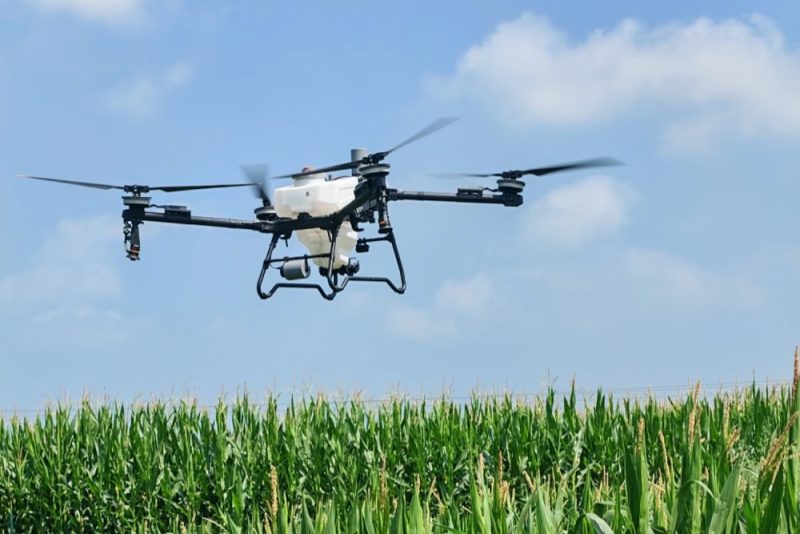
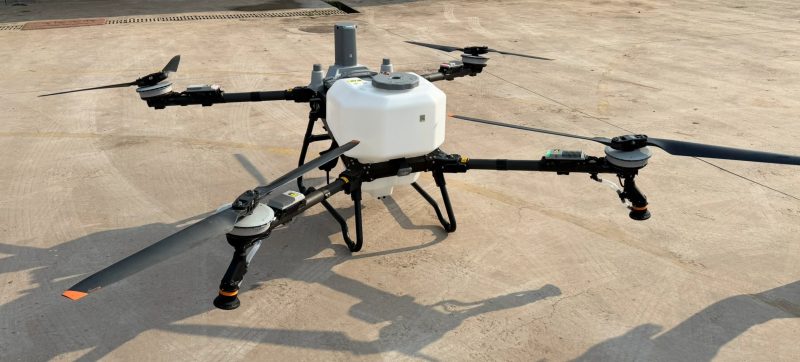
Agricultural drones are becoming essential tools for modern farming. They can spray pesticides, spread fertilizer, and broadcast seeds efficiently while reducing labor costs and improving productivity. However, choosing the right agricultural drone can be challenging, especially when different crops, farm sizes, and operating requirements are involved.
This guide will help you select the best drone for spraying, seeding, and fertilizer spreading according to your needs.
Determine Your Main Application
Before purchasing an agricultural drone, identify its primary purpose.
Crop Spraying
For pesticide and herbicide applications, important factors include:
- Large liquid tank capacity
- Stable spray system
- Adjustable droplet size
- High spraying efficiency
- Accurate route planning
Spraying drones help achieve uniform coverage and reduce chemical waste.
Seed Broadcasting
Seed spreading requires:
- High-capacity spreader system
- Adjustable spreading speed
- Even seed distribution
- Strong flight stability
Agricultural drones can significantly reduce manual labor and improve planting efficiency.
Fertilizer Spreading
Granular fertilizer spreading requires:
- Powerful motors
- Large payload capacity
- High spreading accuracy
- Corrosion-resistant materials
Multi-function drones can switch between spraying and spreading systems quickly, maximizing equipment utilization.
Choose the Right Payload Capacity
Different farm sizes require different payload capacities.
Small Farms (10-50 hectares)
Recommended payload:
- 10L-20L tank
- Easy transportation
- Lower investment cost
Suitable for:
- Vegetables
- Orchards
- Small rice fields
Medium Farms (50-300 hectares)
Recommended payload:
- 30L-50L tank
- Higher efficiency
- Reduced refill frequency
Suitable for:
- Corn
- Wheat
- Soybeans
- Rice
Large Farms and Agricultural Service Providers
Recommended payload:
- 50L-100L capacity
- Long working hours
- Maximum productivity
Suitable for large-scale commercial operations.
Consider Flight Efficiency
High working efficiency means more land covered per hour.
Important features include:
- Intelligent route planning
- Automatic obstacle avoidance
- Terrain following radar
- RTK centimeter-level positioning
- Long battery life
- Fast charging capability
Efficient drones help reduce labor and operational costs.
Evaluate Spray System Performance
The spraying system directly affects crop protection quality.
Look for:
- Multiple nozzles
- Centrifugal atomization system
- Adjustable flow rate
- Uniform droplet distribution
- Anti-drip design
These features improve coverage and minimize chemical waste.
Check Spreading System Capability
If you need fertilizer spreading and seed broadcasting, pay attention to:
- Hopper capacity
- Granule compatibility
- Spreading width
- Variable-rate application
- Quick installation and replacement
One drone with multiple functions provides better return on investment.
Battery and Charging Efficiency
Battery performance affects daily productivity.
Choose drones with:
- Intelligent batteries
- Fast charging systems
- Swappable batteries
- Long cycle life
Multiple battery sets allow continuous operation during busy seasons.
Reliability and After-Sales Support
Reliable support is as important as the drone itself.
Consider suppliers that provide:
- Spare parts availability
- Technical support
- Online training
- Video guidance
- OEM and ODM services
- Software upgrades
Strong after-sales support ensures long-term stable operation.
Why Multi-Function Agricultural Drones Are More Cost-Effective
Modern agricultural drones can perform multiple tasks:
- Pesticide spraying
- Fertilizer spreading
- Seed broadcasting
- Orchard protection
- Field monitoring
Instead of buying several machines, farmers can use one drone to handle multiple agricultural operations and maximize productivity.
Looking for Professional Agricultural Drone Solutions?
Whether you are a farm owner, distributor, dealer, or agricultural service company, selecting the right drone is critical to improving efficiency and reducing costs.
We provide:
- High-performance agricultural drones
- Spraying and spreading systems
- Multiple payload options
- OEM and ODM customization
- Technical support and spare parts supply
- Global distribution cooperation
Contact us today to receive professional recommendations and customized agricultural drone solutions for your market.
FAQ
What is the best agricultural drone for spraying and spreading?
Multi-function agricultural drones with interchangeable spraying and spreading systems are ideal for most farming applications.
How much payload capacity do I need?
Small farms usually require 10L-20L drones, while large farms and service providers may need 50L-100L capacity models.
Can one drone perform spraying and fertilizer spreading?
Yes. Many modern agricultural drones support quick switching between spraying and spreading systems.
How many hectares can an agricultural drone cover per hour?
Depending on the model and application, coverage can range from 10 to over 30 hectares per hour.
Are OEM and custom agricultural drones available?
Yes. OEM and ODM services are available for distributors, dealers, and agricultural projects worldwide.
Which crops can agricultural drones be used for?
Agricultural drones are widely used for rice, wheat, corn, soybeans, cotton, orchards, vegetables, and many other crops.


No comments yet