


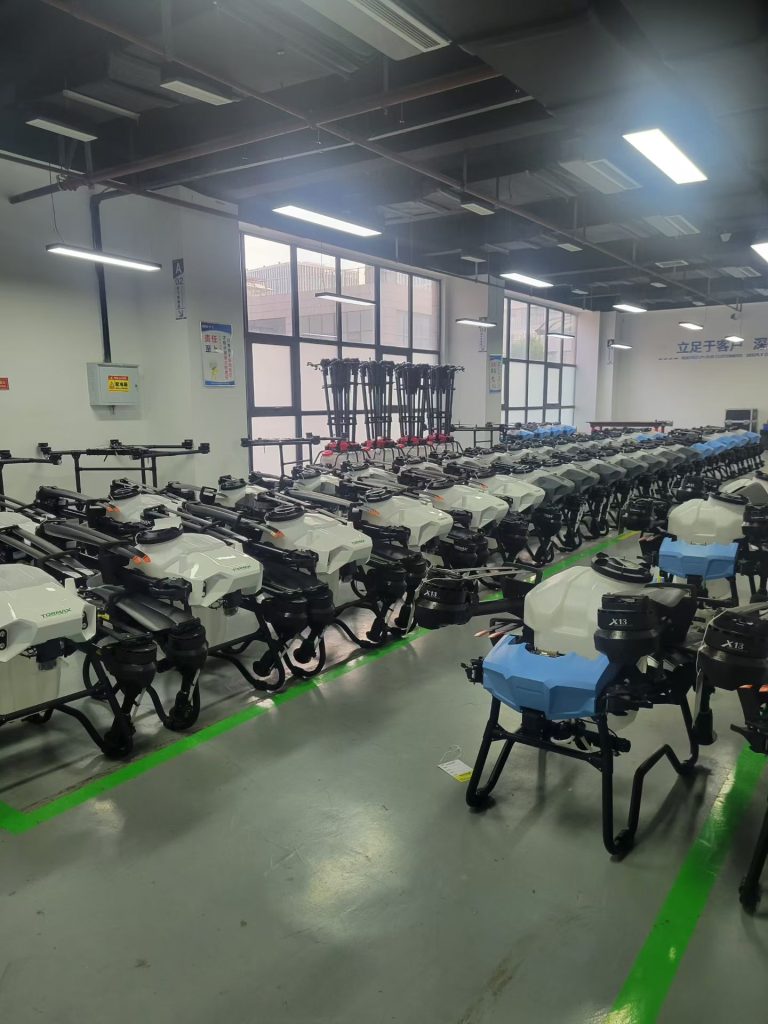
For agricultural equipment distributors and importers, finding a reliable 50KG agricultural spraying drone manufacturer is only the first step. Many international buyers also need OEM customization, private labeling, product documentation, packaging, spare parts, and long-term technical support.
A professional Chinese agricultural drone factory can provide more than a standard product. It can help overseas distributors develop a complete agricultural spraying drone solution under their own brand.
This guide explains what global buyers should know when sourcing a 50KG agricultural spraying drone through an OEM or private-label manufacturer in China.
What Is a 50KG Agricultural Spraying Drone?
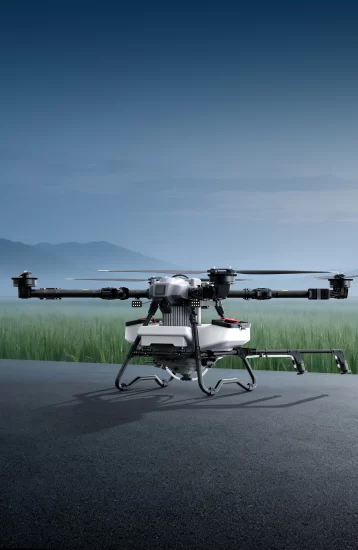
A 50KG agricultural spraying drone is a high-payload UAV designed for commercial crop protection applications.
Depending on the specific configuration, the system may include:
- Large-capacity spraying tank
- High-efficiency spray pumps
- Multiple spray nozzles
- Intelligent flight controller
- GPS positioning
- RTK positioning
- Automatic route planning
- Obstacle detection
- Terrain-following functions
- High-capacity lithium batteries
- Intelligent battery charger
- Remote controller
The exact specifications should always be confirmed with the manufacturer because different factories may define payload and configuration differently.
Why Do Global Buyers Choose Chinese Manufacturers?
China has a large manufacturing ecosystem for UAV components and agricultural equipment.
A qualified Chinese factory can potentially provide:
- Competitive factory pricing
- OEM customization
- Private-label production
- Product development
- Component sourcing
- Assembly
- Quality inspection
- Export packaging
- Spare parts
- Technical support
For overseas distributors, working directly with a manufacturer can make it easier to develop a long-term supply chain.
However, buyers should carefully verify the supplier’s actual production capabilities before placing a large order.
OEM vs. Private Label: What’s the Difference?
International buyers often use the terms OEM and private label interchangeably, but they can involve different levels of customization.
Private Label
Private-label cooperation generally means selling an existing manufacturer model under your own brand.
Possible customization may include:
- Logo
- Product labels
- Packaging
- User manual
- Marketing materials
- Brand colors
This is usually suitable for distributors that want to launch an agricultural drone quickly.
OEM
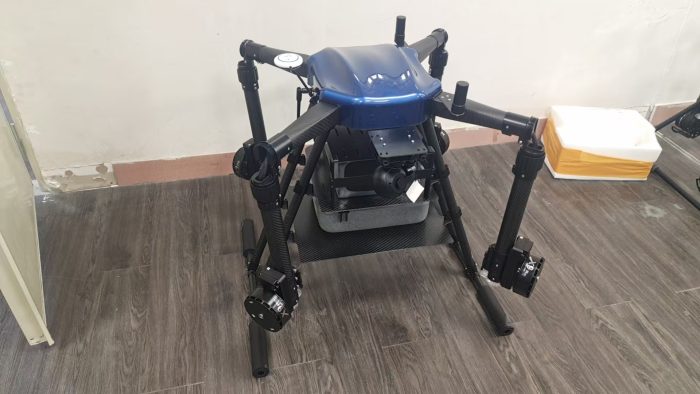
OEM projects can involve deeper product customization.
Depending on the factory, this may include:
- Hardware configuration
- Appearance
- Software interface
- Remote controller
- Battery configuration
- Spraying system
- Product branding
- Packaging
- Accessories
OEM requirements usually involve higher development costs, longer lead times, and larger order quantities.
What Can Be Customized on a 50KG Agricultural Spraying Drone?
The available customization depends on the manufacturer’s engineering and production capabilities.
1. Brand Logo
The factory may add the buyer’s logo to:
- Drone body
- Remote controller
- Batteries
- Packaging
- User manuals
2. Product Appearance
Some buyers may request:
- Custom colors
- Brand decals
- Customized body panels
- Product identification labels
The feasibility depends on the existing design and production process.
3. Packaging
Packaging can be customized for international distribution.
Possible options include:
- Export cartons
- Wooden cases
- Foam protection
- Customized labels
- Product identification
- Brand packaging
The packaging should also be suitable for the transportation method and product configuration.
4. User Manuals
A manufacturer can potentially provide customized manuals containing:
- Brand information
- Operating instructions
- Maintenance procedures
- Safety information
- Troubleshooting
- Contact information
For international markets, multilingual documentation may also be required.
5. Accessories
Distributors may request different accessory packages.
For example:
- Additional batteries
- Spare propellers
- Spare pumps
- Extra nozzles
- Tool kits
- Transport cases
- Replacement components
A factory can prepare different packages according to the distributor’s target market.
Why Is OEM Important for Agricultural Drone Distributors?
For distributors, selling a generic product can make it difficult to differentiate from competitors.
A private-label agricultural drone can help create a unique product identity.
Potential advantages include:
Brand Development
The distributor can build a recognizable local agricultural equipment brand.
Market Differentiation
Customized packaging and product presentation can help distinguish the product from competing models.
Customer Loyalty
Customers who purchase through a distributor’s own brand may be more likely to return for spare parts, batteries, and future equipment.
Long-Term Supply Chain
A stable factory relationship can make future product upgrades and repeat orders easier to manage.
What Should Global Buyers Check Before Starting an OEM Project?
Before discussing customization, buyers should provide the manufacturer with detailed requirements.
Important information includes:
- Target country
- Intended application
- Target customer
- Required payload
- Crop types
- Terrain
- Required flight functions
- Battery requirements
- Spraying requirements
- Branding requirements
- Expected annual order quantity
The more detailed the requirements, the easier it is for the factory to recommend a suitable configuration.
Minimum Order Quantity for OEM
OEM MOQ varies depending on the type of customization.
For simple logo or packaging customization, the MOQ may be relatively low.
More complex changes can require:
- Engineering development
- New molds
- Software development
- New components
- Testing
- Certification
Therefore, buyers should ask for the MOQ and development cost before confirming an OEM project.
Example of OEM Requirements
A distributor may request:
Product: 50KG agricultural spraying drone
Brand: Distributor’s own brand
Payload: 50KG-class liquid tank
Positioning: GPS + RTK
Spraying: Multi-nozzle spraying system
Controller: Customized logo
Battery: Multiple intelligent batteries
Packaging: Customized export packaging
Manual: English
Spare parts: Commercial spare-parts package
This gives the factory a clear basis for preparing a quotation.
How to Evaluate an OEM Agricultural Drone Factory
A factory should be evaluated on more than its website.
Ask about:
- Production facilities
- Engineering team
- Assembly process
- Quality control
- Product testing
- Monthly capacity
- Component sourcing
- Spare parts
- OEM experience
- Export experience
- Technical support
If possible, buyers should request factory photos, production videos, product test videos, and documentation.
For larger orders, an independent factory inspection can provide additional confidence.
Product Quality Control
A 50KG agricultural spraying drone contains multiple systems that must work together.
A manufacturer’s quality-control process should cover areas such as:
Incoming Component Inspection
Components such as motors, ESCs, pumps, batteries, sensors, and electronic parts should be checked before assembly.
Assembly Inspection
Technicians should verify:
- Wiring
- Mechanical connections
- Motor installation
- Spray-system connections
- Battery connectors
- Structural components
Flight Testing
The completed drone should be tested for:
- Flight stability
- Motor performance
- Controller communication
- Navigation
- Battery performance
- Spraying system
Final Inspection
Before shipment, the manufacturer should verify the product configuration against the customer’s purchase order.
Why Spare Parts Matter for OEM Buyers
Distributors need more than the initial drone shipment.
After-sales parts can become an important part of the business.
Common replacement parts include:
- Propellers
- Motors
- ESCs
- Pumps
- Nozzles
- Valves
- Pipes
- Sensors
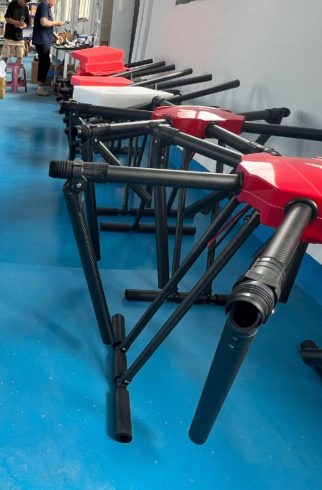
- Landing gear
- Batteries
- Chargers
A reliable manufacturer should be able to provide a stable spare-parts supply.
For distributors, purchasing a starter spare-parts package together with the initial order can reduce future downtime.
Technical Support for International Buyers
A 50KG agricultural drone is a relatively complex machine.
Overseas distributors may need support with:
- Product setup
- Flight configuration
- Spraying parameters
- Battery management
- Maintenance
- Troubleshooting
- Spare-parts replacement
A manufacturer can provide support through:
- Online communication
- Instruction videos
- Manuals
- Remote technical assistance
- Online training
For larger distributors, the factory may also provide more structured product training.
Product Documentation
Professional documentation can make international distribution easier.
Ask the manufacturer whether the following documents are available:
- Product specification sheet
- User manual
- Maintenance manual
- Packing list
- Commercial invoice
- Spare-parts list
- Battery specifications
- Safety instructions
- Product testing information
The exact documents required may vary depending on the destination market and transportation method.
International Shipping Considerations
Agricultural drones may be shipped internationally together with lithium batteries.
This can introduce additional transportation requirements.
Before placing an order, confirm:
- Product dimensions
- Gross weight
- Packaging dimensions
- Battery specifications
- Export packaging
- Shipping method
- Required transportation documentation
The buyer should also verify the import requirements of the destination country.
How Much Does a 50KG OEM Agricultural Drone Cost?
OEM pricing depends heavily on configuration and order quantity.
A basic private-label package may have a relatively small customization cost, while a fully customized OEM project can require additional engineering and development expenses.
The quotation may depend on:
- Drone configuration
- Battery quantity
- Charger
- RTK
- Obstacle avoidance
- Spraying system
- Spare parts
- Packaging
- Logo customization
- Manual customization
- Order quantity
- Development requirements
Instead of asking only:
“What is your price?”
a better purchasing request is:
“Please provide your complete OEM configuration and factory quotation, including the drone, batteries, charger, remote controller, spraying system, spare parts, packaging, and customization costs.”
This produces a much more useful comparison.
How to Build a Long-Term Manufacturer Relationship
For distributors, the relationship should not end after the first shipment.
A long-term cooperation plan may include:
Stage 1 — Sample Testing
Purchase or test a sample unit.
Stage 2 — Market Testing
Introduce the product to selected customers and collect feedback.
Stage 3 — Private Label
Launch the product under your own brand.
Stage 4 — Repeat Orders
Establish regular production and spare-parts supply.
Stage 5 — Product Development
Work with the factory to improve configurations for the local market.
This approach can reduce purchasing risk while building a stronger supply chain.
What Should You Include in an OEM Contract?
Before production starts, the buyer and manufacturer should clearly confirm:
- Product model
- Technical specifications
- Payload definition
- Product quantity
- Unit price
- Payment terms
- Production lead time
- Packaging
- Logo requirements
- Quality standards
- Inspection requirements
- Warranty
- Spare parts
- Shipping terms
For customized products, artwork, product specifications, and packaging requirements should be approved before mass production.
Questions to Ask a 50KG Agricultural Drone Manufacturer
Global buyers can send the following questions:
- Are you a direct agricultural drone manufacturer?
- What is the actual liquid payload?
- What is the maximum takeoff weight?
- What is the full-load flight time?
- What battery configuration is included?
- Is RTK available?
- Does the drone support obstacle avoidance?
- What is the effective spraying width?
- What is the spraying flow rate?
- Do you provide OEM services?
- What is your OEM MOQ?
- Can you customize the logo?
- Can you customize the packaging?
- Can you provide customized manuals?
- What spare parts are available?
- What is the warranty period?
- What technical support do you provide?
- What is the production lead time?
- Can you provide product testing information?
- Can you provide export documentation?
A professional factory should be able to provide clear answers and a detailed quotation.
How to Choose the Right OEM Partner
When evaluating several Chinese manufacturers, consider five major areas:
Product
Does the drone meet your required payload and spraying performance?
Factory
Can the supplier maintain consistent production quality?
Customization
Can the manufacturer support your branding and configuration requirements?
Service
Can the factory provide spare parts and technical assistance?
Long-Term Cooperation
Can the supplier support repeat orders and future product development?
The lowest price should not be the only selection criterion.
Conclusion
For international distributors, importers, and agricultural equipment brands, sourcing a 50KG agricultural spraying drone directly from a Chinese manufacturer can provide opportunities for competitive pricing, OEM customization, private labeling, and long-term supply-chain cooperation.
However, choosing an OEM partner requires careful evaluation.
Buyers should check the actual payload, flight performance, spraying system, battery configuration, navigation technology, quality-control procedures, production capability, spare-parts supply, warranty, technical support, and export documentation.
For simple private-label projects, an existing 50KG agricultural spraying drone can often be customized with branding and packaging. For more advanced OEM projects, buyers should prepare detailed technical requirements and discuss development costs, MOQ, testing, and production schedules with the factory.
A reliable manufacturer should be more than a supplier. It should be a long-term production partner capable of providing stable quality, flexible customization, spare parts, technical support, and consistent delivery.
FAQ
Can I put my own brand on a 50KG agricultural spraying drone?
Many manufacturers offer private-label services, including logo, product labels, packaging, and manuals. The available options depend on the factory’s production capabilities and MOQ.
What is the difference between OEM and private label?
Private label usually involves branding an existing product, while OEM can involve deeper customization of hardware, software, appearance, or configuration.
What is the MOQ for OEM agricultural drones?
MOQ depends on the level of customization. Simple branding may require less quantity, while major hardware or design changes may require a larger order.
Can I customize the battery configuration?
Depending on the manufacturer’s engineering capabilities, battery quantity, capacity, charger configuration, and other specifications may be customizable.
Can the factory provide spare parts?
A professional agricultural drone manufacturer should be able to provide common replacement components such as motors, propellers, pumps, nozzles, batteries, chargers, and electronic components.
How can I verify a Chinese agricultural drone manufacturer?
Ask for factory information, production capabilities, quality-control procedures, testing data, product documentation, OEM experience, and spare-parts information. For larger orders, consider arranging a factory audit or third-party inspection.
Can I order a sample before a large OEM order?
This is often a good approach. Testing a sample allows the buyer to evaluate flight performance, spraying performance, battery endurance, build quality, and software functions before committing to a larger order.
What information should I send when requesting an OEM quotation?
Provide the target market, required payload, crop application, desired configuration, branding requirements, expected order quantity, packaging requirements, and any required documentation. This allows the manufacturer to prepare a more accurate quotation.




No comments yet