

Agricultural Fertilizer Spreading Drone: Applications, Benefits and Buying Guide
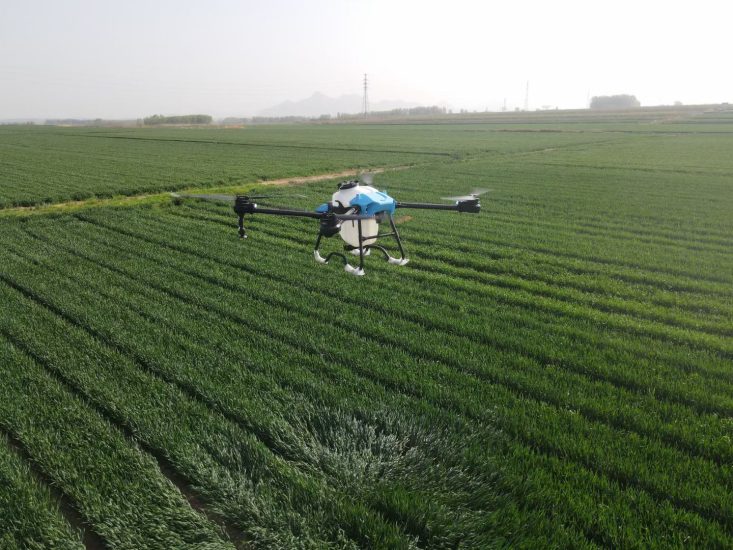
Applying fertilizer evenly across a field can be a demanding agricultural task, particularly when the operating area is large, wet, uneven, or difficult for ground equipment to access. An agricultural fertilizer spreading drone provides an aerial method for distributing granular or other suitable agricultural materials across designated areas.
Unlike liquid spraying drones, fertilizer spreading drones use a hopper and spreading mechanism rather than a liquid tank and spray nozzles. The difference in application method means that buyers need to evaluate different technical specifications when selecting equipment.
For farmers, agricultural contractors, distributors, and international buyers, understanding the spreading system is essential before choosing a fertilizer drone.
What Is an Agricultural Fertilizer Spreading Drone?
An agricultural fertilizer spreading drone is an unmanned aerial vehicle equipped with a hopper and spreading mechanism for distributing suitable granular agricultural materials.
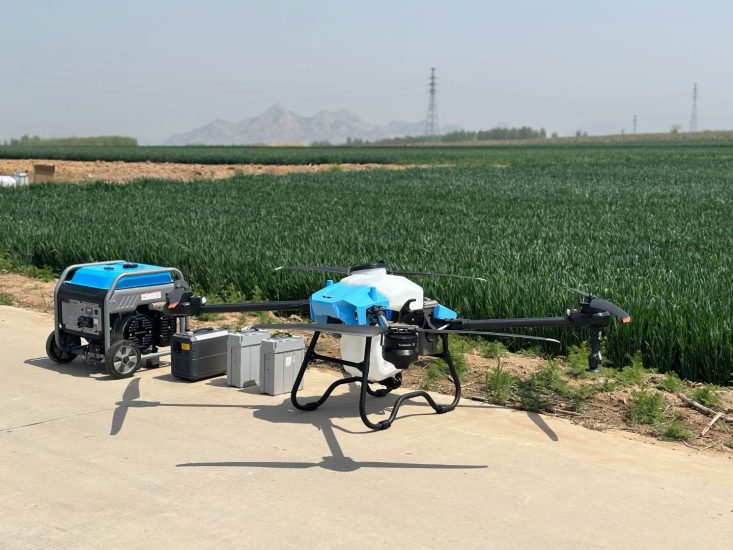
The basic system normally includes:
- UAV platform
- Fertilizer hopper
- Spreading disc or distribution mechanism
- Motor and power system
- Flight controller
- Positioning system
- Remote controller
- Rechargeable battery
- Control software
Depending on the configuration, the system may also include automatic route planning, variable-rate control, terrain-following functions, and other agricultural operating features.
The aircraft carries the material above the field and distributes it according to the selected operating parameters.
How Is a Fertilizer Drone Different From a Spraying Drone?
The biggest difference is the application system.
A spraying drone normally carries liquid in a tank and distributes it through pumps, pipes, and nozzles.
A fertilizer drone generally carries granular material in a hopper and releases it through a mechanical spreading system.
This creates different purchasing priorities.
For a spraying drone, buyers may focus on:
- Tank capacity
- Pump flow
- Nozzle configuration
- Spray width
- Liquid application rate
For a fertilizer spreading drone, important considerations include:
- Hopper capacity
- Spreading width
- Material compatibility
- Discharge rate
- Distribution consistency
- Granule size
- Route planning
- Battery endurance
A platform designed for liquid spraying should not automatically be assumed to be suitable for granular spreading without the appropriate spreading equipment.
Why Use a Drone for Fertilizer Application?
Aerial fertilizer application can provide access to areas where conventional ground machinery is inconvenient.
Wet fields, growing crops, narrow planting areas, steep terrain, and irregular fields can create challenges for tractors and other heavy equipment.
A drone can operate above the crop and avoid direct contact between heavy machinery and the field surface.
Potential operational advantages include:
- Reduced crop contact
- Access to difficult terrain
- Flexible field deployment
- Precise route planning
- Reduced dependence on ground access
- Ability to operate in certain wet-field conditions
The actual benefits depend on crop type, field conditions, material characteristics, and operator practices.
Hopper Capacity
Hopper capacity determines how much fertilizer or other granular material can be carried during a flight.
A larger hopper can reduce the number of refilling cycles, but the aircraft must also have sufficient lifting capacity and battery power to carry the additional material.
Buyers should therefore examine:
- Maximum hopper capacity
- Recommended working load
- Aircraft maximum takeoff weight
- Battery capacity
- Flight time under load
- Spreading rate
The practical objective is to find a balance between payload capacity and operating efficiency.
Spreading Width
Spreading width determines how much area can potentially be covered during each flight pass.
A wider distribution pattern can reduce the number of passes required, but width alone does not guarantee uniform application.
The actual spreading pattern can depend on:
- Material type
- Particle size
- Material density
- Discharge rate
- Spreading mechanism
- Flight altitude
- Flight speed
- Wind conditions
For this reason, buyers should request actual spreading data for the materials they intend to use.
Material Compatibility Is Important
Not every granular material behaves in the same way.
Fertilizers can vary in:
- Particle size
- Density
- Moisture content
- Shape
- Flow characteristics
A material that flows easily through the hopper may behave differently from a material with higher moisture content or irregular particles.
Before purchasing, buyers should ask the manufacturer what material characteristics the spreading system is designed to handle.
Controlling the Application Rate
Application rate is one of the most important parameters in fertilizer distribution.
A suitable system should allow the operator to control the quantity of material being released according to the intended agricultural application.
The actual application rate can depend on:
- Hopper discharge
- Flight speed
- Spreading mechanism
- Material characteristics
- Route spacing
A simple adjustment to flight speed can change the amount of material distributed over a specific area, so route planning and discharge settings should be considered together.
Importance of Even Distribution
Fertilizer application is not only about delivering the required quantity.
Uniform distribution across the target area is also important.
Uneven spreading can result in areas receiving more or less material than intended.
The spreading mechanism should therefore be evaluated for its distribution pattern and consistency.
Before large-scale operation, buyers and operators should understand how the equipment performs with the specific material being used.
Battery Requirements
Carrying granular material increases the aircraft’s weight, particularly when the hopper is full.
Battery performance therefore has a direct effect on operating efficiency.
Important battery considerations include:
- Battery capacity
- Working flight time
- Charging time
- Number of batteries
- Battery cycle life
- Charging infrastructure
- Operating temperature
For commercial operations, multiple batteries may be necessary to keep the drone working while other batteries are charging.
Route Planning for Fertilizer Application
Efficient route planning can reduce unnecessary flying and improve battery utilization.
A typical route may take into account:
- Field boundaries
- Obstacles
- No-entry areas
- Turning points
- Spreading width
- Flight altitude
- Battery limitations
- Material refill location
Automatic route planning can help operators manage repetitive field operations, while manual intervention may still be necessary when field conditions change.
Suitable Agricultural Applications
Rice Fields
Wet rice fields can be difficult for heavy ground machinery.
Aerial distribution can provide another method for applying suitable granular materials without requiring tractors to travel directly through the field.
Large Field Crops
Large open fields provide relatively straightforward conditions for route planning.
A higher-capacity spreading drone may be useful when large areas need to be treated efficiently.
Pasture and Grassland
Certain suitable granular materials can potentially be distributed over pasture or grassland, depending on the application and local requirements.
Orchards
Orchard environments require more careful planning because trees and terrain can create obstacles.
The drone configuration and spreading system should be selected according to the specific orchard layout.
What Is the Difference Between Fertilizer Capacity and Coverage?
A common misunderstanding is to assume that a larger hopper automatically means greater coverage.
Coverage depends on application rate.
For example, if the required application rate is 100 kilograms per hectare, a hopper carrying 50 kilograms would theoretically contain enough material for 0.5 hectares.
The actual coverage can be affected by:
- Material loss
- Application accuracy
- Spreading width
- Route efficiency
- Refilling
- Terrain
- Wind
- Operator settings
Therefore, buyers should calculate expected coverage using their actual fertilizer application requirements.
Maintenance of the Spreading System
Granular materials can enter mechanical components and create wear if the equipment is not properly maintained.
Regular maintenance should include inspection of:
- Hopper
- Discharge opening
- Spreading disc
- Motors
- Guards
- Fasteners
- Wiring
- Battery connectors
- Propellers
- Aircraft frame
The spreading system should be cleaned and inspected according to the manufacturer’s maintenance instructions.
What Should Buyers Consider Before Importing?
International buyers should consider both the drone and the requirements of the destination market.
Important questions include:
- What is the maximum hopper capacity?
- What is the recommended working payload?
- What materials can the spreading system handle?
- What is the adjustable discharge range?
- What is the effective spreading width?
- What is the operating time under load?
- What batteries are included?
- How long does charging take?
- What positioning system is used?
- Does the system support automatic route planning?
- What spare parts are available?
- What technical documentation is provided?
- Can the spreading system be customized?
- Is OEM or ODM production available?
- What certifications or import documents are required for the destination market?
These details are particularly important for distributors purchasing equipment in larger quantities.
OEM and ODM Fertilizer Drone Manufacturing
Agricultural equipment distributors may have requirements that are different from standard retail buyers.
OEM and ODM projects can potentially include:
- Custom branding
- Packaging
- Hopper configuration
- Spreading system
- Controller interface
- Accessories
- Product documentation
- Selected hardware configurations
Customization should be discussed before production because technical changes may affect testing, certification, production costs, and delivery schedules.
Frequently Asked Questions
Can agricultural drones spread fertilizer?
Yes, specially configured agricultural drones can distribute suitable granular agricultural materials through a dedicated spreading system.
Can a spraying drone also spread fertilizer?
Some agricultural UAV platforms can support interchangeable or optional spreading equipment, but compatibility depends on the aircraft and the specific configuration.
What determines fertilizer spreading width?
Spreading width depends on the distribution mechanism, material characteristics, discharge rate, flight altitude, flight speed, and environmental conditions.
Is a larger hopper always better?
Not necessarily. A larger hopper increases carrying capacity but also increases aircraft weight and energy consumption. The appropriate size depends on the operating requirements.
Can fertilizer drones be used on wet fields?
Aerial operation can provide an alternative to ground equipment in certain wet-field conditions because the aircraft does not need to drive directly across the soil.
Can the spreading system be customized?
Depending on the project, OEM and ODM customization may be available for selected components and configurations.
Choosing a Fertilizer Spreading Drone
Selecting a fertilizer drone requires more than comparing hopper capacity.
The spreading mechanism, material compatibility, application rate, distribution consistency, battery system, positioning, route planning, maintenance, and local regulations all contribute to the effectiveness of the complete system.
For commercial buyers, it is also important to determine the type of material that will be applied and the required application rate before selecting the aircraft.
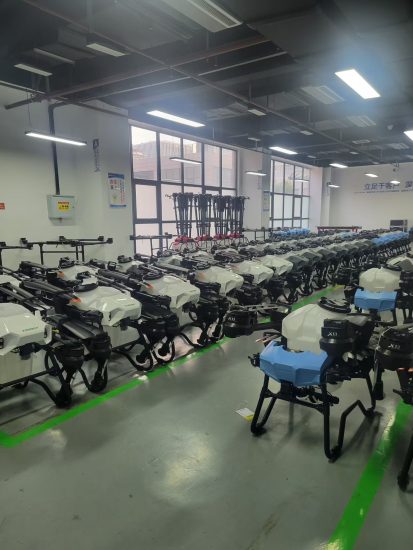
MSOEN provides agricultural UAV solutions and can discuss fertilizer spreading configurations, payload requirements, spreading systems, customization, and OEM/ODM manufacturing according to specific agricultural applications.


No comments yet