



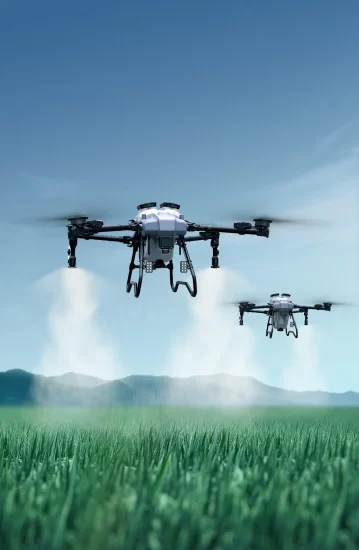
Agricultural drones can help farmers and professional spraying contractors improve crop protection efficiency, reduce labor requirements, and cover large areas more quickly. However, choosing the right drone is not simply a matter of selecting the model with the largest tank.
A 10L agricultural drone may be ideal for one farm, while a 20L or 30L model may be more suitable for another operation.
The right choice depends on farm size, crop type, terrain, spraying requirements, battery capacity, operating cost, local regulations, and after-sales support.
This guide explains the most important factors to consider before buying an agricultural drone.
1. Start With Your Actual Farming Application
Before comparing manufacturers, determine what you want the drone to do.
Agricultural drones are commonly used for:
- Pesticide spraying
- Fungicide application
- Herbicide application
- Liquid fertilizer spraying
- Foliar fertilizer application
- Seed spreading
- Granular fertilizer spreading
- Crop monitoring
- Field inspection
A spraying drone and a spreading drone can have very different configurations.
If your primary application is crop spraying, focus on:
- Tank capacity
- Spray width
- Flow rate
- Pump performance
- Nozzle configuration
- Flight time
- Battery capacity
If you need spreading, pay more attention to:
- Hopper capacity
- Spreading width
- Granule compatibility
- Spreading rate
- Material control system
2. Choose the Right Payload Capacity
Payload is one of the most important factors.
Common agricultural spraying drone capacities include:
| Drone Capacity | Typical Use |
|---|---|
| 10L | Small farms, testing, specialty crops |
| 16L | Small-to-medium commercial operations |
| 20L | Commercial crop spraying |
| 30L | Large-scale agricultural operations |
However, bigger is not always better.
A 30L drone carries more liquid, but it may require:
- Larger batteries
- More powerful motors
- Stronger frame
- Higher charging capacity
- More expensive spare parts
For farms with narrow fields, trees, slopes, or difficult access, a smaller and more maneuverable drone may sometimes be more practical.
3. Consider Your Farm Size
Farm size can help determine the appropriate drone capacity.
Small Farms
For smaller farms, a 10L or 16L drone may provide a good balance between investment and productivity.
Medium Farms
A 16L or 20L drone may be more appropriate when the drone will be used regularly.
Large Farms
For large commercial operations, 20L or 30L models can reduce the number of refilling cycles and improve operational efficiency.
However, farm size alone should not determine your choice.
You should also calculate the actual area covered per hour, including:
- Refilling
- Battery replacement
- Charging
- Turning
- Route planning
- Travel between fields
4. Look at Actual Spraying Efficiency
Do not judge an agricultural drone only by its advertised tank capacity.
The more useful measurement is:
How many hectares or acres can it realistically treat per hour?
Actual productivity depends on:
- Flight speed
- Spray width
- Application rate
- Tank capacity
- Battery endurance
- Refill time
- Battery replacement time
- Field conditions
- Operator experience
For example, a drone with a larger tank may not necessarily complete a field faster if it requires significantly longer charging or has poor flight efficiency.
Ask the manufacturer for realistic operating data rather than relying only on laboratory specifications.
5. Check Flight Time Under Load
Manufacturers sometimes quote a maximum flight time under ideal conditions.
You should ask:
What is the flight time with a full payload?
A drone carrying a full tank requires more power than an empty drone.
Ask the supplier to provide:
- Empty-load flight time
- Full-load flight time
- Recommended operating time
- Battery capacity
- Charging time
This information is more useful when calculating daily productivity.
6. Pay Attention to Battery Capacity
The battery is one of the most important components of an agricultural drone.
Check:
- Battery voltage
- Battery capacity
- Battery weight
- Charging time
- Cycle life
- Battery communication
- Temperature monitoring
- Safety protection
You should also determine how many batteries are needed for continuous operation.
For commercial spraying, having multiple battery sets can allow one battery to be charging while another is being used.
7. Choose the Right Spraying System
A good spraying system should provide consistent application.
Important components include:
- Pumps
- Spray nozzles
- Pipes
- Flow meters
- Pressure control
- Automatic flow adjustment
Ask the manufacturer about:
Spray width, flow rate, nozzle type, and recommended application rate.
Do not assume that a higher flow rate automatically means better spraying.
The goal is uniform coverage at the correct application rate.
8. Check Navigation and Positioning
Navigation technology affects flight accuracy.
Depending on the model, agricultural drones may use:
- GPS
- GNSS
- RTK
- Autonomous route planning
- Return-to-home systems
- Terrain-following functions
For precision agricultural applications, accurate positioning can be especially valuable.
If you are comparing two drones, ask whether RTK is included or available as an optional upgrade.
9. Consider Obstacle Avoidance
Agricultural fields are not always open spaces.
Potential obstacles include:
- Trees
- Utility poles
- Buildings
- Power lines
- Hills
- Other structures
Obstacle detection technology can help improve operational safety.
Ask:
- What sensors are used?
- What is the detection range?
- What obstacles can be detected?
- Does the system work in different lighting conditions?
- Can obstacle avoidance be configured?
Do not rely on the phrase “radar equipped” alone. Ask for the actual specifications.
10. Consider Your Crop Type
Different crops require different operating approaches.
Rice
Rice fields can benefit from drones because ground access may be difficult.
Important factors include:
- Stable flight
- Spray uniformity
- Battery endurance
- Water resistance
- Route planning
Orchards
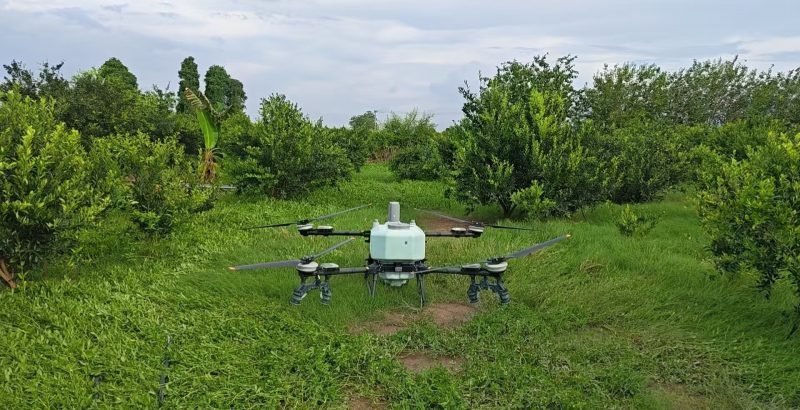
Orchards require special attention to:
- Vertical spraying
- Tree canopy penetration
- Obstacle avoidance
- Terrain following
- Flight stability
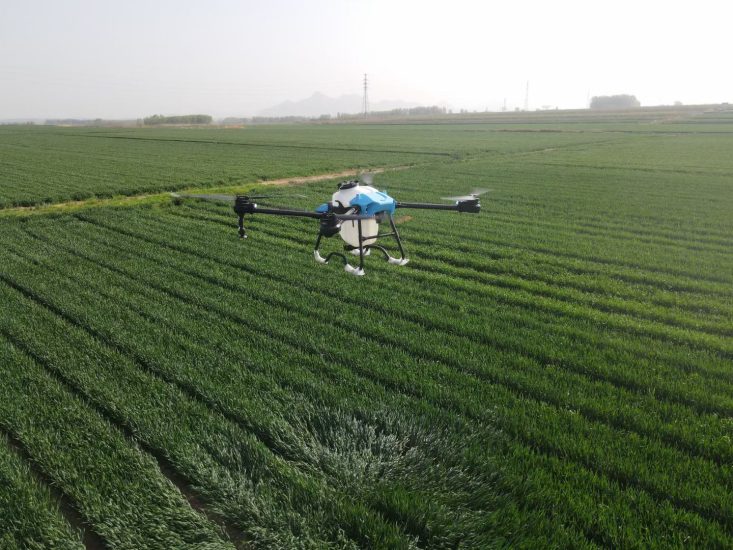
Wheat and Other Field Crops
Large open fields may benefit from:
- Higher flight efficiency
- Larger payload
- Wider spray coverage
- Automated route planning
Vegetables and Specialty Crops
Smaller drones can sometimes provide better maneuverability around narrow fields and obstacles.
11. Consider Terrain
Your farm’s terrain is another important factor.
Flat Fields
Most agricultural drones can operate efficiently in open, flat terrain.
Hilly Areas
You may need:
- Better positioning
- Terrain-following capability
- Stronger obstacle detection
- Stable flight control
Orchards
Trees create additional navigation challenges, so obstacle avoidance and flight planning become more important.
12. Calculate Your Total Cost of Ownership
The purchase price is only the beginning.
Calculate:
Total Cost of Ownership = Drone + Batteries + Charger + Spare Parts + Shipping + Maintenance + Training
You should also estimate operating costs such as:
- Battery replacement
- Propeller replacement
- Pump maintenance
- Nozzle replacement
- Transportation
- Labor
- Charging electricity
A slightly more expensive drone may have a lower long-term operating cost if it is more efficient and easier to maintain.
13. Don’t Ignore Spare Parts
Before purchasing, ask whether replacement parts are readily available.
Important spare parts may include:
- Propellers
- Motors
- Pumps
- Nozzles
- Landing gear
- Spray pipes
- Connectors
- Battery accessories
- Electronic components
For professional operations, it is better to purchase commonly needed spare parts with the initial order.
14. Check Warranty and Technical Support
A drone is a sophisticated electronic and mechanical system.
Before ordering, ask:
- How long is the warranty?
- What parts are covered?
- Who pays shipping for warranty repairs?
- Is remote technical support available?
- Are spare parts available?
- Are repair videos or manuals provided?
- Can technicians provide online troubleshooting?
For overseas buyers, after-sales support can be just as important as the purchase price.
15. Evaluate the Manufacturer
The manufacturer should be evaluated separately from the drone itself.
Look for evidence of:
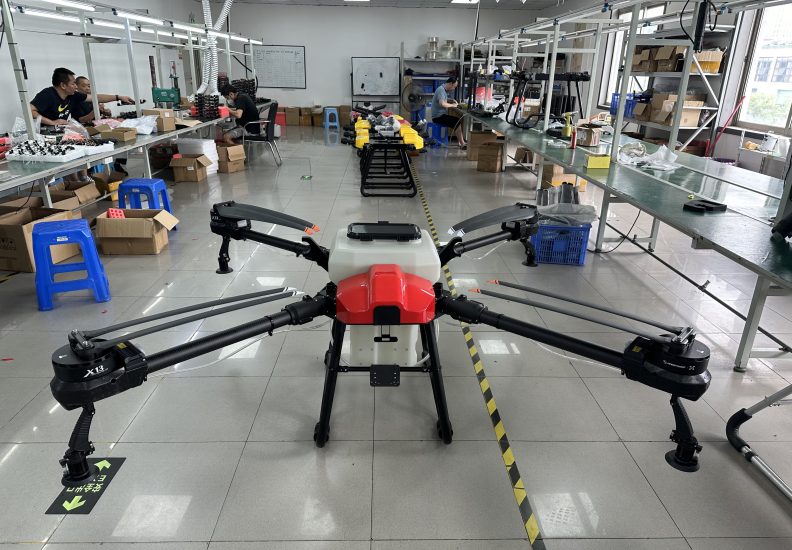
- Real production facilities
- Product testing
- R&D capability
- Quality control
- Export experience
- OEM/ODM capability
- Spare-parts support
- Technical service
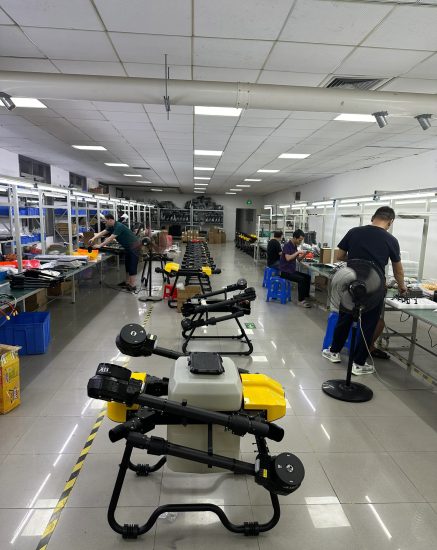
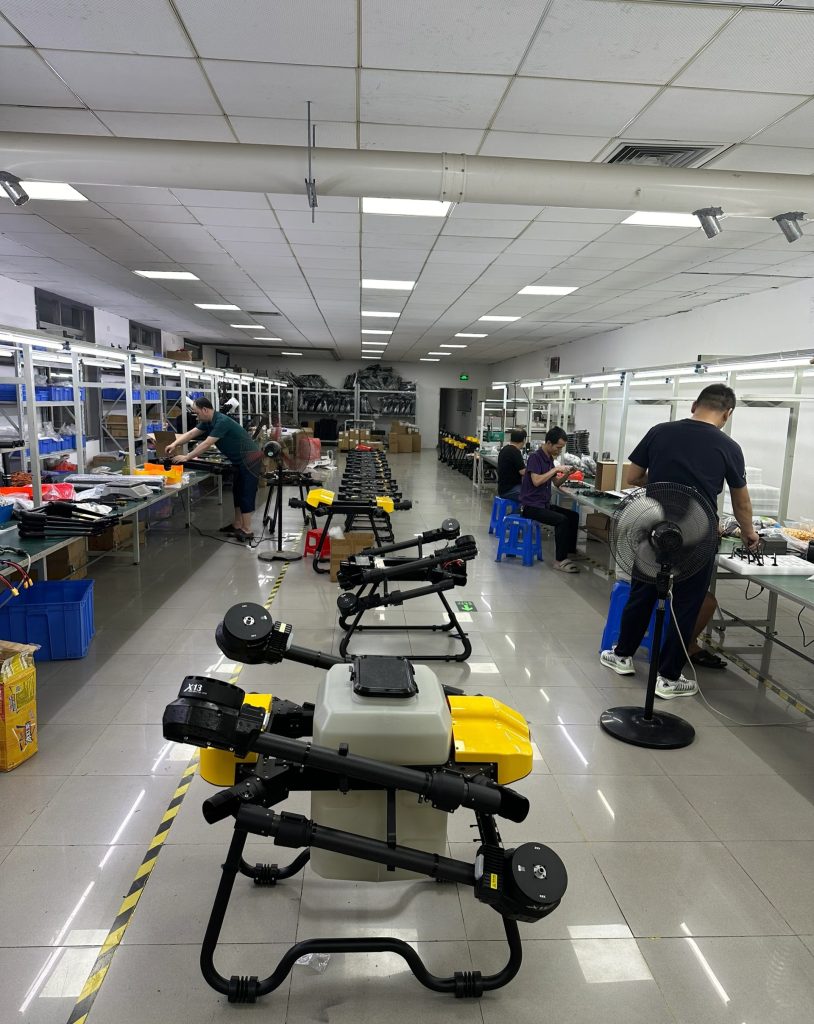
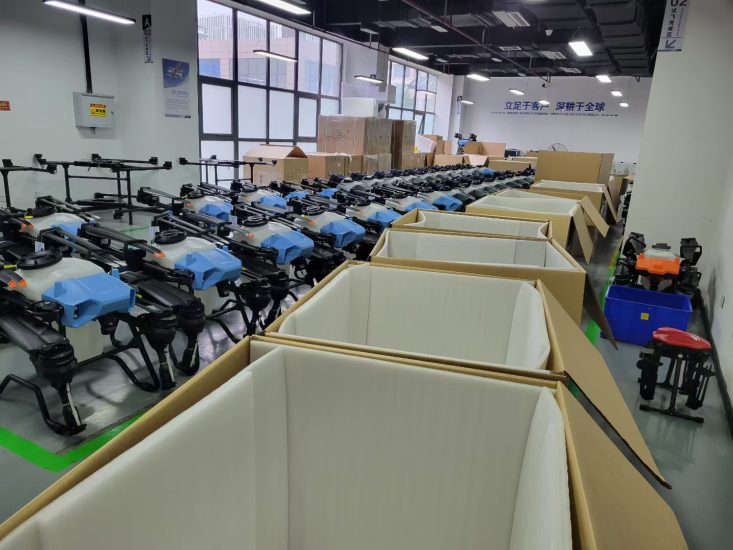
Ask for factory photos, production videos, product testing information, and detailed specifications.
If possible, arrange a video factory inspection or third-party inspection.
16. Check Local Regulations
Before purchasing, confirm whether agricultural drones can legally be imported and operated in your country.
Requirements can vary by market and may involve:
- Drone registration
- Operator licensing
- Radio-frequency approval
- Import requirements
- Agricultural spraying regulations
- Chemical application rules
- Insurance
- Flight restrictions
Do this before placing a large order.
A drone can be technically suitable but still unsuitable for your market if local operating requirements cannot be met.
17. Compare Three Suppliers
Instead of requesting one quotation, contact several manufacturers.
Ask each supplier for the same specification.
For example:
20L agricultural spraying drone
Request:
- Drone price
- Battery price
- Charger price
- Spare-parts package
- MOQ
- Production lead time
- Warranty
- Shipping weight
- Package dimensions
- OEM price
- Technical specifications
Then compare the complete package.
This is much more reliable than comparing only the headline price.
18. When Should You Choose a 10L, 20L, or 30L Drone?
A simple starting point is:
Choose 10L if:
- You operate a smaller farm
- You prioritize maneuverability
- You are testing agricultural drone technology
- Your fields are relatively small
Choose 20L if:
- You operate commercially
- You need higher productivity
- You want a balance between capacity and maneuverability
- You regularly spray larger areas
Choose 30L if:
- You operate large-scale agricultural projects
- You need higher payload capacity
- You want fewer refill cycles
- Your infrastructure can support larger batteries and charging requirements
These are general guidelines. Actual selection should be based on field conditions and operating calculations.
Agricultural Drone Selection Checklist
Before purchasing, confirm:
- [ ] Payload capacity
- [ ] Maximum takeoff weight
- [ ] Flight time under load
- [ ] Battery capacity
- [ ] Number of batteries
- [ ] Charging time
- [ ] Spray width
- [ ] Flow rate
- [ ] Pump type
- [ ] Nozzle type
- [ ] Navigation system
- [ ] RTK availability
- [ ] Obstacle avoidance
- [ ] Remote-control range
- [ ] Software functions
- [ ] Spare parts
- [ ] Warranty
- [ ] Local regulations
- [ ] Shipping requirements
- [ ] OEM options
- [ ] Technical support
FAQ
What size agricultural drone should I buy?
The right size depends on farm size, crop type, terrain, spraying requirements, and operating efficiency. Common choices include 10L, 16L, 20L, and 30L models.
Is a 30L agricultural drone better than a 20L drone?
Not necessarily. A 30L model carries more liquid, but it can also require more battery power and infrastructure. Choose based on actual productivity rather than tank capacity alone.
How many acres can an agricultural drone spray per hour?
There is no universal figure. Productivity depends on application rate, spray width, flight speed, field layout, battery changes, refilling, and operator experience. Ask the manufacturer for realistic field-test data.
How long does an agricultural drone battery last?
Battery endurance varies by drone, payload, battery capacity, weather, flight speed, and operating conditions. Always ask for flight-time data under actual payload conditions.
Are agricultural drones suitable for orchards?
Yes, specialized configurations can be used for orchard applications. Obstacle avoidance, terrain following, flight stability, and spraying performance are especially important.
Should I buy an agricultural drone directly from a Chinese manufacturer?
Direct purchasing can provide competitive factory pricing and OEM options. However, verify the supplier, product specifications, local regulations, shipping requirements, and after-sales support before ordering.
What is the most important specification?
There is no single specification that determines whether a drone is suitable. Payload, flight time, spray performance, battery system, navigation, reliability, and operating cost should be evaluated together.
Conclusion
Choosing the right agricultural drone requires more than comparing prices or tank capacity.
The best model for your farm should match your crop type, farm size, terrain, spraying requirements, working speed, battery infrastructure, local regulations, and long-term operating budget.
For many buyers, starting with a sample unit and conducting a real field test is the safest way to determine whether a particular agricultural drone is suitable.
Before placing a bulk order, compare at least several manufacturers, request complete technical specifications, calculate total ownership costs, verify local regulations, and confirm warranty and spare-parts support.
A well-matched agricultural drone can become a productive farming tool. The wrong configuration, however, can lead to unnecessary operating costs and poor field performance.


No comments yet