

Agricultural Drone Factory vs Trading Company: What International Buyers Should Know
When sourcing agricultural drones from China, international buyers often face an important question: should they purchase directly from a factory or work with a trading company?
Both models can be useful, but they provide different purchasing experiences. The right choice depends on the buyer’s order size, technical requirements, customization needs, destination market, and expected level of supplier support.
For farmers purchasing a small number of drones, a trading company may sometimes provide a convenient sourcing service. For distributors, importers, agricultural equipment companies, and businesses developing private-label products, direct communication with a manufacturer may provide additional opportunities for customization and long-term cooperation.
This guide explains the differences buyers should understand before purchasing agricultural drones from China.
1. What Is an Agricultural Drone Factory?
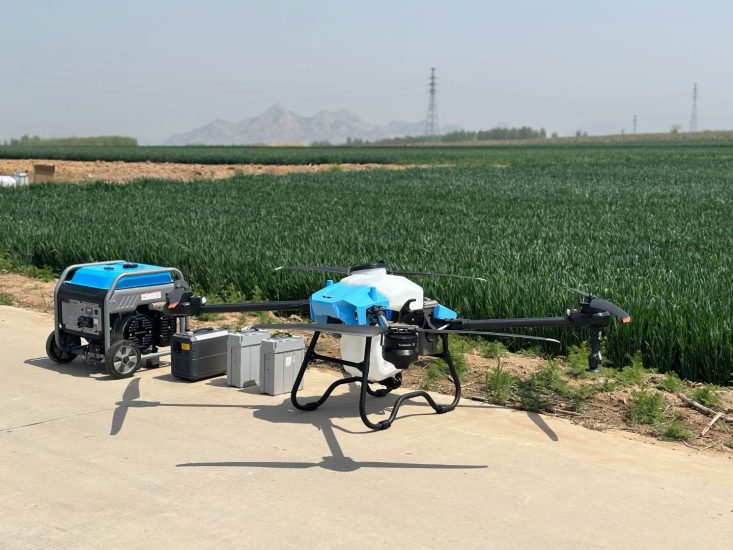
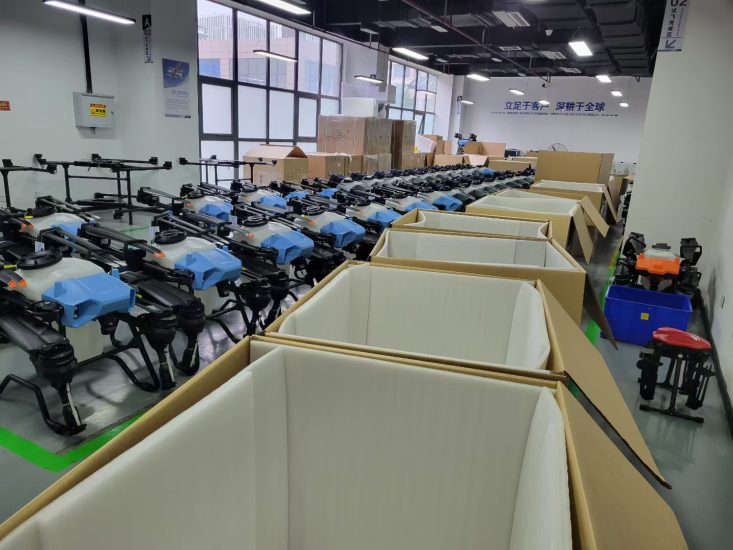
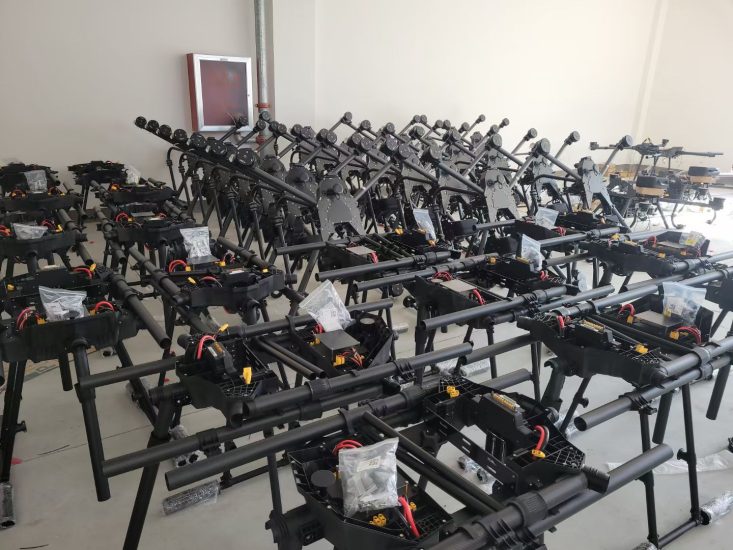
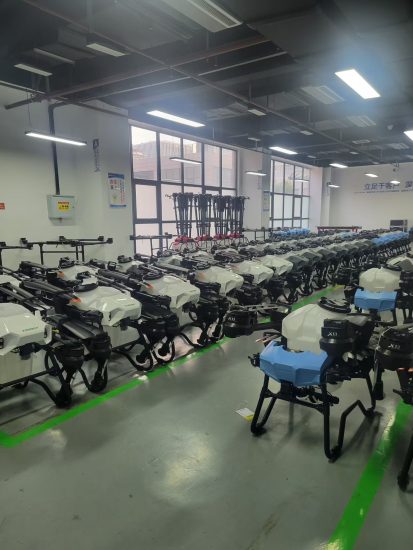
An agricultural drone factory is a company that manufactures or assembles agricultural drones and related components.
Depending on the company, its manufacturing capabilities may include:
- Drone frame assembly
- Motor installation
- Flight-control systems
- Spraying systems
- Pump systems
- Battery systems
- Electronic components
- Software integration
- Product testing
- Final assembly
- Quality inspection
A manufacturer may also have engineering and product-development teams that can modify existing products or develop customized solutions.
However, not every company describing itself as a “factory” necessarily performs every manufacturing process internally.
Therefore, buyers should ask specific questions about what the company actually manufactures and what components are sourced from other suppliers.
2. What Is an Agricultural Drone Trading Company?
A trading company generally purchases products from manufacturers and sells them to customers.
A trading company may provide services such as:
- Supplier sourcing
- Product selection
- Price negotiation
- Quality inspection
- Export documentation
- Shipping coordination
- Multi-product sourcing
- Customer communication
For buyers who need several types of products from different factories, this type of service can sometimes simplify procurement.
A trading company may also have established relationships with multiple manufacturers.
3. Direct Factory vs Trading Company
The difference can be summarized as follows:
| Factor | Direct Manufacturer | Trading Company |
|---|---|---|
| Product source | Direct manufacturing source | Usually purchases from manufacturers |
| Customization | Often available | Depends on manufacturing partner |
| Product selection | Usually focused on own products | May offer products from multiple factories |
| Technical communication | Direct with manufacturer | Usually through trading company |
| OEM/ODM | Often easier to discuss directly | Depends on factory relationship |
| Multi-product sourcing | May be limited | Often more flexible |
| Factory information | Direct access | May depend on supplier |
| Spare parts | Usually directly available | Depends on supplier |
| Production schedule | Direct communication | Usually coordinated through supplier |
| Order management | Direct | Managed by trading company |
These are general differences. Individual companies can operate differently.
4. When Direct Factory Purchasing Can Be Useful
Buying directly from a manufacturer can be particularly relevant when you need:
- Large quantities
- Stable long-term supply
- OEM products
- Private labeling
- Product customization
- Technical support
- Dedicated spare parts
- Consistent product configurations
For example, a distributor planning to purchase dozens or hundreds of agricultural drones may want a direct relationship with the production source.
Direct communication can also make it easier to discuss technical specifications and future product changes.
5. When a Trading Company Can Be Useful
A trading company may be useful when you need:
- Several different products
- Small quantities
- Supplier sourcing
- Export assistance
- Consolidated purchasing
- Communication support
- Multiple product categories
For example, an agricultural equipment distributor may need drones, batteries, spare parts, spraying accessories, protective equipment, and other products from different suppliers.
A trading company may be able to coordinate these purchases.
6. Price Should Not Be the Only Comparison
Many buyers assume that a factory must always provide the lowest price.
That is not necessarily true.
The final purchasing cost depends on:
- Drone configuration
- Quantity
- Battery quantity
- Accessories
- Spare parts
- Packaging
- Customization
- Quality requirements
- Shipping
- Payment terms
- After-sales services
A trading company may have a higher quoted price but provide additional sourcing or logistics services.
A factory may provide a lower product price but require the buyer to manage more parts of the procurement process.
Therefore, compare the complete quotation rather than looking only at the unit price.
7. Ask Who Actually Manufactures the Drone
If you receive a quotation from a supplier, ask:
Who manufactures this drone?
If the supplier is a trading company, ask whether you can obtain information about the actual manufacturer.
Useful questions include:
- Where is the product manufactured?
- Who performs final assembly?
- Who provides the warranty?
- Who supplies spare parts?
- Who handles technical problems?
- Can the factory provide product documentation?
- Can the factory support customized requirements?
Clear answers can help you understand the actual supply chain.
8. Check Product Specifications Carefully
Different suppliers may use similar descriptions for agricultural drones.
For example, two suppliers may both advertise a “30L agricultural spraying drone,” but the actual systems can be different.
Compare:
- Payload
- Tank capacity
- Spray width
- Flow rate
- Pump system
- Nozzle configuration
- Flight time
- Battery capacity
- Charging time
- Positioning system
- Obstacle avoidance
- Spreading capability
- Remote-control system
A specification-by-specification comparison is more useful than comparing model names alone.
9. Consider OEM and Private Label Requirements
For companies developing their own agricultural drone brands, the supply model becomes particularly important.
You may require:
- Your company logo
- Custom product colors
- Private-label packaging
- Custom manuals
- Customized labels
- Special accessories
- Product configuration changes
Direct communication with the manufacturer can make it easier to determine whether these changes are technically possible.
MSOEN provides agricultural drone solutions and can discuss OEM/ODM requirements with international buyers. You can explore the MSOEN agricultural drone solutions for more information.
10. Check Quality-Control Responsibility
Quality control should be clearly defined before an order is placed.
Ask:
- Who inspects the finished drone?
- Is every unit tested?
- Are flight tests performed?
- Are spraying systems tested?
- Are batteries inspected?
- Who records quality-control results?
- What happens if a product fails inspection?
If you are purchasing through a trading company, ask whether the company performs an additional inspection before shipment.
If you purchase directly from a factory, ask about its internal quality-control process.
11. Spare Parts Can Be More Important Than the Initial Purchase
Agricultural drones operate frequently during farming seasons.
A damaged propeller, pump, motor, nozzle, battery, or electronic component can interrupt operations.
Before purchasing, ask:
- Are spare parts available?
- Can spare parts be purchased separately?
- How long does spare-parts delivery take?
- Are parts kept in stock?
- Are technical instructions available?
- Can the supplier help identify faulty components?
For distributors, establishing a spare-parts inventory can be an important part of the business plan.
12. Compare After-Sales Support
The purchase does not end when the drone arrives.
International buyers may need support with:
- Installation
- Calibration
- Software
- Flight settings
- Spraying configuration
- Battery maintenance
- Troubleshooting
- Replacement parts
Ask the supplier how technical problems are handled.
A supplier that provides clear manuals, videos, remote assistance, and spare-parts support can make equipment operation easier for international customers.
13. Check Production Lead Time
Lead time becomes especially important during agricultural seasons.
Ask:
- Is the product in stock?
- Is production required?
- What is the normal production time?
- How long does OEM customization take?
- How long does packaging take?
- When can the goods be shipped?
If you are importing several units, request a written production schedule.
14. Consider Order Quantity
The ideal purchasing model can change depending on order volume.
Small Order
For one or two units, convenience and technical assistance may be more important than establishing a long-term factory relationship.
Medium Order
For several units, buyers should begin evaluating spare parts, warranty support, and production consistency.
Large Order
For larger quantities, buyers may want to establish a direct relationship with the manufacturing source and discuss pricing, production schedules, customization, and long-term supply.
15. Consider Your Long-Term Business Plan
A buyer purchasing one drone for personal use has different requirements from a company building a regional distribution network.
If your plan is to:
- Sell agricultural drones locally
- Establish a dealer network
- Develop a private-label brand
- Provide agricultural spraying services
- Purchase hundreds of units over time
then supplier capability becomes increasingly important.
You should consider whether the supplier can support your business as order volumes increase.
16. Questions to Ask a Trading Company
If you decide to work with a trading company, ask:
- Who is the actual manufacturer?
- Can I receive the manufacturer’s technical specifications?
- Who provides the warranty?
- Who supplies spare parts?
- Can I visit or inspect the factory?
- Can the product be customized?
- What is the actual production lead time?
- Can you support larger orders?
- How is quality checked before shipment?
- What happens if the product has a technical problem?
The answers will help you understand the supply chain.
17. Questions to Ask a Factory
If you are considering direct factory purchasing, ask:
- What parts of the drone are manufactured in-house?
- Where does final assembly take place?
- What quality-control procedures are used?
- What product models are available?
- Can you provide OEM/ODM services?
- What is the MOQ?
- What is the normal production lead time?
- Are spare parts available?
- What warranty is provided?
- What technical support is available?
- Can you provide product documentation?
- What export and packaging support is available?
A serious manufacturer should be able to explain its production and support process clearly.
18. How to Verify a Supplier
Before making a significant payment, international buyers should conduct reasonable supplier verification.
Possible checks include:
- Company information
- Factory location
- Product documentation
- Business registration information
- Product specifications
- Factory photographs or videos
- Sample testing
- Quality inspection
- References where available
- Payment information
- Contract terms
For larger orders, an independent pre-shipment inspection may also be considered.
19. Which Model Is Right for Your Business?
There is no universal answer for every buyer.
A small buyer who needs sourcing assistance may value the services of a trading company.
A distributor looking for long-term product supply may want a direct manufacturer relationship.
A private-label brand may need a manufacturer with strong OEM/ODM capabilities.
An agricultural service company may prioritize technical support, spare parts, and operational reliability.
The important point is to match the supply model with the actual business requirement.
20. How MSOEN Can Support Agricultural Drone Buyers
For international buyers looking for agricultural drone solutions from China, MSOEN provides products and manufacturing-related services for different agricultural applications.
Buyers can discuss:
- Agricultural spraying drones
- Different drone capacities
- Product configurations
- OEM/ODM requirements
- Spare parts
- Packaging
- International orders
Before requesting a quotation, prepare your expected quantity, application, destination country, required capacity, and customization requirements.
This allows the supplier to understand the project and provide more relevant product information.
Frequently Asked Questions
Is it cheaper to buy agricultural drones directly from a factory?
Direct factory purchasing can reduce the number of intermediaries, but the final price depends on product configuration, quantity, customization, logistics, and other costs. Buyers should compare complete quotations.
How can I tell whether an agricultural drone supplier is a factory?
Ask about the manufacturing location, production process, assembly operations, quality control, engineering capabilities, and the products manufactured by the company.
Can a trading company provide OEM agricultural drones?
It can be possible if the trading company works with a manufacturer that supports OEM production. Buyers should confirm who performs the actual customization and manufacturing.
Should I buy directly from a factory for a large order?
For large orders, direct manufacturer communication can be useful for discussing production schedules, customization, quality control, spare parts, and long-term supply. However, the appropriate purchasing model depends on the buyer’s requirements.
What should I compare besides price?
Compare specifications, quality control, batteries, spare parts, warranty, technical support, customization, MOQ, lead time, packaging, shipping, and total purchasing cost.
Can I request a sample before placing a bulk order?
You can ask the supplier whether a sample or demonstration unit is available. Testing a product before a large purchase can provide useful information about its actual operation.
Conclusion
The choice between an agricultural drone factory and a trading company depends on what you need from your supplier.
A trading company may provide sourcing and procurement convenience, while direct manufacturer cooperation may be more suitable for buyers requiring long-term supply, OEM/ODM customization, technical communication, or larger production quantities.
The most important step is to understand the complete supply chain and compare suppliers using the same criteria.
If you are sourcing agricultural drones from China, prepare your product requirements, quantity, destination, and application before requesting quotations. A clear specification makes it easier to compare suppliers and identify a suitable purchasing solution.


No comments yet