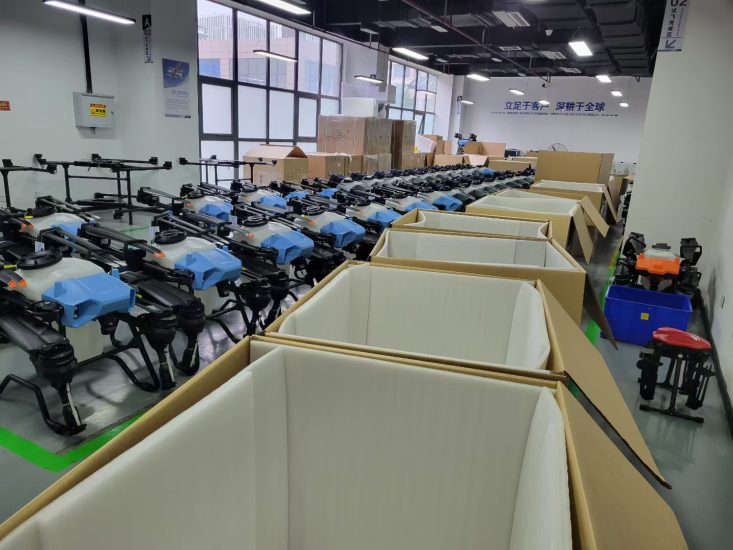


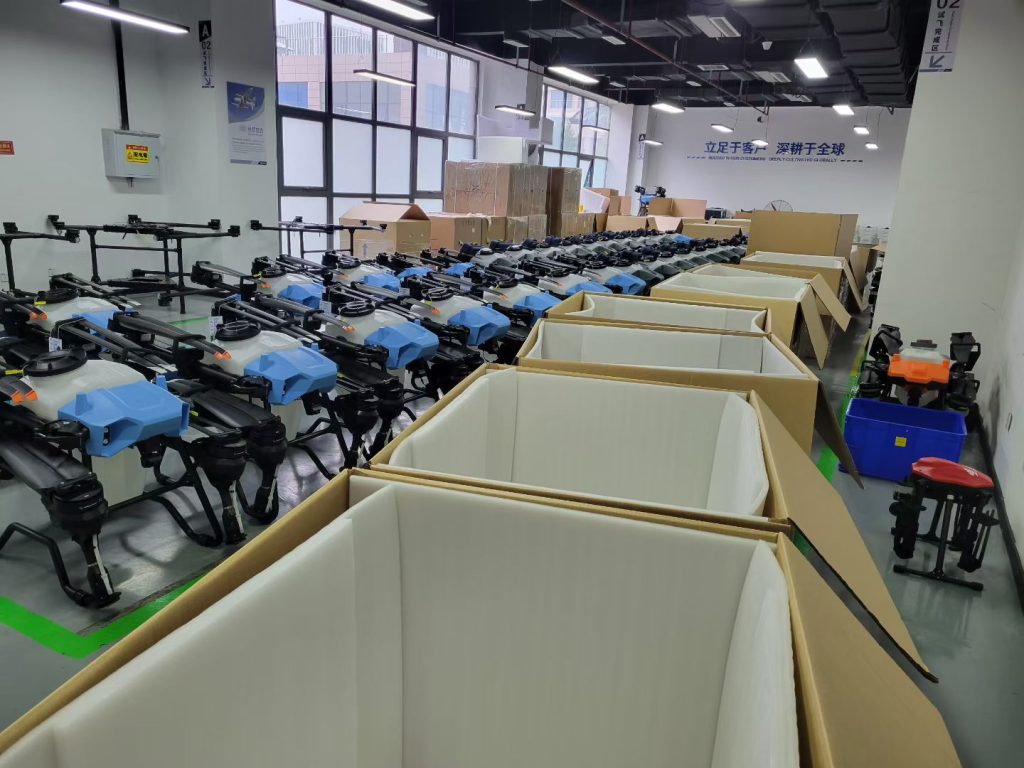
30L Agricultural Spraying Drone: Capacity, Coverage, Flight Time and Applications
A 30L agricultural spraying drone sits in an interesting position in the commercial agricultural equipment market.
It is large enough to reduce frequent refilling compared with smaller spraying drones, but it is still considerably easier to transport and deploy than many larger agricultural UAV systems.
That makes the 30L class attractive to commercial farms, agricultural spraying contractors, crop-protection service companies, equipment distributors, and buyers looking for a professional spraying drone without immediately moving into a much heavier platform.
But there is an important point that is often overlooked:
A 30L tank does not automatically mean 30L of useful productivity per flight.
The actual performance of a 30L agricultural spraying drone depends on application rate, spray width, flight speed, battery capacity, payload weight, field layout, refill logistics, weather, crop conditions, and operator workflow.
For buyers, the better question is not simply:
“How much liquid can a 30L drone carry?”
The more useful question is:
“How efficiently can a 30L drone complete my actual spraying operation?”
This guide explains what buyers should evaluate before purchasing a 30L agricultural spraying drone.
What Is a 30L Agricultural Spraying Drone?
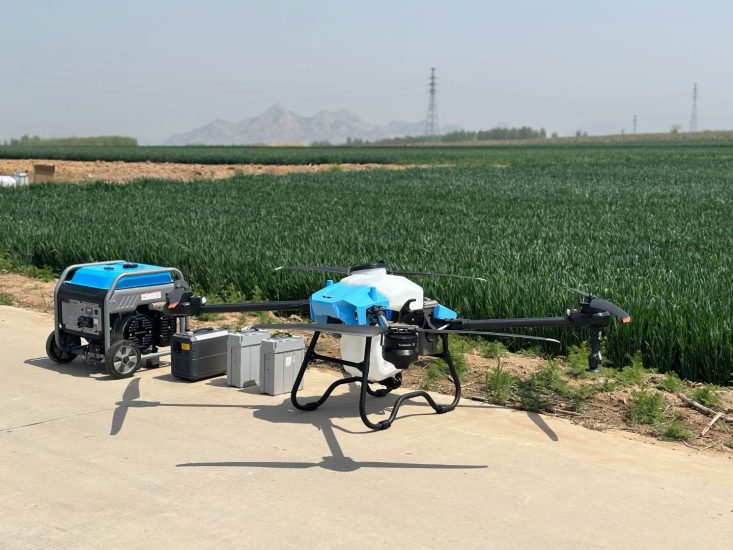
A 30L agricultural spraying drone is an unmanned aerial vehicle designed primarily for liquid agricultural applications, with a spraying tank in the 30-liter class.
The aircraft normally combines several systems:
- Flight-control system
- Motors and propellers
- Agricultural spraying tank
- Pumps
- Nozzles
- Flow-control system
- Navigation system
- Remote controller
- Battery system
- Charging equipment
- Safety and sensing systems
The tank is only one part of the system.
A reliable commercial spraying platform must be able to carry the liquid, maintain stable flight, control the application rate, and complete repeated operating cycles without excessive downtime.
MSOEN’s current agricultural drone product category covers agricultural spraying drones as well as other agricultural UAV applications, making it useful for buyers comparing different configurations before choosing a specific payload class.
https://www.msoen.com/agricultural-drones/
Why Choose a 30L Agricultural Spraying Drone?
The main reason buyers consider a 30L drone is not simply the larger tank.
It is the possibility of improving the entire operating cycle.
Suppose two drones are working on the same farm.
A smaller drone may need to return to the refill station more frequently. Each return takes time, and the lost time becomes significant when the drone is used for several hours every day.
A 30L system can reduce the number of refill cycles when the application rate and field conditions allow the larger payload to be used efficiently.
This can be particularly useful for:
- Large crop fields
- Commercial farms
- Agricultural contractors
- Crop-protection service companies
- Rice farming
- Wheat and corn operations
- Soybean production
- Large-scale field spraying
- Professional agricultural service operations
However, the larger tank also creates additional requirements.
A full tank means more payload.
More payload means the aircraft needs sufficient motor power, battery capacity, frame strength, and flight stability.
Therefore, 30L should be viewed as a complete aircraft configuration rather than simply a tank size.
30L Does Not Mean Every Flight Should Carry 30 Liters
This is one of the most important points for buyers.
A 30L spraying drone can have a 30-liter tank, but the actual liquid volume used during a flight depends on the required application rate.
For example, if the application requirement is relatively low, filling the tank completely may not be necessary.
If the application rate is higher, the drone may consume its liquid capacity more quickly.
Therefore, the correct calculation is:
Required liquid volume = target area × application rate
For example, if a spraying operation requires 15 L/ha and the target area is 2 hectares:
15 L/ha × 2 ha = 30 L
In this simplified example, a 30L tank can theoretically carry enough liquid for approximately 2 hectares.
But the real operation still depends on:
- Actual spray rate
- Spray width
- Flight speed
- Field shape
- Battery endurance
- Turning
- Refilling
- Takeoff and landing
- Weather
- Operator workflow
This is why buyers should calculate the operating cycle instead of looking only at the tank specification.
For a more detailed explanation of agricultural drone coverage calculations, see:
https://www.msoen.com/how-much-area-can-an-agricultural-drone-cover-a-practical-guide-to-agricultural-drone-spraying-efficiency/
30L Agricultural Drone Coverage: What Should You Expect?
There is no responsible way to give one universal number for how many hectares a 30L drone can spray per hour.
Two 30L drones can produce different results.
Even the same drone can produce different results on two different farms.
The basic productivity relationship can be simplified as:
Theoretical coverage = working width × flight speed
But this is only the beginning.
Actual field productivity also includes:
- Turning
- Battery replacement
- Refilling
- Takeoff
- Landing
- Route changes
- Moving between fields
- Chemical preparation
- Operator breaks
- Weather interruptions
- Obstacles
- Field boundaries
Consequently, a buyer should ask a manufacturer for actual field-test data, rather than accepting a theoretical maximum as guaranteed production.
MSOEN’s article on hourly agricultural drone coverage explains why real productivity can be substantially different from theoretical coverage.
https://www.msoen.com/how-many-acres-can-an-agricultural-spraying-drone-cover-per-hour
The Most Important Number May Be Hectares per Hour
When comparing 20L, 30L, 40L, or larger agricultural drones, tank capacity alone is not enough.
Consider two hypothetical machines.
Drone A
- 20L tank
- Lower weight
- Fast battery turnaround
- Short refill time
- Smaller operating footprint
Drone B
- 30L tank
- Larger battery
- Higher payload
- Longer refill cycle
- Heavier operating system
Drone B carries more liquid.
But if its additional payload causes longer battery turnaround and slower ground operations, the productivity difference may be smaller than expected.
That is why professional buyers should compare:
Effective hectares per hour
rather than:
Tank capacity alone.
The objective is to maximize useful agricultural work, not simply liquid carried per flight.
Flight Time of a 30L Agricultural Spraying Drone
Flight time is another specification that needs careful interpretation.
A manufacturer may provide a maximum flight time under a specific test condition.
But an agricultural spraying drone normally operates under changing payload conditions.
A nearly empty aircraft and a fully loaded aircraft do not necessarily consume power at the same rate.
For this reason, buyers should ask for several numbers:
- Flight time without payload
- Flight time at working payload
- Flight time at full tank
- Recommended operating battery level
- Battery charging time
- Battery cycle life
- Recommended number of battery sets
The most useful number is usually the flight time under the payload and operating conditions that match your actual work.
Do not make a purchasing decision based only on the longest advertised flight time.
Battery Management Can Determine Daily Productivity
A professional agricultural drone operation is not simply:
Fly → Spray → Land.
It is closer to:
Fly → Spray → Land → Change battery → Refill → Prepare next load → Take off again.
If the aircraft has only one battery set, the drone may spend a significant amount of time waiting.
A commercial 30L operation should therefore consider the complete battery system.
A buyer should determine:
- How many batteries are supplied?
- How long does charging take?
- How many charging stations are required?
- Can batteries be rotated continuously?
- What is the expected battery cycle life?
- What happens if one battery fails?
- Are replacement batteries readily available?
A drone with excellent flight performance can still have poor daily productivity if its battery logistics are weak.
Spray Width Matters as Much as Tank Capacity
A 30L tank does not determine the working width.
Spray width depends on the spraying system, nozzle arrangement, flight altitude, application requirements, droplet characteristics, wind conditions, and crop environment.
A wider spray pattern may increase theoretical coverage.
But wider is not automatically better.
The goal is uniform agricultural application.
If excessive width creates uneven coverage, drift, or excessive overlap, the theoretical productivity advantage may disappear.
For professional spraying, buyers should ask the manufacturer for:
- Effective spray width
- Nozzle type
- Number of nozzles
- Pump capacity
- Flow rate
- Recommended flight height
- Recommended operating speed
- Application rate
- Droplet characteristics
- Flow-control method
These specifications provide a much clearer picture of actual spraying performance.
30L Drone for Rice Farming
Rice is one of the applications where agricultural spraying drones can be particularly practical.
Wet or flooded fields can make ground equipment difficult to operate without damaging crops or creating access problems.
A drone can operate above the field without driving through the crop.
For a commercial rice operation, a 30L drone may be attractive when:
- Fields are relatively large
- Refill access is available
- High daily spraying volume is required
- Battery rotation is well organized
- The aircraft can maintain stable flight
- Route planning is available
But fragmented rice fields require a different calculation.
If the fields are small and scattered, time spent moving between fields may become more important than tank capacity.
In that situation, a smaller drone may sometimes achieve better overall efficiency.
30L Drone for Wheat and Corn
Large field crops are another natural application for a 30L spraying platform.
Large open fields can allow the aircraft to maintain relatively consistent routes.
The important factors include:
- Field size
- Crop height
- Application rate
- Spray width
- Flight speed
- Battery availability
- Refill location
- Number of daily spraying hours
For large commercial operations, reducing refill frequency can become valuable.
However, the buyer should calculate the complete working cycle before deciding that 30L is automatically better.
30L Drone for Orchards
Orchards are more complicated.
A large tank does not necessarily translate into better orchard spraying performance.
Fruit trees create:
- Obstacles
- Irregular flight paths
- Changing canopy density
- Variable terrain
- Narrow operating spaces
- Different spraying requirements
Orchard spraying may require greater attention to flight stability, obstacle detection, terrain following, spray penetration, and route planning.
MSOEN also has dedicated information on orchard spraying productivity:
https://www.msoen.com/how-many-acres-can-an-orchard-spraying-drone-cover-in-one-day/
For orchard buyers, the question should therefore be:
Can the drone deliver the required spray performance around the crop structure?
rather than:
How large is the tank?
30L Drone for Professional Agricultural Contractors
Agricultural contractors have different purchasing priorities from individual farmers.
A contractor may use the same drone across multiple farms and crop types.
This means utilization becomes extremely important.
A contractor should evaluate:
- Daily operating hours
- Seasonal workload
- Average field size
- Distance between farms
- Refill logistics
- Battery rotation
- Transport requirements
- Spare parts
- Maintenance
- Operator training
- Warranty
- Technical support
A 30L drone that can be operated continuously for long working periods may be more valuable than a cheaper drone that frequently stops for charging, maintenance, or refilling.
30L vs 20L: Is Bigger Always Better?
Not necessarily.
A 20L drone may be more attractive when:
- Fields are small
- Transport distance is long
- Terrain is complicated
- Maneuverability is important
- Daily workload is moderate
- Battery infrastructure is limited
A 30L drone may be more attractive when:
- Fields are larger
- Daily spraying volume is high
- Refill stations are well positioned
- Battery rotation is available
- Higher payload productivity is required
The decision should be based on the complete operation.
If you are comparing agricultural drones according to farm size, crop type, and operating conditions, this existing MSOEN guide can be used alongside your evaluation:
https://www.msoen.com/how-to-choose-the-right-agricultural-drone-for-your-farm
30L vs 50KG Agricultural Drone
The comparison becomes more complicated when moving from liquid spraying to higher-payload agricultural drones.
A 30L liquid spraying drone is designed around liquid application.
A 50KG-class agricultural drone may be configured for fertilizer or granular material spreading, or other payload requirements.
Therefore, buyers should not compare “30L” and “50KG” as though they were the same measurement.
They represent different payload/application concepts.
For buyers who need spraying, focus on:
- Tank capacity
- Pump
- Nozzles
- Flow rate
- Spray width
- Application rate
For buyers who need spreading, focus on:
- Hopper capacity
- Spreading mechanism
- Material compatibility
- Spreading width
- Application rate
For mixed operations, the manufacturer should explain whether the aircraft supports interchangeable agricultural modules.
How Much Does a 30L Agricultural Drone Cost?
Price depends heavily on the aircraft configuration.
A 30L drone quotation may include very different equipment packages.
The buyer should determine whether the quoted price includes:
- Aircraft
- Remote controller
- Batteries
- Charger
- Spraying tank
- Pumps
- Nozzles
- Flow-control system
- Navigation system
- Obstacle sensors
- RTK equipment
- Spare parts
- Training
- Warranty
- Packaging
A low initial price may not represent the lowest total cost.
For example, a quotation without sufficient batteries may look attractive until the buyer calculates the cost of purchasing additional battery sets.
Similarly, a lower-priced drone may become expensive if spare parts are difficult to obtain.
MSOEN also has a dedicated guide discussing the cost of a 30KG agricultural drone, which is useful for understanding why payload class alone does not determine the final equipment price:
https://www.msoen.com/how-much-does-a-30kg-agricultural-drone-cost/
What Should Be Included in a 30L Drone Quotation?
For international buyers, the quotation should be detailed enough to compare suppliers on an equal basis.
Ask the manufacturer to specify:
Aircraft
- Model
- Dimensions
- Empty weight
- Maximum takeoff weight
- Maximum payload
Spraying System
- Tank capacity
- Pump type
- Maximum flow rate
- Nozzle configuration
- Spray width
- Flow-control system
Battery
- Voltage
- Capacity
- Quantity
- Charging time
- Expected cycle life
Navigation
- Positioning system
- RTK availability
- Route planning
- Return-to-home
- Obstacle detection
- Terrain-following capability
Support
- Warranty
- Spare parts
- Technical support
- Training
- Software updates
Without this information, comparing two quotations can be misleading.
What Questions Should You Ask a 30L Agricultural Drone Manufacturer?
Before placing an order, ask questions that reveal actual field performance.
For example:
1. What is the full-load flight time?
Do not accept only the empty-load figure.
2. What is the recommended application rate?
This helps determine how much area can be treated per tank.
3. What is the effective spray width?
The advertised maximum may not equal the recommended operating width.
4. How long does a complete battery change take?
This affects daily productivity.
5. How long does refilling take?
Ground logistics can become a major bottleneck.
6. What field-test data can you provide?
Ask for test conditions, not only marketing numbers.
7. What spare parts should be purchased with the first order?
A commercial operator should prepare for routine maintenance.
8. Can the aircraft be customized?
This is important for distributors and OEM buyers.
9. What support is available after delivery?
Technical support can be as important as the initial purchase price.
When Should You Choose a 30L Agricultural Spraying Drone?
A 30L model is worth serious consideration when the following conditions are present:
- You operate a medium-to-large agricultural area
- Your daily spraying workload is substantial
- Refill time is becoming a bottleneck
- Your fields allow efficient flight routes
- You have sufficient battery infrastructure
- You need higher liquid capacity
- You want professional commercial productivity
- You have appropriate transport and maintenance resources
It may not be the best choice when:
- Fields are very small
- Access is extremely difficult
- Terrain requires highly maneuverable equipment
- Daily spraying volume is low
- Battery infrastructure is limited
- Local regulations restrict the aircraft category
- The larger payload provides little practical benefit
The right drone is the one that matches the operation.
A Better Way to Calculate Whether 30L Is Right for You
Before requesting quotations, write down six numbers:
1. Total area
How many hectares or acres need treatment?
2. Application rate
How many liters per hectare are required?
3. Working hours
How many hours can you realistically operate each day?
4. Refill time
How long does it take to refill the drone?
5. Battery turnaround
How long does it take to replace or recharge the battery?
6. Field efficiency
How much time is actually spent spraying rather than turning, moving, refilling, or preparing?
Once these numbers are available, you can estimate realistic productivity.
This approach is much more useful than simply saying:
“30L is a large drone, so it must be faster.”
Example of a Practical 30L Workflow
Imagine a contractor needs to spray a large agricultural area.
The contractor has:
- A 30L spraying drone
- Multiple battery sets
- A nearby water supply
- A prepared mixing station
- A trained operator
- Large fields with relatively simple boundaries
The drone can land near the operating area.
One team member handles refilling while another manages battery rotation.
The operator can therefore return to the field quickly after each flight.
In this situation, the 30L capacity can become genuinely useful because the aircraft, battery system, and ground support are working together.
Now imagine the same drone being used on dozens of small fields scattered across a large region.
The aircraft may spend more time being transported and repositioned than spraying.
The same 30L specification now has a very different economic value.
This is why agricultural drone productivity is a system-level problem, not just an aircraft specification problem.
30L Agricultural Drone Buying Checklist
Before placing an order, confirm the following:
- [ ] 30L tank capacity
- [ ] Maximum payload
- [ ] Maximum takeoff weight
- [ ] Full-load flight time
- [ ] Battery capacity
- [ ] Number of batteries
- [ ] Charging time
- [ ] Spray width
- [ ] Flow rate
- [ ] Pump configuration
- [ ] Nozzle type
- [ ] Application rate
- [ ] Navigation system
- [ ] RTK availability
- [ ] Obstacle detection
- [ ] Terrain-following capability
- [ ] Route planning
- [ ] Remote-control system
- [ ] Spare parts
- [ ] Warranty
- [ ] Technical support
- [ ] Shipping requirements
- [ ] Local operating regulations
- [ ] OEM/ODM availability
Is a 30L Agricultural Drone Suitable for International Buyers?
Yes, but international buyers need to evaluate more than the aircraft itself.
Before importing a 30L agricultural spraying drone, check:
- Local UAV regulations
- Agricultural chemical regulations
- Radio-frequency requirements
- Battery transportation requirements
- Import documentation
- Product labeling
- Operator requirements
- Insurance requirements
- After-sales support
- Spare-parts availability
A manufacturer should be able to provide the technical information necessary for the buyer to evaluate whether the equipment can be used legally and practically in the target market.
For buyers interested in customized agricultural drones, OEM and ODM capabilities can also be important.
MSOEN provides information about agricultural drone OEM and ODM manufacturing here:
https://www.msoen.com/agricultural-drone-oem-and-odm-a-complete-guide-to-custom-drone-manufacturing/
30L Agricultural Spraying Drone for OEM and Private Label Buyers
The 30L class can also be attractive to distributors.
A distributor may not want to sell a completely standard product.
Instead, the buyer may request:
- Private-label branding
- Customized colors
- Customized logo
- Customized packaging
- Different controller language
- Modified spraying configuration
- Market-specific documentation
- Additional accessories
- Customized software requirements
In this situation, supplier capability becomes part of the product evaluation.
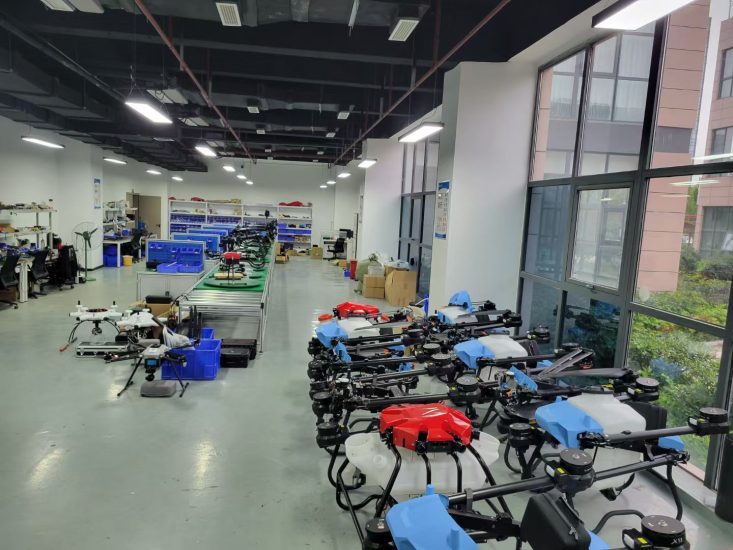
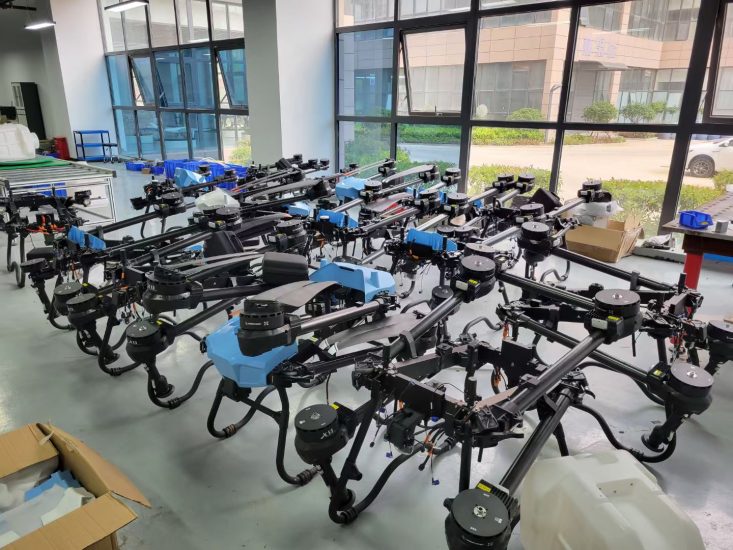
A manufacturer should have the engineering, production, testing, quality-control, and technical-support capabilities necessary to maintain consistent production.
The buyer should also confirm minimum order quantities and customization costs before starting a private-label project.
The Real Value of a 30L Agricultural Spraying Drone
A 30L agricultural spraying drone should not be evaluated as a tank with motors attached.
It is a complete agricultural operating system.
Its value comes from the relationship between:
Payload + Flight Time + Spray Performance + Battery Turnaround + Refill Logistics + Navigation + Operator Workflow
If these elements work together, the 30L platform can provide strong productivity for commercial agricultural spraying.
If one of them becomes a bottleneck, the theoretical advantage of the larger tank may disappear.
That is why professional buyers should ask manufacturers for field-test data, full-load flight information, spray-system specifications, battery data, and complete operating-cycle calculations.
Frequently Asked Questions
Is a 30L agricultural spraying drone good for large farms?
It can be a suitable option for large farms because the higher liquid capacity can reduce refill frequency. However, actual suitability depends on field layout, application rate, battery infrastructure, spray performance, and daily workload.
How much area can a 30L agricultural drone spray?
There is no universal figure. Coverage depends on application rate, spray width, flight speed, tank capacity, battery endurance, field efficiency, refilling, and operator workflow.
How long can a 30L agricultural drone fly?
Flight time depends on battery capacity, aircraft weight, payload, weather, flight speed, and operating conditions. Buyers should request full-load flight-time data rather than relying only on maximum advertised endurance.
Is a 30L drone better than a 20L drone?
Not automatically. A 30L drone may reduce refill cycles, but it can also require more battery power and stronger ground support. The better choice is the configuration that delivers the lowest practical operating cost for the intended work.
Can a 30L agricultural drone spray orchards?
It can be used for certain orchard applications, but orchard operations require careful evaluation of maneuverability, obstacle detection, canopy conditions, terrain, spray performance, and route planning.
What should I ask a manufacturer before buying?
Ask about full-load flight time, spray width, flow rate, application rate, battery cycle life, refill time, field-test results, spare parts, warranty, technical support, and local-market documentation.
Can a 30L agricultural drone be customized?
Depending on the manufacturer, customization can include branding, colors, packaging, spraying configurations, software, documentation, and other OEM/ODM requirements.
Final Takeaway
A 30L agricultural spraying drone can be an effective commercial farming platform, but its value cannot be judged from the tank capacity alone.
The important question is how the aircraft performs during a complete working cycle.
Before buying, evaluate:
30L capacity → full-load flight time → spray width → application rate → battery turnaround → refill time → field efficiency → daily productivity → operating cost.
If these factors match your farm or agricultural service business, a 30L platform can provide a useful balance between payload capacity, maneuverability, and commercial productivity.
For manufacturers, distributors, contractors, and international agricultural equipment buyers, the safest approach is to request complete specifications and realistic field-test data before placing a bulk order.
The best agricultural drone is not necessarily the largest one.
It is the one that can repeatedly complete your actual work with consistent spraying performance, manageable operating costs, reliable support, and the right configuration for your crops and fields.
For buyers evaluating 30L agricultural spraying solutions, MSOEN provides agricultural drone manufacturing and OEM/ODM capabilities for different agricultural applications and international markets.


No comments yet