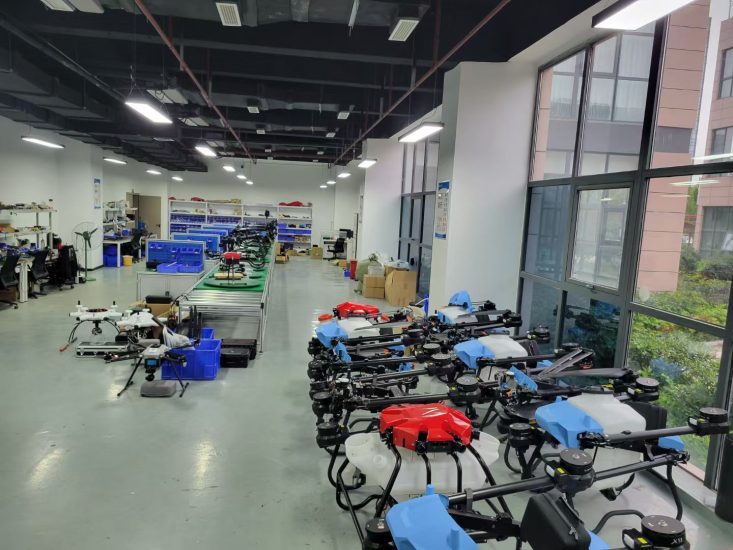


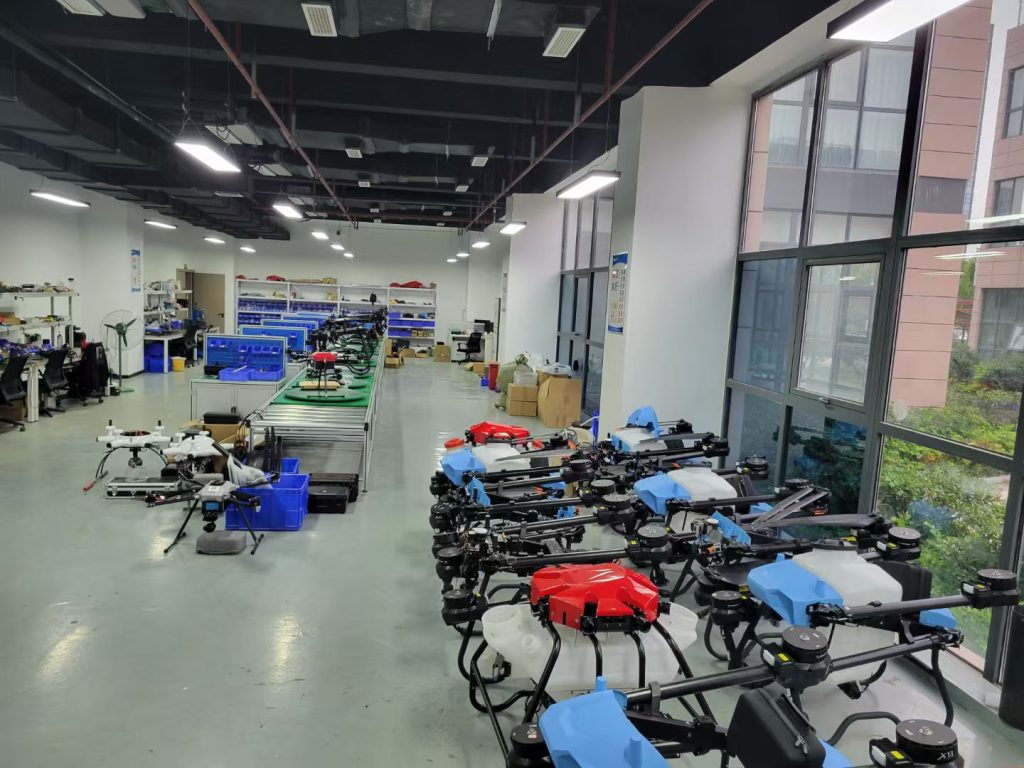
When buying a professional UAV, the aircraft itself is only part of the decision. For distributors, agricultural service companies, industrial users, and OEM customers, manufacturing quality, testing procedures, component inspection, flight testing, and production consistency are equally important.
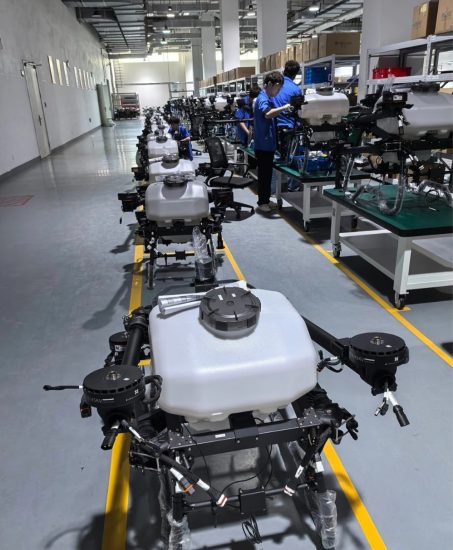
MSOEN applies quality control throughout the UAV manufacturing process, from component selection and assembly to electrical inspection, system testing, flight testing, and final inspection.
The purpose of quality control is not simply to make a drone look good before shipment. A professional UAV needs to perform consistently under real operating conditions, especially when it carries agricultural chemicals, mapping equipment, cameras, industrial sensors, or heavy payloads.
Why UAV Quality Control Matters
Drones operate under conditions that place significant demands on their mechanical, electrical, and software systems.
A typical UAV may experience:
- High motor loads
- Continuous vibration
- Battery discharge and charging cycles
- Wind and temperature changes
- Repeated takeoff and landing
- Payload variation
- Long operating periods
- Moisture and dust exposure
- Radio communication requirements
- Navigation and positioning requirements
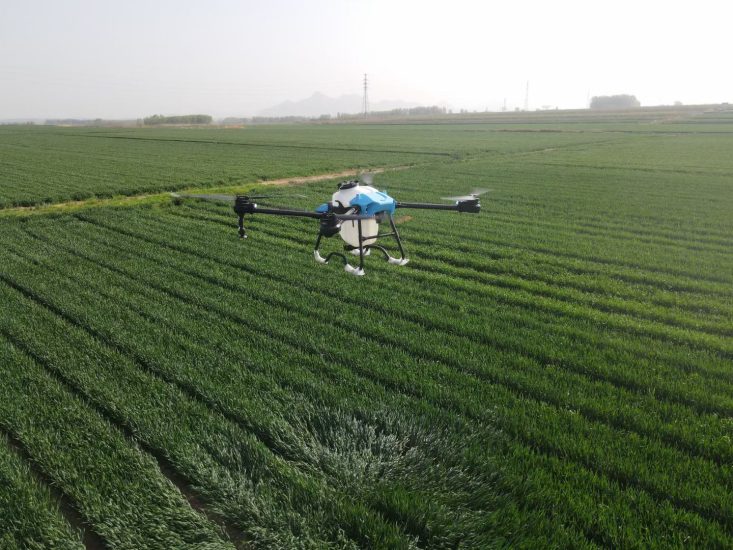
For agricultural drones, the requirements can be even more demanding because the aircraft may repeatedly carry liquid or solid payloads during field operations.
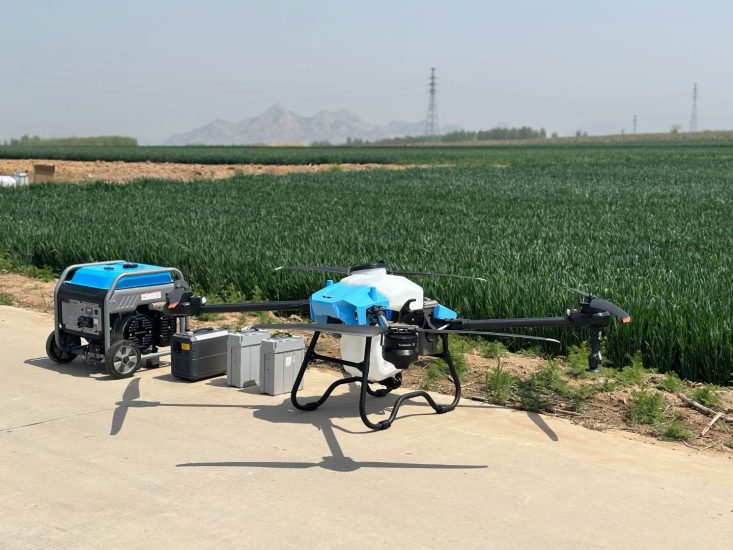
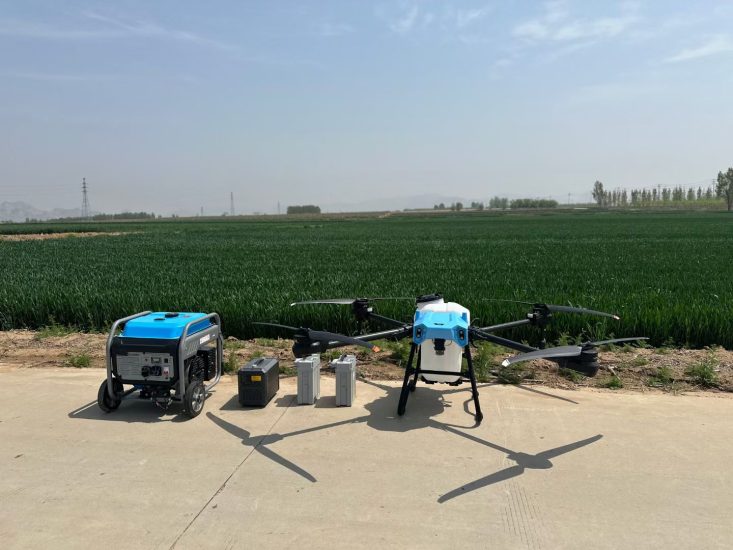
For example, the MSOEN M50 Agricultural Drone is designed around a 50-liter tank and spraying applications. Its configuration includes a carbon-fiber structure, spraying system, intelligent flight control, GPS positioning, optional RTK, terrain-following radar, and obstacle avoidance functions.
This means quality control cannot focus on only one component. The entire aircraft must work as an integrated system.
1. Incoming Component Inspection
Quality control starts before the drone is assembled.
Components can include:
- Motors
- Electronic speed controllers
- Flight controllers
- Batteries
- Power distribution systems
- GPS and positioning modules
- Radar systems
- Cameras
- Pumps
- Spray nozzles
- Carbon-fiber frames
- Wiring harnesses
- Landing gear
- Communication equipment
Incoming components should be checked for specifications, physical condition, compatibility, and consistency.
This step is especially important for OEM and ODM projects because customized drones may use different components depending on the customer’s application.
A component that works correctly by itself may still be unsuitable when integrated into a specific UAV platform.
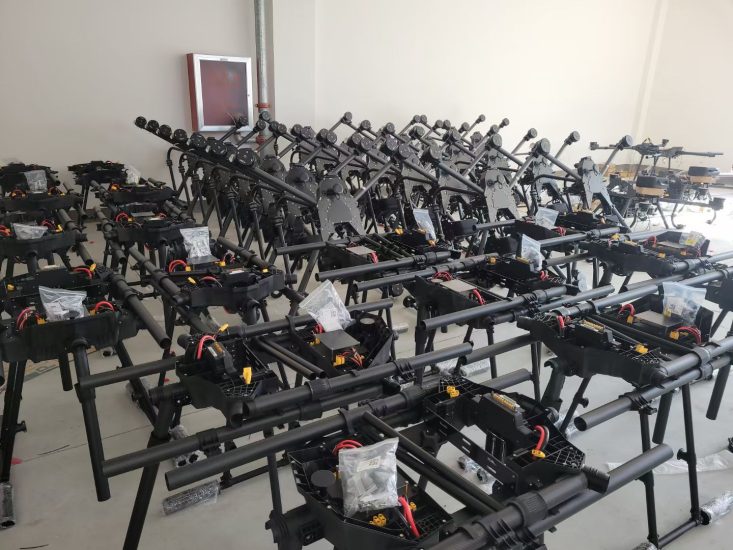
2. Frame and Mechanical Inspection
The aircraft frame carries the motors, batteries, payload system, electronics, and other components.
Mechanical inspection therefore focuses on:
- Frame structure
- Arm connections
- Motor mounting
- Landing gear
- Payload mounting
- Fasteners
- Propeller installation
- Vibration-related components
- Overall structural stability
For agricultural UAVs, structural strength becomes increasingly important as payload capacity increases.
A larger agricultural drone cannot simply be treated as a larger version of a small consumer drone. The frame, propulsion system, battery system, flight controller, and payload system must work together.
If you are comparing different payload classes, see our guide on What Is the Heaviest Load an Agricultural Drone Can Lift?.
3. Motor and Propulsion Testing
The propulsion system is one of the most important parts of a UAV.
Quality inspection may include checking:
- Motor operation
- Motor rotation
- Propeller balance
- ESC response
- Current consumption
- Power output
- Abnormal vibration
- Temperature
- Response under different throttle levels
The objective is to identify abnormal behavior before the aircraft reaches the customer.
For high-payload UAVs, propulsion testing becomes even more important because the motors need sufficient reserve capacity for takeoff, climbing, hovering, maneuvering, and landing.
This is also why buyers should not compare drones only by advertised payload capacity.
4. Flight Controller and Electronic System Testing
The flight controller acts as the central control system of the UAV.
Testing can involve:
- Flight controller startup
- Sensor initialization
- Gyroscope response
- Accelerometer response
- GPS positioning
- RTK positioning when equipped
- Compass calibration
- Remote-control communication
- Motor response
- Fail-safe functions
- Flight mode switching
For agricultural applications, stable flight is particularly important because spraying performance depends on consistent flight behavior.
A spraying drone must maintain an appropriate flight path while the spraying system delivers liquid through the nozzles.
The MSOEN M50, for example, uses GPS positioning with optional RTK precision positioning and automatic route planning.
5. Battery and Power System Inspection
Battery performance directly affects UAV reliability.
Quality control should consider:
- Battery voltage
- Charging condition
- Connector condition
- Power output
- Battery communication
- Charging behavior
- Temperature
- Runtime
- Compatibility with the UAV power system
A battery may appear normal during a basic inspection but behave differently under high current demand.
Therefore, professional UAV manufacturing requires the battery, ESC, motor, flight controller, and power distribution system to be evaluated as a complete electrical system.
MSOEN also offers dedicated agricultural drone battery products for customers who need power solutions for agricultural UAV operations.
6. Agricultural Spraying System Testing
Agricultural spraying drones have another important quality-control area: the spraying system.
The system can include:
- Liquid tank
- Pump
- Pipes
- Filters
- Spray nozzles
- Flow-control components
- Electrical connections
- Control system
Testing should check whether the system operates correctly and whether liquid can be distributed consistently.
Spraying performance depends on more than tank capacity. Flow rate, nozzle configuration, flight speed, spray width, altitude, weather, and crop conditions all influence the actual field result.
For buyers comparing different agricultural drones, our guide How to Choose an Agricultural Drone for Professional Farm Spraying provides a practical framework for evaluating these factors.
7. Payload and Load Testing
Payload capacity is one of the most important specifications for professional UAV buyers.
However, maximum payload should not be considered independently from flight performance.
Testing can evaluate the aircraft under different payload conditions, including:
- Empty-load operation
- Normal operating payload
- Higher payload
- Takeoff performance
- Hover stability
- Climbing performance
- Flight endurance
- Motor temperature
- Battery consumption
This is particularly important for agricultural spraying drones, heavy-lift UAVs, and industrial transport platforms.
A drone designed for a 30 kg, 50 kg, or larger payload requires a different approach to propulsion, frame structure, battery capacity, and flight control.
For a deeper comparison, see Heavy Lift Drone Manufacturer: How to Choose the Right 30KG, 50KG or Larger Drone.
8. Flight Testing Before Delivery
A UAV should not be considered ready simply because all components have been assembled.
Flight testing provides an opportunity to identify problems that cannot always be detected during static inspection.
Depending on the aircraft type, flight testing may evaluate:
- Takeoff
- Hovering
- Forward flight
- Turning
- Climbing
- Descending
- Landing
- GPS positioning
- Remote-control response
- Battery performance
- Payload behavior
- Spraying performance
- Abnormal vibration
For agricultural drones, flight testing can also help verify that the aircraft remains stable when the payload changes during spraying operations.
9. Quality Control for Different UAV Applications
Different drones require different testing priorities.
Agricultural Drones
Agricultural UAV quality control focuses heavily on:
- Payload capacity
- Flight stability
- Pump performance
- Spray distribution
- Battery endurance
- Terrain following
- Navigation
- Structural durability
Mapping Drones
Mapping UAVs require attention to:
- Flight stability
- Positioning accuracy
- Camera integration
- Sensor compatibility
- Navigation
- Flight endurance
- Data collection consistency
MSOEN also offers an Agricultural Mapping Drone designed for aerial data collection and precision-agriculture applications.
Aerial Photography Drones
Camera UAVs require additional attention to:
- Camera mounting
- Gimbal stability
- Image transmission
- Flight stability
- Battery performance
- Remote-control response
For buyers looking for a compact photography platform, the MSOEN M1 Photography Drone is one of the products currently listed on the MSOEN product page.
Underwater Drones
Underwater UAVs have very different testing requirements from aerial drones.
Important areas can include:
- Waterproofing
- Housing integrity
- Propulsion
- Camera operation
- Cable connections
- Remote communication
- Pressure resistance
MSOEN currently lists the M5 Underwater Drone as one of its product offerings.
FPV Drones
FPV platforms require attention to:
- Flight controller
- ESC
- Motor response
- Video transmission
- Receiver communication
- Propeller balance
- Battery system
The F722V3 + 80A/100A 4-in-1 ESC Stack listed by MSOEN is designed for FPV racing, freestyle, long-range, and other high-performance drone builds.
MSOEN also lists an FPV Drone as a product offering.
Fixed-Wing UAVs
Fixed-wing UAVs have different aerodynamic and operational requirements.
Quality control can include:
- Wing structure
- Motor system
- Propeller
- Flight controller
- Navigation
- Takeoff
- Cruise performance
- Landing
- Battery endurance
MSOEN’s product catalog also includes a Fixed-wing UAV.
10. Final Inspection Before Shipment
After assembly and testing, the UAV should receive a final inspection.
A final inspection can cover:
- Overall appearance
- Frame condition
- Motor installation
- Propeller installation
- Wiring
- Battery connections
- Flight controller
- Remote controller
- Payload system
- Accessories
- Spare parts
- Packaging
- Product documentation
The purpose is to ensure that the aircraft delivered to the customer corresponds with the agreed configuration.
For international buyers, this is particularly important because returning a large UAV or replacement component can create additional shipping costs and downtime.
Quality Control Is More Than a Certificate
A certification document can provide useful evidence, but a certificate alone does not prove that every individual UAV has been properly manufactured and tested.
Buyers should also ask manufacturers about:
- Factory production process
- Quality inspection procedures
- Flight testing
- Component inspection
- Product specifications
- Production capacity
- OEM/ODM capability
- Spare parts
- Technical support
- Warranty
- After-sales service
This is especially important when purchasing UAVs in bulk.
For buyers interested in custom production, Agricultural Drone OEM and ODM: A Complete Guide to Custom Drone Manufacturing explains how customization can affect drone configuration, manufacturing, and supply.
Quality Control for OEM and ODM Drone Manufacturing
OEM and ODM projects require additional quality-control considerations.
A customized UAV may involve changes to:
- Brand identity
- Frame design
- Payload capacity
- Battery system
- Spraying system
- Flight controller
- Camera
- Sensors
- Communication system
- Software
- Packaging
Every customization can potentially affect the aircraft’s overall performance.
Therefore, OEM customers should establish clear specifications before production begins.
The manufacturing process should then verify that the finished product matches the approved specifications.
This is particularly important for distributors that intend to sell the UAV under their own brand.
Why Buyers Should Evaluate the Manufacturer, Not Just the Drone
A good UAV specification sheet is useful, but it does not tell the complete story.
Two drones may have similar payload capacity and flight time while having very different manufacturing processes and quality-control systems.
When evaluating a UAV manufacturer, buyers should look at the complete chain:
Product design → Component selection → Assembly → Electrical inspection → System testing → Flight testing → Final inspection → Packaging → After-sales support
This gives buyers a much clearer understanding of the manufacturer’s actual production capability.
How MSOEN Approaches UAV Manufacturing Quality
MSOEN operates as an agricultural and industrial UAV manufacturer providing product development, engineering, manufacturing, quality control, customization, and OEM/ODM support.
Its current product range covers agricultural drones, spraying drones, mapping drones, aerial photography drones, industrial inspection UAVs, and other specialized platforms.
For agricultural drone buyers, quality control is particularly important because the aircraft may be used repeatedly in demanding field conditions.
The goal is not simply to produce a drone that can fly.
The goal is to produce a UAV that can perform its intended task consistently.
Frequently Asked Questions
What quality tests should an agricultural drone pass?
An agricultural drone should be evaluated for propulsion, flight control, battery performance, payload handling, spraying system operation, navigation, structural stability, and overall flight performance.
Why is flight testing important?
Static inspection cannot identify every operational problem. Flight testing allows manufacturers to evaluate the aircraft under actual flight conditions.
Does a larger payload require more testing?
Yes. Increasing payload can affect motors, batteries, frame stress, flight endurance, and handling characteristics. Higher-payload UAVs therefore require appropriate system-level evaluation.
What should an OEM drone buyer ask a manufacturer?
Buyers should ask about manufacturing capability, component sourcing, testing procedures, quality inspection, customization capability, production capacity, spare parts, warranty, and technical support.
Is a certification enough to prove drone quality?
No. Certifications can demonstrate compliance with specific requirements, but buyers should also evaluate manufacturing processes, testing procedures, product documentation, and actual production capability.
Can MSOEN provide customized UAV manufacturing?
MSOEN provides OEM and ODM drone manufacturing solutions for customers requiring customized UAV configurations, private-label products, and application-specific drone systems.
Conclusion
Professional UAV quality control is a complete process rather than a single inspection before shipment.
From motors and batteries to flight controllers, frames, payload systems, sensors, and software, every major component contributes to the final performance of the aircraft.
For agricultural drones, spraying systems and payload performance are particularly important. For mapping and photography UAVs, positioning and imaging systems become more critical. For industrial and heavy-lift platforms, structural strength, propulsion, and system reliability require greater attention.
For international buyers, distributors, agricultural service companies, and OEM customers, choosing a manufacturer with a clear quality-control process can reduce operational risk and improve long-term product reliability.
MSOEN provides agricultural and industrial UAV manufacturing, OEM/ODM development, customization, and global supply support. Buyers can contact MSOEN with their required payload, application, operating environment, target market, and quantity to discuss the appropriate UAV configuration.


No comments yet