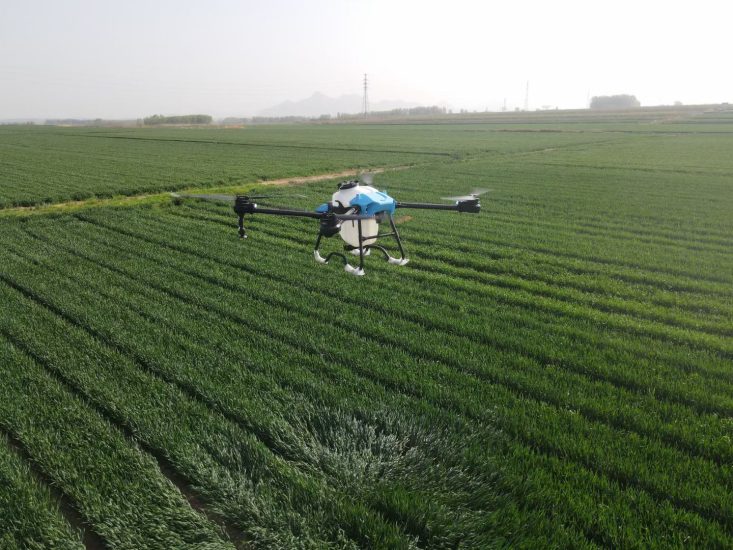


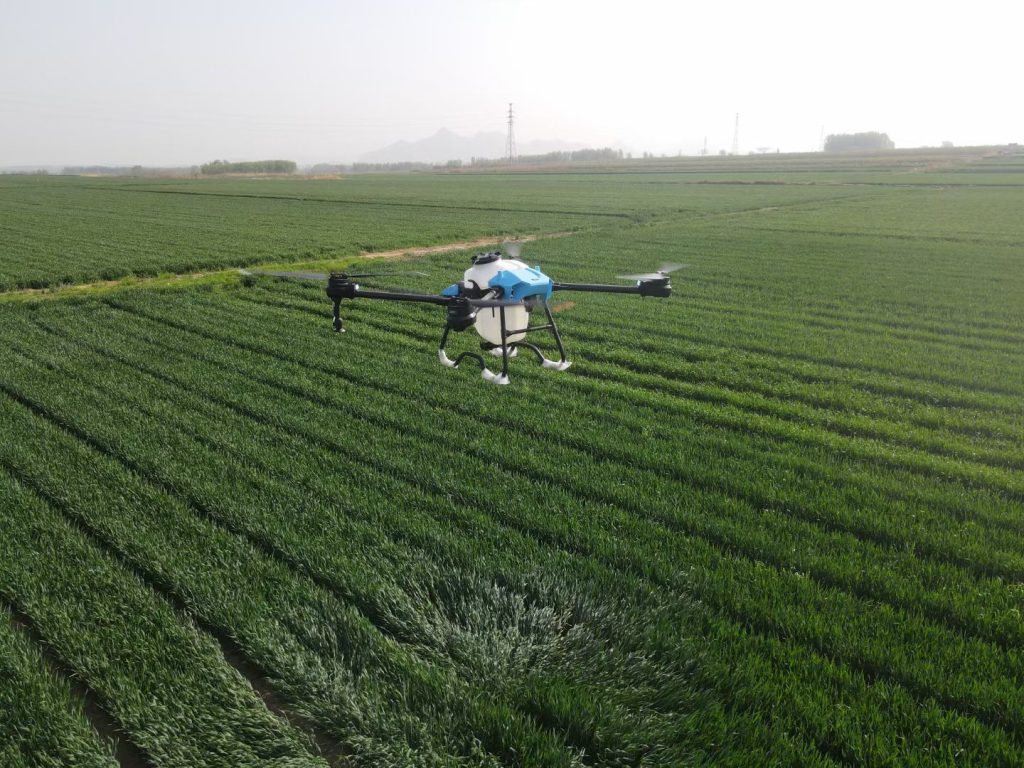
Heavy lift drones are designed for applications where a conventional consumer or small commercial drone cannot provide enough payload capacity.
They are used in areas such as agriculture, industrial transportation, inspection, surveying, construction support, equipment delivery, and specialized aerial operations.
For buyers looking for a heavy lift drone manufacturer, the most important question is not simply how many kilograms a drone can lift.
A heavy lift UAV is a complete engineering system. Its frame, motors, propellers, batteries, flight controller, payload interface, landing system, and safety features must work together under the intended operating conditions.
A drone advertised as a 30KG, 50KG, or larger heavy lift platform should therefore be evaluated according to its real operating payload, flight conditions, endurance, manufacturing quality, and application requirements.
This guide explains what international buyers should know before sourcing a heavy lift drone from a manufacturer.
What Is a Heavy Lift Drone?
A heavy lift drone is a UAV designed to carry substantially heavier payloads than standard commercial drones.
Depending on the design, applications may include:
-
Agricultural operations
-
Equipment transportation
-
Industrial logistics
-
Construction support
-
Surveying equipment
-
Inspection equipment
-
Emergency supply delivery
-
Specialized cargo operations
-
Research projects
-
Customized industrial applications
The required payload varies considerably between applications.
A drone designed for carrying a 30KG payload does not necessarily have the same design requirements as a platform intended for 50KG or more.
As payload increases, the manufacturer must consider the entire propulsion and structural system.
Why the Manufacturer Matters
Heavy lift drones operate under much greater mechanical and electrical demands than lightweight UAVs.
The manufacturer therefore plays an important role in:
-
Structural design
-
Motor selection
-
Propeller matching
-
Battery configuration
-
Flight-control tuning
-
Payload integration
-
Thermal management
-
Testing
-
Safety design
-
Spare-parts support
A buyer should not evaluate a heavy lift drone only from a product photograph or headline payload figure.
The more important question is:
Can the manufacturer demonstrate that the complete aircraft has been designed and tested for the intended payload and operating environment?
Understanding 30KG, 50KG and Larger Heavy Lift Drones
Payload categories are useful for initial product selection, but they should not be treated as absolute performance guarantees.
30KG Heavy Lift Drones
A 30KG-class platform may be suitable for applications requiring a relatively substantial payload while maintaining a more manageable aircraft size.
Potential applications can include:
-
Agricultural equipment
-
Industrial sensors
-
Small cargo
-
Specialized tools
-
Mapping equipment
-
Research equipment
The actual recommended payload should be confirmed with the manufacturer.
50KG Heavy Lift Drones
A 50KG-class platform requires a more substantial propulsion and structural system.
At this level, buyers should pay particular attention to:
-
Motor power
-
Propeller configuration
-
Battery voltage
-
Battery capacity
-
Frame strength
-
Payload mounting
-
Flight-control performance
-
Landing system
The manufacturer should explain the operating conditions associated with its payload rating.
Larger Heavy Lift Platforms
When payload requirements increase beyond 50KG, the engineering requirements become more demanding.
The design may require:
-
Larger motors
-
Multiple propulsion units
-
Higher-capacity batteries
-
Reinforced frames
-
More sophisticated power management
-
Redundant systems
-
Specialized payload interfaces
For these projects, buyers should normally provide the manufacturer with detailed application requirements rather than requesting a generic “largest drone.”
Maximum Payload vs. Recommended Payload
This is one of the most important concepts when comparing heavy lift drones.
A manufacturer may provide a maximum payload specification.
However, maximum payload and recommended operating payload are not necessarily the same.
Maximum payload may refer to a specific test condition.
Recommended operating payload may take into account:
-
Flight duration
-
Battery reserve
-
Weather
-
Temperature
-
Flight altitude
-
Takeoff conditions
-
Safety margins
-
Repeated operation
For commercial applications, the recommended operating configuration is generally more useful than a theoretical maximum.
How Payload Affects Flight Performance
Adding payload changes the behavior of the aircraft.
As payload increases:
-
More lift is required
-
Motor demand increases
-
Battery consumption increases
-
Flight endurance may decrease
-
Takeoff requirements become more demanding
-
Landing loads may increase
This is why buyers should request performance information at different payload levels when possible.
For example, instead of asking only:
“How much can it lift?”
ask:
“What is the expected flight time with a 30KG working payload under normal operating conditions?”
That question provides much more useful information.
The Propulsion System
The propulsion system is at the center of a heavy lift drone.
It normally includes:
-
Motors
-
Electronic speed controllers
-
Propellers
-
Power distribution
-
Batteries
These components must be correctly matched.
Motors
Heavy lift motors need sufficient thrust while maintaining appropriate operating efficiency.
Important factors include:
-
Maximum thrust
-
Continuous operating capability
-
Voltage range
-
Efficiency
-
Thermal performance
-
Operating environment
Buyers should ask whether the motor configuration is intended for continuous heavy-load operation.
Propellers
Propeller size and design influence:
-
Thrust
-
Efficiency
-
Noise
-
Motor load
-
Flight characteristics
The propeller should be matched to the motor and aircraft configuration.
Simply installing a larger propeller does not automatically improve the overall system.
Battery Requirements
Battery capacity becomes increasingly important as payload increases.
A heavy lift drone may consume substantially more power than a smaller UAV.
Buyers should evaluate:
-
Battery voltage
-
Capacity
-
Number of battery packs
-
Energy density
-
Charging time
-
Battery cycle life
-
Replacement cost
-
Charger requirements
For commercial users, battery logistics can become a significant part of the operating cost.
A manufacturer should explain the recommended battery configuration rather than providing only the nominal battery capacity.
Flight Time Under Real Conditions
Advertised flight time should always be interpreted carefully.
Ask the manufacturer:
-
Is the figure measured with or without payload?
-
What battery configuration was used?
-
What flight mode was used?
-
What weather conditions were present?
-
What altitude was used?
-
Does the figure include reserve power?
A heavy lift drone carrying a significant payload will normally have different endurance from the same aircraft flying without cargo.
For procurement decisions, payload-specific flight time is more valuable than an unloaded maximum.
Heavy Lift Drone Frame Design
The airframe must withstand the forces generated by the propulsion system and payload.
Important structural areas include:
-
Center frame
-
Motor arms
-
Landing gear
-
Payload mounting points
-
Battery mounts
-
Connection points
A payload should be properly positioned so that the aircraft’s center of gravity remains within the manufacturer’s recommended range.
Poor payload placement can affect flight stability and control.
Payload Integration
Different customers may need different payloads.
Examples include:
-
Agricultural equipment
-
Cameras
-
Sensors
-
Mapping equipment
-
Industrial tools
-
Delivery containers
-
Research instruments
A capable heavy lift drone manufacturer should be able to discuss how the payload will be integrated.
Questions to ask include:
-
What is the payload mounting interface?
-
What are the permitted dimensions?
-
Where should the center of gravity be located?
-
Is external power available?
-
Can the payload be quickly attached and removed?
-
Can the payload be customized?
Flight Control System
Heavy payloads can affect aircraft dynamics.
The flight-control system therefore needs to handle changes in:
-
Aircraft weight
-
Center of gravity
-
Motor demand
-
Flight response
The manufacturer should configure the aircraft according to the intended payload and operating conditions.
For customized heavy lift projects, flight-control tuning may be an important part of development and testing.
Redundancy and Safety
For higher-payload aircraft, system redundancy can become particularly important.
Depending on the aircraft design, redundancy may involve:
-
Multiple propulsion units
-
Power-system protection
-
Communication systems
-
Navigation systems
-
Flight-control functions
The exact safety architecture varies by manufacturer and aircraft.
Buyers should ask which safety functions are actually included rather than assuming that every heavy lift drone has the same level of redundancy.
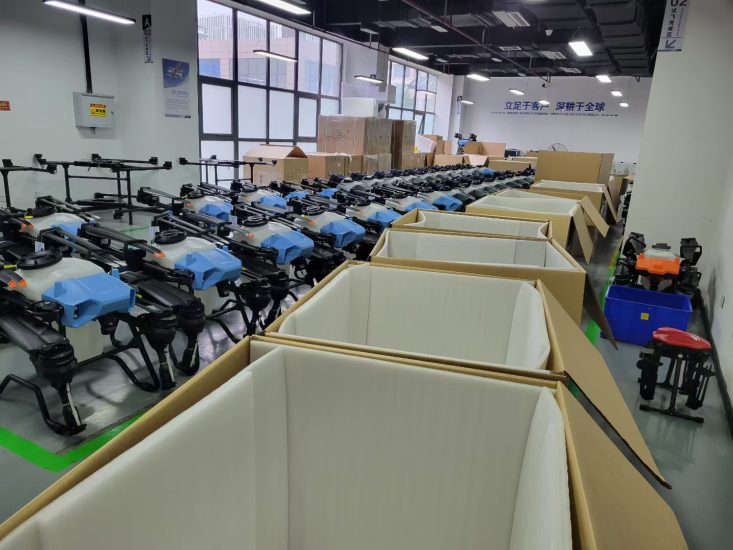
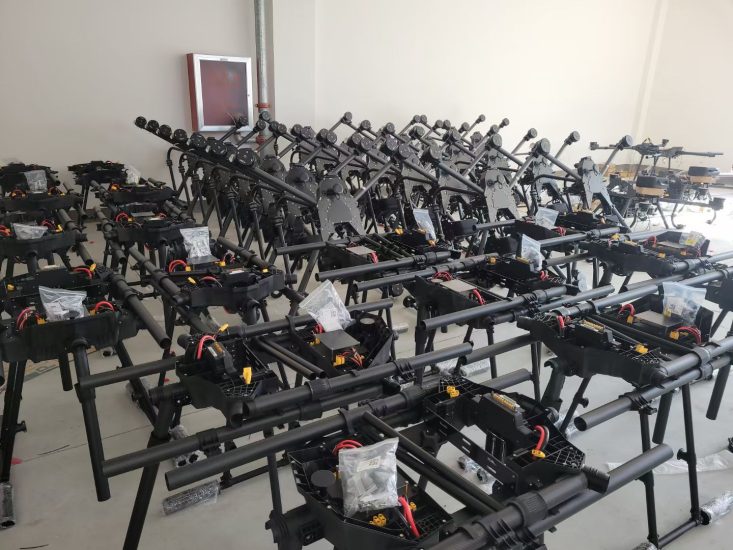
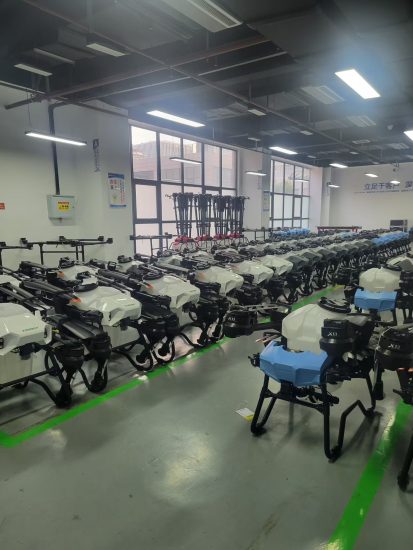
Heavy Lift Drone Manufacturing Process
A professional manufacturer should have a structured production process.
Engineering and Design
The manufacturer determines:
-
Required payload
-
Aircraft configuration
-
Propulsion system
-
Battery system
-
Payload interface
-
Flight-control configuration
Component Selection
Major components are selected according to the intended aircraft configuration.
Frame Assembly
The structural components are assembled and inspected.
Propulsion Installation
Motors, propellers, controllers, and power systems are installed.
Electrical Integration
The manufacturer integrates:
-
Flight controller
-
Power system
-
Navigation components
-
Communication system
-
Battery system
Payload Integration
The aircraft is configured for the intended payload.
Functional Testing
The complete system is checked before flight.
Flight Testing
The aircraft should undergo practical flight testing according to the manufacturer’s procedures.
This can include:
-
Takeoff
-
Hover
-
Forward flight
-
Turning
-
Landing
-
Payload operation
-
Controller communication
Heavy Lift Drone Factory Quality Control
When sourcing directly from a factory, buyers should ask how quality is controlled.
A useful quality-control process can include:
Incoming Component Inspection
Components are checked before production.
Assembly Inspection
Technicians verify installation and connections.
Electrical Testing
Power and communication systems are checked.
Propulsion Testing
Motors and propulsion components are tested according to the manufacturer’s procedures.
Flight Testing
The finished aircraft is tested as a complete system.
Final Inspection
The drone is inspected before packaging and shipment.
For commercial projects, buyers can also ask whether inspection documentation or test records are available.
Heavy Lift Drone OEM
OEM manufacturing can be useful for companies that want to sell heavy lift drones under their own brand.
Potential OEM services can include:
-
Custom logo
-
Product labeling
-
Packaging
-
User manuals
-
Accessories
-
Product configuration
Before beginning an OEM project, buyers should clarify:
-
Minimum order quantity
-
Branding requirements
-
Packaging
-
Production schedule
-
Quality requirements
-
Warranty
-
Spare-parts support
Heavy Lift Drone ODM
ODM is more suitable when a buyer requires deeper customization.
An ODM project may involve:
-
New airframe configuration
-
Custom payload structure
-
Different battery system
-
Specialized propulsion system
-
Custom controller
-
Software configuration
-
Application-specific accessories
For highly specialized applications, ODM can allow the aircraft to be designed around the customer’s actual operating requirements.
However, customized development normally requires engineering evaluation and additional testing.
Applications of Heavy Lift Drones
Heavy lift UAVs can serve many industries.
Agriculture
Heavy lift platforms may be configured for agricultural equipment, spreading systems, spraying systems, or other specialized payloads.
The exact application depends on the aircraft design and local operating requirements.
Industrial Inspection
A larger payload capacity can allow a drone to carry specialized inspection equipment.
Examples may include:
-
Cameras
-
Sensors
-
Lighting equipment
-
Measurement instruments
Construction
Heavy lift UAVs may support certain construction tasks where aerial transportation or specialized equipment deployment is appropriate.
Surveying and Mapping
Larger drones can carry heavier sensors and equipment than small mapping platforms.
However, payload weight must always be considered together with flight endurance.
Research
Universities, engineering companies, and research organizations may require custom payloads for experimental applications.
Heavy lift platforms can provide greater flexibility when the payload cannot be reduced sufficiently.
How to Choose a Heavy Lift Drone Manufacturer
A practical evaluation should include several categories.
Category |
What to Check |
|---|---|
Payload |
Maximum and recommended working payload |
Endurance |
Flight time at specific payload |
Motors |
Thrust and continuous operating capability |
Propellers |
Configuration and replacement availability |
Battery |
Voltage, capacity and charging |
Frame |
Structural design and payload mounting |
Control |
Flight-control and navigation system |
Testing |
Functional and flight testing |
Safety |
Relevant protection and redundancy features |
Spare Parts |
Availability and supply time |
OEM |
Branding and production options |
ODM |
Engineering customization |
Support |
Technical assistance |
Export |
Packaging and documentation |
This makes supplier comparison more objective.
Questions to Ask a Heavy Lift Drone Manufacturer
Before purchasing, ask the manufacturer:
-
What is the maximum payload?
-
What is the recommended continuous operating payload?
-
What is the flight time at the required payload?
-
What battery configuration is used?
-
How many motors and propellers are included?
-
What is the recommended operating temperature?
-
What payload dimensions are supported?
-
How is the payload mounted?
-
How is the aircraft flight-tested?
-
What spare parts are available?
-
What warranty is provided?
-
Can the aircraft be customized?
-
Are OEM services available?
-
Are ODM development projects supported?
-
What technical support is available after delivery?
A manufacturer that can answer these questions clearly is generally easier to evaluate.
Don’t Buy a Heavy Lift Drone Based Only on the Payload Number
A common mistake is to search for:
“50KG drone”
and immediately compare prices.
The payload number alone tells you very little.
Two aircraft with the same nominal payload may have different:
-
Flight times
-
Battery requirements
-
Structural designs
-
Payload interfaces
-
Control systems
-
Safety configurations
-
Testing standards
A better purchasing approach is to define the entire operating requirement.
For example:
Required payload: 30KG
Application: industrial equipment transportation
Required endurance: specified operating period
Payload dimensions: specified
Operating environment: defined
Destination market: defined
The manufacturer can then determine whether an existing platform or customized aircraft is appropriate.
Sample Testing Before a Large Order
For distributors and commercial buyers, testing a sample can reduce purchasing risk.
During testing, evaluate:
-
Build quality
-
Flight stability
-
Payload handling
-
Battery performance
-
Controller operation
-
Payload mounting
-
Ease of maintenance
-
Spare-parts availability
The sample should be tested under conditions that resemble the intended application as closely as practical.
Spare Parts and Maintenance
Heavy lift drones contain multiple components that may eventually require maintenance or replacement.
Common replacement items may include:
-
Propellers
-
Motors
-
Electronic controllers
-
Batteries
-
Chargers
-
Landing components
-
Payload components
-
Wiring
-
Structural parts
A manufacturer should be able to provide a recommended spare-parts list.
For distributors, it may be useful to maintain a basic inventory of commonly required components.
International Support
International buyers should consider how technical support will work after delivery.
Useful support may include:
-
Product manuals
-
Installation instructions
-
Maintenance documentation
-
Troubleshooting guidance
-
Remote technical support
-
Spare-parts identification
-
Product training
For specialized heavy lift systems, clear communication between the manufacturer and buyer is particularly important.
Import and Regulatory Considerations
Heavy lift drones may be subject to aviation, customs, radio, battery transportation, and operational requirements depending on the destination country.
Before importing or operating a heavy lift UAV, buyers should verify the applicable local rules.
The manufacturer can provide technical documents, but the buyer or local operator should confirm the requirements governing the actual operation.
Do not assume that a drone legally sold in one country can automatically be operated under the same conditions in another country.
Total Cost of Ownership
The purchase price is only part of the financial calculation.
Additional costs may include:
-
Batteries
-
Chargers
-
Spare motors
-
Propellers
-
Maintenance
-
Transportation
-
Import costs
-
Operator training
-
Payload equipment
-
Replacement components
For professional operations, buyers should calculate the expected operating cost rather than focusing only on the initial quotation.
Building a Long-Term Relationship With a Manufacturer
Heavy lift UAVs are often specialized products.
For distributors and industrial customers, a long-term relationship with the manufacturer can provide advantages such as:
-
Consistent product supply
-
Spare-parts planning
-
Technical support
-
Product customization
-
Future upgrades
-
New payload configurations
-
OEM production
-
ODM development
A manufacturer that understands the customer’s application can become more valuable over time than a supplier selected solely because of the lowest initial price.
A Practical Buying Workflow
Step 1: Define the Payload
Determine the actual payload weight and dimensions.
Step 2: Define the Application
Explain what the drone will carry and where it will operate.
Step 3: Determine Endurance Requirements
Specify the desired operating time under payload.
Step 4: Request a Complete Configuration
Ask for:
-
Aircraft
-
Motors
-
Propellers
-
Batteries
-
Charger
-
Controller
-
Payload system
-
Accessories
Step 5: Evaluate the Manufacturer
Review its production, testing, engineering, and support capabilities.
Step 6: Test the Aircraft
Where practical, conduct a sample or demonstration evaluation.
Step 7: Confirm Commercial Terms
Confirm:
-
Price
-
Quantity
-
Production time
-
Warranty
-
Spare parts
-
Packaging
-
Shipping
-
Payment terms
Step 8: Plan After-Sales Support
Establish the procedure for technical support and replacement parts before the commercial order is completed.
Final Thoughts
Selecting a heavy lift drone manufacturer is fundamentally an engineering and procurement decision.
Whether the requirement is a 30KG drone, a 50KG platform, or a larger customized UAV, the payload figure should never be considered in isolation.
Buyers should evaluate:
Payload + flight time + propulsion + battery + frame + payload integration + testing + safety + spare parts + technical support.
The right manufacturer should be able to explain how the aircraft performs under the buyer’s actual operating conditions.
For international buyers, distributors, industrial companies, and specialized UAV operators, a careful evaluation process can reduce purchasing risks and make it easier to select a heavy lift drone that matches the intended application.
The best heavy lift drone is not necessarily the aircraft with the largest advertised payload.
It is the aircraft that can reliably perform the required job with the required payload, endurance, equipment, and operating conditions.
FAQ
What is a heavy lift drone?
A heavy lift drone is a UAV designed to carry significantly heavier payloads than standard lightweight commercial drones. Its applications can include agriculture, industrial transportation, construction support, inspection, surveying, research, and specialized operations.
What is a 30KG heavy lift drone?
A 30KG heavy lift drone is generally understood as a platform designed around a payload capacity in the 30-kilogram class. Buyers should confirm whether the stated figure represents maximum payload or recommended operating payload.
How much can a 50KG drone actually carry?
The actual operating payload depends on the manufacturer’s aircraft configuration and operating conditions. Buyers should request both the maximum payload and recommended working payload.
Does payload affect flight time?
Yes. Increasing payload normally increases power demand and can reduce flight endurance. Buyers should request flight-time information at the specific payload they intend to carry.
What battery does a heavy lift drone need?
Battery requirements depend on the motor system, aircraft weight, payload, and intended endurance. The manufacturer should recommend the appropriate voltage, capacity, battery quantity, and charging system.
What industries use heavy lift drones?
Potential applications include agriculture, industrial inspection, construction, surveying, mapping, research, logistics, and specialized equipment transportation.
Can a heavy lift drone be customized?
Depending on the manufacturer, customization may include the airframe, payload interface, battery system, controller, software, accessories, and other application-specific components.
Can I order a heavy lift drone with my own brand?
OEM manufacturing may allow distributors and commercial companies to use their own branding, packaging, labels, and other agreed product elements.
What is the difference between OEM and ODM heavy lift drones?
OEM generally involves manufacturing an existing product according to the buyer’s branding or specified configuration. ODM involves deeper customization or product development.
Should I buy a 30KG or 50KG heavy lift drone?
The correct choice depends on the actual payload, required endurance, application, operating environment, and regulatory requirements. A larger payload rating is not automatically better.
Should I test a heavy lift drone before buying in bulk?
For a new supplier or specialized project, testing a sample or demonstration can help verify the aircraft’s configuration and operating characteristics before committing to a larger order.
What should I ask a heavy lift drone manufacturer?
Ask about maximum and recommended payload, payload-specific flight time, propulsion, batteries, payload mounting, testing, safety functions, spare parts, warranty, technical support, OEM, ODM, and export documentation.
Can I import a heavy lift drone from China?
International buyers can source heavy lift drones from Chinese manufacturers, but they should verify the applicable aviation, customs, radio, battery transportation, registration, and operational requirements in the destination market before importing or operating the aircraft.
THE END


No comments yet