

Quick Introduction
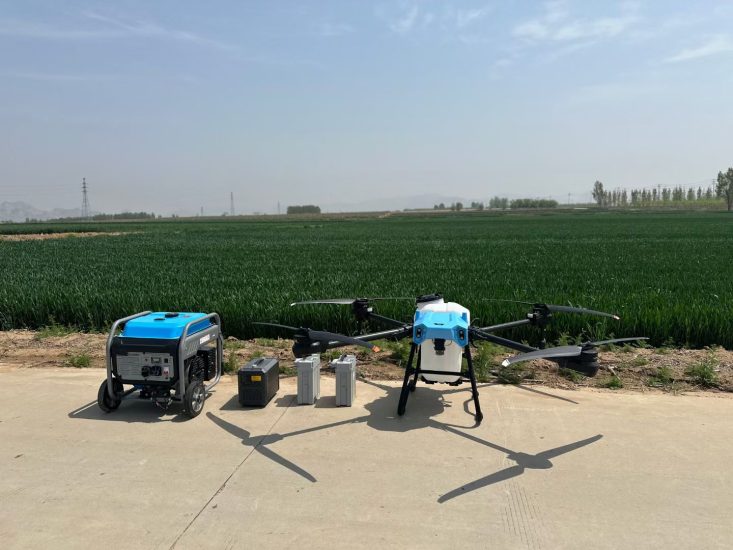
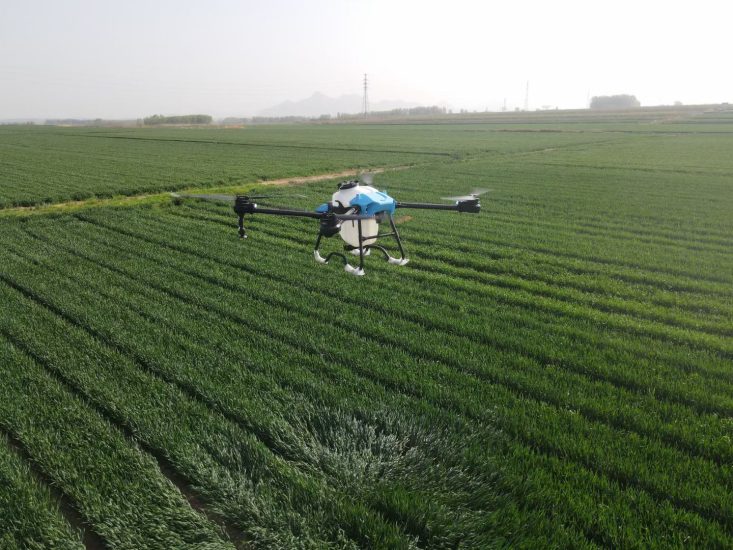
The lifting capacity of an agricultural drone depends on its motors, propellers, battery, frame, flight-control system, and operating conditions. Maximum payload is not the same as recommended working payload, so buyers should evaluate real operating performance before choosing a heavy-lift drone.
What Is the Heaviest Load an Agricultural Drone Can Lift?
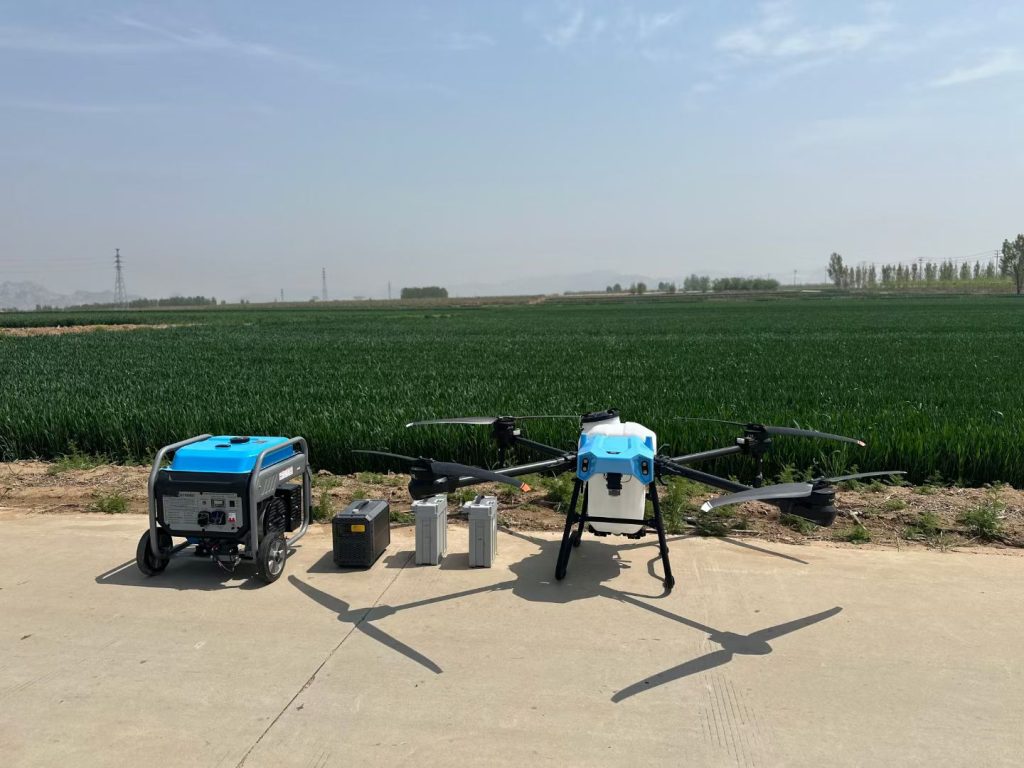
The payload capacity of an agricultural drone is one of the most important specifications for farmers, agricultural contractors, distributors, and commercial drone operators.
When buyers compare agricultural drones, they often ask:
How much weight can an agricultural drone carry?
The answer depends on the aircraft configuration and operating environment.
A drone’s lifting capacity is determined by much more than the size of its frame. Motor power, propeller design, battery voltage and capacity, aircraft weight, flight altitude, temperature, wind, and payload type all influence the amount of weight the drone can safely carry.
For agricultural applications, another distinction is particularly important:
Maximum payload is not necessarily the same as recommended operating payload.
A professional buyer should evaluate both numbers before purchasing.
What Does Agricultural Drone Payload Mean?
Payload refers to the additional weight carried by the drone in addition to the aircraft’s own operating weight.
For a spraying drone, payload may include:
- Water
- Liquid agricultural products
- Fertilizer solutions
- Biological products
- Other approved agricultural liquids
For a spreading drone, payload may include:
- Seeds
- Granular fertilizer
- Granular agricultural materials
- Other compatible dry materials
A simple example illustrates the concept.
If a drone has an operating weight of 20 kg and carries 10 kg of agricultural material, its total flying weight becomes approximately:
20 kg + 10 kg = 30 kg
The propulsion system must generate sufficient thrust to support the complete aircraft weight.
Therefore, payload capacity cannot be evaluated separately from the aircraft’s own weight.
How Much Weight Can an Agricultural Drone Carry?
Agricultural drones are available in different payload classes.
Smaller agricultural drones may be designed for relatively light applications, while larger commercial platforms can carry substantially heavier loads.
Typical agricultural drone categories can include:
| Category | Approximate Application |
|---|---|
| Small Payload | Small farms and light spraying |
| Medium Payload | General crop spraying |
| Large Payload | Commercial agricultural operations |
| Heavy Lift | High-capacity spraying or specialized applications |
The actual capacity depends on the specific aircraft.
Manufacturers should provide a recommended payload rather than encouraging operators to fly continuously at the absolute mechanical limit.
Maximum Payload vs. Recommended Payload
This is one of the most important concepts for agricultural drone buyers.
Maximum Payload
Maximum payload refers to the highest payload that the aircraft may be capable of carrying under specified conditions.
This value may be measured under controlled conditions.
Recommended Operating Payload
Recommended operating payload is more relevant to everyday agricultural work.
It considers factors such as:
- Battery endurance
- Flight stability
- Weather
- Flight altitude
- Operating temperature
- Flight speed
- Safety margin
- Desired working efficiency
For commercial agricultural operations, the recommended operating payload is usually more useful than the theoretical maximum.
Why Payload Capacity Matters in Agricultural Spraying
A larger payload can reduce the number of times an operator needs to return for refilling.
For example, consider a simplified comparison:
Drone A: smaller tank
Drone B: larger tank
If both drones have similar operating efficiency, Drone B may complete more work between refills.
However, this does not mean that the largest possible tank is always the best option.
A heavier payload also requires more energy.
The aircraft may consume more battery power, and the operator may need additional batteries and charging capacity.
Therefore, the ideal payload should balance:
Capacity + Flight Time + Energy Consumption + Productivity
The Relationship Between Payload and Battery
Payload has a direct effect on battery consumption.
As payload increases, the aircraft generally needs more thrust.
More thrust requires more power.
More power can result in:
- Higher energy consumption
- Shorter flight time
- Greater battery temperature
- Higher motor load
- Increased component stress
This is why a manufacturer may provide different flight-time figures for an empty aircraft and a fully loaded aircraft.
Buyers should ask for flight-time information under realistic working conditions.
A Better Question to Ask
Instead of asking:
“How long can the drone fly?”
ask:
“How long can the drone operate with the recommended agricultural payload?”
The second question provides much more useful information for commercial operations.
How Motors Affect Lifting Capacity
The propulsion system is central to an agricultural drone’s lifting ability.
The main components include:
- Motors
- Electronic speed controllers
- Propellers
- Battery
- Flight controller
- Power distribution system
A larger payload generally requires greater total thrust.
The aircraft needs sufficient thrust not only to hover but also to maneuver safely.
A drone operating close to its maximum thrust capacity may have less performance margin in difficult weather conditions.
For professional agricultural use, the propulsion system should therefore have an appropriate safety margin.
How Propellers Affect Payload Capacity
Propeller design also influences lifting performance.
Important factors include:
- Diameter
- Pitch
- Blade design
- Number of blades
- Material
- Motor speed
The propeller and motor must be properly matched.
Simply installing larger propellers does not automatically increase useful payload.
The complete propulsion system must be engineered as a matched system.
Battery Voltage and Heavy-Lift Performance
Battery voltage is another important factor.
Higher-voltage systems can be designed to deliver the electrical power required by high-performance propulsion systems while managing current more effectively.
However, voltage alone does not determine lifting capacity.
Battery performance should be evaluated together with:
- Capacity
- Discharge capability
- Weight
- Battery management
- Motor efficiency
- Propeller configuration
A heavy-lift agricultural drone needs a battery system capable of supporting the propulsion system while still providing practical flight endurance.
Does a Heavier Drone Always Lift More?
No.
Aircraft weight itself consumes part of the available lifting capacity.
For example, if a drone becomes heavier because of a larger frame, larger motors, or a larger battery, some of the additional propulsion power is used to carry the aircraft itself.
This creates an engineering balance between:
Aircraft Weight
and
Useful Payload
The objective is not simply to build the heaviest aircraft.
The objective is to maximize useful payload while maintaining stability, endurance, and reliability.
How Weather Affects Payload
A drone’s practical payload capacity can change with weather.
Wind
Strong wind increases the amount of energy required to maintain position and control the aircraft.
Temperature
High temperatures can affect battery performance and electronics.
Altitude
Air density decreases at higher altitude, which can affect propulsion performance.
Rain and Moisture
Operating restrictions may apply depending on the aircraft design and local conditions.
For these reasons, a payload specification should always be understood together with its testing conditions.
Payload and Flight Altitude
Altitude can influence drone performance.
At higher elevations, the air is less dense than at sea level.
The propulsion system may therefore need to work harder to generate the required thrust.
This is particularly important for agricultural operations in mountainous or high-altitude regions.
Buyers operating in high-altitude areas should tell the manufacturer the expected operating elevation before selecting a drone configuration.
Payload in Orchard Operations
Orchards can create different payload requirements from open farmland.
A drone may need to:
- Fly at lower altitude
- Navigate between trees
- Maintain stable flight
- Follow irregular terrain
- Operate around obstacles
The payload should therefore be evaluated together with the aircraft’s maneuverability.
A very large payload may not provide the best practical result if the aircraft cannot efficiently operate within the orchard environment.
Payload and Spray Tank Capacity
For spraying drones, tank capacity is closely related to payload.
A larger tank can increase productivity by reducing refill frequency.
However, the tank should not be filled beyond the aircraft’s recommended payload.
Operators should consider:
Tank Capacity + Liquid Density + Aircraft Weight
Different liquids can have different densities.
Therefore, a tank’s volume does not automatically equal the same weight for every material.
For example, a tank that holds a certain number of liters of water may have a different total weight when filled with another agricultural liquid.
Operators should follow the manufacturer’s payload limits and the application product’s instructions.
Why Liquid Payload Is Different From Dry Payload
Agricultural drones may be used for both spraying and spreading.
The characteristics of liquid and dry materials can differ significantly.
Liquid spraying requires:
- Tank
- Pump
- Pipes
- Filters
- Nozzles
- Flow control
Dry spreading may require:
- Hopper
- Spreading mechanism
- Material-flow control
- Different software settings
The same aircraft may therefore have different recommended configurations depending on the application.
Heavy-Lift Agricultural Drone Safety
Heavy-lift operations require additional attention to safety.
Before every flight, operators should inspect:
- Propellers
- Motors
- Battery
- Frame
- Landing gear
- Tank
- Pipes
- Pump
- Nozzles
- Communication system
The payload should also be properly secured.
The aircraft should never be operated beyond the manufacturer’s recommended limits.
Do Not Confuse Test Capacity With Daily Working Capacity
A manufacturer may test a drone under controlled conditions to determine its maximum lifting capability.
Commercial operators, however, may encounter:
- Wind
- Uneven terrain
- High temperatures
- Long flight distances
- Repeated takeoffs
- Frequent payload changes
Daily working conditions are more demanding than laboratory testing.
Therefore, buyers should request practical operating data.
How to Choose the Right Payload Capacity
The right payload depends on the actual agricultural operation.
Consider the following questions:
1. What crop are you treating?
Field crops, orchards, and specialty crops may require different configurations.
2. How large is the farm?
A larger operation may benefit from higher capacity and faster refilling workflows.
3. How far is the refill point?
If the refill station is far from the field, larger capacity may reduce unnecessary travel.
4. What is the terrain like?
Mountainous terrain may require additional performance margins.
5. What is the typical weather?
Wind and temperature affect practical operating performance.
6. What battery infrastructure is available?
Higher-capacity drones may require more advanced charging arrangements.
Heavy-Lift Drone Buying Checklist
Before purchasing a high-payload agricultural drone, buyers should confirm:
| Specification | What to Ask |
|---|---|
| Recommended Payload | What is the normal operating payload? |
| Maximum Payload | What is the tested maximum? |
| Empty Weight | How much does the complete aircraft weigh? |
| Tank Capacity | How much liquid can it carry? |
| Battery | What capacity and voltage are required? |
| Flight Time | What is the flight time under load? |
| Motors | What propulsion configuration is used? |
| Propellers | What size and configuration? |
| Spray System | What pump and nozzle system is included? |
| Safety | What protection functions are available? |
| Environment | What temperature and wind conditions are supported? |
| Altitude | What is the recommended operating altitude? |
| Spare Parts | Which components should be stocked? |
Why the 100KG Payload Requirement Needs Careful Evaluation
Some commercial buyers may request an agricultural drone capable of carrying 100 kg or more.
A requirement like this should not be treated as a simple tank-capacity request.
A 100 kg payload requires an aircraft system capable of generating sufficient thrust while maintaining an appropriate safety margin.
The complete system may require:
- High-performance motors
- Large propulsion components
- High-capacity batteries
- Strong structural materials
- Advanced flight control
- Appropriate landing gear
- High-capacity spraying equipment
The buyer should also clarify whether the requirement means:
100 kg of liquid payload
or
100 kg total payload including the tank and spraying equipment.
These are very different requirements.
This distinction should be confirmed before requesting a quotation.
Can an Agricultural Drone Carry 100KG?
A specific answer depends on the aircraft design.
Not every agricultural drone can safely carry 100 kg.
A drone designed for a much smaller payload should not be modified simply by adding larger batteries or motors without proper engineering validation.
For a genuine 100 kg agricultural payload requirement, buyers should look for a platform specifically engineered and tested for that load range.
The manufacturer should provide appropriate technical specifications and operating limitations.
What Is More Important Than Maximum Payload?
For professional agricultural operations, several factors may be more important than the maximum lifting number.
These include:
1. Useful payload
How much material the drone can carry during normal operation.
2. Endurance
How long it can remain productive with the working payload.
3. Reliability
How consistently the system performs during repeated flights.
4. Productivity
How much agricultural area can be completed per operating day.
5. Maintenance
How easily the equipment can be serviced.
6. Support
Whether spare parts and technical assistance are available.
A balanced system is generally more valuable than a drone optimized for one specification.
How Manufacturers Should Present Payload Specifications
For buyers to make meaningful comparisons, agricultural drone manufacturers should clearly distinguish:
- Empty aircraft weight
- Maximum takeoff weight
- Maximum payload
- Recommended payload
- Battery weight
- Flight time without payload
- Flight time under recommended payload
- Operating temperature
- Maximum recommended wind conditions
- Maximum operating altitude
Clear technical information helps buyers make better purchasing decisions and reduces misunderstandings during international trade.
Conclusion
The heaviest load an agricultural drone can lift depends on its complete engineering design.
Motor power, propellers, battery system, aircraft weight, frame strength, flight-control technology, weather, altitude, and application all influence practical payload capacity.
For agricultural spraying, buyers should pay particular attention to the difference between maximum payload and recommended operating payload.
A drone capable of carrying a large theoretical load is not necessarily the best commercial solution.
The better choice is an aircraft that provides a practical combination of:
Payload + Flight Time + Stability + Safety + Productivity + Reliability
Before purchasing a heavy-lift agricultural drone, buyers should provide the manufacturer with detailed information about the required payload, application, crop, terrain, operating altitude, expected working area, and destination market.
This allows the manufacturer to recommend an appropriate configuration instead of simply quoting the largest possible payload number.
Frequently Asked Questions
1. What is the maximum weight an agricultural drone can carry?
There is no universal maximum. Agricultural drones are designed for different payload ranges, and the actual capacity depends on the aircraft configuration and operating conditions.
2. Is maximum payload the same as recommended payload?
No. Maximum payload represents a tested or specified upper limit, while recommended payload is the more practical figure for normal operations.
3. Can an agricultural drone carry 100 kg?
Some specialized heavy-lift platforms may be designed for very high payloads, but not every agricultural drone can safely carry 100 kg. A manufacturer should confirm the aircraft’s tested specifications.
4. Does a larger payload reduce flight time?
Generally, carrying a heavier payload requires more energy and can reduce flight endurance.
5. What determines an agricultural drone’s lifting capacity?
Important factors include motor power, propeller design, battery performance, aircraft weight, frame structure, flight-control system, altitude, temperature, and wind.
6. Does battery capacity determine payload capacity?
Battery capacity is important, but it is only one part of the system. Motors, propellers, aircraft weight, and structural design are also critical.
7. Is a bigger agricultural drone always better?
No. The best drone depends on the actual agricultural application. A very large platform may be unnecessary for a small farm and may increase operating costs.
8. How does wind affect heavy-lift drone operations?
Wind can increase energy consumption and make flight control more demanding. Strong wind may therefore reduce practical payload or operating endurance.
9. Can the same agricultural drone be used for spraying and spreading?
Some platforms can support different agricultural applications with appropriate equipment, but the payload and recommended configuration may change depending on the application.
10. How should I choose an agricultural drone for a 100 kg payload requirement?
First confirm whether 100 kg refers to material payload or total payload. Then provide the manufacturer with information about the application, terrain, altitude, expected flight time, and operating conditions so the appropriate platform can be evaluated.
11. What information should I request from an agricultural drone manufacturer?
Request empty weight, maximum takeoff weight, recommended payload, maximum payload, battery specifications, flight time under load, operating conditions, spray capacity, and maintenance requirements.
12. What is the most important payload specification for commercial farming?
For daily agricultural operations, the recommended operating payload under realistic conditions is generally more useful than the theoretical maximum payload.


No comments yet