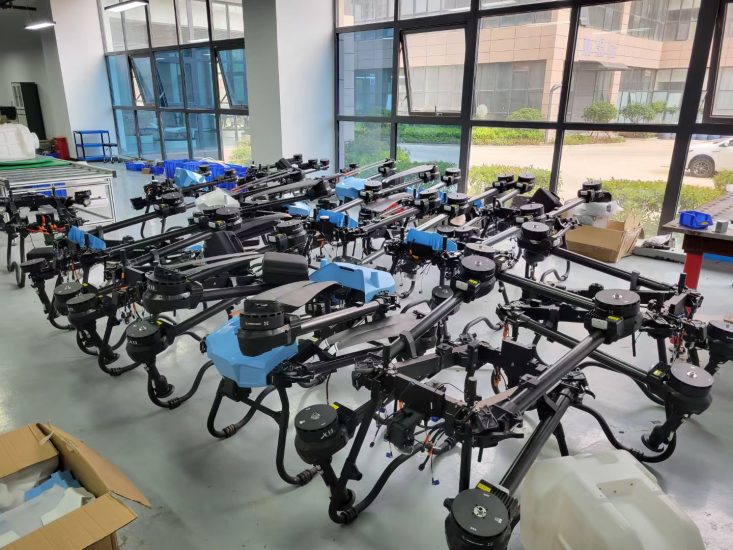


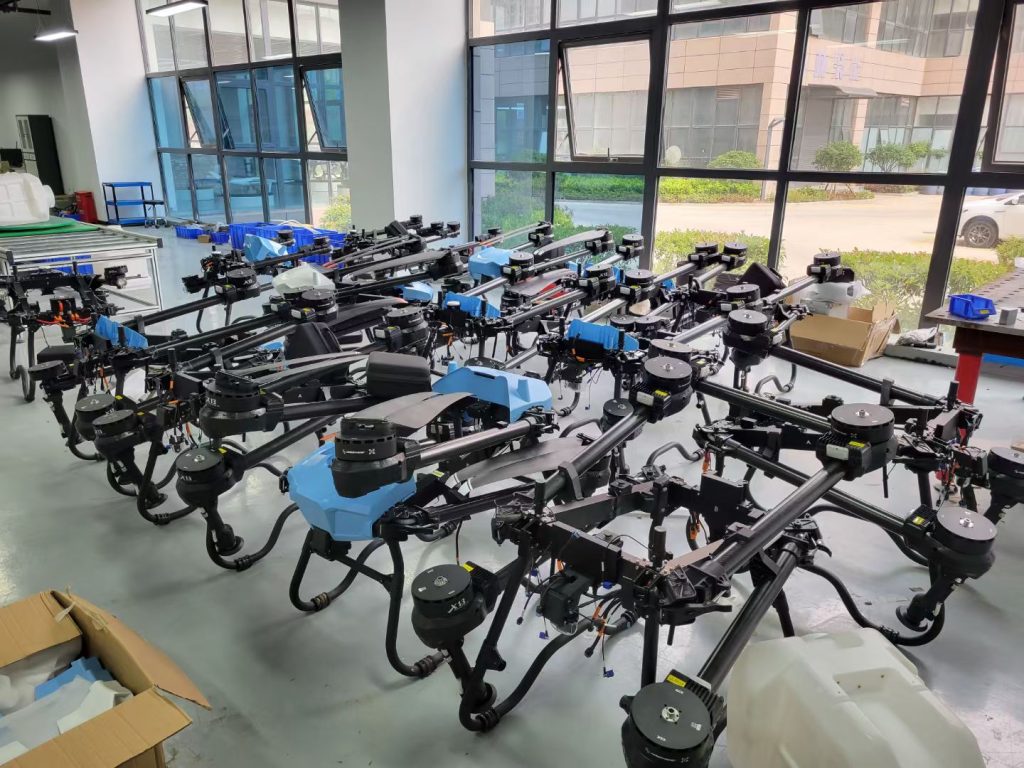
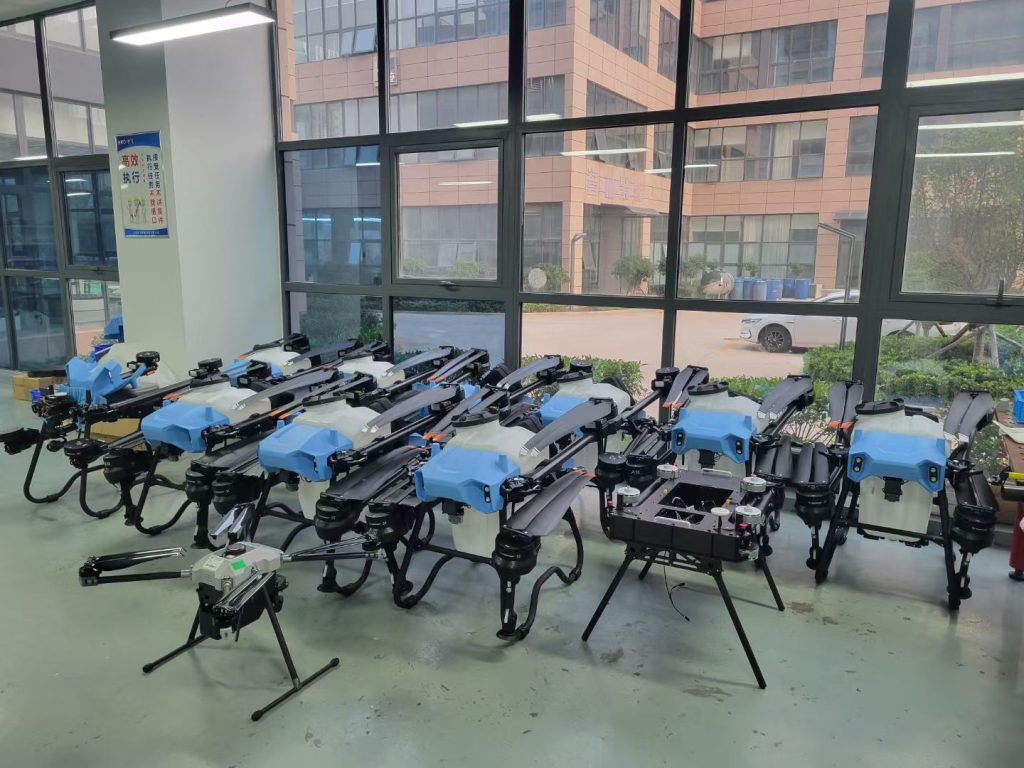
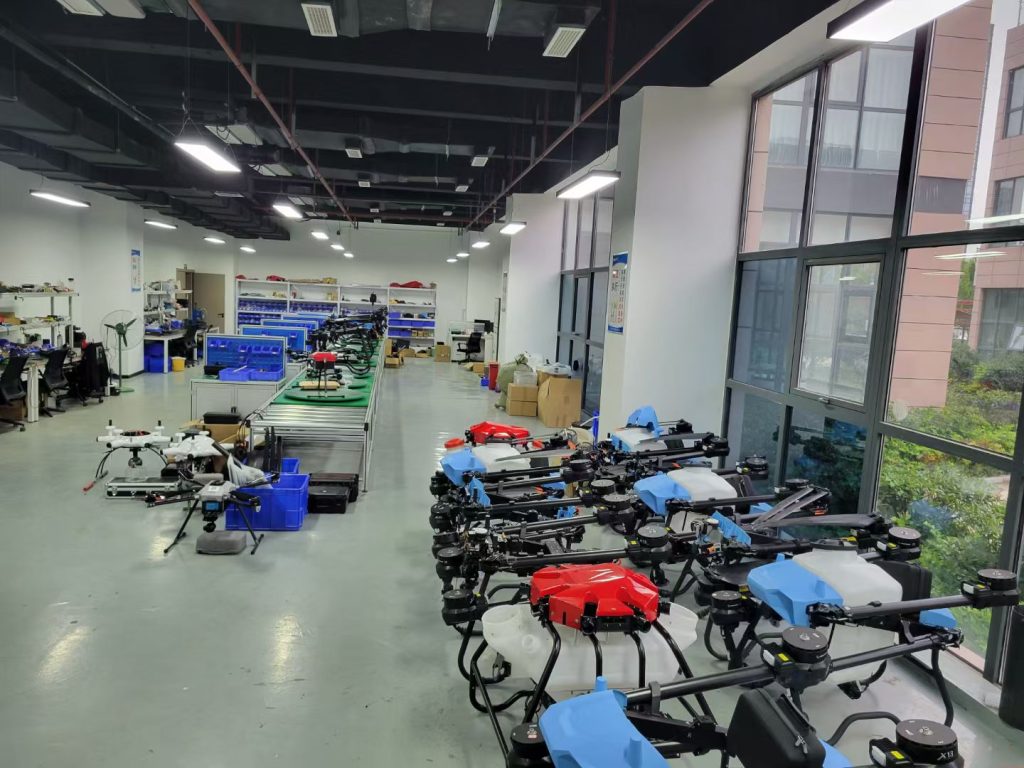
Buying one agricultural drone is relatively simple. Managing a commercial agricultural drone fleet is a different challenge. Once a farm, contractor, or distributor operates several aircraft, the main concern is no longer simply how much payload one drone can carry. Fleet availability, battery rotation, spare parts, operator training, maintenance, scheduling, transportation, and technical support all become important.
A well-planned agricultural drone fleet should be designed around actual field requirements rather than simply the number of aircraft a buyer can purchase. The right combination of drones, batteries, chargers, spare parts, operators, and support resources can significantly reduce downtime and make daily operations more predictable.
This guide explains how to plan, purchase, operate, and expand an agricultural drone fleet for commercial applications.
1. What Is an Agricultural Drone Fleet?
An agricultural drone fleet is a group of agricultural UAVs operated as part of one organized farming, spraying, fertilizing, or agricultural service operation.
A fleet may contain two or three drones for a medium-sized farming operation, or dozens of aircraft for a professional agricultural service provider or distributor.
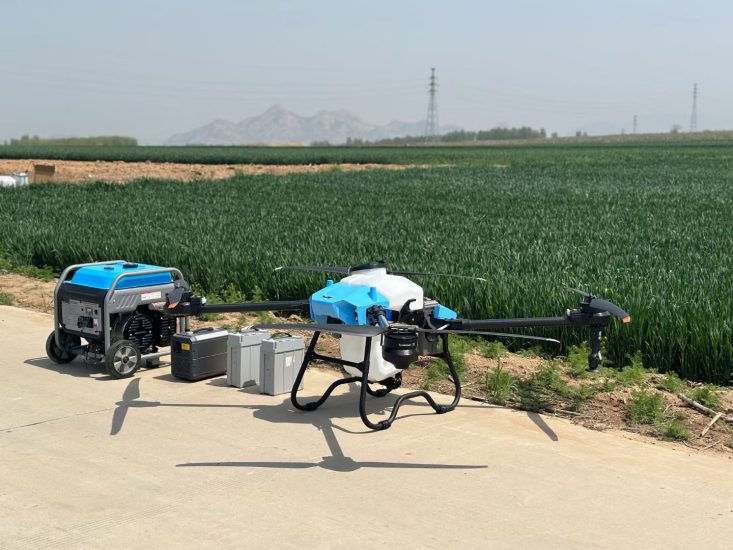
However, a fleet is not simply a collection of drones. A properly managed fleet also includes:
- Agricultural drones
- Flight batteries
- Battery chargers
- Spare propellers
- Pumps and spraying components
- Nozzles and filters
- Motors and electronic components
- Remote controllers
- Transportation equipment
- Trained operators
- Maintenance procedures
- Replacement parts
- Technical support
The objective is to keep as many aircraft operational as possible when agricultural work needs to be completed.
2. When Does a Farm Need More Than One Agricultural Drone?
The decision to build a fleet should be based on workload rather than simply farm size.
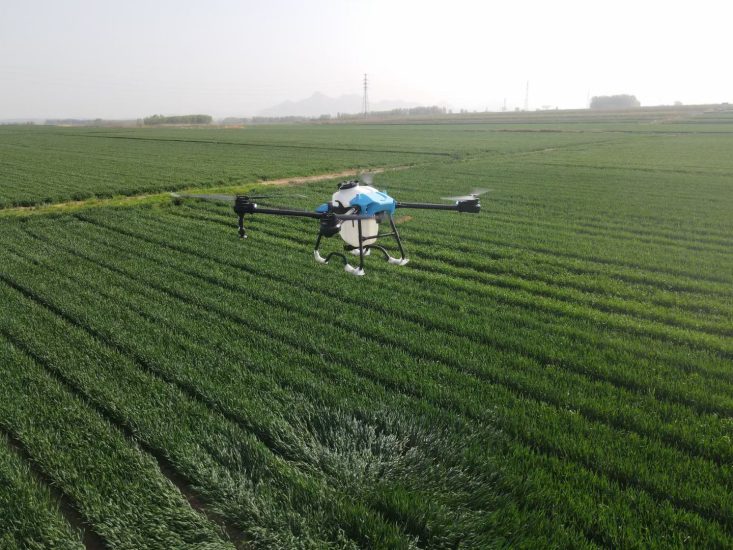
A farm may benefit from multiple agricultural drones when spraying or spreading work must be completed within a limited weather window. Crops may require treatment at specific growth stages, and delays caused by rain, wind, or other field conditions can reduce the available operating time.
Multiple aircraft can provide several advantages:
- Higher daily operating capacity
- Reduced dependence on one aircraft
- Better scheduling flexibility
- Backup capacity during equipment downtime
- More efficient use of trained operators
- Faster response during peak agricultural seasons
For commercial agricultural service companies, multiple drones can also make it easier to serve several customers or fields within the same period.
3. Different Crops Can Change Fleet Requirements
Not every agricultural operation has the same drone requirements. Rice fields, orchards, vineyards, wheat fields, corn fields, and other crops can require different flight patterns, spray configurations, operating heights, and treatment schedules.
For example, an orchard may require more precise flight control around trees, while large field crops may prioritize coverage efficiency and straightforward route planning.
Before selecting the number of drones, buyers should understand the specific application and crop environment. This is especially important when a fleet will be used across several types of agriculture.
For a detailed comparison of crop-specific applications, see:
Agricultural Drones for Rice, Fruit Trees and Field Crops
4. One Large Drone or Several Smaller Drones?
One of the most important fleet decisions is whether to purchase a smaller number of high-capacity drones or a larger number of lower-capacity aircraft.
A larger agricultural drone can reduce the number of refill cycles and potentially increase productivity per aircraft. However, a larger aircraft may also involve higher equipment costs, larger batteries, more demanding transportation requirements, and potentially greater consequences if one aircraft becomes unavailable.
Several smaller or medium-capacity drones can provide operational redundancy.
If one aircraft requires maintenance, the remaining drones can continue working. Operators can also divide work between several fields.
Therefore, the best fleet configuration is not necessarily the one with the highest payload. It is the configuration that provides the best combination of productivity, reliability, operating cost, and availability.
5. Fleet Size Should Be Based on Actual Productivity
A common purchasing mistake is choosing fleet size based only on the advertised payload of an agricultural drone.
Payload is only one part of productivity. Real-world output also depends on:
- Spraying width
- Flight speed
- Field shape
- Battery replacement time
- Refilling time
- Travel distance between fields
- Operator efficiency
- Weather conditions
- Maintenance downtime
A drone with a larger tank does not automatically produce proportionally higher daily output if refilling, battery replacement, transportation, or field access becomes a bottleneck.
Buyers evaluating a Chinese agricultural drone manufacturer should therefore examine the complete production and technical capabilities rather than focusing on one specification.
For more information, see:
Agricultural Drone Manufacturer in China: Products, Factory and OEM Capabilities
6. Battery Planning Is a Fleet Management Problem
Batteries are one of the most important components of an agricultural drone fleet.
A drone may be mechanically ready to operate, but if there are not enough charged batteries available, the aircraft cannot contribute to production.
Fleet managers should therefore calculate battery requirements according to the expected operating schedule.
Important factors include:
- Flight time per battery
- Charging time
- Number of working drones
- Daily operating hours
- Distance between fields
- Battery cooling requirements
- Battery replacement cycles
The objective is to avoid a situation where several drones are available but most of them are waiting for batteries.
7. Do Not Buy the Same Number of Batteries as Drones
Buying exactly one battery set for each drone may not be sufficient for intensive commercial operations.
Professional operations often require multiple battery sets per aircraft so that one battery can be charging while another is being used.
The ideal configuration depends on the drone model, charger capacity, working schedule, field conditions, and available charging infrastructure.
For larger fleets, battery management should be treated as a separate operational system rather than an accessory purchasing decision.
8. Spare Parts Should Be Planned Before the Fleet Arrives
Commercial agricultural drone operations should not wait until a component fails before ordering a replacement.
Common spare parts may include:
- Propellers
- Motors
- Pumps
- Nozzles
- Filters
- Landing gear components
- Power cables
- Electronic modules
- Spraying pipes
- Connectors
The exact spare-parts list should be based on the aircraft configuration and expected operating environment.
For international buyers, spare-parts planning is particularly important because replacement shipments may take longer than domestic deliveries.
9. Standardization Makes Large Fleets Easier to Manage
Whenever possible, commercial operators should avoid creating a fleet containing too many unrelated aircraft models.
Standardization can simplify:
- Operator training
- Battery management
- Spare-parts inventory
- Maintenance procedures
- Software management
- Technical support
- Operator replacement
If ten drones use the same platform, a technician can develop a standardized maintenance process. If every drone is different, training and inventory requirements become more complicated.
For this reason, fleet buyers should consider long-term support before selecting different drone models.
10. Operator Training Should Be Standardized
A reliable fleet depends on operators as much as it depends on hardware.
Each operator should understand the aircraft’s flight controls, battery procedures, spraying system, emergency procedures, pre-flight inspection, post-flight cleaning, and basic troubleshooting.
Commercial operations should develop a standardized checklist that every operator follows.
A basic pre-flight checklist may include:
- Battery condition
- Propeller condition
- Motor condition
- Spraying system
- Nozzles
- Tank connections
- Remote controller
- GPS and positioning systems
- Flight environment
- Emergency procedures
11. Fleet Maintenance Should Be Scheduled Before Peak Season
Maintenance should not begin only after an aircraft develops a problem.
Commercial operators should inspect aircraft before the main agricultural season starts. Components that show excessive wear should be replaced before intensive operations begin.
Regular maintenance can reduce unexpected downtime and help fleet managers identify recurring problems.
A maintenance record should ideally include the aircraft identification number, flight hours, battery cycles, replaced components, inspection dates, and repair history.
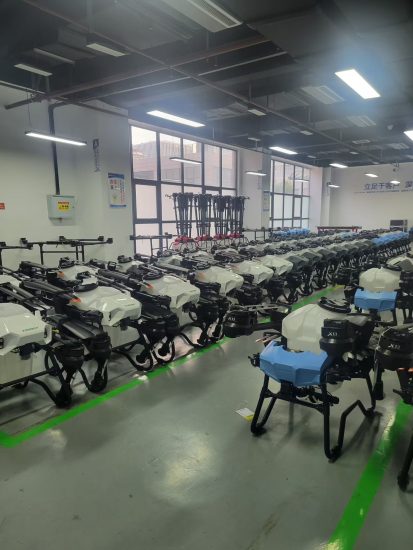
12. Factory Capability Matters When Buying a Commercial Fleet
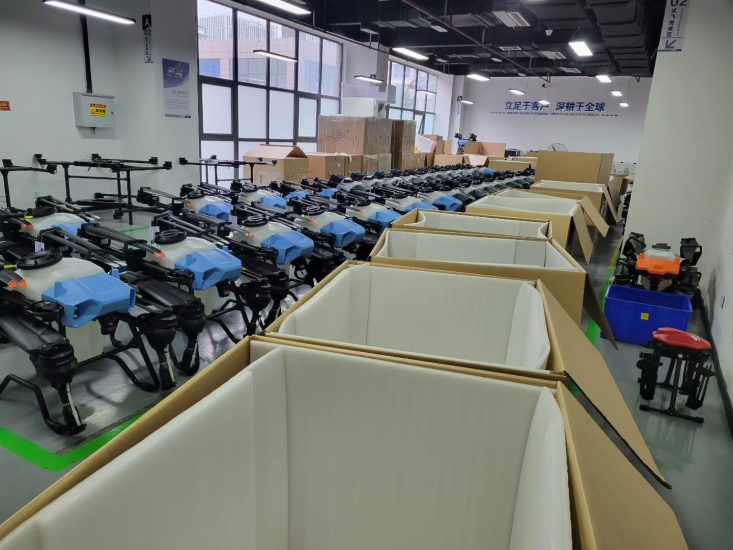
When purchasing one agricultural drone, supplier communication is important. When purchasing a fleet, manufacturing capability becomes even more important.
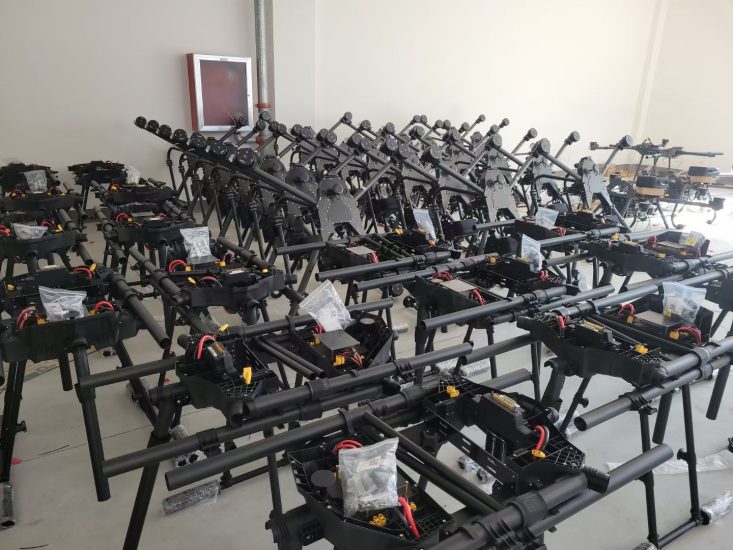
A fleet buyer may need dozens of identical aircraft, batteries, chargers, spare parts, packaging units, and technical documents.
The manufacturer must therefore be capable of maintaining consistent production quality across multiple units.
Important areas to evaluate include:
- Research and development
- Production capacity
- Assembly procedures
- Quality control
- Flight testing
- Component inspection
- Battery testing
- Spare-parts availability
- Technical documentation
For a closer look at the production process, see:
China Agricultural Drone Factory: From R&D to Mass Production
13. Choose a Supplier That Can Support the Entire Fleet
A commercial buyer should evaluate more than the initial quotation.
When purchasing multiple agricultural drones, the supplier should be able to provide consistent communication and support throughout the purchasing and operating process.
Important questions include:
- Can the supplier provide replacement parts?
- Can technical issues be diagnosed remotely?
- Are manuals and operating instructions available?
- Can additional aircraft be supplied later?
- Can the supplier maintain consistent specifications?
- Can the supplier support OEM or ODM requirements?
- What is the expected response time for technical questions?
For buyers evaluating suppliers in China, the following guide provides additional information:
Professional Agricultural Spraying Drone Supplier in China | OEM Solutions
14. Fleet Management for Agricultural Drone Distributors
Distributors have different requirements from end users.
A distributor may purchase agricultural drones for multiple customers, different agricultural applications, or different countries.
In this situation, the distributor needs to think about product consistency, inventory, spare parts, packaging, training, documentation, branding, and after-sales support.
A distributor should also understand which configurations are likely to have long-term demand instead of purchasing many different models without a clear sales strategy.
A standardized product range can make inventory management easier and allow sales teams to develop stronger product knowledge.
15. OEM and ODM Become More Important as the Fleet Grows
OEM and ODM can become useful when buyers need agricultural drones configured for a specific market or commercial application.
Customization may involve:
- Product branding
- Color and appearance
- Battery configuration
- Payload configuration
- Spraying system
- Software requirements
- Remote controller configuration
- Packaging
- User manuals
- Accessories
However, customization should be based on real market requirements rather than cosmetic changes alone.
Buyers considering an OEM or ODM project can review:
Agricultural Drone OEM & ODM: A Complete Guide for Global Distributors
16. Customization Should Match the Target Market
A drone designed for one market may not be ideal for another market.
Climate, crop structure, farm size, operator experience, transportation requirements, regulations, and customer expectations can all influence the final configuration.
For example, a distributor selling agricultural drones to small farms may prioritize ease of operation and transportation. A professional agricultural contractor may place greater emphasis on productivity, battery capacity, spare parts, and long-term operating reliability.
Therefore, customization should begin with the target market and application instead of starting with cosmetic branding.
For a detailed explanation of market-specific customization, see:
Agricultural Drone OEM & ODM: How to Customize Drones for Your Market
17. When Should a Fleet Be Expanded?
Fleet expansion should be based on measurable operational demand.
A company may consider adding aircraft when:
- Existing drones are operating near full capacity
- Customers are waiting for service
- Weather windows are too short for the current fleet
- Aircraft utilization remains consistently high
- New geographic service areas are being added
- Additional operators are available
- Battery and charging infrastructure can support expansion
Buying additional aircraft before the operational system is ready can create unnecessary costs.
A larger fleet should be supported by additional batteries, spare parts, operators, transportation capacity, and maintenance resources.
18. Transportation Is Part of Fleet Planning
Transportation becomes increasingly important as fleet size grows.
A commercial operator may need to transport multiple aircraft, batteries, chargers, spare parts, agricultural chemicals, tools, and other equipment between locations.
The transportation solution should protect the aircraft and make loading and unloading efficient.
International distributors should also plan packaging and shipping requirements before placing large orders.
Battery transportation deserves particular attention because lithium battery shipping may involve additional handling, documentation, and carrier requirements.
19. Keep an Individual Record for Every Aircraft
Every drone in a commercial fleet should have its own operational record.
The record can include:
- Aircraft serial number
- Purchase date
- Flight hours
- Battery usage
- Maintenance history
- Repairs
- Component replacements
- Software updates
- Operator assignments
- Operational incidents
This information can help fleet managers identify aircraft that require additional inspection or replacement.
20. The Most Important Fleet KPI: Aircraft Availability
Maximum payload is easy to compare because it is normally listed as a specification. Fleet availability is more difficult to measure, but it can have a much greater effect on commercial operations.
If ten drones are owned but three are regularly unavailable because of maintenance, battery problems, or spare-parts shortages, the effective fleet capacity is lower than the purchased fleet size suggests.
Fleet managers should therefore monitor:
- Aircraft availability
- Downtime
- Maintenance frequency
- Battery utilization
- Daily operating hours
- Completed field work
- Repair turnaround time
21. How to Compare Two Fleet Configurations
Suppose a buyer is comparing two possible fleet configurations.
Configuration A may use fewer high-capacity aircraft.
Configuration B may use more medium-capacity aircraft.
The comparison should include more than purchase price.
Consider:
- Total aircraft cost
- Battery investment
- Charging equipment
- Spare-parts requirements
- Operator requirements
- Transportation
- Maintenance
- Expected daily productivity
- Backup capacity
- Long-term support
The cheaper configuration at the time of purchase may not necessarily have the lower total operating cost.
22. Why Fleet Reliability Can Matter More Than Maximum Payload
For commercial operations, a drone that is available every working day can sometimes be more valuable than a drone with a higher theoretical payload but greater operational complexity.
Fleet reliability comes from the entire system:
- Aircraft design
- Battery quality
- Charging infrastructure
- Spare-parts supply
- Operator training
- Maintenance
- Technical support
- Manufacturer consistency
This is why buyers should evaluate agricultural drones as complete operational systems rather than individual aircraft.
23. What International Buyers Should Ask Before Ordering a Fleet
International buyers should prepare a detailed list of questions before placing a large agricultural drone order.
Questions may include:
- What is the recommended fleet configuration?
- What battery quantity is recommended per aircraft?
- What spare parts should be ordered?
- What is the production lead time?
- How are aircraft tested before shipment?
- What technical documents are provided?
- What support is available after delivery?
- Can the manufacturer supply additional units later?
- Can the aircraft be customized?
- Can the supplier provide OEM or ODM services?
Clear answers to these questions can help buyers avoid problems after the fleet arrives.
24. When Should a Distributor Consider OEM?
A distributor may consider OEM when it already has an established market, customer base, or brand and wants a more differentiated agricultural drone product.
OEM can be useful when the distributor needs specific branding, packaging, documentation, accessories, or product configurations.
However, OEM projects should have clear technical requirements before production begins.
The buyer and manufacturer should agree on specifications, testing requirements, quality standards, packaging, delivery schedules, spare parts, and technical support.
25. A Practical Fleet Expansion Strategy
A practical expansion strategy is usually more effective than purchasing a very large fleet immediately.
A company can begin with a manageable number of aircraft and evaluate actual operating performance.
The company can then measure:
- Daily operating hours
- Battery consumption
- Maintenance frequency
- Operator productivity
- Customer demand
- Aircraft downtime
- Actual operating cost
Once the data shows that additional capacity is required, the company can expand the fleet using the same or improved configuration.
This approach can reduce purchasing risk and create a more predictable fleet-management system.
26. Final Advice for Building an Agricultural Drone Fleet
Building a reliable agricultural drone fleet is not simply a matter of purchasing more aircraft.
The most successful fleet strategy combines the right aircraft configuration with sufficient batteries, chargers, spare parts, trained operators, maintenance procedures, transportation planning, and reliable technical support.
For commercial farms and agricultural service providers, fleet availability should be treated as a key performance indicator. For distributors, manufacturer capability, product consistency, OEM/ODM support, and long-term spare-parts availability can be equally important.
Before placing a large order, buyers should calculate their actual workload, identify crop-specific requirements, compare different fleet configurations, and evaluate the manufacturer’s ability to support the fleet after delivery.
A properly planned fleet can provide more than additional spraying capacity. It can create a repeatable agricultural service system that is easier to operate, maintain, expand, and support over the long term.
Frequently Asked Questions
1. How many agricultural drones do I need for a commercial farm?
The required number depends on field area, crop type, treatment schedule, drone productivity, battery availability, operator capacity, and available working hours. There is no single fleet size suitable for every farm.
2. Is it better to buy one large agricultural drone or several smaller drones?
It depends on the application. A larger drone may provide higher capacity per aircraft, while several smaller or medium-capacity drones can provide greater redundancy and scheduling flexibility.
3. How many batteries should an agricultural drone fleet have?
The battery quantity should be calculated according to flight time, charging time, operating hours, number of drones, and field conditions. Intensive commercial operations normally require multiple battery sets rather than one set per aircraft.
4. What spare parts should an agricultural drone fleet keep?
Common spare parts may include propellers, motors, pumps, nozzles, filters, cables, connectors, spraying components, and other model-specific components.
5. How can I reduce agricultural drone fleet downtime?
Standardized aircraft, preventive maintenance, sufficient spare parts, battery management, operator training, and reliable technical support can all help reduce downtime.
6. Should all drones in a commercial fleet be the same model?
Not necessarily, but standardization can make training, battery management, maintenance, spare-parts inventory, and technical support easier.
7. Can agricultural drone manufacturers provide fleet customization?
Many manufacturers can provide different levels of customization depending on their production and engineering capabilities. Buyers should define technical requirements before discussing an OEM or ODM project.
8. What should I ask an agricultural drone manufacturer before buying 20 or 50 units?
Ask about production capacity, quality control, testing, lead time, battery configuration, spare parts, technical documentation, warranty terms, technical support, future supply capability, and customization options.
9. What is more important: drone payload or fleet availability?
For commercial operations, both are important, but fleet availability can have a major impact on actual productivity. A high-payload drone that is frequently unavailable cannot provide consistent commercial capacity.
10. How should a distributor prepare for selling agricultural drones?
A distributor should understand its target market, select a manageable product range, prepare spare parts and technical support, train its sales and service teams, and establish a long-term relationship with a capable manufacturer.


No comments yet