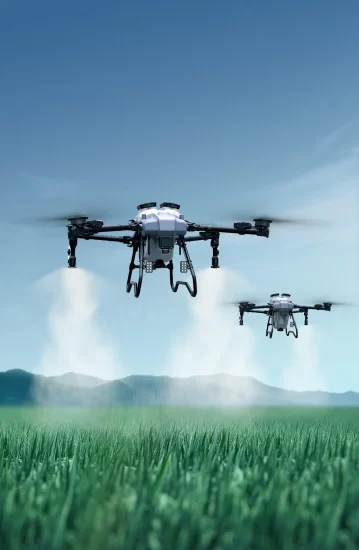


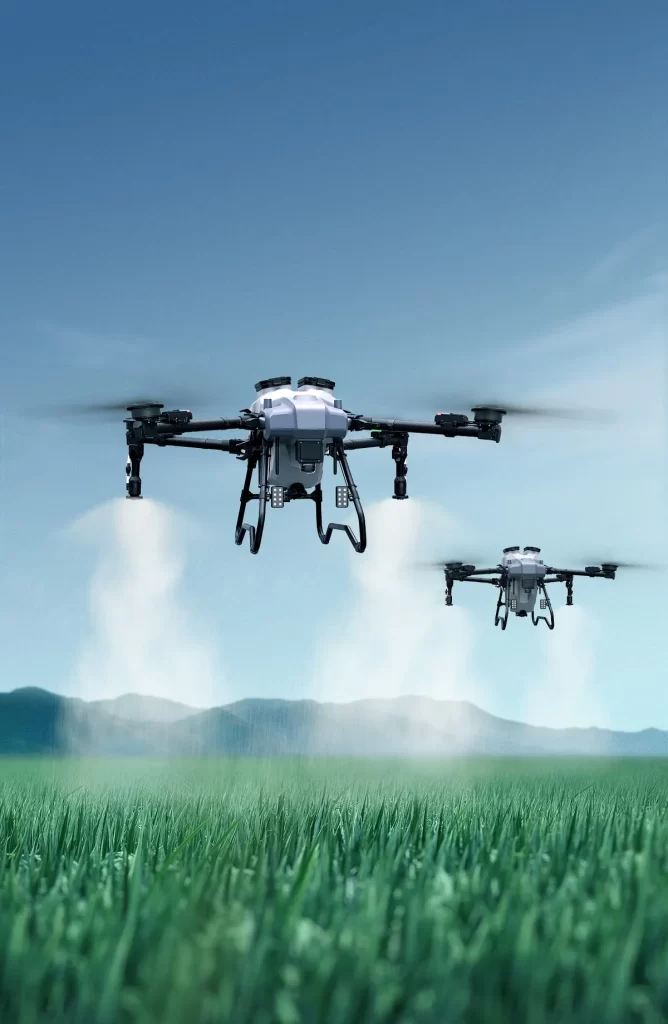
Wheat production requires timely crop protection, especially during periods when weeds, insects, and plant diseases can affect crop growth and final yield. In large wheat-growing areas, conventional spraying can require considerable labor and suitable field access. When soil conditions are wet or the crop has reached a later growth stage, entering the field with ground equipment may also become difficult.
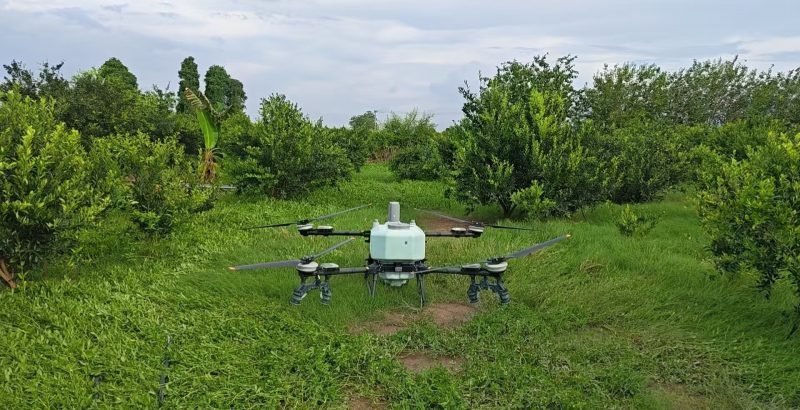
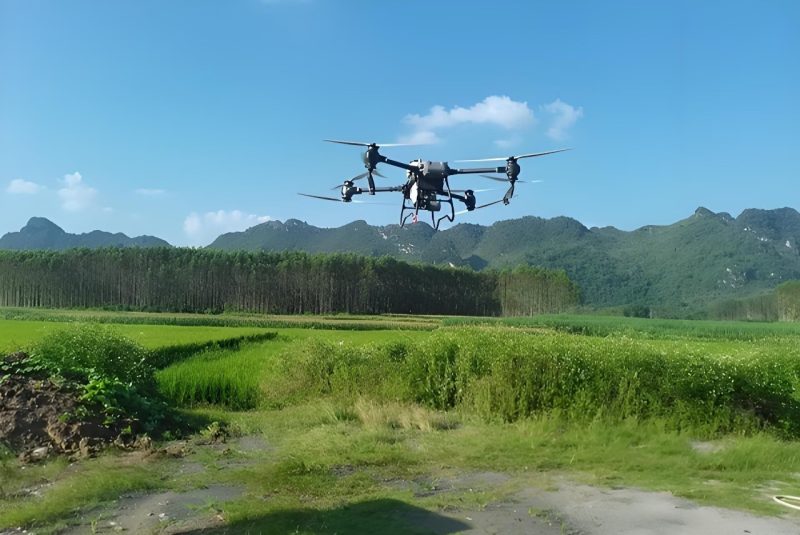
A wheat spraying drone provides an aerial alternative for applying approved agricultural products. The aircraft operates above the crop while a dedicated spraying system controls the delivery of liquid through pumps, pipes, and nozzles.
As a professional agricultural drone manufacturer, the focus should not simply be on producing a drone with a large tank. A practical wheat spraying system needs a balanced combination of flight performance, payload capacity, spray control, navigation, battery management, maintenance, and operator support.
What Is a Wheat Spraying Drone?
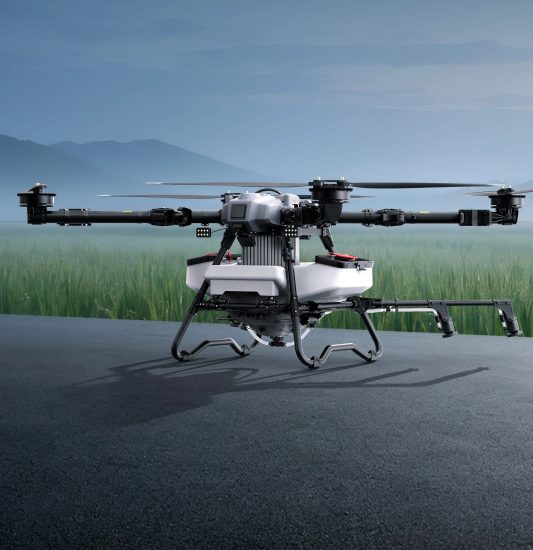
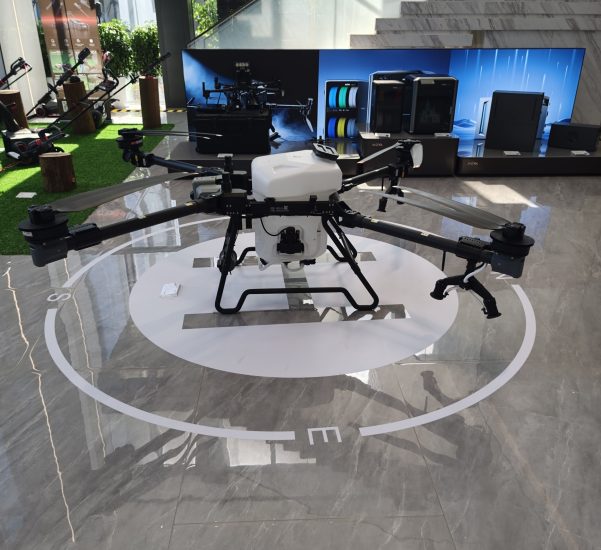
A wheat spraying drone is an agricultural unmanned aerial vehicle designed to carry and distribute liquid agricultural products over wheat fields.
A complete system normally includes:
-
Agricultural drone airframe
-
High-performance motors and propellers
-
Liquid tank
-
Pump system
-
Spray pipes
-
Agricultural nozzles
-
Flow-control system
-
Flight controller
-
Positioning and navigation system
-
Remote controller
-
Rechargeable batteries
-
Battery charger
-
Safety and monitoring functions
The aircraft can be programmed to follow a planned route over the wheat field. During operation, the spraying system releases liquid according to the selected application parameters.
The purpose is to provide a controlled and repeatable application method rather than simply spraying as much liquid as possible.
Why Use a Drone for Wheat Spraying?
Wheat is generally cultivated over relatively large areas, making efficient field coverage important.
Traditional backpack spraying can require substantial physical labor. Tractor-mounted equipment can cover large areas but requires suitable ground access and may cause crop or soil disturbance under certain conditions.
A drone operates without wheels touching the crop.
This provides several practical advantages.
Reduced Ground Contact
The drone flies above the wheat rather than driving through the field. This can reduce direct crop contact and make aerial application useful when ground access is inconvenient.
Flexible Field Access
Wet soil, uneven terrain, narrow field entrances, and other conditions can make conventional machinery difficult to operate. Aerial equipment can work without requiring a vehicle to travel across the entire field.
Programmable Coverage
Modern agricultural drones can use planned flight routes to maintain consistent field coverage.
The operator can define the working boundary and adjust parameters such as flight speed, route spacing, altitude, and spraying status according to the equipment configuration and agricultural application requirements.
Reduced Manual Work
The operator does not need to carry a backpack sprayer across the entire field. Instead, the drone performs the flight while the operator monitors the equipment from a safe location.
Rapid Response
Crop protection often depends on timing. A practical drone system can help farmers organize spraying operations within an appropriate treatment window, provided weather and legal requirements permit the application.
Wheat Spraying Applications
A wheat spraying drone may be configured for several types of crop protection work.
Weed Control
Weeds compete with wheat for water, nutrients, sunlight, and growing space.
Where a herbicide is approved for the intended crop and aerial application, a spraying drone can be used to distribute the product across the designated field.
Correct application rate and spray coverage are critical. A drone should not be operated simply according to maximum flow capacity.
Insect Control
Wheat can be affected by different insect pests depending on the growing region.
Aerial application can provide an additional tool for pest management when an appropriate agricultural product and application method are legally permitted.
Disease Management
Fungal and other plant diseases can become a significant concern under suitable environmental conditions.
For disease-control applications, spray coverage is particularly important because the target may be distributed across different parts of the crop canopy.
The drone’s altitude, speed, nozzle configuration, droplet characteristics, and application volume therefore need to be considered together.
The Spraying System Is the Core of the Machine
A high-quality aircraft alone does not guarantee high-quality spraying.
The liquid delivery system is equally important.
Pump
The pump must provide stable and predictable liquid flow.
A pump with a very high maximum flow rate is not automatically better. The system must be capable of operating within the flow range required for the intended application.
Nozzles
Nozzles determine how liquid is distributed into droplets and how the spray pattern is formed.
Different agricultural applications may require different nozzle configurations.
The appropriate nozzle should be selected according to the agricultural product, application rate, desired coverage, weather conditions, and manufacturer’s operating recommendations.
Filters
Filters help prevent particles from reaching the pump and nozzles.
Regular inspection is important because blocked filters can reduce flow and create uneven spraying.
Pipes and Connections
Pipes should be securely connected and resistant to the operating environment.
Leaks can cause product loss, equipment contamination, and inaccurate application.
Application Rate and Flight Speed
One of the most important concepts for wheat spraying is the relationship between application rate and flight parameters.
A simplified relationship is:
Application Rate ≈ Flow Rate ÷ (Flight Speed × Effective Spray Width)
For example, if the drone increases its flight speed while keeping the same flow rate, less liquid is delivered per unit area.
If the drone slows down without changing the flow rate, the application rate can increase.
This means operators should calibrate the aircraft rather than relying on a fixed flow setting for every field.
Actual field performance also depends on route overlap, nozzle distribution, crop conditions, wind, terrain, and the characteristics of the liquid being applied.
Spray Width Does Not Equal Effective Coverage
A manufacturer may specify a maximum spray width, but buyers should understand the difference between theoretical width and practical application width.
A wider spray pattern can increase productivity, but excessive spacing between flight paths may produce untreated strips.
The correct route spacing should be determined through calibration and field testing.
A professional manufacturer should therefore provide recommended operating parameters instead of simply advertising the largest possible spray width.
Flight Speed and Spray Quality
Higher flight speed can increase theoretical field coverage, but it also changes the amount of liquid delivered per unit area.
If the spraying system cannot maintain the required flow as flight speed increases, application consistency may suffer.
For this reason, commercial operators should establish a suitable combination of:
-
Flight speed
-
Spray width
-
Flow rate
-
Route spacing
-
Flight altitude
-
Droplet characteristics
-
Application volume
The objective is consistent crop coverage, not simply maximum flying speed.
Battery Capacity and Working Efficiency
Battery management has a major influence on agricultural drone productivity.
A fully loaded spraying drone requires considerably more energy than an aircraft flying without liquid.
Working efficiency is also affected by:
-
Payload
-
Flight speed
-
Wind
-
Temperature
-
Field size
-
Route design
-
Takeoff and landing frequency
-
Battery charging time
-
Liquid refill time
For commercial users, it is often more useful to calculate the complete operating cycle than to focus only on theoretical flight time.
A practical cycle can be considered as:
Flight → spraying → landing → battery replacement → liquid refill → inspection → next flight
Reducing unnecessary downtime can have a significant effect on daily field capacity.
Choosing the Correct Tank Capacity
Wheat farmers and agricultural service providers may have very different requirements.
A smaller agricultural drone can be easier to transport and handle, while a larger tank can reduce the number of refilling operations.
However, increasing tank capacity also increases aircraft payload and energy consumption.
The correct capacity should therefore be selected according to:
-
Farm size
-
Application volume
-
Field layout
-
Water availability
-
Battery system
-
Labor organization
-
Daily operating target
-
Transportation requirements
There is no single tank size that is ideal for every wheat farm.
RTK and Accurate Navigation
Accurate positioning can be valuable for large-scale agricultural operations.
RTK positioning can improve route accuracy and help the drone maintain more consistent flight paths.
This is particularly useful when the operator needs to manage repeated routes across large fields.
However, positioning accuracy is only one part of spraying precision. A highly accurate flight route cannot compensate for incorrect nozzle selection, poor calibration, excessive wind, or incorrect application parameters.
The complete system must be calibrated as one unit.
Obstacle Detection and Flight Safety
Wheat fields may contain:
-
Trees
-
Utility poles
-
Buildings
-
Irrigation equipment
-
Fences
-
Other agricultural machinery
Obstacle detection and terrain-related functions can provide additional operational assistance.
Nevertheless, automated functions should not be treated as a replacement for an experienced operator.
Before every flight, the operator should inspect the work area, identify potential hazards, confirm the operating boundary, and follow applicable aviation and agricultural regulations.
Weather Conditions Matter
Weather can strongly influence spraying results.
Wind can move droplets away from the target area. Rain can affect the effectiveness of some agricultural products. High temperatures and low humidity can also change evaporation behavior.
Therefore, drone spraying should be carried out only under conditions suitable for the selected agricultural product and the applicable local regulations.
A professional manufacturer should provide operating guidance, but the final decision must consider actual field conditions and the product label.
Maintenance of a Wheat Spraying Drone
Agricultural drones operate in a demanding environment.
After spraying, the liquid system should be cleaned according to the manufacturer’s procedures and the requirements associated with the agricultural product.
Important maintenance tasks include:
Spray System
Inspect and clean:
-
Tank
-
Pump
-
Filters
-
Pipes
-
Nozzles
-
Connectors
Propulsion System
Inspect:
-
Motors
-
Propellers
-
Motor mounts
-
Arms
-
Landing gear
Electrical System
Check:
-
Battery connectors
-
Power cables
-
Charging equipment
-
Controller
-
Communication systems
Structural Components
Look for cracks, loose fasteners, deformation, or chemical contamination.
Routine maintenance is particularly important during peak spraying seasons because equipment failure can interrupt time-sensitive crop protection work.
OEM Wheat Spraying Drone Manufacturing
Distributors and agricultural equipment companies may require customized products rather than standard retail configurations.
OEM and ODM requirements may include:
-
Custom logo
-
Custom colors
-
Customized packaging
-
Controller language
-
User manuals
-
Tank configuration
-
Battery configuration
-
Nozzle configuration
-
Software localization
-
Spare parts packages
A manufacturer should evaluate the technical requirements and target market before confirming a customized configuration.
Different countries can also have different requirements for agricultural UAV operation, pesticide application, radio equipment, batteries, and product certification.
Quality Control Before Shipment
A professional agricultural drone should undergo systematic inspection before delivery.
Aircraft Inspection
The manufacturer should inspect the frame, motors, propellers, arms, landing gear, wiring, and electrical connections.
Spraying Inspection
The tank, pump, pipes, filters, nozzles, and flow-control system should be tested.
Flight Testing
The aircraft should be checked for takeoff, hovering, directional control, route following, landing, and relevant safety functions.
Battery Testing
Battery condition, connectors, charging behavior, communication, and protection functions should be checked.
Final Packaging
The drone should be properly protected for transportation, with batteries and sensitive components packaged according to applicable shipping requirements.
What Should Buyers Ask a Wheat Spraying Drone Manufacturer?
Before placing an order, buyers should request detailed information about:
-
Tank capacity
-
Maximum payload
-
Recommended operating payload
-
Pump flow range
-
Nozzle specifications
-
Effective spray width
-
Flight endurance under load
-
Battery capacity
-
Charging time
-
Navigation system
-
Obstacle detection
-
Waterproofing and cleaning requirements
-
Spare parts
-
Warranty
-
Training
-
Technical support
-
OEM options
-
Export packaging
A serious manufacturer should be able to explain the relationship between these specifications instead of providing only a basic product catalog.
Why Manufacturer Support Matters
Agricultural drones are working machines. Buyers may encounter questions about calibration, nozzle replacement, battery management, software settings, and field operation after delivery.
For distributors and commercial users, access to spare parts can be just as important as the initial purchase price.
A manufacturer that maintains a clear supply chain for motors, propellers, pumps, nozzles, batteries, controllers, and other key components can help customers reduce downtime.
Technical documentation should also be clear enough for local operators to understand routine inspection and maintenance.
Final Thoughts
A wheat spraying drone can provide an efficient aerial method for crop protection when the aircraft, spraying system, operating parameters, and field conditions are properly matched.
The most important point is that agricultural drone performance should not be judged by tank capacity or maximum flight speed alone.
A reliable wheat spraying solution requires:
-
Stable flight performance
-
Appropriate payload capacity
-
Consistent liquid delivery
-
Suitable nozzles
-
Accurate route planning
-
Proper calibration
-
Effective battery management
-
Regular maintenance
-
Trained operators
-
Compliance with local regulations
For farmers, distributors, and agricultural service companies, choosing a manufacturer that understands the complete spraying process is more valuable than simply choosing the lowest-priced drone.
FAQ
1. What is a wheat spraying drone?
A wheat spraying drone is an agricultural UAV equipped with a liquid tank, pump, pipes, nozzles, navigation, and flight-control systems for aerial crop protection applications.
2. Can agricultural drones be used for wheat fields?
Yes. Agricultural spraying drones can be configured for wheat-field applications, provided the intended agricultural product is approved for the crop and aerial application in the relevant market.
3. What can a wheat spraying drone be used for?
Depending on local regulations and the approved agricultural product, applications can include weed control, insect control, and disease management.
4. What tank capacity is suitable for wheat spraying?
The appropriate capacity depends on field size, application volume, battery configuration, water availability, and the user’s operating requirements. A larger tank is not always the most efficient choice because additional payload requires more energy.
5. How many hectares can a wheat spraying drone cover per hour?
There is no universal figure. Actual productivity depends on spray width, flight speed, application volume, tank capacity, battery changes, refilling time, field shape, and weather.
Some commercial drone manufacturers publish substantially different field-capacity figures for wheat under defined test conditions, which illustrates why buyers should compare operating parameters rather than relying on a single headline number.
6. Does a wheat spraying drone damage the crop?
Because the drone flies above the crop, it does not have wheels driving through the wheat. However, improper flight parameters, unsuitable spray settings, or excessive rotor airflow can still affect crop and spray performance.
7. How do I choose the correct nozzle?
Nozzle selection depends on the agricultural product, required application rate, droplet characteristics, spray pattern, weather, and target crop. The nozzle should be selected and calibrated according to the equipment and agricultural product requirements.
8. Is RTK necessary for wheat spraying?
RTK is not necessarily required for every operation, but accurate positioning can be valuable for repeatable flight routes and large-field operations. The actual requirement depends on the field, aircraft, navigation system, and operating method.
9. Can one drone spray wheat and other crops?
Many agricultural drone platforms can be configured for multiple crops. However, different crops can require different application volumes, spray patterns, flight speeds, and nozzle configurations.
10. How should the drone be cleaned after spraying?
The tank, pump, filters, pipes, and nozzles should be cleaned according to the manufacturer’s procedures and the agricultural product’s instructions. The aircraft should also be inspected for chemical residue.
11. Can you provide OEM wheat spraying drones?
OEM customization may include branding, colors, packaging, controller language, documentation, selected spraying components, and other configurations depending on the project.
12. What information should I provide when requesting a quotation?
For a more accurate quotation, provide your destination country, expected quantity, preferred tank capacity, intended wheat application, battery requirements, OEM requirements, and delivery destination. This allows the manufacturer to recommend a suitable configuration rather than quoting a generic model.
THE END


No comments yet