



Agricultural spraying is an essential part of modern crop production. Farmers need to apply pesticides, fungicides, herbicides, fertilizers, and other agricultural products efficiently while controlling labor, equipment, and operating costs.
For decades, farms have relied on tractors, boom sprayers, backpack sprayers, and other ground-based equipment. Today, 100KG payload agricultural spraying drones provide another option, particularly for large farms and difficult-to-access agricultural areas.
But is a 100KG agricultural drone actually more efficient than traditional spraying equipment?
The answer depends on the farm, crop, terrain, application rate, labor cost, and operating conditions.
This guide compares agricultural drones and traditional spraying methods across productivity, labor, crop damage, terrain, operating costs, precision, flexibility, and investment requirements.
What Is a 100KG Agricultural Spraying Drone?
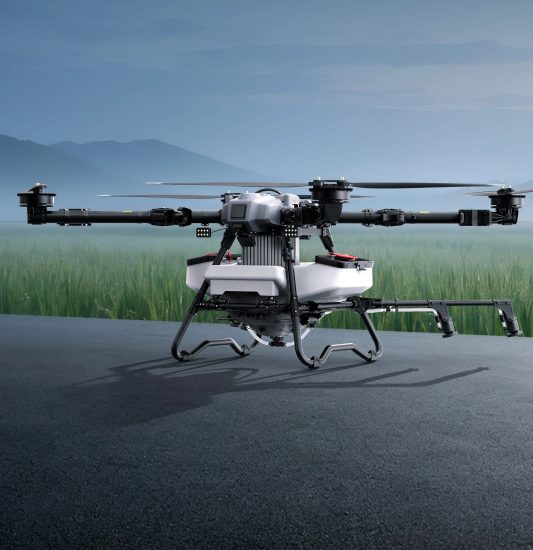
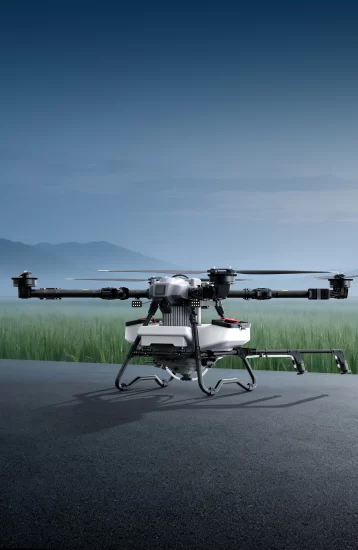
A 100KG agricultural spraying drone is a heavy-duty unmanned aircraft designed to carry a substantial agricultural payload.
Depending on the model, it may support:
- Liquid pesticide spraying
- Fungicide application
- Herbicide application
- Foliar fertilizer application
- Granular fertilizer spreading
- Seed spreading
- Other agricultural applications
The “100KG payload” specification does not necessarily mean that the aircraft should always operate with exactly 100KG of liquid or material.
Actual working payload depends on the drone design, battery configuration, weather, altitude, and operating conditions.
What Are Traditional Agricultural Spraying Methods?
Traditional agricultural spraying can include several methods.
Tractor-Mounted Sprayers
Tractors can carry large quantities of agricultural liquid and are widely used on open farmland.
Advantages include:
- Large tank capacity
- Long operating periods
- Familiar technology
- High productivity on suitable terrain
However, tractors require access to the field and can create soil compaction and crop damage.
Backpack Sprayers
Backpack sprayers are relatively inexpensive and flexible.
They can be useful for:
- Small farms
- Gardens
- Irregular areas
- Spot treatment
However, they require substantial manual labor and are generally unsuitable for very large-scale commercial operations.
Self-Propelled Sprayers
Self-propelled sprayers can provide high productivity on large farms.
They typically offer:
- Large tanks
- High ground speed
- Wide spray booms
- Automated controls
However, they require significant capital investment and suitable field conditions.
Agricultural Drone vs. Traditional Spraying
The best way to compare the two approaches is to evaluate several key factors.
| Factor | 100KG Agricultural Drone | Traditional Ground Sprayer |
|---|---|---|
| Initial investment | Medium to high | Medium to very high |
| Labor requirement | Relatively low | Medium to high |
| Difficult terrain | Excellent potential | Limited |
| Crop contact | Minimal | Possible |
| Soil compaction | Very low | Can be significant |
| Terrain flexibility | High | Medium |
| Route automation | Available on many models | Available on some systems |
| Refilling | Frequent depending on tank | Less frequent with large tanks |
| Battery requirement | Yes | Usually no |
| Weather sensitivity | Relatively high | Also weather dependent |
| Large open fields | Suitable | Highly suitable |
| Wet fields | Strong advantage | Can be difficult |
| Orchards | Potentially useful | Depends on equipment |
The correct solution depends on the farm’s specific operating conditions.
1. Which Is Faster?
Speed should not be evaluated simply by vehicle or drone speed.
The more useful metric is:
Hectares completed per hour
A tractor may move quickly and carry a large tank, but it may need to avoid wet areas, make wide turns, and operate carefully around crops.
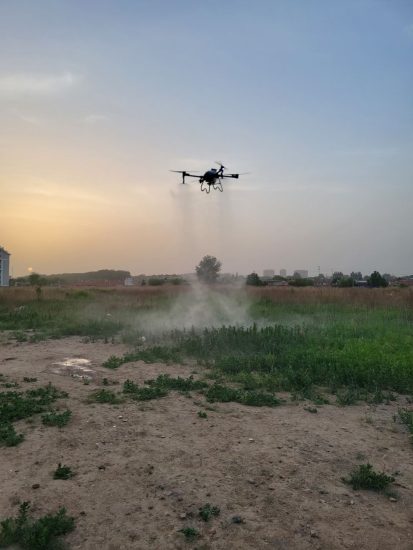
A drone can fly directly over crops and may be able to operate in areas that ground machinery cannot easily access.
However, drones also need:
- Battery changes
- Refilling
- Takeoff and landing
- Route planning
- Charging
Therefore, actual productivity must be measured under real field conditions.
2. Which Requires Less Labor?
Agricultural drones can reduce the physical labor required for spraying.
A typical drone operation may involve:
- One pilot/operator
- A person preparing agricultural liquid
- Battery management
- Refilling
Automation can further reduce repetitive manual operations.
By comparison, traditional spraying may require:
- Tractor operator
- Equipment maintenance
- Fuel management
- Manual setup
- Additional field workers depending on the operation
Labor savings can be particularly valuable in regions where agricultural wages are increasing.
3. What About Crop Damage?
One of the major advantages of aerial spraying is that the drone does not need to drive directly through the crop.
Tractors and other ground equipment can potentially:
- Crush plants
- Damage roots
- Create wheel tracks
- Compact soil
This can be particularly important for mature crops.
A drone flies above the crop and therefore avoids direct wheel contact.
However, aerial spraying must still be properly managed to achieve appropriate deposition and minimize drift.
4. Which Works Better on Wet Fields?
Wet conditions can create major problems for ground equipment.
Heavy tractors can become stuck or create deep tracks.
They may also cause significant soil compaction.
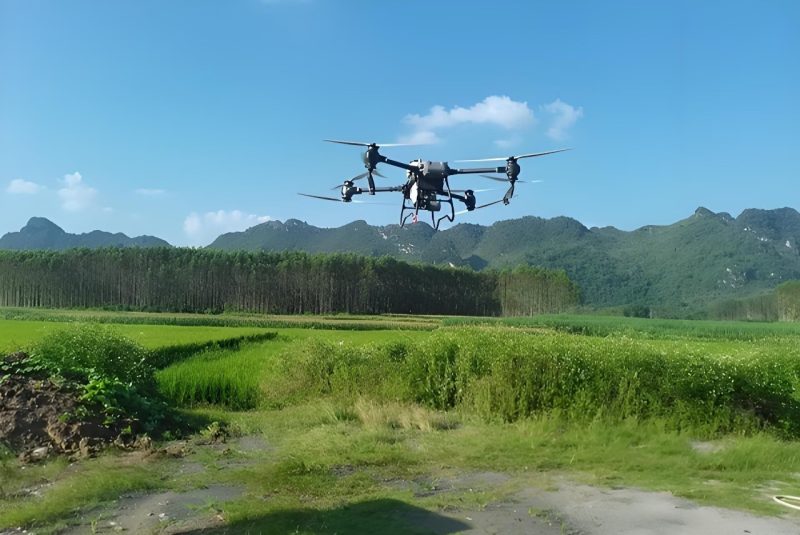
Agricultural drones can operate without physically driving across the field.
This makes drones potentially valuable for:
- Rice fields
- Waterlogged farmland
- Wet agricultural areas
- Soft soil
- Recently irrigated fields
However, drone operations are also affected by weather and wind, so aerial operation should always follow applicable safety and agricultural requirements.
5. Which Is Better for Sloped Terrain?
Drones can provide significant advantages in areas with slopes and difficult access.
Ground machinery can become difficult or unsafe to operate on:
- Steep hills
- Terraced fields
- Narrow fields
- Uneven terrain
A drone can fly over these areas without requiring a road or tractor path.
Terrain-following technology can further improve performance on uneven farmland.
6. Which Has Better Precision?
Modern agricultural drones can use navigation technologies such as:
- GNSS
- RTK
- Automatic route planning
- Terrain following
- Digital field mapping
These systems can help operators create repeatable flight paths.
Some traditional sprayers also have highly sophisticated GPS and application-control systems.
Therefore, neither method is automatically more precise.
Precision depends on:
- Equipment quality
- Calibration
- Operator skill
- Application rate
- Nozzle selection
- Weather
- Field mapping
7. Which Uses Less Agricultural Chemical?
A drone does not automatically reduce chemical consumption.
The actual amount depends on the application rate and the agricultural product being used.
However, precise route planning and controlled application can help reduce unnecessary overlap.
The goal should always be to apply the correct amount required by the crop and product label.
Reducing application volume simply for the sake of saving chemicals is not necessarily appropriate.
8. Which Has Lower Operating Costs?
Operating costs vary considerably.
Drone Operating Costs
Typical costs can include:
- Battery electricity
- Battery depreciation
- Maintenance
- Spare parts
- Operator labor
- Transportation
- Software
- Drone depreciation
Ground Sprayer Costs
Typical costs can include:
- Diesel or fuel
- Tractor depreciation
- Maintenance
- Tires
- Operator labor
- Repairs
- Equipment storage
A drone may have higher battery and electronics costs, while a tractor-based system may have higher fuel, tire, and mechanical maintenance costs.
The correct comparison is:
Total operating cost per hectare
rather than the cost of a single flight or a single machine.
Example Cost Comparison
Consider a hypothetical commercial operation.
Drone
Suppose the total operating cost is:
US$3 per hectare
and the drone treats:
3,000 hectares
Annual operating cost:
3 × 3,000 = US$9,000
Traditional Sprayer
Suppose the total operating cost is:
US$5 per hectare
for the same area.
Annual operating cost:
5 × 3,000 = US$15,000
The theoretical difference would be:
US$6,000 per year
However, this is only an example.
Actual costs vary according to fuel prices, electricity prices, labor costs, equipment depreciation, farm size, and operating conditions.
9. Which Has Lower Initial Investment?
This depends heavily on the type of traditional equipment being compared.
A 100KG agricultural drone can represent a significant investment.
However, a large self-propelled agricultural sprayer can also be very expensive.
A tractor-mounted system may require:
- Tractor
- Spray boom
- Tank
- Pump
- Nozzles
- GPS system
- Maintenance equipment
A drone system may require:
- Drone
- Batteries
- Chargers
- Remote controller
- Spray system
- Spare parts
- Transport equipment
The total system cost should be compared rather than the price of the aircraft alone.
10. Which Is Better for Large Farms?
Large farms can benefit from either technology.
Traditional equipment may be better when:
- Fields are flat
- Fields are easily accessible
- Roads are good
- Soil can support heavy machinery
- Large tanks are preferred
- Long continuous operation is required
Agricultural drones may be better when:
- Fields are difficult to access
- Crops are mature
- Soil is wet
- Terrain is uneven
- Crop damage from wheels is a concern
- Labor availability is limited
- Multiple fields are geographically separated
In some cases, the best solution is to use both technologies.
11. Drone + Tractor: A Hybrid Strategy
Large agricultural businesses do not necessarily need to choose only one technology.
A hybrid system can combine the strengths of both.
For example:
Tractor
Used for:
- Large-volume applications
- Open fields
- Operations requiring large tanks
Drone
Used for:
- Wet areas
- Difficult terrain
- Mature crops
- Spot treatment
- Areas inaccessible to tractors
This approach can provide greater flexibility.
12. Which Is Better for Orchards?
Orchards present unique challenges.
Trees can create:
- Uneven terrain
- Narrow passages
- Obstacles
- Difficult ground access
Aerial drones can operate above orchard rows without driving directly between the trees.
However, orchard spraying requires careful attention to:
- Droplet size
- Air movement
- Spray penetration
- Flight altitude
- Flight speed
- Wind conditions
The appropriate drone configuration should therefore be selected according to the specific orchard.
13. Which Is Better for Rice Farming?
Rice fields are one of the applications where agricultural drones can have significant advantages.
Traditional tractors may have difficulty operating in flooded or muddy fields.
A drone can operate above the field without driving through the water or soil.
Potential advantages include:
- Reduced soil disturbance
- Less crop contact
- Better access to wet areas
- Reduced dependence on field roads
A 100KG-class drone can also provide a high payload capacity for large commercial operations.
14. Which Is Easier to Maintain?
Traditional agricultural machinery is mechanical and may require:
- Engine maintenance
- Oil changes
- Tire maintenance
- Hydraulic maintenance
- Pump maintenance
- Mechanical repairs
Agricultural drones have different maintenance requirements.
They may require:
- Motor inspection
- Propeller inspection
- Battery maintenance
- Pump cleaning
- Nozzle cleaning
- Sensor inspection
- Firmware updates
- Wiring inspection
Neither system is maintenance-free.
However, the maintenance skills required are different.
15. Battery vs. Fuel
This is an important difference.
Traditional equipment generally depends on fuel.
A drone depends on batteries and electrical charging.
Drone operators need to manage:
- Battery charging
- Battery temperature
- Battery storage
- Battery cycle life
- Spare battery inventory
For large-scale operations, sufficient charging infrastructure is essential.
The advantage is that electric propulsion can reduce dependence on fuel during operation.
16. Environmental Considerations
Agricultural drones can reduce direct soil contact because they do not need to drive across the field.
This can help reduce:
- Soil compaction
- Wheel tracks
- Crop crushing
However, drone spraying still requires responsible chemical management.
Operators should consider:
- Spray drift
- Wind conditions
- Droplet size
- Buffer zones
- Water sources
- Local pesticide regulations
The drone itself does not eliminate the need for proper agricultural chemical management.
17. What About Safety?
Both drones and traditional equipment require proper operation.
For a 100KG-class drone, additional attention should be given to:
- Flight restrictions
- Operator training
- Battery safety
- Emergency procedures
- Obstacle avoidance
- Communication systems
- Local aviation regulations
Ground equipment also has risks involving:
- Heavy machinery
- Moving parts
- Fuel
- Hydraulic systems
- Road transportation
The safest system is the one operated according to appropriate training, procedures, and regulations.
18. Which One Should You Buy?
The decision can be simplified by asking several questions.
Choose a 100KG agricultural drone if:
- You manage large or difficult-to-access fields
- Wet soil limits tractor access
- Crop damage from ground machinery is a concern
- Labor availability is limited
- You need flexible aerial application
- You want automated flight routes
- You need a solution for slopes or irregular terrain
Consider traditional equipment if:
- Your fields are large, flat, and easily accessible
- Soil conditions support heavy machinery
- You need very large liquid tanks
- Long continuous operation is more important than aerial flexibility
- You already own suitable tractors and spraying equipment
Consider a hybrid system if:
You have diverse agricultural conditions and need maximum flexibility.
100KG Agricultural Drone vs. Traditional Sprayer: Final Comparison
| Category | 100KG Agricultural Drone | Traditional Sprayer |
|---|---|---|
| Labor | Lower potential labor requirement | Higher depending on system |
| Soil compaction | Very low | Can be significant |
| Crop damage | Minimal direct contact | Possible |
| Wet-field operation | Strong advantage | Often difficult |
| Slopes | Strong potential advantage | Can be limited |
| Tank capacity | Limited by aircraft design | Often very large |
| Battery/fuel | Electricity | Usually fuel |
| Precision | High with appropriate systems | Can also be high |
| Automation | High on advanced systems | High on modern equipment |
| Initial cost | Moderate to high | Moderate to very high |
| Maintenance | Electronics, motors, pumps, batteries | Engine, hydraulics, tires, pumps |
| Flexibility | High | High on suitable terrain |
| Large flat fields | Suitable | Excellent |
| Difficult terrain | Excellent potential | Limited |
Conclusion
A 100KG agricultural spraying drone can be more efficient than traditional spraying equipment in many agricultural situations, but it is not automatically the best choice for every farm.
Its biggest advantages are generally associated with:
- Difficult terrain
- Wet fields
- Mature crops
- Reduced crop contact
- Lower soil disturbance
- Reduced manual labor
- Flexible field access
- Automated flight planning
Traditional spraying equipment remains highly effective for large, flat, easily accessible fields where high-capacity tanks and long continuous operating times are important.
For many large agricultural operations, the most practical strategy may be a combination of drones and traditional equipment.
Before purchasing, compare both systems using measurable data:
Hectares per hour + hectares per day + labor cost + energy/fuel cost + maintenance cost + equipment depreciation + cost per hectare
This provides a more accurate picture of which technology is actually more efficient for your farm.
FAQ
Is a 100KG agricultural drone more efficient than a tractor sprayer?
It can be, especially on wet, steep, irregular, or difficult-to-access farmland. On large, flat fields with good access, a tractor sprayer may still provide excellent productivity.
Can agricultural drones replace tractors completely?
Not necessarily. Drones and tractors have different strengths. Many commercial farms can benefit from using both technologies.
Do agricultural drones reduce pesticide usage?
Not automatically. Chemical usage depends on the required application rate and product instructions. Accurate route planning and application control can help reduce unnecessary overlap.
Are 100KG agricultural drones suitable for rice fields?
They can be particularly useful for wet or flooded rice fields because the drone does not need to drive through the field.
Are drones cheaper than traditional spraying?
The answer depends on the total cost per hectare. Drone costs include batteries, electricity, maintenance, and depreciation, while traditional systems can have fuel, tires, mechanical maintenance, and operator costs.
How much labor can an agricultural drone save?
The exact amount depends on the operation. Automated flight planning and aerial operation can reduce manual spraying work, but commercial operations still require trained personnel for preparation, refilling, battery management, and supervision.
Are agricultural drones suitable for large farms?
Yes. High-payload drones can be useful for large farms, especially when field access, labor, terrain, or crop damage are important considerations.
What should I compare before purchasing?
Compare the complete operating system rather than the drone price alone. Key factors include working payload, flight time, hectares per day, spray width, application rate, battery cost, maintenance, spare parts, training, warranty, and cost per hectare.


No comments yet