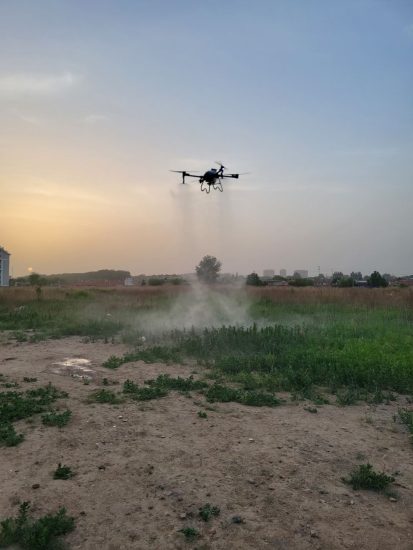


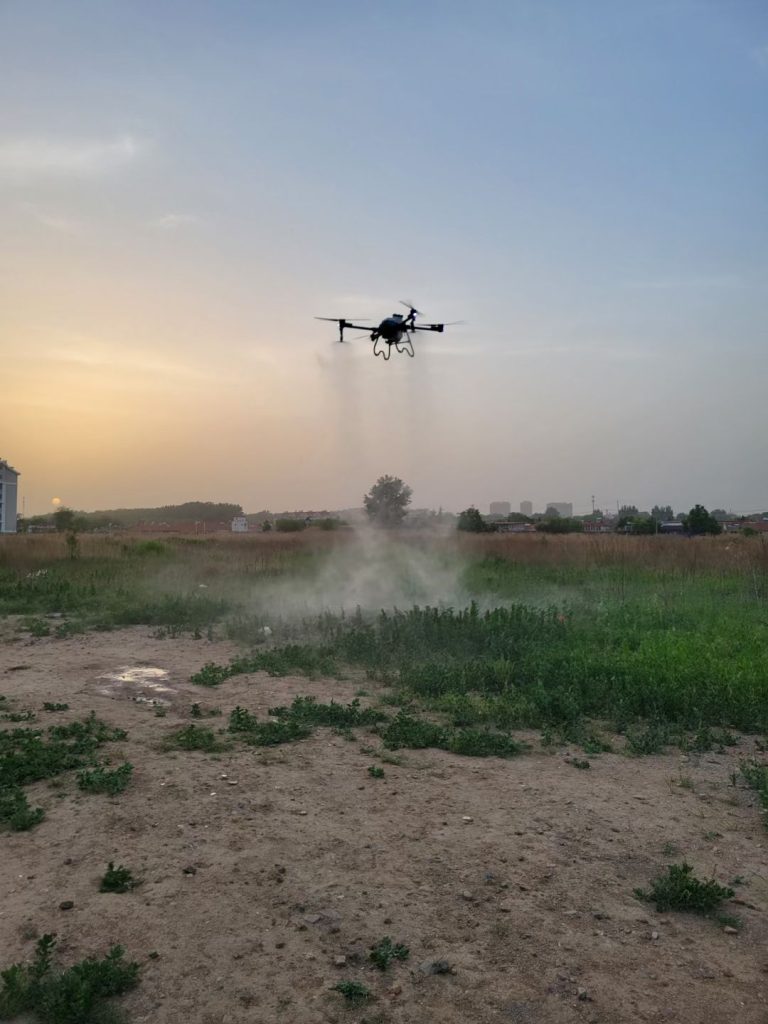
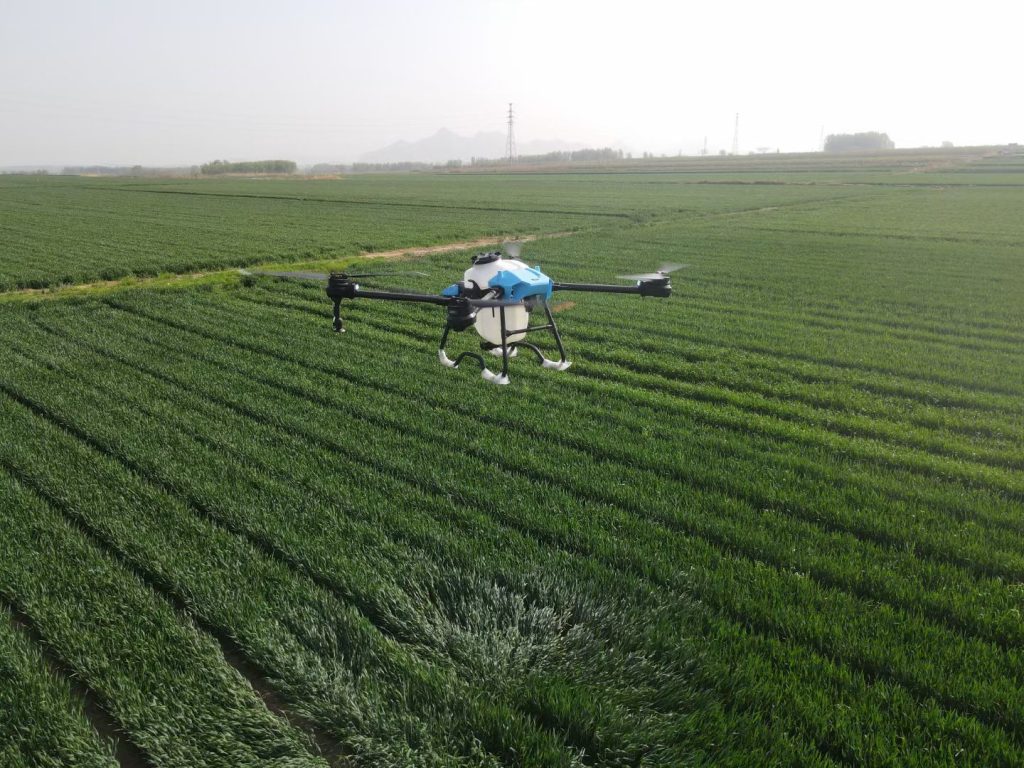
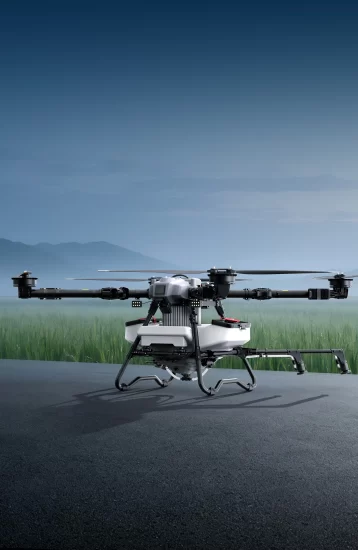
Construction sites are increasingly using heavy lift drones to move materials where conventional transportation is slow, expensive, or physically difficult.
A drone can move materials across a construction site without building temporary roads, positioning a crane, or sending workers into difficult terrain. This is particularly useful on high-rise projects, bridges, mountain construction sites, power infrastructure, remote roads, tunnels, and emergency repair projects.
However, buying a heavy lift drone for construction is very different from buying an ordinary camera drone.
The important question is not simply “How many kilograms can the drone lift?”
A construction buyer needs to know:
-
How much payload can it carry under real operating conditions?
-
How long can it fly with the actual construction load?
-
How far can it travel and still return safely?
-
Can it operate in wind around buildings and structures?
-
How does it handle suspended loads?
-
What happens if a motor, battery, communication link, or positioning system fails?
-
Can the drone maintain a stable position while lowering materials?
-
What safety systems are included?
-
How much does a complete commercial system actually cost?
This guide explains the major technical and purchasing considerations before investing in a heavy lift drone for construction and industrial material transport.
1. Why Construction Companies Are Using Heavy Lift Drones
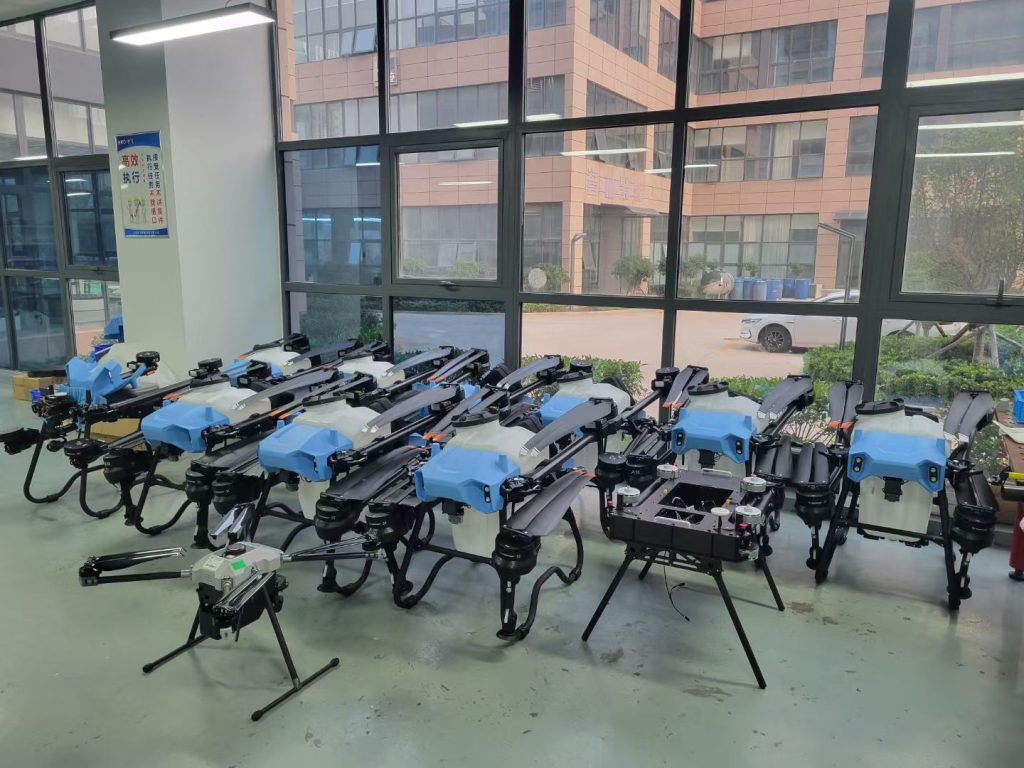
Traditional material transportation on a construction site usually depends on cranes, forklifts, trucks, hoists, elevators, temporary roads, or manual labor.
These methods remain essential for many applications, but they are not always efficient.
Consider a mountain construction project where workers need to move tools, pipes, concrete components, cables, or replacement parts from a lower staging area to a work location several hundred meters away.
A truck may require a temporary road.
A crane may require a suitable installation position.
A helicopter may be technically possible but extremely expensive.
A heavy lift drone can potentially fly directly between two points.
This creates several useful applications:
Construction material delivery
Heavy lift drones can transport:
-
Construction tools
-
Cables
-
Pipes
-
Steel components
-
Insulation materials
-
Roofing materials
-
Fasteners
-
Spare parts
-
Small machinery components
-
Emergency repair equipment
High-rise construction
Drones can be useful when material needs to be moved vertically or between elevated working areas.
A winch system is particularly useful when the drone cannot safely land at the destination.
Mountain and remote construction
This is one of the strongest use cases.
Remote construction sites often have poor road access, steep terrain, or limited space for cranes.
Power and telecommunications infrastructure
Heavy lift drones can potentially transport:
-
Cables
-
Tools
-
Components
-
Maintenance equipment
-
Replacement parts
Bridge and infrastructure projects
A drone can sometimes move materials around obstacles such as rivers, valleys, railways, roads, and restricted ground-access areas.
2. Payload Capacity Is the First Number You Should Question
Many heavy lift drone advertisements focus heavily on maximum payload.
For example:
100 kg payload
That number is useful, but it does not tell you whether the drone can carry 100 kg during your actual construction mission.
Payload capacity depends on factors such as:
-
Battery configuration
-
Aircraft empty weight
-
Payload system weight
-
Flight altitude
-
Temperature
-
Wind
-
Battery condition
-
Flight distance
-
Takeoff weight
-
Payload dimensions
-
Center of gravity
-
Required safety reserve
A manufacturer may advertise a maximum payload measured under controlled conditions, while your real construction operation could require a lower working load.
This distinction is critical.
Maximum Payload vs. Working Payload
A serious supplier should provide at least three figures:
Specification |
What it means |
|---|---|
Maximum payload |
Absolute maximum under specified conditions |
Recommended working payload |
Practical payload for normal operations |
Payload at specific range |
Payload the drone can carry for a defined flight distance |
For example, a drone may theoretically lift 100 kg but only be suitable for 70–80 kg when the mission requires a meaningful round trip, wind resistance, altitude, and battery reserve.
That is why buyers should never choose a drone based only on the headline payload number.
3. How Much Payload Does a Construction Drone Really Need?
The correct payload depends on the material being transported.
A 30 kg drone can be enough for tools and smaller components.
A 50 kg drone becomes more useful for construction logistics.
An 80–100 kg aircraft is more suitable for heavier industrial material movement.
A basic selection guide is:
Payload Class |
Typical Construction Applications |
|---|---|
10–20 kg |
Tools, inspection equipment, small components |
20–30 kg |
Electrical components, equipment, repair materials |
30–50 kg |
Pipes, cables, construction tools, heavier components |
50–80 kg |
Larger industrial materials |
80–100 kg |
Heavy components and high-capacity material transport |
100 kg+ |
Specialized industrial logistics |
For most construction buyers, the best choice is not the largest drone available.
Instead, calculate the average payload required per mission.
If most loads are 35–45 kg, purchasing a 100 kg aircraft may increase the purchase price and operating cost without producing a meaningful benefit.
If the project frequently moves 70–90 kg loads, however, a 100 kg-class platform can make much more sense.
4. Flight Time With Payload Is More Important Than Empty Flight Time
One of the most misleading specifications in the drone industry is:
Maximum flight time: 60 minutes
The question is:
60 minutes carrying what payload?
A heavy lift drone consumes substantially more energy when carrying a heavy load.
For construction operations, the manufacturer should provide flight data under a defined payload.
A useful specification table looks like this:
Parameter |
Example Requirement |
|---|---|
Empty flight time |
30–60+ min |
Flight time at 30 kg |
20–40 min |
Flight time at 50 kg |
15–30 min |
Flight time at 80 kg |
10–20 min |
Flight time near maximum payload |
Often significantly shorter |
Operational reserve |
Normally required |
Actual figures vary substantially between aircraft.
For example, DJI’s FlyCart 100 specification lists a maximum flight time of 14 minutes under a 149.9 kg takeoff weight with dual batteries, under controlled test conditions. DJI also states that flight results vary with environment and operating conditions.
That is much more useful information than simply advertising an unloaded endurance figure.
5. Calculate Flight Time From the Actual Construction Mission
Suppose a construction site requires:
-
Payload: 60 kg
-
One-way distance: 2 km
-
Return distance: 2 km
-
Total flight distance: approximately 4 km
-
Moderate wind
-
100–200 m elevation difference
A drone that can technically fly 10 km does not necessarily provide a comfortable 4 km construction mission.
The aircraft must have enough energy for:
-
Takeoff
-
Climb
-
Loaded outbound flight
-
Hovering or positioning
-
Payload release
-
Return flight
-
Wind variation
-
Emergency maneuvering
-
Battery reserve
Therefore, the practical flight radius should always be calculated from the round-trip mission, not the advertised maximum range.
6. Construction Sites Create a More Difficult Flying Environment
A heavy lift drone flying over open farmland operates in a relatively predictable environment.
A construction site is different.
There may be:
-
Cranes
-
Scaffolding
-
Steel structures
-
Buildings
-
Power cables
-
Temporary structures
-
Workers
-
Vehicles
-
Dust
-
Uneven terrain
-
Strong wind around buildings
Wind is especially important.
A drone may experience relatively low wind at ground level but significantly stronger or more turbulent airflow around tall buildings.
This can create additional loads on:
-
Motors
-
Propellers
-
Arms
-
Payload cables
-
Winch systems
-
Battery
-
Flight-control system
A drone should therefore be evaluated based on the actual construction environment rather than laboratory specifications alone.
7. Wind Resistance Should Be Tested With Payload
A manufacturer may quote a wind resistance value such as 12 m/s.
That does not automatically mean the drone can safely carry its maximum payload in 12 m/s wind in every direction.
DJI’s FlyCart 100 specifications list maximum wind resistance of 12 m/s and clearly note that operating conditions affect performance.
For a construction buyer, the more useful question is:
What is the recommended maximum wind speed when carrying 50 kg, 80 kg, or 100 kg?
Ask the manufacturer to provide test data for:
-
Headwind
-
Tailwind
-
Crosswind
-
Gusts
-
Payload swing
-
Takeoff
-
Landing
-
Hovering
-
Winch operation
This information can be more important than the maximum speed of the aircraft.
8. Winch System or Direct Lifting System?
Construction drones normally use one of two approaches.
Direct lifting
The material is attached beneath the aircraft.
The drone carries the load directly.
This configuration is relatively simple and can be efficient for transporting compact loads.
It is useful when the destination has enough space for controlled placement.
Winch system
A winch lowers the material on a cable.
This can be much more practical for construction sites.
The drone can hover above an inaccessible area while the payload is lowered.
For example:
-
Roof installation
-
Mountain slopes
-
Bridge structures
-
Towers
-
Construction platforms
-
Confined work areas
A current example is DJI’s FlyCart 100 winch system, which supports a cable length of up to 30 meters, cable retrieval, weighing, hook control, and an emergency cable-discard function.
For construction applications, a winch should not be evaluated only by cable length.
You should also ask about:
-
Maximum winch load
-
Cable strength
-
Retrieval speed
-
Hook design
-
Emergency release
-
Automatic load stabilization
-
Cable swing
-
Payload rotation
-
Real-time weight measurement
9. Suspended Loads Are a Major Safety Issue
A suspended load behaves differently from a fixed load.
Wind can cause the load to swing.
When the drone accelerates or stops suddenly, the payload can continue moving.
This can create a pendulum effect.
The result can be:
-
Reduced flight stability
-
Increased motor load
-
Collision with structures
-
Increased cable tension
-
Difficulty positioning the payload
-
Damage to the material
For construction work near buildings, this is particularly important.
A good heavy lift drone should have appropriate control algorithms for suspended loads and should allow the operator to control movement smoothly.
A payload weighing 80 kg is not equivalent to an 80 kg payload with a long cable swinging in the wind.
10. RTK Positioning Can Be Extremely Valuable
High-precision positioning is useful when the drone needs to place materials accurately.
RTK can improve positioning accuracy when suitable GNSS conditions and correction services are available.
For example, DJI lists RTK hovering accuracy of approximately ±10 cm horizontally and vertically under strong GNSS conditions on the FlyCart 100.
This can be valuable when:
-
Delivering materials to a specific platform
-
Working near structures
-
Following repeatable routes
-
Performing precise placement
-
Operating in large industrial sites
However, RTK should not be treated as a substitute for visual observation or obstacle detection.
GNSS signals can be affected by:
-
Buildings
-
Mountains
-
Steel structures
-
Electromagnetic interference
-
Trees
-
Other obstacles
11. Obstacle Avoidance Is a Construction Requirement
Construction sites contain obstacles that may not exist in ordinary drone operations.
A professional heavy lift system should ideally combine multiple sensing technologies.
Modern systems may use:
-
Millimeter-wave radar
-
LiDAR
-
Vision cameras
-
Downward sensors
-
FPV cameras
-
GNSS/RTK
For example, DJI’s FlyCart 100 uses front, rear, and downward radar together with LiDAR and a multi-camera vision system.
The important issue is not how many sensors are installed.
The real question is:
Can the system detect the types of obstacles found on your construction site?
Thin cables, scaffolding, steel beams, tree branches, glass, and partially constructed structures can all create different sensing challenges.
12. Battery Configuration Directly Affects Payload
Battery weight becomes a major factor in heavy lift drones.
For example, DJI lists its DB2160 intelligent flight battery at approximately 14.7 kg, with a 52 V nominal voltage and 41 Ah capacity.
When two batteries are installed, the drone gains additional energy but also carries additional battery weight.
This creates a trade-off.
Single battery
Advantages:
-
Lower aircraft weight
-
Potentially higher payload under some configurations
-
Lower initial battery investment
Disadvantages:
-
Less redundancy
-
Shorter endurance
-
Reduced operational flexibility
Dual battery
Advantages:
-
More energy
-
Longer operating capability
-
Greater redundancy
-
Better suited to repetitive commercial missions
Disadvantages:
-
Higher weight
-
Higher purchase cost
-
Additional battery replacement cost
The manufacturer should clearly explain how battery configuration changes the maximum payload.
DJI, for example, specifies up to 100 kg maximum payload in single-battery mode and 85 kg in dual-battery mode for the FlyCart 100, with the actual recommended loading determined according to aircraft condition, environment, and task.
This is an excellent example of why buyers should look at the complete operating configuration instead of only the maximum payload headline.
13. Charging Infrastructure Is Part of the Drone System
A construction company that operates a heavy lift drone several times per day needs to think about charging.
If the drone requires one hour to recharge after every mission, the aircraft may spend more time on the ground than in the air.
Commercial operations may require:
-
Multiple battery sets
-
Fast charger
-
Generator
-
Portable power station
-
Charging station
-
Battery storage
-
Battery temperature management
For example, DJI offers a high-power C12000 charging system for the FlyCart 100 ecosystem.
When requesting a quotation, do not ask only:
How much is the drone?
Ask:
What is the complete price for one operational system capable of performing 10–20 missions per day?
That produces a much more realistic comparison.
14. Safety Requirements for Construction Heavy Lift Drones
Safety should be treated as part of the aircraft specification, not an optional marketing feature.
A professional construction operation should consider at least the following systems.
14.1 Redundant propulsion
Heavy lift aircraft often use multiple motors and propellers.
The goal is to reduce the consequences of a single propulsion-system problem.
Ask the manufacturer:
-
How many motors?
-
How many independent ESCs?
-
Can the aircraft remain controllable after one motor failure?
-
What happens after an ESC failure?
Do not accept vague statements such as “highly redundant.”
Ask for the actual failure scenario and test conditions.
14.2 Emergency landing capability
The drone should have a defined emergency response for:
-
Low battery
-
Communication loss
-
GNSS problems
-
Motor failure
-
Sensor failure
-
Excessive wind
-
Payload problems
The response should be predictable and documented.
14.3 Parachute
A parachute can reduce the consequences of certain aircraft failures.
However, a parachute is not a guarantee that the aircraft will land safely in every situation.
Deployment altitude, aircraft weight, wind, terrain, and system response time all matter.
For example, DJI’s FlyCart 100 integrates a parachute system and specifies a minimum opening height of 100 m for the published touchdown-performance condition.
A buyer should therefore ask:
-
What is the minimum deployment altitude?
-
Maximum aircraft weight?
-
Deployment speed?
-
Automatic or manual?
-
Can it deploy after power loss?
-
Has it been tested at maximum takeoff weight?
15. Communication Loss Must Have a Defined Response
Construction sites often contain buildings and steel structures that can interfere with communication.
A professional system should have a clearly defined behavior after signal loss.
Possible functions include:
-
Return-to-home
-
Hover
-
Automatic landing
-
Route continuation
-
Emergency descent
The correct response depends on the mission.
For example, automatically returning home while carrying a suspended load could create a different risk from hovering in place.
Therefore, buyers should ask the manufacturer to demonstrate the exact behavior during a communication-loss test.
16. Maximum Takeoff Weight Is Not the Same as Payload
This is another specification that is frequently misunderstood.
Maximum takeoff weight includes the aircraft and everything it carries.
A simplified calculation is:
Maximum Payload = Maximum Takeoff Weight − Aircraft Weight − Battery Weight − Payload System Weight − Other Equipment
For example, if an aircraft has:
-
Maximum takeoff weight: 170 kg
-
Aircraft structure: 55 kg
-
Batteries: 30 kg
-
Lifting system: 5 kg
-
Other equipment: 5 kg
The theoretical remaining payload is:
170 − 55 − 30 − 5 − 5 = 75 kg
The exact calculation depends on the manufacturer’s configuration and operating restrictions.
DJI’s published FlyCart 100 specification lists a 170 kg maximum takeoff weight, while its payload specifications vary by battery and lifting configuration.
This is why buyers should never calculate payload from the advertised takeoff weight alone.
17. Construction Drone Dimensions Matter More Than Many Buyers Expect
A 100 kg-class heavy lift drone can be physically large.
DJI’s FlyCart 100, for example, has a diagonal wheelbase of approximately 2.33 meters and unfolded dimensions of roughly 3.22 × 3.22 × 0.98 meters.
This affects:
-
Transportation
-
Storage
-
Launch area
-
Landing area
-
Vehicle selection
-
Site access
-
Operator setup
Before purchasing, measure the actual launch area.
A drone may have excellent payload performance but still be impractical if the construction site does not have a safe takeoff and landing zone.
18. How Much Does a Heavy Lift Construction Drone Cost?
Prices vary considerably because “heavy lift drone” describes a wide range of systems.
The following ranges are reasonable indicative China-market purchasing ranges, rather than fixed global retail prices.
Payload Class |
Indicative Drone Price |
|---|---|
10–20 kg |
US$3,000–8,000 |
20–30 kg |
US$5,000–12,000+ |
30–50 kg |
US$8,000–20,000+ |
50–80 kg |
US$12,000–30,000+ |
80–100 kg |
US$20,000–40,000+ |
Premium 100 kg-class systems |
US$40,000–60,000+ |
Custom 100 kg+ industrial systems |
US$40,000–100,000+ |
Current Chinese supplier listings illustrate how wide the market can be. For example, one 100 kg-class listing is advertised around US$25,000–35,000, another around US$38,888–59,999, while another OEM 100 kg platform is listed around US$20,000 for low-volume purchases.
These prices should be treated as supplier-listing indications, not equivalent specifications.
A US$20,000 drone and a US$50,000 drone may differ substantially in:
-
Payload certification
-
Battery system
-
Flight controller
-
Motor quality
-
Sensors
-
RTK
-
Winch
-
Safety system
-
Software
-
Communications
-
Redundancy
-
Testing
-
After-sales support
19. The Real Cost Is Higher Than the Aircraft Price
A commercial construction operation may require:
Aircraft
US$20,000–60,000+
Batteries
Additional battery sets can add several thousand dollars depending on capacity and manufacturer.
Charging equipment
Fast charging equipment can significantly increase the total investment.
Winch system
A professional winch system can cost considerably more than a basic lifting attachment.
RTK equipment
Some projects may require additional RTK infrastructure.
Spare parts
Recommended spare parts may include:
-
Propellers
-
Motors
-
ESCs
-
Landing gear
-
Cables
-
Hooks
-
Sensors
-
Batteries
Training
Operators need appropriate technical and operational training.
Transportation
Large drones may require dedicated cases or vehicles.
Insurance and compliance
These costs depend heavily on the country and operating environment.
Therefore, a US$30,000 aircraft can easily become a US$40,000–60,000 operational package.
20. Example: 50 kg Construction Delivery Mission
Consider a construction project where the drone needs to transport 50 kg of tools and components.
Mission:
-
One-way distance: 1.5 km
-
Round trip: 3 km
-
Payload: 50 kg
-
Moderate wind
-
100 m elevation difference
-
8–10 missions per day
The buyer should request the following data:
Required Data |
Why It Matters |
|---|---|
Flight time at 50 kg |
Determines mission feasibility |
Maximum recommended wind |
Safety |
Battery consumption per mission |
Operating cost |
Recharge time |
Daily productivity |
Maximum range with 50 kg |
Route planning |
Payload release method |
Site suitability |
Emergency procedure |
Risk management |
Maintenance interval |
Long-term cost |
Spare battery price |
Operational planning |
Motor replacement price |
Maintenance budgeting |
This information is far more valuable than simply knowing that the drone has a “100 kg maximum payload.”
21. How Many Missions Can One Drone Perform Per Day?
Suppose one mission takes:
-
12 minutes flight
-
10 minutes loading/unloading
-
15 minutes battery charging/cooling
The complete cycle could take approximately:
37 minutes
In an eight-hour operating day:
480 ÷ 37 ≈ 13 theoretical cycles.
But real operations will include:
-
Weather delays
-
Battery replacement
-
Site coordination
-
Inspection
-
Loading delays
-
Safety checks
-
Flight planning
Therefore, actual productivity may be significantly lower.
For a commercial project, it is better to calculate capacity using realistic cycle time rather than theoretical flight time.
22. Drone vs. Crane: Which Is Better?
A heavy lift drone does not replace every crane.
A crane is usually superior when:
-
Loads are extremely heavy
-
Continuous lifting is required
-
The crane can be positioned easily
-
Construction lasts for months
-
High lifting capacity is required
A drone becomes attractive when:
-
The site is remote
-
Terrain is difficult
-
Temporary roads are expensive
-
Crane positioning is difficult
-
Material movement is intermittent
-
The destination is difficult to access
-
Rapid deployment is valuable
The correct question is therefore not:
Can a drone replace our crane?
It is:
Which parts of our material transportation process are expensive or inefficient enough that aerial delivery creates a measurable advantage?
23. How to Choose Between 50 kg and 100 kg
This is one of the most important purchasing decisions.
Choose a 50 kg-class drone when:
-
Typical loads are below 40 kg
-
Flight distance is relatively short
-
Lower purchase price is important
-
Launch areas are limited
-
The project does not require heavy components
Choose a 100 kg-class drone when:
-
Regular loads exceed 60–70 kg
-
Construction materials are bulky or heavy
-
Productivity is more important than initial price
-
Long-term commercial operation is expected
-
A winch system is required
A larger aircraft is not automatically better.
Oversizing the drone can increase:
-
Capital cost
-
Battery cost
-
Transport requirements
-
Maintenance
-
Operator requirements
-
Site restrictions
24. What Should You Ask a Chinese Heavy Lift Drone Manufacturer?
Before requesting a quotation, prepare a detailed RFQ.
Do not simply send:
Please quote 100 kg drone.
Instead provide:
Application: Construction material transport
Required payload: 60 kg
Maximum payload: 80–100 kg
One-way distance: 2 km
Required round-trip distance: 4 km
Altitude: 500 m above sea level
Maximum expected wind: 8–10 m/s
Payload type: Tools, pipes and construction materials
Payload dimensions: 80 × 60 × 50 cm
Delivery method: Winch
Required cable: 10–20 m
Daily missions: 10–15
Operating temperature: 10–35°C
Location: Specify country and terrain
Then ask the supplier to provide:
-
Aircraft price
-
Battery price
-
Charger price
-
Winch price
-
Spare parts price
-
Recommended payload
-
Maximum payload
-
Flight time with actual payload
-
Maximum range with actual payload
-
Wind limits
-
Maximum operating altitude
-
Communication range
-
RTK specifications
-
Obstacle detection system
-
Emergency procedures
-
Warranty
-
Training
-
Maintenance schedule
-
Production lead time
-
Export documentation
This produces much more comparable quotations.
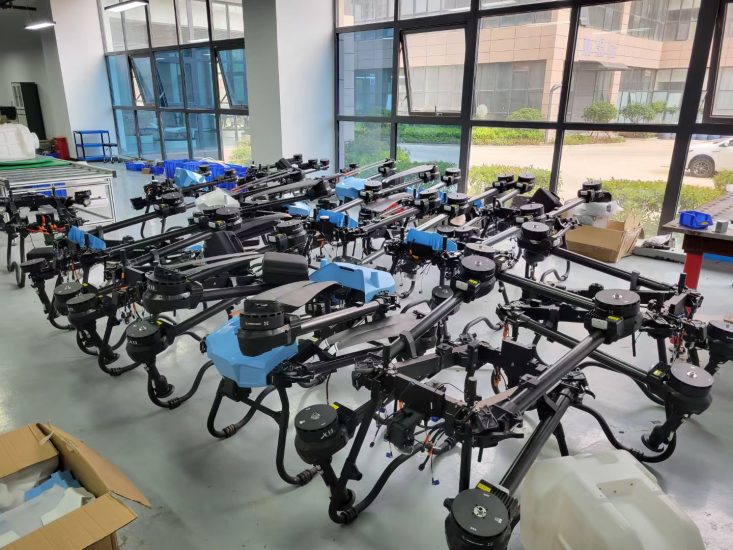
25. How to Verify a Heavy Lift Drone Factory
If purchasing directly from China, factory verification is particularly important.
Ask the supplier for:
Company information
-
Registered company name
-
Factory address
-
Business license
-
Years in operation
-
Main products
Manufacturing information
-
Production facility photos
-
Assembly area
-
Motor testing
-
Flight testing
-
Battery testing
-
Quality-control procedures
Technical evidence
Ask for a video showing the actual aircraft:
-
Taking off
-
Carrying the advertised payload
-
Hovering
-
Flying horizontally
-
Returning with the payload
-
Releasing the payload
-
Demonstrating emergency functions
A supplier should be able to demonstrate the performance of the exact model being quoted.
26. Don’t Judge a Drone Only by Its Payload
Two 100 kg drones can have very different commercial value.
One may use inexpensive motors and batteries and achieve the payload only for a short demonstration.
Another may have:
-
Redundant propulsion
-
Industrial-grade flight controller
-
RTK
-
LiDAR
-
Radar
-
High-power batteries
-
Professional winch
-
Parachute
-
Advanced software
-
Detailed maintenance documentation
The second system may cost twice as much but potentially be much more suitable for commercial construction work.
The right comparison is therefore:
Price ÷ usable payload ÷ mission range ÷ daily productivity ÷ reliability
rather than:
Price ÷ maximum payload
27. Regulations and Construction Site Compliance
Drone regulations vary by country.
The requirements may depend on:
-
Maximum takeoff weight
-
Operating altitude
-
Urban operation
-
Operations near people
-
Commercial use
-
BVLOS operation
-
Airspace restrictions
-
Operator certification
-
Remote identification
-
Insurance
-
Local aviation authority approval
A 100 kg heavy lift drone is not equivalent to a small consumer drone from a regulatory perspective.
The buyer should identify the aviation authority and legal framework applicable to the actual country and mission before purchasing.
The manufacturer can provide technical documents, but the buyer remains responsible for confirming that the aircraft and intended operation meet local requirements.
28. Construction Safety Checklist
Before every mission, the operator should verify:
Aircraft
-
Propellers inspected
-
Motors inspected
-
Arms and frame inspected
-
Landing gear checked
-
Sensors clean
-
Battery condition acceptable
Payload
-
Weight confirmed
-
Center of gravity checked
-
Attachment points secured
-
Cable/hook inspected
-
No loose components
Environment
-
Wind checked
-
Weather checked
-
Takeoff area clear
-
Landing area clear
-
Route checked
-
Obstacles identified
People
-
Personnel clear of the flight path
-
Exclusion zone established
-
Ground coordinator assigned
-
Communication established
Aircraft systems
-
GNSS/RTK available
-
Battery level adequate
-
Remote controller connected
-
Emergency settings confirmed
-
Return-to-home settings checked
For heavy lift operations, the pre-flight process should be treated more like an industrial lifting procedure than a recreational drone flight.
29. Questions That Reveal Whether a Supplier Is Experienced
Ask the manufacturer these five questions:
Question 1
“What is the recommended payload for a 4 km round trip at 8 m/s wind?”
A knowledgeable manufacturer should give a specific answer.
Question 2
“What is the flight time carrying 50 kg, not empty?”
This separates real performance from marketing specifications.
Question 3
“What happens if one motor fails at maximum payload?”
The answer should explain the actual redundancy architecture.
Question 4
“What is the emergency procedure if the communication link is lost while carrying a suspended load?”
This reveals whether the system has been designed for real industrial operations.
Question 5
“Can you provide a flight test video using the same configuration we are purchasing?”
This helps verify whether the quoted performance belongs to the actual product.
30. Recommended Specification for a Commercial Construction Drone
For a general construction material transport project, a practical specification might look like this:
Specification |
Recommended Target |
|---|---|
Payload |
50–100 kg |
Working payload |
60–80% of maximum where practical |
Flight mode |
Autonomous + manual |
Positioning |
GNSS + RTK |
Obstacle sensing |
Radar + LiDAR/vision preferred |
Payload system |
Direct lift or winch |
Winch length |
10–30 m depending on application |
Wind resistance |
10–12 m/s class |
Battery |
High-voltage intelligent battery |
Battery configuration |
Dual battery preferred for commercial use where supported |
Communication |
Long-range digital transmission + optional 4G |
Safety |
Redundant propulsion + emergency procedures |
Parachute |
Recommended for appropriate operations |
Protection |
IP-rated industrial platform preferred |
Operating temperature |
Approximately -20°C to 40°C depending on model |
Maintenance |
Documented maintenance schedule |
Spare parts |
Available locally or from manufacturer |
These are target specifications, not universal requirements. The correct configuration depends on the construction project.
31. Final Buying Recommendation
If you are buying a heavy lift drone for construction, start with the mission rather than the aircraft.
Define:
Payload → distance → altitude → wind → load dimensions → delivery method → daily missions → safety requirements
Then select the aircraft.
For most professional construction applications, the five most important specifications are:
-
Real payload under your operating conditions
-
Flight time with that payload
-
Reliable positioning and obstacle detection
-
Safe payload release and emergency procedures
-
Total operating cost rather than aircraft purchase price
A drone advertised as “100 kg heavy lift” may look attractive, but if it can only carry that load for a short demonstration, it may have little practical value.
A slightly smaller drone with better endurance, safer payload handling, faster battery turnaround, and stronger after-sales support can produce more useful work every day.
The best construction heavy lift drone is therefore not necessarily the one with the highest payload.
It is the one that can reliably move the required load, over the required distance, under the expected site conditions, while maintaining an acceptable safety margin and operating cost.
Frequently Asked Questions
1. How much does a heavy lift drone for construction cost?
A 30–50 kg industrial drone may cost approximately US$8,000–20,000+, while 80–100 kg systems commonly fall around US$20,000–60,000+ depending on configuration. Custom industrial systems can exceed US$100,000.
The aircraft, batteries, charger, winch, RTK equipment, spare parts, and training should be priced separately.
2. Can a 100 kg drone really carry 100 kg?
Some commercial aircraft are rated for up to 100 kg under specified conditions. However, the practical payload can be lower depending on battery configuration, altitude, weather, flight distance, and operating requirements.
Always request the manufacturer’s recommended payload for your specific mission.
3. How long can a heavy lift drone fly with a construction load?
There is no single answer.
A drone that can fly for 40–60 minutes without a payload may have a much shorter endurance when carrying 50–100 kg.
For heavy payload missions, buyers should request flight-time data at the exact intended payload.
4. Is a winch better than direct lifting?
For construction, a winch can be extremely useful when the destination is difficult to land at.
It allows the drone to remain above the delivery point while lowering the material.
Direct lifting can be simpler and more efficient when there is enough space for controlled placement.
5. Can heavy lift drones operate in strong wind?
Industrial drones are designed with specific wind-resistance limits, but maximum advertised wind resistance should not be interpreted as a universal operating limit at maximum payload.
Wind around buildings, towers, mountains, and cranes can be turbulent.
Always obtain payload-specific wind recommendations from the manufacturer.
6. Does a construction drone need RTK?
Not every application requires RTK.
RTK becomes particularly useful when accurate positioning is needed for repeatable routes or precise material placement.
For construction projects near large structures, RTK can improve positioning but should be combined with appropriate obstacle detection and operational procedures.
7. How many batteries should a construction company buy?
For commercial operations, one battery set is often insufficient.
The number depends on:
-
Missions per day
-
Flight time
-
Charging speed
-
Battery cooling requirements
-
Shift length
For high-frequency operations, multiple battery sets can significantly improve aircraft utilization.
8. Can a heavy lift drone replace a construction crane?
Usually not completely.
A drone is better suited to specific transportation tasks where access is difficult or crane deployment is inefficient.
For extremely heavy or continuous lifting, cranes remain more practical.
9. What is more important: payload or flight range?
Neither should be considered independently.
A drone with a high payload but insufficient range may not complete the mission.
A drone with long range but insufficient payload also cannot solve the problem.
The correct specification is the payload at the required round-trip distance.
10. What should I request from a Chinese heavy lift drone manufacturer?
Request:
-
Full technical specification
-
Recommended payload
-
Maximum payload
-
Flight time at actual payload
-
Flight distance at actual payload
-
Wind limits
-
Battery specifications
-
Charger specifications
-
Winch specifications
-
RTK information
-
Obstacle detection system
-
Safety system
-
Failure-response procedures
-
Warranty
-
Spare parts pricing
-
Training
-
Factory information
-
Flight-test video
-
Export documents
-
Complete commercial quotation
This gives you enough information to compare suppliers based on actual construction performance rather than advertising claims.
THE END


No comments yet