

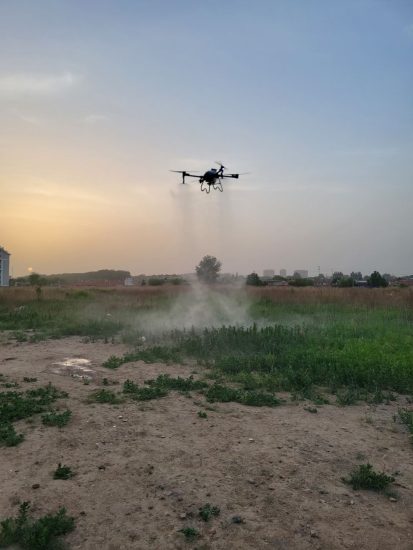
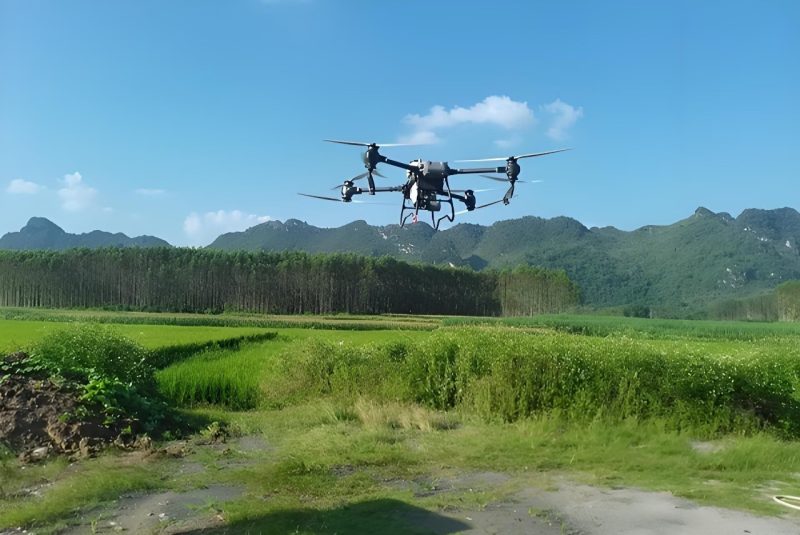
Agricultural spraying drones have become an increasingly practical solution for large-scale crop protection. Compared with traditional ground spraying equipment, a high-payload drone can operate in areas that are difficult for tractors and workers to access while reducing crop damage and improving spraying efficiency.
For farms, agricultural contractors, distributors, and equipment importers looking for a 50KG agricultural spraying drone manufacturer in China, choosing the right factory is more important than simply comparing the lowest quotation.
A reliable manufacturer should be able to provide suitable payload capacity, stable flight performance, accurate spraying systems, reliable batteries, spare parts, technical support, and consistent production quality.
This guide explains what international buyers should check before choosing a 50KG agricultural spraying drone supplier.
What Is a 50KG Agricultural Spraying Drone?
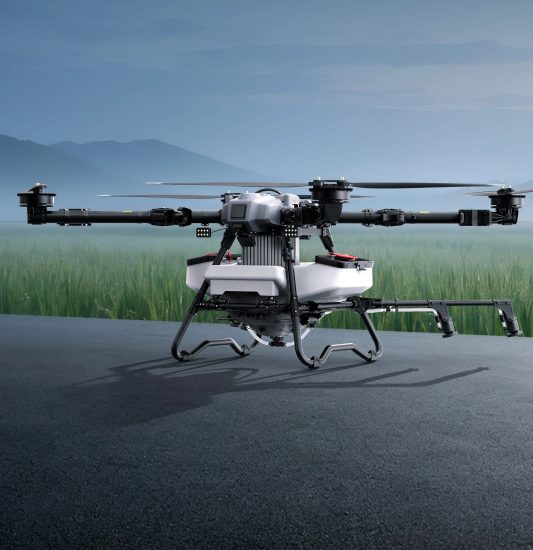
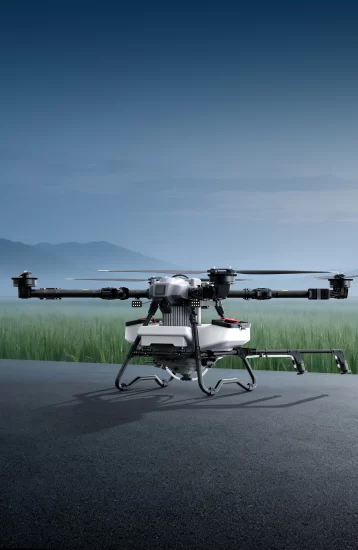
A 50KG agricultural spraying drone is a heavy-duty unmanned aerial vehicle designed for agricultural spraying applications.
The “50KG” specification generally refers to the drone’s maximum spraying payload or liquid-carrying capacity, depending on the manufacturer’s technical definition. Buyers should therefore confirm exactly what the quoted payload specification means before placing an order.
A typical heavy-duty agricultural spraying drone may include:
- Large-capacity liquid tank
- Multiple spray nozzles
- High-pressure spraying pumps
- Intelligent flight controller
- RTK positioning system
- Obstacle avoidance sensors
- High-capacity lithium batteries
- Automatic route planning
- Remote controller
- Terrain-following functions
- Flow-rate control
- Emergency return-to-home functions
The exact configuration varies between models and manufacturers.
For commercial agricultural operations, the most important consideration is not simply the tank capacity. The entire system needs to work reliably under real field conditions.
Why Choose a 50KG Spraying Drone?
A 50KG-class agricultural drone is designed for applications where productivity is more important than portability.
For large farms and professional crop protection companies, a higher payload can reduce the number of refilling cycles required during spraying operations.
For example, if two drones have similar spraying efficiency but one carries significantly more liquid per flight, the larger model may be able to cover more area before returning for refilling.
Potential advantages include:
1. Higher Spraying Productivity
A larger tank can reduce the frequency of landing and refilling.
This can be particularly useful for:
- Rice fields
- Corn
- Wheat
- Cotton
- Sugarcane
- Orchards
- Vegetable farms
- Large plantations
Actual field efficiency depends on application rate, crop conditions, flight speed, terrain, weather, and operating procedures.
2. Reduced Crop Damage
Because the drone flies above the crop, there is no need for heavy agricultural machinery to drive directly through the field.
This can help reduce mechanical crop damage and soil compaction in certain applications.
3. Access to Difficult Terrain
Agricultural drones can be useful in locations where conventional machinery has difficulty operating.
Examples include:
- Wet farmland
- Sloped terrain
- Narrow fields
- Orchards
- Areas with limited road access
4. Reduced Manual Labor
A properly configured spraying drone can automate many repetitive spraying operations.
The operator can plan routes and control spraying parameters from the ground rather than carrying a traditional spraying system through the field.
What Should You Check When Choosing a Chinese Manufacturer?
Finding a factory is easy.
Finding a manufacturer capable of providing a reliable 50KG agricultural spraying drone for long-term commercial use requires more careful evaluation.
Here are the most important factors to check.
1. Confirm the Real Payload Capacity
The first question should be:
Does the 50KG specification represent the actual liquid payload capacity?
Some suppliers may describe the drone according to maximum takeoff weight, while others may describe the spraying tank capacity.
These specifications are not necessarily the same.
Ask the manufacturer for:
- Maximum takeoff weight
- Empty drone weight
- Maximum liquid payload
- Recommended operating payload
- Tank capacity
- Battery weight
- Flight time at different payloads
A professional manufacturer should be able to provide clear technical specifications rather than only saying “50KG drone.”
2. Check the Flight Time Under Load
Flight time without liquid is not enough to evaluate a spraying drone.
A buyer should ask for flight-time information under actual operating conditions.
For example:
How long can the drone operate with a full spraying payload?
The answer depends on:
- Battery voltage
- Battery capacity
- Motor efficiency
- Propeller size
- Drone weight
- Payload
- Flight speed
- Weather
- Flight altitude
A manufacturer that provides testing data under different payload conditions can give buyers a much better understanding of the drone’s real performance.
3. Evaluate the Spraying System
The spraying system directly affects agricultural application quality.
Important components include:
Spray Pump
The pump should provide stable pressure and flow during operation.
Nozzles
Nozzle selection affects droplet size, spray width, and application performance.
Flow Control
The system should be able to regulate spraying according to the planned application rate.
Spray Width
Buyers should confirm the effective spraying width under actual operating conditions rather than relying only on laboratory specifications.
Tank Material
The tank should be made from suitable materials that can withstand the intended agricultural chemicals and operating environment.
4. Check the Flight Control System
A heavy agricultural drone requires a reliable flight control system.
Important functions may include:
- GPS positioning
- RTK positioning
- Automatic route planning
- Automatic return to home
- Low-battery warning
- Loss-of-signal protection
- Obstacle avoidance
- Terrain following
- Automatic takeoff and landing
Not every buyer needs every advanced function.
The correct configuration depends on the target market, crop type, operating environment, and local regulations.
5. Pay Attention to Battery Technology
The battery is one of the most important components of a heavy agricultural spraying drone.
A 50KG-class drone consumes considerable power during operation, particularly when carrying a large liquid payload.
Ask the manufacturer about:
- Battery voltage
- Battery capacity
- Battery weight
- Charging time
- Expected cycle life
- Operating temperature
- Battery management system
- Charger specifications
- Battery warranty
It is also useful to ask whether replacement batteries are readily available.
For commercial operators, having additional battery packs can significantly improve daily operating efficiency.
6. Check Motor and Propulsion System Quality
The propulsion system needs to provide sufficient thrust while maintaining stable operation.
Ask the manufacturer about:
- Motor model
- Maximum thrust
- Motor efficiency
- ESC specifications
- Propeller size
- Waterproofing
- Cooling system
- Expected service life
A good manufacturer should be able to explain why a particular motor and propeller combination is suitable for the drone’s payload.
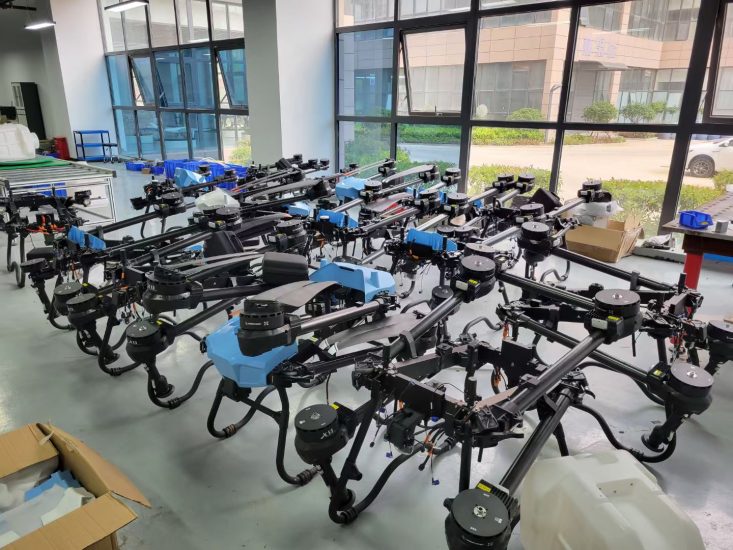
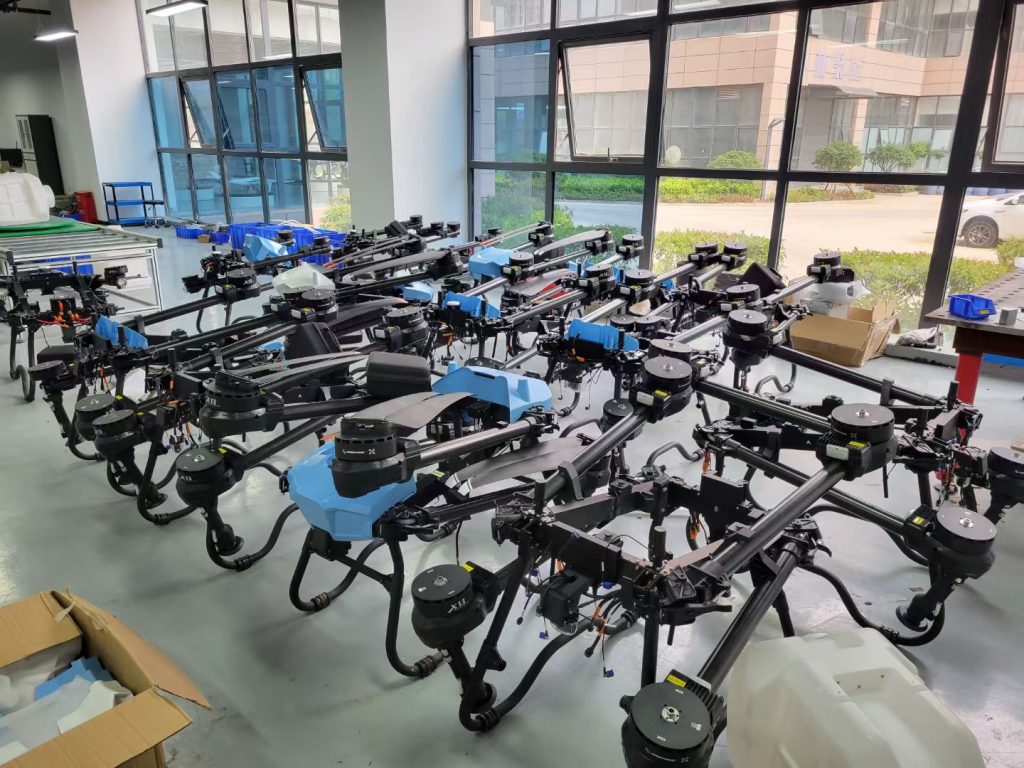
7. Ask About Factory Production Capability
If you are importing drones for distribution, factory capability is extremely important.
Do not only ask:
“Are you a manufacturer?”
Instead, ask for evidence of manufacturing capability.
You can check:
- Factory location
- Production area
- Assembly lines
- Quality-control procedures
- Testing equipment
- Product development capability
- Number of production technicians
- Monthly production capacity
- Spare-parts inventory
- Product testing procedures
A factory with established production and testing procedures is generally better positioned to support long-term B2B orders.
8. Check Whether OEM and Private Label Are Available
For distributors and agricultural equipment brands, OEM and private-label services can be important.
A capable 50KG agricultural drone manufacturer may provide customized services such as:
- Custom logo
- Customized drone body
- Customized packaging
- Remote-controller branding
- User manuals
- Color customization
- Software localization
- Product labels
- Accessories
- Spare-parts packages
Before requesting customization, confirm the manufacturer’s minimum order quantity and development requirements.
9. Request a Sample or Demonstration
Before placing a large order, serious buyers should consider requesting a sample unit or arranging a product demonstration.
A demonstration can help evaluate:
- Flight stability
- Spraying consistency
- Pump performance
- Navigation accuracy
- Battery endurance
- Payload performance
- Remote-controller operation
- Obstacle avoidance
- Automatic route planning
Videos can provide useful information, but an actual demonstration gives buyers much more confidence.
10. Check Spare Parts and After-Sales Support
Agricultural drones operate in demanding environments.
Even a reliable drone may eventually require replacement parts.
Before purchasing, ask whether the manufacturer can supply:
- Motors
- Propellers
- ESCs
- Pumps
- Nozzles
- Spray pipes
- Batteries
- Chargers
- Flight controllers
- Sensors
- Landing gear
- Remote controllers
A good supplier should also provide technical documentation and troubleshooting support.
For overseas distributors, after-sales support can be just as important as the initial product price.
How Much Does a 50KG Agricultural Spraying Drone Cost?
The price of a 50KG agricultural spraying drone varies considerably depending on configuration.
Factors affecting the price include:
| Cost Factor | Impact on Price |
|---|---|
| Payload capacity | High |
| Battery capacity | High |
| RTK system | Medium to high |
| Obstacle avoidance | Medium |
| Spray pump system | Medium |
| Flight controller | High |
| Remote controller | Medium |
| Battery charger | Medium |
| Spare parts | Medium |
| OEM customization | Depends on requirements |
| Packaging | Depends on requirements |
When comparing quotations, buyers should compare the complete configuration, not just the drone’s headline price.
For example, one supplier may quote only the aircraft, while another quotation includes batteries, charger, remote controller, spraying system, spare parts, and accessories.
The cheaper quotation may not necessarily represent the lower total purchasing cost.
Questions to Ask a 50KG Agricultural Drone Factory
Before ordering, international buyers can send the manufacturer a checklist like this:
- What is the actual liquid payload capacity?
- What is the maximum takeoff weight?
- What is the flight time with a full payload?
- What battery configuration is included?
- How long does battery charging take?
- What is the effective spraying width?
- What type of pump is used?
- How many spray nozzles are included?
- Does the drone support RTK?
- Does it support obstacle avoidance?
- What is the maximum recommended flight speed?
- What spare parts are included?
- What is the warranty period?
- Can you provide technical support?
- Do you offer OEM/private-label services?
- What is the MOQ?
- What is the production lead time?
- Can you provide a complete product specification sheet?
A professional manufacturer should be able to answer these questions clearly.
50KG Agricultural Spraying Drone for International Markets
Different markets may have different requirements for agricultural drones.
For example, buyers may require different configurations depending on:
- Crop type
- Farm size
- Climate
- Terrain
- Local pesticide application practices
- Aviation regulations
- Radio-frequency requirements
- Import regulations
- Operator certification requirements
Therefore, a manufacturer should not simply recommend the same configuration to every customer.
A good factory should first understand the buyer’s application and target market before recommending the final configuration.
Why Work Directly With a Manufacturer?
Buying directly from a manufacturer can provide several potential advantages for B2B buyers.
Better Product Communication
You can communicate directly with the engineering and sales teams about technical requirements.
OEM Support
Direct manufacturers are generally better positioned to handle customized product requirements.
Spare Parts Availability
Factory-direct cooperation can simplify the purchase of replacement components.
Better Control Over Quality
Buyers can communicate directly about inspection standards, packaging, testing, and production requirements.
Long-Term Cooperation
For distributors importing agricultural drones regularly, establishing a direct relationship with a factory can make future orders easier to manage.
How to Compare Two 50KG Drone Manufacturers
Suppose you receive quotations from two factories.
Do not compare only the prices.
Instead, create a comparison table:
| Item | Manufacturer A | Manufacturer B |
|---|---|---|
| Liquid payload | Confirm | Confirm |
| Flight time with load | Confirm | Confirm |
| Battery capacity | Confirm | Confirm |
| RTK | Included/Optional | Included/Optional |
| Obstacle avoidance | Included/Optional | Included/Optional |
| Spray system | Compare | Compare |
| Remote controller | Included | Included |
| Charger | Included | Included |
| Spare parts | Compare | Compare |
| Warranty | Compare | Compare |
| OEM | Available/Not available | Available/Not available |
| Lead time | Compare | Compare |
| Technical support | Compare | Compare |
This approach makes it easier to identify the actual value of each quotation.
Final Checklist for Choosing a Reliable Manufacturer
Before placing an order for a 50KG agricultural spraying drone, make sure you have confirmed:
Payload: Is the 50KG specification clearly defined?
Performance: Has the drone been tested under realistic payload conditions?
Spraying: Are pump pressure, flow rate, nozzles, and spraying width clearly specified?
Battery: Is the battery configuration suitable for commercial operation?
Navigation: Does the drone have the positioning and flight-control functions required for your market?
Factory: Can the supplier demonstrate genuine production capability?
Quality: Does the factory have a clear testing and inspection process?
Customization: Are OEM and private-label services available if required?
Spare Parts: Can replacement components be supplied consistently?
After-Sales: Is technical support available after delivery?
Compliance: Can the product meet the regulations of your target market?
Shipping: Can the manufacturer provide suitable export packaging and documentation?
Conclusion
Choosing a reliable 50KG agricultural spraying drone manufacturer in China requires more than comparing product prices.
International buyers should evaluate payload capacity, flight performance, spraying technology, battery systems, flight control, factory production capability, quality control, spare parts, OEM support, and after-sales service.
For distributors, agricultural contractors, and large-farm operators, the ideal supplier is not necessarily the factory offering the lowest quotation. A better choice is a manufacturer that can provide a stable product, transparent specifications, consistent quality, reliable spare parts, and long-term technical support.
Before placing a large order, request the complete technical specification, product configuration, testing information, warranty terms, spare-parts list, and commercial quotation. This allows you to compare suppliers objectively and select a 50KG agricultural spraying drone that fits your actual application and target market.
Frequently Asked Questions
Q1: What does a 50KG agricultural spraying drone mean?
It generally refers to a heavy-duty agricultural drone designed around a 50KG-class spraying payload. Buyers should confirm whether the manufacturer’s stated 50KG refers to liquid payload, maximum payload, or another technical specification.
Q2: How long can a 50KG spraying drone fly?
Flight time depends on battery capacity, drone weight, payload, motors, propellers, weather, and flight conditions. The most useful figure is the tested flight time under the intended operating payload.
Q3: Can I order OEM 50KG agricultural spraying drones from China?
Many agricultural drone factories can provide OEM or private-label services. Available customization depends on the manufacturer’s production and engineering capabilities.
Q4: What crops can a 50KG agricultural spraying drone be used for?
Potential applications include rice, wheat, corn, cotton, vegetables, sugarcane, orchards, and other commercial crops. The appropriate spraying configuration depends on the crop and application requirements.
Q5: Should I buy a complete drone package?
For overseas buyers, a complete package can simplify procurement. Ask whether the quotation includes the aircraft, batteries, charger, remote controller, spraying system, accessories, and necessary spare parts.
Q6: What should I ask a Chinese agricultural drone manufacturer before ordering?
Ask about actual payload, flight time under load, battery specifications, spraying performance, positioning system, factory capability, warranty, spare parts, OEM services, production lead time, and technical support.



No comments yet