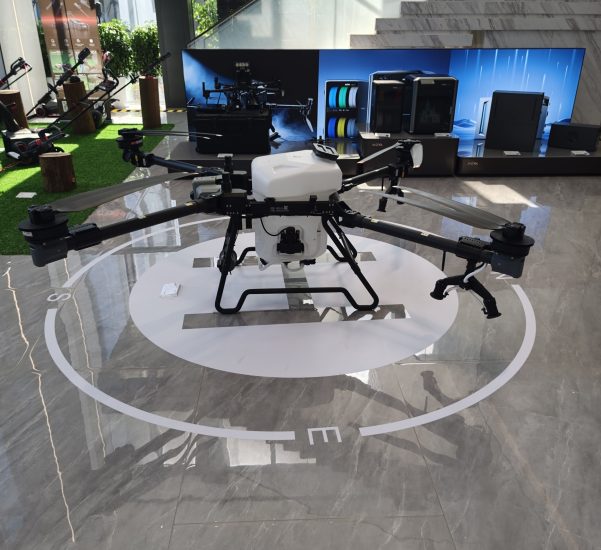



Choosing an agricultural spraying drone is not simply a matter of selecting the largest tank or the newest model. The right drone depends on your crops, farm size, terrain, spraying requirements, battery system, available labor, and local regulations.
For farmers, agricultural service companies, and equipment distributors, making the right choice before purchasing can help avoid unnecessary costs and ensure the equipment matches the actual working environment.
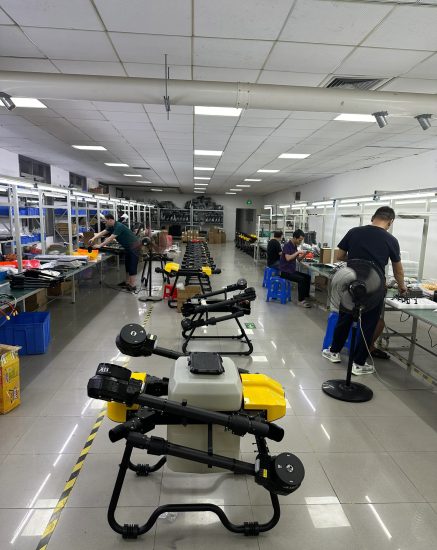
MSOEN manufactures agricultural spraying drones for professional crop-spraying applications and provides solutions for different farm types and operating conditions.
1. Start with Your Crop Type
The first question is simple: What crops will the drone be used for?
Different crops require different spraying approaches.
Rice
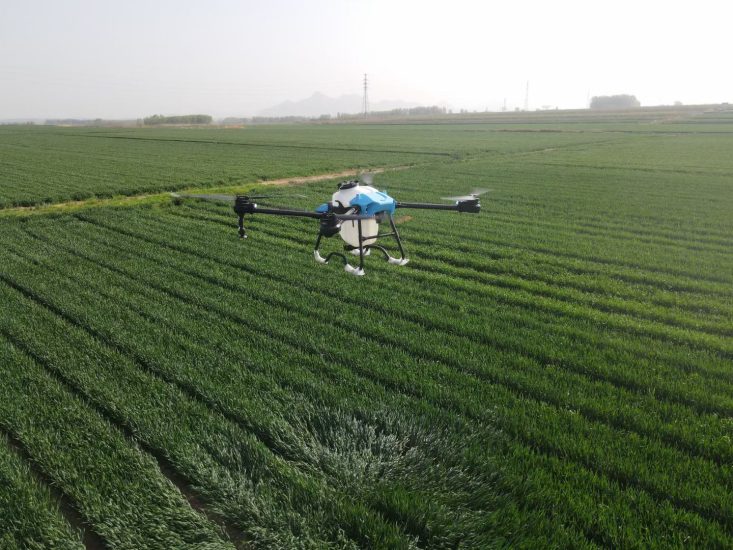
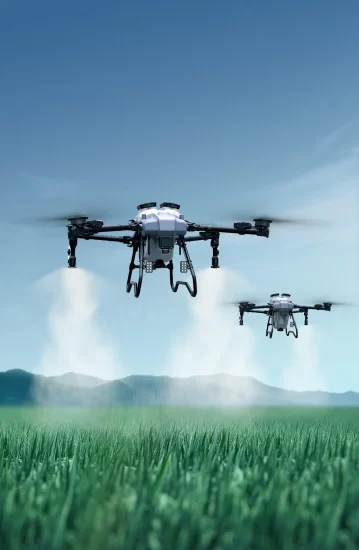
Rice fields are often wet or flooded, making ground equipment difficult to operate. An agricultural drone can fly above the field without driving directly through the crop.
Corn and Wheat
Large field crops generally require efficient coverage. The appropriate drone depends on field size, application rate, crop height, and operating schedule.
Fruit Trees
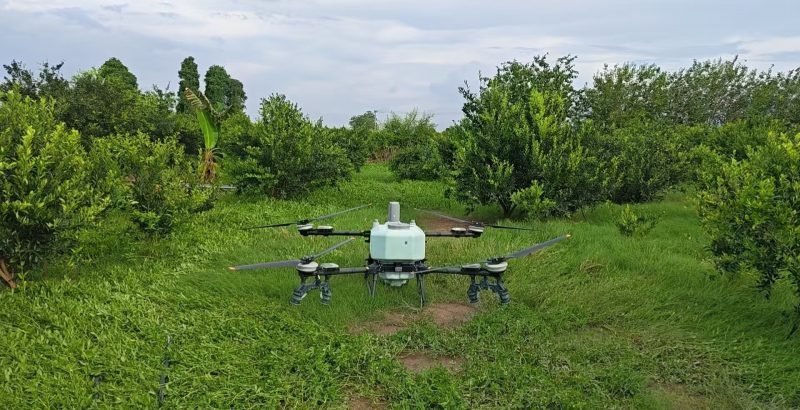
Orchards require more careful consideration because tree height, canopy density, and planting distance can vary considerably.
Vineyards
Vineyards often have narrow rows and uneven terrain. Flight planning and spraying configuration should take these conditions into account.
The crop should therefore be identified before selecting the drone model.
2. Consider Your Farm Size
Farm size has a direct influence on the required drone capacity.
For smaller farms, a compact spraying drone may be easier to transport and operate.
For larger farms, a higher-capacity model can reduce the number of refill cycles.
However, bigger does not always mean better.
A large drone can carry more liquid, but its greater payload may require more battery power and more careful handling.
The goal is to find the best balance between capacity and operating efficiency.
3. Choose the Appropriate Tank Capacity
Agricultural spraying drones are commonly differentiated by tank capacity.
For example, a 20L-class drone can offer a balance between payload and maneuverability, while a 30L-class drone can carry more liquid per flight.
When comparing tank capacities, consider:
-
Farm size
-
Crop type
-
Application rate
-
Refill distance
-
Battery capacity
-
Terrain
-
Daily operating hours
If the refill station is close to the field, a smaller tank may be perfectly practical.
If the refill point is far away, higher capacity may help reduce downtime.
4. Check the Spraying System
The spraying system is just as important as the aircraft itself.
A professional agricultural drone should have a spraying system appropriate for its intended application.
Important components include:
-
Pump
-
Nozzles
-
Pipes
-
Flow-control system
-
Liquid tank
-
Spray configuration
Pump
The pump delivers liquid from the tank to the nozzles.
Stable pump performance is important for consistent liquid delivery.
Nozzles
Nozzles influence how the liquid is distributed.
Different applications may require different nozzle types and configurations.
Flow Control
Flow control allows the operator to adjust the amount of liquid being applied according to the operating parameters.
5. Do Not Judge the Drone by Spray Width Alone
Many buyers focus heavily on advertised spray width.
However, spray width alone does not determine actual field productivity.
Real performance also depends on:
-
Flight speed
-
Flight altitude
-
Application rate
-
Nozzle type
-
Wind
-
Crop density
-
Terrain
-
Field shape
A wider spray pattern can be useful, but it must be considered together with the entire spraying system.
Ask the manufacturer how the spray-width figure was measured and under what conditions.
6. Evaluate Battery Performance
Battery performance is one of the most important factors in agricultural drone operation.
The drone must use energy for:
-
Flight
-
Carrying the liquid payload
-
Pump operation
-
Electronic systems
-
Positioning and control
A full tank generally places a greater load on the aircraft than an empty tank.
When comparing models, ask for information about:
-
Battery capacity
-
Typical flight time
-
Flight time under spraying load
-
Charging time
-
Battery cycle life
-
Charger specifications
-
Spare battery availability
For commercial operations, multiple batteries may be necessary.
7. Consider Your Terrain
The farm environment can significantly affect drone selection.
Flat Fields
Flat fields are generally straightforward for route planning and operation.
Hills and Slopes
Hilly farms may require more careful flight planning and positioning.
Orchards
Trees can create obstacles and affect airflow and spraying patterns.
Wet Fields
Wet fields may be difficult for ground equipment but can be suitable for aerial spraying when conditions and regulations permit.
The drone should be selected based on the actual environment rather than a generic specification sheet.
8. Look at Flight-Control Features
A professional agricultural drone should provide reliable flight control.
Depending on the model, useful functions can include:
-
GPS positioning
-
Automatic route planning
-
Altitude control
-
Return-to-home
-
Obstacle detection
-
Remote monitoring
-
Automated spraying control
These features can reduce the amount of manual flying required.
However, automation does not replace the need for a trained operator.
The operator remains responsible for safe operation and compliance with local requirements.
9. Think About Maintenance
Agricultural drones often work in demanding environments.
They may be exposed to:
-
Dust
-
Moisture
-
Agricultural liquids
-
Vibration
-
Temperature changes
-
Frequent transportation
For this reason, maintenance should be considered before purchasing.
Ask the manufacturer about:
-
Cleaning procedures
-
Nozzle replacement
-
Pump maintenance
-
Motor inspection
-
Propeller replacement
-
Battery maintenance
-
Sensor maintenance
-
Spare parts
A drone with readily available replacement parts can be easier to maintain during busy farming seasons.
10. Check Spare Parts Availability
This is especially important for international buyers.
If a distributor or farm has to wait weeks for a small replacement component, agricultural operations can be interrupted.
Before buying, ask whether the manufacturer can supply common spare parts such as:
-
Propellers
-
Motors
-
Pumps
-
Nozzles
-
Pipes
-
Batteries
-
Chargers
-
Landing components
-
Electronic modules
It is also useful to understand which parts are considered regular consumables.
11. Consider After-Sales Support
Price is important, but technical support can be even more important after the drone arrives.
A manufacturer should be able to provide appropriate product documentation and technical assistance.
International buyers should ask about:
-
User manuals
-
Installation instructions
-
Operator training
-
Troubleshooting
-
Warranty
-
Remote technical support
-
Spare parts
-
Software updates
For distributors, after-sales support can directly affect their ability to serve local customers.
12. Check Local Regulations Before Buying
This is one of the most important steps for international buyers.
Drone regulations vary from country to country.
Some markets may have requirements concerning:
-
Drone registration
-
Pilot qualifications
-
Operating zones
-
Radio equipment
-
Commercial operation
-
Agricultural chemical application
-
Flight restrictions
Import requirements and operating regulations are not necessarily the same thing.
Before placing a large order, buyers should confirm the applicable rules in their target market.
13. Think About Transportation
Agricultural drones often include lithium batteries.
This can affect transportation requirements.
Before shipment, international buyers should confirm:
-
Battery specifications
-
Packaging
-
Shipping method
-
Dangerous-goods requirements where applicable
-
Export documents
-
Import documents
-
Destination requirements
A manufacturer and logistics provider should coordinate the shipment requirements in advance.
14. Buying Directly from a China Manufacturer
For international buyers, purchasing directly from a Chinese agricultural drone manufacturer can provide access to manufacturing support and product customization.
Direct communication can make it easier to discuss:
-
Tank capacity
-
Spraying system
-
Battery configuration
-
Accessories
-
Packaging
-
OEM branding
-
Spare parts
-
Technical requirements
However, buyers should evaluate the manufacturer carefully instead of selecting a supplier based only on the lowest quotation.
15. Consider OEM Requirements
If you are an agricultural equipment distributor, you may want to sell the product under your own brand.
OEM cooperation may include:
-
Custom logo
-
Product labels
-
Packaging
-
Manuals
-
Accessories
-
Product configuration
Before starting an OEM project, both sides should confirm specifications, order quantities, testing requirements, packaging, production schedule, and after-sales responsibilities.
A Simple Agricultural Drone Buying Checklist
Before placing an order, ask yourself:
Crop: What crops will I spray?
Farm size: How many hectares or acres need to be covered?
Terrain: Is the land flat, hilly, wet, or orchard-based?
Tank: What capacity is appropriate?
Application rate: How much liquid needs to be applied?
Battery: How much operating time is required?
Refilling: How far is the refill station from the field?
Maintenance: Can I obtain spare parts quickly?
Support: Does the manufacturer provide technical assistance?
Regulations: Can the drone legally be imported and operated in my market?
Answering these questions before purchasing can make the selection process much easier.
Frequently Asked Questions
What size agricultural drone should I buy?
It depends on your farm size, crop type, application rate, terrain, refill distance, and operating schedule. A 20L or 30L-class drone may suit different requirements, but tank capacity should not be the only selection factor.
Is a larger agricultural drone always more efficient?
No. A larger tank reduces refill frequency but also increases payload weight and may increase energy consumption. The best drone is the one that matches the complete operation.
Can one drone spray different crops?
Potentially, yes. However, spraying parameters, nozzles, flight altitude, speed, and application rates may need to be adjusted for different crops.
What should I ask an agricultural drone manufacturer?
Ask about tank capacity, spray system, pump, nozzles, flight time, battery, charging system, spare parts, warranty, technical support, OEM options, and export documentation.
Can I import an agricultural drone from China?
Yes, international buyers can source agricultural drones from Chinese manufacturers, but import, battery transportation, drone operation, and agricultural-use requirements should be checked for the destination market.
Conclusion
Choosing the right agricultural spraying drone starts with understanding the farm rather than simply comparing product specifications.
Crop type, farm size, terrain, tank capacity, spraying system, battery performance, maintenance, spare parts, and local regulations all need to be considered.
For farmers and agricultural service providers, the right configuration can make daily operations more practical. For distributors and international buyers, choosing a manufacturer that can provide technical support and long-term parts supply is equally important.
MSOEN focuses on agricultural spraying drone manufacturing for professional crop-spraying applications and provides solutions for different crops, farm sizes, and agricultural operating environments.
THE END


No comments yet