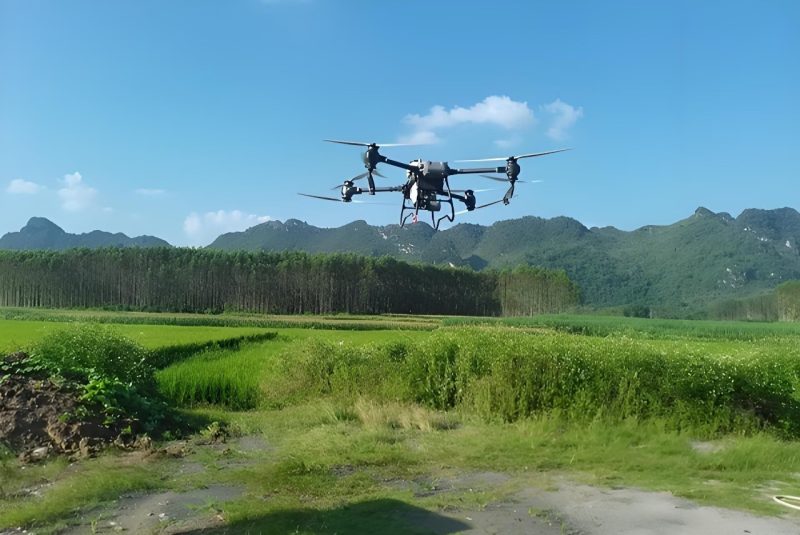




The battery is one of the most important components of an agricultural drone. It directly affects flight time, spraying productivity, operating cost, charging requirements, and the number of batteries needed for a full working day.
For farmers, agricultural contractors, and distributors, one of the most important questions before buying an agricultural drone is:
How long does an agricultural drone battery last?
The answer depends on the drone model, battery capacity, payload, flight speed, weather conditions, battery age, and operating mode.
In many agricultural drone applications, a battery may provide approximately 8–20 minutes of practical flight time per charge, although the actual duration can be shorter or longer depending on the configuration and workload.
This guide explains agricultural drone battery life, charging time, replacement costs, battery cycles, and how to choose the right battery system.
Quick Agricultural Drone Battery Guide
| Factor | Typical Range / Consideration |
|---|---|
| Practical flight time | About 8–20 minutes per charge |
| Empty-load flight time | Usually longer |
| Full-load flight time | Usually shorter |
| Charging time | About 10–30+ minutes, depending on system |
| Battery cycle life | Often hundreds of cycles, depending on battery type and usage |
| Battery type | Commonly high-capacity lithium battery systems |
| Replacement cost | Often several hundred US dollars per battery |
| Recommended spare batteries | Usually multiple packs for commercial operation |
These figures are general planning ranges. Actual battery specifications vary by manufacturer, model, battery chemistry, capacity, charger, temperature, payload, and operating conditions.
1. Why Agricultural Drone Batteries Are Different
Agricultural drones need considerably more power than many lightweight consumer drones.
They have to power:
- Multiple high-performance motors
- Flight controllers
- GPS/RTK systems
- Radar
- Cameras or sensors
- Pumps
- Spraying systems
- Remote communication
- Payload lifting
At the same time, the drone may be carrying 10L, 20L, or 30L of liquid.
This creates a high power demand.
As the payload increases, the battery generally needs to provide more energy to maintain stable flight.
2. How Long Does One Agricultural Drone Battery Last?
A practical flight-time range for many agricultural drones is approximately:
8–20 minutes per battery charge.
However, this should not be treated as a universal specification.
For example, a drone may achieve:
18 minutes
without a significant payload but only:
10–12 minutes
during a demanding spraying operation.
Flight time depends on:
- Payload
- Battery capacity
- Motor efficiency
- Propeller size
- Flight speed
- Wind
- Temperature
- Flight altitude
- Battery condition
- Spraying system operation
Always ask the manufacturer for full-load flight time, not just maximum flight time.
3. Empty Load vs Full Load Flight Time
This is one of the most important things to understand when comparing agricultural drones.
Suppose a manufacturer advertises:
20 minutes flight time
You should ask:
20 minutes with what payload?
A drone carrying no liquid will generally consume less energy.
A drone carrying a full tank requires significantly more power.
For example:
| Operating Condition | Possible Flight Time |
|---|---|
| Empty load | 18–20 minutes |
| Half payload | 14–17 minutes |
| Full payload | 10–14 minutes |
These numbers are illustrative rather than guaranteed specifications.
When comparing suppliers, always compare the same operating conditions.
4. How Does Payload Affect Battery Life?
Payload is one of the biggest factors affecting flight endurance.
Consider a 20L agricultural spraying drone.
When empty, it may weigh substantially less than when carrying 20L of liquid.
The additional weight requires more thrust.
More thrust means:
Higher motor power consumption → Higher battery consumption → Shorter flight time
This is why a manufacturer should provide battery performance under realistic operating conditions.
5. How Much Battery Capacity Does an Agricultural Drone Need?
Agricultural drone batteries can have much higher capacity than ordinary consumer drone batteries.
Depending on the model, battery specifications may include:
- Voltage
- Amp-hour capacity
- Watt-hour capacity
- Maximum discharge current
- Battery weight
- Charging current
- Cycle life
A common agricultural drone battery may be a high-voltage lithium battery designed specifically for high-power flight applications.
Do not compare batteries only by the number of mAh.
A better comparison is:
Energy = Voltage × Amp-hours
For example, a 50V 30Ah battery provides approximately:
50 × 30 = 1,500Wh
This is a simplified calculation. Actual usable energy depends on battery management, discharge conditions, temperature, and other factors.
6. How Long Does It Take to Charge an Agricultural Drone Battery?
Charging time depends on:
- Battery capacity
- Charger power
- Charging current
- Battery temperature
- Charger technology
- Battery management system
A practical charging period may be approximately:
10–30+ minutes
for some high-power charging systems.
However, buyers should always confirm the exact charging time for the specific battery and charger.
A high-capacity battery that takes a long time to recharge may reduce daily productivity if you do not have enough spare batteries.
7. How Many Batteries Do You Need?
For occasional use, one or two batteries may be sufficient.
For professional agricultural spraying, more batteries are usually needed.
A practical working configuration may include:
- Battery 1 — Flying
- Battery 2 — Ready
- Battery 3 — Charging
- Battery 4 — Charging or cooling
The exact number depends on:
- Daily operating hours
- Charging speed
- Drone flight time
- Number of drones
- Field size
The objective is to minimize waiting time.
8. Why Battery Cycle Life Matters
A battery does not last forever.
Each complete charge and discharge contributes to battery aging.
Manufacturers may specify a battery cycle life such as several hundred cycles, but actual service life depends on:
- Charging temperature
- Discharge depth
- Storage conditions
- Charging speed
- Operating temperature
- Overloading
- Maintenance
A battery used under extreme conditions can degrade faster than one operated and stored correctly.
9. How Much Does an Agricultural Drone Battery Cost?
The cost varies significantly by capacity and manufacturer.
A high-capacity agricultural drone battery can commonly cost approximately:
US$300–US$1,500+ per battery
depending on the voltage, capacity, chemistry, intelligent battery system, brand, and drone model.
For a complete commercial setup, batteries can represent a significant percentage of the initial investment.
For example:
Drone + 4 batteries + charger + spare parts
may cost substantially more than the base drone alone.
Always request a complete quotation.
10. Battery Cost Should Be Included in Operating Cost
Suppose an agricultural drone battery costs:
US$800
and lasts:
400 cycles
A simplified battery cost per cycle would be:
US$800 ÷ 400 = US$2 per cycle
If one cycle allows the drone to treat 10 acres:
US$2 ÷ 10 = US$0.20 per acre
This is only a simplified example.
Actual battery cost per acre depends on battery life, usable capacity, operating conditions, flight time, and field productivity.
11. How Temperature Affects Agricultural Drone Batteries
Temperature can have a significant effect on lithium battery performance.
Very low temperatures can reduce:
- Available power
- Flight endurance
- Charging performance
Very high temperatures can increase battery stress and accelerate degradation.
Before operation, check:
- Battery temperature
- Battery condition
- Charging temperature
- Storage temperature
Never charge a battery outside the manufacturer’s recommended temperature range.
12. How to Store Agricultural Drone Batteries
Proper storage can extend battery service life.
General practices include:
- Avoid storing batteries completely empty
- Avoid keeping them fully charged for very long periods
- Store them in a dry location
- Avoid extreme temperatures
- Protect batteries from physical damage
- Inspect batteries regularly
- Follow the manufacturer’s storage voltage recommendations
For long-term storage, follow the specific battery manufacturer’s instructions.
13. How to Maintain Agricultural Drone Batteries
Before each flight, check:
- Battery housing
- Connectors
- Battery voltage
- Cell balance
- Temperature
- Error messages
- Physical swelling or damage
Stop using a battery if you notice unusual swelling, severe physical damage, abnormal temperature, or other safety problems.
Do not attempt to repair damaged high-capacity lithium batteries unless the manufacturer or a qualified technician specifically instructs you to do so.
14. Intelligent Battery Systems
Modern agricultural drones may use intelligent battery systems that monitor:
- Voltage
- Current
- Temperature
- Remaining capacity
- Charging status
- Cycle count
- Battery health
These functions can help operators monitor battery condition and reduce unexpected failures.
For commercial agricultural operations, intelligent battery management can be an important feature.
15. Battery Compatibility Is Critical
Do not assume that two agricultural drone batteries with similar voltage are interchangeable.
The battery system may communicate with:
- Flight controller
- Charger
- Battery management system
- Power distribution system
Before purchasing replacement batteries, confirm:
- Voltage
- Capacity
- Connector
- Communication protocol
- Physical dimensions
- Maximum discharge current
- Compatible charger
Using an incompatible battery can damage equipment or create serious safety risks.
16. Battery Shipping from China
Agricultural drone batteries are often lithium batteries, which can be subject to special transportation requirements.
Before importing batteries from China, confirm:
- Battery type
- Watt-hour rating
- Packaging requirements
- Transportation method
- Required documentation
- Airline restrictions
- Shipping-line requirements
- Destination-country requirements
Air and sea transportation may have different procedures.
If you are buying drones and batteries from China, ask the supplier and your freight forwarder to confirm the appropriate shipping method before shipment.
17. How to Choose an Agricultural Drone Battery
When comparing batteries, look at:
Capacity
Higher capacity can provide longer flight time but may increase weight.
Voltage
The battery voltage must match the drone’s power system.
Discharge Capability
The battery must be capable of providing the current required by the motors.
Weight
A heavier battery can reduce the benefit of additional capacity.
Cycle Life
Longer cycle life can reduce long-term operating costs.
Charging Speed
Fast charging can increase daily productivity if the battery and charger are designed for it.
Intelligent Management
Battery monitoring can make commercial operation easier and safer.
18. Battery Configuration for 10L, 20L, and 30L Drones
Different drone sizes generally require different battery systems.
10L Drone
Usually has lower power requirements and may use a smaller battery system.
20L Drone
Requires more power because of its larger payload.
30L Drone
Typically requires a higher-capacity and higher-power battery system to support its heavier payload.
The battery should always be evaluated together with:
- Motor system
- Propeller
- Frame
- Payload
- Flight controller
A larger battery alone does not necessarily provide better flight performance.
19. How to Extend Agricultural Drone Battery Life
To maximize battery service life:
Avoid Deep Discharge
Do not repeatedly drain the battery to the absolute minimum.
Avoid Excessive Heat
Allow batteries to cool according to manufacturer recommendations before charging.
Use the Correct Charger
Always use a compatible charger designed for the battery.
Monitor Battery Health
Regularly check cycle count, cell balance, temperature, and error messages.
Store Correctly
Follow the manufacturer’s recommended storage state and temperature.
Avoid Damaged Batteries
Do not continue using batteries that show swelling, leakage, severe damage, or abnormal behavior.
20. Questions to Ask an Agricultural Drone Manufacturer
Before purchasing, ask:
- What is the battery voltage?
- What is the battery capacity?
- What is the battery weight?
- What is the full-load flight time?
- What is the empty-load flight time?
- How long does charging take?
- How many cycles is the battery rated for?
- How many batteries are recommended?
- What charger is included?
- Is fast charging supported?
- What is the replacement battery price?
- How should the battery be stored?
- What documents are available for shipping?
- Is the battery covered by warranty?
- Is the battery compatible with the latest drone model?
Getting these answers before purchasing can prevent unexpected costs later.
FAQ
How long does an agricultural drone battery last?
A typical agricultural drone battery may provide approximately 8–20 minutes of practical flight time per charge, depending on payload, drone size, battery capacity, weather, and operating conditions.
How long does an agricultural drone battery take to charge?
Depending on the battery and charger, charging may take approximately 10–30+ minutes. Always confirm the manufacturer’s exact specification.
How many batteries do I need for an agricultural drone?
For professional operations, multiple batteries are usually recommended so the drone can continue operating while other batteries are charging or cooling.
How much does an agricultural drone battery cost?
Depending on capacity and configuration, replacement batteries can cost approximately US$300–US$1,500+.
How many cycles can an agricultural drone battery last?
Many high-quality batteries are designed for hundreds of cycles, but actual service life depends heavily on temperature, charging practices, discharge depth, storage, and operating conditions.
Does a heavier payload reduce flight time?
Yes. A heavier payload generally requires more power, which can reduce flight endurance.
Can I use a different battery brand?
Only if the battery is confirmed to be fully compatible with the drone’s electrical, mechanical, charging, and communication systems.
Can agricultural drone batteries be shipped by air?
Some lithium batteries can be transported by air under applicable dangerous-goods rules, but restrictions and documentation depend on battery specifications, packaging, airline, route, and destination.
Conclusion
The battery system is one of the most important factors when choosing an agricultural drone.
A drone may have excellent specifications on paper, but if its battery provides insufficient flight time, takes too long to charge, or has a high replacement cost, overall productivity can suffer.
When comparing agricultural drones, look beyond the advertised maximum flight time.
Ask for full-load flight time, battery capacity, charging time, cycle life, replacement cost, battery quantity, and real operating data.
For commercial buyers, the best battery system is not necessarily the one with the largest capacity. It is the one that provides a good balance between flight endurance, charging speed, reliability, service life, weight, and total operating cost.
Before importing an agricultural drone from China, make sure the battery system is compatible with your intended operating conditions and that the required transportation and local regulatory requirements have been confirmed.


No comments yet