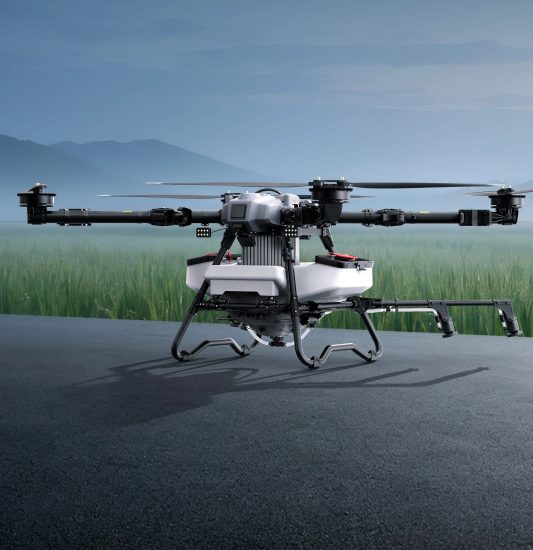


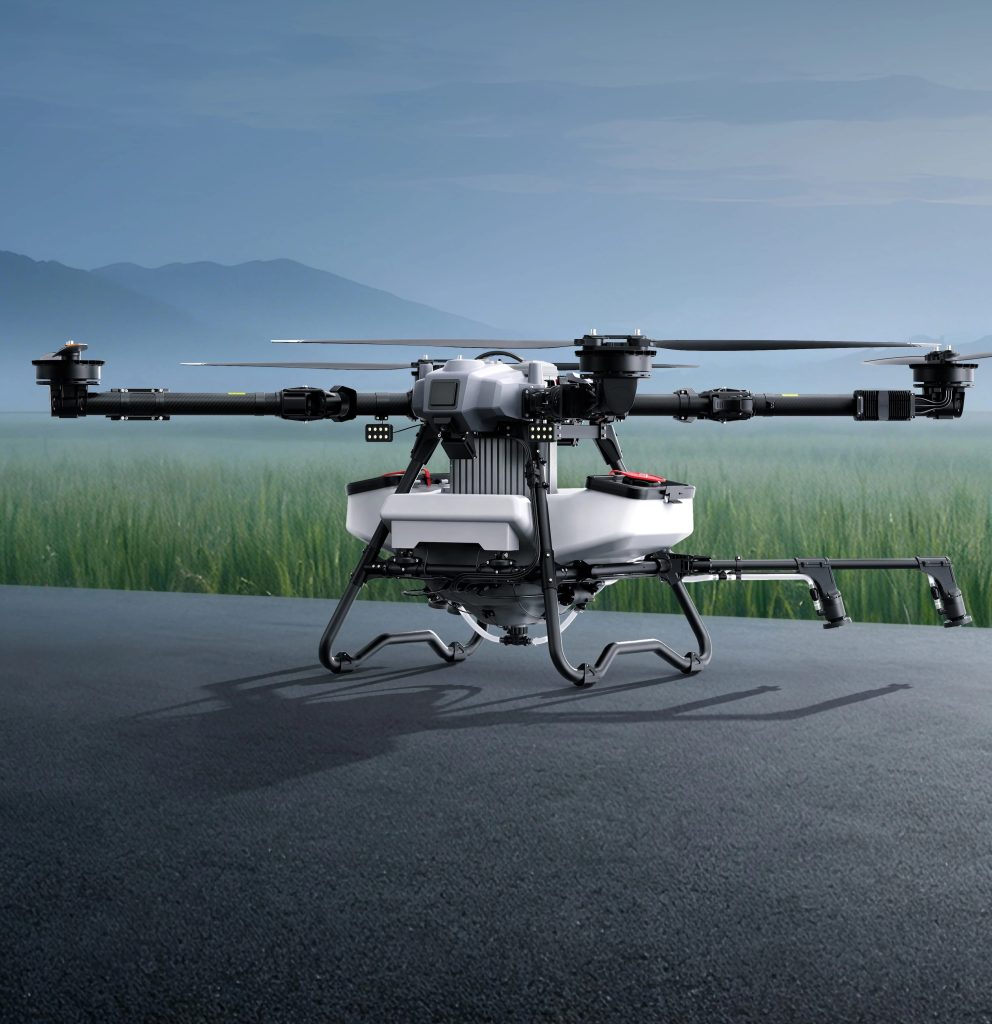
The price of a 100KG payload agricultural spraying drone can vary significantly depending on the aircraft design, battery system, spraying capacity, flight-control technology, sensors, accessories, and manufacturer.
For agricultural businesses, buying the cheapest drone is not always the best option. A low purchase price can become expensive if the drone has short flight time, poor spraying consistency, expensive batteries, limited spare parts, or inadequate technical support.
This buyer’s guide explains the typical price range of 100KG-class agricultural spraying drones and the major factors that affect the final cost.
100KG Agricultural Spraying Drone Price Range
As a general international purchasing reference, heavy-duty agricultural spraying drones in this class may fall into the following approximate ranges:
| Configuration | Approximate Price |
|---|---|
| Basic 100KG-class agricultural drone | US$15,000–25,000 |
| Commercial configuration | US$25,000–40,000 |
| High-end professional configuration | US$40,000–60,000+ |
These figures are indicative market ranges rather than fixed quotations.
The actual price can be considerably different depending on the manufacturer and configuration.
A quotation should therefore specify exactly what is included.
For example, one supplier may quote US$22,000 for the drone only, while another supplier may quote US$30,000 including multiple batteries, chargers, RTK equipment, spare parts, and a spreading system.
The second offer may actually provide better overall value.
What Determines the Price of a 100KG Agricultural Drone?
Several technical factors have a direct impact on the price.
1. Payload Capacity
The first factor is payload capacity.
However, buyers should distinguish between:
- Maximum payload
- Recommended working payload
- Liquid tank capacity
- Hopper capacity
- Maximum takeoff weight
A drone capable of lifting a heavy payload requires a sufficiently strong frame, motors, ESCs, propellers, landing system, and power supply.
Higher structural requirements generally increase manufacturing costs.
2. Battery System
The battery is one of the most important components of a heavy agricultural drone.
A larger drone needs substantial electrical power to carry its payload.
Depending on the design, a commercial system may require:
- High-capacity lithium batteries
- Multiple battery packs
- Intelligent battery management
- High-power chargers
- Battery cooling
- Battery monitoring
Battery quantity can have a major impact on the total purchase price.
For commercial operations, it is usually better to purchase enough battery packs to maintain continuous field operations rather than buying only the minimum number.
3. Spraying Tank Capacity
A larger spraying tank can reduce the number of refilling operations.
However, increasing tank capacity also affects:
- Drone weight
- Structural strength
- Motor requirements
- Battery consumption
- Pump capacity
- Takeoff performance
Buyers should therefore evaluate the entire system instead of assuming that the largest tank is automatically the best choice.
4. Pump and Nozzle System
The spraying system can significantly affect the price.
A professional agricultural drone may include:
- High-flow pumps
- Multiple pumps
- Electronic flow control
- Anti-drip nozzles
- Replaceable nozzles
- Pressure monitoring
- Automatic application-rate adjustment
A high-quality pump system can improve application consistency and reduce problems caused by uneven spraying.
5. RTK Positioning
RTK technology can increase the cost of an agricultural drone but can provide much more precise positioning.
For large farms, accurate navigation can help with:
- Repeatable flight paths
- More accurate field coverage
- Reduced overlap
- Better route planning
- Improved operational efficiency
Whether RTK is necessary depends on the farm and application requirements.
6. Obstacle Detection and Radar
Higher-end agricultural drones may use radar or other sensing technologies.
These systems can help detect obstacles and maintain safer flight operations.
Depending on the model, the drone may include:
- Forward radar
- Side radar
- Downward sensors
- Terrain-following sensors
- Obstacle detection
- Altitude sensors
Additional sensors increase the cost, but they can be valuable when operating around trees, buildings, power lines, or uneven terrain.
7. Flight Controller
The flight controller is effectively the brain of the drone.
A commercial agricultural drone requires stable control under changing payload and environmental conditions.
Higher-end flight-control systems may support:
- Automatic takeoff
- Automatic landing
- Route planning
- Return-to-home
- Low-battery protection
- Signal-loss protection
- Terrain following
- Precision positioning
The reliability of these systems can have a direct impact on commercial operating efficiency.
What Is Included in the Quoted Price?
When comparing suppliers, ask for a detailed quotation.
A complete quotation may include:
| Item | Usually Included? |
|---|---|
| Drone frame | Yes |
| Motors | Yes |
| Propellers | Yes |
| Flight controller | Yes |
| Remote controller | Yes |
| Spray system | Depends on configuration |
| Battery | Depends on quantity |
| Charger | Depends on package |
| RTK | Optional on some models |
| Radar | Optional on some models |
| Spreading system | Optional |
| Spare parts | Depends on supplier |
| Training | Depends on supplier |
This is why comparing only the headline drone price can be misleading.
How Much Do Batteries Cost?
For a heavy-duty agricultural drone, batteries can represent a substantial part of the investment.
A commercial buyer should ask:
- How many batteries are required for one drone?
- How many flights can one battery support?
- What is the battery cycle life?
- How long does charging take?
- Can batteries be charged simultaneously?
- What is the replacement price?
- Is battery monitoring included?
For large agricultural operations, battery logistics can sometimes be just as important as the drone itself.
How Much Does Charging Equipment Cost?
Charging requirements depend on the battery architecture.
A professional charging system may include:
- High-power charger
- Multiple charging ports
- Battery management
- Temperature monitoring
- Overcurrent protection
- Automatic charging control
Buyers should confirm whether the charger is included in the quoted price.
They should also check whether the charger is compatible with the local electrical system.
Shipping Cost When Importing From China
For international buyers purchasing agricultural drones from China, the equipment price is only one component of the landed cost.
The total cost may include:
Drone Price + Batteries + Charger + Spare Parts + Packaging + Freight + Insurance + Customs Duties + Local Taxes + Local Delivery
The shipping method can also affect the total cost.
Possible transportation methods may include:
- Air freight
- Sea freight
- Express transportation for certain components
- Specialized logistics solutions
Because batteries are regulated for transportation, buyers should confirm the applicable dangerous-goods and lithium-battery shipping requirements before ordering.
Example of a Total Purchase Budget
Suppose a buyer receives a quotation for:
- Agricultural drone: US$25,000
- Additional batteries: US$4,000
- Charger: US$1,500
- Spare parts: US$1,000
- Packaging: US$500
The equipment subtotal would be:
US$32,000
After adding international transportation, insurance, import duties, taxes, and local delivery, the final landed cost could be higher.
Therefore, a buyer should not use the factory quotation alone when calculating the actual investment.
New Drone vs. Used Agricultural Drone
Some buyers consider used agricultural drones because of the lower initial price.
A used drone can potentially reduce upfront investment, but there are additional risks.
Check:
- Battery cycle count
- Motor condition
- Flight-controller history
- Previous crash history
- Frame condition
- Pump condition
- Radar condition
- Firmware compatibility
- Spare-parts availability
The battery is especially important.
A used drone with heavily aged batteries may appear inexpensive but require immediate battery replacement.
For professional agricultural operations, a new drone with manufacturer support may provide better long-term value.
How to Calculate the Operating Cost
The purchase price is not enough to determine whether a drone is economical.
A better approach is to calculate the cost per hectare.
A simplified formula is:
Operating Cost per Hectare = Total Operating Cost ÷ Total Area Treated
Operating expenses may include:
- Electricity
- Battery depreciation
- Maintenance
- Spare parts
- Labor
- Transportation
- Agricultural chemicals
- Insurance
- Equipment depreciation
For example, if the total operating cost is US$5,000 and the equipment treats 2,000 hectares:
US$5,000 ÷ 2,000 = US$2.50 per hectare
The actual cost will vary according to the farm and operating conditions.
Is a More Expensive Drone Worth It?
Not necessarily.
The right question is not:
Which drone is cheapest?
The better question is:
Which drone provides the lowest total cost per hectare while maintaining reliable operation?
For example:
Drone A
Purchase price: US$20,000
Advantages:
- Lower initial investment
- Basic spraying system
Potential disadvantages:
- Shorter flight time
- Fewer sensors
- Limited spare parts
Drone B
Purchase price: US$35,000
Advantages:
- Higher efficiency
- Better navigation
- More batteries
- Better spraying control
- Stronger technical support
If Drone B can complete substantially more hectares per day and has lower downtime, it may provide better economic value despite the higher purchase price.
What Questions Should You Ask a Manufacturer?
Before paying a deposit, ask the supplier for clear answers to the following questions.
Technical specifications
- What is the maximum payload?
- What is the recommended working payload?
- What is the tank capacity?
- What is the maximum flow rate?
- What is the spraying width?
- What is the maximum flight speed?
Battery
- What is the battery capacity?
- What is the flight time with a full payload?
- How many batteries are included?
- What is the charging time?
- How much does a replacement battery cost?
Navigation
- Does it support RTK?
- Does it support automatic route planning?
- Does it have terrain following?
- Does it have obstacle detection?
Service
- How long is the warranty?
- Which spare parts are available?
- How quickly can spare parts be shipped?
- Is operator training available?
- Is remote technical support available?
How to Choose a China Manufacturer
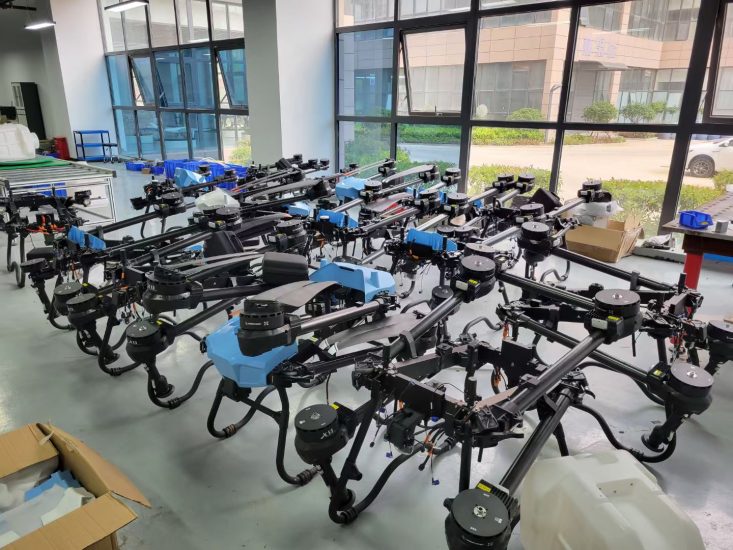
China has a large agricultural drone manufacturing industry, but buyers should evaluate suppliers carefully.
A reliable manufacturer should be able to provide:
- Product specifications
- Factory information
- Testing documentation
- Product videos
- Agricultural application data
- Spare-parts information
- Warranty terms
- User manuals
- Export documentation
It is also useful to ask for a sample unit or demonstration before purchasing a large quantity.
For OEM and private-label projects, buyers should additionally discuss:
- Logo customization
- Product color
- Packaging
- Remote controller branding
- User manuals
- Software localization
- Minimum order quantity
- Production lead time
Is a 100KG Agricultural Drone Suitable for Your Farm?
A 100KG-class agricultural drone may be suitable if your operation requires high daily productivity and you have sufficient infrastructure for charging, refilling, maintenance, and transportation.
It may be especially useful for:
- Large crop farms
- Rice fields
- Corn fields
- Wheat fields
- Soybean farms
- Orchards
- Vineyards
- Forestry operations
- Fertilizer spreading
- Large-scale crop protection
However, smaller farms may find that a lower-payload drone provides a better balance between investment and productivity.
Final Buying Advice
When purchasing a 100KG payload agricultural spraying drone, do not compare suppliers based solely on the advertised price.
Instead, compare the complete package:
Drone + Payload + Spraying System + Batteries + Charger + Navigation + Sensors + Spare Parts + Warranty + Shipping + Taxes + Operating Cost
A drone costing US$20,000 may not necessarily be cheaper than one costing US$30,000 if it requires additional batteries, has lower field efficiency, or lacks reliable after-sales support.
For commercial agricultural operations, the most useful metric is often cost per hectare and hectares completed per day.
Before making a large purchase, request a detailed technical quotation and, whenever possible, test the drone under realistic field conditions.
FAQ
How much does a 100KG payload agricultural spraying drone cost?
A rough international equipment price range can be approximately US$15,000–60,000+, depending on configuration, manufacturer, battery package, spraying system, sensors, navigation technology, and accessories.
Does the price include batteries?
Not always. Some quotations include one or more batteries, while others price batteries separately. Always confirm the exact quantity and battery specifications.
Is the charger included?
It depends on the supplier and package. A professional agricultural drone system should specify the charger model and electrical requirements in the quotation.
How much does a replacement battery cost?
The price varies according to voltage, capacity, chemistry, manufacturer, and battery-management system. Buyers should request the replacement price before purchasing the drone.
Is RTK worth the additional cost?
For large-scale precision agriculture, RTK can be valuable because it improves positioning accuracy and flight-path repeatability. However, the actual requirement depends on the application.
Can I buy a 100KG agricultural drone directly from China?
Yes, international buyers can purchase agricultural drones from Chinese manufacturers or exporters. However, buyers should check local drone regulations, agricultural chemical rules, battery transportation requirements, customs requirements, and import taxes before ordering.
What is more important, price or flight efficiency?
For commercial farms, operating efficiency is generally more important than the lowest purchase price. A more expensive drone may provide better value if it covers more hectares per day and has lower downtime.
What should I include in a quotation request?
Provide the intended application, target payload, crop type, farm area, country of delivery, required batteries, spraying requirements, preferred navigation system, and whether you need OEM or private-label production.
This allows the manufacturer to provide a more accurate configuration and quotation.



No comments yet