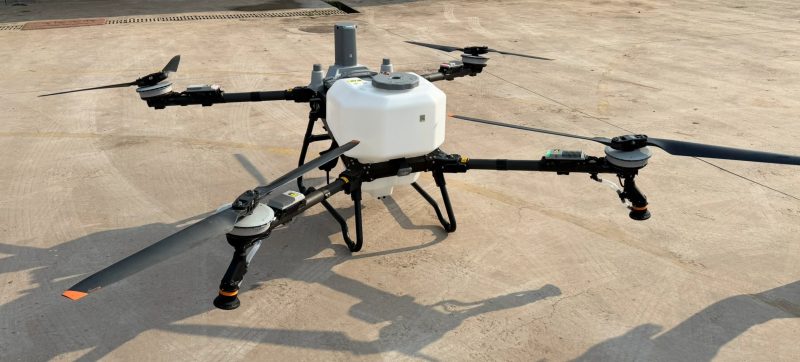



Buying agricultural drones directly from a Chinese factory can offer competitive pricing, OEM opportunities, flexible configurations, and access to a wide range of agricultural UAV technologies.
However, choosing the wrong supplier can create serious problems. A drone may look impressive in photographs but perform poorly in real agricultural conditions. A low quotation may also exclude important accessories, batteries, spare parts, or technical support.
Before placing an order, international buyers should carefully evaluate the manufacturer, product, quality-control system, documentation, logistics, and after-sales support.
This guide provides a practical checklist for buyers who are considering purchasing agricultural drones from a Chinese factory.
1. Verify That the Company Can Actually Manufacture the Drone
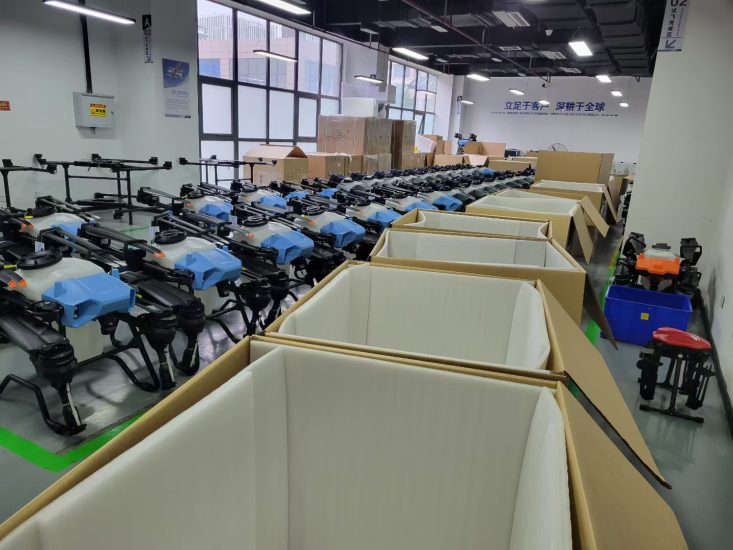
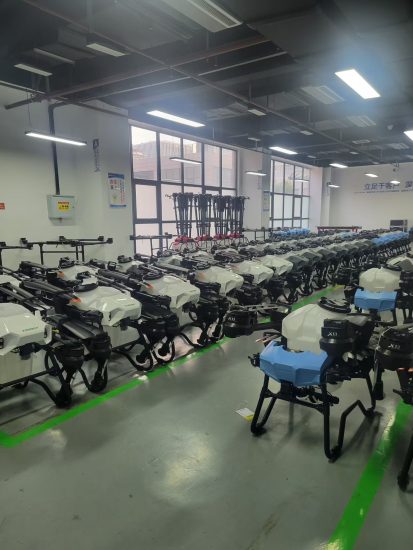
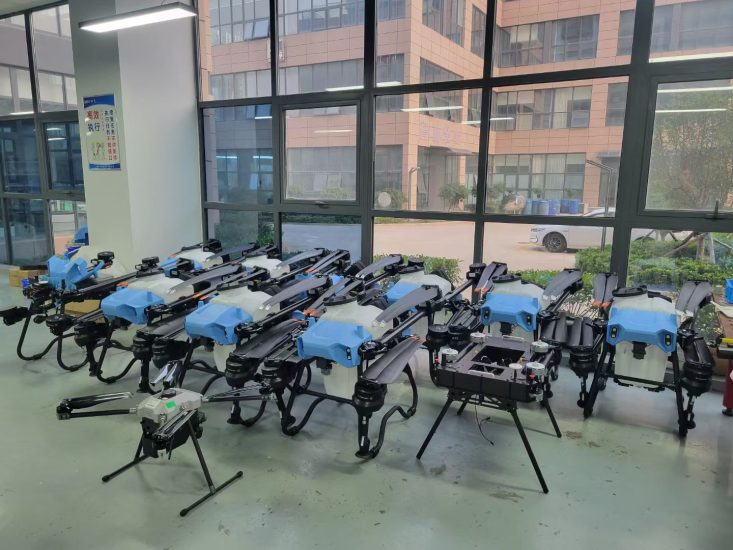
The first thing to check is the supplier’s manufacturing capability.
A company may sell agricultural drones without manufacturing all of the major components itself. Some businesses operate primarily as trading companies, while others design, assemble, test, and develop their own UAV products.
A trading company is not automatically a bad supplier. However, if you are looking for OEM, ODM, technical customization, or long-term cooperation, you should understand exactly who is responsible for manufacturing the product.
Ask for:
- Factory address
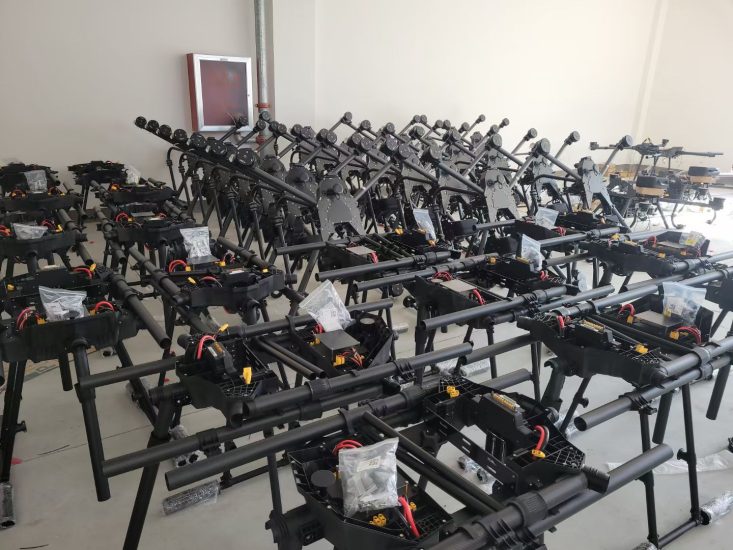
- Production facility information
- Assembly photos
- Testing-area photos
- R&D information
- Product development history
- Production capacity
- Quality-control procedures
If possible, arrange a video factory tour.
A live video call can provide more useful information than a collection of marketing photographs.
2. Check the Manufacturer’s Product Experience
Agricultural drones require specialized engineering.
A company experienced in consumer drones does not necessarily have the same expertise in agricultural UAVs.
Agricultural drones must deal with:
- Heavy payloads
- Liquid spraying
- Battery-intensive operation
- Dust
- Moisture
- Vibration
- Long operating periods
- Agricultural chemicals
- Outdoor environmental conditions
Ask the manufacturer how long it has been developing agricultural UAV products and which types of agricultural applications it supports.
More importantly, ask for evidence of actual product development and field testing.
3. Review the Complete Product Specifications
Never purchase an agricultural drone based only on the tank capacity.
A complete specification sheet should include:
- Tank capacity
- Recommended payload
- Maximum payload
- Empty weight
- Flight time
- Battery specifications
- Motor configuration
- Propeller specifications
- Pump type
- Flow rate
- Spray width
- Nozzle configuration
- Radar
- Navigation system
- Remote controller
- Charger
- Protection rating
Pay particular attention to flight time under load.
A manufacturer may advertise a long flight time under ideal conditions, but actual flight time can be significantly different when the drone carries a full payload.
Ask for operating conditions associated with the stated flight time.
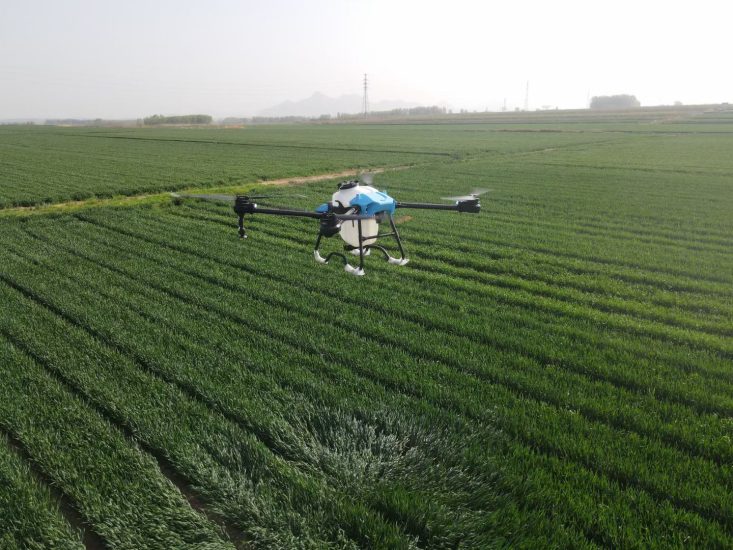
4. Ask About Real-World Spraying Performance
The purpose of an agricultural spraying drone is not simply to fly.
Its most important function is to deliver an appropriate spraying application.
Ask the manufacturer about:
- Spray width
- Flow rate
- Droplet size
- Nozzle type
- Number of nozzles
- Pump performance
- Flow control
- Spray uniformity
- Recommended flight altitude
Different crops may require different spraying approaches.
For example, orchard applications can involve different flight patterns and requirements from large open-field crops.
Ask whether the manufacturer has field-testing experience related to your target crops.
5. Test a Sample Before Buying in Bulk
A sample order is one of the most effective ways to evaluate a new supplier.
Before placing a large order, test the drone under realistic conditions.
Evaluate:
Flight
- Takeoff
- Hovering
- Turning
- Landing
- Return-to-home
- Communication
- Battery performance
Spraying
- Pump stability
- Flow consistency
- Nozzle performance
- Spray uniformity
- Leakage
- Tank sealing
Hardware
- Motors
- Propellers
- Frame
- Wiring
- Connectors
- Landing components
A sample can reveal problems that cannot be identified from a product catalog.
6. Examine Battery Specifications Carefully
The battery is one of the most important and expensive components of an agricultural drone.
Ask for complete battery information, including:
- Voltage
- Capacity
- Weight
- Cell configuration
- Battery management system
- Charging current
- Charging time
- Recommended storage conditions
- Expected cycle life
- Warranty
- Replacement cost
Do not compare batteries using capacity alone.
A professional battery system should provide appropriate monitoring and protection for commercial UAV operations.
Also ask how many batteries are recommended for continuous operation.
7. Check the Charger
The charger is sometimes overlooked during purchasing.
However, charging speed can have a direct impact on daily productivity.
Ask:
- How long does a full charge take?
- How many batteries can be charged simultaneously?
- What input voltage does the charger require?
- Is the charger included in the quoted price?
- Is the charger suitable for the destination market?
- What safety protections are included?
If you plan to operate multiple drones, charging infrastructure should be considered before purchasing the aircraft.
8. Evaluate the Flight-Control and Navigation System
An agricultural drone needs reliable navigation and control.
Depending on the model, the system may support:
- GPS
- RTK
- Automatic route planning
- Return-to-home
- Terrain following
- Obstacle detection
- Altitude control
- Flight monitoring
Ask the manufacturer which functions are standard and which are optional.
Do not assume that a feature mentioned in a marketing brochure is included in the quoted configuration.
Request the exact configuration in writing.
9. Check Radar and Safety Systems
Commercial agricultural drones may operate near trees, buildings, poles, people, and other obstacles.
Depending on the application, radar or other sensing systems may help improve operational safety.
Ask the manufacturer:
- What radar system is used?
- What does it detect?
- Is it included in the standard model?
- How does the system respond to obstacles?
- Does it work during low-altitude operation?
- Can the system be calibrated?
- What happens if a sensor fails?
The exact safety features vary by drone model.
Do not assume that one radar system provides the same performance as another.
10. Inspect the Quality of the Frame and Components
A commercial agricultural drone needs a structure capable of supporting the aircraft, payload, batteries, and spraying system.
Inspect:
- Frame construction
- Arms
- Motor mounts
- Landing structure
- Tank
- Spray pipes
- Connectors
- Wiring
- Fasteners
Look for signs of poor assembly such as:
- Loose components
- Poor cable routing
- Uneven assembly
- Weak connectors
- Inconsistent finishing
A drone designed for professional use should have a clear and organized assembly process.
11. Check Waterproofing and Environmental Protection
Agricultural drones may operate in wet environments and around liquid chemicals.
Ask the manufacturer about the product’s protection level and which components are protected.
Do not assume that the entire aircraft has the same level of environmental protection.
Ask specifically about:
- Motors
- Electronic modules
- Battery connectors
- Wiring
- Pumps
- Sensors
- Remote controller
Also ask whether the manufacturer has performed environmental or field testing.
12. Verify the Pump and Spraying System
The spraying system is central to agricultural drone performance.
Important components include:
- Pump
- Flow meter
- Nozzles
- Filters
- Valves
- Pipes
- Connectors
Ask about the expected service life of these components and the availability of replacements.
You should also find out how easily the pump and nozzles can be cleaned and replaced.
For commercial agricultural operations, easy maintenance can reduce downtime.
13. Ask About Spare Parts
Before buying a drone, request a complete spare-parts catalog.
Common parts may include:
- Propellers
- Motors
- Pumps
- Nozzles
- Filters
- Spray pipes
- Landing components
- Radar modules
- Batteries
- Chargers
- Electronic components
Ask:
Which parts are considered consumables?
Which parts are normally replaced after long-term use?
How quickly can replacement parts be supplied?
This information is especially important for distributors.
14. Verify Warranty Terms
Do not rely on a simple statement such as “one-year warranty.”
Ask exactly what the warranty covers.
Important questions include:
- Is the aircraft covered?
- Are motors covered?
- Are electronic components covered?
- Is the battery covered?
- Is the charger covered?
- What counts as a manufacturing defect?
- Who pays transportation for warranty parts?
- How long does a warranty claim take?
Get the warranty terms in writing before placing the order.
15. Check After-Sales Technical Support
Agricultural drones can require technical assistance.
Customers may need help with:
- Calibration
- Software
- Flight settings
- Battery management
- Spray configuration
- Maintenance
- Troubleshooting
Ask whether the manufacturer provides:
- User manuals
- Installation instructions
- Training videos
- Technical documents
- Remote support
- Troubleshooting guides
- Operator training
For distributors, factory technical support can be an important part of the business relationship.
16. Verify Certifications and Market Requirements
Do not assume that a drone can be legally sold and operated in every country simply because it is manufactured in China.
Depending on the destination market, requirements may involve:
- UAV registration
- Radio-frequency approval
- Product certification
- Battery requirements
- Import documentation
- Operator qualifications
- Agricultural spraying regulations
Ask the manufacturer what documentation it can provide.
Then independently verify the requirements applicable to your market.
The importer remains responsible for ensuring that the product can legally be imported and operated in the destination country.
17. Check Lithium Battery Transportation Requirements
Agricultural drones often use high-capacity lithium batteries.
Battery transportation can involve additional requirements depending on:
- Battery type
- Capacity
- Packaging
- Transportation mode
- Destination
- Current regulations
Ask the manufacturer for accurate battery specifications and the available documentation.
If you are importing internationally, work with a freight forwarder experienced in lithium-battery shipments.
Do not wait until the cargo is ready to ship before discovering that the planned transportation method cannot accept the battery configuration.
18. Confirm the Exact Quotation
A low price is meaningless if important components are excluded.
Ask the manufacturer to provide a detailed quotation showing:
- Drone
- Battery
- Charger
- Remote controller
- Spraying system
- Radar
- Navigation equipment
- Accessories
- Spare parts
- Packaging
- OEM customization
- Shipping terms
Compare quotations using identical configurations.
For example, if Supplier A includes two batteries and Supplier B includes only one, their prices cannot be compared directly.
19. Understand MOQ and OEM Conditions
If you plan to sell the drones under your own brand, ask about:
- OEM MOQ
- Logo customization
- Packaging
- Product labels
- User manuals
- Colors
- Remote-controller branding
- Software customization
- Development fees
Some manufacturers may support small-volume branding, while deeper customization may require larger quantities.
Discuss these requirements before signing the purchase agreement.
20. Check Production Lead Time
Ask the manufacturer how long production will take after receiving payment or order confirmation.
Lead time can vary depending on:
- Model
- Order quantity
- Battery quantity
- OEM requirements
- Packaging
- Seasonal demand
- Component availability
For a distribution business, late delivery can affect customer relationships.
Therefore, the production lead time should be clearly stated in the commercial agreement.
21. Inspect the Factory’s Quality-Control Process
Ask how the manufacturer checks products before shipment.
A useful process may include:
- Incoming component inspection
- Assembly inspection
- Electrical testing
- Motor testing
- Flight-control testing
- Battery testing
- Spraying-system testing
- Full-load testing
- Final inspection
- Packaging inspection
For larger orders, consider using an independent inspection service before shipment.
22. Check Packaging and Shipping Protection
Agricultural drones contain sensitive electronics and mechanical components.
Ask how the manufacturer protects the product during transportation.
Check:
- Inner packaging
- Outer carton or case
- Battery packaging
- Shock protection
- Moisture protection
- Product labeling
- Package dimensions
- Gross weight
Request final package dimensions before arranging freight.
This information is also important for calculating shipping costs.
23. Calculate the Total Cost of Ownership
The purchase price is only one part of the business cost.
Consider:
Purchase price + batteries + charger + spare parts + shipping + import costs + maintenance + training + downtime
A slightly more expensive drone may have a lower total cost if it provides:
- Better reliability
- Longer component life
- Easier maintenance
- Better technical support
- Better spare-parts availability
The objective should be long-term operating value rather than the lowest initial price.
24. Check the Manufacturer’s Communication
Communication quality is an underrated supplier-selection factor.
During the quotation process, evaluate whether the manufacturer:
- Answers technical questions clearly
- Provides complete documents
- Responds consistently
- Understands your requirements
- Admits limitations when necessary
- Provides realistic delivery times
- Explains product differences
Be cautious if a supplier responds to every technical question with vague marketing language.
A professional manufacturer should be able to discuss both advantages and limitations.
25. Ask for References and Evidence
If available, ask the manufacturer for evidence of previous commercial applications.
Useful information can include:
- Product demonstrations
- Field-testing videos
- Customer applications
- Distributor cooperation
- Export markets
- Industry exhibitions
- Product manuals
- Technical documentation
Do not judge a supplier solely by the number of years claimed in its marketing materials.
Look for evidence that supports the claim.
26. Create a Supplier Comparison Scorecard
Before making your final decision, score each supplier.
| Category | Priority |
|---|---|
| Manufacturing capability | High |
| Product quality | High |
| R&D capability | High |
| Flight performance | High |
| Spraying performance | High |
| Battery quality | High |
| Quality control | High |
| Certifications | High |
| Spare parts | High |
| Warranty | High |
| After-sales support | High |
| OEM capability | Medium/High |
| Production capacity | High |
| Delivery time | High |
| Price | Medium |
| Communication | Medium/High |
This prevents a very low price from overshadowing more important factors.
27. Red Flags to Watch For
Be cautious when a supplier:
- Refuses to provide detailed specifications
- Cannot explain battery information
- Avoids factory verification
- Provides inconsistent company information
- Gives an unusually low price without explanation
- Cannot provide warranty terms
- Has no spare-parts plan
- Cannot explain the production process
- Makes unrealistic performance claims
- Pressures you to place a large order immediately
One red flag does not automatically mean that a supplier is unreliable, but several together deserve careful investigation.
28. A Practical Pre-Purchase Checklist
Before placing an order, confirm:
Manufacturer
- Factory verified
- Production capability confirmed
- R&D capability evaluated
- Communication tested
Product
- Model confirmed
- Payload confirmed
- Flight time tested
- Spray performance evaluated
- Battery specifications confirmed
- Radar and navigation confirmed
Commercial
- Unit price confirmed
- MOQ confirmed
- OEM requirements confirmed
- Lead time confirmed
- Warranty confirmed
- Payment terms confirmed
Logistics
- Package dimensions confirmed
- Battery documents confirmed
- Shipping method confirmed
- Customs requirements checked
- Import taxes estimated
After-sales
- Spare parts available
- Manuals provided
- Technical support available
- Warranty process documented
Conclusion
Before buying agricultural drones from a Chinese factory, do not focus only on the purchase price.
A professional buying process should evaluate the manufacturer, product specifications, battery system, spraying performance, quality control, certifications, spare parts, warranty, logistics, and after-sales support.
The most important step is to verify the product under realistic conditions.
Whenever possible, request a sample, test the aircraft, inspect the factory, compare complete quotations, and confirm the import requirements of your target market before placing a large order.
For distributors and agricultural service companies, the right Chinese manufacturer should be more than a source of low-cost drones. The ideal partner should provide consistent quality, technical expertise, reliable production, spare-parts support, OEM capability, and long-term cooperation.
A careful supplier-selection process can reduce purchasing risks and give your agricultural drone business a stronger foundation for long-term growth.


No comments yet