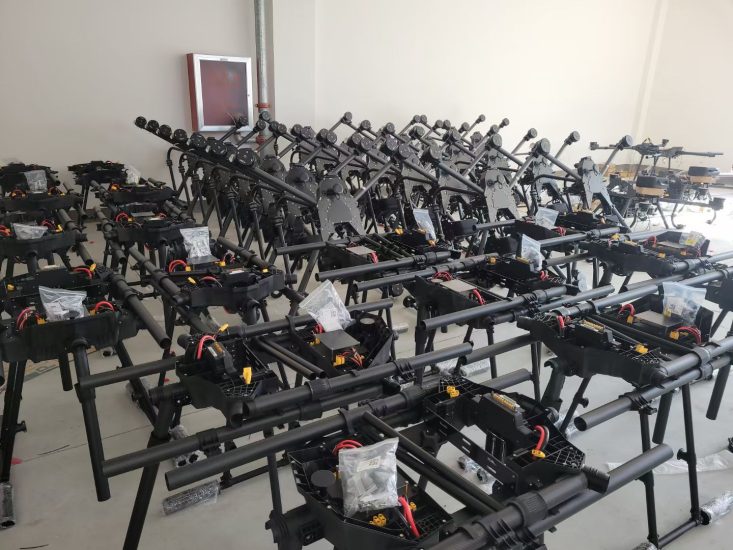


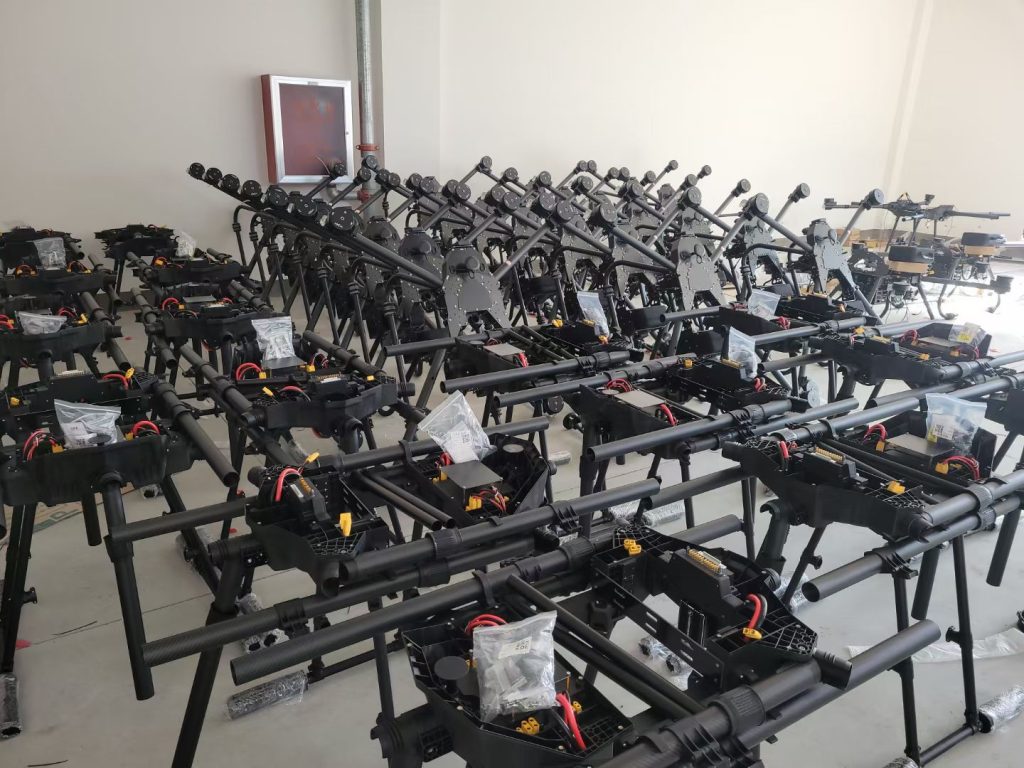
For distributors, agricultural equipment companies, technology businesses, industrial operators, and emerging drone brands, buying a standard UAV is not always enough.
Different markets have different requirements for payload capacity, flight endurance, battery systems, cameras, sensors, spraying systems, communication systems, software, branding, packaging, and operating environments.
This is where OEM and ODM drone manufacturing becomes valuable.
MSOEN provides OEM and ODM drone manufacturing solutions for customers that need customized UAV products rather than simply purchasing standard drones.
From agricultural spraying drones and mapping UAVs to FPV platforms, aerial photography drones, and specialized industrial systems, customization can be developed around the customer’s application, target market, and commercial requirements.
What Is Drone OEM Manufacturing?
OEM stands for Original Equipment Manufacturer.
In an OEM project, the customer usually provides the brand requirements, product specifications, target application, or desired configuration, while the manufacturer handles some or all of the engineering, production, assembly, testing, and delivery.
An OEM drone project may include:
- Customer branding
- Custom product configuration
- Customized frame
- Motor selection
- Battery configuration
- Camera integration
- Sensor integration
- Flight-control system
- Payload system
- Packaging
- User manuals
- Product labeling
- Spare parts
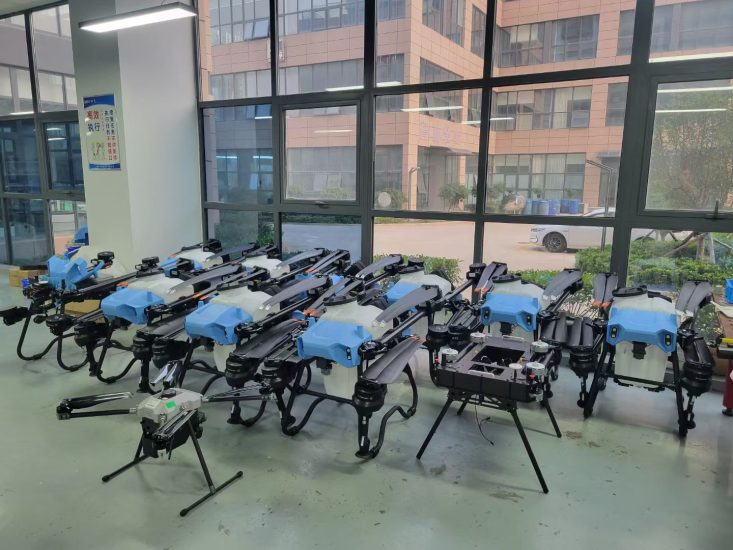
- Mass production
For distributors, OEM manufacturing can make it possible to sell UAV products under their own brand instead of competing only with standard products.
What Is Drone ODM Manufacturing?
ODM stands for Original Design Manufacturer.
ODM is generally more involved than simply changing a logo or packaging.
The manufacturer may provide an existing technical platform and help develop the final product according to the customer’s application.
An ODM project can involve:
- Product architecture
- Industrial design
- Hardware selection
- System integration
- Flight-control configuration
- Payload development
- Prototype development
- Testing
- Product optimization
- Mass production
For companies entering the UAV market without their own engineering team, ODM can significantly reduce the amount of internal development required.
OEM vs ODM: Which One Is Better?
There is no universal answer.
The right approach depends on what the buyer already has.
OEM may be suitable when:
- You already have a product specification
- You already have a drone design
- You have your own engineering requirements
- You mainly need manufacturing capacity
- You need your own brand
- You already understand your target market
ODM may be suitable when:
- You need help developing the product
- You do not have a complete technical design
- You need a manufacturer to integrate components
- You want to modify an existing platform
- You need a faster route toward production
- You need application-specific customization
In some projects, OEM and ODM can also be combined.
What Can Be Customized on a Drone?
Drone customization is much more than putting a customer’s logo on the aircraft.
Depending on the platform, MSOEN can discuss customization across multiple areas.
1. Frame Design
The frame determines the basic structure of the UAV.
Customization may involve:
- Frame size
- Folding structure
- Material
- Arm configuration
- Landing gear
- Payload mounting
- Transportation dimensions
- Structural reinforcement
For agricultural drones, frame design also needs to consider the weight of the liquid or granular payload.
For heavy-lift applications, structural strength becomes even more important.
2. Payload Capacity
Different customers have different payload requirements.
For example:
- 5L agricultural spraying
- 10L agricultural spraying
- 16L agricultural spraying
- 30L agricultural spraying
- 50L agricultural spraying
- Larger heavy-lift configurations
- Mapping payloads
- Photography equipment
- Industrial sensors
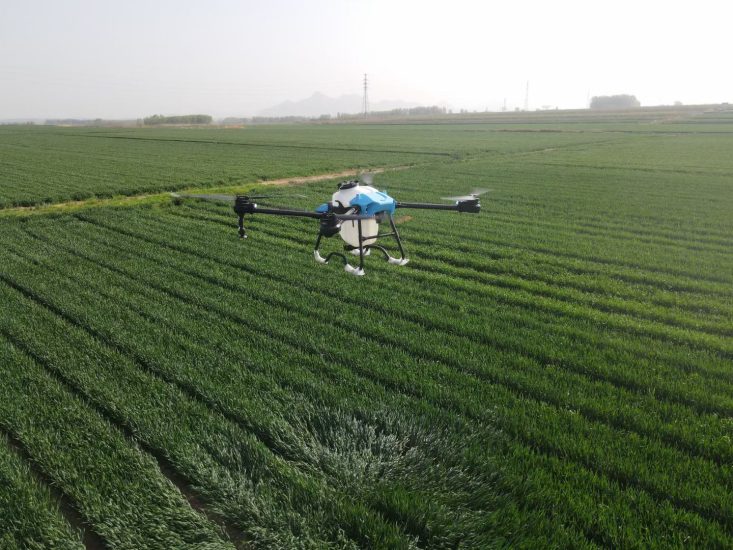
MSOEN currently offers agricultural drone configurations ranging from smaller agricultural platforms to larger commercial systems. Its M50, for example, is positioned as a 50-liter agricultural spraying platform.
The correct payload should be determined together with the motor system, battery, flight time, frame, and intended operating conditions.
3. Agricultural Spraying Systems
Agricultural drone OEM projects can include customization of the spraying system.
Possible requirements include:
- Tank capacity
- Pump configuration
- Number of nozzles
- Spray width
- Flow rate
- Pipe configuration
- Filters
- Quick-release components
- Automatic flow control
The MSOEN agricultural drone product range includes multiple payload configurations designed for different farm sizes and applications.
For a distributor selling agricultural drones in a specific country, it may make more sense to develop several configurations instead of selling exactly the same specification to every customer.
4. Fertilizer and Granular Spreading Systems
Not every agricultural customer needs a spraying drone.
Some require drones for:
- Granular fertilizer
- Seeds
- Biological products
- Agricultural materials
- Specialized spreading applications
The spreading mechanism, hopper size, motor configuration, discharge system, and control software can all affect the final performance.
Therefore, fertilizer-spreading OEM projects should be designed around the material being distributed rather than simply modifying a spraying drone.
5. Camera and Imaging Systems
Photography and mapping applications often require completely different payload systems from agricultural UAVs.
Customization may include:
- HD camera
- 4K camera
- Thermal camera
- Multispectral camera
- Mapping camera
- Gimbal
- Video transmission
- Image storage
- Live transmission
MSOEN also offers an M1 Photography Drone, which can serve as a reference point when discussing customized aerial photography configurations.
For mapping projects, the Agricultural Mapping Drone can also be considered when the customer’s application involves aerial data collection and agricultural mapping.
6. Flight Control Systems
The flight-control system is one of the most important parts of a customized UAV.
Depending on the project, requirements can include:
- GPS navigation
- RTK positioning
- Autonomous flight
- Waypoint missions
- Terrain following
- Obstacle avoidance
- Return-to-home
- Fail-safe functions
- Remote monitoring
- Application-specific flight modes
Agricultural spraying drones, mapping UAVs, inspection drones, and FPV drones can require completely different flight-control priorities.
This is why OEM development should begin with the actual application rather than starting with a fixed hardware list.
7. Battery and Power System Customization
Battery configuration has a direct impact on:
- Flight time
- Payload
- Charging time
- Aircraft weight
- Motor performance
- Operating cost
- Transportation
OEM customers may need different battery configurations depending on their market.
For example, a commercial agricultural operator may prioritize rapid charging and multiple battery sets, while a lightweight photography platform may prioritize weight reduction.
The battery should therefore be designed together with the complete UAV system.
8. FPV Drone OEM and ODM
FPV drones are another area where customization can be valuable.
MSOEN’s current product range includes FPV products and components, while its OEM/ODM services can be used for customized FPV configurations.
Possible customization areas include:
- Frame
- Motor
- ESC
- Flight controller
- Camera
- Video transmitter
- Receiver
- Battery
- Propellers
- Remote controller
- Branding
- Packaging
MSOEN also provides Custom FPV Drone OEM & ODM Services, covering areas such as hardware configuration, camera integration, flight systems, and application-specific requirements.
For customers who need an existing FPV platform, the FPV Drone can also be used as a product reference.
9. Industrial UAV Customization
Industrial customers may require UAVs for applications such as:
- Infrastructure inspection
- Power-line inspection
- Railway inspection
- Mining
- Construction
- Security
- Environmental monitoring
- Surveying
- Emergency response
These applications may require specialized sensors and software rather than simply a larger drone.
MSOEN’s industrial UAV positioning includes inspection and specialized applications, making application-specific customization an important part of its manufacturing capability.
10. Fixed-Wing UAV Customization
Fixed-wing UAVs are useful when customers require longer-distance flight or larger-area surveying.
Customization may include:
- Airframe
- Wingspan
- Motor
- Battery
- Flight controller
- Navigation
- Payload
- Camera
- Communication system
- Ground-control system
MSOEN also lists a Fixed-wing UAV in its product range.
The appropriate configuration depends heavily on the mission profile.
A drone designed for short-range mapping does not necessarily need the same configuration as one designed for long-range surveying.
11. Underwater Drone OEM and ODM
Customization is not limited to aerial UAVs.
Underwater platforms can be developed for applications involving:
- Inspection
- Marine research
- Aquaculture
- Infrastructure
- Underwater photography
- Environmental monitoring
MSOEN’s product range includes the M5 Underwater Drone, which can be used as a reference for underwater UAV applications.
Because underwater systems operate in a completely different environment, customization needs to consider waterproofing, propulsion, communication, camera systems, and pressure resistance.
Why Product Configuration Matters in OEM Manufacturing
One of the biggest mistakes in OEM purchasing is discussing only the appearance.
A customer may say:
“We want a 30L agricultural drone with our logo.”
But this is not enough information for manufacturing.
The manufacturer also needs to understand:
- Required flight time
- Target payload
- Spray width
- Operating altitude
- Terrain
- Battery system
- Charging method
- Remote controller
- Navigation
- Obstacle avoidance
- Communication distance
- Climate
- Target country
- Annual quantity
- Packaging
- Certification requirements
The same 30L drone can have very different configurations depending on the application.
OEM Drone Manufacturing Process
A professional OEM project normally follows several stages.
Stage 1: Requirement Analysis
The buyer explains:
- Target application
- Target country
- Product type
- Required specifications
- Quantity
- Budget
- Branding
- Certification requirements
The manufacturer then evaluates whether the requirements are technically realistic.
Stage 2: Product Configuration
The main technical parameters are confirmed.
These can include:
- Frame
- Motors
- Battery
- Flight controller
- Payload
- Sensors
- Communication
- Software
- Accessories
Stage 3: Prototype Development
If substantial customization is required, a prototype may be developed.
The prototype allows both sides to identify problems before mass production.
Stage 4: Testing
The customized UAV should be tested according to the agreed specifications.
Testing can include:
- Flight testing
- Payload testing
- Battery testing
- Motor testing
- Communication testing
- Sensor testing
- Spraying testing
- Navigation testing
Stage 5: Sample Approval
The customer reviews the finished sample.
Any required changes should be documented before mass production.
Stage 6: Mass Production
After approval, manufacturing can begin.
Quality control should continue during production rather than only at the end.
Stage 7: Final Inspection
The finished UAVs should be inspected before packaging and shipment.
This includes checking:
- Product configuration
- Appearance
- Accessories
- Battery
- Charger
- Documentation
- Packaging
- Quantity
How Long Does UAV OEM Development Take?
There is no single standard timeline.
A project requiring only branding and packaging can be much faster than a project involving a new frame, custom flight system, new payload, or specialized sensors.
The development timeline depends on:
- Existing platform
- Degree of customization
- Prototype requirements
- Component availability
- Testing requirements
- Certification
- Order quantity
For this reason, buyers should avoid choosing a manufacturer based only on the shortest promised development time.
A realistic development schedule is more valuable than an unrealistic delivery promise.
How Much Does Custom Drone Manufacturing Cost?
OEM/ODM pricing depends heavily on configuration.
The main cost factors can include:
- UAV platform
- Frame
- Motors
- Flight controller
- Battery
- Payload
- Camera
- Sensors
- Communication system
- Prototype development
- Tooling
- Packaging
- Certification
- Order quantity
A customized drone can cost significantly more during the prototype stage than during mass production.
As production volume increases, engineering and tooling costs can be distributed across more units.
Therefore, buyers should request pricing based on the actual configuration and order quantity rather than asking for a generic “OEM drone price.”
MOQ for OEM Drone Manufacturing
Minimum order quantity depends on the level of customization.
For simple branding, the MOQ may be different from a project requiring:
- Custom tooling
- New frame
- New electronics
- Custom packaging
- New software
- Specialized sensors
- New certification
For serious OEM customers, it is better to discuss expected annual volume as well as the first order quantity.
This allows the manufacturer to understand the commercial potential of the project.
OEM Drone Branding and Private Label
Private-label UAV manufacturing can include:
- Brand logo
- Aircraft labeling
- Remote-controller branding
- Battery labeling
- Packaging
- User manuals
- Product stickers
- Accessories
- Marketing materials
However, branding should be treated as one part of the project.
The more important question is whether the underlying UAV meets the customer’s technical and market requirements.
A strong private-label product needs both:
Brand differentiation + reliable product performance
Quality Control During OEM Production
Customization should not weaken quality control.
Each customized UAV should be checked against the approved specification.
Important quality-control areas include:
- Component consistency
- Assembly
- Wiring
- Motor operation
- Battery
- Flight controller
- Payload
- Communication
- Flight performance
- Final configuration
This is particularly important when the customer plans to sell the product under its own brand.
The customer’s reputation becomes directly connected to the quality of the finished UAV.
For this reason, OEM buyers should also review the manufacturer’s UAV Quality Control process and testing capabilities before placing a large order.
OEM and Certification Requirements
Certification should be considered before mass production.
If the target market requires specific compliance, the requirements should be identified before the final product configuration is approved.
Changing major components after certification can create additional cost and delay.
This is why the previous article in this series, “MSOEN Certifications & International Compliance | UAV Certificates & Standards,” should be considered part of the OEM development process.
The sequence should ideally be:
Target market → Product requirements → Applicable standards → Product configuration → Prototype → Testing → Certification → Mass production
What Information Should You Send to an OEM Drone Manufacturer?
A good initial inquiry should include as much practical information as possible.
For example:
Product: Agricultural spraying drone
Payload: 30L
Application: Rice and fruit orchards
Target market: [Country]
Required flight time: [Minutes]
Required spray width: [Meters]
Positioning: GPS / RTK
Brand: [Brand name]
Estimated first order: [Quantity]
Annual quantity: [Quantity]
Customization: Logo + packaging + product configuration
Certification: Required market certifications
Delivery: [Destination]
The more complete the information, the easier it is for the manufacturer to recommend a realistic configuration.
Why Choose a Manufacturer Instead of a Trading Company?
For a long-term OEM project, buyers should understand who is actually responsible for product development and manufacturing.
A manufacturer can potentially provide more direct access to:
- Engineering
- Production
- Quality control
- Testing
- Customization
- Spare parts
- Technical support
- Product development
This can simplify communication when a customized product needs to be modified.
For OEM customers, manufacturing capability is therefore an important part of supplier evaluation.
Who Is MSOEN OEM/ODM Manufacturing Suitable For?
MSOEN’s customized UAV manufacturing services can be relevant to:
- Drone distributors
- Agricultural equipment distributors
- Importers
- Wholesalers
- Technology companies
- Industrial solution providers
- Surveying companies
- Agricultural service companies
- Private-label brands
- Project contractors
- Startups entering the UAV market
The best solution depends on the customer’s application and expected production volume.
MSOEN Product Platforms for Customization
Instead of developing every UAV completely from zero, customers can also start from an existing product platform where appropriate.
Examples include:
- M50 Agricultural Drone
- M1 Photography Drone
- M5 Underwater Drone
- FPV Drone
- Fixed-wing UAV
- Agricultural Mapping Drone
- F722V3 + 80A/100A 4-in-1 ESC Stack
Starting with an existing platform can reduce development complexity when the standard architecture already meets most of the customer’s requirements.
Frequently Asked Questions
What is the difference between OEM and ODM drones?
OEM generally focuses on manufacturing according to the customer’s requirements, while ODM involves greater participation from the manufacturer in product design and development.
Can I put my own brand on MSOEN drones?
Private-label branding can be discussed as part of an OEM project, including product labeling, packaging, manuals, and other brand-related requirements.
Can the drone frame be customized?
Depending on the project, frame size, structure, material, payload configuration, and other mechanical elements can be discussed for customization.
Can an agricultural spraying drone be customized?
Yes. Agricultural UAV customization can involve tank capacity, spraying system, payload, battery, flight-control configuration, positioning, radar, and other features.
Can I customize an FPV drone?
Yes. FPV OEM/ODM projects can involve the frame, motors, ESC, flight controller, camera, video transmission, battery, receiver, branding, and packaging.
Can MSOEN develop a completely new drone?
The feasibility depends on the project requirements. Customers should provide the intended application, technical specifications, target market, quantity, and customization requirements so the development scope can be evaluated.
Is OEM more expensive than buying a standard drone?
Not necessarily. A customized product may have additional development, tooling, testing, and certification costs, but these costs can be distributed across larger production quantities.
What is the MOQ for OEM drones?
MOQ depends on the degree of customization, product type, components, tooling, packaging, and production requirements. It should be confirmed according to the actual project.
Can MSOEN provide OEM/ODM for international markets?
Yes. MSOEN positions its manufacturing services for international buyers, distributors, and project customers seeking agricultural and industrial UAV solutions.
Conclusion
OEM and ODM drone manufacturing is not simply a matter of changing a logo.
A successful customized UAV project requires coordination between product requirements, engineering, components, flight systems, payloads, testing, certification, production, and after-sales support.
For a distributor, the goal may be to create a private-label agricultural drone.
For an industrial company, the goal may be a UAV carrying a specialized inspection payload.
For a mapping company, the priority may be positioning accuracy and sensor integration.
For an FPV brand, the priority may be flight performance, camera systems, and customized electronics.
The manufacturing approach should therefore start with the application rather than a generic drone specification.
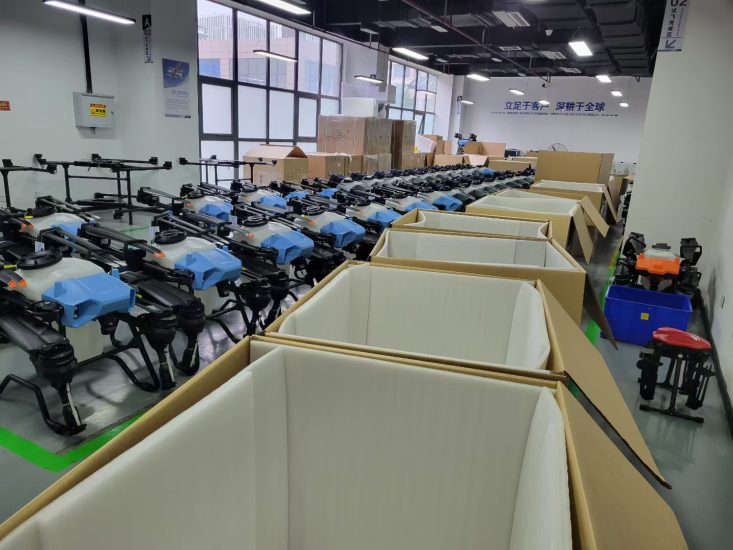
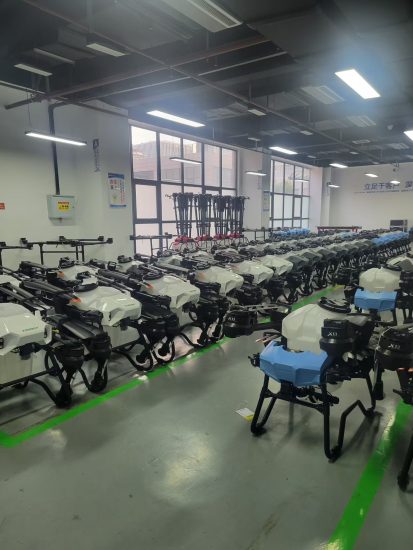
MSOEN provides agricultural and industrial UAV manufacturing, OEM/ODM development, customization, testing, and production support for international customers.
If you are looking for a customized UAV, provide the application, payload requirement, target country, desired specifications, estimated quantity, and branding requirements. These details allow the manufacturing team to evaluate the appropriate platform and development route.


No comments yet