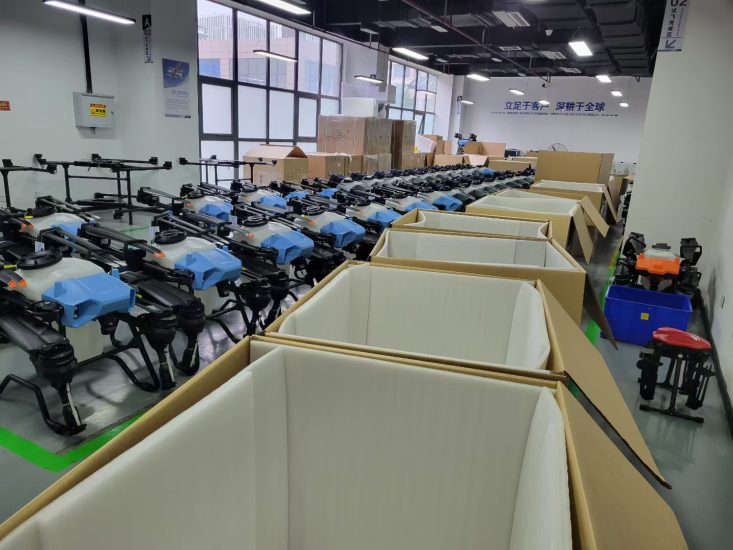


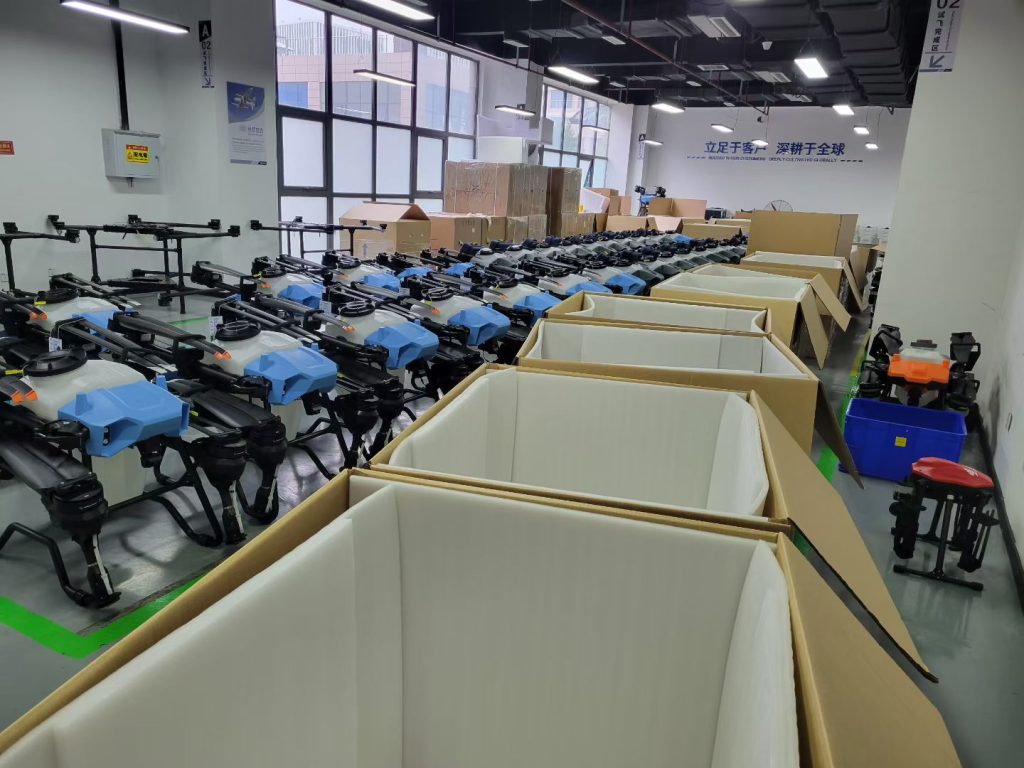
When buyers evaluate a UAV manufacturer, product specifications are only one part of the decision.
A professional buyer also needs to understand how a manufacturer approaches different applications, payload requirements, operating environments, customization requests, and production challenges.
A spraying drone used for large-scale agriculture has very different requirements from an aerial photography drone. A mapping UAV needs different equipment from an industrial inspection platform. An FPV drone, fixed-wing UAV, and underwater drone also require completely different configurations.
This is why UAV manufacturing should be evaluated through applications and project requirements rather than simply comparing prices.
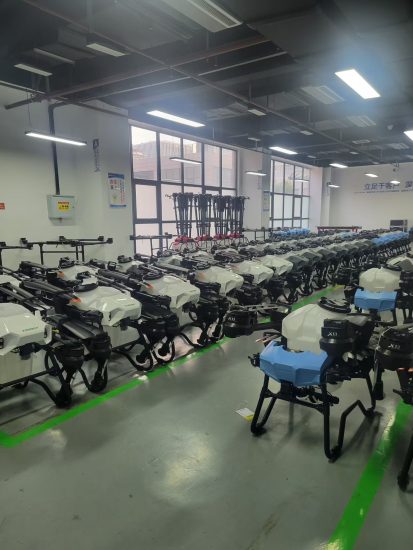
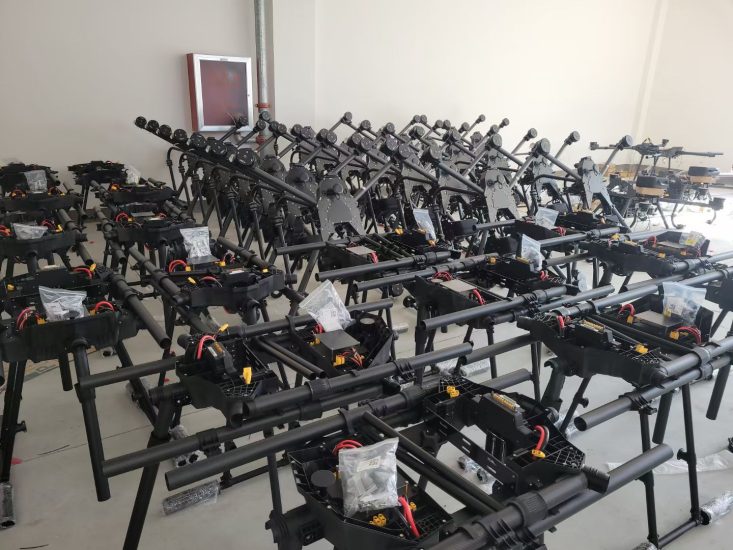
MSOEN develops and manufactures UAV solutions covering agricultural spraying, aerial photography, mapping, FPV, industrial inspection, underwater applications, fixed-wing platforms, heavy-lift requirements, and OEM/ODM customization. The current product portfolio also includes multiple UAV configurations for different application scenarios.
The following case studies are presented around real application requirements and representative MSOEN product configurations. They focus on how a professional UAV manufacturer approaches project requirements rather than inventing customer names or unsupported project results.
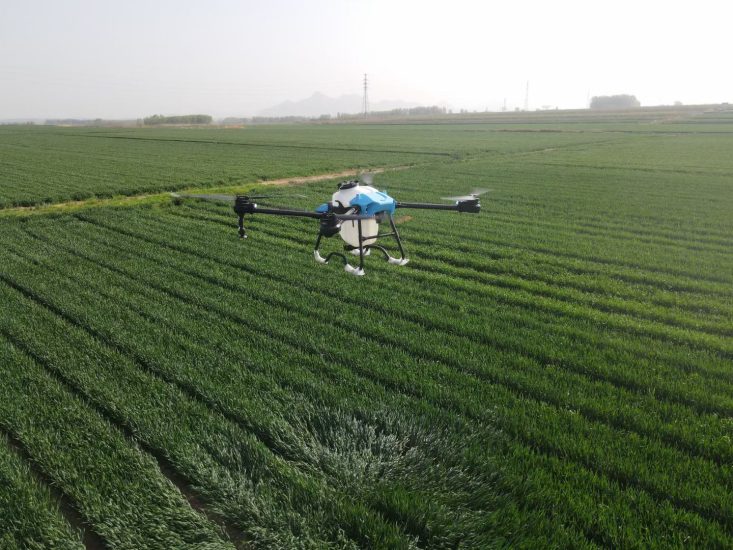
Case Study 1: Large-Scale Agricultural Spraying
One of the most demanding agricultural UAV applications is large-scale crop spraying.
A professional agricultural operator may need to treat hundreds of acres per day while maintaining consistent spraying coverage.
The key requirements are usually:
- Large liquid capacity
- Stable spraying flow
- Wide spraying width
- Long enough flight time
- Fast battery replacement
- Reliable positioning
- Terrain following
- Obstacle avoidance
- Easy maintenance
- Spare-parts availability
For this type of application, a small consumer drone is not an appropriate solution.
The aircraft needs to be designed as an agricultural working platform.
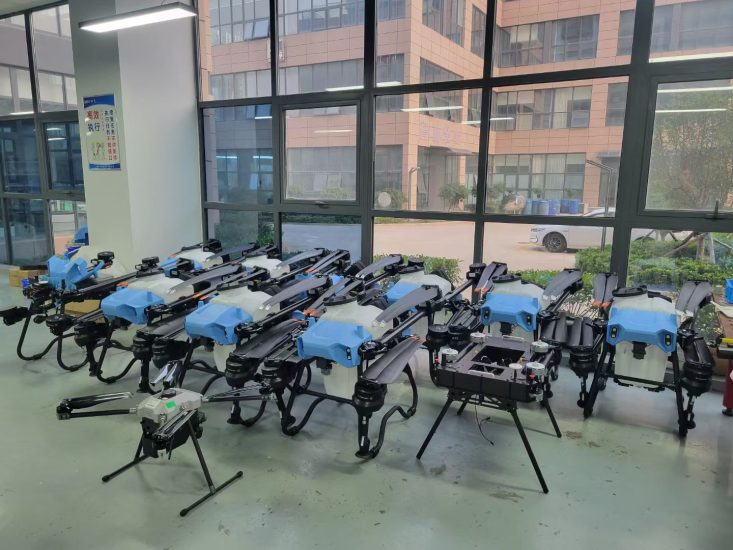
MSOEN M50 Agricultural Drone
The MSOEN M50 is positioned for large-scale agricultural operations.
Its listed configuration includes:
- 50-liter tank
- 6–10 meter spraying width
- 10–20 minutes flight time
- 1–3 km control range
- GPS with optional RTK
- Terrain-following radar
- Obstacle avoidance
- 14S/18S smart battery configuration
The listed applications include rice, wheat, corn, orchards, and sugarcane.
You can review the [MSOEN M50 Agricultural Drone]MSOEN M50 Agricultural Drone for the product configuration.
For agricultural distributors, the important question is not simply how many liters the tank holds.
The real question is whether the complete system—including aircraft, battery, pump, spraying system, positioning, flight control, and operator workflow—matches the intended farming operation.
Case Study 2: Precision Agriculture and RTK Positioning
Some agricultural customers have requirements beyond basic spraying.
They may need more accurate route planning, repeatable flight paths, terrain following, and precise application.
This becomes particularly important when:
- Fields have irregular boundaries
- Crops are planted in rows
- Orchards contain obstacles
- Terrain changes significantly
- Repeated spraying is required
- Chemical application needs to be controlled carefully
MSOEN’s agricultural systems incorporate GPS-based positioning and optional RTK configurations on the M50.
The company’s published material describes RTK positioning, route planning, terrain following, and flow control as part of its precision-agriculture approach.
This type of project demonstrates an important principle in UAV manufacturing:
The aircraft should be configured according to the operational problem, not simply according to a standard product specification.
A buyer who needs precision agricultural application may require a different configuration from a buyer who simply wants the largest possible tank.
Case Study 3: Aerial Photography and Content Production
Not every UAV project involves agriculture.
Professional aerial photography requires a completely different design priority.
The buyer may care more about:
- Camera resolution
- Image stabilization
- Flight stability
- Battery endurance
- GPS positioning
- Obstacle avoidance
- Intelligent flight modes
- Portability
- Real-time monitoring
MSOEN M1 Photography Drone
The MSOEN M1 is one of the photography-oriented products in the current portfolio.
Its product information includes a 4K camera, GPS positioning, obstacle avoidance, intelligent flight functions, and a listed flight time of up to 35 minutes.
You can view the [MSOEN M1 Photography Drone]MSOEN M1 Photography Drone.
For a photography project, increasing payload capacity is not necessarily the priority.
Instead, the engineering focus may shift toward flight stability, camera integration, control response, transmission, and ease of operation.
This is why UAV manufacturers need experience with multiple aircraft categories.
Case Study 4: FPV Drone Development
FPV projects require a different approach from agricultural and photography drones.
An FPV buyer may prioritize:
- Fast response
- Low latency
- Lightweight construction
- Motor performance
- ESC configuration
- Flight controller
- Camera
- Video transmission
- Frame durability
- Custom configuration
MSOEN’s current product portfolio includes an FPV drone as well as an F722V3 flight-controller and ESC stack.
The [MSOEN FPV Drone]MSOEN FPV Drone can be considered for FPV-oriented applications.
For buyers developing their own FPV product line, the [F722V3 + 80A/100A 4-in-1 ESC Stack]F722V3 + 80A/100A 4-in-1 ESC Stack provides another example of a component-level configuration within the MSOEN product portfolio.
The stack combines a flight controller and 4-in-1 ESC configuration and is designed around FPV and DIY quadcopter applications.
This type of product is especially relevant to OEM customers that want to develop their own UAV configuration rather than simply purchase a finished aircraft.
Case Study 5: Long-Range and Fixed-Wing Applications
Multirotor drones are not always the best choice.
For projects involving long-distance flight, mapping, surveying, or large-area coverage, fixed-wing UAVs may be more appropriate depending on the mission.
Typical requirements can include:
- Longer flight endurance
- Efficient forward flight
- Large-area coverage
- Mapping payloads
- Stable navigation
- Lightweight structure
- Efficient propulsion
- Mission planning
MSOEN’s portfolio includes a [Fixed-Wing UAV]Fixed-Wing UAV.
A fixed-wing project requires different engineering decisions from a multirotor project.
For example, the manufacturer must consider:
- Wing structure
- Center of gravity
- Propulsion
- Control surfaces
- Navigation
- Takeoff method
- Landing method
- Payload placement
This is an important consideration for buyers looking for a manufacturer rather than a simple trading supplier.
A manufacturer with experience across different UAV architectures can evaluate whether a multirotor, fixed-wing, or customized platform is more appropriate for the application.
Case Study 6: Underwater Drone Applications
UAV manufacturing is no longer limited to aircraft flying through the air.
Underwater remotely operated platforms introduce another set of engineering challenges.
The main concerns can include:
- Waterproofing
- Sealing
- Pressure resistance
- Underwater propulsion
- Camera protection
- Buoyancy
- Communication
- Structural durability
MSOEN’s current product portfolio also includes the [M5 Underwater Drone]M5 Underwater Drone.
This type of product demonstrates why UAV manufacturing capability should not be evaluated only through aerial spraying drones.
Different environments require different engineering solutions.
An underwater platform must be designed around water exposure and pressure, while an agricultural platform must deal with chemicals, moisture, vibration, dust, and payload weight.
Case Study 7: Agricultural Mapping and Surveying
Agricultural mapping is another area where UAV configuration must be matched to the intended operation.
A mapping project may require:
- Accurate positioning
- Stable flight
- Consistent altitude
- Camera or mapping payload
- Route planning
- Large-area coverage
- Data collection
- Repeatable missions
The aircraft may need to follow predetermined flight paths rather than simply fly manually.
For agricultural applications, mapping can support tasks such as:
- Crop monitoring
- Field boundary identification
- Plant health assessment
- Irrigation planning
- Crop growth analysis
- Surveying
- Farm management
MSOEN also provides an agricultural mapping drone solution for this type of application.
For buyers, the important consideration is the complete workflow.
A mapping drone is not simply a camera attached to an aircraft.
The aircraft, navigation system, payload, flight-control system, software, and data-processing workflow need to work together.
Case Study 8: Industrial Inspection
Industrial inspection creates another category of UAV requirements.
A customer inspecting factories, infrastructure, energy facilities, mines, railways, or other industrial assets may need:
- Stable hovering
- High-quality cameras
- Thermal imaging
- Mapping capability
- Obstacle avoidance
- Accurate positioning
- Long flight time
- Specialized payloads
- Reliable communication
MSOEN has developed content around factory inspection, mine inspection, and railway inspection applications, reflecting the different requirements of industrial UAV operations.
For example, an industrial inspection project may require the UAV to operate close to structures rather than simply fly over open farmland.
That changes the importance of obstacle avoidance, positioning, camera systems, and flight-control behavior.
Case Study 9: Custom Heavy-Lift UAV Requirements
Some buyers do not need a standard agricultural or photography drone.
They may require a customized heavy-lift platform for:
- Industrial equipment
- Specialized sensors
- Delivery systems
- Survey equipment
- Cameras
- Agricultural payloads
- Experimental equipment
In this situation, the first question should not be:
“How much does your biggest drone cost?”
Instead, the buyer should provide:
- Required payload
- Payload dimensions
- Desired flight time
- Takeoff weight limitation
- Battery requirements
- Flight environment
- Required control range
- Operating temperature
- Target country
- Expected quantity
A manufacturer can then determine whether an existing platform can be modified or whether a new configuration is required.
MSOEN’s manufacturing scope includes heavy-lift and customized UAV solutions, making this type of project suitable for an OEM/ODM discussion.
Case Study 10: Private-Label Drone Product Development
Another common B2B project is private-label production.
In this model, the buyer may already have a market and sales channels but does not have its own drone manufacturing facility.
The buyer may request:
- Brand logo
- Custom product name
- Packaging
- User manual
- Product labels
- Customized colors
- Accessories
- Spare parts
- Firmware configuration
- Product specifications
- Different battery packages
This is where OEM and ODM capabilities become important.
MSOEN provides OEM/ODM manufacturing services for customized UAV projects, allowing buyers to discuss product configuration rather than simply selecting a standard catalog item.
The buyer should clearly define what needs to be customized before requesting a production quotation.
Case Study 11: Developing a Drone for a Specific Market
Different countries can have different requirements for UAV operation, radio equipment, batteries, labeling, documentation, and operator regulations.
Therefore, a manufacturer should know the target market before finalizing the product configuration.
A buyer should provide:
- Target country
- Intended application
- Commercial or private use
- Drone weight
- Frequency requirements
- Battery configuration
- Required documentation
- Certification requirements
- Import requirements
- Expected annual quantity
The manufacturer can then evaluate the appropriate configuration and documentation.
This is particularly important for distributors that intend to sell UAVs under their own brand.
Case Study 12: From Prototype to Mass Production
A successful UAV project normally has several stages.
Stage 1: Requirement Definition
The buyer explains the intended application and target market.
Stage 2: Technical Evaluation
The manufacturer evaluates:
- Payload
- Flight time
- Structure
- Battery
- Motors
- Flight controller
- Communication
- Sensors
- Payload integration
Stage 3: Prototype
A sample configuration is developed or modified.
Stage 4: Testing
The prototype is evaluated through:
- Static testing
- Flight testing
- Payload testing
- Battery testing
- Communication testing
- Environmental testing where appropriate
Stage 5: Modification
Problems discovered during testing are addressed.
Stage 6: Pre-Production
The final configuration is prepared for production.
Stage 7: Mass Production
Production begins after the specifications are confirmed.
Stage 8: Final Inspection
Finished units are checked before shipment.
This process is particularly important for OEM and ODM buyers because changing a product after mass production has already started can increase both cost and delivery time.
What These UAV Cases Have in Common
Although agricultural spraying, aerial photography, FPV, fixed-wing, underwater, mapping, and industrial inspection drones appear very different, they share one important characteristic.
The UAV must be designed around the application.
A buyer should therefore avoid selecting a drone solely because it has:
- The largest battery
- The largest tank
- The longest advertised range
- The highest camera resolution
- The lowest price
Instead, evaluate the complete system.
1. Payload
What does the drone actually need to carry?
A camera, spraying tank, fertilizer, mapping sensor, thermal camera, or industrial sensor can produce very different requirements.
2. Flight Time
Flight time should be evaluated under realistic operating conditions.
A manufacturer’s maximum flight time under light or empty-load conditions may not represent actual working performance.
3. Operating Environment
Consider:
- Wind
- Rain
- Dust
- Heat
- Cold
- Mountains
- Orchards
- Buildings
- Warehouses
- Mines
- Water
The environment determines many design requirements.
4. Maintenance
Commercial UAV buyers should also consider:
- Replacement motors
- Propellers
- Batteries
- Pumps
- Nozzles
- ESCs
- Flight controllers
- Landing gear
- Chargers
- Structural components
A drone that is easy to maintain can be more valuable than a slightly cheaper aircraft that is difficult to repair.
5. Spare Parts
For distributors and commercial operators, spare-parts availability is critical.
Before placing a large order, ask for a recommended spare-parts list.
This can include:
- Motors
- ESCs
- Propellers
- Arms
- Pumps
- Nozzles
- Batteries
- Chargers
- Flight controllers
- Communication components
6. Technical Support
A professional UAV manufacturer should be able to provide technical information regarding:
- Setup
- Operation
- Maintenance
- Troubleshooting
- Firmware
- Spare parts
- Flight configuration
- Battery management
For international customers, documentation and remote technical support are particularly important.
How MSOEN Approaches Different UAV Projects
MSOEN’s current product portfolio demonstrates a broad range of UAV configurations, including agricultural drones, photography drones, underwater drones, FPV drones, fixed-wing UAVs, and flight-control components.
This makes the manufacturing approach more flexible than simply offering one standardized aircraft.
For example:
Agricultural project → prioritize payload, spraying system, flight stability, positioning and field efficiency.
Photography project → prioritize camera integration, stability, endurance and image transmission.
FPV project → prioritize flight response, electronics, propulsion and video transmission.
Mapping project → prioritize positioning, navigation, payload integration and repeatable flight paths.
Industrial project → prioritize sensors, obstacle avoidance, positioning, endurance and specialized payloads.
Underwater project → prioritize waterproofing, pressure resistance, propulsion and underwater imaging.
Fixed-wing project → prioritize endurance, aerodynamic structure, navigation and long-distance coverage.
OEM project → prioritize customization, engineering, production consistency and branding.
This application-driven approach is important for B2B buyers because the right UAV is determined by the job it needs to perform.
Why Buyers Should Evaluate the Manufacturer, Not Just the Drone
A UAV is a complex system.
Even when two products appear similar in photographs, their manufacturing quality, component selection, assembly process, flight-control configuration, testing procedures, and after-sales support can be very different.
A serious buyer should therefore evaluate:
- Manufacturing capability
- Engineering capability
- Product range
- Quality control
- Testing
- OEM/ODM capability
- Spare parts
- Technical support
- Documentation
- Production consistency
- Export experience
- Target-market requirements
This is especially important for distributors ordering dozens or hundreds of units.
The initial product price is only one part of the total business cost.
Downtime, defective units, missing spare parts, difficult repairs, inconsistent configurations, and inadequate technical support can become much more expensive over time.
How to Start a Custom UAV Project with MSOEN
If you are considering a customized UAV project, the fastest way to receive a useful technical recommendation is to provide detailed requirements from the beginning.
Send the following information:
- Application
What will the drone be used for?
- Payload
What equipment or material must it carry?
- Required Flight Time
What minimum working endurance do you need?
- Target Country
Where will the drone be operated or sold?
- Quantity
How many units are required for the first order and expected annual demand?
- UAV Type
Agricultural, photography, mapping, FPV, fixed-wing, industrial, underwater, heavy-lift, or another configuration.
- Branding
Do you require your own logo, packaging, manual, or private-label product?
- Certification
What certification or compliance documentation is required for your market?
- Accessories
Do you need batteries, chargers, spare parts, controllers, cameras, sensors, or other equipment?
- Delivery
Provide the destination country and preferred shipping method if known.
With this information, a manufacturer can evaluate whether an existing model is suitable or whether a customized UAV configuration is necessary.
FAQ
What types of UAV projects can MSOEN support?
MSOEN’s current product and manufacturing scope covers agricultural drones, spraying drones, mapping drones, aerial photography drones, industrial UAVs, FPV drones, fixed-wing UAVs, underwater drones, heavy-lift platforms, and customized OEM/ODM projects.
Does MSOEN manufacture agricultural spraying drones?
Yes. The MSOEN M50 is an agricultural spraying platform with a listed 50-liter tank, 6–10 meter spraying width, GPS/optional RTK, terrain-following radar, and obstacle avoidance.
Can MSOEN provide OEM and ODM drone manufacturing?
Yes. Buyers can discuss customized UAV development, private-label production, product configuration, branding, and other OEM/ODM requirements.
Can MSOEN customize drones for different applications?
Yes. The appropriate customization depends on the required payload, flight time, operating environment, electronics, sensors, structure, and target application.
Does MSOEN offer photography drones?
Yes. The MSOEN M1 is listed as an aerial photography drone and includes a 4K camera and GPS-based positioning features.
Does MSOEN offer FPV drones?
Yes. MSOEN’s product portfolio includes FPV drones and FPV flight-control hardware.
Does MSOEN manufacture fixed-wing UAVs?
Yes. A fixed-wing UAV is included in the current product portfolio.
Can buyers purchase spare parts with their drones?
Spare parts can be discussed according to the UAV model and project requirements. For commercial orders, buyers should request a recommended spare-parts package before confirming the order.
Can MSOEN develop a completely new UAV?
The feasibility depends on the technical requirements, quantity, payload, target application, development scope, and expected production volume. Buyers should provide detailed specifications for an engineering evaluation.
What information should I provide for a UAV quotation?
Provide the application, payload, required flight time, target country, quantity, UAV type, branding requirements, certification requirements, accessories, and delivery destination.
Conclusion
The most valuable UAV manufacturing projects are not created by choosing a drone from a catalog and simply placing an order.
They begin with understanding the application.
A large agricultural operation may require a high-capacity spraying platform. A photography customer may prioritize camera stability and endurance. A mapping project may require accurate positioning and repeatable flight paths. An industrial inspection project may need specialized sensors and obstacle avoidance. An FPV project may require a completely different propulsion and electronics configuration.
The manufacturer’s role is to connect those requirements with an appropriate UAV architecture.
MSOEN’s current product portfolio spans agricultural spraying drones, aerial photography drones, FPV platforms, fixed-wing UAVs, underwater drones, mapping solutions, and other UAV configurations, providing a foundation for different commercial applications.
For distributors, importers, agricultural service providers, engineering companies, industrial customers, and private-label drone brands, the best starting point is therefore not simply asking:
“How much is the drone?”
A better question is:
“Can you build the UAV configuration that my application actually requires?”
That is the starting point for a serious UAV manufacturing project.
If you are looking for an OEM, ODM, private-label, agricultural, industrial, mapping, photography, FPV, fixed-wing, underwater, or heavy-lift UAV solution, send MSOEN your application, payload, target market, quantity, and technical requirements for a configuration evaluation.


No comments yet