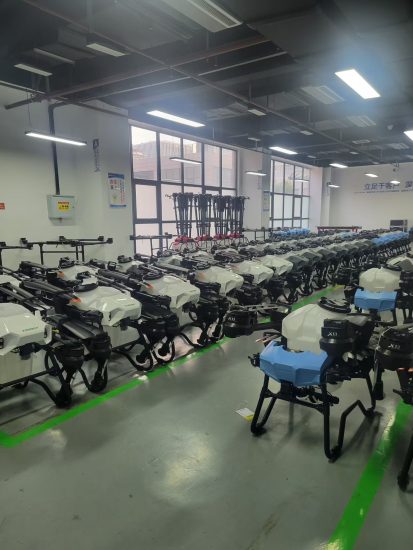


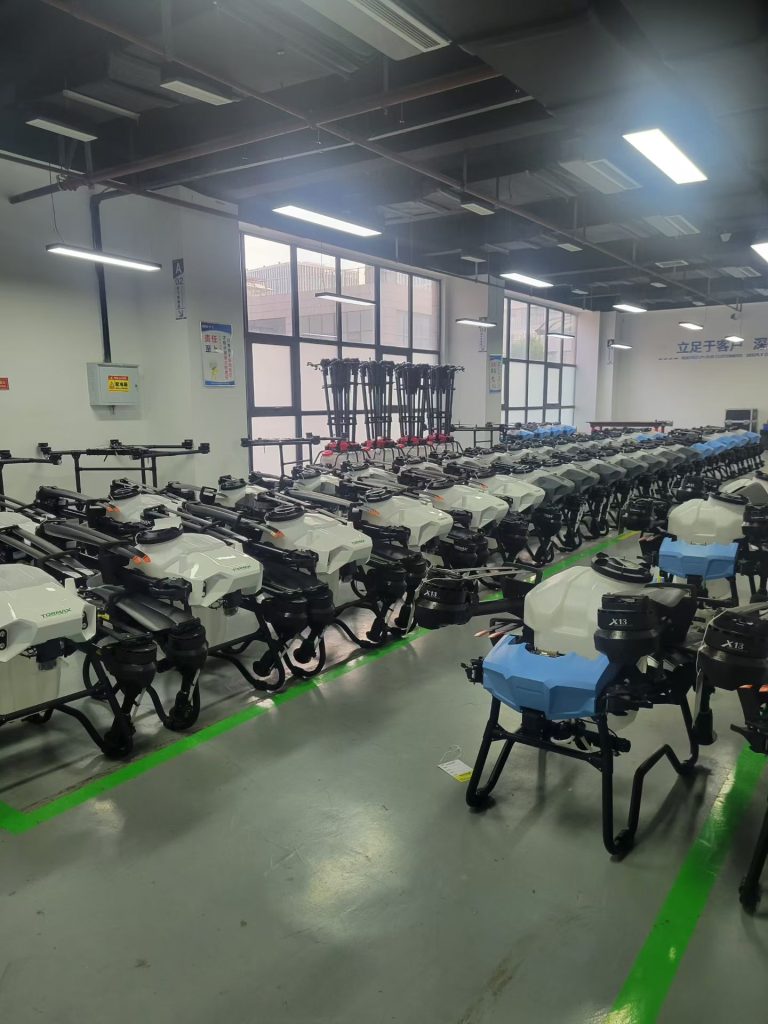
Quick Introduction:
Regular maintenance is essential for keeping an agricultural drone safe, reliable, and productive. Spraying chemicals, dust, moisture, vibration, and heavy field use can gradually affect motors, propellers, pumps, batteries, nozzles, and electronic components. A practical maintenance program helps operators reduce unexpected downtime, improve flight reliability, extend component life, and maintain consistent spraying performance throughout the agricultural season.
Why Agricultural Drone Maintenance Matters
Agricultural drones operate in a more demanding environment than many general-purpose drones.
During normal agricultural operations, an aircraft may be exposed to:
- Fertilizers
- Pesticides
- Dust
- Mud
- Water
- Humidity
- Vibration
- High temperatures
- Frequent takeoffs and landings
- Repeated battery cycles
These conditions can gradually affect mechanical and electronic components.
A drone that appears to be operating normally may still have problems developing in the motors, propellers, spraying system, battery, wiring, or navigation equipment.
For commercial agricultural operations, preventive maintenance is therefore much more valuable than waiting for a component to fail.
The basic principle is simple:
Inspect → Clean → Test → Maintain → Record
The Main Components That Require Maintenance
An agricultural drone is a complete operating system rather than just an aircraft.
Important maintenance areas include:
| Component | Main Maintenance Concern |
|---|---|
| Propellers | Cracks, deformation, imbalance |
| Motors | Noise, vibration, overheating |
| Battery | Damage, abnormal temperature, charging condition |
| Pump | Blockage, leakage, reduced pressure |
| Nozzles | Clogging and uneven spraying |
| Pipes | Leakage, aging, chemical residue |
| Tank | Cracks, contamination, residue |
| Landing gear | Damage and loose connections |
| Frame | Cracks and structural damage |
| Electronics | Moisture, connectors, wiring |
| Communication system | Signal stability |
| Navigation system | Positioning accuracy |
| Remote controller | Battery and control condition |
A maintenance program should cover all of these areas rather than focusing only on the battery.
1. Inspect the Drone Before Every Flight
A pre-flight inspection is one of the simplest ways to prevent avoidable problems.
Before starting an agricultural operation, inspect the aircraft carefully.
Check the propellers
Look for:
- Cracks
- Chips
- Scratches
- Deformation
- Loose mounting
- Unusual wear
Even a small crack can become a serious problem when the propeller rotates at high speed.
Damaged propellers should not be used.
Check the motors
Rotate the motors according to the manufacturer’s recommended inspection procedure.
Pay attention to:
- Unusual resistance
- Abnormal noise
- Excessive movement
- Visible contamination
- Signs of overheating
A motor that behaves differently from the others deserves additional inspection.
2. Keep Propellers Clean and Balanced
Propellers are critical flight components.
Agricultural chemicals, dust, and dirt can accumulate on the propeller surface.
This can affect aerodynamic performance and balance.
After operation, propellers should be cleaned using an appropriate method recommended by the manufacturer.
Do not continue using a propeller simply because the drone can still fly.
A damaged or unbalanced propeller can increase vibration and place additional stress on:
- Motors
- Arms
- Bearings
- Fasteners
- Flight-control components
For professional operations, replacing a relatively inexpensive propeller is usually preferable to risking damage to more expensive components.
3. Maintain the Motors
Agricultural drone motors frequently operate under high loads.
A fully loaded spraying drone requires considerable thrust, especially during takeoff, acceleration, and operation in wind.
After flights, operators should check whether the motors show:
- Unusual noise
- Excessive vibration
- Abnormal temperature
- Visible contamination
- Loose components
The exact cleaning and lubrication procedure depends on the motor design.
Do not apply lubricants unless the manufacturer specifically recommends doing so.
Modern brushless motors often require different maintenance practices from traditional mechanical motors.
4. Clean the Spraying System
The spraying system is one of the most important areas of an agricultural drone.
After spraying, chemical residue may remain inside:
- Tank
- Pipes
- Pumps
- Filters
- Nozzles
- Connectors
If residue is allowed to remain inside the system, it can cause clogging or corrosion and may affect future spraying performance.
A proper cleaning procedure should follow the equipment manufacturer’s instructions and the chemical product’s handling requirements.
5. Check the Nozzles
Nozzles directly affect spray distribution.
A partially blocked nozzle can produce an uneven spray pattern.
This may cause:
- Under-application
- Over-application
- Uneven crop coverage
- Reduced treatment effectiveness
Operators should regularly inspect the nozzles for:
- Blockages
- Wear
- Damage
- Uneven flow
- Chemical residue
Do not assume that all nozzles are performing identically just because liquid is coming out of them.
For professional spraying, consistent output is important.
6. Inspect Pumps and Pipes
The pump is responsible for moving liquid from the tank through the spraying system.
Common problems can include:
- Reduced pressure
- Leakage
- Blockage
- Unusual noise
- Irregular flow
Pipes and connectors should also be checked.
Look for:
- Cracks
- Loose connections
- Chemical residue
- Aging
- Leakage
A small leak can become a larger problem during a long spraying operation.
7. Clean the Agricultural Drone After Operation
Post-operation cleaning is particularly important when the drone has been exposed to agricultural chemicals.
The aircraft should be cleaned according to the manufacturer’s instructions.
Operators should pay particular attention to areas where residue can accumulate.
However, electronics should never be exposed to uncontrolled water or cleaning methods that could damage sensitive components.
The correct cleaning method depends on the aircraft’s design and protection level.
After cleaning, the drone should be completely dry before storage or charging.
8. Agricultural Drone Battery Maintenance
Battery maintenance deserves special attention.
Agricultural drones often use high-capacity lithium batteries, and battery condition directly affects flight safety and endurance.
Operators should inspect batteries for:
- Swelling
- Cracks
- Damage
- Abnormal heat
- Connector damage
- Unusual charging behavior
A battery showing physical damage or abnormal behavior should not simply be returned to service.
Follow the battery manufacturer’s charging and storage requirements.
Battery storage
When the drone is not being used for an extended period, batteries should be stored according to the manufacturer’s recommended state of charge and environmental conditions.
Avoid storing batteries in locations exposed to:
- Excessive heat
- Direct sunlight
- Water
- High humidity
- Extreme cold
Proper battery storage can help preserve battery performance over time.
9. Monitor Battery Cycle History
Professional operators should keep battery records.
A simple battery log can include:
| Information | Example |
|---|---|
| Battery ID | BAT-001 |
| Purchase date | Recorded |
| Number of cycles | Recorded |
| Last inspection | Recorded |
| Charging condition | Normal |
| Physical condition | Good |
| Abnormal events | None |
This makes it easier to identify batteries that are approaching the end of their useful operating life.
It also helps prevent different batteries from being treated as if they all have identical performance.
10. Inspect the Drone Frame
The frame supports the aircraft’s major components.
After repeated agricultural operations, inspect the frame and arms for:
- Cracks
- Deformation
- Loose fasteners
- Impact damage
- Excessive vibration
Pay particular attention after:
- Hard landings
- Collision events
- Transport damage
- Contact with obstacles
A drone that has experienced a significant impact should receive a more detailed inspection before returning to service.
11. Check the Landing Gear
Landing gear experiences repeated impact loads.
Inspect it for:
- Cracks
- Bending
- Loose screws
- Damage
- Chemical residue
Although landing gear may appear to be a simple component, failure during landing can damage the tank, frame, motors, or other equipment.
12. Maintain Navigation and Communication Systems
Modern agricultural drones depend heavily on navigation and communication systems.
Before operation, verify that:
- Positioning works normally
- Remote-control communication is stable
- Flight-control functions respond correctly
- Sensors show normal status
- Warning messages are investigated
Do not ignore repeated system warnings.
An occasional warning may have a simple cause, but repeated warnings can indicate a developing technical problem.
13. Software and Firmware
If the manufacturer provides software or firmware updates, operators should review the update information before installation.
Important considerations include:
- Compatibility
- Aircraft version
- Remote-controller version
- Battery compatibility
- Flight-control changes
- New operating requirements
Avoid updating critical equipment immediately before an important commercial operation without first confirming that the complete system works correctly.
For professional fleets, software versions should also be documented.
14. Create a Daily Maintenance Routine
A simple daily routine can significantly improve operational reliability.
Before flight
Check:
- Battery
- Propellers
- Motors
- Frame
- Tank
- Pipes
- Nozzles
- Communication
- Navigation
- Flight-control warnings
After flight
Check:
- Chemical residue
- Tank condition
- Nozzles
- Pump
- Pipes
- Propellers
- Motors
- Frame
- Battery condition
This process does not have to take a long time.
The important thing is consistency.
15. Weekly Agricultural Drone Maintenance
For frequently used commercial drones, a deeper inspection can be performed periodically.
Depending on operating hours and manufacturer recommendations, inspect:
- Fasteners
- Motors
- Propellers
- Wiring
- Connectors
- Pump system
- Nozzles
- Landing gear
- Battery condition
- Aircraft frame
The exact maintenance interval should be based on actual flight hours, environmental conditions, and manufacturer requirements rather than using the same schedule for every aircraft.
16. Seasonal Maintenance
Agricultural drones often experience seasonal changes in workload.
During peak agricultural seasons, the aircraft may operate many times per day.
After the season ends, operators should consider a more comprehensive inspection.
This can include:
- Thorough cleaning
- Battery inspection
- Propeller inspection
- Motor inspection
- Spraying-system inspection
- Frame inspection
- Wiring inspection
- Software review
- Spare-parts inventory
- Maintenance record update
Preparing the equipment before the next agricultural season can reduce unexpected downtime.
How Maintenance Affects Spraying Performance
Maintenance is not only about keeping the drone in the air.
It can also affect agricultural application quality.
For example, worn or blocked nozzles may change the spray pattern.
A damaged pump may reduce flow.
A poorly maintained aircraft may have increased vibration.
Battery degradation may reduce available flight time.
These problems can combine to reduce operational efficiency.
Therefore:
Aircraft maintenance = Flight reliability + Spraying consistency + Operational efficiency
Common Agricultural Drone Maintenance Mistakes
Mistake 1: Only Cleaning the Outside
An aircraft may look clean externally while chemical residue remains inside the spraying system.
The tank, pump, pipes, filters, and nozzles also require appropriate maintenance.
Mistake 2: Continuing to Use Damaged Propellers
A minor crack should not be ignored.
Propellers are critical safety components.
Mistake 3: Ignoring Battery Warning Signs
Swelling, unusual heating, physical damage, or abnormal charging should be treated seriously.
Mistake 4: Waiting Until Failure
Preventive maintenance is generally easier than repairing a failed aircraft during a critical agricultural season.
Mistake 5: Not Keeping Records
Without maintenance records, it becomes difficult to determine:
- When a component was replaced
- How many battery cycles have occurred
- When the aircraft was last inspected
- Whether a recurring problem exists
Agricultural Drone Maintenance Checklist
| Maintenance Item | Before Flight | After Operation | Periodically |
|---|---|---|---|
| Propellers | ✓ | ✓ | ✓ |
| Motors | ✓ | ✓ | ✓ |
| Battery | ✓ | ✓ | ✓ |
| Tank | ✓ | ✓ | ✓ |
| Nozzles | ✓ | ✓ | ✓ |
| Pump | ✓ | ✓ | ✓ |
| Pipes | ✓ | ✓ | ✓ |
| Frame | ✓ | ✓ | ✓ |
| Landing gear | ✓ | ✓ | ✓ |
| Communication | ✓ | — | ✓ |
| Navigation | ✓ | — | ✓ |
| Software | — | — | ✓ |
| Maintenance records | — | ✓ | ✓ |
The exact inspection frequency should always follow the aircraft manufacturer’s maintenance instructions.
What Spare Parts Should Agricultural Drone Operators Keep?
Commercial operators may benefit from maintaining an appropriate spare-parts inventory.
Common consumable or replacement components may include:
- Propellers
- Nozzles
- Filters
- Pump components
- Hoses
- Connectors
- Fasteners
- Landing-gear components
For larger agricultural operations, keeping suitable spare parts available can reduce downtime when a component needs replacement.
The exact spare-parts list should be based on the specific drone model and expected operating conditions.
How to Choose an Agricultural Drone Manufacturer
Maintenance requirements should be considered before purchasing the aircraft.
A professional buyer should ask the manufacturer:
Technical Support
- Is technical support available?
- Are maintenance instructions provided?
- Are replacement parts available?
- Is troubleshooting documentation available?
Battery Support
- What is the expected battery service life?
- How should batteries be stored?
- What charging equipment is required?
- How can battery health be checked?
Spraying System
- How are nozzles cleaned?
- How often should filters be replaced?
- What maintenance does the pump require?
After-Sales Service
- What warranty is provided?
- How are replacement parts ordered?
- Is operator training available?
- How is remote technical support handled?
These questions can be more important for a commercial buyer than simply comparing the purchase price.
Agricultural Drone Maintenance for International Buyers
For overseas buyers, maintenance planning should begin before the drone arrives.
A buyer should consider ordering appropriate spare parts together with the aircraft.
This can be especially useful when local access to specialized components is limited.
The buyer should also request:
- User manual
- Maintenance instructions
- Spare-parts list
- Battery instructions
- Troubleshooting guide
- Warranty information
- Technical support information
Good documentation can make a significant difference when equipment is deployed in another country.
Final Thoughts
Agricultural drones are professional working machines, and their performance depends on more than the aircraft’s basic specifications.
A reliable maintenance program protects the investment and helps operators maintain consistent agricultural productivity.
The most important principles are:
Inspect before flying.
Clean after operation.
Monitor batteries.
Check the spraying system.
Replace damaged components.
Keep maintenance records.
For professional agricultural operations, preventive maintenance should be part of the normal workflow rather than something performed only after a failure.
Frequently Asked Questions
1. How often should an agricultural drone be maintained?
Basic inspections should normally be performed before and after operations, while deeper inspections should follow the manufacturer’s recommended maintenance intervals and the aircraft’s actual operating hours.
2. How should I clean an agricultural spraying drone?
Cleaning procedures depend on the aircraft design. Follow the manufacturer’s instructions, especially around motors, electronics, sensors, batteries, and connectors.
3. How often should agricultural drone nozzles be replaced?
There is no universal replacement interval. Nozzle life depends on material, chemical exposure, operating hours, cleaning practices, and wear. Operators should monitor spray performance and inspect nozzles regularly.
4. What are the most important agricultural drone components to maintain?
Propellers, motors, batteries, pumps, nozzles, pipes, tanks, frame components, navigation systems, and electrical connections all deserve regular attention.
5. Can I use a damaged propeller?
A cracked, deformed, or otherwise damaged propeller should not be used. Propeller condition directly affects flight safety and aircraft balance.
6. How do I know if an agricultural drone battery needs attention?
Warning signs can include swelling, physical damage, unusual heating, abnormal charging behavior, or significant performance changes. Follow the battery manufacturer’s safety instructions.
7. Why is spraying-system maintenance important?
Blocked nozzles, damaged pipes, contaminated filters, or pump problems can cause uneven application and reduce spraying efficiency.
8. Should I keep spare parts for an agricultural drone?
For commercial operations, keeping commonly required spare parts can reduce downtime. The appropriate inventory depends on the drone model and operating environment.
9. Does maintenance improve agricultural drone flight time?
Proper maintenance cannot overcome the physical limits of a battery or aircraft design, but it can help prevent performance losses caused by damaged propellers, motor problems, excessive friction, contamination, or other technical issues.
10. Should agricultural drone maintenance be recorded?
Yes. Maintenance records can help operators track component replacement, battery cycles, inspections, repairs, and recurring problems.
11. What should international agricultural drone buyers ask the manufacturer?
Buyers should ask about maintenance procedures, spare parts, batteries, warranty, technical support, training, manuals, troubleshooting, and replacement-component availability.
12. What is the most important agricultural drone maintenance rule?
Do not ignore abnormal behavior. Unusual vibration, noise, heating, leakage, battery behavior, or flight-control warnings should be investigated before the aircraft is returned to normal commercial operation.


No comments yet