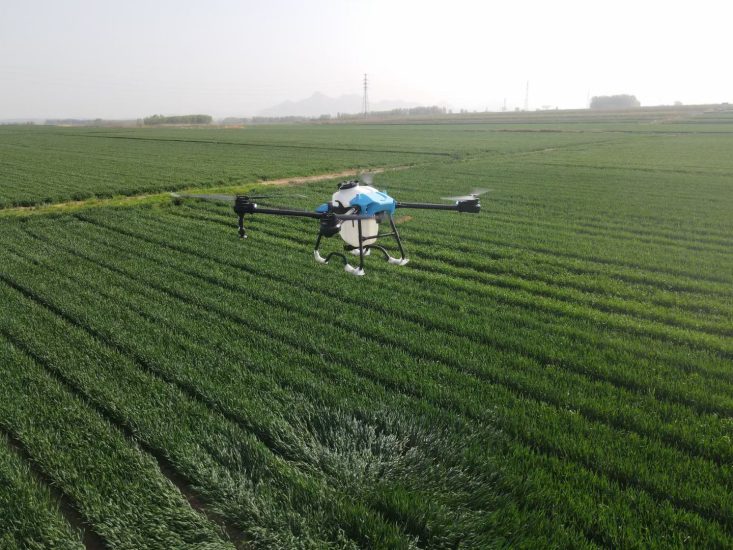


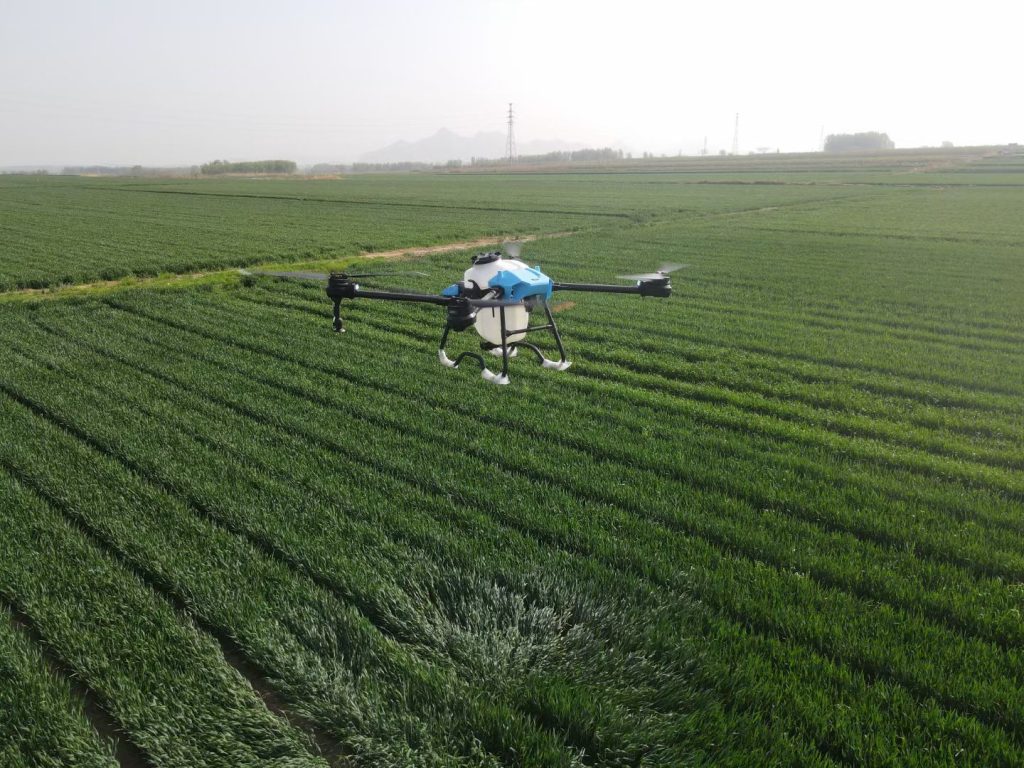
Industrial heavy lift drones are moving beyond experimental projects and becoming practical tools for construction, mining, emergency response, infrastructure maintenance, logistics, and remote-site transportation.
For buyers, however, purchasing a heavy lift drone is very different from buying a conventional camera drone.
A drone advertised as “100 kg payload” may not be able to carry 100 kg under your actual operating conditions. Mountain altitude, battery configuration, flight distance, wind, cable length, cargo shape, and takeoff weight can all change the usable payload.
This is why buyers looking for industrial heavy lift drones for sale should evaluate the complete aircraft system rather than focusing on one advertised payload number.
This guide explains the key specifications, OEM and customization options, realistic price ranges, and supplier verification points that matter when purchasing an industrial cargo drone.
What Is an Industrial Heavy Lift Drone?
An industrial heavy lift drone is a large unmanned aircraft designed to transport significantly heavier loads than conventional commercial drones.
Depending on the design, these aircraft may carry:
-
Construction materials
-
Tools and equipment
-
Spare parts
-
Emergency supplies
-
Rescue equipment
-
Agricultural materials
-
Mining supplies
-
Utility components
-
Communication equipment
-
Small machinery
-
Industrial replacement parts
Most heavy lift cargo drones use multi-rotor configurations because vertical takeoff and landing are valuable when operating at construction sites, mountains, forests, offshore facilities, or other locations without conventional runways.
Common configurations include:
-
Quadcopters
-
Hexacopters
-
Octocopters
-
Coaxial multi-rotors
-
Hybrid-electric heavy lift UAVs
The larger the payload requirement, the more important propulsion redundancy, battery capacity, structural strength, flight-control stability, and safety systems become.
How Much Payload Can an Industrial Heavy Lift Drone Carry?
Payload is one of the most misunderstood specifications in the heavy-lift drone market.
A manufacturer may advertise:
Maximum payload: 100 kg
That does not necessarily mean the drone can routinely transport 100 kg over a long-distance route.
There are several different numbers buyers should request.
1. Maximum Rated Payload
This is the highest payload the aircraft is designed to lift under defined conditions.
It is useful for understanding the capability of the aircraft, but it should not automatically be treated as the recommended commercial operating payload.
2. Recommended Working Payload
This is much more important for commercial operations.
For example, a drone might theoretically lift 100 kg but be better suited to 60–80 kg for repeated flights with reasonable battery reserves.
3. Payload at Specific Distance
A serious manufacturer should be able to provide a table similar to:
Payload |
Approximate Flight Distance |
|---|---|
20 kg |
XX km |
40 kg |
XX km |
60 kg |
XX km |
80 kg |
XX km |
100 kg |
XX km |
The exact figures must come from the specific aircraft and test conditions.
As a real-world reference, DJI’s FlyCart 100 is officially rated for up to 100 kg in single-battery configuration and 85 kg in dual-battery configuration. DJI also publishes performance figures showing that configuration and takeoff weight have a major effect on flight performance.
DJI has also published a specific example of the FC100 carrying up to 65 kg for 12 km with dual batteries under its stated test conditions.
This illustrates an important purchasing principle:
Maximum payload and useful commercial payload are not the same specification.
Heavy Lift Drone Payload Classes
For initial supplier comparison, buyers can divide industrial cargo drones into several practical categories.
Payload Class |
Typical Applications |
Indicative China Price |
|---|---|---|
10–20 kg |
Small equipment, tools, emergency supplies |
US$3,000–8,000 |
20–30 kg |
Construction tools, agricultural transport |
US$5,000–12,000+ |
30–50 kg |
Industrial logistics, construction |
US$8,000–20,000+ |
50–80 kg |
Heavy construction and remote logistics |
US$12,000–30,000+ |
80–100 kg |
Heavy cargo and industrial transport |
US$20,000–40,000+ |
Premium 100 kg class |
Professional industrial operations |
US$40,000–60,000+ |
Customized 100 kg+ |
Specialized industrial projects |
US$40,000–100,000+ |
These are indicative procurement ranges rather than fixed market prices. Current Chinese marketplace listings show very wide variation: examples for 100 kg-class systems range from roughly US$11,000–20,000 for some platforms to US$38,888–59,999 for a more specialized hybrid hexacopter, while another OEM 100 kg platform is listed around US$20,000.
The reason for such a large price difference is that “100 kg drone” can describe very different products.
A bare frame is not equivalent to a complete industrial aircraft.
Why Some 100 kg Drones Cost US$20,000 and Others Cost US$50,000+
The price difference is often related to the complete system rather than simply the carbon-fiber frame.
A professional industrial system may include:
-
Aircraft frame
-
Motors
-
ESCs
-
Propellers
-
Flight controller
-
GNSS/RTK positioning
-
Radar
-
LiDAR
-
FPV camera
-
Long-range communication system
-
Dual battery system
-
Intelligent battery management
-
Cargo weighing system
-
Winch
-
Emergency release
-
Parachute
-
Ground control station
-
Remote controller
-
Charging equipment
-
Spare parts
-
Software
-
Training
-
Technical support
A low-priced listing may only include the frame or a PNP power system.
For example, Chinese marketplace listings currently show 100 kg-rated frames around US$1,799, while complete 100 kg-class heavy-lift aircraft are listed at substantially higher prices.
Therefore, never compare two suppliers based solely on the headline price.
Ask both suppliers to quote the same configuration.
Fixed Lifting System vs. Winch System
One of the most important customization decisions is how the cargo will be attached.
Fixed Lifting System
A fixed lifting system normally uses a short cable, hook, or cargo attachment point underneath the aircraft.
It works well when:
-
Cargo dimensions are predictable
-
Pickup and delivery areas are relatively clear
-
The load can be attached manually
-
Fast deployment is important
-
The delivery point does not require precise cable positioning
A fixed lifting system can also be simpler and lighter than a sophisticated winch.
Winch System
A winch allows the cargo to be lowered and raised using a cable.
This can be useful when the drone needs to deliver cargo:
-
Onto a building roof
-
Into a restricted area
-
Down a steep slope
-
Into a forest clearing
-
Onto a ship or offshore platform
-
Into a construction zone
-
Into locations where landing is impossible
For example, DJI’s FlyCart 100 supports a dedicated winch system with a cable length of up to 30 meters, weighing functionality, controlled hook operation, and emergency cable-release functionality.
For OEM projects, buyers should specify:
-
Maximum cable length
-
Maximum cable load
-
Winch speed
-
Hook type
-
Automatic release
-
Manual release
-
Emergency release
-
Load measurement
-
Anti-swing control
-
Cable material
-
Replacement cable cost
What Can Be Customized on an Industrial Heavy Lift Drone?
OEM does not always mean the entire aircraft is redesigned.
In many cases, manufacturers offer modular customization.
1. Payload Capacity
A buyer may request a platform optimized for:
-
20 kg
-
30 kg
-
50 kg
-
80 kg
-
100 kg
-
120 kg+
Increasing payload normally requires changes to the propulsion system, battery system, frame structure, landing gear, power electronics, and flight-control parameters.
It is not simply a software setting.
2. Cargo Mounting System
The cargo attachment can often be customized.
Examples include:
-
Hook
-
Cargo basket
-
Platform
-
Sling
-
Box carrier
-
Custom fixture
-
Electromagnetic attachment
-
Specialized industrial tool mount
If your cargo has an unusual shape, provide the supplier with drawings and dimensions before requesting a final quotation.
3. Battery System
Battery configuration has a direct relationship with payload and redundancy.
A heavy lift drone may use:
-
Single battery
-
Dual batteries
-
Parallel battery packs
-
Hot-swappable batteries
-
High-voltage lithium battery systems
-
Hybrid-electric power systems
For industrial operations, dual-battery configurations can provide operational redundancy and simplify fleet scheduling.
The battery itself is also part of the aircraft’s payload equation.
A supplier should tell you:
Aircraft weight + batteries + lifting equipment + cargo = actual takeoff weight.
Do not calculate payload based only on the empty-aircraft weight.
Flight Time: Don’t Believe a Single Number
“30 minutes flight time” is almost meaningless without test conditions.
Ask:
Flight time with what payload?
A drone might achieve its advertised endurance:
-
Without cargo
-
With a small battery
-
At sea level
-
In calm weather
-
At a particular temperature
-
Without wind
-
At an optimized cruising speed
But your actual mission may involve:
-
70 kg cargo
-
5–10 km outbound flight
-
Return flight
-
Wind
-
High altitude
-
Frequent climbing
-
Hot weather
-
Long cable
-
Repeated takeoff and landing
The resulting endurance can be dramatically different.
For example, DJI’s official FC100 specifications give maximum flight-time figures under controlled conditions and separately specify flight distance at a defined takeoff weight. DJI explicitly notes that actual performance can vary with environment, usage, and firmware.
A professional RFQ should therefore request:
Payload + distance + temperature + altitude + wind condition + battery configuration.
RTK Positioning for Industrial Cargo Delivery
RTK is particularly valuable when cargo needs to be delivered accurately.
Standard GNSS positioning may not be sufficient for:
-
Construction sites
-
Tower work
-
Rooftop delivery
-
Narrow landing zones
-
Infrastructure projects
-
Repetitive delivery routes
RTK can improve positioning accuracy substantially when appropriate correction signals and satellite conditions are available.
As an example, DJI specifies approximately ±10 cm horizontal and vertical hovering accuracy for the FC100 when RTK positioning is enabled under strong GNSS conditions.
However, buyers should not assume that “RTK” automatically means centimeter-level accuracy in every environment.
Ask the supplier:
-
Which RTK system is used?
-
Is a base station included?
-
Is network RTK supported?
-
What happens if RTK corrections are lost?
-
What is the fallback positioning method?
-
How does the system behave around buildings or mountains?
Radar, LiDAR and Obstacle Detection
A heavy lift drone carrying 50–100 kg is not equivalent to a lightweight camera drone.
The consequences of collision can be much greater.
A professional aircraft may therefore combine:
-
Millimeter-wave radar
-
LiDAR
-
Vision cameras
-
Downward sensors
-
FPV camera
-
GNSS/RTK
-
Terrain-following sensors
For example, DJI’s FC100 safety system includes front and rear radar, downward radar, LiDAR, a multi-camera vision system, and FPV.
But sensors are not a substitute for operational planning.
Even advanced systems can have limitations with:
-
Moving objects
-
Thin cables
-
Poor lighting
-
Fog
-
Rain
-
Reflective surfaces
-
Complex cargo
-
Obstacles close to the suspended load
The buyer should evaluate both the aircraft and the operating environment.
Safety Features to Ask About
Before buying an industrial heavy lift drone, ask the manufacturer to explain its emergency procedures.
Important functions may include:
Emergency Return-to-Home
What happens if:
-
Communication is lost?
-
GNSS becomes unavailable?
-
Battery voltage drops?
-
The pilot loses control?
Emergency Cargo Release
Can the aircraft release the cargo if keeping the load attached becomes dangerous?
Motor Redundancy
Can the aircraft remain controllable after a propulsion-system failure?
The answer depends heavily on the aircraft architecture.
Parachute
A parachute can reduce descent speed during certain emergency conditions.
DJI’s FC100, for example, includes an integrated parachute system with a published minimum opening height of 100 meters under its specified test conditions.
For an OEM aircraft, ask for:
-
Parachute deployment conditions
-
Minimum deployment altitude
-
Maximum deployment weight
-
Replacement interval
-
Manual/automatic deployment
-
Certification or test documentation where applicable
IP Rating and Weather Resistance
Industrial buyers often work outdoors, so weather protection matters.
But an IP rating should not be interpreted as “the drone can fly in any rain.”
For example, DJI rates the FC100 at IP55 and provides specific limitations and maintenance recommendations concerning rain exposure.
Ask your manufacturer:
-
IP rating of the aircraft
-
Whether the motors are protected
-
Whether batteries are weather-resistant
-
Maximum permitted rainfall
-
Maximum wind speed
-
Operating temperature
-
Storage temperature
-
High-humidity restrictions
-
Dust protection
If your project is in a tropical, desert, coastal, or high-altitude environment, tell the supplier before selecting the aircraft.
Industrial Heavy Lift Drone Price Breakdown
A realistic procurement budget should include more than the aircraft.
For example:
Item |
Typical Cost Consideration |
|---|---|
Heavy lift drone |
US$10,000–60,000+ |
Additional battery |
Hundreds to several thousand USD |
Fast charger |
Hundreds to several thousand USD |
Winch system |
Depends heavily on design |
RTK/base station |
Additional cost |
Parachute |
Additional cost |
Spare propellers |
Additional cost |
Spare motors |
Additional cost |
Flight controller |
Additional cost |
Transportation case |
Additional cost |
Training |
Supplier dependent |
Insurance |
Country dependent |
Import duty/tax |
Destination dependent |
Local registration |
Country dependent |
The current Chinese market demonstrates why buyers should request a detailed bill of configuration. Public listings include 100 kg-class aircraft around US$15,000–36,000, while specialized systems can exceed US$40,000.
A very low quotation is not necessarily a bargain.
It may simply exclude critical components.
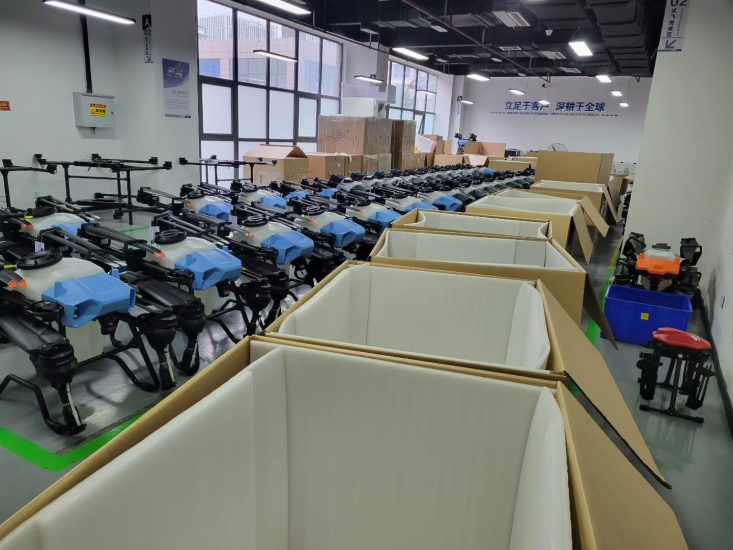
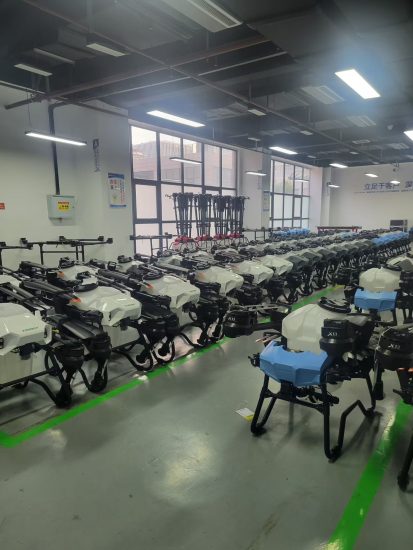
China Industrial Heavy Lift Drone OEM
China is an important manufacturing base for industrial UAV components and complete heavy-lift platforms.
However, buyers should distinguish between:
Factory
OEM manufacturer
System integrator
Trading company
These are not necessarily the same.
A supplier may sell a Chinese-made drone while outsourcing the frame, motors, batteries, or flight-control system.
That is not automatically a problem.
The important question is whether the supplier can take responsibility for the complete system.
How to Verify a Heavy Lift Drone Supplier
Before placing a large order, ask for the following information.
Company Information
Request:
-
Registered company name
-
Business license
-
Factory address
-
Main product categories
-
Years producing UAV systems
-
Export markets
-
Engineering team information
-
Production capability
Product Information
Request:
-
Complete technical datasheet
-
Empty weight
-
Maximum takeoff weight
-
Recommended payload
-
Maximum payload
-
Flight time at different payloads
-
Flight distance at different payloads
-
Maximum operating altitude
-
Maximum wind resistance
-
Battery specifications
-
Charging time
-
Operating temperature
-
IP rating
-
Communication range
-
Positioning system
-
Safety functions
Testing Information
Ask whether the manufacturer can provide:
-
Factory flight-test video
-
Payload lifting test
-
Maximum payload test
-
Long-distance flight test
-
Wind test
-
Emergency procedure demonstration
-
Cargo release test
Do not rely exclusively on promotional videos.
A good supplier should be able to explain how the published numbers were measured.
Ask for a Payload Test Before Buying
If you plan to purchase a 100 kg industrial drone, one of the most useful questions is:
Can you demonstrate a controlled flight test using our required payload?
For example:
Required payload: 70 kg
Cargo dimensions: 100 × 80 × 60 cm
Flight distance: 5 km one way
Return: Yes
Altitude: 500 m above sea level
Environment: Outdoor
Battery: Dual battery
Required reserve: 20%
This is much more useful than asking:
How many kilograms can your drone carry?
The supplier’s answer should be based on your mission profile.
Industrial Applications
Heavy lift drones are particularly attractive when traditional transportation is expensive, dangerous, or physically difficult.
Construction
Potential applications include transporting:
-
Cement
-
Tools
-
Pipes
-
Steel components
-
Construction equipment
-
Spare parts
-
Temporary materials
This can be valuable on steep slopes or high-rise construction sites where cranes or ground transportation are difficult.
Mining
Heavy drones can potentially move:
-
Spare parts
-
Geological equipment
-
Emergency supplies
-
Tools
-
Maintenance components
The main benefit is access to remote areas without constructing roads for every delivery route.
Emergency Response
Cargo drones can transport:
-
Medical supplies
-
Rescue equipment
-
Food
-
Water
-
Communication equipment
This is particularly useful after floods, earthquakes, landslides, and other disasters.
Infrastructure
Possible applications include:
-
Power-line maintenance
-
Telecommunications
-
Wind farms
-
Bridges
-
Remote towers
-
Oil and gas facilities
The drone can deliver equipment without requiring workers to carry heavy materials over difficult terrain.
Off-the-Shelf vs. OEM Heavy Lift Drone
Not every buyer needs a completely customized aircraft.
Choose an off-the-shelf drone when:
-
Your payload requirement is standard
-
Your operating environment is predictable
-
You need delivery quickly
-
Existing software meets your requirements
-
You do not need a unique cargo system
Consider OEM customization when:
-
You need a special payload
-
You require a custom winch
-
You need a specific battery architecture
-
You need integration with existing software
-
You operate at high altitude
-
You need a special communication system
-
Your cargo dimensions are unusual
-
You need fleet-level modifications
OEM development normally increases both cost and lead time.
It is therefore better to customize only the components that solve a real operational problem.
How to Request a Quotation
A professional RFQ should include more information than:
Please send price for 100 kg drone.
A better RFQ would look like this:
Product: Industrial Heavy Lift Cargo Drone
Required Payload: 60–80 kg working payload
Maximum Payload: 100 kg preferred
Flight Distance: 8 km one way
Total Mission: 16 km round trip
Operating Altitude: 500–1,000 m
Cargo: Construction materials
Cargo Dimensions: 120 × 80 × 60 cm
Delivery Method: Winch preferred
Positioning: RTK required
Safety: Radar + obstacle detection + emergency cargo release
Battery: Dual battery preferred
Quantity: 1 sample + 10 units
Destination: [Country]
Customization: OEM branding and cargo system
Ask the supplier to quote:
-
Aircraft
-
Batteries
-
Charger
-
Remote controller
-
Winch/lifting system
-
RTK equipment
-
Safety system
-
Spare parts
-
Training
-
Packaging
-
Warranty
-
Shipping cost
-
Lead time
This makes supplier quotations much easier to compare.
What Should You Check Before Paying a Deposit?
Before paying for an expensive industrial drone, confirm five things.
1. Exact Configuration
Make sure the quotation identifies the exact model and accessories.
2. Payload Evidence
Confirm the payload specification under defined test conditions.
3. Battery Configuration
Determine whether the advertised performance requires one or two batteries.
4. After-Sales Support
Ask how replacement parts and technical support are provided internationally.
5. Local Regulations
Drone regulations differ significantly between countries.
A drone legally available for sale does not automatically mean it can be operated commercially in your country.
Before importing the aircraft, check local requirements for:
-
Registration
-
Operator licensing
-
Flight permissions
-
Weight categories
-
Airspace restrictions
-
Remote identification
-
Insurance
-
Commercial operation
The manufacturer should provide technical documents, but the buyer remains responsible for confirming local operational requirements.
A Practical Buying Strategy
For most commercial buyers, the safest purchasing process is:
Step 1 — Define the mission
Do not start with the drone.
Start with the cargo.
Step 2 — Define the working payload
Determine what you need to carry repeatedly, not the theoretical maximum.
Step 3 — Define the route
Distance, altitude, terrain, wind and return requirements all matter.
Step 4 — Compare 3–5 suppliers
Request identical specifications.
Step 5 — Verify the manufacturer
Check company identity, engineering capability, production facility and previous projects.
Step 6 — Request a test
Ideally, test with your actual cargo or a representative load.
Step 7 — Purchase one sample
For expensive industrial equipment, a sample order is often more valuable than negotiating a slightly lower unit price.
Step 8 — Evaluate real operating cost
Include batteries, charging, spare parts, maintenance, transportation, insurance and local compliance.
Step 9 — Start bulk purchasing
Only after the aircraft has passed your operational requirements.
Frequently Asked Questions
How much does a 100 kg heavy lift drone cost?
A 100 kg-class industrial heavy lift drone can range from approximately US$20,000 to US$60,000 or more, depending on configuration. Specialized OEM systems can exceed this range.
Current Chinese supplier listings show examples around US$19,000–20,000, US$38,888–59,999 and approximately US$49,579–52,188. These are supplier-listed prices rather than universal market prices.
Can a 100 kg drone really carry 100 kg?
Some aircraft are officially rated for a 100 kg maximum payload, but the practical payload depends on battery configuration, takeoff weight, altitude, weather, route distance and safety margins.
Always request a payload-versus-distance test table.
Is a 100 kg drone suitable for construction?
Yes, potentially. Heavy lift drones can transport tools, materials and equipment to locations where cranes, trucks or manual transportation are inefficient.
However, the correct model depends on cargo weight, route distance and site conditions.
What is the difference between a heavy lift drone and a cargo drone?
The terms overlap.
“Cargo drone” generally describes the transportation application, while “heavy lift drone” emphasizes the aircraft’s payload capability.
A cargo drone may carry 5 kg, 20 kg or 100 kg depending on its design.
Should I choose a winch or fixed lifting system?
Choose a fixed lifting system when the cargo can be attached and released easily at the delivery point.
Choose a winch when the cargo needs to be lowered from the aircraft without landing.
Is RTK necessary?
Not for every project.
RTK becomes more valuable when you need accurate positioning for repeated delivery routes, construction sites, narrow landing zones or infrastructure operations.
How long can a heavy lift drone fly?
There is no universal answer.
A drone may have substantially different endurance with 0 kg, 30 kg, 60 kg and 100 kg payloads.
Always ask for flight-time data at your actual working payload.
Can I customize a Chinese heavy lift drone?
Yes. Many Chinese suppliers offer OEM or customization options, ranging from branding and cargo attachments to batteries, propulsion systems, winches, communication systems and aircraft structure.
The level of customization depends on the manufacturer.
Can I buy only a heavy lift drone frame?
Yes.
Chinese suppliers sell frames and PNP systems separately. Current listings include 100 kg-rated frames at prices around US$1,799, but a frame should not be confused with a complete operational aircraft.
What should I ask a supplier before ordering?
At minimum:
-
Maximum payload
-
Recommended payload
-
Payload at specific distance
-
Flight time under load
-
Maximum takeoff weight
-
Battery specifications
-
Charging system
-
Communication range
-
RTK capability
-
Obstacle detection
-
Emergency procedures
-
Winch specifications
-
Spare parts
-
Warranty
-
Lead time
-
OEM options
-
Export documentation
Final Buying Advice
The best industrial heavy lift drone is not necessarily the aircraft with the highest advertised payload.
For a commercial buyer, the more important question is:
Can this drone safely transport my required cargo, over my required distance, in my actual operating environment, repeatedly and economically?
A 100 kg-rated aircraft that can only carry that load under highly controlled conditions may be less useful than an 80 kg platform that can reliably transport 60–70 kg on your normal route.
When comparing industrial heavy lift drones for sale, evaluate the complete system:
Payload + range + battery + propulsion + safety + cargo system + positioning + after-sales support + total cost.
For OEM projects, give the manufacturer a detailed mission profile rather than simply asking for a “100 kg drone.”
That approach produces much more useful quotations and makes it easier to identify suppliers capable of delivering a real industrial solution rather than a product that only looks impressive on a specification sheet.
THE END


No comments yet