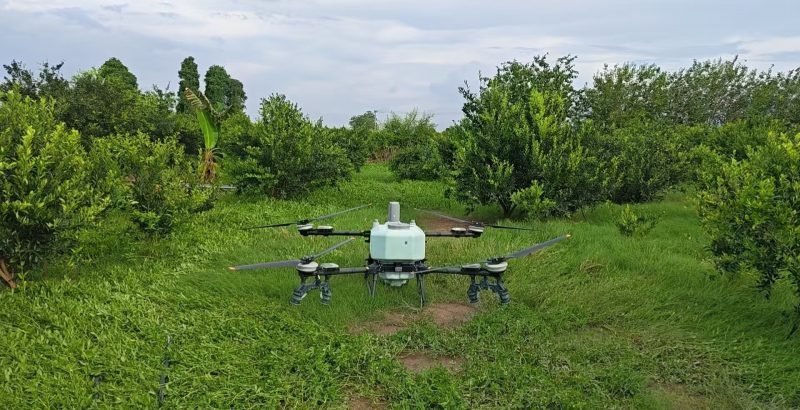



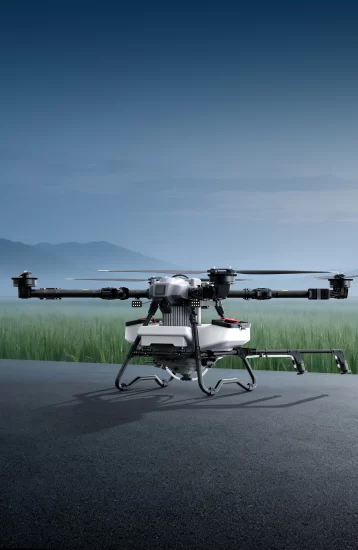
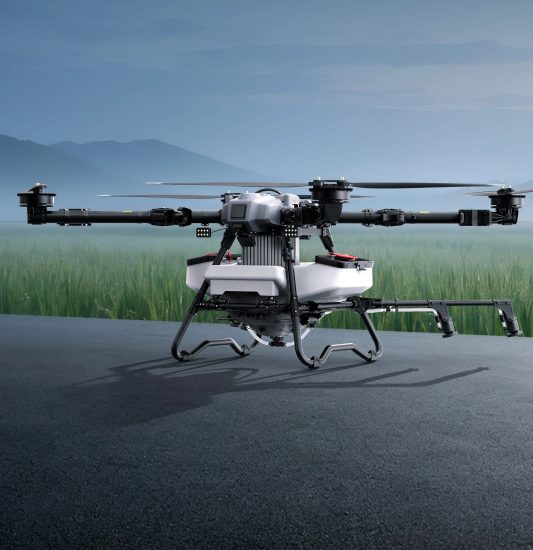
For farms, agricultural contractors, distributors, and agricultural equipment companies, buying agricultural spraying drones directly from a Chinese factory can provide several potential advantages.
China has a large manufacturing ecosystem for agricultural drones, including drone assembly, motors, batteries, flight-control systems, pumps, electronic components, and other supporting parts. However, direct factory sourcing is not simply about getting a lower price. Buyers also need to evaluate manufacturing capability, quality control, technical support, spare parts, export experience, and long-term cooperation.
This guide explains the main advantages of sourcing agricultural spraying drones directly from a Chinese manufacturer and what international buyers should consider before placing an order.
1. Direct Communication With the Manufacturer
One of the main advantages of buying directly from a factory is direct communication with the production team.
When purchasing through multiple intermediaries, information may pass through several companies before reaching the manufacturer.
Direct communication can make it easier to discuss:
-
Product specifications
-
Spraying requirements
-
Battery configuration
-
Technical problems
-
Product improvements
-
Spare parts
-
Packaging
-
OEM requirements
-
Delivery schedules
This can be especially useful when the buyer has technical requirements that differ from a standard catalog configuration.
2. More Flexible Product Configuration
Agricultural operations are different from one country to another.
A buyer may need a specific combination of:
-
Tank capacity
-
Battery capacity
-
Pump configuration
-
Nozzles
-
Sensors
-
Remote controller
-
Charging equipment
-
Spare parts
A manufacturer may be able to adjust the configuration according to the buyer’s requirements.
For example, a distributor may prefer a standard configuration for general agricultural applications, while an agricultural contractor may require a different battery and spare-parts package for intensive daily use.
3. Better Access to OEM and Private-Label Services
Direct factory sourcing can be particularly valuable for distributors that want to establish their own brand.
Depending on the manufacturer’s capabilities, OEM services may include:
-
Logo printing
-
Product labels
-
Customized packaging
-
User manuals
-
Product colors
-
Spare-parts packaging
-
Remote-controller branding
More advanced customization may involve changes to hardware, software, or product configuration.
Not every Chinese factory offers the same OEM capability, so buyers should confirm the exact scope before ordering.
4. Potentially Better Factory Pricing
Buying directly from a manufacturer can reduce the number of intermediaries involved in the transaction.
This may create opportunities for more competitive pricing, particularly for larger orders.
However, buyers should not assume that every factory quotation will automatically be the lowest.
The final price depends on:
-
Drone model
-
Tank capacity
-
Battery quantity
-
Charger
-
Sensors
-
Spraying system
-
Spare parts
-
OEM requirements
-
Order quantity
-
Packaging
-
Shipping terms
A direct factory price should always be compared using the same configuration.
5. Better Pricing for Larger Orders
Manufacturers may offer different pricing according to order volume.
A buyer purchasing one sample unit will usually receive different commercial terms from a distributor purchasing dozens or hundreds of units.
When negotiating, ask for tiered quotations.
For example:
Order Quantity |
Possible Commercial Structure |
|---|---|
1 unit |
Sample price |
5 units |
Small-volume price |
10 units |
Distributor price |
50+ units |
Volume quotation |
OEM order |
Customized quotation |
The actual pricing depends on the manufacturer and configuration.
6. Easier Product Customization
Direct factory communication can simplify customization.
Suppose a distributor wants:
-
A specific logo
-
Different packaging
-
Local-language instructions
-
Customized accessories
-
A particular battery package
It is generally easier to communicate these requirements directly with the manufacturer.
The factory can then confirm:
-
Whether the modification is technically possible
-
MOQ
-
Additional cost
-
Production lead time
-
Testing requirements
7. Better Understanding of Product Technology
A factory’s technical team can often provide more detailed information about the product than a general trading intermediary.
Buyers can ask technical questions about:
-
Motor systems
-
Flight controllers
-
Battery management
-
Pump systems
-
Nozzles
-
Navigation
-
Sensors
-
Software
-
Maintenance
This can be important when the drone will be used for commercial agricultural operations.
8. Easier Spare-Parts Procurement
Agricultural drones contain multiple components that may eventually need replacement.
Direct relationships with manufacturers can simplify the procurement of:
-
Propellers
-
Motors
-
Pumps
-
Nozzles
-
Filters
-
Pipes
-
Batteries
-
Chargers
-
Electronic components
A distributor can also discuss maintaining a spare-parts inventory in advance.
This can reduce downtime for customers.
9. Better Access to Technical Support
Technical problems may occur during installation, operation, maintenance, or software updates.
A direct relationship with the manufacturer can make it easier to obtain:
-
Operating instructions
-
Troubleshooting guidance
-
Maintenance information
-
Training videos
-
Software updates
-
Replacement recommendations
For distributors, this support can be particularly important because they may need to provide first-level assistance to local customers.
10. Faster Feedback From the Market to the Factory
Distributors and agricultural contractors often learn useful information from actual field operations.
For example, customers may request:
-
Different tank configurations
-
Improved obstacle detection
-
Better battery endurance
-
Additional nozzle options
-
Local-language software
-
Different packaging
When the buyer has a direct relationship with the factory, this feedback can potentially reach the product-development team more quickly.
Long-term factory relationships can therefore become more than simple buying arrangements.
11. Easier Quality-Control Coordination
When buying directly from a factory, buyers can establish specific inspection requirements.
For example, before shipment, the buyer may request checks of:
-
Drone structure
-
Motors
-
Battery
-
Charger
-
Pump
-
Nozzles
-
Remote controller
-
Flight functions
-
Spraying functions
-
Packaging
For larger orders, buyers can also consider third-party inspection.
The inspection requirements should be agreed before production rather than after the goods are ready to ship.
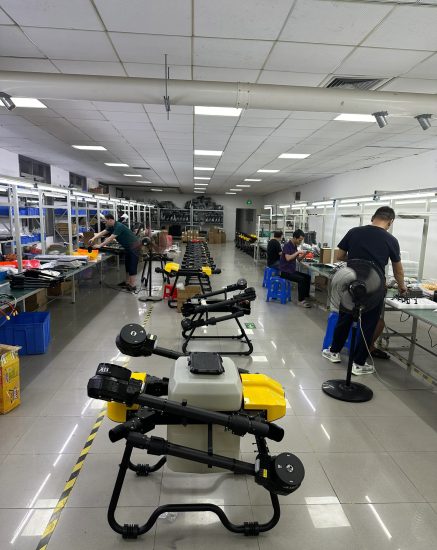
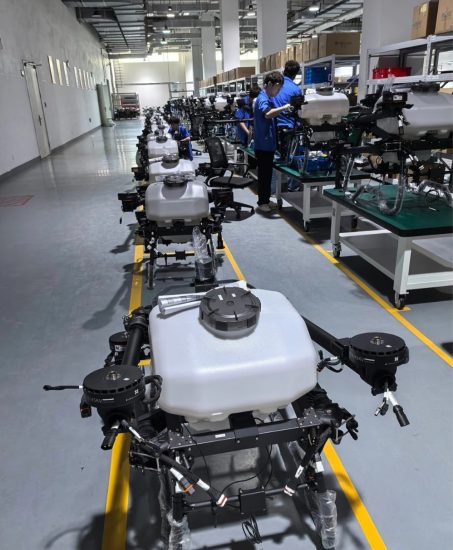
12. More Transparent Production Information
A professional manufacturer should be able to provide information about:
-
Production lead time
-
Assembly
-
Testing
-
Packaging
-
Spare-parts preparation
-
Shipment
This can help international buyers plan inventory and customer deliveries.
For distributors, production visibility is especially useful when preparing seasonal agricultural equipment stock.
13. Easier Development of Long-Term Cooperation
Agricultural drones are not always a one-time purchase.
A distributor may need:
-
Additional drones
-
Replacement batteries
-
Spare parts
-
Accessories
-
New models
-
OEM products
-
Technical support
A direct relationship with a manufacturer can create a foundation for long-term cooperation.
Over time, both sides may develop a better understanding of:
-
Product requirements
-
Market demand
-
Forecast quantities
-
Quality expectations
-
Packaging
-
Delivery schedules
14. Better Control Over Product Consistency
For distributors, product consistency is important.
If products are sourced from different factories, specifications can change between batches.
Working with one qualified manufacturer can make it easier to maintain consistency in:
-
Drone configuration
-
Battery specifications
-
Packaging
-
Spare parts
-
Manuals
-
Branding
This can help distributors build a more standardized after-sales system.
15. More Efficient OEM Production
For private-label businesses, direct factory sourcing can reduce unnecessary communication layers.
A typical OEM process may involve:
-
Buyer provides brand requirements.
-
Manufacturer confirms technical feasibility.
-
Both sides confirm specifications.
-
Packaging and labeling are approved.
-
Sample is produced.
-
Buyer tests the sample.
-
Final specifications are confirmed.
-
Mass production begins.
-
Finished products are inspected.
-
Products are shipped.
Clear communication at every stage helps reduce misunderstandings.
16. Better Control of Packaging
Agricultural drones can require specialized packaging because the shipment may contain:
-
Aircraft components
-
Batteries
-
Chargers
-
Remote controllers
-
Propellers
-
Pumps
-
Spare parts
The buyer can discuss packaging requirements directly with the manufacturer.
For international transportation, packaging should also be compatible with the selected shipping method.
17. Potentially Easier Export Coordination
Experienced Chinese manufacturers may already have experience exporting agricultural drone equipment.
Ask whether the factory can provide the documents required for your shipment.
Depending on the destination and transportation method, documentation may include:
-
Commercial invoice
-
Packing list
-
Product specifications
-
Battery-related documents
-
Certificate of origin
-
Export-related documents
The exact requirements depend on the destination country and shipping method.
18. Direct Factory Sourcing Does Not Mean “Buy Without Verification”
This is one of the most important points.
A factory-direct relationship does not automatically guarantee quality.
Before ordering, verify:
-
Company information
-
Factory capabilities
-
Product specifications
-
Quality-control process
-
Export experience
-
Warranty
-
Spare-parts supply
-
Technical support
-
Certifications where applicable
-
Customer references
-
Sample performance
A trading company with strong sourcing capabilities may sometimes provide better service than an inexperienced factory.
The key is not simply whether the supplier calls itself a factory. The key is whether it can reliably meet your requirements.
19. Compare Factory Quotes Correctly
Suppose three manufacturers provide different prices.
Do not compare the numbers immediately.
First check whether they include the same:
-
Drone model
-
Tank capacity
-
Batteries
-
Charger
-
Remote controller
-
Spraying system
-
Sensors
-
Spare parts
-
Packaging
-
Warranty
-
Shipping terms
Only after standardizing the configuration can you make a meaningful comparison.
20. Evaluate Total Cost Instead of Factory Price
The real cost of purchasing agricultural drones may include:
Product Cost + Batteries + Charger + Spare Parts + Packaging + Freight + Insurance + Taxes + Compliance Costs
There can also be operating costs after delivery:
Maintenance + Battery Replacement + Spare Parts + Training + Downtime
Therefore, the cheapest factory quotation is not necessarily the lowest total cost.
21. Ask About Minimum Order Quantity
Direct manufacturers may have different MOQs for standard products and customized products.
For standard products, a factory may accept small trial orders.
For OEM products, the MOQ may be higher because customized packaging, labels, or production arrangements create additional costs.
Always confirm the MOQ before planning your purchasing budget.
22. Start With a Sample When Possible
For new suppliers, a sample order is often a practical way to reduce risk.
Test:
-
Flight stability
-
Spraying performance
-
Battery endurance
-
Charging
-
Navigation
-
Remote controller
-
Pump performance
-
Ease of maintenance
-
Product documentation
If the sample meets expectations, you can negotiate a larger order based on actual performance.
23. Build a Clear Quality Agreement
For larger purchases, do not rely only on verbal promises.
Confirm important requirements in writing.
These may include:
-
Model
-
Specifications
-
Accessories
-
Battery quantity
-
Packaging
-
Branding
-
Inspection requirements
-
Warranty
-
Delivery schedule
-
Spare parts
-
Payment terms
A clear agreement helps both sides understand what is being purchased.
24. Questions to Ask a Chinese Agricultural Drone Factory
Before placing an order, ask:
Manufacturing
-
Are you the manufacturer?
-
Where is the factory located?
-
What is your monthly production capacity?
-
What quality-control procedures do you use?
Product
-
Which model is suitable for my crop?
-
What is the tank capacity?
-
What is the recommended payload?
-
What battery is included?
-
What is the practical flight time?
Spraying
-
What pump system is used?
-
What nozzle options are available?
-
What is the flow rate?
-
How is the spraying system controlled?
Service
-
What is the warranty?
-
Are spare parts available?
-
Do you provide technical support?
-
Is operator training available?
Commercial
-
What is the MOQ?
-
What is the lead time?
-
Can you provide OEM services?
-
Which shipping terms are available?
Frequently Asked Questions
Is buying directly from a Chinese factory cheaper?
It can be, particularly for larger orders, but there is no guarantee. Pricing depends on product configuration, order quantity, customization, accessories, and commercial terms.
Can I buy one agricultural spraying drone directly from a factory?
Many manufacturers can provide samples or small quantities, although MOQ policies vary. Confirm the sample price and purchasing terms before ordering.
Can Chinese agricultural drone factories provide OEM services?
Some manufacturers provide OEM and private-label services. The available customization, MOQ, tooling requirements, and production lead time vary by factory.
Is factory-direct purchasing suitable for distributors?
Yes. Direct sourcing can be particularly useful for distributors that need consistent products, OEM branding, spare parts, technical support, and repeat orders.
How can I reduce the risk of buying directly from a factory?
Verify the manufacturer, request detailed specifications, order a sample, test the product, confirm warranty and spare-parts support, and use a written purchase agreement for larger orders.
Should I choose a factory based only on price?
No. Product quality, technical capability, battery performance, spraying system, spare-parts availability, warranty, and after-sales support should all be considered.
Conclusion
Buying agricultural spraying drones directly from a Chinese factory can offer several potential advantages, including direct communication, product customization, OEM support, competitive pricing, spare-parts access, technical support, and opportunities for long-term cooperation.
However, factory-direct sourcing works best when the buyer performs proper supplier verification.
Before placing an order, compare manufacturers based on the complete package rather than the drone price alone. Check the product specifications, spraying system, battery, charger, quality control, warranty, spare parts, export documentation, and technical support.
For distributors and commercial agricultural users, the ideal Chinese manufacturer is not simply the supplier offering the lowest quotation. It is a manufacturer capable of providing consistent products, realistic technical specifications, reliable after-sales support, stable spare-parts supply, and long-term cooperation.
THE END


No comments yet