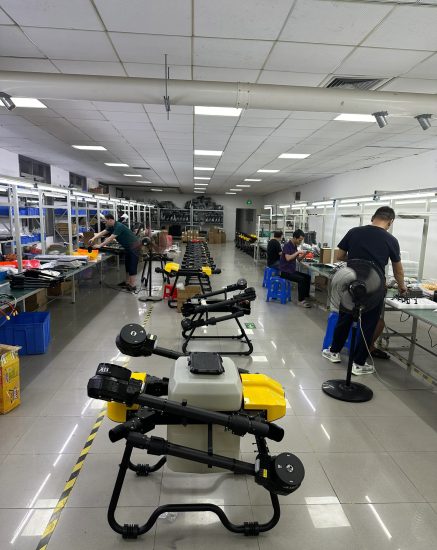


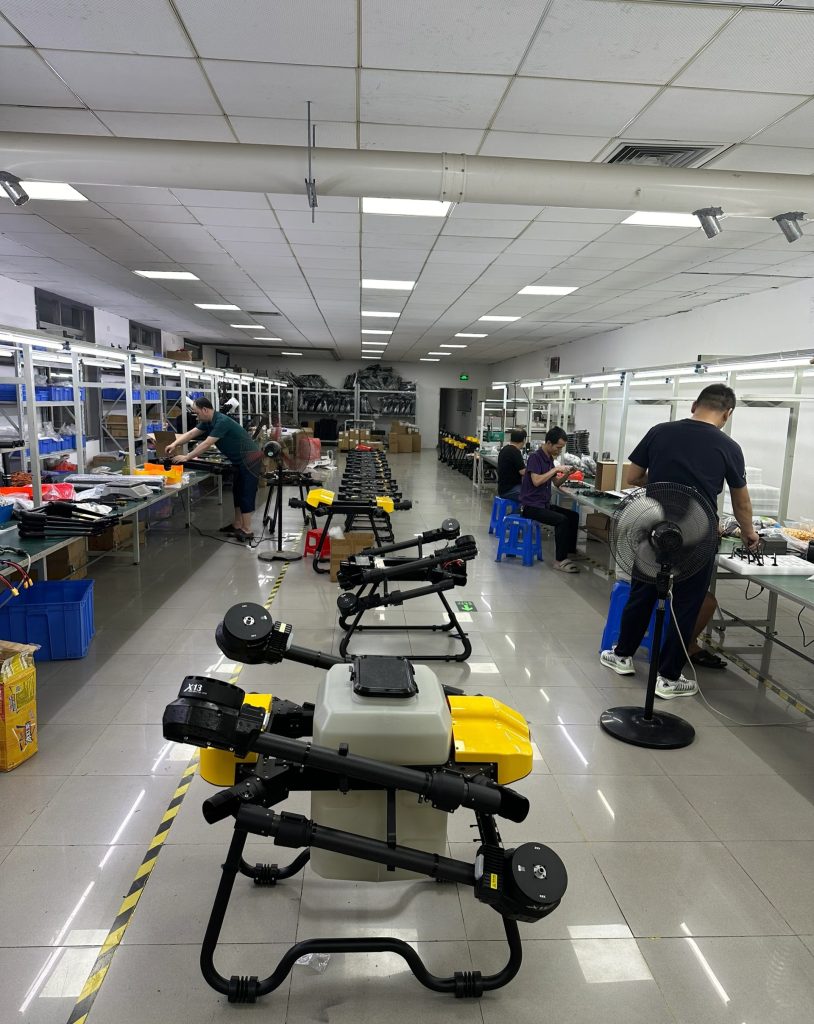
Large farms and professional agricultural service companies need spraying equipment that can handle demanding workloads while maintaining reliable operation. A 30L agricultural spraying drone offers a higher liquid carrying capacity than many smaller spraying drones, making it an option for commercial crop-spraying operations.
MSOEN develops agricultural spraying drones for professional users, including farms, agricultural contractors, equipment distributors, and international buyers.
What Is a 30L Agricultural Spraying Drone?
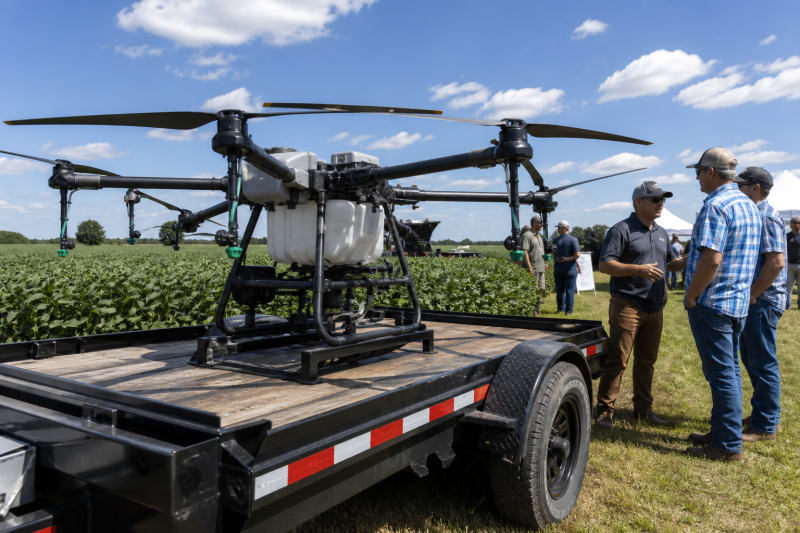
A 30L agricultural drone is designed around a liquid tank with a capacity in the 30-liter class. Its larger payload allows operators to carry more agricultural liquid during each flight.
A professional system typically includes:
-
30L-class spraying tank
-
High-performance agricultural pump
-
Multiple spray nozzles
-
Flight-control system
-
GPS positioning
-
Remote controller
-
Intelligent route planning
-
Obstacle detection
-
Rechargeable flight batteries
-
Spraying flow-control system
The exact specifications depend on the particular model and configuration.
Why Choose a 30L Agricultural Drone?
For large-scale agricultural operations, reducing unnecessary refill cycles can be important.
A 30L-class drone can provide a useful combination of:
-
Higher liquid capacity
-
Longer spraying operations between refills
-
Efficient field logistics
-
Professional agricultural operation
-
Reduced dependence on ground equipment
However, a larger tank does not automatically mean higher productivity. Payload weight, battery performance, spray rate, refill distance, flight speed, and field conditions all affect actual operating efficiency.
Suitable Applications
A 30L agricultural spraying drone can be considered for a variety of agricultural environments.
Large Field Crops
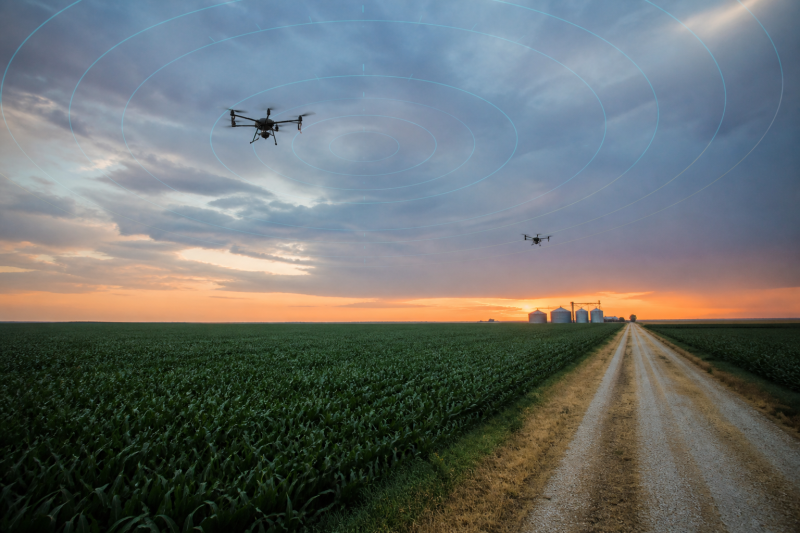
Large areas of corn, wheat, soybean, cotton, and other field crops may benefit from equipment designed for higher-capacity spraying operations.
The drone can follow planned flight routes while distributing agricultural liquids over the target area.
Rice Farming
Rice fields can be difficult for tractors because of water and soft soil.
Aerial spraying allows the drone to operate above the field without driving through the crop.
Orchards
Fruit-tree operations can require specialized aerial spraying strategies.
A 30L drone may be considered for commercial orchards where a larger liquid payload is useful. However, operators should select the nozzle system, flight altitude, and application method according to the crop and tree structure.
Vineyards
Vineyards can contain narrow rows and uneven terrain. A spraying drone can provide an alternative to some ground-based equipment while reducing the need to drive directly through planting rows.
30L Spraying System
The spraying system determines how effectively the drone distributes liquid.
A professional 30L drone may use multiple nozzles connected to an electric pump system.
Key specifications include:
Pump Capacity
The pump needs to deliver liquid consistently from the tank to the spray nozzles.
Nozzle Arrangement
The nozzle layout affects the distribution pattern underneath the drone.
The correct arrangement depends on the application, liquid, target crop, and desired spraying characteristics.
Flow Control
Flow control helps operators manage application rates according to the selected operating parameters.
Spray Width
Spray width affects field productivity, but it should always be considered together with flight speed, altitude, wind, nozzle type, and crop structure.
A manufacturer’s advertised spray width should not be interpreted as guaranteed effective coverage in every field condition.
Battery and Payload Considerations
A full 30L tank adds significant weight compared with an empty drone.
As payload increases, the propulsion system generally needs to work harder, which can influence energy consumption and flight time.
For this reason, buyers should evaluate flight performance under realistic operating conditions.
Important battery considerations include:
-
Battery capacity
-
Rated flight time
-
Flight time under spraying load
-
Charging speed
-
Number of batteries
-
Charger capacity
-
Battery replacement availability
-
Battery monitoring
For commercial users, multiple batteries and an efficient charging setup can help maintain continuous operations.
How Much Area Can a 30L Drone Cover?
There is no universal answer.
Actual coverage depends on the application rate and operating conditions.
For example, two farms using the same 30L drone may achieve very different daily productivity because they use different spray volumes, crop densities, flight speeds, terrain, and refill distances.
Important variables include:
-
Liquid application rate
-
Flight speed
-
Spray width
-
Flight altitude
-
Battery duration
-
Refill time
-
Field layout
-
Weather conditions
-
Crop density
When comparing agricultural drones, buyers should ask manufacturers to provide performance information based on specific test conditions.
Advantages for Large Agricultural Operations
A 30L drone can be particularly useful when the operation requires a higher payload.
Fewer Refilling Cycles
Compared with smaller-capacity systems, a 30L tank can reduce the number of refill stops for certain applications.
Efficient Farm Logistics
When the refill point is properly positioned, a larger tank can help reduce unnecessary travel between the field and preparation area.
Suitable for Professional Operators
Agricultural service providers often work across multiple farms and need equipment that can support repeated daily operations.
A 30L-class drone can be considered as part of a professional spraying fleet.
Is a 30L Drone Right for Your Farm?
The answer depends on the farm rather than simply the tank capacity.
A 30L drone may be worth considering when:
-
The farm has large operating areas
-
Higher payload capacity is required
-
Refill locations are relatively far away
-
Professional spraying is performed regularly
-
Multiple trained operators are available
A smaller drone may be more practical when fields are fragmented, access is limited, or frequent manual repositioning is required.
Buying a 30L Agricultural Drone from China
International buyers should evaluate the manufacturer before placing an order.
Do not compare suppliers only by product price.
Consider:
-
Manufacturing experience
-
Product specifications
-
Quality-control procedures
-
Battery availability
-
Spare parts
-
Technical support
-
Operator training
-
Warranty terms
-
OEM capability
-
Export experience
A reliable supply of spare parts can be particularly important for commercial users.
OEM and Distribution Opportunities
Agricultural equipment distributors may choose a 30L agricultural drone as part of their product portfolio.
For international distributors, OEM cooperation can provide opportunities to customize:
-
Brand logo
-
Product appearance
-
Packaging
-
Manuals
-
Accessories
-
Product configurations
OEM requirements should be discussed clearly before production begins.
The manufacturer and buyer should confirm specifications, order quantities, testing requirements, packaging, delivery schedule, and after-sales responsibilities.
Maintenance for Commercial Use
A 30L agricultural drone may operate frequently during the farming season, so regular maintenance is important.
Operators should follow the manufacturer’s maintenance instructions and pay particular attention to:
-
Spray nozzles
-
Pumps
-
Liquid tank
-
Pipes
-
Motors
-
Propellers
-
Sensors
-
Landing gear
-
Battery connectors
-
Remote controller
-
Flight-control system
The spraying system should be cleaned according to the manufacturer’s instructions after agricultural operations.
Battery condition should also be monitored regularly because battery performance directly affects flight safety and operating efficiency.
International Shipping Considerations
When importing a 30L agricultural drone from China, buyers should confirm shipping requirements before production or shipment.
The equipment may include lithium batteries, electronic components, motors, and radio equipment.
Depending on the destination country and shipping method, additional documentation or transportation requirements may apply.
Buyers should confirm:
-
Product specifications
-
Battery specifications
-
Package dimensions
-
Gross weight
-
Export documentation
-
Battery shipping requirements
-
Import requirements
-
Local drone regulations
-
Agricultural-use regulations
-
Operator requirements
Local rules should be checked before commercial operation.
Frequently Asked Questions
Is a 30L agricultural drone suitable for large farms?
It can be suitable for large-scale operations, especially when higher liquid capacity and fewer refill cycles are important. Actual productivity depends on the complete operating setup.
Is 30L better than 20L?
Not necessarily. A 30L model offers greater liquid capacity, while a 20L model may provide a different balance between payload, maneuverability, and battery consumption. The best choice depends on the farm and application.
Can a 30L drone spray rice?
Yes, a properly configured agricultural spraying drone can be used for rice-field applications.
Can a 30L drone be used in orchards?
Yes. However, orchard spraying requires appropriate flight planning and spraying configuration based on tree height, canopy density, row spacing, and terrain.
How long can a 30L agricultural drone fly?
Flight time varies according to payload, battery, weather, flight mode, and operating conditions. Buyers should request test data under realistic spraying conditions.
Can MSOEN provide OEM agricultural drones?
OEM requirements can be discussed according to the buyer’s market, branding, specifications, packaging, and order requirements.
Conclusion
A 30L agricultural spraying drone is designed for professional users who need a higher liquid payload for demanding crop-spraying operations.
It can be considered for large farms, rice fields, field crops, orchards, vineyards, and agricultural service operations.
The most important factor is not simply choosing the largest tank. Buyers should evaluate payload, battery performance, spraying system, field conditions, refill logistics, maintenance, and local regulations together.
MSOEN focuses on agricultural drone manufacturing and provides spraying solutions for professional agricultural users and international buyers.
Article Link:
30L Agricultural Drone for Large-Scale Farm Spraying
THE END


No comments yet