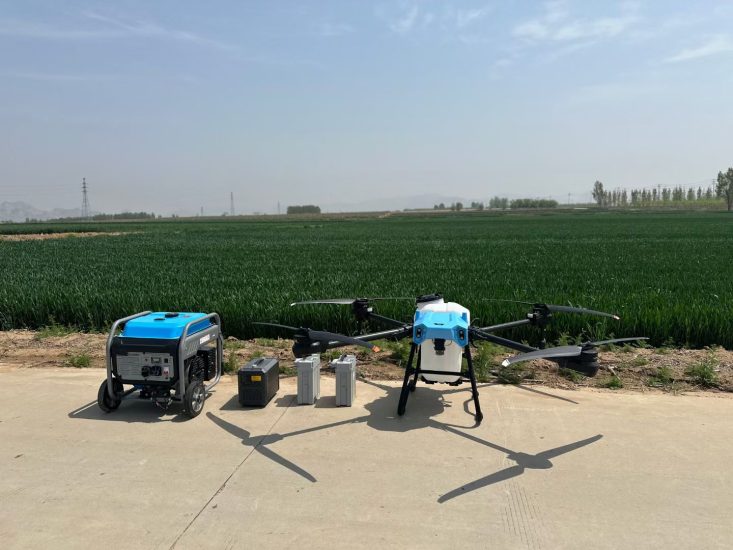


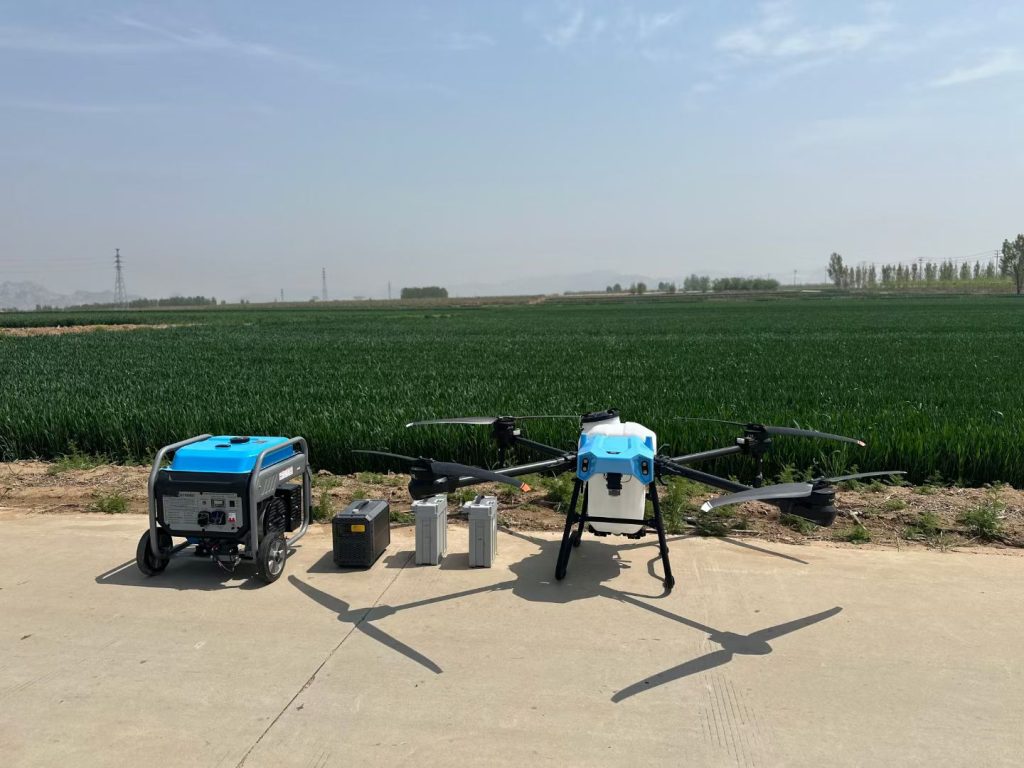
If you are planning to buy an agricultural drone, one of the most important questions is:
How much weight can an agricultural drone carry?
The answer depends on the drone configuration, tank or hopper capacity, battery system, motor and propeller configuration, aircraft weight, flight conditions, and the manufacturer’s recommended operating limits.
For international buyers, distributors, agricultural contractors, and farm operators, it is important to distinguish between maximum payload, tank capacity, and recommended working payload.
A drone with a larger advertised payload is not automatically the most productive or economical option.
This guide explains how to evaluate agricultural drone payload capacity before purchasing.
1. What Does Payload Mean on an Agricultural Drone?
Payload refers to the additional weight an aircraft can carry during operation.
For an agricultural spraying drone, the payload can include:
- Spraying liquid
- Fertilizer
- Other approved agricultural materials
- The contents of a spraying tank
- The contents of a spreading hopper
The drone itself also has its own weight, including:
- Frame
- Motors
- Propellers
- Flight-control system
- Battery
- Pump
- Tank or hopper
- Sensors
- Remote-control communication equipment
Therefore, buyers should not confuse drone weight with payload capacity.
The total operating weight is determined by the aircraft itself plus the working payload.
2. Tank Capacity Is Not the Same as Practical Payload
A common mistake is to assume that a 20L agricultural drone can always operate with exactly 20L of liquid under every condition.
In practice, operating performance depends on the complete configuration.
For example, a spraying drone may have a tank designed for a particular capacity, but the actual working conditions can be affected by:
- Battery weight
- Liquid density
- Flight speed
- Wind
- Temperature
- Field altitude
- Battery condition
- Flight route
- Takeoff and landing requirements
- Motor performance
This is why buyers should ask the manufacturer for both the maximum payload and the recommended operating payload.
For a broader comparison of tank capacities, see our guide to 10L vs 20L vs 30L agricultural drones.
3. 10L, 20L, and 30L Agricultural Drones
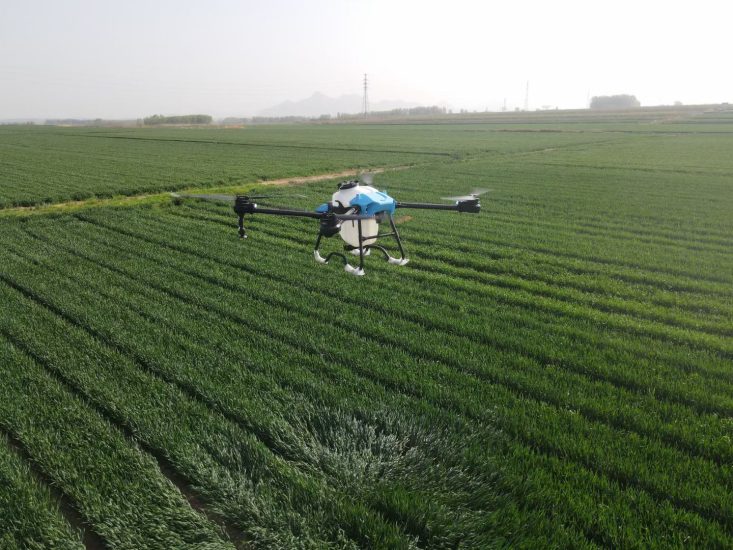
Agricultural spraying drones are commonly discussed according to tank capacity.
10L Agricultural Drone
A 10L-class agricultural drone is generally more compact and can be easier to transport and maneuver.
Potential advantages include:
- Lower initial investment
- Easier transportation
- Good maneuverability
- Lower liquid load
- Suitable for smaller agricultural operations
- Useful for testing agricultural drone technology
However, a smaller tank means the operator may need to refill more frequently.
20L Agricultural Drone
A 20L-class drone can provide a balance between payload capacity and operational efficiency.
It may be suitable for:
- Commercial farms
- Agricultural contractors
- Medium-sized operations
- Crop spraying services
- Distributors testing commercial models
The larger payload can reduce the number of refilling cycles compared with smaller drones, although the aircraft may also require more battery capacity and lifting power.
30L Agricultural Drone
A 30L-class agricultural drone is designed for higher-volume operations.
Potential advantages include:
- Higher liquid capacity
- Fewer refilling cycles
- Greater productivity potential
- Suitable for large-scale agricultural operations
However, a larger aircraft generally requires greater attention to:
- Battery capacity
- Charging infrastructure
- Transportation
- Takeoff and landing conditions
- Motor performance
- Maintenance
- Operating regulations
The largest drone is therefore not necessarily the best choice for every buyer.
4. Maximum Payload vs Recommended Working Payload
This is one of the most important questions to ask a manufacturer.
A supplier may advertise a maximum payload figure, but international buyers should also ask:
What is the recommended payload for normal agricultural operation?
There can be a difference between a theoretical maximum and a practical working configuration.
A useful supplier specification sheet should include:
| Specification | What Buyers Should Ask |
|---|---|
| Maximum payload | What is the maximum supported load? |
| Recommended payload | What payload is recommended for normal operation? |
| Empty weight | How much does the drone weigh without the working load? |
| Tank capacity | How much liquid can the tank hold? |
| Battery | What battery is required at full payload? |
| Flight time | What is the flight time under working conditions? |
| Motors | What motor configuration is used? |
| Spray system | What pump and nozzle system is included? |
| Operating conditions | Under what conditions were specifications tested? |
This information makes different manufacturers much easier to compare.
5. How Does Payload Affect Flight Time?
Payload has a direct relationship with energy consumption.
When an agricultural drone carries a heavier load, the motors generally need to generate more lift.
This can increase energy consumption.
As a result, a drone carrying a full working load may have a different flight time from the same drone flying with a lighter load.
When comparing manufacturers, do not ask only:
“How many minutes can the drone fly?”
Instead, ask:
“How long can the drone fly with the recommended working payload?”
This is much more useful for commercial buyers.
6. Battery Capacity Matters
The battery system is one of the most important parts of a heavy-payload agricultural drone.
Buyers should check:
- Battery capacity
- Battery voltage
- Battery weight
- Charging time
- Battery cycle life
- Charger specifications
- Replacement battery availability
- Number of batteries recommended per drone
A larger battery can provide more energy, but the battery itself also adds weight.
Therefore, agricultural drone manufacturers need to balance battery capacity, aircraft weight, motor performance, and payload.
If you are comparing suppliers, ask them to provide performance information using the same battery configuration.
7. Motor and Propeller Configuration
The motors and propellers determine how much lifting force the aircraft can generate.
For a heavy-payload agricultural drone, buyers should ask about:
- Motor specifications
- Propeller size
- Number of motors
- Motor efficiency
- Maximum thrust
- Operating temperature
- Replacement parts
However, maximum motor thrust alone does not tell you how the complete drone will perform.
The entire system needs to work together.
A professional manufacturer should be able to explain how its aircraft configuration supports the intended working payload.
8. Spraying Payload vs Spreading Payload
Not every agricultural drone carries the same type of payload.
A spraying drone normally carries liquid in a tank.
A spreading drone may carry granular fertilizer, seeds, or other materials in a hopper.
The density of the material can change the actual weight.
For example, two materials may occupy the same volume but have different weights.
Therefore, buyers interested in spreading applications should provide the manufacturer with:
- Material type
- Material density
- Required spreading rate
- Hopper capacity
- Target working area
This allows the manufacturer to recommend a suitable configuration.
9. How Much Weight Can a Drone Carry in Real Agricultural Operations?
There is no universal payload figure that applies to every agricultural drone.
The practical payload depends on:
- Aircraft design
- Motor configuration
- Propeller configuration
- Battery system
- Aircraft empty weight
- Tank or hopper design
- Flight environment
- Wind conditions
- Operating altitude
- Manufacturer’s recommended limits
This is why buyers should avoid comparing agricultural drones using only one number.
A better comparison is:
Payload + flight time + battery capacity + operating efficiency + reliability.
MSOEN’s manufacturer guide also recommends evaluating payload together with flight time, battery capacity, motor configuration, and operating conditions rather than looking at payload alone.
10. What Happens When You Fly With a Full Payload?
Operating with a full payload can change the aircraft’s performance.
Potential effects include:
- Higher energy consumption
- Shorter flight time
- Greater motor workload
- More frequent battery changes
- Increased importance of takeoff conditions
- Greater transportation requirements
- Different spray performance
The exact effect depends on the drone model.
Therefore, buyers should request test data from the manufacturer rather than assuming that the specifications of one model apply to another.
11. Questions to Ask an Agricultural Drone Manufacturer
Before purchasing, send the manufacturer a clear list of questions.
For example:
Payload
- What is the maximum payload?
- What is the recommended working payload?
- What is the empty weight?
- What is the maximum takeoff weight?
Battery
- What battery is used?
- How long can the drone fly at recommended payload?
- How long does charging take?
- How many batteries are recommended?
Spraying
- What is the tank capacity?
- What is the flow rate?
- What is the effective spray width?
- What pump system is included?
Spreading
- What materials can the hopper handle?
- What is the hopper capacity?
- What is the spreading width?
- What is the recommended application rate?
Commercial Supply
- What is the MOQ?
- What is the sample price?
- What is the production lead time?
- Are spare parts available?
- Is OEM or ODM available?
- What warranty is provided?
For more information about evaluating Chinese agricultural drone suppliers, see our guide on how to choose an agricultural drone manufacturer in China.
12. Payload and Total Purchase Cost
Payload capacity can also affect the purchase price.
Larger agricultural drones may require:
- Larger motors
- Larger propellers
- Higher-capacity batteries
- More powerful charging systems
- Larger frames
- Larger spraying systems
- More advanced control systems
These components can increase the total purchase cost.
However, a more expensive drone may still be economical if its higher productivity reduces operating costs.
When comparing prices, buyers should calculate the complete configuration rather than comparing the drone body alone.
You can also read How Much Does an Agricultural Drone Cost? for a broader explanation of agricultural drone pricing.
13. Payload and Operating Efficiency
Payload should ultimately be considered together with productivity.
For example, a larger tank can reduce refilling frequency, but a larger aircraft may also consume more battery energy.
A smaller drone may be easier to transport and operate but may require more refilling cycles.
The right choice depends on:
- Farm size
- Crop type
- Field layout
- Distance to refill location
- Labor availability
- Battery infrastructure
- Daily operating hours
- Local regulations
This is why choosing an agricultural drone is a business decision, not simply a specification comparison.
14. Should You Choose a 10L, 20L, or 30L Drone?
A simple approach is:
Choose a 10L-class drone if:
- You operate smaller fields
- You want easier transportation
- You are testing agricultural drone technology
- Initial investment is important
- Maneuverability is a priority
Consider a 20L-class drone if:
- You need a balance between capacity and maneuverability
- You operate commercially
- You want fewer refilling cycles
- You need a more productive general-purpose spraying drone
Consider a 30L-class drone if:
- You operate large agricultural areas
- High-volume spraying is important
- You have suitable battery and charging infrastructure
- Transportation and operating requirements can support a larger aircraft
Do not select the capacity only because it is larger.
Choose the configuration that matches your actual operating environment.
15. How to Compare Two Agricultural Drones
When comparing two models, create a specification table.
| Specification | Drone A | Drone B |
|---|---|---|
| Tank/Hopper Capacity | Ask supplier | Ask supplier |
| Maximum Payload | Ask supplier | Ask supplier |
| Recommended Payload | Ask supplier | Ask supplier |
| Empty Weight | Ask supplier | Ask supplier |
| Battery Capacity | Ask supplier | Ask supplier |
| Full-Load Flight Time | Ask supplier | Ask supplier |
| Spray Width | Ask supplier | Ask supplier |
| Flow Rate | Ask supplier | Ask supplier |
| Charging Time | Ask supplier | Ask supplier |
| Spare Parts | Check | Check |
| Warranty | Check | Check |
| OEM | Check | Check |
| MOQ | Check | Check |
| Factory Price | Request quotation | Request quotation |
This method is much more useful than comparing only the advertised payload.
16. Final Buyer Checklist
Before ordering an agricultural drone, confirm:
- [ ] Maximum payload
- [ ] Recommended working payload
- [ ] Maximum takeoff weight
- [ ] Empty aircraft weight
- [ ] Battery specifications
- [ ] Full-load flight time
- [ ] Motor and propeller configuration
- [ ] Tank or hopper capacity
- [ ] Spray or spreading performance
- [ ] Remote controller
- [ ] Navigation system
- [ ] Spare parts
- [ ] Charger
- [ ] Warranty
- [ ] Technical support
- [ ] MOQ
- [ ] Production lead time
- [ ] Shipping requirements
- [ ] Destination-country regulations
Frequently Asked Questions
How much weight can an agricultural drone carry?
There is no single payload limit for all agricultural drones. The capacity depends on the aircraft design, motors, propellers, battery, tank or hopper, and operating conditions.
Is a 20L agricultural drone able to carry 20kg?
Not necessarily.
The “20L” designation generally refers to the approximate tank capacity for liquid spraying. Buyers should ask the manufacturer for the actual recommended payload, maximum payload, and maximum takeoff weight.
Does a heavier payload reduce flight time?
Generally, a heavier working load can increase energy consumption and reduce flight endurance. Buyers should request flight-time data under a specified working payload rather than relying on unloaded flight-time figures.
Is a larger agricultural drone always better?
No.
A larger drone can carry more material, but it can also require more battery capacity, transportation resources, and operating infrastructure.
The best drone depends on the farm, crop, operating area, and business model.
What should I ask a manufacturer about payload?
Ask for the maximum payload, recommended working payload, maximum takeoff weight, empty weight, battery configuration, full-load flight time, and test conditions.
How should international buyers compare agricultural drone manufacturers?
Compare the complete product configuration, manufacturing capability, quality control, payload performance, battery system, spare parts, warranty, technical support, OEM options, lead time, and total purchasing cost.
Conclusion
The question “How much weight can an agricultural drone carry?” cannot be answered by looking at one number.
A professional buyer should evaluate the relationship between payload, aircraft weight, battery capacity, flight time, motor performance, spraying or spreading equipment, and actual operating conditions.
A 10L, 20L, or 30L agricultural drone can be suitable for different applications. The right choice depends on your farm size, crop, field conditions, operating requirements, and budget.
Before placing an order, ask the manufacturer for real performance data under a clearly defined working payload.
For international buyers, the goal should not be to find the drone with the largest advertised payload.
The goal is to find the agricultural drone that provides the best combination of payload capacity, productivity, reliability, operating cost, and long-term support.


No comments yet