

How to Choose an Agricultural Drone Manufacturer in China: A Buyer’s Guide
Choosing an agricultural drone manufacturer in China is an important decision for farmers, agricultural service companies, distributors, importers, and businesses planning to develop their own drone brands.
China has a large manufacturing industry covering agricultural drones, batteries, motors, flight-control systems, spraying equipment, and related components. However, not every supplier offers the same manufacturing capabilities, product quality, technical support, or customization options.
A suitable manufacturer should be evaluated from several angles rather than selected only because it offers the lowest quotation.
1. Start With Your Actual Application
Before contacting manufacturers, determine how you plan to use the agricultural drone.
Your requirements may be different depending on whether you need the drone for:
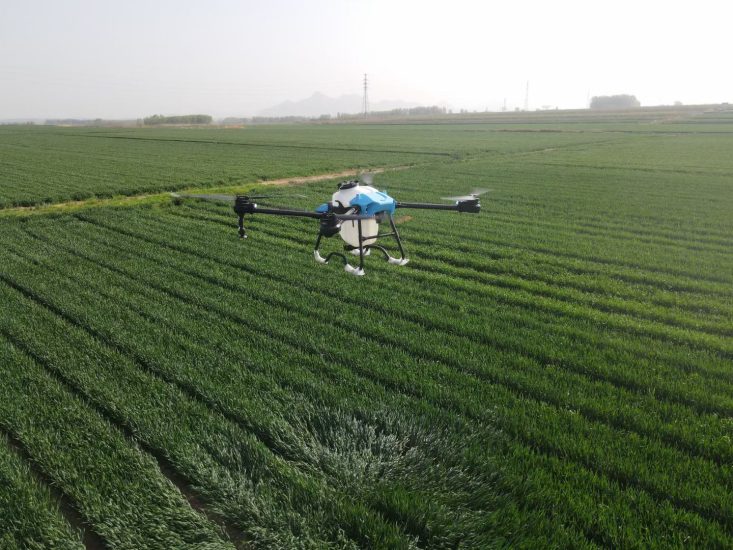
- Crop spraying
- Fertilizer spreading
- Seed spreading
- Orchard applications
- Rice farming
- Large-scale field operations
- Agricultural service contracting
- Equipment distribution
- Private-label sales
The manufacturer needs this information to recommend an appropriate configuration.
For example, a drone designed primarily for spraying may have a different pump, nozzle arrangement, tank configuration, and control system from a model intended for granular spreading.
2. Check Whether the Supplier Is a Manufacturer
One of the first questions international buyers should ask is whether they are communicating directly with a manufacturer or with a trading company.
A manufacturer may have its own:
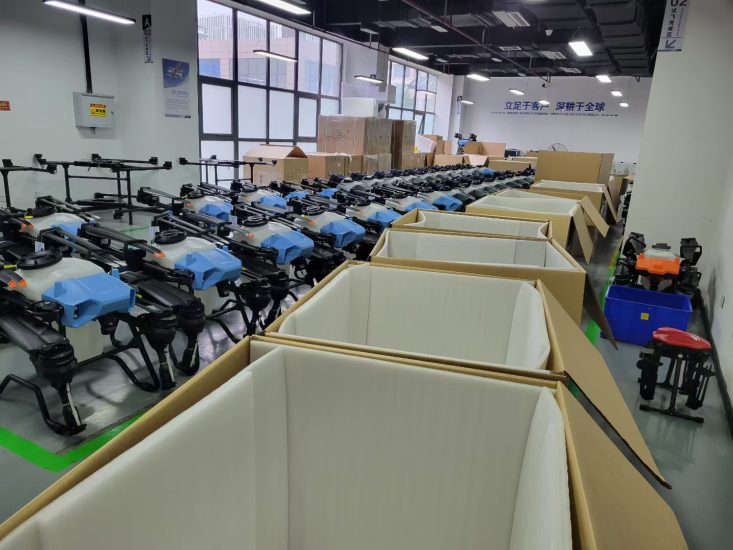
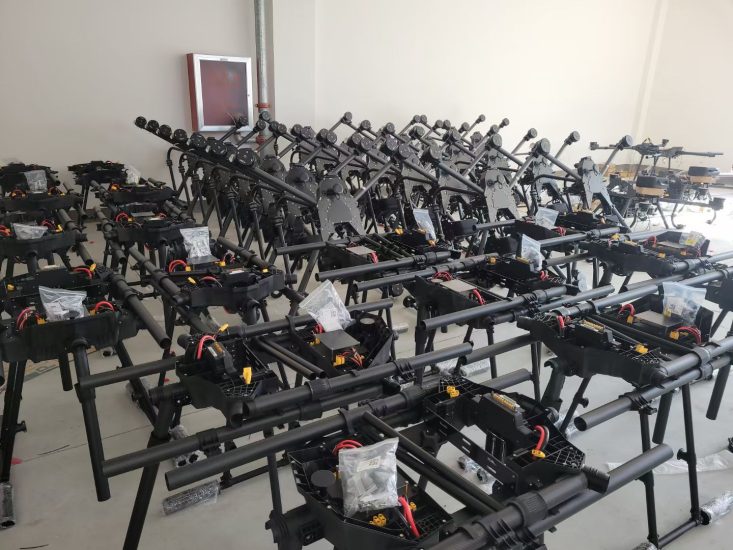
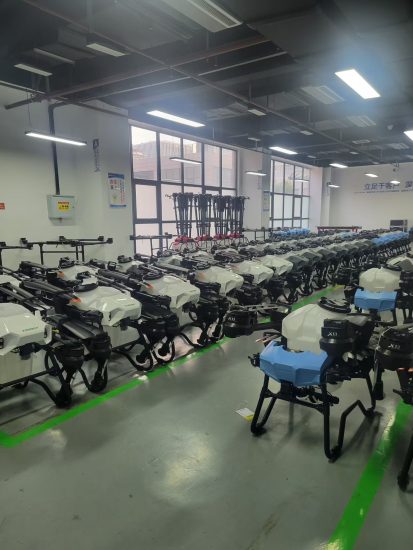
- Production facility
- Assembly lines
- Engineering team
- Quality-control process
- Product-development capability
- Spare-parts system
- Technical support
A trading company may also provide useful sourcing services, but buyers looking for long-term OEM, customization, or distribution cooperation may want to understand exactly who is responsible for manufacturing the equipment.
Ask the supplier for information about its factory, production process, product range, and engineering capabilities.
3. Examine the Product Range
A manufacturer with experience across several agricultural drone configurations may be able to provide more suitable options as your business develops.
Look at the available:
- Spraying drones
- Spreading drones
- Different tank capacities
- Battery systems
- Charging systems
- Accessories
- Spare parts
- Remote-control systems
Do not choose a supplier simply because it has one attractive drone model.
Instead, consider whether the manufacturer can continue supplying products and components when your requirements change.
4. Compare Technical Specifications
Technical specifications allow buyers to make a more meaningful comparison between agricultural drone manufacturers.
Important specifications include:
Payload Capacity
The payload determines how much liquid or granular material the drone can carry.
Tank Capacity
Different farming operations may require different tank sizes.
Spray Width
A wider spray pattern may improve operational efficiency under suitable conditions.
Flow Rate
The pump and nozzle system determine how much material can be applied over a specific period.
Flight Time
Actual flight time depends on payload, battery condition, weather, flight mode, and operating conditions.
Positioning System
Navigation and positioning technologies can affect flight accuracy and operational performance.
Obstacle Avoidance
Obstacle-detection systems can provide additional assistance when operating around trees, structures, power lines, and other objects.
Buyers should request complete specifications rather than relying on marketing descriptions alone.
5. Evaluate Manufacturing Quality
Agricultural drones operate in demanding environments.
A drone may be exposed to water, dust, agricultural chemicals, vibration, high temperatures, and repeated takeoffs and landings.
Ask how the manufacturer controls quality during production.
Useful questions include:
- Are components inspected before assembly?
- Are flight tests performed?
- Is the spraying system tested?
- Are batteries inspected?
- Are motors tested?
- Is every completed drone checked before shipment?
- How are defective components handled?
A clear quality-control process is particularly important for distributors who will have to support customers after the products arrive in their market.
6. Ask About OEM and ODM Manufacturing
If you are building an agricultural equipment brand, standard products may not be enough.
You may need:
- Your company logo
- Custom colors
- Private-label packaging
- Customized manuals
- Product labels
- Different accessories
- Custom product configurations
Before choosing a manufacturer, ask about its OEM and ODM capabilities.
You can review the MSOEN OEM and ODM manufacturing options to understand how customized agricultural drone cooperation can be structured.
For a new brand, it is also important to discuss MOQ, production lead time, packaging requirements, product documentation, and customization costs before placing an order.
7. Check Battery and Charging Support
The battery system is one of the most important parts of an agricultural drone.
A buyer should understand:
- Battery capacity
- Battery weight
- Charging time
- Battery cycle life
- Charger specifications
- Replacement battery availability
- Battery storage requirements
- Charging requirements
For commercial operations, battery management can directly affect daily productivity.
If you are purchasing multiple drones, ask the manufacturer to recommend the appropriate number of batteries and chargers for your planned operation.
8. Ask About Spare Parts
A good agricultural drone supplier should have a clear spare-parts strategy.
Potential replacement components include:
- Propellers
- Motors
- Pumps
- Spray nozzles
- Pipes
- Batteries
- Chargers
- Landing components
- Electronic modules
- Remote controllers
Before ordering, ask for a spare-parts catalogue and recommended maintenance inventory.
Distributors may want to purchase commonly required spare parts together with their initial drone order.
9. Understand the Warranty
Warranty conditions can differ significantly between suppliers.
Ask:
- How long is the warranty?
- Which components are covered?
- What situations are excluded?
- How are warranty claims handled?
- Who pays for replacement shipping?
- Is remote technical support available?
Do not assume that every component has the same warranty period.
A written warranty policy is much easier to understand than a general promise of after-sales service.
10. Evaluate Technical Support
Buying an agricultural drone is different from buying a simple consumer product.
Operators may need assistance with:
- Initial setup
- Flight preparation
- Calibration
- Spraying configuration
- Battery management
- Maintenance
- Software
- Replacement components
Ask whether the manufacturer can provide manuals, videos, remote assistance, training materials, or other technical support.
For international distributors, multilingual documentation may also be useful when training local customers.
11. Check Export Experience
International logistics can be more complicated when products contain batteries and electronic equipment.
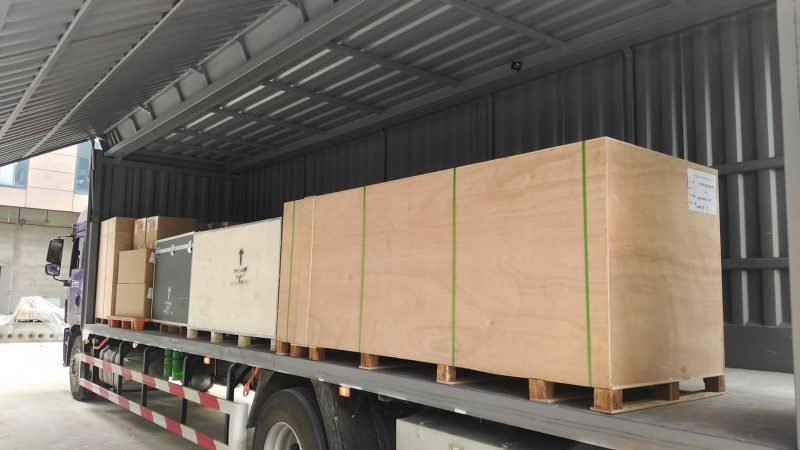
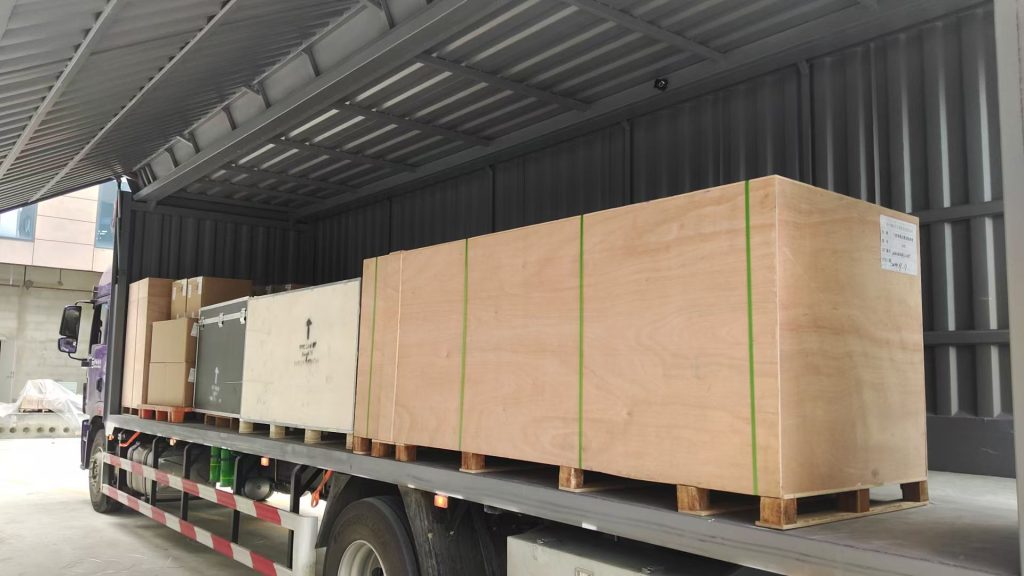
Ask the manufacturer about its experience with international orders and export packaging.
You should confirm:
- Product packing dimensions
- Gross weight
- Battery packing
- Shipping options
- Export documentation
- Commercial invoice
- Packing list
- Transportation arrangements
The exact requirements can vary depending on the destination and transportation method.
12. Consider Your Destination Market
A drone suitable for one market may not automatically be suitable for another.
Before ordering, research local requirements concerning:
- Drone registration
- Radio equipment
- Operator requirements
- Agricultural spraying
- Import procedures
- Product certification
- Chemical application
The manufacturer can provide technical information, but the importer remains responsible for understanding the regulations applicable in the destination market.
13. Request a Sample or Demonstration
If you have never worked with the manufacturer before, consider requesting a sample or product demonstration.
During evaluation, pay attention to:
- Flight stability
- Spraying consistency
- Battery performance
- Controller operation
- Software interface
- Build quality
- Ease of maintenance
- Availability of replacement parts
A sample evaluation can reveal practical details that are difficult to determine from a product catalogue.
14. Compare the Total Cost
Do not compare manufacturers based only on the drone’s unit price.
Your actual purchasing cost may include:
Drone + batteries + charger + spare parts + packaging + shipping + insurance + customs-related costs + local expenses
For distributors, there may also be costs associated with warehousing, training, marketing, customer support, and warranty service.
A slightly different product configuration can also significantly change the final price.
Therefore, ask each manufacturer to quote the same basic configuration whenever possible.
15. Look at Production Capacity
If your business grows, you may need larger quantities.
Ask the manufacturer:
- What is the normal production lead time?
- What is the MOQ?
- Can production volume be increased?
- Can the same configuration be supplied consistently?
- How are large orders scheduled?
- Can spare parts be supplied separately?
Production capacity is especially important for distributors and agricultural equipment companies preparing for seasonal demand.
16. Review Communication Before Ordering
Communication during the quotation stage can reveal how the supplier handles customer requirements.
Pay attention to whether the supplier:
- Answers technical questions clearly
- Provides complete specifications
- Understands your application
- Explains differences between models
- Provides realistic lead times
- Clearly explains customization
- Responds to after-sales questions
Good communication does not guarantee product quality, but it can make international procurement much easier.
17. Build a Manufacturer Evaluation Checklist
Before choosing a supplier, create a simple checklist.
You can compare manufacturers according to:
| Category | What to Check |
|---|---|
| Product | Capacity, payload, spraying system |
| Manufacturing | Factory and production capability |
| Quality | Testing and inspection |
| Battery | Capacity, charging, replacement |
| Spare Parts | Availability and pricing |
| OEM/ODM | Customization options |
| Warranty | Coverage and process |
| Technical Support | Manuals, training and assistance |
| Export | Packaging and documentation |
| MOQ | Minimum order quantity |
| Lead Time | Production schedule |
| Communication | Response quality |
| Total Cost | Product and logistics expenses |
This approach makes supplier comparison more structured.
18. Why Work With an Experienced Agricultural Drone Manufacturer?
A long-term agricultural drone supplier should be able to support more than the initial transaction.
As your business grows, you may need:
- Additional drone models
- Replacement parts
- New configurations
- OEM products
- Private labeling
- Technical support
- Larger production quantities
- Product updates
Choosing a supplier that can support these requirements may simplify future procurement.
19. Questions to Ask Before Placing an Order
Before confirming your purchase, ask the manufacturer:
- Which model matches my application?
- What is the actual payload?
- What is the tank capacity?
- What is the spraying width?
- What is the maximum flow rate?
- How many batteries are included?
- What is the charging time?
- What spare parts should I order?
- What is the warranty period?
- What technical support is available?
- Can you provide OEM or ODM services?
- What is the MOQ?
- What is the production lead time?
- How will the products be packaged?
- What shipping options are available?
- Can you provide complete product documentation?
Getting clear answers before ordering can reduce misunderstandings later.
20. Choosing an Agricultural Drone Manufacturer for Long-Term Cooperation
The right supplier depends on your particular requirements.
A farmer may prioritize operational performance and ease of maintenance. A distributor may focus on product consistency, spare parts, warranty support, and production capacity. A new agricultural technology brand may place greater importance on OEM customization and private labeling.
For this reason, there is no single specification that determines whether a manufacturer is suitable for every buyer.
The best approach is to define your business requirements first and then compare manufacturers against the same criteria.
Frequently Asked Questions
How do I find an agricultural drone manufacturer in China?
Start by identifying manufacturers that offer the type of agricultural drone you need. Then compare their product specifications, manufacturing capabilities, quality-control procedures, OEM options, spare-parts support, warranty, and export experience.
What should I check before buying from a Chinese drone manufacturer?
Check the product specifications, production capability, quality-control process, battery system, spare parts, warranty, technical support, customization options, packaging, lead time, and shipping arrangements.
Can agricultural drone manufacturers provide OEM products?
Some manufacturers provide OEM and ODM services. The available customization depends on the manufacturer, order quantity, product model, and technical requirements.
Should I visit the factory before ordering?
A factory visit can provide additional information about production and quality-control processes, but it is not always practical for international buyers. Buyers can also request factory information, product demonstrations, inspection reports, videos, and samples.
How can I compare two agricultural drone manufacturers?
Ask both suppliers for comparable configurations and evaluate product specifications, quality control, battery systems, spare parts, warranty, technical support, lead time, customization, and total purchasing cost.
What information should I send when contacting a manufacturer?
Provide the intended application, required drone capacity, estimated quantity, destination country, preferred configuration, and any OEM or customization requirements.
Final Thoughts
Choosing an agricultural drone manufacturer in China should be based on the complete supply relationship rather than the lowest initial quotation.
Product specifications, manufacturing capability, quality control, battery support, spare parts, OEM services, warranty, technical assistance, export experience, and production capacity all deserve careful consideration.
For international buyers, a clear purchasing requirement and a structured supplier evaluation process can make it easier to identify a manufacturer that matches the intended application and long-term business model.
If you are sourcing agricultural drones from China for farming, distribution, agricultural services, or a private-label business, you can contact MSOEN with your required drone capacity, quantity, destination, and application to discuss available solutions.


No comments yet