



![Image [4]-Underwater ROV vs Underwater Drone: What’s the Difference?-msoen](https://www.msoen.com/wp-content/uploads/2026/02/5096d44e7508.jpg)

A complete comparison between underwater ROVs and underwater drones, covering structure, control systems, industrial applications, and how to choose the right solution for commercial projects.
Introduction
As underwater robotics technology continues to advance, many buyers and project managers often ask the same question: What is the difference between an underwater ROV and an underwater drone?
Although these terms are sometimes used interchangeably, there are technical and operational distinctions—especially in commercial and industrial environments.
Understanding the differences helps engineering firms, offshore operators, and distributors make informed purchasing decisions. This guide explains the structure, performance, applications, and market positioning of both systems.
What Is an Underwater ROV?
An ROV (Remotely Operated Vehicle) is a tethered underwater robotic system controlled from the surface. These machines are typically used in industrial or commercial operations.
Key Characteristics of ROVs:
- Tethered cable connection to surface control unit
- High power supply via cable
- Deep-water capability (100m–1000m+)
- Heavy-duty structure
- Support for robotic arms and advanced sensors
- Designed for long-duration missions
ROVs are commonly used in offshore oil & gas, dam inspections, marine construction, and infrastructure maintenance.
What Is an Underwater Drone?
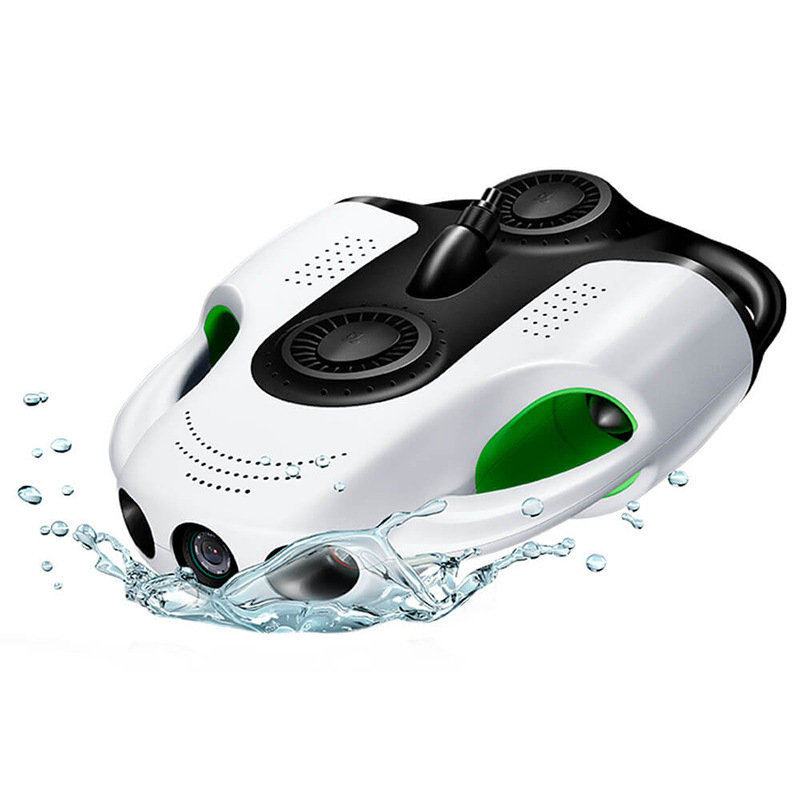
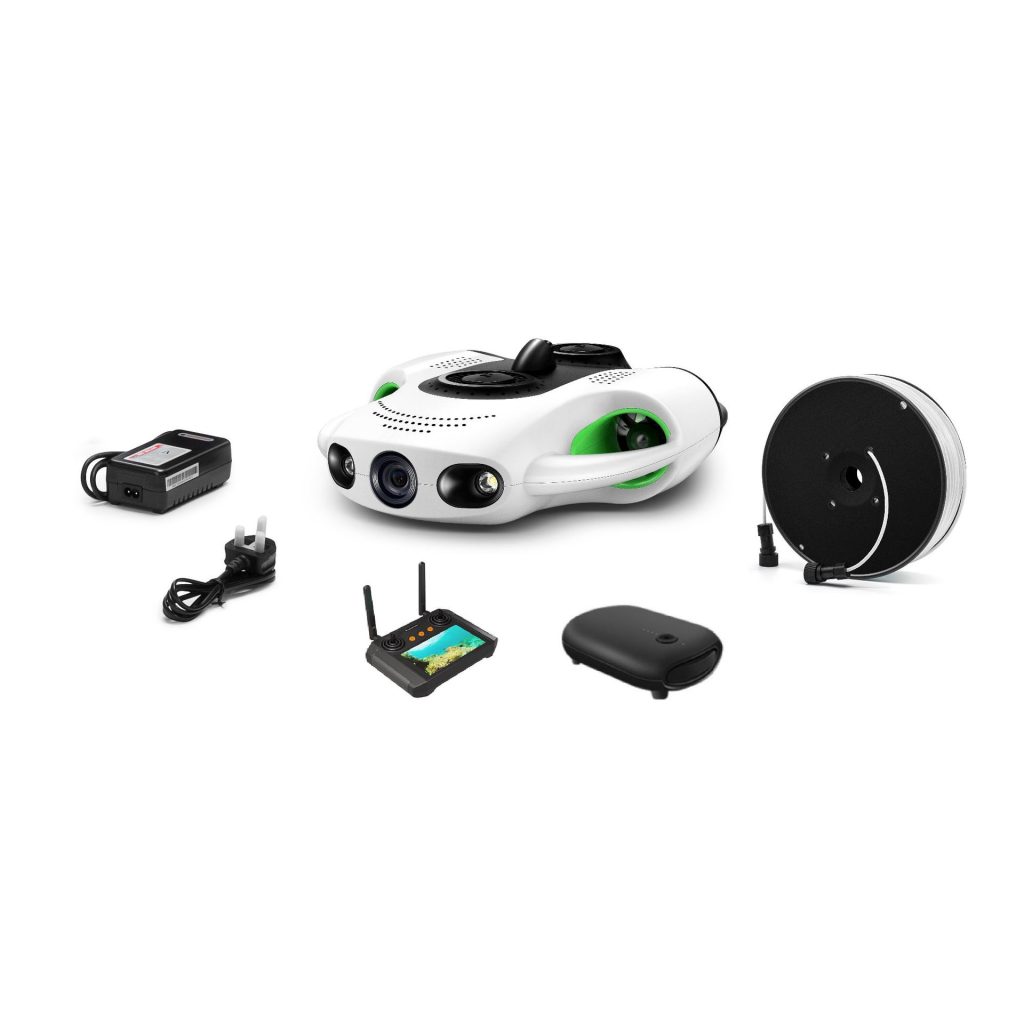
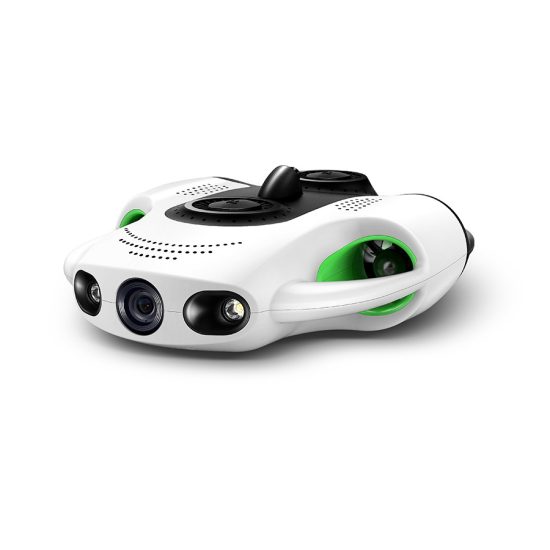
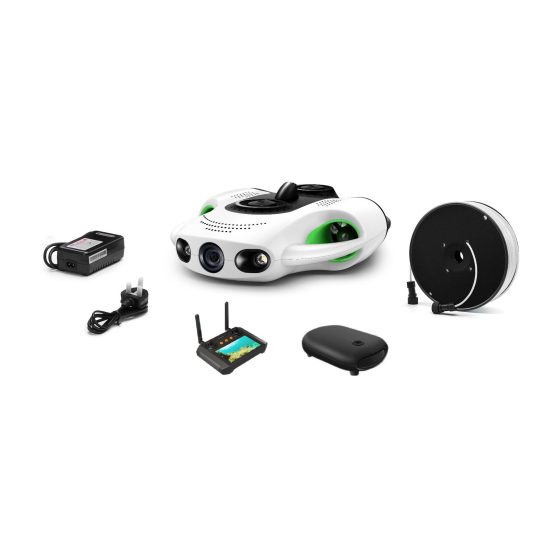
An underwater drone is generally a more compact, portable underwater robotic device designed for photography, light inspection, and recreational or semi-professional use.
Key Characteristics of Underwater Drones:
- Smaller size and lighter weight
- User-friendly control systems
- Integrated battery power
- Typically 50m–200m depth rating
- Focus on imaging and observation
While some commercial-grade underwater drones overlap with ROV functionality, the term “drone” is often associated with portability and ease of use.
Core Differences Between Underwater ROV and Underwater Drone
1. Tether and Power System
ROVs rely on a tether cable not only for control but also for power transmission. This enables:
- Continuous operation
- Stronger thrusters
- Heavy payload capacity
Underwater drones typically use internal batteries. This makes them portable but limits operation time.
Conclusion: ROVs are better for long industrial missions.
2. Depth Capability
Industrial ROVs can operate at significant depths, sometimes exceeding 300–500 meters depending on model design.
Most compact underwater drones operate within 100–200 meters.
Conclusion: For deep-sea engineering, ROV is the preferred solution.
3. Payload and Expandability
ROVs often support:
- Robotic manipulators
- Sonar systems
- Thickness gauges
- Laser measurement tools
- Water sampling modules
Underwater drones typically focus on camera systems and basic sensor integration.
Conclusion: ROVs offer stronger modular expansion capability.
4. Application Scope
ROVs dominate heavy industries such as:
- Offshore energy inspection
- Subsea pipeline monitoring
- Port security
- Dam and bridge inspection
Underwater drones are commonly used for:
- Aquaculture monitoring
- Recreational exploration
- Light commercial inspection
- Marine research
5. Price Range
ROVs are generally more expensive due to:
- Industrial components
- High-pressure housing
- Advanced propulsion systems
- Professional control stations
Underwater drones usually have lower entry costs, making them accessible for smaller operations.
Industrial Applications Comparison
Offshore & Subsea Engineering
ROVs are the standard solution for offshore inspection because they provide stability, depth performance, and heavy tooling support.
Underwater drones may assist in shallow-water surveys but are rarely used for heavy industrial intervention.
Dam & Infrastructure Inspection
For municipal and infrastructure projects:
- ROVs are ideal for detailed structural analysis
- Drones are suitable for visual inspection and quick surveys
Marine Research & Aquaculture
Both technologies are valuable:
- ROVs for deep-sea scientific missions
- Drones for routine fish farm monitoring
Which One Should You Choose?
The decision depends on project requirements.
Choose an Underwater ROV If:
- You require deep-water operation
- You need robotic arm intervention
- You need sonar integration
- You operate in strong currents
- You require long working hours
Choose an Underwater Drone If:
- Portability is important
- You focus on imaging tasks
- Budget is limited
- You operate in shallow water
- You need quick deployment
Market Trends in 2026
The line between ROVs and underwater drones is becoming less distinct. Many professional manufacturers are developing hybrid systems that combine:
- Industrial durability
- Compact design
- AI-assisted navigation
- Smart stabilization algorithms
Future systems may integrate autonomous capabilities while maintaining tether reliability for industrial safety standards.
Manufacturing Perspective
Professional underwater robotics manufacturers focus on:
- Pressure-resistant structural design
- High-efficiency brushless thrusters
- Waterproof sealing systems
- Stable real-time transmission
- Modular payload architecture
Choosing a manufacturer with strong R&D capability ensures long-term product upgrades and stable supply.
Final Thoughts
While “underwater ROV” and “underwater drone” are often used interchangeably in marketing language, they represent different operational levels.
- ROVs = industrial, heavy-duty, deep-water, expandable
- Underwater drones = portable, imaging-focused, user-friendly
Understanding these differences allows buyers to select equipment that matches their project scope, budget, and technical requirements.
As underwater industries continue expanding, both technologies will play critical roles in offshore engineering, environmental monitoring, and marine innovation.
FAQ
1. Is an underwater drone the same as an ROV?
Technically, all underwater drones are ROVs, but not all ROVs are considered “drones.” The term “drone” usually refers to compact or consumer-oriented models.
2. Which is better for offshore oil inspection?
An industrial ROV is better due to deeper operating capability and payload support.
3. Can underwater drones carry robotic arms?
Some advanced models can, but industrial ROVs are more commonly equipped with manipulators.
4. Are underwater ROVs fully autonomous?
Most ROVs are remotely operated, but some advanced systems integrate semi-autonomous navigation features.
5. What is the average working time?
Battery-powered drones typically operate 2–4 hours. Tethered ROVs can operate continuously depending on surface power supply.


No comments yet