


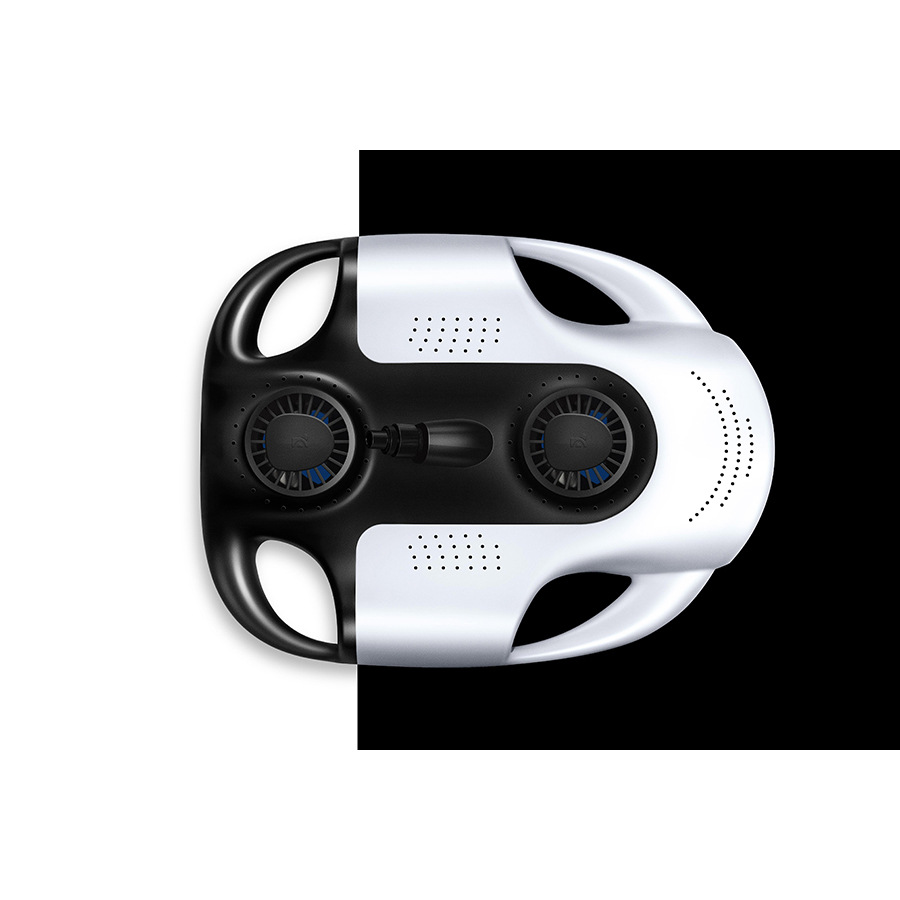

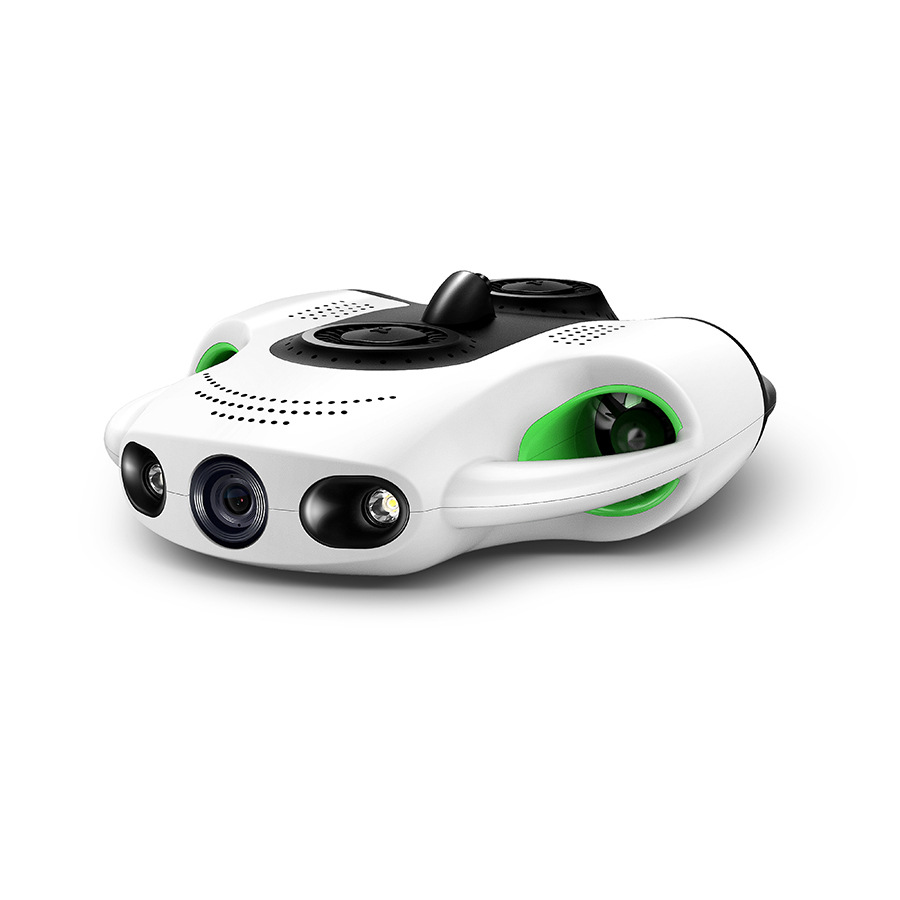

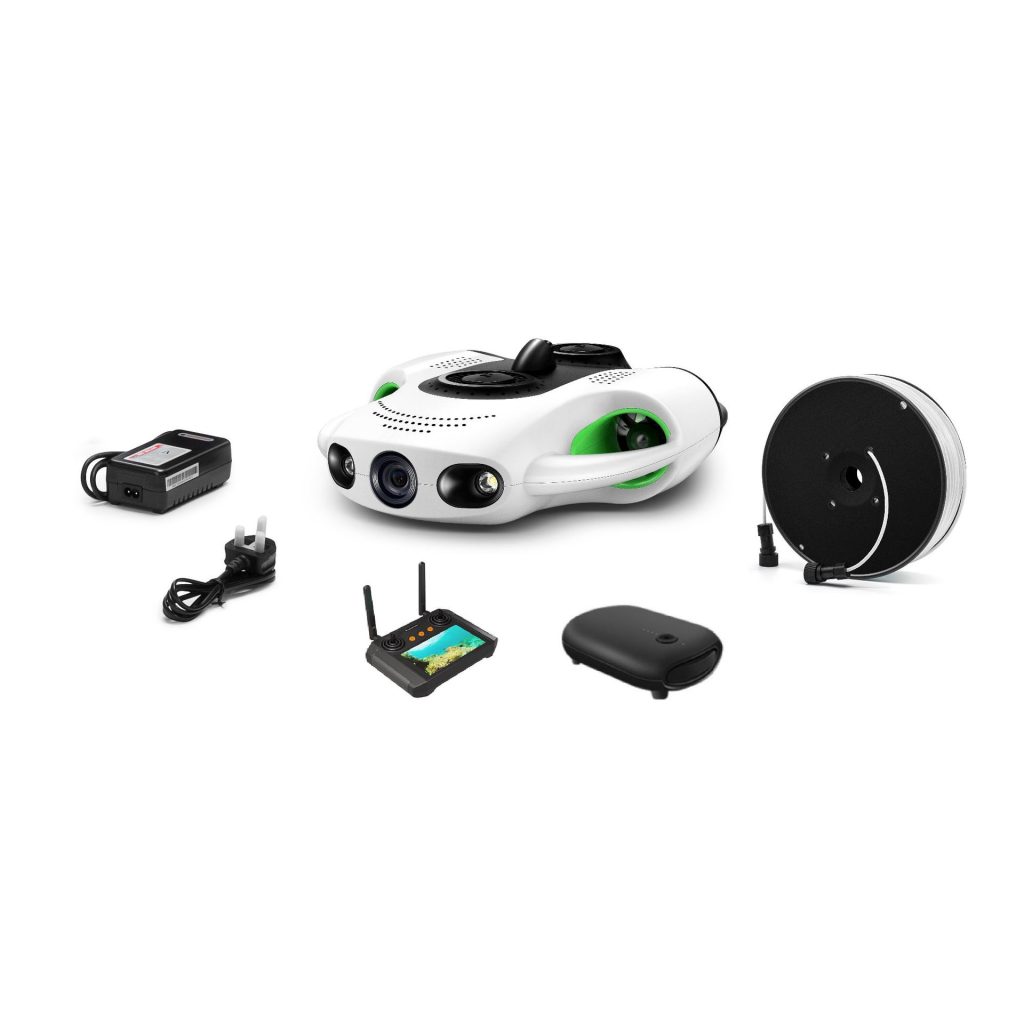
Underwater drones—also known as Remotely Operated Vehicles (ROVs) or Unmanned Underwater Vehicles (UUVs)—have become indispensable tools for inspection, research, filmmaking, aquaculture, and commercial applications. As technology evolves, so do prices, which can range from a few hundred dollars for basic units to tens of thousands for professional systems. Understanding the cost differences is essential for buyers to make informed decisions that match their budget and mission requirements.
This article breaks down underwater drone price ranges comprehensively, from entry-level recreational models to rugged professional systems, exploring what you get at each price tier, why prices differ, and how to choose the right one for your needs.
1. Why Underwater Drone Prices Vary: Components That Influence Cost
Before we examine specific price bands, it’s important to understand the factors that fundamentally impact cost:
1.1. Depth Rating
How deep a drone can dive is one of the biggest cost drivers:
- Shallow consumer units: ~10–30 meters
- Mid-range: ~30–150 meters
- Professional units: 300–1000+ meters
Pressure resistance requires stronger hulls, high-precision seals, and more expensive materials.
1.2. Imaging System
Cameras and sensors dramatically affect price:
- Basic HD cameras (1080p) = Low cost
- 4K UHD + low-light performance = Mid cost
- High-end sonar, LiDAR, multi-camera arrays = Professional
1.3. Control & Communication
- Wi-Fi tethered units: cheaper
- Fiber optic tethers: more expensive
- Wireless acoustic systems: premium
Complex communication increases cost.
1.4. Payload & Expandability
Some drones support:
- Manipulator arms
- Sonar modules
- Water sampling tools
- Environmental sensors
Modular capabilities raise the price.
1.5. Software & Autonomy
Drones with advanced autopilot, waypoint navigation, and mapping software cost more than basic manual control.
1.6. Build Quality & Reliability
Industrial ROVs use marine-grade materials and redundant systems, which raise manufacturing costs but reduce failure risk.
2. Entry-Level Underwater Drones (Approx. $300 – $2,000)
2.1. Typical Price Range: $300 – $2,000
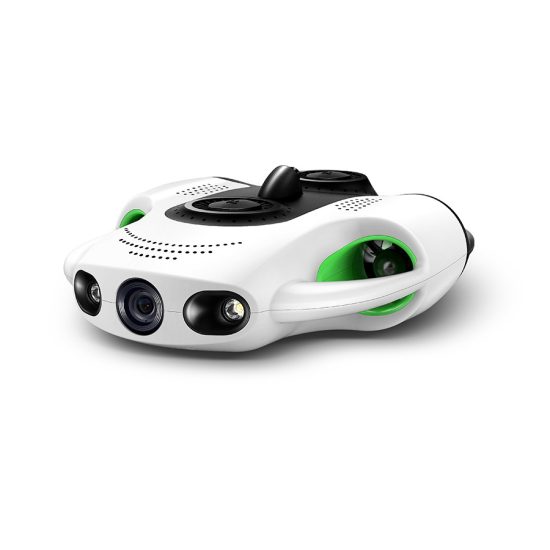
This entry category serves hobbyists, casual beach/pool explorers, and leisure users.
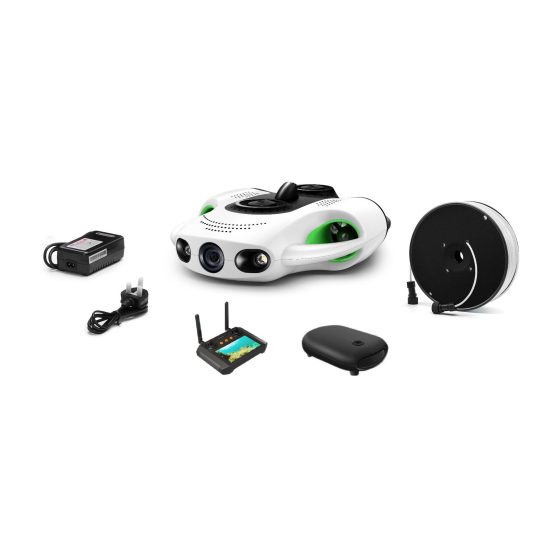
2.2. What You Get
- Cameras: 1080p or lower quality
- Depth: ~10–30 meters
- Thrusters: Small, low-power
- Control: Wi-Fi or basic remote
- Build: Lightweight plastics
2.3. Use Cases
- Pool photography
- Shallow snorkeling videos
- Recreational underwater exploration
- Beginner learning
2.4. Limitations
- Limited depth and stability
- Basic imaging quality
- Short battery life
- Weak motor power
2.5. Representative Models
- Easy-to-use tethered Wi-Fi drones
- Portable models designed for beach/pool
Entry units are great for first-time users, but they are not reliable for serious inspection or professional filmmaking.
3. Mid-Range Underwater Drones (Approx. $2,000 – $10,000)
3.1. Typical Price Range: $2,000 – $10,000
Mid-range drones appeal to enthusiast videographers, fisheries, inspection teams, and small rescue operations.
3.2. What You Get
- 4K cameras capable of lower-light capture
- Depth rating: ~30–150 meters
- Higher-performance thrusters
- Longer battery life
- Possibly built-in sensors (depth/temperature)
3.3. Use Cases
- Underwater photography & videography
- Recreational diving support
- Small boat hull inspection
- Fishery surveys
- Environmental monitoring
3.4. Feature Examples
- Improved stabilization and gimbals
- Modular tether lengths
- Basic waypoint navigation
- Sonar add-ons (optional)
3.5. Limitations
- May not withstand strong currents
- Limited professional sensor integration
- Software and interface can be less advanced than enterprise systems
Mid-range models are the sweet spot for many buyers due to their balance between performance and affordability.
4. High-End/Professional Underwater Drones (Approx. $10,000 – $60,000+)
4.1. Typical Price Range: $10,000 – $60,000+
Professional units are built for industry, research institutions, surveying companies, and government contracts.
4.2. What You Get
- Superior imaging: 4K/8K HDR and low-light performance
- Depth ratings: 300–1000+ meters
- Integrated navigation systems
- Robust thrusters and vector control
- Industrial-grade sensors (multibeam sonar, depth & imaging sonar)
4.3. Use Cases
- Offshore infrastructure inspection
- Oil & gas pipeline surveys
- Subsea construction monitoring
- Marine research and archaeology
- Port security
4.4. Feature Examples
- Integrated sonars (side-scan, forward-look)
- Manipulator arms
- Redundant safety systems
- Real-time data logging and telemetry
4.5. Professional Support
- Advanced technical documentation
- Training and installation assistance
- Long-term support packages
High-end drones emphasize durability, data accuracy, and mission flexibility, which justify their cost for professional applications.
5. Custom & Enterprise Underwater Drones (Over $60,000)
5.1. Typical Price Range: $60,000 – $200,000+
Custom or enterprise solutions are engineered per project.
5.2. What You Get
- Tailored builds for unique industrial missions
- Redundant integrated systems
- Advanced autonomy (AI navigation, SLAM mapping)
- Integration with ROV manipulators and sensors
5.3. Use Cases
- Offshore wind turbine inspection
- Deep-sea research
- Military and defense ROV deployment
- Complex subsea robotics
5.4. What Drives These Prices
- Custom engineering design
- Advanced sensors and software suites
- High-reliability marine hardware
- Certification compliance
Enterprise systems are often project-specific and may involve long consultation and engineering cycles.
6. Example Price Breakdown (Realistic Budget Guide)
| Price Tier | Typical Range | Applications | Pros | Cons |
|---|---|---|---|---|
| Entry | $300 – $2,000 | Hobby, basic capture | Affordable, portable | Limited depth, basic features |
| Mid-Range | $2,000 – $10,000 | Semi-pro crewing | Better imaging, deeper dive | Limited advanced sensors |
| Professional | $10,000 – $60,000 | Industrial missions | Depth, robustness, sonar | Higher cost, learning curve |
| Enterprise | $60,000+ | Custom/EOD/R&D | Mission-specific power | Highest cost, long lead time |
7. What You Get for Higher Investment
7.1. Imaging Quality
Higher tiers bring:
- Larger sensors
- Better low-light capture
- HDR video
- Raw recording support
7.2. Depth & Pressure Resistance
Greater depth rating means:
- Better hull bearings
- Advanced sealing systems
- Higher pressure tolerance
7.3. Sensor Integration
Professional systems can integrate:
- Sonar (side-scan & forward-look)
- Multispectral sensors
- Water quality probes
- Manipulator arms
7.4. Control & Software
Advanced drones support:
- Waypoint mission planning
- Autonomous navigation
- AI obstacle avoidance
- Live mapping
8. Additional Costs Beyond the Base Price
When budgeting, remember:
8.1. Accessories
- Extended tethers
- Extra batteries
- Sonar modules
- Manipulator systems
8.2. Training & Support
Professional training improves safety and operational success.
8.3. Transport & Storage
Cases, rigs, and maintenance storage add to lifecycle costs.
8.4. Maintenance & Warranty
Routine servicing and replacement parts contribute to total cost of ownership.
9. How to Choose Based on Your Needs
9.1. Hobby & Recreational Use
Budget: $300 – $2,000
Choose units with easy controls and basic camera quality.
9.2. Semi-Professional or Small Business
Budget: $2,000 – $10,000
Focus on deeper dive capability and better imaging.
9.3. Industrial & Professional Inspection
Budget: $10,000 – $60,000
Prioritize robust build, sonar integration, and mission reliability.
9.4. Enterprise & Custom Projects
Budget: $60,000+
Select specialized engineering and sensor packages.
10. Pricing Trends and Market Direction
10.1. Cost Decreasing for Entry Models
Consumer tech improvements and supply chain scaling make entry models cheaper and more capable each year.
10.2. Advanced Sensors Are Still Premium
Sonar, multibeam systems, and manipulation remain high-cost.
10.3. Software & Autonomy Driving Value
AI and advanced navigation add software costs that influence overall pricing.
11. Buyer Tips for Saving Money Without Sacrificing Quality
11.1. Balance Needs Vs. Features
Too many unused features waste budget.
11.2. Prioritize Safety & Reliability
Cheap units with poor sealing fail early.
11.3. Ask for Real Test Reports
Verify depth ratings and performance with real test data.
11.4. Consider Warranty & Service
A slightly more expensive unit with better support may save money long-term.
12. Final Thoughts
Underwater drone prices vary widely because of the complex engineering required to operate reliably underwater. Knowing what to expect—from beginner models to enterprise rigs—allows you to choose the best tool for your mission and budget.
FAQ – Underwater Drone Price Range
Q1: How much does an entry-level underwater drone cost?
Entry models typically range from $300 to $2,000, ideal for recreational use and basic video capture.
Q2: What is the price range for professional inspection ROVs?
Professional industrial units generally fall between $10,000 and $60,000 depending on depth rating, sensors, and robustness.
Q3: Are there underwater drones over $60,000?
Yes. Enterprise and custom systems—often with advanced sonar and manipulation—can exceed $60,000, with some specialized builds exceeding $200,000.
Q4: Why do prices vary so much?
Key factors include depth rating, imaging quality, sensor integration, software capabilities, material quality, and mission complexity.
Q5: Can I start small and upgrade later?
Yes—many manufacturers offer modular platforms where sensors, tethers, and software modules can be added as needed.


No comments yet