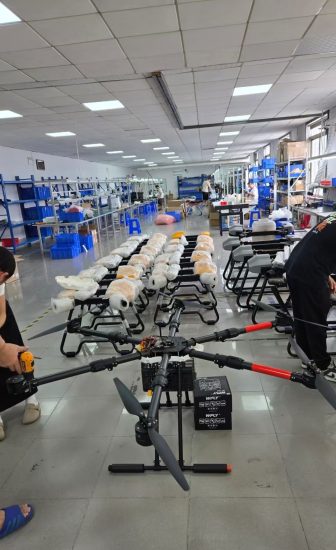


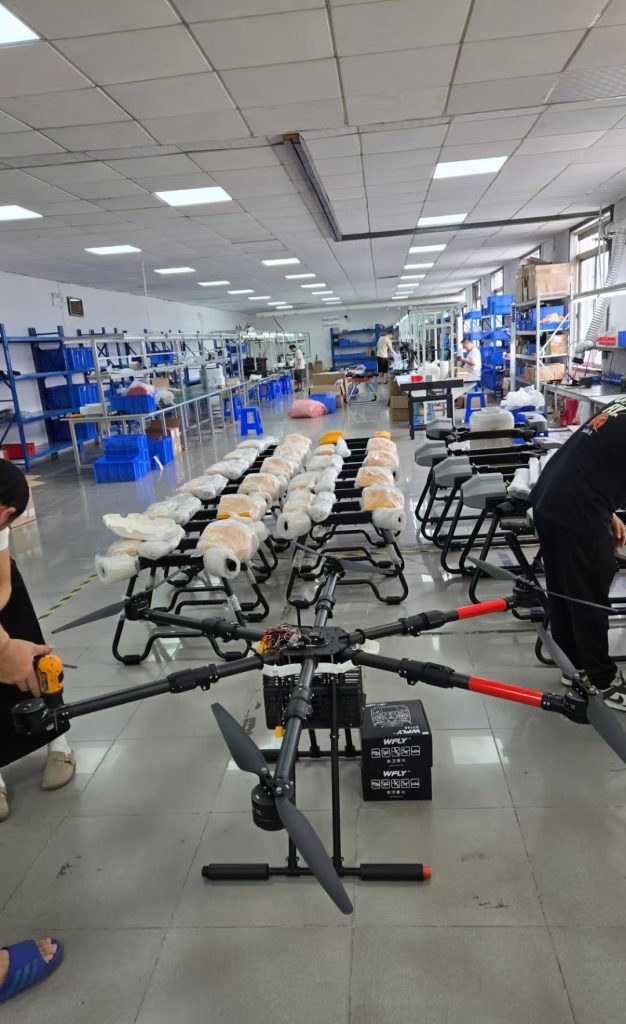
As modern agriculture becomes increasingly dependent on efficient crop protection, agricultural spraying drones are attracting growing attention from farmers, agricultural service companies, equipment distributors, and importers. For businesses looking to source equipment from China, selecting a professional agricultural spraying drone supplier in China is an important decision.
A suitable supplier should offer more than a competitive unit price. Buyers need to evaluate the aircraft platform, spraying system, batteries, flight-control technology, production capabilities, OEM services, spare parts, technical support, and ability to deliver consistent quality for wholesale orders.
This guide explains what international buyers should consider when sourcing agricultural spraying drones from China and how an OEM cooperation program can be structured.
What Is an Agricultural Spraying Drone?
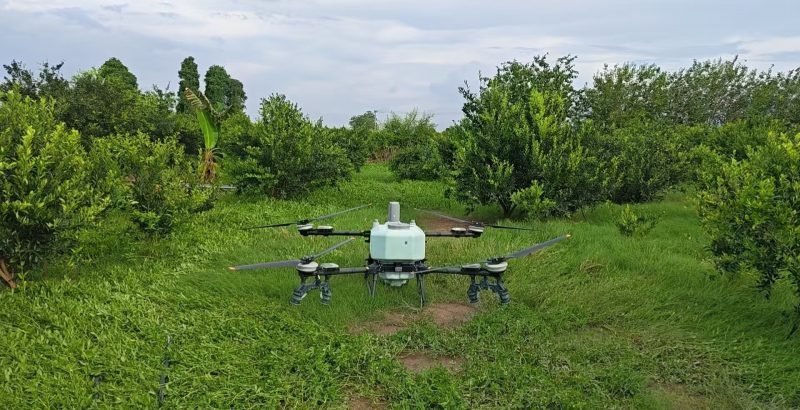
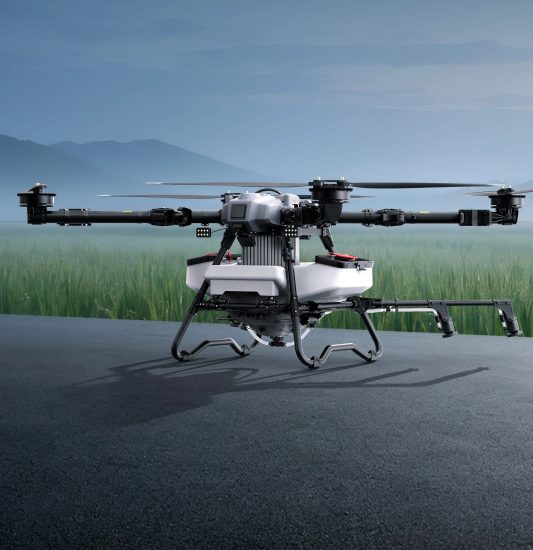
An agricultural spraying drone is an unmanned aerial vehicle equipped with a liquid application system designed for agricultural operations.
A typical system includes:
- Drone frame
- Flight controller
- Motors
- Propellers
- Battery
- Intelligent charger
- Liquid tank
- Pump
- Pipes
- Filters
- Nozzles
- Remote controller
- Positioning system
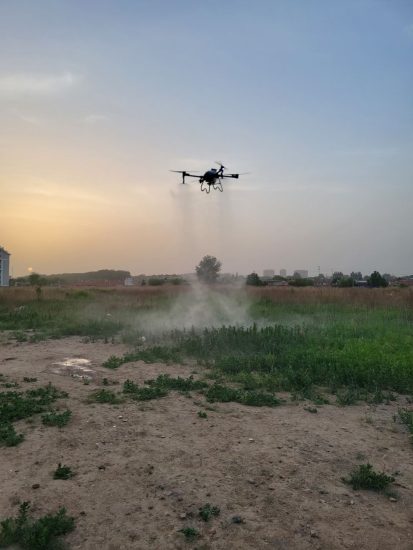
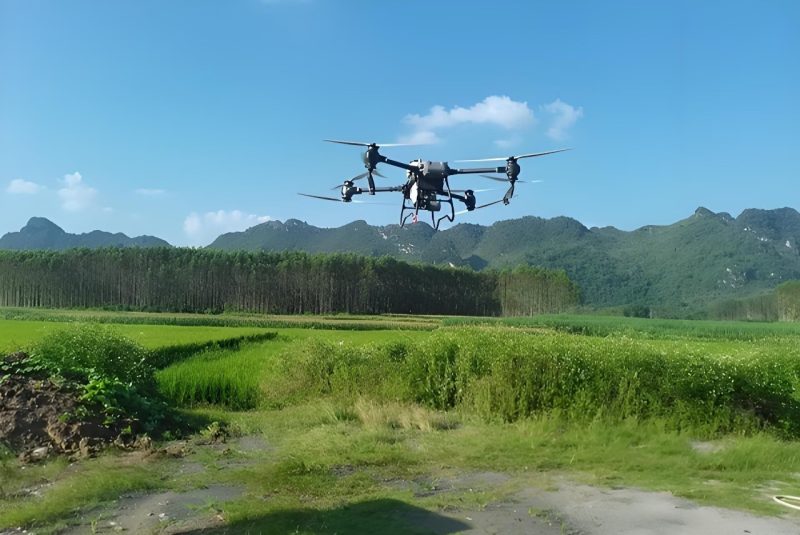
During operation, the drone carries a liquid payload over a crop area and applies the liquid through its spraying system.
The actual application performance depends on the aircraft configuration, liquid characteristics, nozzle system, flight speed, altitude, weather conditions, crop structure, and operator settings.
Why Work With a Professional Supplier?
Agricultural spraying drones are specialized equipment. A supplier that understands only the basic aircraft specifications may not be able to provide sufficient support for a commercial agricultural operation.
A professional supplier should understand the relationship between:
Payload → Battery → Flight Time → Pump → Nozzle → Flow Rate → Spray Coverage
Changing one component can affect the overall system.
For example, increasing payload capacity may require a stronger propulsion system and larger battery. Increasing pump flow may affect battery consumption. Changing nozzle configuration can change application performance.
This is why buyers should evaluate the complete system rather than one specification.
What Makes a Reliable Agricultural Drone Supplier?
Manufacturing Capability
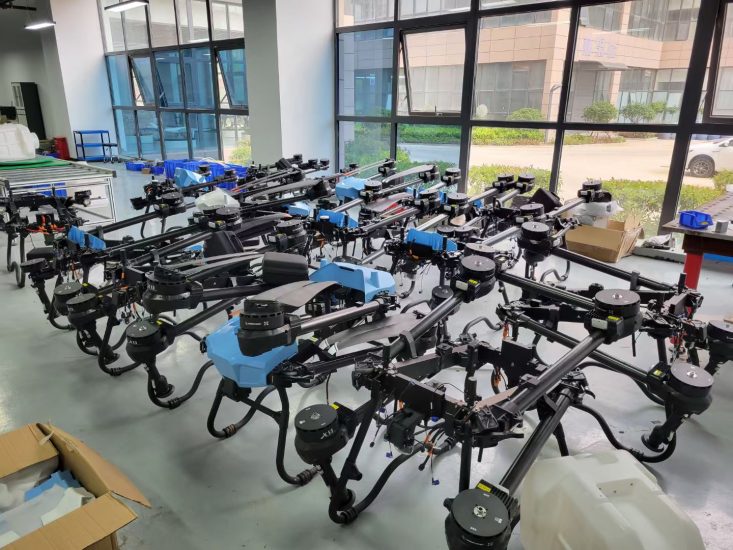
A reliable supplier should have a clear production and assembly process.
International buyers can ask about:
- Factory facilities
- Assembly processes
- Quality control
- Product testing
- Production capacity
- Lead time
- Component sourcing
This is particularly important for distributors planning recurring orders.
Stable Product Specifications
A sample that performs well is only the beginning.
For wholesale buyers, production consistency is critical.
If a distributor purchases 50 or 100 drones, the units should maintain consistent specifications and performance.
The supplier should therefore have appropriate quality-control procedures throughout production.
Technical Support
Agricultural drones contain multiple electronic and mechanical systems.
When a problem occurs, the distributor may need assistance diagnosing:
- Motor problems
- Battery issues
- Pump failures
- Communication problems
- GPS positioning issues
- Spraying-system problems
- Flight-control errors
A supplier capable of providing clear technical documentation and remote support can make international distribution easier.
OEM Agricultural Spraying Drone Solutions
OEM is particularly useful for distributors that want to develop their own agricultural equipment brand.
Instead of selling a standard product under the manufacturer’s brand, the buyer can discuss customized branding and packaging.
Depending on the manufacturer’s capabilities, OEM options may include:
Logo Customization
Your company logo can potentially be applied to:
- Drone body
- Remote controller
- Battery
- Packaging
- Product labels
Packaging Customization
International distributors may require:
- Custom cartons
- Product labels
- User manuals
- Installation instructions
- Brand information
- Accessory packaging
Product Configuration
Some manufacturers may also support selected technical customization.
Possible areas can include:
- Tank configuration
- Nozzle configuration
- Battery options
- Charger configuration
- Software language
- Accessories
Not every manufacturer can customize every component, so buyers should confirm technical feasibility before placing an OEM order.
OEM vs. Standard Agricultural Drone
Which option is better depends on the buyer’s business model.
| Option | Best For | Main Advantage |
|---|---|---|
| Standard Product | Small distributors | Faster purchasing |
| Standard Wholesale | Established dealers | Better volume pricing |
| OEM Product | Brand owners | Build your own brand |
| Customized OEM | Large distributors | Market-specific product |
For a company entering the agricultural drone market for the first time, testing a standard model before investing in a large OEM project can reduce initial risk.
Choosing the Right Drone Capacity
Agricultural spraying drones are available in different tank capacities.
The appropriate capacity depends on:
- Crop type
- Field size
- Terrain
- Operating conditions
- Transportation requirements
- Battery system
- Local regulations
- Business model
20L Agricultural Spraying Drone
A 20L platform can be suitable for many commercial agricultural operations.
It may offer a practical balance between payload and aircraft size.
However, buyers should check the complete specification rather than simply looking at the “20L” label.
30L Agricultural Spraying Drone
A 30L platform can provide higher liquid capacity for operators who need to reduce refill frequency.
However, a larger payload requires sufficient propulsion power and battery capacity.
The manufacturer should provide clear information about the recommended operating payload and maximum takeoff weight.
How to Evaluate Spraying Performance
Tank capacity alone does not determine spraying efficiency.
Important parameters include:
Flow Rate
Flow rate determines how much liquid reaches the nozzles over a given period.
Nozzle Configuration
The number, type, and arrangement of nozzles affect the spray pattern.
Operating Speed
The aircraft’s flight speed affects the amount of liquid applied to a particular area.
Flight Altitude
Altitude influences spray distribution and coverage.
Droplet Characteristics
Droplet size can influence application behavior, drift, and coverage.
Operators must select appropriate application parameters according to the agricultural product label, crop conditions, weather, and local regulations.
Battery and Charging Solutions
A commercial spraying drone requires a battery system capable of handling repeated high-load operations.
A supplier should provide clear information about:
- Battery voltage
- Capacity
- Weight
- Charging time
- Expected cycle life
- Charging temperature
- Battery protection
- Charger specifications
For professional operators, having multiple batteries can help maintain operational continuity.
Buyers should also consider battery replacement costs when calculating the total cost of ownership.
Spare Parts and Maintenance
Agricultural drones operate in outdoor environments where dust, moisture, vibration, and repeated operation can place stress on components.
A professional supplier should be able to provide commonly required replacement parts.
These may include:
- Propellers
- Motors
- Pumps
- Nozzles
- Filters
- Pipes
- Landing gear
- Chargers
- Batteries
- Electronic components
Before placing a wholesale order, distributors should request a spare-parts list and recommended stock quantities.
Why Spare Parts Matter for Distributors
Imagine a distributor has sold 30 agricultural drones to farming customers.
If a critical component fails and the replacement is unavailable, the customer’s operation may be interrupted.
This can damage the distributor’s reputation even if the original product price was competitive.
Therefore, a strong distributor relationship should include:
Drone + Spare Parts + Technical Support + Training + Warranty
rather than focusing only on the initial purchase.
Agricultural Drone Quality Control
Quality control should cover the complete manufacturing process.
A professional factory may inspect:
Propulsion System
Motors and propellers should be checked for proper operation and balance.
Battery
Battery systems should be inspected and tested according to the manufacturer’s procedures.
Pump
The pump should be tested for stable operation and appropriate flow.
Spraying System
The manufacturer should check pipes, connections, valves, filters, and nozzles.
Flight System
The finished aircraft should undergo appropriate functional and flight testing.
For larger wholesale orders, buyers can also discuss pre-shipment inspections and sample approval procedures.
Agricultural Drone Supplier for International Distributors
International distributors have different requirements from individual farmers.
A distributor may need:
- Wholesale pricing
- OEM branding
- Product documentation
- Spare parts
- Training
- Marketing materials
- Technical support
- Warranty procedures
- Stable production
- Regular replenishment
A professional supplier should understand these requirements and establish a clear process for handling repeat orders.
How to Start an OEM Cooperation
A practical OEM project can follow several stages.
Stage 1: Market Research
Determine:
- Target country
- Target customer
- Main crops
- Preferred capacity
- Competitive products
- Local regulations
Stage 2: Product Selection
Select the appropriate agricultural spraying drone model based on the target market.
Stage 3: Sample Testing
Order samples and evaluate:
- Flight performance
- Battery endurance
- Spraying system
- Remote controller
- Ease of maintenance
- Build quality
Stage 4: OEM Confirmation
Discuss:
- Logo
- Packaging
- Manuals
- Labels
- Accessories
- MOQ
Stage 5: Bulk Production
After confirming the sample and specifications, establish the production schedule.
Stage 6: After-Sales Support
Set up procedures for:
- Spare parts
- Warranty
- Technical support
- Troubleshooting
- Customer training
This process can help reduce misunderstandings between the manufacturer and overseas distributor.
What Should You Include in an RFQ?
When contacting a professional agricultural spraying drone supplier, send a detailed RFQ rather than asking only for the price.
For example:
Product: Agricultural Spraying Drone
Capacity: 20L / 30L
Quantity: 20 units
Destination: [Country]
Application: Crop spraying
Brand: OEM
Logo: Required
Packaging: Customized
Battery: 2–3 batteries per drone
Charger: Required
Spare Parts: Required
Shipping: To be quoted
Then ask the supplier to provide:
- Unit price
- MOQ
- Production lead time
- OEM cost
- Packaging cost
- Spare-parts price
- Warranty
- Payment terms
- Shipping options
This creates a much clearer basis for comparison.
Questions to Ask Before Ordering
Is the supplier a manufacturer?
Ask whether the company owns or operates its own production facilities and what manufacturing processes are performed in-house.
Can the supplier support OEM?
Confirm MOQ, logo requirements, packaging, customization costs, and production lead time.
Can spare parts be supplied?
Ask for a complete spare-parts catalog.
Is technical support available?
International distributors should understand how technical problems are handled after delivery.
What is the warranty?
Clarify what is covered, what is excluded, and how replacement components are handled.
Can the product be legally operated in my country?
The manufacturer can provide technical documentation, but the buyer should independently verify local aviation, radio, agricultural, chemical, and import requirements.
Common Mistakes When Buying Agricultural Spraying Drones
Mistake 1: Choosing Only by Price
The cheapest drone may not have the lowest total cost of ownership.
Battery replacement, spare parts, downtime, maintenance, and technical support can significantly affect long-term costs.
Mistake 2: Comparing Only Tank Capacity
A 30L tank does not automatically mean better productivity.
Evaluate the complete aircraft and spraying system.
Mistake 3: Ignoring Spare Parts
A low-cost drone can become expensive if replacement parts are difficult to obtain.
Mistake 4: Buying a Large Quantity Before Testing
For new suppliers, ordering samples first is generally a more prudent approach.
Mistake 5: Ignoring Local Regulations
A drone that can be manufactured and exported does not automatically mean it can be legally operated for agricultural spraying in every country.
FAQ
What does OEM mean for agricultural spraying drones?
OEM means that a manufacturer produces equipment according to an agreed specification and can potentially apply the buyer’s branding, packaging, or other customized requirements.
What is the best capacity for a commercial spraying drone?
There is no universal best capacity. The appropriate capacity depends on crop type, field size, operating conditions, aircraft design, and local regulations.
Can I order agricultural spraying drones wholesale from China?
Yes. Chinese manufacturers commonly work with international distributors and importers, but MOQ, payment terms, production schedules, and export arrangements vary by supplier.
Can I put my own logo on the drone?
Many manufacturers offer logo customization, but requirements and minimum quantities vary. Confirm the available OEM options before ordering.
How many spare parts should I order?
The recommended quantity depends on fleet size and expected operating conditions. Ask the supplier to provide a recommended spare-parts package for your initial fleet.
What information should I provide when requesting a quotation?
Provide the desired model, capacity, quantity, destination country, OEM requirements, battery quantity, charger requirements, spare parts, packaging requirements, and shipping preference.
Conclusion
A professional agricultural spraying drone supplier in China should provide more than a product catalog and a factory price.
For international buyers, the ideal supplier should be able to support the complete process:
Product Selection → Sample Testing → OEM Customization → Bulk Production → Quality Control → Shipping → Spare Parts → Technical Support
Whether you are building an agricultural equipment distribution business, developing a private-label brand, or purchasing drones for professional agricultural services, selecting a supplier based on manufacturing capability, product reliability, OEM flexibility, and long-term support can help create a stronger and more sustainable supply chain.


No comments yet