

![Image [1]-Inside China’s Underwater Drone Factories: Engineering the Depths with Precision and Innovatio-msoen](https://www.msoen.com/wp-content/uploads/2026/02/5096d44e7508.jpg)


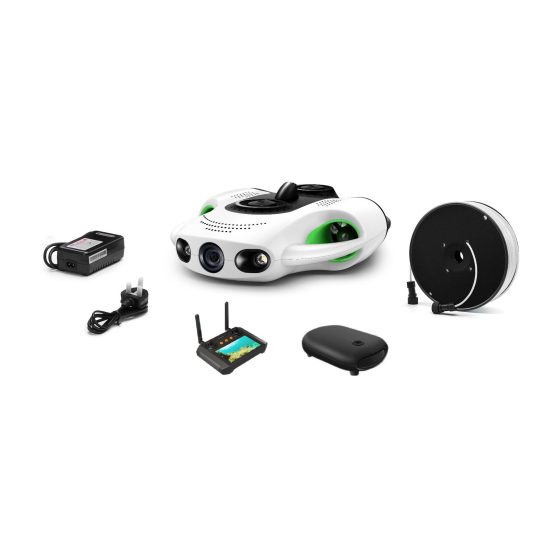
Beneath the waves, a quiet revolution is unfolding. China’s underwater drone (UUV/ROV) manufacturing sector has evolved from niche prototyping to global leadership, driven by strategic investments in marine technology, defense modernization, and sustainable resource exploration. Unlike surface drones, subsea systems face unique challenges: extreme pressure, limited communication, and corrosive saltwater environments. Chinese factories have risen to meet these demands by integrating advanced materials science, AI-driven autonomy, and lean production methodologies. This article provides an insider’s look at the engineering, production, and application of these undersea workhorses, grounded in technical rigor and industry-specific insights.
Section 1: Decoding the Technology – Key Specifications of Modern Underwater Drones
The performance of an underwater drone hinges on its ability to balance power, endurance, and sensor capability. Below are the critical technical parameters defining China’s state-of-the-art models, with a focus on industrial and research-grade systems.
1.1 Propulsion: Mastering Maneuverability in 3D Space
Underwater drones rely on vector-thrust systems to navigate complex currents. Chinese manufacturers have pioneered:
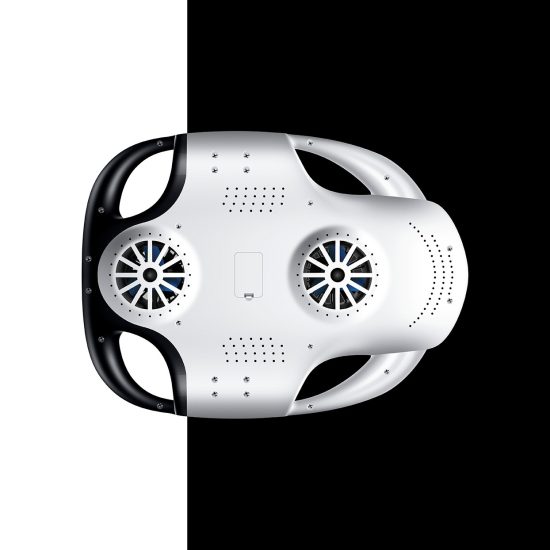
- Multi-Axis Thruster Arrays: 6–8 brushless DC thrusters (e.g., 4 horizontal + 2 vertical + 2 lateral) with 0.1° steering precision, enabling 360° roll/pitch/yaw control. Power density reaches 40W/kg, with peak thrust of 25N per unit.
- Adaptive Control Algorithms: PID (Proportional-Integral-Derivative) loops combined with machine learning adjust thrust in real time to counteract currents up to 2 knots.
- Energy-Efficient Power Management: Silicon carbide (SiC)-based motor controllers reduce energy loss by 30% compared to traditional IGBT systems, extending battery life.
Example: A typical 8-thruster model achieves 0.2m/s cruising speed and 0.05m/s hover stability, critical for tasks like pipeline inspection.
1.2 Sensing: Eyes and Ears of the Deep
Sensors are the “brain” of underwater drones, enabling data collection in near-zero visibility. Key components include:
- Imaging Systems: 4K/8K low-light cameras with 1/1.7-inch Sony STARVIS sensors, paired with 2500-lumen LED arrays (adjustable color temperature: 2700K–6500K) for murky water. Wide-angle (170°) and narrow-focus (12°) lenses cover macro to landscape views.
- Acoustic Sensors: Multibeam echo sounders (MBES) with 400kHz–1MHz frequency ranges, mapping seabed topography at 0.5cm resolution. Side-scan sonars (SSS) detect objects as small as 10cm at 200m range.
- Environmental Probes: Integrated CTD (Conductivity-Temperature-Depth) sensors (accuracy: ±0.01 S/m conductivity, ±0.01°C temperature), turbidity meters, and dissolved oxygen (DO) sensors (range: 0–20mg/L).
Innovation Spotlight: Some models use synthetic aperture sonar (SAS), which stitches multiple pings into high-resolution images, rivaling optical quality in deep water.
1.3 Structure: Surviving the Abyss
Hull design balances strength, weight, and hydrodynamics:
- Materials: Grade 5 titanium alloy (yield strength: 830MPa) for pressure-resistant sections, with carbon fiber-reinforced polymer (CFRP) fairings (density: 1.6g/cm³) to reduce drag.
- Pressure Rating: Standard models handle 300m (30MPa), with deep-sea variants reaching 6,000m (60MPa) using hemispherical acrylic viewports (thickness: 50mm).
- Modular Payload Bay: Interchangeable modules (e.g., robotic arms with 5-DOF, sediment samplers, water quality kits) attach via MIL-SPEC 38999 connectors, allowing 10-minute swaps.
Section 2: From Blueprint to Deployment – A Factory Tour
To understand how these drones are built, we explore a typical production facility (anonymized for proprietary reasons), focusing on the integration of human expertise and automation.
2.1 Design Phase: Digital Twins and Hydrodynamic Optimization
Engineers start with 3D modeling using CATIA V6, creating digital twins to simulate performance. Key steps:
- Computational Fluid Dynamics (CFD): Ansys Fluent simulates flow around the hull, minimizing drag by optimizing curvature (target: drag coefficient <0.08).
- Structural Analysis: Finite element analysis (FEA) with Abaqus tests stress points (e.g., thruster mounts, viewport edges) under 1.5x rated pressure.
- Prototyping: Selective laser sintering (SLS) 3D printers create test hulls from nylon-carbon composite, validated in wave tanks (simulating 3m waves) and pressure chambers.
2.2 Production Line: Precision Meets Scalability
The assembly line combines automated precision with manual craftsmanship:
- Frame Fabrication: Laser-welded titanium frames (tolerance: ±0.02mm) are inspected via coordinate measuring machines (CMM) to ensure alignment.
- Electronics Integration: Surface-mount technology (SMT) lines place 0201-sized components on PCBs, with automated optical inspection (AOI) checking solder joints. Custom firmware programs microcontrollers (STM32H7 series) for real-time data fusion.
- Waterproofing: Critical seals (silicone O-rings, epoxy potting) undergo helium leak testing (sensitivity: 1×10⁻⁹ mbar·L/s) before final assembly.
2.3 Testing: Pushing Limits in Controlled Environments
No drone leaves the factory without rigorous validation:
- Depth Trials: Tested in hyperbaric chambers (up to 10,000m equivalent pressure) to verify seal integrity.
- Endurance Runs: Continuous operation for 72 hours in freshwater tanks, monitoring battery voltage, motor temperature, and sensor drift.
- Field Simulations: Outdoor pools with current generators (0.5–2 knots) test navigation algorithms, while dark rooms evaluate camera low-light performance.
Section 3: Real-World Impact – Applications Redefining Industries
Underwater drones are no longer lab curiosities; they solve critical problems across sectors.
3.1 Oceanography: Unlocking Climate Data
Research institutions use drones to study thermohaline circulation, tracking temperature/salinity changes in polar regions. A 2023 mission in the South China Sea deployed a drone with a fiber-optic distributed temperature sensing (DTS) system, mapping a 50km² area in 8 hours—equivalent to 20 human dives.
3.2 Offshore Energy: Safer, Cheaper Inspections
For wind farms and oil rigs, drones replace divers in hazardous tasks:
- Turbine Foundation Checks: 4K cameras and MBES map scour damage (erosion around bases) with 1cm accuracy, reducing inspection costs by 60%.
- Pipeline Leak Detection: Acoustic sensors listen for gas bubbles (frequency: 1–5kHz), identifying leaks as small as 0.1L/min.
3.3 National Security: Silent Guardians of Coasts
Defense applications leverage stealth and autonomy:
- Mine Countermeasures (MCM): Drones with forward-looking sonar (FLS) scan harbors for mines, marking locations for neutralization.
- Subsea Infrastructure Monitoring: Long-endurance models (30+ days) patrol submarine cables, detecting anchor strikes or sabotage attempts.
FAQ: Your Questions Answered
Q1: How do underwater drones communicate?
A: They use acoustic modems (underwater) and satellite links (surface) for hybrid communication. Acoustic signals travel at ~1,500m/s, with data rates of 1–10kbps; surface buoys relay high-speed data (4G/5G) to operators.
Q2: What’s the difference between ROVs and AUVs?
A: ROVs (Remotely Operated Vehicles) are tethered to a ship, ideal for real-time control. AUVs (Autonomous Underwater Vehicles) are untethered, pre-programmed for long missions (e.g., 1,000km surveys). Most modern drones are hybrids (ARVs) with both modes.
Q3: How are batteries protected from seawater?
A: Batteries are sealed in pressure-compensated housings filled with dielectric oil, which equalizes internal/external pressure. Overcharge protection circuits prevent thermal runaway.
Q4: Can drones repair themselves?
A: Some models have self-healing coatings (microcapsules of sealant) that release when scratched. For major issues, modular design allows field replacement of thrusters or cameras.
Technical Specifications Comparison: Industrial vs. Research Models
| Parameter | Industrial Model (IM-500) | Research Model (RM-2000) |
|---|---|---|
| Max Operating Depth | 1,000m (10MPa) | 6,000m (60MPa) |
| Thruster Array | 6x 500W brushless | 8x 1,200W brushless |
| Battery Type | Li-ion (120Ah, 14.4V) | Li-SOCl₂ (200Ah, 3.6V) |
| Endurance | 12 hours (cruise) | 24 hours (cruise) |
| Sensor Suite | 4K camera, MBES, CTD | 8K camera, SAS, DTS, DO sensor |
| Payload Capacity | 15kg | 25kg |
| Communication Range | 5km (acoustic) | 10km (acoustic) |
| Price (Ex-Factory) | $180,000 | $450,000 |
Contrast: Traditional Diving vs. Underwater Drones
| Factor | Human Divers | Underwater Drones |
|---|---|---|
| Depth Limit | 40m (recreational), 100m (tech) | Up to 11,000m (full ocean depth) |
| Mission Duration | 1–2 hours (air supply) | 6–30+ hours (battery) |
| Risk | Decompression sickness, equipment failure | Minimal (no human exposure) |
| Data Collection | Manual notes, basic photos | High-res video, 3D maps, real-time sensors |
| Cost per Hour | $500–$2,000 (including support) | $50–$200 (amortized) |
Future Trends: Where China’s Underwater Drones Are Headed
- AI Autonomy: Next-gen models will use reinforcement learning to adapt to new environments (e.g., avoiding uncharted reefs).
- Hybrid Power: Solar-charged batteries and kinetic energy recovery (from currents) aim to extend endurance to weeks.
- Biomimicry: Robots inspired by fish (e.g., tuna-like bodies) could reduce noise and energy use by 40%.
Conclusion: Engineering the Unseen
China’s underwater drone factories represent more than manufacturing—they embody a national commitment to mastering the oceans. By merging cutting-edge R&D with scalable production, these facilities are equipping scientists, engineers, and defenders with tools to explore, protect, and utilize the blue economy. As technology advances, one thing is clear: the future of the seas will be written by the silent, tireless robots rising from these workshops.


No comments yet