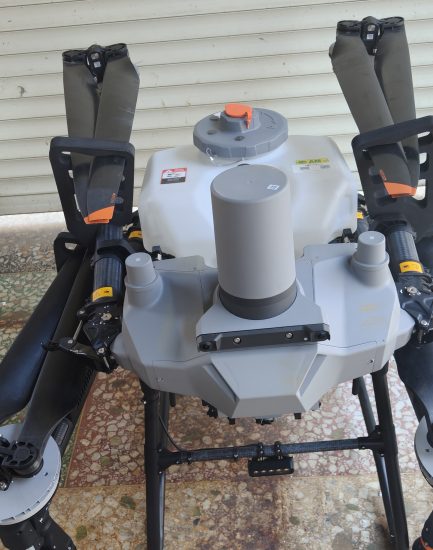



Choosing a reliable agricultural drone manufacturer in China requires more than checking a product catalog or comparing prices.
For overseas buyers, the real challenge is determining whether a supplier has genuine manufacturing capabilities, stable product quality, reliable batteries and spraying systems, sufficient spare parts, proper quality control, and dependable after-sales support.
A professional verification process can significantly reduce sourcing risks before placing a large order.
This guide explains how international buyers can evaluate the quality and reliability of a Chinese agricultural drone manufacturer step by step.
1. Verify the Company’s Basic Information
Start with the supplier’s basic company information.
Ask for:
-
Legal company name
-
Registered business information
-
Factory address
-
Main business activities
-
Contact information
-
Product catalog
-
Company website
-
Export markets
-
Years of operation
The information provided by the supplier should be reasonably consistent across its quotation, website, product documents, and commercial contracts.
If important company information changes between documents, ask the supplier for clarification before proceeding.
2. Determine Whether It Is Actually a Manufacturer
A company selling agricultural drones is not necessarily the manufacturer.
There are several types of suppliers in the market:
-
Drone manufacturers
-
OEM factories
-
Component manufacturers
-
Trading companies
-
Export companies
-
Distributors
A trading company is not automatically unreliable, but buyers should understand who is actually responsible for manufacturing the product.
Ask:
Are you the original manufacturer of this agricultural drone?
Then ask:
Which components are manufactured in-house and which are sourced from third-party suppliers?
The answers can help you understand the supplier’s actual capabilities.
3. Request Factory Evidence
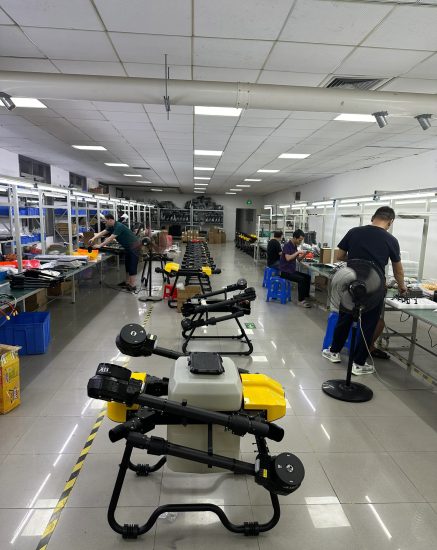
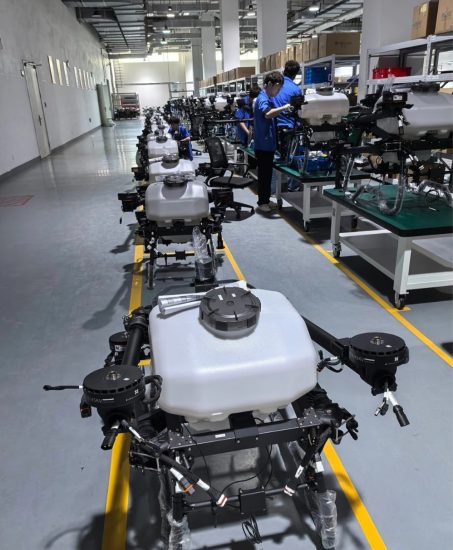
A professional manufacturer should be able to provide reasonable evidence of its production facilities.
You can request:
-
Factory photographs
-
Production-line videos
-
Assembly-line videos
-
Product-testing videos
-
Warehouse photographs
-
Packaging videos
-
Live video factory tours
A live video call can be particularly useful because you can ask the supplier to show specific areas of the factory in real time.
For example, ask them to show:
-
Drone assembly area
-
Battery testing area
-
Spraying-system testing area
-
Finished-product warehouse
-
Spare-parts warehouse
This is more useful than relying only on professionally edited promotional videos.
4. Check Production Capacity
Production capacity is important if you plan to purchase multiple units.
Ask:
-
How many drones can the factory produce per month?
-
How many workers are involved in production?
-
What is the normal lead time?
-
What happens during peak season?
-
Can production capacity increase for larger orders?
A supplier that can manufacture ten units per month may not be suitable for a distributor expecting hundreds of units.
At the same time, a very large claimed production capacity should also be supported by reasonable evidence.
5. Evaluate the Research and Development Capability
Agricultural drones combine multiple technologies.
These may include:
-
Flight control
-
Navigation
-
Motors
-
Batteries
-
Communication
-
Pump systems
-
Sensors
-
Software
-
Remote controllers
A manufacturer with genuine R&D capabilities may be better positioned to troubleshoot technical problems and improve products over time.
Ask whether the company has:
-
Engineering staff
-
Product-development teams
-
Testing facilities
-
Software engineers
-
Hardware engineers
-
Product-design capabilities
You can also ask how often the company updates its product range.
6. Examine the Drone’s Structural Design
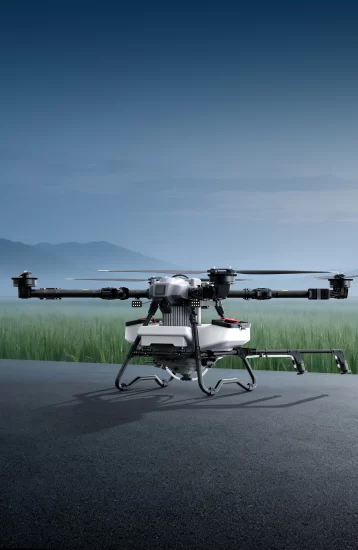
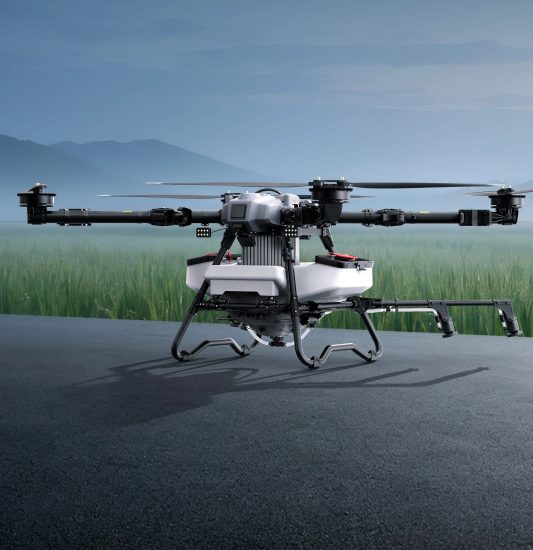
The aircraft frame should be suitable for agricultural operations.
Ask about:
-
Frame material
-
Structural strength
-
Foldable design
-
Motor mounting
-
Landing gear
-
Tank construction
-
Waterproofing
-
Maintenance access
Agricultural drones may operate in humid, dusty, or chemically exposed environments.
Therefore, components should be designed with the actual operating conditions in mind.
7. Check Motor and Propulsion Systems
The propulsion system is fundamental to flight stability and payload capacity.
Ask about:
-
Motor specifications
-
Propeller dimensions
-
Motor controller
-
Maximum thrust
-
Recommended payload
-
Motor cooling
-
Replacement availability
Do not evaluate motors only by their advertised maximum power.
The important question is whether the propulsion system can reliably support the drone’s intended payload during normal agricultural operations.
8. Examine Battery Quality
Battery performance can have a major effect on agricultural drone reliability.
Ask for:
-
Battery voltage
-
Capacity
-
Cell configuration
-
Battery weight
-
Battery management system
-
Cycle-life information
-
Charging requirements
-
Operating temperature range
-
Warranty
-
Replacement cost
The manufacturer should also provide clear instructions for battery charging, storage, transportation, and maintenance.
9. Test the Battery Under Realistic Conditions
A battery specification alone does not prove actual endurance.
During sample testing, monitor:
-
Flight time
-
Payload
-
Battery temperature
-
Remaining battery percentage
-
Charging time
-
Battery voltage behavior
Ideally, testing should be conducted under normal operating conditions rather than only with an unloaded aircraft.
If the manufacturer claims a particular flight time, ask how that figure was measured.
10. Evaluate the Spraying System
The spraying system is just as important as the flight system.
Check:
-
Tank construction
-
Pump quality
-
Pump flow rate
-
Nozzle configuration
-
Filters
-
Pipes
-
Flow control
-
Pressure control
The spraying system should provide consistent performance under the intended operating conditions.
Ask the supplier for field-test information or demonstration videos.
11. Inspect Spray Uniformity
A drone can fly perfectly but still provide poor agricultural results if the spraying system is inconsistent.
During testing, examine:
-
Spray distribution
-
Flow consistency
-
Nozzle performance
-
Pump stability
-
Leakage
-
Filter performance
The appropriate spray pattern depends on the agricultural application.
Therefore, testing should reflect the intended crop and operating method as closely as practical.
12. Check Flight-Control Reliability
Ask about the drone’s control and navigation systems.
Depending on the model, functions may include:
-
GPS positioning
-
Automatic route planning
-
Return-to-home
-
Altitude control
-
Route recording
-
Obstacle detection
-
Terrain following
-
Low-battery warnings
-
Signal-loss protection
The important question is not how many features are listed in the brochure, but whether those features work reliably in practical field conditions.
13. Test Remote-Control Performance
The remote controller should be easy for operators to understand.
Check:
-
Screen visibility
-
Control responsiveness
-
Battery life
-
Navigation interface
-
Warning notifications
-
Map functions
-
Route planning
-
Spraying controls
If you are purchasing for an international market, ask whether the interface and documentation are available in the required language.
14. Review Quality-Control Procedures
A reliable manufacturer should have documented quality-control procedures.
Ask how the factory tests:
Incoming Components
Are motors, batteries, pumps, electronic components, and other parts inspected when they arrive?
Assembly
Are components checked during assembly?
Finished Products
Is every completed drone tested before shipment?
Packaging
Are products inspected before packaging?
These procedures can significantly affect batch consistency.
15. Ask for Quality-Control Records
For larger orders, ask whether the manufacturer can provide inspection records.
Depending on the product and agreement, these may include:
-
Functional test records
-
Battery test information
-
Flight-test records
-
Packing inspection
-
Serial-number records
Not every manufacturer will provide the same documentation, but the willingness to explain its quality-control system is useful information.
16. Check Product Consistency
Testing one sample is helpful, but batch consistency is also important.
A manufacturer should be able to produce units with consistent:
-
Specifications
-
Components
-
Performance
-
Software
-
Packaging
-
Accessories
For larger orders, consider random sampling during production or pre-shipment inspection.
17. Verify Certifications and Compliance Documents
Agricultural drones can be subject to different regulations depending on the destination country.
Ask the supplier for applicable:
-
Product certifications
-
Test reports
-
Radio-frequency compliance documents
-
Battery documents
-
Safety documents
-
User manuals
Do not assume that a certificate automatically applies to your destination market.
Check:
-
The exact product model
-
Certificate issuer
-
Certificate validity
-
Applicable market
-
Relevant product configuration
If necessary, consult the appropriate regulatory authority or a qualified local compliance specialist.
18. Check Export Experience
A manufacturer that regularly exports may be more familiar with international documentation and logistics.
Ask:
-
Which countries have you exported to?
-
How long have you been exporting?
-
What shipping methods have you used?
-
Can you provide standard export documents?
-
Can you support battery transportation requirements?
Export experience does not automatically guarantee product quality, but it can reduce some logistical difficulties.
19. Evaluate Spare-Parts Availability
A reliable manufacturer should have a clear spare-parts supply system.
Ask about availability and pricing for:
-
Propellers
-
Motors
-
Pumps
-
Nozzles
-
Filters
-
Pipes
-
Batteries
-
Chargers
-
Electronic components
For distributors, consider negotiating a recommended spare-parts package with the initial order.
20. Check After-Sales Support
After-sales support is particularly important for agricultural equipment.
Ask:
-
How are technical problems handled?
-
Is remote diagnosis available?
-
How quickly does the support team normally respond?
-
Are training materials provided?
-
Are software updates available?
-
How are warranty claims processed?
A manufacturer that provides detailed answers before the sale is generally easier to evaluate.
21. Understand the Warranty
Ask for the warranty terms in writing.
Clarify:
-
Warranty period
-
Covered components
-
Excluded components
-
Battery warranty
-
Charger warranty
-
Replacement procedure
-
Shipping responsibility
-
Repair process
Do not rely only on verbal statements such as “one year warranty.”
22. Check the Manufacturer’s Communication Quality
Communication is an important part of supplier reliability.
Pay attention to whether the supplier:
-
Answers questions directly
-
Provides technical details
-
Responds consistently
-
Admits limitations
-
Provides documents when requested
-
Avoids unrealistic promises
A supplier that cannot answer basic technical questions may create problems later.
23. Request a Sample Unit
For serious buyers, purchasing a sample is one of the most practical verification methods.
Test:
-
Flight stability
-
Battery endurance
-
Spraying performance
-
Pump operation
-
Navigation
-
Remote control
-
Charging
-
Maintenance
-
Noise
-
Product assembly
If possible, test the drone in conditions similar to your actual application.
24. Conduct a Factory Inspection for Large Orders
For larger purchases, consider arranging an independent factory inspection.
The inspection can evaluate:
-
Factory existence
-
Production facilities
-
Manufacturing capability
-
Raw materials
-
Production progress
-
Quality-control procedures
-
Finished products
-
Packaging
-
Quantity
This can provide additional assurance before making a substantial payment.
25. Compare Multiple Manufacturers
Do not evaluate one supplier in isolation.
Compare at least several qualified manufacturers using the same criteria.
Evaluation Factor |
Supplier A |
Supplier B |
Supplier C |
|---|---|---|---|
Factory capability |
— |
— |
— |
Product quality |
— |
— |
— |
Battery system |
— |
— |
— |
Spraying system |
— |
— |
— |
Quality control |
— |
— |
— |
Certifications |
— |
— |
— |
Spare parts |
— |
— |
— |
Warranty |
— |
— |
— |
Technical support |
— |
— |
— |
Price |
— |
— |
— |
This makes it easier to identify the strongest overall supplier.
26. Be Careful With Unrealistic Claims
Warning signs include claims such as:
-
Extremely long flight times
-
Extremely high spraying efficiency
-
Unlimited operating range
-
No maintenance required
-
Extremely low battery replacement costs
-
Guaranteed performance in every environment
The problem is not necessarily the claim itself.
The important question is whether the manufacturer can provide credible testing conditions and technical evidence.
Ask:
Under what conditions was this specification measured?
That simple question can reveal a lot.
27. Check Whether the Price Matches the Configuration
A very low quotation may result from a different configuration.
Compare:
-
Tank capacity
-
Battery quantity
-
Charger
-
Pump
-
Nozzles
-
Sensors
-
Controller
-
Spare parts
-
Warranty
-
Packaging
Never compare price alone without comparing the complete specification.
28. Check Payment and Contract Terms
Before making payment, ensure the commercial agreement clearly identifies:
-
Product model
-
Quantity
-
Unit price
-
Total price
-
Specifications
-
Accessories
-
Delivery date
-
Warranty
-
Inspection requirements
-
Packaging
-
Shipping terms
-
Payment terms
The more detailed the contract, the easier it is to resolve misunderstandings.
29. Build a Supplier Verification Scorecard
A simple scoring system can help you make a more objective decision.
For example:
Category |
Suggested Importance |
|---|---|
Manufacturing capability |
Very High |
Product quality |
Very High |
Battery reliability |
High |
Spraying performance |
Very High |
Quality control |
Very High |
Technical support |
High |
Spare parts |
High |
Compliance |
High |
Export experience |
Medium |
Price |
Medium |
The goal is to identify the manufacturer that provides the best overall balance rather than simply the lowest price.
Frequently Asked Questions
How can I know whether a Chinese agricultural drone supplier is a real factory?
Request factory information, production photographs, videos, live factory tours, product documentation, and other evidence of manufacturing activity. For larger orders, consider an independent factory inspection.
Should I trust the manufacturer’s product specifications?
Specifications should be verified where possible. Ask about testing conditions and compare the information with sample performance.
Is a factory inspection necessary?
It may not be necessary for every small purchase, but it can be valuable for large orders, OEM projects, or long-term distributor relationships.
Should I test a sample?
Yes. A sample provides an opportunity to evaluate flight, spraying, battery, charging, navigation, and overall product quality before making a larger commitment.
What is the most important quality factor?
There is no single factor. For agricultural drones, flight reliability, battery performance, spraying consistency, structural quality, quality control, and after-sales support should all be considered.
How can I reduce the risk of receiving inconsistent products?
Confirm specifications in writing, establish quality requirements, use pre-shipment inspection for larger orders, and maintain clear communication with the manufacturer.
Final Supplier Verification Checklist
Before placing a significant order, verify:
-
[ ] Company identity
-
[ ] Factory location
-
[ ] Manufacturing capability
-
[ ] Production capacity
-
[ ] R&D capability
-
[ ] Product specifications
-
[ ] Battery specifications
-
[ ] Spraying system
-
[ ] Flight-control system
-
[ ] Quality-control procedures
-
[ ] Sample performance
-
[ ] Product consistency
-
[ ] Applicable certifications
-
[ ] Export documentation
-
[ ] Spare-parts supply
-
[ ] Warranty
-
[ ] Technical support
-
[ ] Production lead time
-
[ ] Packaging
-
[ ] Contract terms
Conclusion
Verifying a Chinese agricultural drone manufacturer should be a structured process rather than a simple website search or price comparison.
A reliable supplier should be able to demonstrate real manufacturing capability, stable product quality, systematic quality control, practical product performance, reliable battery and spraying systems, sufficient spare parts, clear warranty terms, and responsive technical support.
For international buyers, the safest approach is to verify the manufacturer first, request detailed technical documentation, test a sample, compare multiple suppliers, and consider factory or third-party inspection for larger orders.
The objective is not simply to find the cheapest agricultural spraying drone. It is to find a Chinese manufacturer that can consistently deliver the right product and provide the technical and commercial support required for long-term agricultural operations.
THE END


No comments yet