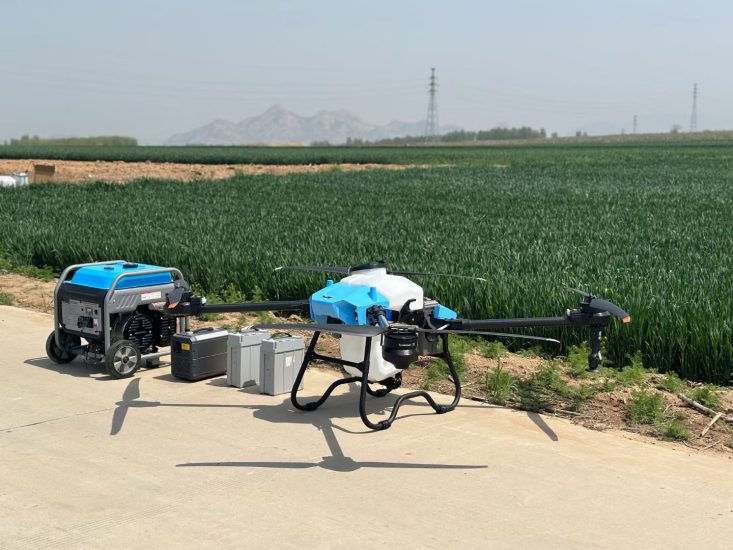


China has become an important manufacturing base for industrial drones, including heavy lift platforms designed for construction, agriculture, infrastructure, emergency logistics, power-line maintenance, and material transportation.
For an overseas buyer, however, finding a Chinese supplier is relatively easy.
Finding a reliable heavy lift drone manufacturer is much harder.
A search for “100kg cargo drone manufacturer China” can produce dozens of companies. Some are genuine manufacturers with their own engineering teams and production facilities. Others are trading companies. Some assemble aircraft using third-party components, while others advertise products that they do not actually manufacture.
The biggest problem is that heavy lift drones are not ordinary consumer electronics.
A low-cost mistake can become a serious operational problem when the aircraft is expected to carry 50, 80, or 100 kg above workers, buildings, roads, or valuable equipment.
Therefore, the correct purchasing process should not start with:
“Who has the cheapest 100kg drone?”
It should start with:
“Which manufacturer can demonstrate that its aircraft can safely perform my actual mission?”
This guide explains how to evaluate Chinese heavy lift drone manufacturers, what technical information to request, how to compare prices, and how to avoid common supplier problems.
1. Start With the Application, Not the Supplier
Before contacting Chinese manufacturers, define the mission.
A manufacturer cannot provide a meaningful quotation if the only requirement is:
Heavy lift drone, 100kg.
A 100kg drone used for construction material delivery may require a completely different configuration from one used for agricultural logistics or emergency rescue.
Prepare the following information:
Requirement |
Example |
|---|---|
Application |
Construction material transport |
Required payload |
60 kg |
Maximum payload |
80–100 kg |
One-way distance |
2 km |
Round-trip distance |
4 km |
Flight altitude |
300 m above sea level |
Wind |
Up to 8–10 m/s |
Payload dimensions |
100 × 60 × 50 cm |
Delivery method |
Winch |
Cable length |
15 m |
Daily missions |
10–20 |
Operating temperature |
5–35°C |
Country |
Customer’s destination country |
This information allows the manufacturer to recommend an aircraft based on actual operating requirements.
It also makes supplier comparison much easier.
2. Manufacturer, Factory and Trading Company Are Not the Same
One of the first things to determine is what kind of supplier you are dealing with.
There are generally several categories.
Type 1: Original Equipment Manufacturer
The company designs and manufactures its own drone platform.
It may control:
-
Airframe design
-
Flight controller integration
-
Motor system
-
Power system
-
Software
-
Payload system
-
Testing
-
Assembly
-
After-sales support
This type of company is usually the most suitable for serious OEM or long-term commercial projects.
Type 2: Drone Assembly Factory
The company has a production facility but purchases some major components externally.
This is not necessarily a problem.
Many manufacturers use third-party:
-
Motors
-
Batteries
-
Flight controllers
-
Communication modules
-
Sensors
The important question is whether the supplier has sufficient engineering capability to integrate, test, repair, and support the complete system.
Type 3: Trading Company
A trading company may source drones from several factories.
A trading company is not automatically unreliable.
In some cases, a trading company can provide:
-
Better export service
-
Multilingual communication
-
Consolidated purchasing
-
Logistics
-
Customer support
But buyers should know whether the company controls the product or simply resells it.
If something fails, you need to know who is responsible for engineering support.
3. Ask for the Legal Company Name First
Before discussing price, request the supplier’s full registered company name.
Do not rely only on a brand name.
Ask for:
-
Chinese company name
-
English company name
-
Business license
-
Registered address
-
Factory address
-
Company registration information
-
Contact person
-
Corporate email
-
Website
The company receiving your payment should be clearly identifiable.
This is especially important when the quotation comes from a different company name than the website.
For example:
Website brand: ABC Drone
Quotation company: Shenzhen XYZ Technology Co., Ltd.
Payment company: Guangzhou Trading Co., Ltd.
That does not automatically mean fraud, but it creates a question that should be resolved before payment.
Ask the supplier to explain the relationship between the companies.
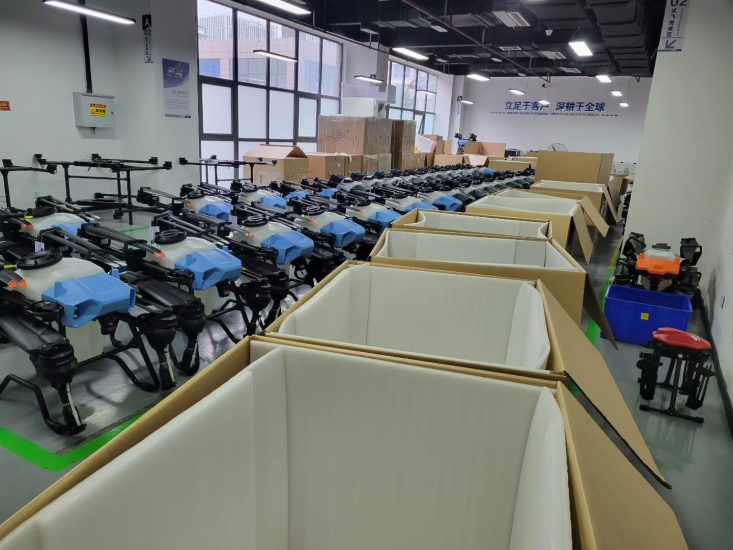
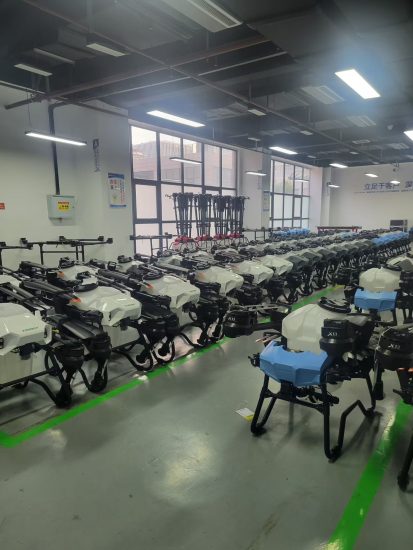
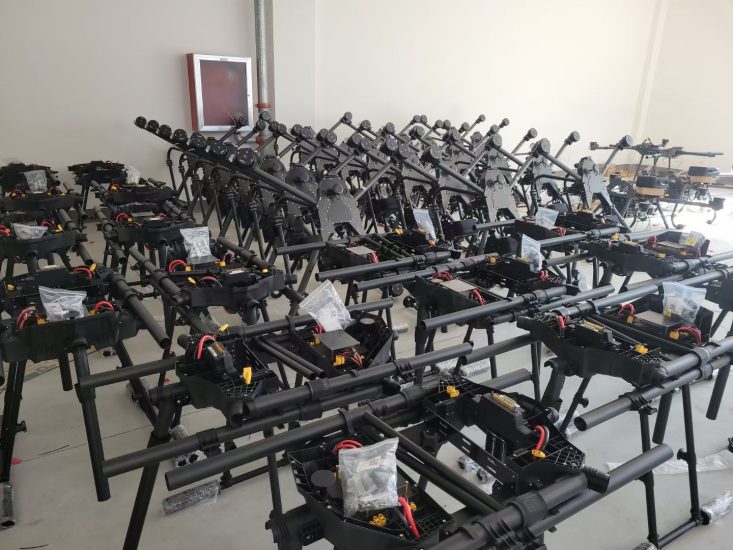
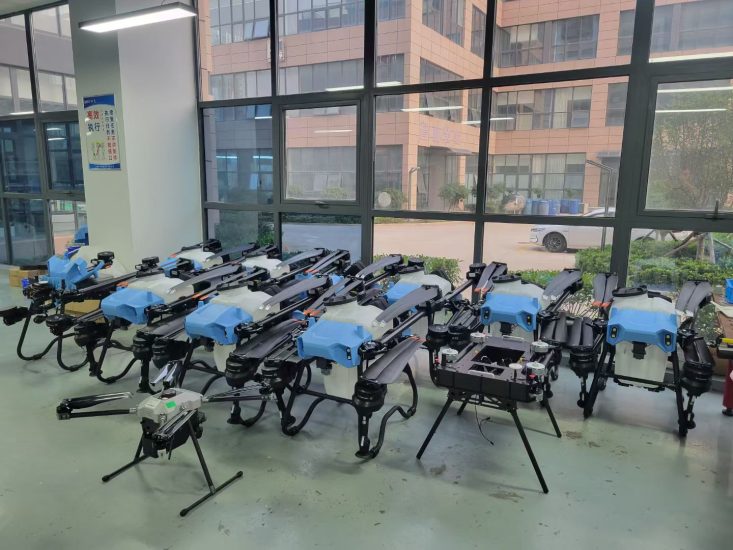
4. Verify Whether the Factory Actually Exists
A real factory should be able to provide evidence of its production operation.
Request recent photos or, preferably, a live video call.
During a video inspection, ask the supplier to show:
-
Company entrance
-
Production floor
-
Drone assembly area
-
Testing area
-
Battery area
-
Spare parts warehouse
-
Finished aircraft
-
Engineering department
-
Quality inspection area
Do not accept only professionally edited promotional videos.
A live video call is much more useful.
Ask the salesperson to walk from the office to the production area and show the current production line.
This makes it much harder to present another company’s factory as their own.
5. The Most Important Question: Who Designed the Drone?
This question is often overlooked.
Ask:
“Did your company design this aircraft, or are you manufacturing/assembling a third-party platform?”
Then ask:
“Which parts of the aircraft are developed in-house?”
A serious manufacturer should be able to explain the architecture.
For example:
-
Airframe: in-house
-
Flight controller: in-house or third-party
-
Motors: supplier
-
ESC: supplier/in-house
-
Battery management system: in-house
-
Winch: in-house
-
Software: in-house
-
Payload interface: in-house
-
RTK integration: third-party/in-house
There is nothing wrong with using external components.
The problem is when a supplier cannot explain the system it is selling.
6. Do Not Judge the Manufacturer by the 100kg Claim
The phrase “100kg heavy lift drone” is not enough.
Ask five different questions:
-
What is the maximum payload?
-
What is the recommended working payload?
-
At what altitude?
-
At what wind speed?
-
For what flight distance?
These numbers should be connected.
A drone may technically lift 100 kg under a specific test condition but have a lower recommended payload for normal commercial operations.
For example, DJI’s FlyCart 100 is officially specified for up to 100 kg in single-battery configuration and up to 85 kg in dual-battery configuration. DJI also states that its Delivery App recommends loading weight according to aircraft status, environmental conditions, and the task.
That is an important lesson for buyers:
Maximum payload is not necessarily your usable commercial payload.
7. Ask for Payload Test Evidence
This is one of the best ways to distinguish a serious manufacturer from a marketing company.
If the supplier says:
Maximum payload: 100 kg
Ask for a video showing:
-
Aircraft identification
-
Payload weighing
-
Payload attachment
-
Takeoff
-
Hover
-
Forward flight
-
Turning
-
Climbing
-
Returning
-
Payload release
Ideally, the aircraft should carry the same configuration that you are purchasing.
Do not accept a video of an unknown drone carrying a load if the supplier cannot confirm that it is the same model.
8. Ask for Flight Time at Different Payloads
A good manufacturer should be able to provide more than one endurance figure.
Request a table similar to:
Payload |
Flight Time |
Test Condition |
|---|---|---|
0 kg |
XX min |
Sea level |
30 kg |
XX min |
25°C |
50 kg |
XX min |
25°C |
70 kg |
XX min |
25°C |
100 kg |
XX min |
25°C |
Then ask:
“What is the recommended battery reserve?”
This is important because a flight test that uses 100% of the battery is not a realistic commercial operating plan.
For example, DJI’s published FlyCart 100 figures show a maximum flight time of 14 minutes under a 149.9 kg takeoff weight with dual batteries, under specified controlled conditions. The company explicitly notes that actual performance varies with environment and use.
This is the type of information a buyer should look for.
9. Ask for the Actual Range With Payload
“Transmission range” and “flight range” are different specifications.
A manufacturer may say:
Control distance: 20 km.
That does not mean the aircraft can fly 20 km away carrying 80 kg and return safely.
Ask for:
Maximum one-way range
and
Practical round-trip distance with payload
For example:
60kg payload + 4km round trip + 8m/s wind.
That is a much more meaningful engineering question.
10. Check the Battery System Carefully
Heavy lift drones consume significant energy.
The battery is not simply an accessory.
It directly affects:
-
Payload
-
Flight time
-
Safety
-
Charging time
-
Operating cost
-
Aircraft weight
Ask for:
-
Battery model
-
Voltage
-
Capacity
-
Weight
-
Cell type
-
Cycle life
-
Maximum charging power
-
Charging time
-
Operating temperature
-
Battery management system
-
Replacement price
As a reference point, DJI lists its DB2160 battery at approximately 14.7 kg, 41 Ah, and 52 V for the FlyCart 100.
This illustrates why battery weight needs to be included when comparing heavy lift platforms.
11. Ask Whether the Drone Uses Single or Dual Batteries
Dual-battery systems can provide operational advantages, but they also add weight.
Ask the manufacturer:
Does the maximum payload change between single and dual battery operation?
This is not a theoretical question.
For DJI’s FlyCart 100, the published maximum payload is 100 kg in single-battery mode and 85 kg in dual-battery mode.
Therefore, simply seeing “dual battery” in a specification sheet does not mean the drone automatically has a higher payload.
The entire system has to be evaluated.
12. Evaluate the Motor and Propulsion System
Heavy lift drones place much greater demands on the propulsion system than ordinary camera drones.
Ask for:
-
Motor quantity
-
Motor model
-
Motor power
-
Propeller diameter
-
Propeller material
-
ESC rating
-
Motor redundancy
-
Maximum continuous power
-
Cooling system
For example, the FlyCart 100 uses an eight-pair rotor configuration and 62-inch carbon-fiber composite propellers.
For another manufacturer’s product, you should request equivalent technical information.
Do not accept:
“Our motor is very powerful.”
Ask for actual numbers.
13. Redundancy Is More Important Than Maximum Speed
For a heavy lift aircraft, safety architecture should receive more attention than top speed.
Ask:
-
How many motors?
-
How many ESCs?
-
Are power circuits independent?
-
What happens if one motor fails?
-
What happens if one battery fails?
-
Can the aircraft land after a propulsion fault?
-
What happens after communication loss?
A manufacturer that can clearly explain failure scenarios is usually more credible than one that only talks about speed and payload.
14. Look at the Obstacle Detection System
Construction and industrial environments can contain:
-
Steel structures
-
Cranes
-
Power lines
-
Buildings
-
Scaffolding
-
Trees
-
Towers
-
Cables
Ask which sensors are used.
Possible technologies include:
-
Radar
-
LiDAR
-
Stereo vision
-
Monocular vision
-
Ultrasonic sensors
-
Downward sensing
DJI’s FlyCart 100, for example, combines front, rear and downward radar with LiDAR and a quad-camera vision system.
But sensor quantity alone is not enough.
Ask the supplier:
“Which obstacles can the system detect, at what distance, and under what lighting conditions?”
15. RTK Is Valuable for Industrial Applications
If the drone must repeatedly deliver materials to a specific location, RTK can be useful.
Ask whether the aircraft supports:
-
RTK positioning
-
Base station
-
Network RTK
-
Correction services
-
Waypoint flight
-
Precision hovering
For example, DJI lists approximately ±10 cm horizontal and vertical hovering accuracy with RTK enabled under strong GNSS conditions on the FlyCart 100.
However, RTK does not eliminate the need for obstacle detection or safe operating procedures.
A construction site can still create GNSS interference and multipath effects.
16. Winch Quality Can Determine Whether the Drone Is Useful
If your application involves construction, rescue, tower maintenance, or difficult terrain, the winch may be just as important as the aircraft.
Ask:
-
Maximum winch load
-
Cable length
-
Cable material
-
Cable diameter
-
Retraction speed
-
Hook type
-
Automatic balancing
-
Weight measurement
-
Emergency release
-
Cable cutting
-
Manual control
DJI’s FlyCart 100 flagship winch system supports a cable length of up to 30 meters, weighing, hook control, automatic balance control, and cable-discard emergency release.
When comparing Chinese manufacturers, request the same level of technical detail.
17. Check the Emergency System
A heavy lift drone should have defined emergency procedures.
Ask what happens during:
Communication loss
Does the drone:
-
Hover?
-
Return home?
-
Continue the route?
-
Land?
Low battery
Does the system:
-
Warn the operator?
-
Automatically return?
-
Prevent a new mission?
-
Recommend a landing point?
GNSS failure
Can the aircraft:
-
Maintain control?
-
Switch positioning mode?
-
Return manually?
Motor failure
Can the aircraft remain stable?
Payload problem
Can the load be released?
These questions reveal much more about the engineering maturity of the supplier than a product brochure does.
18. Parachute Systems Need Real Specifications
If a manufacturer says:
“The drone has a parachute.”
Ask for:
-
Parachute model
-
Activation method
-
Automatic/manual deployment
-
Minimum opening altitude
-
Maximum takeoff weight
-
Descent speed
-
Battery backup
-
Replacement interval
-
Deployment test records
DJI’s FlyCart 100 documentation specifies a minimum parachute opening height of 100 m and a touchdown speed of up to 7 m/s under the stated test conditions.
The important point is that parachute performance depends on conditions.
It should not be treated as a universal guarantee of safe landing.
19. Check the IP Rating Carefully
Construction environments can involve:
-
Rain
-
Dust
-
Mud
-
Concrete dust
-
High humidity
Ask for the aircraft’s IP rating and exactly what it applies to.
For example, the FlyCart 100 is rated IP55, while DJI notes that the rating is not permanent and does not apply to the propulsion system.
Therefore, a supplier saying “waterproof drone” is not sufficient.
Ask:
What IP rating?
and:
Which components are covered by that rating?
20. Understand Why Chinese Heavy Lift Drone Prices Differ So Much
Indicative China-market prices can vary dramatically.
A rough purchasing range is:
Payload Class |
Indicative China Price |
|---|---|
10–20 kg |
US$3,000–8,000 |
20–30 kg |
US$5,000–12,000+ |
30–50 kg |
US$8,000–20,000+ |
50–80 kg |
US$12,000–30,000+ |
80–100 kg |
US$20,000–40,000+ |
Premium 100 kg class |
US$40,000–60,000+ |
Custom industrial 100 kg+ |
US$40,000–100,000+ |
These are indicative market ranges, not fixed factory prices.
A quotation can change substantially depending on:
-
Battery quantity
-
Charger
-
Winch
-
RTK
-
Radar
-
LiDAR
-
Remote controller
-
Spare parts
-
Software
-
Payload system
-
Training
-
Packaging
-
OEM requirements
21. Why One Factory Quotes US$20,000 and Another Quotes US$50,000
This is a common buyer question.
Suppose two suppliers both advertise:
100kg heavy lift drone.
Supplier A quotes:
US$22,000
Supplier B quotes:
US$52,000
It is tempting to conclude that Supplier B is overpriced.
But compare:
Item |
Supplier A |
Supplier B |
|---|---|---|
Max payload |
100 kg |
100 kg |
Recommended payload |
Unknown |
Specified |
Battery |
Basic |
Industrial |
Winch |
Optional |
Included |
RTK |
Optional |
Included |
Radar |
Basic |
Multi-sensor |
LiDAR |
No |
Yes |
Parachute |
Optional |
Included |
Software |
Basic |
Industrial |
Testing |
Limited |
Documented |
Spare parts |
Limited |
Available |
Training |
No |
Included |
The two products are not necessarily equivalent.
This is why a procurement comparison should use a technical specification matrix, not only a price list.
22. What Should Be Included in the Quotation?
Ask the supplier to separate the price.
A professional quotation should ideally show:
Aircraft
US$XX,XXX
Batteries
US$X,XXX each
Charger
US$X,XXX
Winch
US$X,XXX
Remote controller
US$XXX
RTK
US$XXX
Spare propellers
US$XXX
Spare motors
US$XXX
Spare ESCs
US$XXX
Packaging
US$XXX
Training
Included / additional
Warranty
Specify duration and coverage.
This makes supplier comparison much easier.
23. Ask About OEM and Customization
If you plan to purchase large quantities, ask whether the factory supports:
-
Logo
-
Color
-
Packaging
-
Remote-controller language
-
Software localization
-
Payload interface
-
Battery configuration
-
Winch design
-
Communication system
-
Data platform
-
API/SDK
-
Flight-control integration
For a serious OEM project, ask:
“Which parts can you customize without changing the core flight-control architecture?”
This is a better question than simply asking:
“Can you do OEM?”
Almost every trading company will answer “yes.”
The real question is what they can actually engineer.
24. Request a Factory Audit Before a Large Order
For an initial sample order, a remote audit may be enough.
For a larger commercial project, consider a physical factory inspection.
The audit should check:
Company
-
Legal registration
-
Ownership
-
Factory address
Production
-
Assembly line
-
Production capacity
-
Staff
-
Equipment
Quality control
-
Incoming inspection
-
Motor testing
-
Battery testing
-
Flight testing
-
Final inspection
R&D
-
Engineers
-
Software team
-
Flight testing
-
Product development
Inventory
-
Motors
-
ESCs
-
Batteries
-
Propellers
-
Controllers
-
Sensors
After-sales
-
Repair capability
-
Spare parts
-
Technical support
The purpose is not to find the most beautiful factory.
It is to determine whether the company can reliably produce and support the aircraft you are purchasing.
25. Ask How Many Units They Have Actually Delivered
This is an extremely useful question.
Ask:
“How many units of this exact model have you delivered?”
Then ask:
“How many are currently operating commercially?”
Then:
“Can you provide references from customers using the same model?”
A manufacturer that has sold 1,000 small camera drones may still be inexperienced with 100kg industrial aircraft.
Experience must be relevant to the product you are buying.
26. Ask About Failure Rates and Warranty
No industrial product has zero failures.
A serious manufacturer should have a process for handling failures.
Ask:
-
Warranty period
-
Motor warranty
-
Battery warranty
-
Flight-controller warranty
-
Replacement policy
-
Repair turnaround
-
Remote technical support
-
Spare-part availability
Also ask:
“What parts are considered consumables?”
This may include:
-
Propellers
-
Cables
-
Hooks
-
Battery components
-
Landing gear
Knowing these costs before purchasing helps calculate total cost of ownership.
27. Spare Parts Are Part of the Purchase
A construction drone cannot be economically useful if a small component failure stops the aircraft for three months.
For a commercial order, consider purchasing a spare-parts package.
A typical package might include:
Spare Part |
Suggested Purpose |
|---|---|
Propellers |
Routine replacement |
Motors |
Emergency replacement |
ESCs |
Electronic failure |
Landing gear |
Physical damage |
Payload cable |
Wear |
Hook |
Payload handling |
Sensors |
Collision/damage |
Battery |
Operational backup |
Fasteners |
Maintenance |
The exact list should be based on the manufacturer’s recommended maintenance schedule.
28. Export Experience Matters
A manufacturer may be technically strong but inexperienced with international shipments.
Ask whether they regularly export to your country or region.
Request:
-
Commercial invoice
-
Packing list
-
Certificate of origin if required
-
Product specifications
-
Battery documentation
-
Dangerous-goods shipping documents where applicable
-
Customs information
-
HS classification guidance
-
Export packaging
Lithium batteries can create additional transport requirements, so the shipping method should be discussed before the order is finalized.
29. Check Local Drone Regulations Before Buying
A Chinese manufacturer can sell you a technically capable aircraft.
That does not automatically mean you can legally operate it in your country.
Before placing a commercial order, check:
-
Maximum takeoff weight rules
-
Operator licensing
-
Commercial operation requirements
-
BVLOS requirements
-
Operating altitude
-
Urban operation
-
Operations near people
-
Airspace restrictions
-
Remote identification
-
Insurance
-
Registration
-
Import requirements
The regulations are country-specific.
Do not ask the factory:
“Is this drone legal in my country?”
Instead ask the manufacturer for the technical documentation required by your local authority and independently verify the operating rules.
30. A Realistic RFQ Template for Chinese Manufacturers
Instead of sending:
Please quote 100kg drone.
Send a technical RFQ.
Product
Heavy Lift Cargo Drone
Application
Construction material transportation
Required working payload
60 kg
Maximum payload
100 kg preferred
Flight distance
4 km round trip
Maximum wind
8–10 m/s
Altitude
500 m above sea level
Payload dimensions
100 × 70 × 60 cm
Delivery system
Winch preferred
Winch length
15–20 m
Daily operation
10–20 missions
Operating temperature
5–35°C
Required positioning
RTK preferred
Safety
Obstacle detection + emergency release + redundant propulsion preferred
Please quote:
-
Aircraft
-
Batteries
-
Charger
-
Winch
-
Remote controller
-
RTK equipment
-
Spare parts
-
Training
-
Warranty
-
Packaging
-
FOB price
-
CIF price if available
-
Production lead time
-
Minimum order quantity
Please provide:
-
Full specification
-
Payload test video
-
Flight-time test data
-
Factory information
-
Company registration information
-
Warranty policy
-
Spare-parts list
-
Operating manual
This RFQ immediately makes your inquiry look like a professional commercial project.
31. How to Compare Three Chinese Manufacturers
Suppose you receive three quotations.
Do not immediately choose the cheapest.
Create a scoring table.
Category |
Supplier A |
Supplier B |
Supplier C |
|---|---|---|---|
Payload evidence |
8/10 |
10/10 |
5/10 |
Flight-time data |
6/10 |
9/10 |
4/10 |
Factory capability |
8/10 |
9/10 |
6/10 |
Safety system |
7/10 |
10/10 |
6/10 |
Battery system |
7/10 |
9/10 |
6/10 |
After-sales |
8/10 |
9/10 |
5/10 |
Spare parts |
8/10 |
9/10 |
5/10 |
Price |
9/10 |
6/10 |
10/10 |
Documentation |
7/10 |
10/10 |
5/10 |
The cheapest supplier may not be the cheapest solution over three years.
32. Calculate Total Cost of Ownership
Suppose:
Drone: US$30,000
Extra batteries: US$5,000
Charger: US$3,000
Winch: US$4,000
Spare parts: US$2,000
Training: US$1,000
Initial equipment cost:
US$45,000
But the real cost also includes:
-
Shipping
-
Customs
-
Insurance
-
Operator training
-
Battery replacement
-
Maintenance
-
Repairs
-
Software
-
Insurance
-
Regulatory compliance
Therefore, compare suppliers using the three-year operating cost, not just the purchase price.
33. Red Flags When Buying From China
Be cautious when a supplier:
Refuses to provide company registration information
A professional manufacturer should have no reason to hide its legal identity.
Only communicates through personal messaging apps
WhatsApp and WeChat are normal for business communication, but official company information should also be available.
Cannot provide a factory address
This is a significant warning sign.
Uses only stock photos
Ask for current factory and aircraft photos.
Cannot provide payload test data
A 100kg claim without evidence should be treated cautiously.
Promises impossible performance
For example:
100kg payload + 2 hours flight time + 20 km round trip + high wind
Such combinations should be questioned.
Gives an unusually low price
A very low quotation may indicate:
-
Missing batteries
-
Missing charger
-
Basic configuration
-
No winch
-
No safety system
-
Different payload definition
-
Third-party aircraft
Always ask what is included.
34. What a Reliable Manufacturer Should Be Able to Explain
A credible supplier should be able to answer technical questions without constantly saying:
“Our engineer will check.”
It is normal for sales staff to consult engineers.
But the company should ultimately be able to explain:
-
Payload
-
Flight time
-
Battery
-
Motor system
-
Charging
-
Range
-
Wind limits
-
Altitude
-
Sensors
-
RTK
-
Winch
-
Safety
-
Maintenance
-
Warranty
The deeper the questions become, the more obvious the difference between a manufacturer and a simple reseller usually becomes.
35. The Best Way to Test a Supplier Before a Large Order
For a new supplier, use a staged purchasing process.
Stage 1 — Document verification
Check:
-
Company
-
Factory
-
Product
-
Certifications
-
Technical data
Stage 2 — Video verification
Ask for:
-
Payload test
-
Flight test
-
Winch test
-
Emergency-function demonstration
Stage 3 — Sample order
Purchase one aircraft or the smallest commercially useful configuration.
Stage 4 — Field test
Test:
-
Payload
-
Endurance
-
Range
-
Wind
-
Positioning
-
Payload release
-
Battery turnaround
Stage 5 — Factory audit
Conduct an onsite inspection before a large order.
Stage 6 — Bulk order
Only after the product and supplier have passed the earlier stages should you consider a substantial purchase.
This reduces the financial risk of choosing an unknown supplier.
36. What Makes a Good Chinese Heavy Lift Drone Manufacturer?
The strongest supplier is not necessarily the one with:
-
The biggest factory
-
The lowest price
-
The highest advertised payload
-
The longest empty flight time
A better manufacturer should demonstrate five things:
1. Engineering capability
They understand why the aircraft performs the way it does.
2. Manufacturing capability
They can consistently build the aircraft.
3. Testing capability
They can prove performance with documented tests.
4. Commercial capability
They can handle export, documentation, packaging, and international customers.
5. After-sales capability
They can provide spare parts, troubleshooting, repairs, and technical support.
For a commercial heavy lift drone, all five matter.
37. Final Recommendation: Don’t Buy the Cheapest 100kg Drone
The biggest mistake in Chinese heavy lift drone procurement is comparing products only by headline payload and price.
A better purchasing formula is:
Usable Payload + Mission Range + Flight Time + Safety + Reliability + After-Sales Support + Total Cost
A US$20,000 aircraft may be excellent for one application.
A US$50,000 aircraft may be justified for another.
The important question is not why one drone costs more.
The important question is:
What additional capability are you receiving for the additional money?
When evaluating a Chinese heavy lift drone manufacturer, ask the supplier to prove the exact performance you need.
If you need a 60 kg working payload over a 4 km round trip, request test information for approximately that mission.
If you need a 100 kg maximum payload, request a real 100 kg payload demonstration.
If you need a winch, test the actual winch.
If you operate around buildings, test obstacle detection.
If you operate in remote areas, test communication and positioning.
And if you intend to buy 20, 50, or 100 aircraft, evaluate the factory and after-sales system just as carefully as the aircraft itself.
The best Chinese heavy lift drone manufacturer is not simply the company that gives you the lowest quotation.
It is the company that can prove its aircraft, explain its engineering, support your operation, and continue supplying parts and technical assistance after the sale.
Frequently Asked Questions
1. How can I find a reliable heavy lift drone manufacturer in China?
Start by identifying manufacturers that produce the payload class you actually need. Then verify the legal company, factory, engineering capability, payload test data, flight performance, safety systems, export experience, warranty, and spare-parts availability.
Do not select a supplier based solely on Alibaba-style product listings or the lowest quotation.
2. How much does a heavy lift drone from China cost?
Indicative prices range from approximately US$3,000–8,000 for smaller 10–20 kg platforms to US$20,000–60,000+ for serious 80–100 kg industrial systems.
Custom 100 kg+ platforms can reach US$40,000–100,000 or more depending on the configuration.
The final price depends heavily on batteries, charger, winch, sensors, RTK, software, safety equipment, and OEM requirements.
3. What is a reasonable price for a 100kg heavy lift drone?
A basic industrial 100kg-class platform may fall around US$20,000–40,000, while more sophisticated systems can reach US$40,000–60,000+.
Custom engineering projects may cost significantly more.
The buyer should compare complete configurations rather than aircraft-only prices.
4. How do I know whether a Chinese supplier is a real factory?
Request the legal company name, business license, factory address, production photos, live factory video, production-line video, and evidence of actual manufacturing.
A live video inspection is more useful than relying only on promotional photographs.
For a large order, consider an independent factory audit.
5. Should I buy directly from a factory or a trading company?
For standard products, a reputable trading company can sometimes provide useful export and customer-service support.
For a customized 80–100 kg commercial drone, direct communication with the actual manufacturer is usually preferable because technical issues, spare parts, software, and engineering changes become important.
6. What documents should I request from the manufacturer?
At minimum:
-
Company registration information
-
Commercial quotation
-
Technical specification
-
User manual
-
Warranty terms
-
Battery information
-
Safety information
-
Test data
-
Export documents
-
Packing list
-
Commercial invoice
Additional documents may be required depending on the destination country.
7. How do I verify a 100kg payload claim?
Ask the manufacturer for a test video showing the actual model carrying a verified 100kg load.
Also request:
-
Takeoff weight
-
Battery configuration
-
Flight duration
-
Flight distance
-
Wind conditions
-
Altitude
-
Payload dimensions
A payload claim without operating conditions is incomplete.
8. Is a cheaper Chinese drone necessarily lower quality?
No.
Chinese manufacturing is highly competitive, and some smaller manufacturers can offer excellent value.
However, unusually low prices should be investigated.
Check exactly what is included in the quotation and whether the quoted aircraft has the same battery, winch, safety system, controller, and payload configuration as competing products.
9. Can Chinese manufacturers provide OEM heavy lift drones?
Many industrial drone manufacturers can provide some level of OEM or customization.
Possible options include:
-
Branding
-
Color
-
Packaging
-
Software
-
Payload systems
-
Battery configuration
-
Winch
-
Communication systems
-
Data integration
The manufacturer should specify exactly which components can be customized.
10. How many batteries should I purchase?
For commercial operation, one battery set is often insufficient.
The correct quantity depends on:
-
Flight time
-
Charging time
-
Missions per day
-
Battery cooling
-
Operating schedule
For high-frequency operations, additional batteries can increase aircraft utilization considerably.
11. Should I choose a winch system?
Choose a winch when the destination is difficult or unsafe for landing.
Winches are especially useful for:
-
Construction
-
Towers
-
Bridges
-
Mountains
-
Power infrastructure
-
Emergency logistics
For simple ground delivery where the drone can safely land, direct lifting may be simpler.
12. How long does a Chinese heavy lift drone normally last?
Service life depends on:
-
Flight hours
-
Payload
-
Battery cycles
-
Weather
-
Maintenance
-
Motor wear
-
Propeller condition
-
Operating environment
The manufacturer should provide maintenance intervals and recommended replacement schedules rather than promising a universal lifespan.
13. Can I buy one drone first before placing a bulk order?
Yes, and this is often the safer approach.
For an unfamiliar manufacturer, purchase a sample first and test it under actual operating conditions.
Only proceed to a large order after verifying:
-
Payload
-
Flight time
-
Range
-
Reliability
-
Safety
-
Software
-
Spare parts
-
Technical support


No comments yet