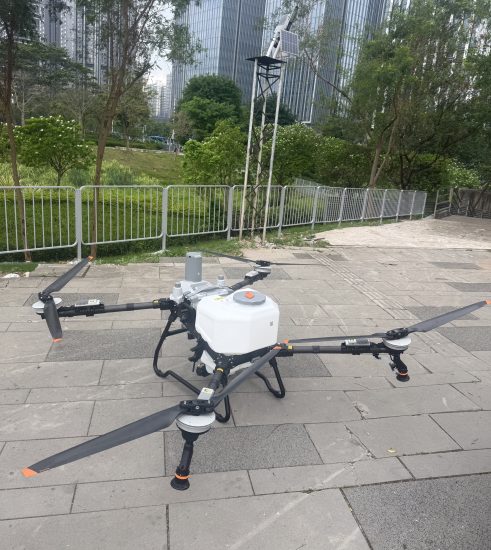



China is one of the world’s major manufacturing centers for agricultural equipment, including agricultural spraying drones, intelligent batteries, flight-control systems, spraying systems, chargers, and replacement parts.
For farmers, agricultural contractors, importers, distributors, and agricultural equipment companies, buying directly from a reliable Chinese agricultural drone manufacturer can provide access to competitive pricing, product customization, OEM/ODM services, and a broader range of equipment.
However, finding a reliable manufacturer requires more than searching for “agricultural drone manufacturer China” and choosing the first supplier that appears in search results.
Buyers need to evaluate manufacturing capability, product quality, technical support, spare parts, certifications, export experience, communication, and long-term cooperation potential.
This guide explains how to identify and evaluate a reliable agricultural drone manufacturer in China.
1. Start With Your Product Requirements
Before contacting Chinese manufacturers, clearly define what you need.
Important information includes:
-
Drone payload capacity
-
Intended crops
-
Farming area
-
Spraying requirements
-
Required flight time
-
Battery quantity
-
Charging system
-
Navigation system
-
Remote controller
-
Spare parts
-
OEM requirements
-
Target quantity
-
Destination country
-
Expected delivery time
For example, asking:
“I need an agricultural drone.”
is not enough information for a professional quotation.
A better inquiry would explain:
“We are looking for 30L agricultural spraying drones for commercial rice farming. We initially need 5 units and may purchase 50 units annually. Please provide specifications, battery options, spare-parts pricing, OEM possibilities, warranty, and shipping terms.”
A detailed inquiry helps the manufacturer understand your business and provide a more useful quotation.
2. Search for a Manufacturer, Not Just a Seller
When searching online, you may encounter:
-
Actual manufacturers
-
Trading companies
-
Export companies
-
Distributors
-
Sourcing agents
These suppliers can all provide products, but their capabilities may be different.
If your goal is long-term cooperation, OEM, private labeling, bulk purchasing, or technical support, it is particularly important to understand whether the company actually manufactures the agricultural drone.
Ask questions such as:
-
Where is your factory located?
-
What products do you manufacture?
-
Do you have your own production line?
-
Which components are produced in-house?
-
Where does final assembly take place?
-
Do you have an R&D team?
-
Can we arrange a factory visit or video inspection?
The purpose is not simply to find the cheapest supplier.
It is to determine whether the supplier has the capability to support your business over the long term.
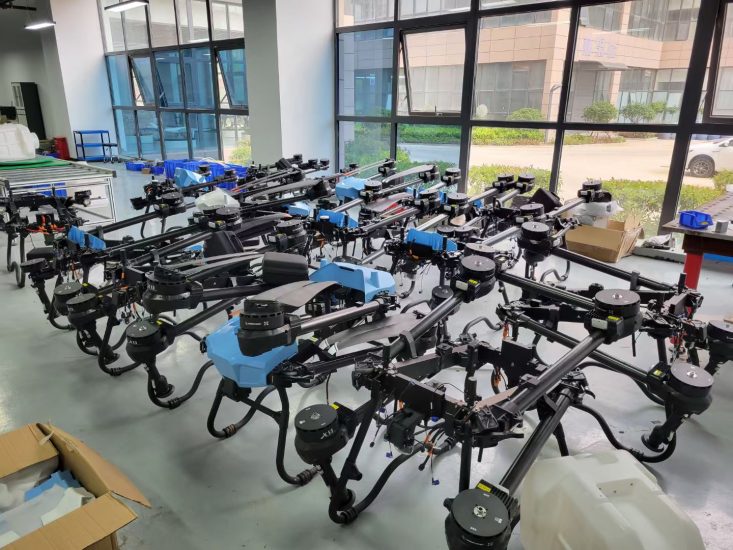
3. Check the Manufacturer’s Factory
A professional agricultural drone manufacturer should be able to provide reasonable evidence of its production capability.
Useful information may include:
-
Factory photographs
-
Production-line photographs
-
Assembly videos
-
Product testing videos
-
Quality-control procedures
-
Warehouse information
-
R&D facilities
-
Packaging facilities
-
Product development information
If possible, consider arranging:
-
On-site factory inspection
-
Third-party factory audit
-
Live video factory tour
A factory visit can help you understand the difference between a genuine manufacturer and a company that mainly resells products.
4. Evaluate R&D Capability
Agricultural drones are not simple consumer products.
A complete system may involve:
-
Aircraft structure
-
Motors
-
Electronic speed controllers
-
Flight controller
-
Navigation
-
RTK positioning
-
Remote controller
-
Battery system
-
Charger
-
Pump
-
Flow control
-
Nozzles
-
Software
-
Communication systems
Therefore, R&D capability can be an important indicator of a manufacturer’s long-term competitiveness.
Ask whether the company has:
-
Product engineers
-
Hardware engineers
-
Software engineers
-
Flight-control development
-
Testing procedures
-
Product improvement programs
A manufacturer with its own technical team may be better positioned to solve problems when product updates or technical issues occur.
5. Check the Product Specification Carefully
Do not rely only on marketing descriptions.
Request a detailed technical specification.
Important parameters include:
-
Payload capacity
-
Empty weight
-
Maximum takeoff weight
-
Flight time
-
Battery voltage
-
Battery capacity
-
Charger specifications
-
Motor configuration
-
Maximum flight speed
-
Spraying width
-
Pump flow rate
-
Nozzle type
-
Tank material
-
Navigation system
-
Positioning accuracy
-
Remote-control range
-
Wind resistance
-
Operating temperature
Ask the manufacturer to distinguish between:
Maximum theoretical performance
and
Recommended operating performance.
Real-world agricultural operations can differ significantly from laboratory or ideal test conditions.
6. Ask About Actual Flight Time
Flight time is one of the most commonly misunderstood specifications.
A manufacturer may quote a maximum flight time under specific conditions.
Actual flight time can depend on:
-
Payload
-
Battery condition
-
Temperature
-
Wind
-
Flight speed
-
Altitude
-
Flight route
-
Battery age
Therefore, ask:
What is the expected flight time with a full spraying payload?
This is much more useful than asking only for the maximum unloaded flight time.
7. Evaluate the Battery System
Battery performance is critical for agricultural drones.
Ask the manufacturer about:
-
Battery capacity
-
Voltage
-
Weight
-
Charging time
-
Battery cycle life
-
Intelligent battery management
-
Safety protection
-
Replacement cost
-
Availability
-
Storage requirements
Also ask whether batteries can be purchased separately.
For distributors, battery availability can be extremely important because customers may require replacements after extended use.
8. Check the Spraying System
The drone’s spraying performance depends heavily on the spraying system.
Evaluate:
-
Pump
-
Flow rate
-
Nozzles
-
Filters
-
Spray pipes
-
Pressure control
-
Flow monitoring
-
Automatic spraying control
Ask the manufacturer whether the spray system can be adjusted for different application rates.
If you intend to serve multiple crops, flexibility can be more important than maximum flow rate.
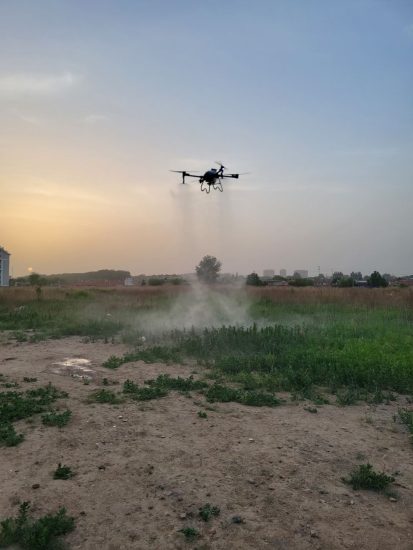
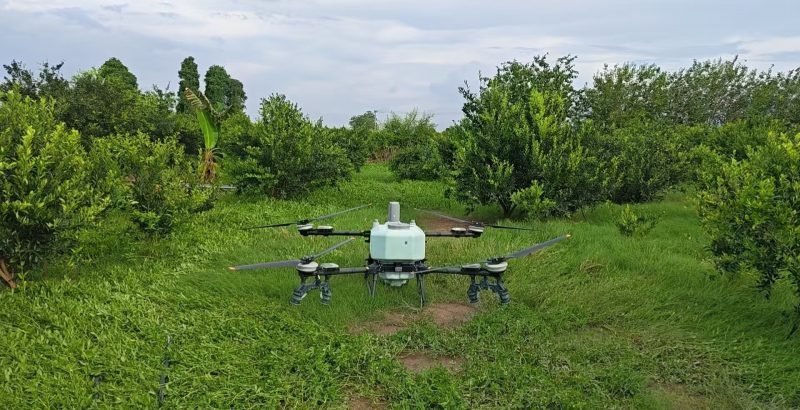
9. Ask About Real Agricultural Applications
A supplier should be able to explain how its drones are used in real agricultural environments.
Ask:
-
Which crops have been tested?
-
Which countries use the drones?
-
What types of fields are suitable?
-
Are the drones used for rice?
-
Are they used in orchards?
-
Are they used for vegetables?
-
Are they used for fertilizer application?
Case studies and real application videos can provide more useful information than promotional photographs.
10. Request Product Testing Information
Before placing a large order, ask how the manufacturer tests its drones.
Testing may include:
-
Flight testing
-
Payload testing
-
Battery testing
-
Spraying testing
-
Motor testing
-
Waterproof or environmental testing where applicable
-
Remote-control testing
-
Software testing
-
Safety testing
You do not necessarily need every test to be identical between suppliers.
The important point is whether the manufacturer has a systematic quality-control process.
11. Check Quality-Control Procedures
Ask the manufacturer how products are inspected before shipment.
A good quality-control process may include inspections at different production stages.
For example:
Incoming Components → Assembly → System Testing → Flight Testing → Final Inspection → Packaging
Ask whether the manufacturer keeps inspection records.
For bulk orders, you may also consider using an independent inspection company before shipment.
This can help identify problems before the products leave China.
12. Check Certifications and Documentation
Certification requirements depend on the destination market and the product configuration.
Depending on your country, you may need documentation related to:
-
Drone equipment
-
Radio communication
-
Batteries
-
Chargers
-
Electromagnetic compatibility
-
Import requirements
-
Agricultural applications
Ask the manufacturer which certificates and technical documents are available.
Do not assume that a certificate issued for one market automatically satisfies requirements in another market.
Always verify the regulations that apply in your destination country.
13. Evaluate Export Experience
A manufacturer with international export experience may understand common challenges related to:
-
Packaging
-
International shipping
-
Battery transportation
-
Customs documentation
-
Commercial invoices
-
Packing lists
-
Export documents
-
Destination requirements
Ask whether the company has previously shipped agricultural drones to your country or region.
Experience with your market can simplify communication and logistics.
14. Check OEM and ODM Capability
If you are an importer or distributor, OEM/ODM services may be important.
Potential customization options include:
-
Logo
-
Product label
-
Packaging
-
User manual
-
Accessories
-
Product appearance
-
Software interface
-
Spare-parts packages
Ask the manufacturer:
-
What is the MOQ?
-
What is the customization cost?
-
How long does customization take?
-
Can you provide samples?
-
Can packaging be customized?
-
Can manuals be produced in our language?
A supplier with flexible OEM capability can be valuable if you want to develop your own agricultural drone brand.
15. Ask About Minimum Order Quantity
MOQ varies among manufacturers.
Some suppliers may accept one sample unit.
Others may require larger quantities for customized products.
Ask for pricing at several levels:
-
1 unit
-
5 units
-
10 units
-
20 units
-
50 units
-
Larger annual quantities
This helps you understand the supplier’s wholesale pricing structure.
16. Compare Total Cost, Not Just Unit Price
Suppose Manufacturer A offers a lower drone price than Manufacturer B.
That does not necessarily mean Manufacturer A is cheaper.
Compare:
Drone + Batteries + Charger + Spare Parts + Packaging + Shipping + Taxes + Maintenance + Technical Support
For example, if one supplier offers a low drone price but charges significantly more for batteries and spare parts, the long-term cost may be higher.
Always request a complete quotation.
17. Understand Shipping Terms
Chinese manufacturers may quote prices under different Incoterms.
Common terms include:
-
EXW
-
FOB
-
CIF
-
DAP
-
DDP
These terms determine which party is responsible for different costs and logistics stages.
When comparing suppliers, make sure you compare equivalent shipping terms.
An EXW quotation should not be directly compared with a DDP quotation.
For agricultural drones containing lithium batteries, shipping arrangements should also be confirmed in advance.
18. Check Spare Parts Availability
Spare parts are essential for long-term operation.
Ask the manufacturer whether it can supply:
-
Motors
-
Propellers
-
Batteries
-
Chargers
-
Pumps
-
Nozzles
-
Filters
-
Landing gear
-
Electronic components
-
Remote controllers
Also ask:
How quickly can replacement parts be shipped?
A drone that is unable to operate because a small replacement component is unavailable can create significant business losses.
19. Evaluate Warranty Terms
Before ordering, request the warranty policy in writing.
Check:
-
Warranty period
-
Covered components
-
Battery warranty
-
Motor warranty
-
Controller warranty
-
Conditions for warranty claims
-
Replacement policy
-
Repair process
-
Shipping responsibility
A clear warranty policy reduces misunderstandings after delivery.
20. Check Technical Support
Technical support is particularly important for international buyers.
Ask whether the supplier provides:
-
Installation instructions
-
User manuals
-
Video tutorials
-
Remote technical support
-
Troubleshooting assistance
-
Software updates
-
Operator training
If you are a distributor, also ask whether the manufacturer can provide technical training for your local service team.
This can help you provide better support to your own customers.
21. Test a Sample Before a Large Order
If possible, purchase a sample before placing a large order.
A sample allows you to evaluate:
-
Product quality
-
Flight stability
-
Spraying performance
-
Battery performance
-
Controller usability
-
Software
-
Build quality
-
Technical support
-
Packaging
For distributors, sample testing can also help determine whether the product is suitable for local customers.
A small initial investment can reduce the risk of a large purchasing mistake.
22. Communicate With the Manufacturer’s Technical Team
Do not communicate only with sales staff.
If you have technical questions, ask whether you can speak with an engineer or technical specialist.
Useful questions include:
-
What happens if the pump fails?
-
How is the flow rate calibrated?
-
How is the drone protected against low battery?
-
How does the navigation system work?
-
How are software updates handled?
-
Which components can the customer replace?
-
What maintenance is required?
The quality and speed of technical answers can provide valuable insight into the manufacturer’s capabilities.
23. Red Flags When Choosing a Chinese Agricultural Drone Supplier
Be cautious if a supplier:
-
Refuses to provide basic company information
-
Cannot explain product specifications
-
Provides inconsistent specifications
-
Uses only generic product photographs
-
Cannot show factory or production evidence
-
Refuses sample testing
-
Has unclear warranty terms
-
Cannot provide spare parts
-
Gives unusually low prices without explanation
-
Avoids technical questions
-
Pressures you to make immediate payment
One red flag does not necessarily prove that a company is unreliable, but multiple warning signs should be investigated carefully.
24. Questions to Ask Before Placing an Order
Before making a purchasing decision, ask:
-
Are you the manufacturer or a trading company?
-
Where is your factory located?
-
How long have you manufactured agricultural drones?
-
What models do you currently produce?
-
What is the recommended payload?
-
What is the realistic flight time with a full payload?
-
What battery system is included?
-
What spraying system is used?
-
Which crops have been tested?
-
What certifications are available?
-
What countries do you export to?
-
Can you provide OEM/ODM services?
-
What is the MOQ?
-
What are the spare-parts prices?
-
What is the warranty?
-
What technical support is available?
-
Can we purchase a sample?
-
Can you provide a complete shipping quotation?
-
What is the production lead time?
-
Can you provide factory inspection or video verification?
25. A Simple Manufacturer Evaluation Checklist
You can score each supplier before making your final decision.
Category |
What to Evaluate |
|---|---|
Factory |
Production capability |
R&D |
Engineering and product development |
Product |
Specifications and performance |
Quality |
Testing and inspection |
Battery |
Capacity, safety and availability |
Spraying |
Pump, nozzles and flow control |
Navigation |
GNSS, RTK and flight planning |
Certifications |
Destination-market requirements |
Export |
International shipping experience |
OEM/ODM |
Customization capability |
MOQ |
Suitable order quantity |
Spare parts |
Availability and price |
Warranty |
Clear warranty policy |
Support |
Technical assistance |
Price |
Complete landed cost |
Communication |
Response quality and speed |
FAQ
How do I find an agricultural drone manufacturer in China?
You can search through B2B platforms, search engines, industry exhibitions, trade networks, and direct manufacturer websites. However, always verify factory capability, product specifications, export experience, quality control, and after-sales support before placing an order.
How can I tell whether a Chinese supplier is a real manufacturer?
Ask for factory information, production photographs, videos, company documentation, product testing evidence, and, where practical, arrange a factory inspection or live video tour.
Should I buy a sample before placing a bulk order?
For new suppliers, a sample can be a useful way to evaluate product quality, performance, packaging, communication, and technical support before committing to a larger order.
Can Chinese agricultural drone manufacturers provide OEM?
Many manufacturers offer OEM or ODM services, but the available options, MOQ, customization costs, and development time vary. These terms should be confirmed in writing.
What documents should I request?
Depending on your market, you may request product specifications, user manuals, commercial documents, available certificates, battery documentation, warranty information, and other technical materials required for import or operation.
How should I compare Chinese agricultural drone suppliers?
Compare the complete package rather than the unit price. Evaluate product performance, factory capability, battery system, spraying system, spare parts, warranty, technical support, OEM capability, shipping terms, and total cost.
Final Advice
Finding a reliable agricultural drone manufacturer in China requires a structured evaluation process.
Do not choose a supplier simply because it offers the lowest price or has attractive product photographs.
Instead, evaluate the complete supply chain:
Factory → Product → Quality Control → Battery → Spraying System → Certification → Export → Spare Parts → Warranty → Technical Support
For farmers, reliability and operating efficiency should be the main priorities.
For agricultural service companies, productivity and maintenance support are critical.
For importers and distributors, OEM/ODM capability, wholesale pricing, spare-parts availability, technical support, and long-term cooperation may be even more important.
Before placing a large order, request detailed specifications, compare several manufacturers, test a sample where appropriate, and verify the supplier’s production capability.
The right Chinese agricultural drone manufacturer should not simply sell you a drone.
It should provide a complete and reliable solution that supports your agricultural business before, during, and after the sale.
THE END


No comments yet