

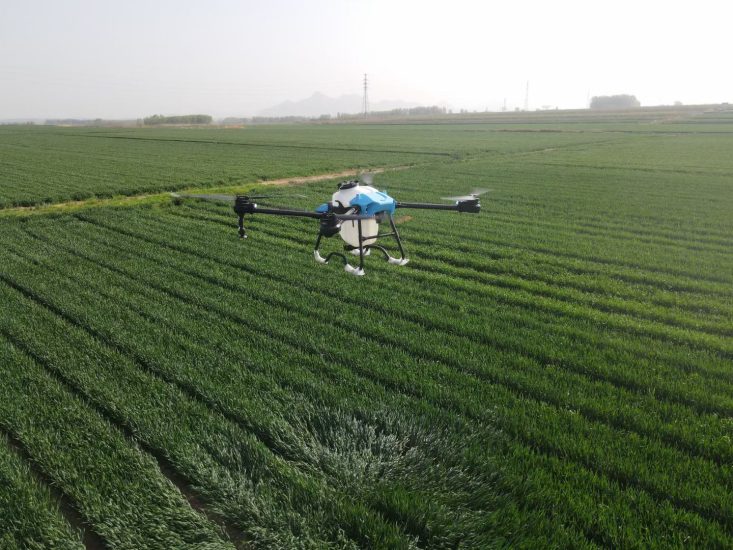
Agricultural spraying drones have become an important tool for modern crop protection. Compared with traditional manual spraying and tractor-mounted equipment, drones can operate over difficult terrain, reduce the need for workers to enter fields, and improve the efficiency of spraying operations.
For importers, agricultural contractors, distributors, and farm operators, however, choosing the right manufacturer in China is more complicated than comparing prices. A reliable supplier needs to provide suitable drone specifications, stable spraying performance, dependable batteries and chargers, spare parts, technical support, and export documentation.
This guide explains what international buyers should check before choosing an agricultural spraying drone manufacturer in China.
1. Start With Your Actual Agricultural Requirements
Before contacting manufacturers, define how and where the drone will be used.
Different crops and operating conditions require different configurations. A drone designed for small farms may not be the best choice for large-scale commercial spraying.
Consider the following factors:
-
Crop type
-
Farm size
-
Field conditions
-
Required spraying volume
-
Required working efficiency
-
Terrain and obstacles
-
Local weather conditions
-
Water availability
-
Battery charging conditions
-
Transportation requirements
-
Local agricultural regulations
For example, a buyer operating rice fields may have different requirements from a buyer spraying orchards, vineyards, cotton fields, corn, or other crops.
A professional manufacturer should ask about these requirements before recommending a model rather than simply offering the highest-capacity drone.
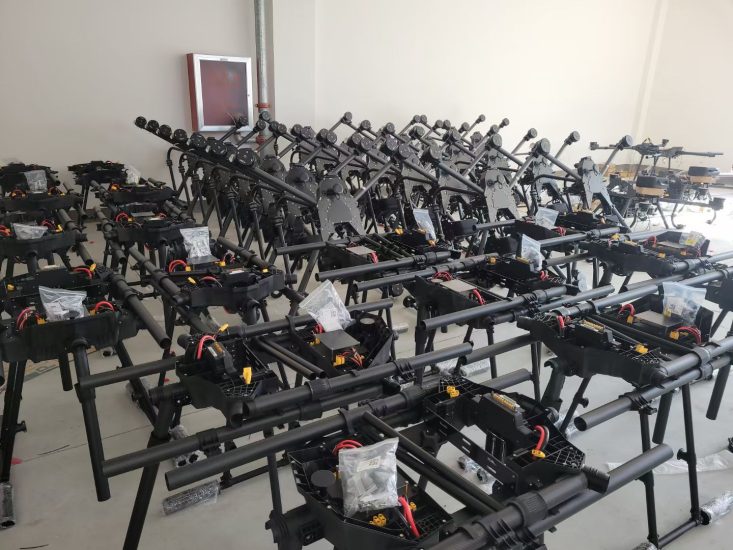
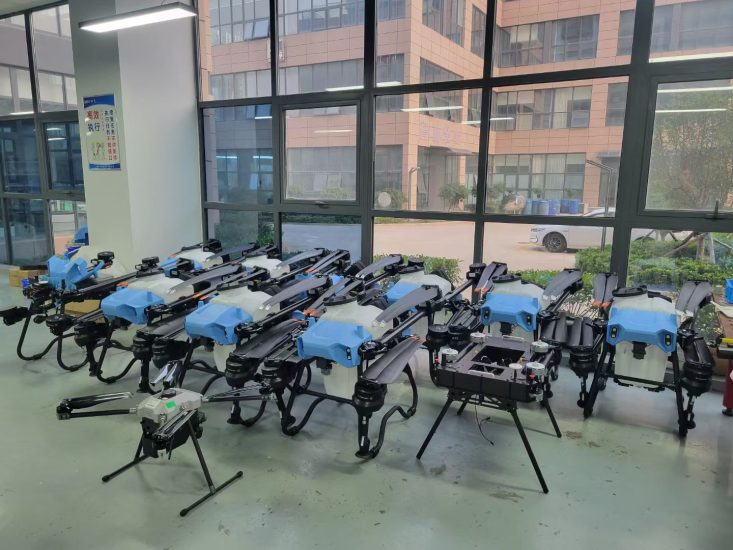
2. Check Whether the Manufacturer Is a Real Factory
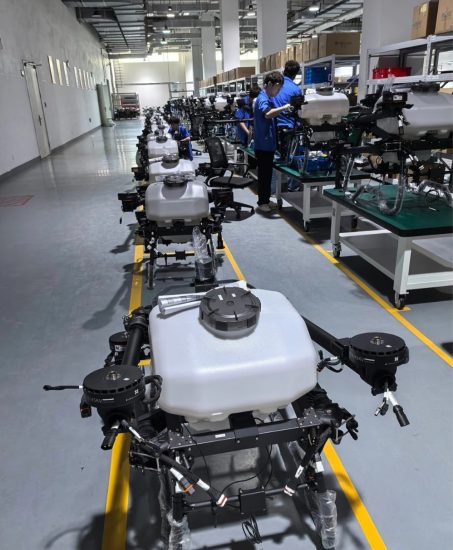
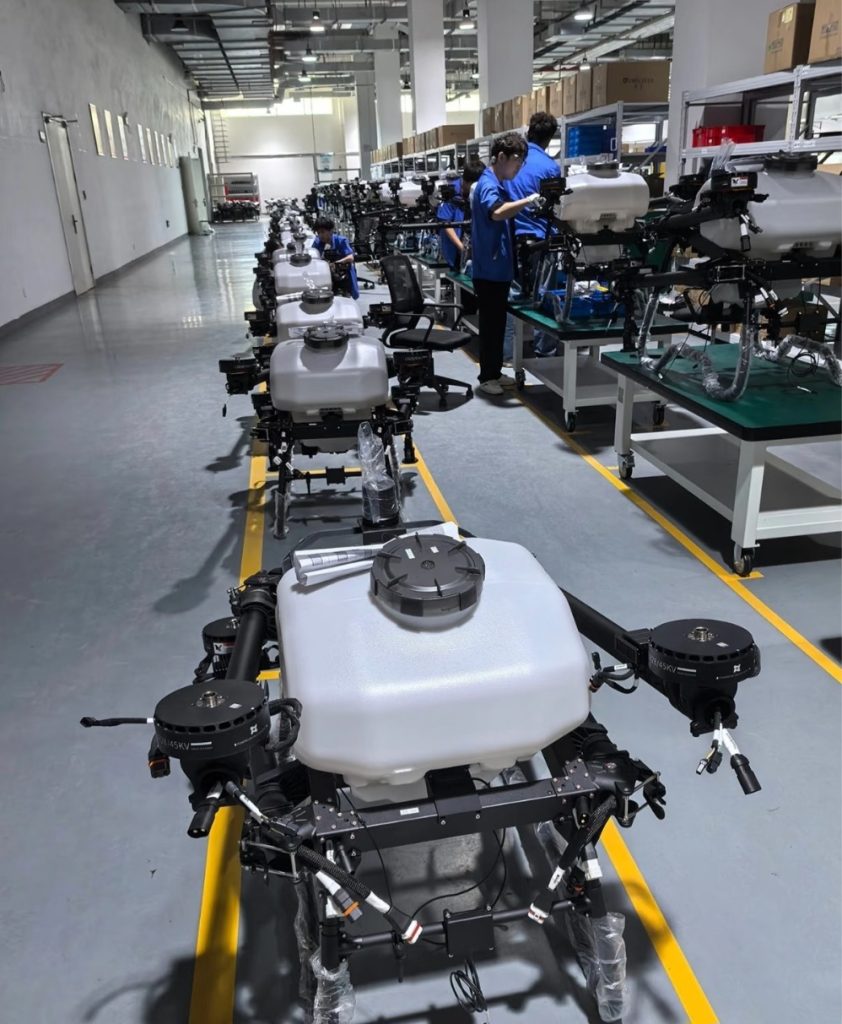
One of the most important steps is verifying whether the supplier is actually a manufacturer.
Some trading companies can provide agricultural drones, but their technical capabilities, production control, spare-parts availability, and after-sales support may depend on another factory.
Ask the supplier for information such as:
-
Factory location
-
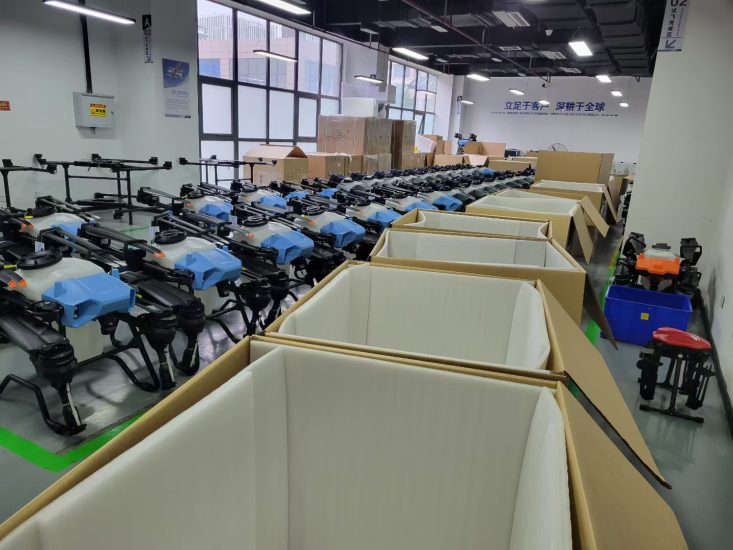
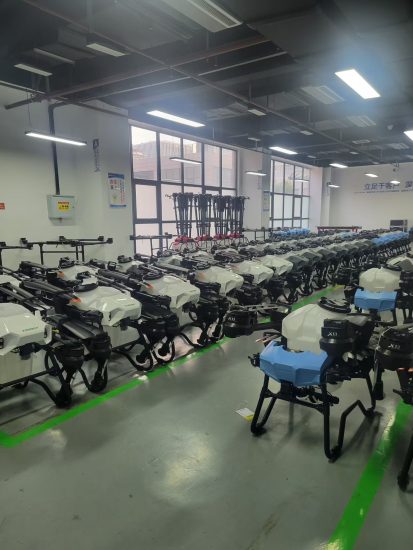
Production facilities
-
Assembly lines
-
Quality-control procedures
-
R&D capabilities
-
Product testing procedures
-
Production capacity
-
Main export markets
-
Certifications and compliance documents
-
Product manuals and technical specifications
A factory visit or live video inspection can provide additional confidence.
You should also compare the information on the company’s website, quotation, product documentation, and business registration information. Inconsistent company information is a reason to conduct additional verification.
3. Evaluate the Drone’s Spraying System
The spraying system is one of the most important parts of an agricultural spraying drone.
A drone may have an impressive flight specification, but poor spraying performance can reduce its practical value.
Ask about:
Tank Capacity
Tank capacity affects how much liquid can be carried during each operation.
Larger tanks can reduce the number of refills, but they also increase the aircraft’s operating weight and may affect flight time.
The correct capacity should therefore be selected according to the crop, field size, terrain, and operating requirements.
Pump System
The pump should provide stable pressure and flow during operation.
Ask the manufacturer about:
-
Pump type
-
Flow rate
-
Maximum pressure
-
Flow control
-
Pump durability
-
Replacement availability
Nozzles
Nozzle selection affects droplet size, coverage, and application performance.
A professional manufacturer should be able to explain which nozzle configurations are available and how they are matched to different spraying applications.
Flow Control
Consistent application is important for agricultural spraying.
A good system should maintain relatively stable application performance as operating conditions change and should provide appropriate control of liquid flow according to the flight system and spraying settings.
4. Examine Flight Performance Carefully
Do not judge a drone only by its maximum flight time.
Actual operating performance depends on payload, wind, temperature, flight speed, spraying volume, battery condition, and operating altitude.
Ask the manufacturer to provide test conditions for claimed specifications.
For example, when a manufacturer states a particular flight time, determine whether the figure was measured:
-
Without payload
-
With a full tank
-
At a specific flight speed
-
Under specific weather conditions
-
Using a new battery
-
Under laboratory or field conditions
This distinction is important because laboratory specifications may differ from actual agricultural operations.
5. Pay Close Attention to Battery Technology
Agricultural drones consume significant battery power because they must support both flight and spraying operations.
Battery quality directly affects operating efficiency.
When evaluating a supplier, ask about:
-
Battery voltage
-
Battery capacity
-
Battery weight
-
Battery cycle life
-
Charging time
-
Charging temperature
-
Battery management system
-
Charging protection
-
Battery warranty
-
Spare-battery availability
For commercial operators, battery replacement costs should also be included in the total cost of ownership.
A cheaper drone may become expensive if its batteries have short service lives or are difficult to replace.
6. Check the Charger and Charging System
The charger is often overlooked during purchasing, but it can have a major effect on daily productivity.
For professional agricultural operations, buyers may need multiple batteries and efficient charging between flights.
Ask whether the manufacturer offers:
-
Standard chargers
-
Fast chargers
-
Multi-battery charging systems
-
Intelligent charging management
-
Over-voltage protection
-
Over-current protection
-
Temperature monitoring
You should also confirm whether the charging system is compatible with the electrical standards of your destination country.
7. Ask About Flight Control and Navigation
Modern agricultural drones may use GPS-based positioning and automated flight functions to improve operating efficiency.
Depending on the model, features may include:
-
Automatic route planning
-
Boundary mapping
-
Obstacle detection
-
Return-to-home functions
-
Terrain following
-
Altitude control
-
Automatic spraying control
-
Remote-control monitoring
-
Low-battery warnings
-
Signal-loss protection
However, buyers should not assume that every advertised function works equally well in real agricultural environments.
Ask the manufacturer for practical demonstrations, operating videos, technical documentation, and information about the conditions under which each function works.
8. Consider Different Crops and Terrain
Agricultural spraying drones are used in many different environments.
Flat farmland is generally easier to operate than mountainous or irregular agricultural areas.
Orchards can present additional challenges because trees, branches, terrain variations, and canopy structures can affect flight and spraying operations.
When contacting a manufacturer, explain your actual environment.
For example:
We need a spraying drone for orchards with uneven terrain and limited access for ground equipment.
A technically capable manufacturer should then be able to recommend a suitable configuration instead of simply quoting a standard model.
9. Review Product Quality-Control Procedures
A reliable manufacturer should have a systematic quality-control process.
Ask how the factory tests:
-
Motors
-
Flight controllers
-
Pumps
-
Batteries
-
Chargers
-
Remote controllers
-
Communication systems
-
Spraying systems
-
Structural components
It is also useful to ask whether finished drones undergo complete functional testing before shipment.
For larger orders, buyers may consider requesting pre-shipment inspection or sample testing.
10. Verify Certifications and Import Requirements
Agricultural drones are electronic aircraft and may be subject to different requirements depending on the destination country.
Before placing an order, determine which documents and approvals are required in your market.
Potential requirements may include:
-
Product compliance documentation
-
Radio-frequency approvals
-
Battery transportation documents
-
Safety documentation
-
User manuals
-
Commercial invoices
-
Packing lists
-
Certificates of origin
-
Air or sea transportation documentation
The exact requirements depend on the destination market and the specific drone configuration.
A Chinese manufacturer should be able to provide the available product documentation and clearly explain what is included in the quotation.
Do not assume that a certification used in China automatically satisfies the requirements of another country.
11. Compare Total Cost Instead of Only Factory Price
Price is important, but the lowest quotation is not necessarily the cheapest solution.
Calculate the complete purchasing cost.
This may include:
Drone + Batteries + Charger + Spare Parts + Packaging + Shipping + Insurance + Taxes + Local Compliance Costs + Maintenance
For example, Supplier A may offer a lower drone price but charge more for batteries and spare parts.
Supplier B may have a slightly higher initial price but include better battery configuration, more spare parts, training, and technical support.
For commercial operations, total operating cost is usually more meaningful than the initial purchase price.
12. Ask About Spare Parts Availability
Agricultural drones operate in demanding environments. Components can eventually require replacement.
Before ordering, ask for a spare-parts list.
Common replacement items may include:
-
Propellers
-
Motors
-
Pumps
-
Nozzles
-
Pipes
-
Filters
-
Landing components
-
Batteries
-
Chargers
-
Remote-control components
A reliable manufacturer should be able to provide a clear spare-parts supply process.
For distributors, it is particularly important to understand whether commonly needed parts can be stocked locally or shipped quickly from China.
13. Evaluate After-Sales Technical Support
After-sales support can be more important than the initial product price.
Before purchasing, ask:
-
How is technical support provided?
-
Is remote troubleshooting available?
-
Are manuals available in English?
-
Are software updates provided?
-
Is operator training available?
-
What is the warranty period?
-
How are warranty claims handled?
-
How quickly can replacement components be supplied?
For international buyers, communication quality matters.
A manufacturer that responds quickly and provides clear technical answers before the order is generally easier to work with after the sale.
14. Test a Sample Before a Large Order
If you are a distributor, agricultural contractor, or commercial farm operator planning a substantial purchase, consider starting with a sample unit or small order.
During testing, evaluate:
-
Flight stability
-
Spraying uniformity
-
Pump performance
-
Battery endurance
-
Charging time
-
Remote-control range
-
Navigation accuracy
-
Ease of maintenance
-
Operator learning curve
-
Spare-parts availability
Real-world testing can reveal problems that are not obvious from a product catalog.
15. Ask the Manufacturer the Right Questions
Before requesting a quotation, prepare a structured list of questions.
For example:
Product
-
What is the recommended model for my crop?
-
What is the maximum payload?
-
What is the tank capacity?
-
What is the recommended spraying speed?
Battery
-
What is the battery capacity?
-
How many batteries are recommended?
-
What is the typical charging time?
-
What is the expected battery service life?
Spraying
-
What pump system is used?
-
What nozzle options are available?
-
What is the spraying flow rate?
-
How is flow controlled?
Support
-
What warranty is provided?
-
Are spare parts available?
-
Is remote technical support provided?
-
Is operator training available?
Export
-
Which countries have you supplied?
-
What export documents can you provide?
-
How are batteries packaged for transportation?
-
Can you support OEM or distributor orders?
The quality of the manufacturer’s answers can tell you a lot about its technical capability and export experience.
16. Be Careful With Unrealistic Claims
Buyers should be cautious when a supplier makes unusually aggressive claims about flight time, spraying efficiency, range, battery life, or operating area.
Ask for the testing conditions behind every important specification.
Instead of asking only:
How many hectares can the drone spray per hour?
Ask:
Under what crop, flight speed, spraying volume, tank capacity, and field conditions was this figure measured?
This produces a much more useful comparison between manufacturers.
17. OEM and Private-Label Requirements
If you are a distributor or established agricultural equipment company, you may want an OEM or private-label solution.
Before selecting a manufacturer, discuss:
-
Logo customization
-
Drone body branding
-
Packaging
-
User manuals
-
Remote-control interface
-
Product colors
-
Spare-parts packaging
-
Minimum order quantity
-
Production lead time
-
Warranty arrangements
-
Software or firmware requirements
Not every factory has the same level of OEM capability.
If branding is important to your business, confirm the manufacturer’s customization capabilities before signing a purchase agreement.
18. Compare Manufacturers Using a Simple Evaluation System
Instead of choosing a supplier based on one factor, score each manufacturer across several categories.
For example:
Evaluation Factor |
Importance |
|---|---|
Product performance |
High |
Spraying system |
High |
Battery system |
High |
Factory capability |
High |
Quality control |
High |
Certifications |
High |
Spare parts |
High |
After-sales support |
High |
OEM capability |
Medium |
Price |
Medium |
Delivery time |
Medium |
This approach helps prevent a low price from hiding weaknesses in product quality or service.
19. What Makes a Reliable Chinese Agricultural Drone Manufacturer?
A reliable manufacturer should generally be able to provide:
-
Clear technical specifications
-
Transparent quotations
-
Stable product quality
-
Consistent production
-
Product testing
-
Spare-parts support
-
Export documentation
-
Technical training
-
Responsive after-sales service
-
Realistic performance specifications
-
Long-term cooperation capability
The best supplier is not necessarily the largest factory or the cheapest manufacturer.
The better choice is the manufacturer whose products match your agricultural requirements and whose production, quality-control, documentation, and support systems can support your business over the long term.
Frequently Asked Questions
How do I find agricultural spraying drone manufacturers in China?
You can search for manufacturers through B2B platforms, industry exhibitions, professional websites, and direct Google searches. When you identify a supplier, verify its factory information, product documentation, production capabilities, and export experience before placing an order.
What should I request before buying a spraying drone?
Request a complete product specification, quotation, battery and charger information, warranty terms, spare-parts list, available certifications, user manual, packaging details, and shipping information.
Is it better to buy directly from a Chinese factory?
Direct factory purchasing can provide better communication with the production team and may offer more customization options. However, buyers should first verify that the supplier is a genuine manufacturer and has adequate quality-control and after-sales capabilities.
Can Chinese manufacturers provide OEM agricultural spraying drones?
Some manufacturers can provide OEM or private-label services, but capabilities vary. Buyers should confirm minimum order quantities, branding options, packaging requirements, production lead times, and technical support before ordering.
How should I compare two agricultural drone suppliers?
Compare product performance, spraying technology, battery systems, factory capabilities, quality control, certifications, spare parts, warranty, technical support, delivery time, and total purchasing cost rather than comparing the drone price alone.
What is the most important factor when choosing a manufacturer?
There is no single factor that applies to every buyer. Product suitability, spraying performance, reliability, battery quality, technical support, spare-parts availability, and compliance with the destination market should all be considered together.
Final Buying Checklist
Before placing an order with a Chinese agricultural spraying drone manufacturer, make sure you have confirmed:
-
Crop and application requirements
-
Drone model and configuration
-
Tank capacity
-
Pump and nozzle specifications
-
Battery capacity and quantity
-
Charger configuration
-
Flight-control functions
-
Quality-control procedures
-
Product documentation
-
Destination-market requirements
-
Warranty terms
-
Spare-parts availability
-
Technical support
-
OEM requirements, if applicable
-
Packaging and shipping
-
Total landed cost
Choosing an agricultural spraying drone manufacturer should be treated as a long-term sourcing decision rather than a simple price comparison.
A professional Chinese manufacturer should be able to understand your application, recommend an appropriate configuration, provide transparent technical information, support product testing, and continue supplying parts and technical assistance after delivery.
For international buyers, the strongest supplier relationship is built on verified manufacturing capability, consistent product quality, realistic performance data, reliable after-sales service, and long-term spare-parts support.
THE END


No comments yet