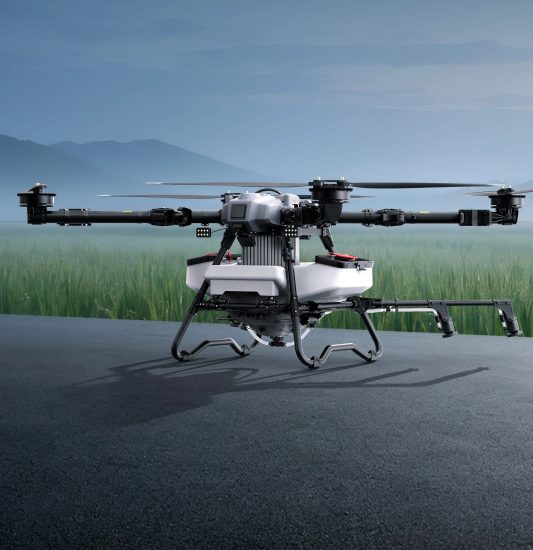


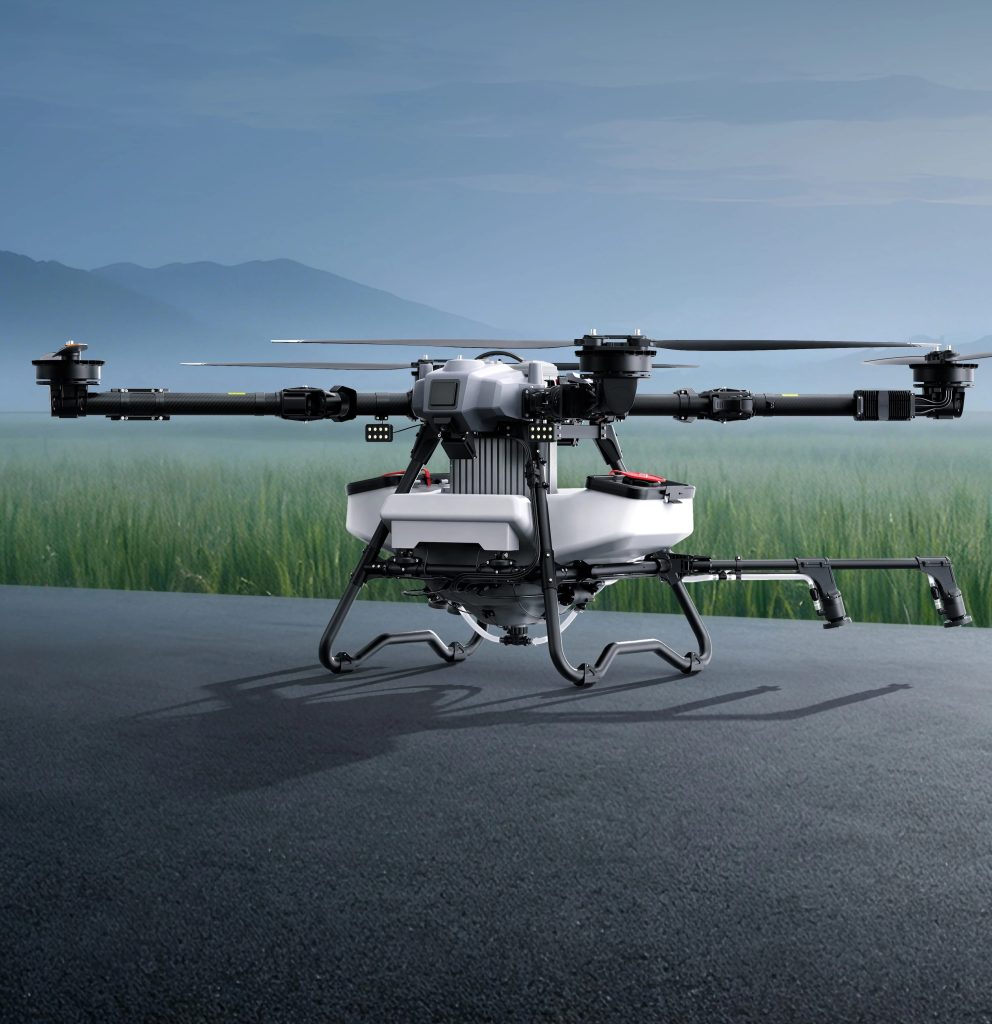
Choosing the right orchard spraying drone is not simply about buying the drone with the largest tank. Fruit tree height, canopy density, orchard area, terrain, spraying frequency, battery capacity, and labor requirements all affect which model is the most practical.
For orchard owners, agricultural contractors, and commercial growers, the goal should be to select a spraying drone that provides good coverage, stable flight, efficient operation, and reasonable operating costs.
1. Why Orchard Spraying Drones Need to Be Selected Carefully
Orchards are different from open farmland.
A field of wheat or corn may have relatively uniform crop height and spacing. An orchard can contain:
- Tall fruit trees
- Dense canopies
- Narrow rows
- Sloping terrain
- Uneven ground
- Obstacles such as branches and utility poles
- Different planting densities
Because of these conditions, a drone that works well for large agricultural fields may not necessarily be the best choice for orchards.
The spraying drone should match the actual working environment.
For example, a small orchard may not need a large-capacity drone. A very large drone can increase purchase costs, battery requirements, transportation requirements, and operating complexity.
2. What Payload Capacity Should You Choose?
Payload capacity is one of the most important factors when choosing an orchard spraying drone.
Common agricultural spraying drone capacities include approximately:
| Tank Capacity | Suitable Application |
|---|---|
| 5–10 L | Small orchards, testing, small farms |
| 10–16 L | Small and medium orchards |
| 16–25 L | Medium commercial orchards |
| 25–40 L | Large orchards and professional contractors |
| 40 L+ | Large-scale commercial operations |
These are general categories rather than fixed standards. Actual productivity depends on flight speed, spray width, terrain, tree density, liquid application rate, battery performance, and operator experience.
Small 5–10 L Drones
A smaller drone can be useful for:
- Small orchards
- Family farms
- Difficult terrain
- Trial operations
- Areas with narrow tree rows
The main advantage is easier transportation and operation.
The disadvantage is that the operator may need to refill the tank more frequently.
10–16 L Drones
This capacity can be a practical option for many small and medium-sized orchards.
It provides a balance between:
- Payload
- Flight time
- Maneuverability
- Battery consumption
- Refilling frequency
- Purchase cost
For growers who do not need to cover hundreds of hectares, this size can be sufficient.
16–25 L Drones
For commercial orchards, a 16–25 L spraying drone can provide higher working efficiency.
It can reduce the number of refills while still maintaining reasonable maneuverability.
This type of drone may be suitable for orchards growing:
- Apples
- Pears
- Peaches
- Plums
- Citrus
- Mangoes
- Avocados
- Other tree crops
However, the actual suitability depends on tree structure and local spraying requirements.
25–40 L Drones
Large-capacity drones are generally more suitable for professional agricultural service providers and large commercial farms.
Their major advantage is higher liquid carrying capacity.
Instead of returning frequently to refill, the operator can cover more area per flight.
However, a larger tank also means a heavier aircraft.
That can increase battery consumption and place higher demands on motors, propellers, batteries, transportation equipment, and takeoff areas.
3. Choose According to Orchard Size
Orchard size is another important consideration.
For example, a small farm with only several hectares does not necessarily need a 40 L drone.
A medium-capacity model may provide sufficient productivity at a lower overall investment.
For larger commercial orchards, however, a higher-capacity drone can reduce downtime caused by frequent refilling.
A simple decision approach is:
Small orchard → prioritize maneuverability and low operating cost.
Medium orchard → balance tank capacity, flight time, and efficiency.
Large orchard → prioritize productivity, battery management, refilling efficiency, and operational stability.
4. Different Fruit Trees Require Different Considerations
Not all fruit trees have the same spraying requirements.
Apple Orchards
Apple trees often have relatively dense canopies.
A suitable drone should provide stable flight and sufficient spray penetration.
The operator should pay attention to:
- Tree height
- Canopy density
- Row spacing
- Spray droplet distribution
- Flight altitude
- Flight speed
Simply increasing the amount of pesticide does not necessarily improve coverage.
Citrus Orchards
Orange, lemon, grapefruit, and other citrus trees can have dense foliage.
The drone should be capable of maintaining a stable flight path while delivering a consistent spray pattern.
Terrain can also be an important factor because citrus orchards are often located in hilly or uneven areas.
Mango Orchards
Mango trees can develop large and dense canopies.
The drone selection should therefore consider the tree height and canopy structure rather than focusing only on tank capacity.
A drone with good obstacle sensing and stable positioning can be particularly useful in complex orchard environments.
Avocado Orchards
Avocado trees may have irregular canopy structures and can be planted on sloped land.
For this type of orchard, flight stability and terrain-following capability may be more important than simply choosing the largest tank.
5. Don’t Choose a Drone Based Only on Tank Size
A common mistake is to think:
Bigger tank = better drone.
This is not necessarily true.
A 40 L drone may carry significantly more liquid than a 10 L drone, but it may also be heavier and consume more battery power.
For a small orchard with narrow rows, a smaller drone may actually be easier and faster to operate.
Therefore, you should evaluate the complete system.
Important specifications include:
- Tank capacity
- Maximum takeoff weight
- Empty weight
- Flight time
- Battery capacity
- Charging time
- Spray width
- Number of nozzles
- Pump flow rate
- Positioning accuracy
- Obstacle avoidance
- Terrain-following capability
- Remote-control range
- Spare battery availability
- Replacement parts
- After-sales support
6. Spray System Is Just as Important as Payload Capacity
A high-capacity tank is not enough.
The spraying system determines how efficiently the liquid is distributed over the trees.
Important components include the:
Pump
The pump needs to provide stable pressure and sufficient flow.
Nozzles
Nozzle selection affects droplet size and spray distribution.
Different applications may require different nozzle configurations.
Spray Width
A wider spray pattern can improve productivity, but it must match the orchard’s tree spacing and canopy structure.
Flow Control
Automatic flow control can help maintain a more consistent application rate when flight speed changes.
This is especially important when operating in irregular terrain.
7. What About Hilly and Mountain Orchards?
Mountain orchards create additional challenges.
Ground-based spraying equipment may have difficulty accessing steep slopes.
An agricultural spraying drone can fly directly over rows and avoid many ground-access problems.
However, the drone should have suitable features for challenging terrain.
Look for:
- Strong positioning performance
- Terrain-following capability
- Obstacle detection
- Stable flight control
- Reliable return-to-home functions
- Adequate battery capacity
The operator should also maintain a safe distance from trees, power lines, buildings, and other obstacles.
8. How Much Area Can an Orchard Spraying Drone Cover?
There is no single number that applies to every orchard.
Actual productivity depends on several factors.
For example:
Working efficiency = flight speed × effective spray width × operating time
But this theoretical calculation does not include:
- Turning time
- Battery replacement
- Refilling
- Charging
- Transportation
- Obstacles
- Terrain
- Operator experience
Therefore, manufacturers should avoid promising a fixed number of acres or hectares per day without knowing the actual orchard conditions.
For buyers, it is better to ask the manufacturer for real-world field test data under conditions similar to their own orchard.
9. How Many Batteries Do You Need?
Battery management can have a major effect on productivity.
If the drone has only one battery, operations may stop frequently for charging.
For commercial orchard spraying, operators may prepare multiple batteries and use a charging system that matches the daily workload.
When evaluating a drone, calculate:
Daily working time + charging time + battery replacement time + refilling time
This gives a more realistic picture of actual productivity.
10. Should You Buy a Small or Large Drone?
A simple comparison can help.
| Requirement | Recommended Direction |
|---|---|
| Small family orchard | 5–10 L |
| Small commercial orchard | 10–16 L |
| Medium commercial orchard | 16–25 L |
| Large orchard | 25–40 L+ |
| Mountain orchard | Prioritize stability and terrain following |
| Dense canopy | Prioritize spray coverage and stable operation |
| Contract spraying business | Prioritize productivity and battery management |
These recommendations are starting points, not universal rules.
The best model depends on the actual orchard.
11. Calculate the Total Cost Before Buying
The purchase price is only one part of the investment.
The total operating cost can include:
- Drone
- Batteries
- Charger
- Spare propellers
- Pumps
- Nozzles
- Maintenance
- Transportation
- Operator labor
- Electricity
- Replacement parts
For example, a cheaper drone may have a lower initial purchase price but higher long-term maintenance costs.
A more expensive drone may be worthwhile if it provides better reliability and productivity.
Therefore, buyers should compare cost per hectare, rather than only comparing the purchase price.
12. Questions to Ask an Orchard Spraying Drone Manufacturer
Before purchasing, ask the manufacturer:
- What is the actual tank capacity?
- What is the recommended working payload?
- How long can the drone fly with a full tank?
- What is the effective spray width?
- What is the pump flow rate?
- What nozzle options are available?
- Does it support terrain following?
- What obstacle-avoidance system does it use?
- How many batteries are recommended for continuous operation?
- How long does one battery take to charge?
- Are spare parts readily available?
- Does the manufacturer provide operator training?
- What warranty is included?
- Is OEM customization available?
- Can the manufacturer provide field testing data?
These questions can help buyers avoid choosing a drone based only on marketing specifications.
FAQ
What size drone is best for a small orchard?
For a small orchard, a 5–10 L or 10–16 L drone may be sufficient. The final choice should consider orchard size, tree density, terrain, and required application rate.
Is a larger spraying drone always better?
No. Larger drones carry more liquid but may require more battery power and have lower maneuverability in narrow or complex orchards.
Can spraying drones work in mountain orchards?
Yes, agricultural drones can be useful in sloped and difficult-to-access orchards. However, the aircraft should have reliable positioning, terrain-following, and obstacle-detection capabilities.
Can one drone spray different types of fruit trees?
Generally, yes. However, flight parameters, application rates, nozzle selection, and operating height may need to be adjusted for different tree species and canopy structures.
How should I choose an orchard spraying drone?
Start with four factors: orchard area, fruit tree type, terrain, and spraying requirements. Then compare tank capacity, flight time, spray system, battery efficiency, safety functions, spare parts, and after-sales support.
Conclusion
Choosing an orchard spraying drone is not simply a matter of selecting the largest tank.
The right drone should match the size of the orchard, fruit tree structure, row spacing, terrain, canopy density, spraying requirements, and expected daily workload.
For small orchards, a compact drone can provide better flexibility and lower operating costs. For medium and large commercial orchards, a higher-capacity drone can improve productivity and reduce refilling time.
Before making a purchase, ask the manufacturer for detailed technical specifications and, whenever possible, request real orchard field-test results.
The best spraying drone is not necessarily the biggest one. It is the model that provides the right balance of spraying performance, operating efficiency, reliability, safety, and total cost for your orchard.


No comments yet