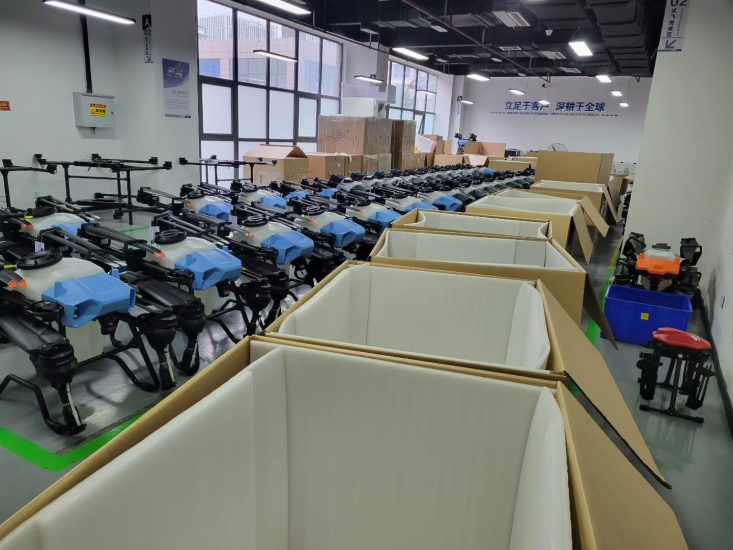


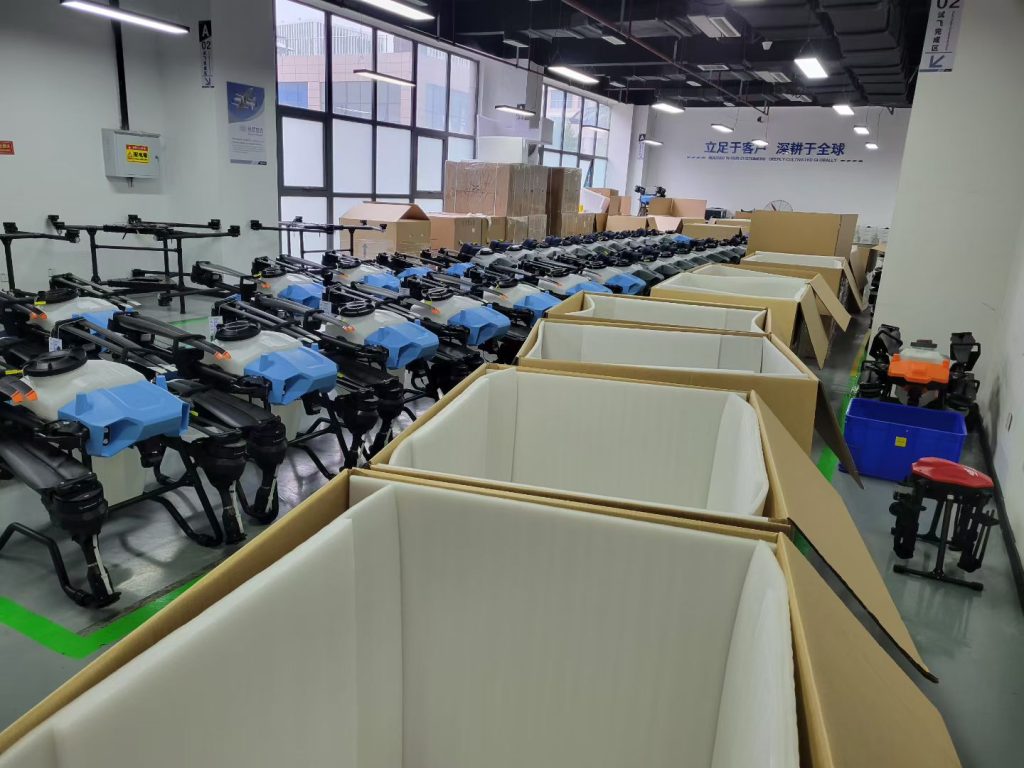
A commercial heavy lift drone can cost anywhere from several thousand dollars to more than US$100,000, depending on its payload capacity, propulsion system, batteries, delivery mechanism, safety equipment and level of customization.
For a buyer, however, the most useful question is not simply:
“How much does a heavy lift drone cost?”
The better question is:
“How much will a complete commercial system cost, and how much will it cost to operate every delivery mission?”
A 30 kg cargo drone designed for short-distance construction work is a very different machine from a 100 kg industrial transport UAV with RTK positioning, redundant propulsion, winch delivery, parachute protection, high-capacity batteries and rapid charging.
This guide explains the realistic cost structure of commercial heavy lift drones, what different payload classes normally cost, what affects the quotation, and how buyers can compare manufacturers without being misled by unusually low prices.
1. Typical Heavy Lift Drone Prices
As a broad purchasing reference, the current market can be divided into several categories.
Heavy Lift Drone Class |
Typical Payload |
Indicative Price Range |
|---|---|---|
Entry industrial platform |
10–20 kg |
US$3,000–8,000 |
Light heavy-lift |
20–30 kg |
US$5,000–12,000+ |
Medium heavy-lift |
30–50 kg |
US$8,000–20,000+ |
Large industrial UAV |
50–80 kg |
US$12,000–30,000+ |
100 kg-class system |
80–100 kg |
US$18,000–40,000+ |
Premium 100 kg system |
Around 100 kg |
US$40,000–60,000+ |
Custom industrial system |
100 kg+ |
US$40,000–100,000+ |
These figures should be treated as market reference ranges, not guaranteed factory prices.
Public Chinese supplier listings illustrate how wide the market can be. For example, one 100 kg eight-axis heavy-lift drone is currently listed around US$20,000, while another 100 kg system is listed around US$49,579–52,188. A separate 100 kg UAV listing is priced at US$45,000 and states a 25-minute flight duration with a 100 kg load.
The difference is not necessarily a sign that one supplier is expensive.
The aircraft may simply be configured differently.
2. Why Heavy Lift Drones Are Expensive
The cost of a heavy lift drone increases much faster than the payload number suggests.
A drone carrying 10 kg does not simply become a 100 kg drone by installing larger motors.
Increasing payload requires improvements throughout the aircraft:
-
Larger motors
-
Larger propellers
-
Stronger arms
-
Stronger landing gear
-
Higher-capacity batteries
-
Higher-current ESCs
-
More powerful flight-control hardware
-
Stronger frame structure
-
Better heat management
-
More reliable communication
-
More advanced positioning
-
Better safety systems
The aircraft also has to remain controllable when the payload is moving or suspended.
This is why a commercial 100 kg drone can cost tens of thousands of dollars rather than a few thousand.
3. The Cheapest Heavy Lift Drone Is Not Always the Cheapest Solution
Suppose three suppliers quote:
Supplier A: US$18,500
Supplier B: US$28,000
Supplier C: US$49,000
At first glance, Supplier A looks like the obvious choice.
But imagine the quotations contain:
Supplier A
-
Aircraft only
-
One battery
-
Basic charger
-
Basic controller
-
No RTK
-
No parachute
-
No winch
-
Limited spare parts
Supplier B
-
Aircraft
-
Two batteries
-
Fast charger
-
RTK
-
Cargo lifting system
-
Radar
-
Spare propellers
-
Training
Supplier C
-
Aircraft
-
Multiple batteries
-
Fast charging system
-
Winch
-
RTK
-
Radar
-
LiDAR
-
Parachute
-
Cargo weighing
-
Automatic balancing
-
Training
-
Spare parts
-
Software
The three prices are no longer directly comparable.
This is one of the most important lessons when purchasing an industrial UAV:
Compare configurations, not product titles.
4. What Is Included in a Commercial Drone Price?
Before comparing quotations, ask the manufacturer to separate the price into individual components.
Aircraft
-
Airframe
-
Motors
-
ESCs
-
Propellers
-
Flight controller
-
Landing gear
-
Communication system
Battery system
-
Main batteries
-
Battery compartment
-
Battery management system
-
Charger
-
Charging cables
Cargo system
-
Cargo platform
-
Hook
-
Cable
-
Winch
-
Weighing module
-
Emergency release system
Navigation
-
GNSS
-
RTK
-
Base station
-
Remote controller
Safety
-
Radar
-
LiDAR
-
Vision sensors
-
Parachute
-
Warning system
Support
-
Training
-
Spare parts
-
Technical documentation
-
Warranty
A quotation that says “US$25,000 per set” is incomplete until the buyer knows exactly what “set” means.
5. How Much Does a 30 kg Heavy Lift Drone Cost?
For buyers who do not need extreme lifting capacity, the 20–30 kg class can be significantly more economical.
A commercial 30 kg system may typically fall around:
US$5,000–12,000+
depending on the configuration.
This class can be suitable for:
-
Small construction materials
-
Agricultural transportation
-
Mountain delivery
-
Emergency supplies
-
Equipment movement
-
Short-distance logistics
For example, if most of your cargo weighs 10–15 kg, purchasing a 100 kg drone may create unnecessary capital and operating costs.
The aircraft should be sized according to the actual cargo distribution, not the heaviest shipment you might handle once a month.
6. How Much Does a 50 kg Heavy Lift Drone Cost?
The 50 kg class is often a useful middle ground for commercial operators.
A realistic market budget is approximately:
US$8,000–20,000+
The final price depends heavily on whether the system is:
-
Basic
-
Fully autonomous
-
RTK-equipped
-
Winch-equipped
-
Redundant
-
Weather-resistant
-
Customized for a specific industry
A 50 kg drone can be particularly attractive for construction contractors because many common materials can be divided into loads below 50 kg.
Instead of trying to transport one extremely heavy load, operators can sometimes achieve better economics by optimizing the size and frequency of each flight.
7. How Much Does an 80 kg Heavy Lift Drone Cost?
An 80 kg aircraft generally moves into a more serious industrial category.
A typical budget may be:
US$12,000–30,000+
At this level, the buyer should pay much more attention to:
-
Maximum takeoff weight
-
Empty aircraft weight
-
Battery weight
-
Payload mechanism
-
Motor redundancy
-
Battery redundancy
-
Wind resistance
-
Loaded flight time
-
Loaded range
-
Emergency procedures
The aircraft is no longer just a large multirotor.
It is becoming an industrial transportation system.
8. How Much Does a 100 kg Heavy Lift Drone Cost?
The 100 kg category attracts considerable attention because it provides enough payload capacity for serious construction and industrial applications.
Current Chinese supplier listings show a wide range.
Examples include:
-
Around US$20,000 for a 100 kg eight-axis heavy-lift system
-
Around US$25,000–35,000 for another 100 kg-class platform
-
Around US$45,000 for a 100 kg system
-
Around US$49,579–52,188 for another 100 kg cargo UAV
-
Around US$52,190 for an HZH Y100 listing
-
Around US$53,721 for another HZH Y100 listing
These public prices demonstrate why a simple “100 kg drone price” is not sufficient for procurement.
The buyer needs to determine whether each quotation represents:
-
Bare aircraft
-
Complete aircraft
-
Battery included
-
Charger included
-
Cargo system included
-
Winch included
-
RTK included
-
Safety equipment included
-
Training included
9. A Real Example of Why Specifications Matter
DJI’s FlyCart 100 provides a useful example of how configuration affects performance.
The official specifications list an aircraft weight of approximately 55.2 kg with the lifting system or 60.2 kg with the winch system, excluding batteries and certain accessories. Its maximum takeoff weight is listed as 170 kg.
The same aircraft supports different battery configurations.
DJI states that the maximum payload is:
-
100 kg with a single battery
-
85 kg with dual batteries
The dual-battery configuration adds battery and related system weight, which affects available payload.
This illustrates an important purchasing principle:
Payload capacity cannot be evaluated separately from aircraft weight and battery configuration.
10. Battery Cost Can Be a Major Part of the Purchase
The aircraft is only one part of the investment.
A commercial operator may need:
-
2 batteries
-
4 batteries
-
6 batteries
-
8 or more batteries
depending on daily utilization.
Why?
Because one battery can be charging while another is flying.
For high-frequency operations, additional batteries can increase productivity much more than buying a larger drone.
When requesting a quotation, ask for separate prices for:
Aircraft + 1 battery
Additional battery
Charger
Fast charger
Charging station
This makes future operating costs much easier to calculate.
11. Fast Charging Can Change the Economics
Imagine two drones.
Drone A
Flight time: 12 minutes
Charging time: 60 minutes
Drone B
Flight time: 12 minutes
Charging time: 15 minutes
If the aircraft is used occasionally, this difference may not matter.
If the aircraft is expected to complete dozens of deliveries per day, it becomes critical.
A commercial operator should therefore calculate:
Flights per hour
rather than only:
Flight time per battery.
DJI’s FlyCart 100, for example, is paired with a 12 kW C12000 charging system, with DJI specifying approximately 9 minutes for charging from 30% to 95% under stated test conditions.
The actual electrical infrastructure required should also be considered.
12. Winch Systems Increase the Cost
A standard lifting hook is generally cheaper than a sophisticated winch system.
A winch can include:
-
Motor
-
Drum
-
Cable
-
Hook
-
Load sensor
-
Control electronics
-
Automatic retraction
-
Emergency release
The additional hardware adds both purchase cost and weight.
But it can dramatically increase the range of applications.
For example, a drone can lower a package onto a high-rise construction platform without landing.
This can be valuable where:
-
The landing area is too small
-
The ground is unsafe
-
The destination is elevated
-
There are obstacles
-
The cargo must be positioned vertically
DJI’s FlyCart 100 winch specification includes a cable system of up to 30 m, weighing functionality, hook control and emergency cable-discard functionality.
13. RTK Adds Cost but Can Add Operational Value
RTK is not necessary for every heavy lift application.
But it becomes useful when:
-
The same route is flown repeatedly
-
Precise delivery is required
-
Construction sites have defined delivery points
-
The aircraft operates close to infrastructure
-
Automated missions are required
The value of RTK should therefore be evaluated according to the application.
A buyer should not simply ask:
Does the drone have RTK?
Ask:
What positioning accuracy can the system actually achieve under our operating conditions?
For example, DJI specifies approximately ±10 cm horizontal and vertical RTK hovering accuracy under strong GNSS conditions for the FlyCart 100.
14. Safety Equipment Can Significantly Increase the Price
Industrial cargo drones carry much heavier loads than consumer UAVs.
Therefore, safety equipment becomes increasingly important.
Potential systems include:
-
Redundant motors
-
Redundant batteries
-
Radar
-
LiDAR
-
Vision sensing
-
Parachute
-
Emergency landing
-
Cargo release
-
Cable cutting
-
Battery monitoring
A parachute system, for example, is not simply another accessory.
It requires:
-
Deployment mechanism
-
Control logic
-
Structural consideration
-
Testing
-
Maintenance
-
Replacement procedures
DJI’s FlyCart 100 includes an integrated parachute system with specified deployment and touchdown characteristics.
When comparing suppliers, ask whether safety equipment is included in the advertised price.
15. What Does a Complete 100 kg System Really Cost?
For a serious commercial operation, a more realistic budget may look like this:
Component |
Indicative Budget |
|---|---|
Aircraft |
US$18,000–50,000+ |
Batteries |
US$2,000–10,000+ |
Charger |
US$500–8,000+ |
Cargo/lifting system |
US$500–5,000+ |
Winch |
US$2,000–8,000+ |
RTK/navigation |
US$500–3,000+ |
Safety equipment |
US$1,000–8,000+ |
Spare parts |
US$1,000–5,000+ |
Training |
US$500–5,000+ |
Shipping/export packaging |
Variable |
These are planning figures rather than fixed prices.
A basic system may stay near the lower end.
A fully equipped industrial system can easily move toward or beyond US$50,000–70,000.
Highly customized systems can exceed US$100,000.
16. The Difference Between Factory Price and Delivered Cost
An overseas buyer should not confuse the factory quotation with the final landed cost.
A Chinese supplier may quote:
US$30,000 EXW
but the buyer may additionally pay for:
-
Inland transportation
-
Export packaging
-
Export documentation
-
Air or sea freight
-
Cargo insurance
-
Import duties
-
Local taxes
-
Customs clearance
-
Local delivery
-
Certification
-
Installation
Therefore, request quotations using clearly defined Incoterms:
-
EXW
-
FOB
-
CIF
-
DAP
-
DDP
For an expensive drone, the difference between EXW and delivered cost can be substantial.
17. How Much Does It Cost to Operate a Heavy Lift Drone?
Purchase price is only one part of the commercial calculation.
Typical operating costs include:
Battery depreciation
Batteries have a finite cycle life.
Propellers
Heavy-lift propellers are expensive compared with consumer drone propellers.
Motors and ESCs
High-power propulsion systems experience significant thermal and mechanical loads.
Maintenance
Regular inspection should include:
-
Motors
-
Propellers
-
Arms
-
Wiring
-
Battery connectors
-
Landing gear
-
Payload mechanism
Operator
A commercial operation needs trained personnel.
Insurance and compliance
Requirements vary by country and operation.
Transportation
Large industrial drones may require special cases or vehicles.
18. A Simple Cost-per-Mission Calculation
Suppose a company invests:
US$40,000
in the aircraft and supporting equipment.
Assume the system performs:
1,000 commercial flights
during its useful operating period.
Ignoring financing, labor and other expenses:
US$40,000 ÷ 1,000 = US$40 per flight
Now add:
-
Battery depreciation
-
Maintenance
-
Operator
-
Electricity
-
Insurance
-
Transportation
The real mission cost may become US$60, US$80 or more.
This calculation is still useful because it allows the buyer to compare the drone against alternative transportation methods.
19. Drone vs Crane: Which Is Cheaper?
The answer depends on the job.
A crane may be much cheaper for moving materials continuously within a fixed construction zone.
A drone becomes more interesting when the delivery points are:
-
Remote
-
Difficult to access
-
Distributed
-
Elevated
-
Across steep terrain
-
Temporary
For example, mobilizing a crane to move a relatively small number of loads to multiple remote locations may be inefficient.
A drone can move directly between points without requiring a road connection.
The economic advantage is therefore often not the drone itself.
It is the accessibility of the delivery route.
20. Drone vs Helicopter
Heavy lift drones can also be compared with helicopters.
A helicopter offers:
-
High payload
-
Long range
-
Fast transportation
But helicopter operations can involve substantial costs for:
-
Aircraft
-
Fuel
-
Pilot
-
Maintenance
-
Insurance
-
Airport/landing infrastructure
-
Regulatory requirements
A battery-powered heavy lift drone may be more attractive for short-range repeated transportation where a helicopter would be economically excessive.
However, drones are not a universal replacement for helicopters.
The correct comparison should be based on:
cost per delivered kilogram
or
cost per completed mission.
21. How Payload Affects Cost per Kilogram
Suppose:
30 kg drone
Mission cost: US$50
Payload: 25 kg
Cost per delivered kg:
US$2/kg
Now suppose:
100 kg drone
Mission cost: US$90
Payload: 80 kg
Cost per delivered kg:
US$1.13/kg
The larger drone has a higher mission cost.
But its cost per kilogram can actually be lower.
This is why procurement decisions should consider utilization and payload efficiency instead of simply comparing purchase prices.
22. What Is a Good ROI for a Heavy Lift Drone?
There is no universal ROI figure.
The business case depends on what the drone replaces.
Consider a construction contractor currently spending US$300 per difficult material-delivery operation.
If the drone reduces that cost to US$100, the saving is:
US$200 per mission
If the complete drone investment is US$40,000:
US$40,000 ÷ US$200 = 200 missions
The theoretical payback point is 200 missions.
But this calculation excludes:
-
Labor
-
Maintenance
-
Batteries
-
Insurance
-
Financing
-
Regulatory costs
-
Downtime
Therefore, it should be treated as a preliminary business-case calculation rather than a guaranteed ROI.
23. How Many Flights Per Day Should You Expect?
This depends on:
-
Flight distance
-
Payload
-
Loading time
-
Unloading time
-
Battery charging
-
Weather
-
Operator efficiency
-
Airspace restrictions
A drone with a 10-minute flight time does not necessarily perform six missions per hour.
A realistic mission cycle might be:
-
Load cargo
-
Battery check
-
Pre-flight inspection
-
Takeoff
-
Outbound flight
-
Cargo delivery
-
Return
-
Landing
-
Battery replacement
-
Reload
The actual cycle time may be considerably longer than the flight time.
For commercial procurement, ask the manufacturer:
“What is the recommended mission cycle time?”
rather than only:
“What is the maximum flight time?”
24. How to Negotiate a Heavy Lift Drone Price
Instead of simply asking the factory to reduce the unit price, negotiate the complete package.
For example:
We are considering two units initially, with additional units if the field test is successful. Please quote the aircraft, batteries, charger, lifting system, spare parts and training separately.
This gives you more negotiating flexibility.
You can then request:
-
Free spare propellers
-
Additional battery discount
-
Charger discount
-
Spare-parts package
-
Training included
-
Extended warranty
-
OEM branding
-
Better shipping terms
Factories are often more willing to negotiate the overall package than simply cutting the aircraft price.
25. What Quantity Gets a Better Price?
Chinese manufacturers may provide different prices for:
-
1 unit
-
2–5 units
-
10 units
-
50 units
-
100+ units
For example, one current 100 kg supplier listing shows US$20,000 for 1–99 units, US$19,300 for 100–999 units and US$18,500 for 1,000+ units.
However, these published quantity tiers do not necessarily represent the final negotiated price.
For specialized UAVs, engineering requirements can be more important than volume.
A 10-unit order with extensive customization may cost more per aircraft than 50 standard units.
26. Beware of Extremely Cheap 100 kg Drone Listings
If you find a supposed 100 kg heavy lift drone for only a few thousand dollars, investigate carefully.
Possible explanations include:
-
Frame only
-
Prototype
-
Agricultural drone incorrectly categorized
-
No battery
-
No charger
-
No controller
-
No payload mechanism
-
Limited payload duration
-
Promotional starting price
-
Custom quotation required
A search result can say:
“100 kg heavy lift drone — US$5,000”
while the actual complete system costs several times more.
Never make a purchase decision based on the headline price alone.
27. The Five Numbers Every Manufacturer Should Provide
Before requesting a formal quotation, ask the supplier for these five numbers:
1. Empty weight
How heavy is the aircraft without cargo and battery?
2. Maximum takeoff weight
What is the total maximum aircraft weight?
3. Recommended payload
What payload should be used for normal commercial operation?
4. Flight time at actual payload
How long does it fly carrying 50 kg, 80 kg or 100 kg?
5. Practical round-trip distance
How far can it fly with cargo and return with a reasonable battery reserve?
These numbers tell you much more than a marketing statement such as “100 kg heavy lift.”
28. Recommended Specification Table for Supplier Comparison
Ask every supplier to complete the same table.
Specification |
Supplier A |
Supplier B |
Supplier C |
|---|---|---|---|
Maximum payload |
|||
Recommended payload |
|||
Empty weight |
|||
Maximum takeoff weight |
|||
Loaded flight time |
|||
Loaded range |
|||
Wind resistance |
|||
Operating altitude |
|||
Battery capacity |
|||
Battery weight |
|||
Charging time |
|||
RTK |
|||
Radar |
|||
LiDAR |
|||
Parachute |
|||
Winch |
|||
Cargo weighing |
|||
Price |
|||
Warranty |
This makes supplier comparison much more objective.
29. What Should a Commercial Buyer Request Before Ordering?
A serious buyer should request:
Technical documents
-
Product specification
-
User manual
-
Battery manual
-
Charger specification
-
Payload system specification
Performance evidence
-
Loaded flight video
-
Payload test
-
Flight-time test
-
Wind test
-
Emergency procedure demonstration
Commercial documents
-
Proforma invoice
-
Warranty terms
-
Spare-parts quotation
-
Packing dimensions
-
Gross weight
-
Incoterm
-
Lead time
Factory information
-
Business license
-
Factory address
-
Production photographs
-
Quality-control process
-
Export experience
For an expensive system, a factory audit or third-party inspection can be worthwhile.
30. Frequently Asked Questions
How much does a heavy lift drone cost?
Commercial heavy lift drones can range from approximately US$5,000 for smaller industrial systems to US$60,000 or more for sophisticated 100 kg-class systems. Highly customized industrial aircraft can exceed US$100,000.
The payload, battery, safety equipment, navigation system and delivery mechanism have a major impact on the final quotation.
How much does a 50 kg heavy lift drone cost?
A reasonable planning range is approximately US$8,000–20,000+.
The actual price depends on whether it includes batteries, charger, RTK, winch, radar, parachute and other equipment.
How much does a 100 kg cargo drone cost?
Current Chinese supplier listings show 100 kg systems from approximately US$20,000 to more than US$50,000, with some products around US$45,000–52,000.
A complete industrial package can cost considerably more than the advertised aircraft price.
Why are some 100 kg drones only US$20,000 while others cost US$50,000?
The configurations are usually different.
The more expensive system may include:
-
More batteries
-
Better charging
-
RTK
-
Radar
-
LiDAR
-
Parachute
-
Winch
-
Cargo weighing
-
Software
-
Training
-
Spare parts
Always compare the complete bill of materials.
Is the battery included in the drone price?
Not necessarily.
Some suppliers quote the aircraft separately from batteries and chargers.
Always request an itemized quotation.
Is a 100 kg payload the same as a 100 kg takeoff weight?
No.
Payload is the cargo weight.
Takeoff weight includes the aircraft, batteries, payload and other equipment.
Confusing these two numbers can lead to a seriously incorrect purchasing decision.
Does maximum payload mean the drone can fly normally with that load?
Not necessarily.
Maximum payload may only be achievable under specific conditions.
For example, DJI lists different maximum payloads for single- and dual-battery configurations on the FlyCart 100 and notes that recommended loading is determined according to aircraft status, environmental conditions and operational tasks.
Does a heavier payload reduce flight time?
Yes.
In general, carrying more weight requires more power.
But the exact reduction depends on aircraft design, battery capacity, speed, altitude, wind and route.
Always ask for flight time at your actual payload.
Is a winch worth the extra cost?
If the drone must deliver cargo to locations where landing is impossible or undesirable, a winch can be extremely useful.
For simple open-area delivery, a conventional lifting system may provide better value.
How much does a heavy lift drone cost to operate?
There is no universal figure.
The operating cost depends on:
-
Electricity
-
Battery depreciation
-
Maintenance
-
Propellers
-
Operator
-
Insurance
-
Compliance
-
Transportation
-
Spare parts
The best approach is to calculate cost per completed mission or cost per delivered kilogram.
Can I buy a heavy lift drone directly from a Chinese manufacturer?
Yes. China has numerous industrial UAV manufacturers and suppliers.
However, buyers should verify whether the company is actually the manufacturer, what is produced in-house, what is outsourced and who provides after-sales technical support.
Can the manufacturer provide OEM customization?
Many Chinese UAV suppliers offer OEM/ODM services.
Common customization areas include:
-
Branding
-
Cargo platform
-
Battery system
-
Communication
-
RTK
-
Winch
-
Software
-
Payload mechanism
Engineering modifications usually cost significantly more than simple branding.
What is the best way to get an accurate price?
Send the manufacturer a detailed RFQ containing:
-
Payload
-
Flight distance
-
Round-trip requirement
-
Operating altitude
-
Wind conditions
-
Cargo dimensions
-
Delivery method
-
Battery requirements
-
Navigation requirements
-
Safety requirements
-
Quantity
-
Destination country
The more precise the requirements, the less likely you are to receive a misleading “starting from” price.
31. Final Buying Advice
The price of a commercial heavy lift drone should never be judged by the aircraft alone.
A realistic procurement budget should include:
Aircraft + batteries + charger + payload system + safety equipment + navigation + spare parts + training + shipping + compliance.
For a buyer who needs a 30 kg drone, spending US$50,000 on a 100 kg platform may make little economic sense.
For a construction or industrial company moving 70–100 kg loads every day, however, a more expensive aircraft can potentially reduce the number of flights and lower the cost per delivered kilogram.
The right question is therefore not:
“Which heavy lift drone is cheapest?”
It is:
“Which drone can complete my required transportation missions at the lowest reliable cost?”
Before placing an order, require the manufacturer to prove three things:
-
The aircraft can carry your actual payload.
-
It can complete your required route with an appropriate battery reserve.
-
The complete system cost is transparent.
If a supplier can provide those three answers with real test data and a detailed quotation, you are no longer comparing advertisements.
You are comparing commercial transportation systems.
THE END


No comments yet