

Many orchard owners face the same problem: traditional spraying requires significant labor, takes a long time, and can be difficult in mountainous or densely planted orchards.
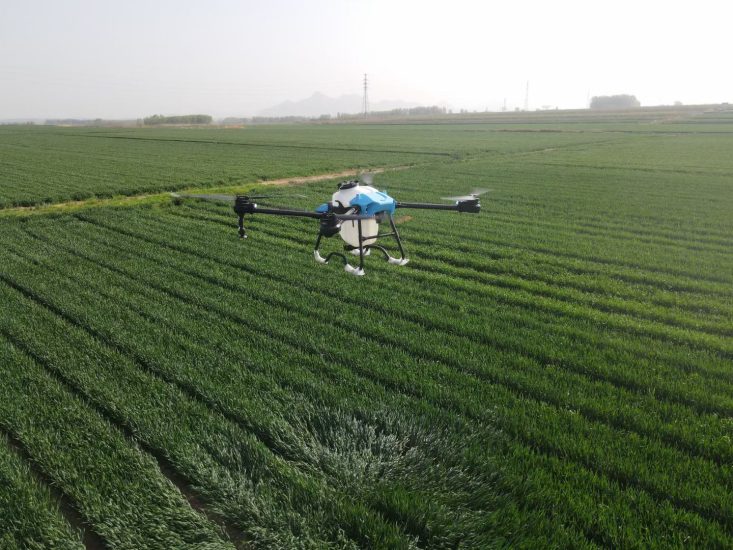
Agricultural spraying drones provide an alternative. They can fly above orchard rows, carry liquid pesticides or other approved agricultural treatments, and operate in areas where ground equipment may have difficulty accessing.
But an important question remains:
How much orchard area can a spraying drone actually cover in one day?
The answer depends on the drone, orchard layout, tree density, terrain, battery system, spray rate, and operator experience.
1. Why Are Spraying Drones Becoming Popular in Orchards?
Traditional orchard spraying can involve:
-
Manual labor
-
Backpack sprayers
-
Tractor-mounted equipment
-
Large ground machines
-
Long working hours
-
Difficult access to steep terrain
For small orchards, these methods may still be practical.
However, when the orchard becomes larger, labor availability and operating efficiency become increasingly important.
A spraying drone can potentially reduce the amount of manual movement required and make difficult-to-access areas easier to treat.
2. How Many Acres Can a Spraying Drone Cover Per Day?
There is no universal number.
A manufacturer may advertise a theoretical working efficiency, but actual orchard productivity can be significantly lower because of:
-
Battery replacement
-
Liquid refilling
-
Charging
-
Turning between rows
-
Obstacles
-
Uneven terrain
-
Dense tree canopies
-
Wind
-
Transportation between orchard sections
-
Operator experience
For practical planning, it is better to calculate productivity using the actual orchard conditions.
For example, a medium-capacity spraying drone might have a theoretical productivity of several acres per hour under favorable conditions, but the actual daily area can be lower after accounting for refilling, batteries, turning, and other downtime.
3. The Basic Productivity Formula
A simple way to estimate theoretical spraying productivity is:
Productivity = Flight Speed × Effective Spray Width
For example, suppose a drone travels at:
5 m/s
and has an effective spray width of:
5 m
The theoretical coverage rate would be:
5 × 5 = 25 m²/s
However, this is only a theoretical calculation.
Real operations require additional time for turning, refilling, battery replacement, and route adjustments.
Therefore:
Actual productivity < Theoretical productivity
This distinction is very important when comparing different drones.
4. Tank Capacity Affects Daily Efficiency
Tank capacity directly affects how often the drone needs to return for refilling.
For example:
10 L Drone
Advantages:
-
Lower aircraft weight
-
Easier transportation
-
Good maneuverability
-
Suitable for small orchards
Disadvantages:
-
More frequent refilling
-
Potentially lower productivity for large farms
20 L Drone
Advantages:
-
Larger liquid capacity
-
Fewer refilling cycles
-
Better suited to medium-sized orchards
Disadvantages:
-
Higher aircraft weight
-
Higher battery requirements
30–40 L Drone
Advantages:
-
High payload
-
Fewer refills
-
Suitable for large commercial operations
Disadvantages:
-
Higher purchase price
-
Higher battery consumption
-
More demanding transportation and maintenance
The best choice depends on the orchard rather than simply choosing the largest available tank.
5. Battery Management Is Critical
Battery management can have a major impact on daily productivity.
A drone may have excellent flight performance, but if the operator has only one battery, the operation may stop frequently for charging.
For professional orchard spraying, operators may use multiple batteries.
A typical workflow can be:
Battery A → spraying
Battery B → charging
Battery C → ready for replacement
This allows the drone to spend more time flying instead of waiting.
6. Refilling Time Can Affect Productivity
Refilling is another hidden factor.
Imagine a drone requires several minutes to refill after each flight.
If the orchard requires many flights, the accumulated refilling time can become significant.
A good operating system should therefore include:
-
Water or mixing tank
-
Fast filling equipment
-
Multiple batteries
-
Efficient charging system
-
Organized transportation
The drone itself is only one part of the entire spraying operation.
7. Orchard Layout Makes a Big Difference
A large, flat orchard with straight rows is easier to spray than a small orchard with irregular boundaries.
For example:
Orchard A
-
Flat terrain
-
Straight rows
-
Uniform tree spacing
-
Few obstacles
This environment can provide relatively high productivity.
Orchard B
-
Steep slopes
-
Irregular rows
-
Dense canopy
-
Power lines
-
Buildings
-
Narrow access
The same drone may achieve significantly lower productivity.
Therefore, buyers should never compare daily acreage without considering orchard conditions.
8. Mountain Orchards May Have Lower Productivity
Mountain orchards can be excellent applications for drones because ground equipment may have difficulty accessing steep slopes.
However, mountainous terrain can also reduce productivity.
The operator may need to:
-
Fly more slowly
-
Avoid obstacles
-
Follow changing terrain
-
Adjust flight routes
-
Change batteries more frequently
-
Move equipment between orchard sections
Safety should always take priority over maximum coverage.
9. Dense Canopies Require More Careful Operation
A dense canopy may require more attention to spray coverage.
Flying too quickly may reduce the amount of spray deposited on the target.
The operator may need to adjust:
-
Flight speed
-
Flight altitude
-
Spray flow
-
Nozzle configuration
-
Route spacing
Therefore, the fastest theoretical speed is not necessarily the best operating speed.
The objective is to achieve the required coverage while following the pesticide label and local regulations.
10. Estimated Agricultural Drone Price Range
The cost of an orchard spraying drone depends heavily on payload capacity and configuration.
A general equipment budget may look like this:
Drone Capacity |
Approximate Price Range |
|---|---|
5–10 L |
US$2,000–5,000 |
10–16 L |
US$3,500–7,000 |
16–25 L |
US$5,000–10,000 |
25–40 L |
US$8,000–15,000+ |
Professional/customized models |
US$15,000–25,000+ |
These figures are indicative budget ranges, not fixed factory quotations.
The final price can depend on:
-
Battery quantity
-
Charger
-
Remote controller
-
Obstacle-sensing system
-
Spray system
-
Spare parts
-
OEM customization
-
Packaging
-
Shipping
-
Import taxes
-
Local certification
International buyers should calculate the total landed cost rather than comparing only the factory equipment price.
11. How to Calculate Your Own Daily Productivity
Instead of asking a manufacturer:
“How many acres can your drone spray per day?”
ask for the assumptions behind the number.
You need to know:
-
Flight speed
-
Spray width
-
Application rate
-
Tank capacity
-
Battery flight time
-
Battery charging time
-
Refilling time
-
Average turning time
-
Terrain conditions
-
Tree height and canopy density
Then you can estimate the actual productivity of your orchard.
12. Example Calculation
Suppose a drone has:
-
20 L tank
-
5 m effective spray width
-
5 m/s operating speed
-
Suitable battery system
-
Relatively flat orchard
-
Straight rows
The theoretical coverage can be calculated from:
5 m/s × 5 m = 25 m²/s
But this does not mean the drone will continuously cover 25 m² every second.
After accounting for turning, refilling, battery changes, and other downtime, practical productivity will be lower.
This is why field testing is more valuable than theoretical calculations.
13. How Much Labor Can a Drone Save?
The amount of labor saved depends on the previous spraying method.
For example, a farm using backpack sprayers may require several workers to cover a large orchard.
A drone can reduce the need for workers to physically carry spraying equipment through every row.
However, the drone still requires trained personnel for:
-
Flight operation
-
Mixing and loading
-
Battery management
-
Equipment inspection
-
Maintenance
-
Safety monitoring
Therefore, the correct comparison is not:
“Drone = no labor.”
It is:
“Drone = potentially less manual spraying labor and more efficient labor allocation.”
FAQ
How many acres can an orchard spraying drone cover in one day?
There is no fixed answer. Actual coverage depends on tank capacity, spray width, flight speed, battery availability, refilling time, terrain, tree density, and operator experience.
Is a 20 L drone suitable for commercial orchards?
A 20 L-class drone can be suitable for many medium-sized commercial orchards, but the correct choice depends on orchard size, tree structure, and terrain.
Is a larger tank always more efficient?
No. A larger tank reduces refilling frequency but also increases aircraft weight and battery requirements.
How can I increase daily spraying productivity?
Multiple batteries, efficient charging, fast refilling equipment, good route planning, and proper operator training can significantly improve overall workflow.
Can drones spray mountainous orchards?
Yes, drones can be particularly useful where ground equipment has difficulty accessing slopes. However, terrain-following, positioning, obstacle awareness, and operator training are important.
Conclusion
An orchard spraying drone can significantly improve spraying efficiency, but daily acreage should never be judged from tank capacity alone.
The real productivity depends on the entire operating system:
Drone + battery + charging + refilling + route planning + operator + orchard conditions
For small orchards, a compact 5–10 L drone may provide sufficient flexibility. For medium orchards, 10–25 L models can offer a balance between capacity and maneuverability. Large commercial farms may benefit from 25–40 L or larger professional systems.
Before purchasing, ask the manufacturer for real-world orchard field-test data, including flight speed, spray width, application rate, battery cycles, and actual operating time.
This will give you a much more realistic estimate of how many acres or hectares the drone can spray in your own orchard.
THE END


No comments yet