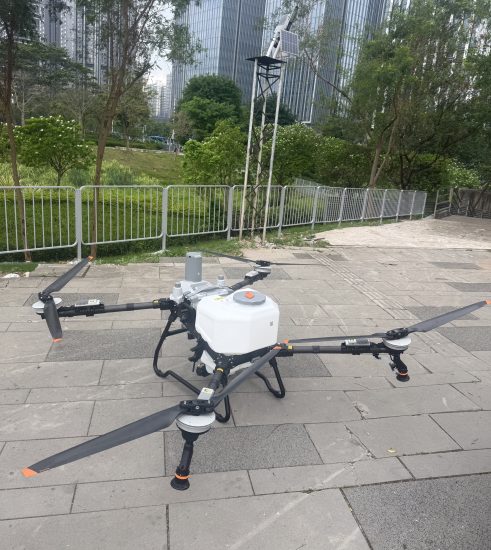



Agricultural spraying drones have become an increasingly practical tool for modern farming. For farmers, agricultural service providers, distributors and importers, choosing the right drone requires more than comparing the purchase price.
The correct agricultural spraying drone should match the crop, field size, terrain, required application rate, payload, battery system, spraying equipment and daily workload.
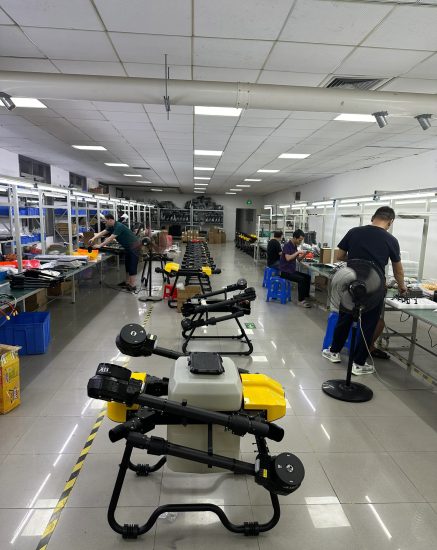
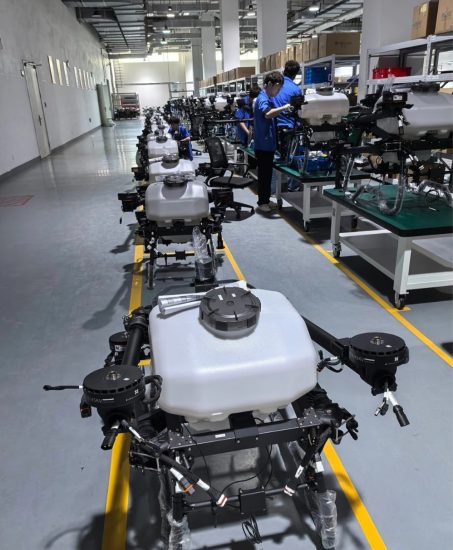
MSOEN is a Chinese UAV manufacturer focused on agricultural spraying drones and professional UAV solutions. Its products are designed for applications such as crop spraying, fertilizer application, orchards, plantations and large-scale agricultural operations.
For product information, specifications and purchasing inquiries, visit the official MSOEN website: www.msoen.com.
1. What Is an Agricultural Spraying Drone?
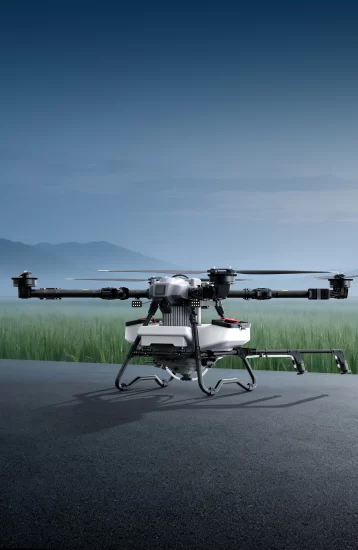
An agricultural spraying drone is an unmanned aerial vehicle equipped with a liquid tank and spraying system.
A typical agricultural spraying drone includes:
- UAV airframe
- Flight controller
- Motors
- Propellers
- GPS/navigation system
- Remote controller
- Liquid tank
- Pump
- Filters
- Spray pipes
- Nozzles
- Battery
- Charger
- Flight-planning functions
The aircraft carries the agricultural liquid and distributes it through the spray system while flying over the target area.
The purpose is to provide an efficient aerial application method for appropriate agricultural operations.
However, the drone does not determine whether a particular chemical is legal or appropriate. Operators must follow local agricultural regulations, product labels and aviation requirements.
2. How to Choose the Right MSOEN Spraying Drone Model
There is no single agricultural drone that is perfect for every farm.
The correct model depends on several factors.
Farm Size
A small farm may need a compact spraying drone, while a commercial agricultural service provider covering hundreds or thousands of hectares may prefer larger payload capacity and multiple batteries.
Crop Type
Rice, wheat, corn, vegetables, orchards and plantations can have different operating requirements.
Terrain
Flat farmland is generally easier to operate in than mountainous or irregular terrain.
Daily Workload
If the drone needs to operate for many hours every day, battery rotation and charging efficiency become particularly important.
Refill Conditions
If the water or liquid preparation point is far from the field, a larger tank may reduce the number of refill cycles.
The correct model should therefore be selected based on the complete operation rather than simply choosing the biggest aircraft.
3. Common Spraying Drone Capacity Options
Tank capacity is one of the easiest specifications for buyers to understand.
MSOEN’s published agricultural drone information includes multiple spraying configurations, including 10L, 16L, 20L, 30L and 40L models, with exact specifications depending on the selected product.
10L Class
A smaller-capacity drone can be suitable for:
- Smaller farms
- Narrow fields
- Training
- Orchard applications
- Operations requiring greater flexibility
Its lower payload can also reduce the overall aircraft load.
16L Class
A 16L configuration can provide a balance between payload and operational flexibility.
It may be suitable for farms that need more capacity than a compact agricultural drone but do not require a larger platform.
20L Class
A 20L spraying drone can be considered for medium-sized agricultural operations.
It provides greater liquid capacity while remaining relatively practical for transportation and field operations.
30L Class
A 30L platform is more suitable for professional agricultural operations where reducing refill frequency is important.
The additional payload means that battery and power-system performance must also be considered.
40L Class
A 40L platform is intended for higher-capacity agricultural operations.
The larger tank can reduce the number of refill cycles, but buyers should evaluate the complete system, including battery consumption, takeoff weight and operating conditions.
4. Why Tank Capacity Is Not the Same as Productivity
A common purchasing mistake is to assume:
Larger tank = higher productivity
This is not always true.
Actual productivity depends on:
Tank capacity + spray width + flight speed + battery life + refill time + charging time + field conditions
For example, a larger drone may carry more liquid but consume more energy.
If batteries require frequent replacement or charging, the theoretical payload advantage may not translate directly into higher daily output.
Therefore, buyers should compare hectares treated per working day, not just liters per flight.
5. Understanding Spray Flow Rate
Spray flow rate determines how quickly liquid leaves the tank through the spraying system.
The actual application rate depends on:
- Pump performance
- Nozzle configuration
- Number of nozzles
- Flight speed
- Flight height
- Liquid characteristics
- Required application rate
A professional spraying drone should provide appropriate control over the spraying system.
MSOEN agricultural drone solutions are designed with agricultural spraying systems suitable for different application requirements.
Operators should always set application parameters according to the agricultural product being used and applicable local requirements.
6. Spray Width and Field Efficiency
Spray width determines how much ground can potentially be covered during each flight pass.
A wider effective spray area can reduce the number of passes needed.
However, effective spray width is influenced by:
- Nozzle configuration
- Flight altitude
- Wind
- Liquid characteristics
- Crop height
- Spray pattern
Therefore, buyers should distinguish between theoretical spray width and actual effective field coverage.
When requesting a quotation, ask the manufacturer for recommended operating parameters instead of relying only on the maximum advertised figure.
7. Flight Time and Battery Capacity
Flight time is another major consideration.
However, actual flight time changes according to:
- Payload
- Wind speed
- Temperature
- Flight speed
- Battery condition
- Terrain
- Operating mode
A drone carrying a full liquid tank normally has different energy requirements from an aircraft operating without payload.
For this reason, buyers should ask:
What is the expected flight time under the recommended spraying payload?
This is more useful than asking only for maximum empty-flight time.
8. Battery Charging and Battery Rotation
Professional agricultural operations require efficient battery management.
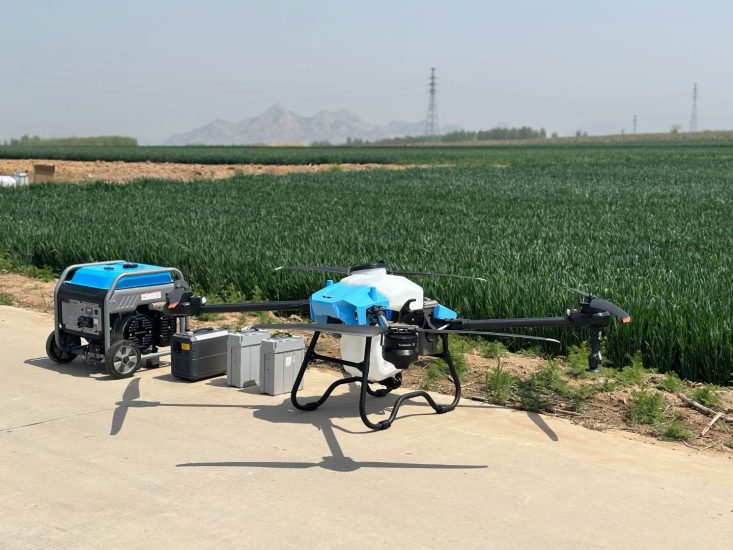
A commercial operation may use multiple batteries in rotation:
Battery A → Flying
Battery B → Charging
Battery C → Ready
This allows the drone to continue operating while batteries are being charged.
Buyers should consider:
- Battery capacity
- Number of batteries
- Charger quantity
- Charging speed
- Battery replacement procedure
- Battery service life
- Storage requirements
For large agricultural operations, battery management can have a significant effect on daily productivity.
9. GPS and Automatic Flight Functions
Modern agricultural drones can provide automated functions that make repetitive agricultural operations easier to manage.
Depending on the MSOEN model, functions may include:
- GPS positioning
- Automatic route planning
- Automatic return
- Route memory
- Breakpoint resume
- Terrain-following functions
- Obstacle detection
These functions can help operators manage large fields more systematically.
However, automated flight should not be treated as completely unattended operation.
Operators should continue monitoring:
- Aircraft position
- Battery
- Weather
- Wind
- Obstacles
- Spraying system
- Field conditions
10. Agricultural Drone Pricing
Agricultural drone pricing can vary significantly.
There is no single universal price because the final cost depends on configuration.
Important price factors include:
Drone Capacity
Larger payload platforms generally require more powerful components and larger batteries.
Battery Quantity
A basic package and a professional operating package may include different battery quantities.
Charger
Charging equipment can have different capacities and functions.
Spraying System
Pump, nozzles, filters and flow-control components affect the final configuration.
Navigation
Additional navigation and sensing systems may increase equipment cost.
Accessories
Extra batteries, chargers, spare parts and other accessories can change the final price.
OEM Customization
Custom branding, packaging, manuals and engineering changes can also affect project costs.
Therefore, buyers should request a complete configuration quotation rather than comparing a single advertised drone price.
11. What Should Be Included in a Quotation?
A professional quotation should clearly identify:
- Drone model
- Tank capacity
- Battery quantity
- Battery specifications
- Charger
- Remote controller
- Spraying system
- Nozzles
- Accessories
- Spare parts
- Packaging
- Warranty
- Production time
- Shipping terms
For international buyers, it is also important to distinguish between:
EXW price
FOB price
CIF price
and other applicable trade terms.
The buyer should confirm exactly what is included before comparing quotations.
12. Example of a Professional Purchasing Inquiry
Instead of sending:
“How much is your spraying drone?”
A more useful inquiry would be:
We are looking for agricultural spraying drones for commercial farming. The target market is [country]. The main crop is [crop], and the total farming area is approximately [number] hectares. We are interested in a [10L/20L/30L/40L] configuration and would like to know the recommended model, flight time under working payload, spray width, battery configuration, charger, spare parts, MOQ, production time and OEM options.
This gives the manufacturer enough information to recommend a suitable product.
13. Choosing a Drone for Different Crops
Rice
Rice fields can be wet and difficult for heavy ground equipment.
Aerial spraying can provide an alternative method for suitable crop-treatment applications.
Corn
Corn fields can benefit from planned aerial routes, especially where large areas need to be treated efficiently.
Wheat
Open wheat fields can be suitable for automated route planning and systematic spraying.
Vegetables
Vegetable crops may require careful application control because different crops and growth stages have different requirements.
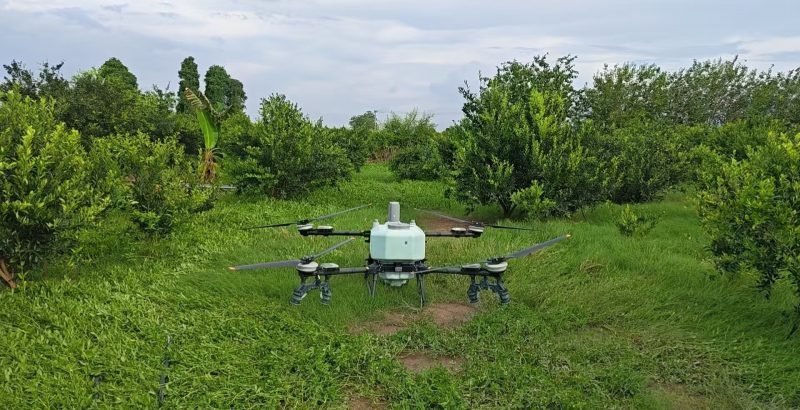
Orchards
Orchards require additional consideration of:
- Tree height
- Canopy density
- Row spacing
- Terrain
- Wind
The drone should be configured and operated according to the specific orchard environment.
Plantations
Plantations can contain slopes and difficult ground access.
Agricultural drones can provide aerial access where traditional equipment is less practical.
14. Agricultural Spraying Drone Maintenance
Regular maintenance is necessary for long-term operation.
After Every Operation
Clean and inspect:
- Tank
- Pump
- Pipes
- Filters
- Nozzles
Aircraft Inspection
Check:
- Propellers
- Motors
- Arms
- Landing structure
- Fasteners
Battery Inspection
Check:
- Battery condition
- Connectors
- Charging status
- Physical damage
Agricultural liquids can leave residues in the spraying system, so cleaning should be performed according to the manufacturer’s instructions.
15. Spare Parts
Commercial operators should consider purchasing critical spare parts together with the drone.
Potential spare parts include:
- Propellers
- Motors
- Pumps
- Nozzles
- Filters
- Pipes
- Batteries
- Chargers
- Electronic components
Having commonly required parts available locally can reduce downtime.
Before placing an order, ask MSOEN which spare parts are recommended for the selected model.
16. OEM and ODM Agricultural Drone Solutions
MSOEN also provides OEM and ODM solutions for customers who require customized agricultural drones.
OEM requirements can include:
- Custom logo
- Custom packaging
- Product labels
- User manuals
- Accessories
- Branding
ODM projects can involve deeper customization, depending on technical requirements.
For example:
- Customized payload
- Modified spraying system
- Hardware configuration
- Product appearance
- Software requirements
MOQ, engineering requirements, development time and testing requirements should be confirmed before beginning a customized project.
17. How to Calculate the Total Cost of Ownership
The purchase price is only one part of the total cost.
A better calculation includes:
Drone + Batteries + Charger + Spare Parts + Shipping + Import Costs + Maintenance + Replacement Parts
For professional agricultural service companies, battery replacement and spare parts can become important long-term expenses.
A slightly more expensive drone may potentially provide better value if it has:
- Better operating efficiency
- Reliable components
- Better battery management
- Easier maintenance
- Stronger technical support
The correct decision should therefore focus on total operating cost, not simply the initial purchase price.
18. Why Choose MSOEN?
MSOEN focuses on UAV manufacturing and provides agricultural spraying drone solutions for international customers.
Its agricultural UAV solutions cover applications such as:
- Crop spraying
- Fertilizer application
- Orchard operations
- Plantation operations
- Precision agriculture
- Agricultural service operations
MSOEN also supports OEM and ODM cooperation for customers requiring customized products.
For detailed product information, specifications and cooperation inquiries, visit:
MSOEN Official Website — www.msoen.com
Frequently Asked Questions
How much does an MSOEN agricultural spraying drone cost?
The price depends on the model and configuration. Tank capacity, batteries, charger, spraying system, navigation equipment, spare parts and customization can all affect the final quotation.
For an accurate quotation, provide the target model, quantity, country and required configuration.
Which MSOEN spraying drone capacity should I choose?
The correct capacity depends on the crop, farm size, terrain, refill conditions and daily workload.
Smaller models can provide flexibility, while larger models can reduce refill frequency.
Is a 20L drone suitable for commercial agriculture?
A 20L configuration can be suitable for many commercial agricultural operations, but the actual suitability depends on field conditions and required daily coverage.
Is a 40L drone better than a 20L drone?
Not necessarily.
A 40L drone carries more liquid, but it also has a higher payload and may require more energy.
The best model is the one that provides the appropriate balance between payload, battery performance, spraying efficiency and operating logistics.
Can MSOEN agricultural drones be used in orchards?
Yes. Agricultural spraying drones can be used for appropriate orchard applications. The operating parameters should be selected according to tree height, canopy structure, terrain and weather.
Does MSOEN provide OEM and ODM services?
Yes. MSOEN provides OEM and ODM solutions for customers requiring customized agricultural drone products.
Can I purchase spare parts with my drone?
Spare-parts packages can be discussed when purchasing the drone. It is recommended that commercial operators maintain critical spare parts for regular maintenance.
How do I request an MSOEN quotation?
Provide:
- Target country
- Crop type
- Farm size
- Desired quantity
- Preferred capacity
- OEM requirements, if any
Then contact MSOEN through www.msoen.com for product and quotation information.
Conclusion
Choosing an agricultural spraying drone requires a complete understanding of model, payload, spraying system, battery capacity, flight time, navigation, pricing and long-term operating costs.
The most expensive drone is not necessarily the best choice, and the cheapest drone is not necessarily the most economical.
The right solution is the one that matches the actual farming operation.
MSOEN provides agricultural spraying drone solutions for farms, agricultural service providers, distributors and international buyers, with different configurations for different operating requirements.
For current product information, OEM/ODM cooperation and purchasing inquiries, visit www.msoen.com and provide your crop, farm size, target country, required capacity and expected workload.
:::


No comments yet