


For many farmers, fertilizer application still relies on tractors, fertilizer spreaders, manual broadcasting, or other ground-based equipment. These methods are well established and can be highly productive under the right conditions.
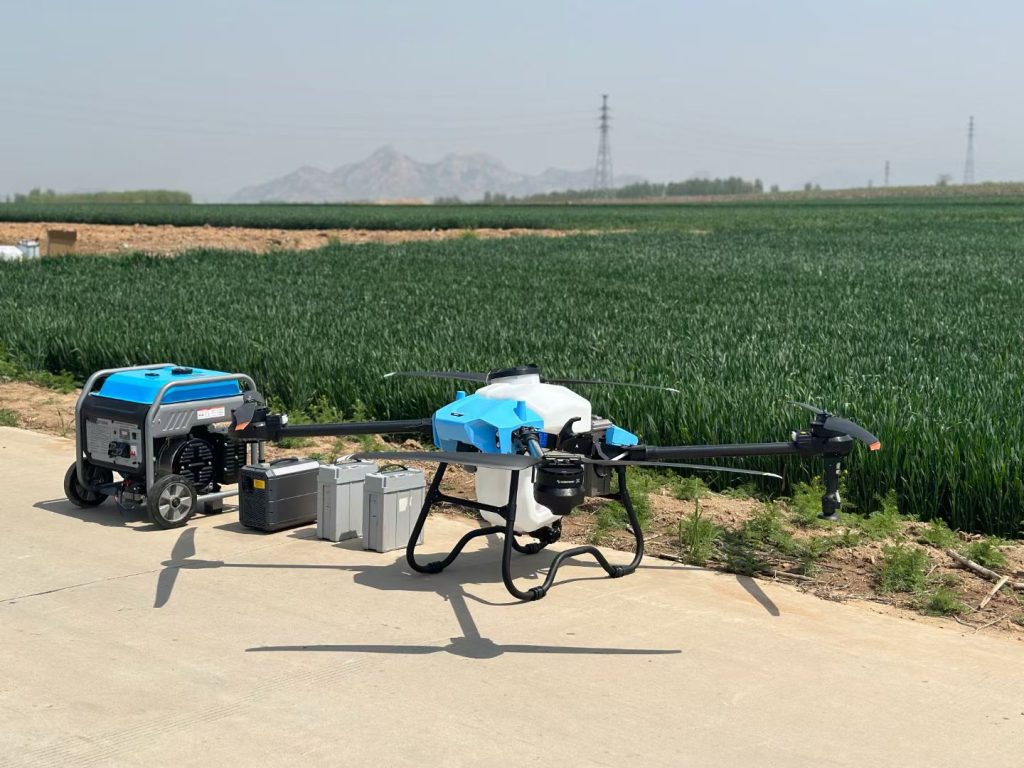
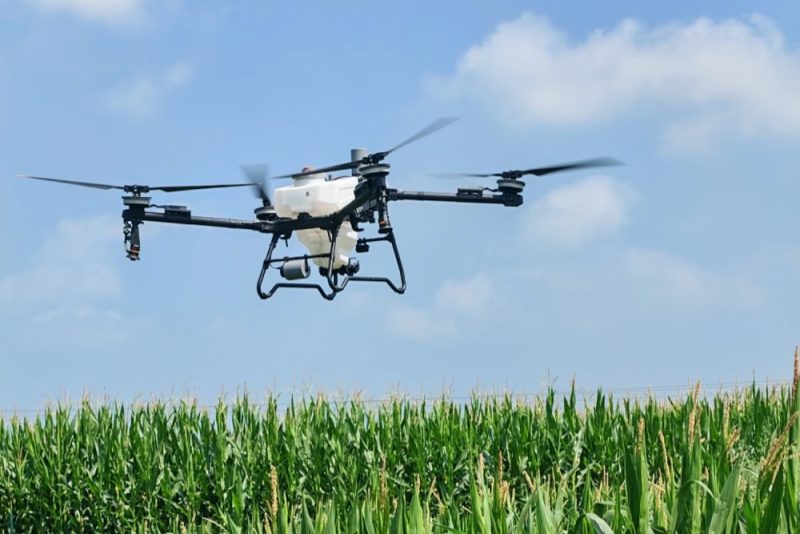
At the same time, agricultural drones equipped with fertilizer spreading systems are becoming increasingly practical. They can distribute granular fertilizer from the air without driving through the crop, making them particularly interesting for wet fields, steep terrain, fragmented farmland, and situations where agricultural labor is limited.
But which option is actually better?
There is no universal answer.
A fertilizer spreading drone can be more efficient in certain conditions, while a tractor-mounted or self-propelled spreader may remain the better choice for other farms. The right decision depends on field size, soil condition, crop type, fertilizer rate, equipment costs, labor availability, and the required application window.
This article compares the two approaches from a practical farming perspective.
Fertilizer Drone vs. Traditional Equipment at a Glance
Factor |
Fertilizer Drone |
Traditional Ground Equipment |
|---|---|---|
Field access |
Excellent for difficult or wet areas |
Requires suitable ground access |
Soil compaction |
Very low |
Can be significant with heavy machinery |
Labor |
Lower field labor requirement |
Often requires driver/operator |
Large flat fields |
Can work well, but needs logistics |
Often highly productive |
Small fragmented fields |
Very flexible |
Moving equipment can be inefficient |
Steep terrain |
Strong advantage |
Often difficult or unsafe |
Wet rice fields |
Particularly suitable |
Ground equipment may struggle |
Payload |
Limited by aircraft design |
Usually much larger |
Refill frequency |
Can be relatively high |
Usually lower |
Battery requirement |
Yes |
Depends on equipment |
Weather sensitivity |
Sensitive to wind and flight conditions |
Also affected by wet soil and weather |
Initial investment |
Moderate to high |
Can be high |
Precision |
Good with proper calibration |
Can also be highly accurate |
Transport between fields |
Easy for smaller systems |
Can require tractors/trucks |
The table shows why neither technology should automatically be considered superior.
1. Field Access: The Biggest Advantage of a Fertilizer Drone
Ground equipment has one obvious requirement:
It needs to reach the field.
This sounds simple, but agricultural land is not always easy to access.
A tractor or fertilizer spreader may have difficulty with:
-
Saturated soil
-
Muddy rice paddies
-
Steep slopes
-
Narrow terraces
-
Soft ground
-
Dense crops
-
Small isolated plots
-
Fields without suitable access roads
A fertilizer drone approaches the problem differently.
The aircraft can take off from a nearby location and fly over the crop, eliminating the need for wheels to enter the field.
This can be a major advantage when ground access is the limiting factor.
Example: Wet Rice Fields
After heavy rainfall or irrigation, a rice field can become difficult for heavy machinery.
A tractor entering the field may:
-
Sink into soft soil
-
Damage young plants
-
Create ruts
-
Compact soil
-
Require additional time to recover
A drone can potentially apply granular fertilizer while remaining airborne.
This does not mean a drone can operate safely in every weather condition. Strong wind, heavy rain, and poor visibility can make drone operations unsuitable.
However, when flying conditions are acceptable, the drone provides an alternative that does not depend on soil bearing capacity.
2. Soil Compaction: Where Drones Have a Clear Advantage
Heavy agricultural machinery places substantial pressure on the soil.
Repeated passes across a field can create compaction, particularly when the soil is wet.
Soil compaction can affect:
-
Root growth
-
Water infiltration
-
Soil aeration
-
Drainage
-
Crop development
A fertilizer drone has no tires or tracks traveling through the crop area.
This means the physical traffic caused by fertilizer application is greatly reduced.
For farms where soil compaction is already a concern, this can be an important reason to consider aerial fertilizer application.
However, the economic value of reduced compaction varies from farm to farm. A farmer should not assume that avoiding one tractor pass will automatically produce a measurable financial return.
It is better considered as one component of the overall cost-benefit calculation.
3. Payload: Traditional Equipment Has the Advantage
This is one area where conventional equipment generally has a major advantage.
A tractor-mounted fertilizer spreader can carry a much larger quantity of material than an agricultural drone.
A drone may have a payload of 20 kg, 30 kg, 40 kg, 50 kg, or another manufacturer-specific capacity.
A tractor-based system may carry substantially more fertilizer in a single load.
That means ground equipment can often cover large areas without frequent refilling.
For example, if a farm needs to apply 3,000 kg of fertilizer, a high-capacity tractor spreader may require far fewer loading cycles than a drone.
This becomes important on very large farms.
Where the Drone Can Still Compete
Payload is only one part of productivity.
If a tractor takes a long time to move between distant fields, gets stuck in wet soil, or requires several workers and vehicles, the larger hopper does not necessarily translate into lower total operating costs.
The correct comparison is therefore:
Total application time per hectare
rather than simply:
Kilograms carried per load
4. Labor Requirements
Traditional fertilizer spreading normally requires an operator for the tractor or spreading machine.
Additional workers may also be needed for:
-
Loading fertilizer
-
Transport
-
Field preparation
-
Equipment movement
-
Maintenance
A drone can reduce some of this labor.
A trained operator can control the aircraft while another person handles fertilizer and batteries, depending on the operating setup and local requirements.
Automation can also reduce the amount of continuous manual flight control required.
However, it would be inaccurate to say that fertilizer drones are completely labor-free.
Drone operations still require:
-
Pre-flight inspection
-
Fertilizer loading
-
Battery management
-
Route planning
-
Flight monitoring
-
Refilling
-
Cleaning
-
Maintenance
The real advantage is labor reduction, not complete elimination of labor.
5. Application Accuracy: Both Systems Can Perform Well
Some buyers assume that drones automatically provide more accurate fertilizer application.
That is not necessarily true.
A properly calibrated traditional spreader can provide excellent application uniformity.
Likewise, a well-designed agricultural drone can provide controlled application when the spreading system is correctly calibrated.
Accuracy depends on several factors.
For drones:
-
Spreader design
-
Fertilizer particle size
-
Flight speed
-
Flight altitude
-
Working width
-
Wind
-
Material flow
-
Calibration
For ground spreaders:
-
Spreader design
-
Driving speed
-
Fertilizer characteristics
-
Working width
-
Calibration
-
Overlap
-
Operator behavior
Neither technology should be considered automatically accurate simply because it uses modern equipment.
6. Fertilizer Distribution and Wind
Drones have an additional variable that ground spreaders do not have to the same degree:
air movement around the aircraft.
Rotor wash can influence how fertilizer particles move after leaving the spreading system.
Environmental wind can also affect distribution.
The actual spreading pattern depends on:
-
Particle weight
-
Particle size
-
Release point
-
Rotor airflow
-
Flight height
-
Wind speed
-
Wind direction
This means a drone operator needs to understand how the particular fertilizer behaves.
A wider advertised spreading width is not necessarily better if fertilizer distribution becomes uneven toward the edges.
The practical working width should be based on acceptable application uniformity.
7. Large Farms: Which Is Better?
For a large, flat farm with good road access, traditional equipment can be extremely competitive.
A tractor-mounted spreader may have:
-
Large fertilizer capacity
-
Long operating time
-
Fast refilling
-
High ground productivity
-
Established maintenance procedures
If the farm already owns the tractor and spreading equipment, replacing the entire system with drones may not make economic sense.
However, drones can still complement conventional equipment.
For example, a farm could use tractors for large accessible fields and drones for:
-
Wet areas
-
Narrow sections
-
Areas inaccessible to tractors
-
Crop areas where ground traffic is undesirable
-
Small fields separated from the main farm
This hybrid approach can sometimes be more practical than choosing only one technology.
8. Small and Fragmented Farms: Drones Can Be More Attractive
Small farms have a different cost structure.
Suppose a farmer has many small plots scattered across a large area.
A tractor may spend significant time:
-
Driving between plots
-
Turning around
-
Loading and unloading
-
Finding suitable access points
The actual fertilizer spreading may represent only part of the total working time.
A drone can be transported relatively easily between fields and launched from suitable locations.
This makes the technology particularly interesting for fragmented farmland.
The smaller the individual fields and the more difficult the ground access, the more valuable aerial flexibility can become.
9. Mountain Farming
Mountain agriculture is another area where drones can provide a significant practical advantage.
Carrying fertilizer manually uphill is physically demanding.
Moving tractors through steep terrain can also be difficult or unsafe.
A drone can transport fertilizer from a lower or more accessible loading point to fields located on slopes.
This can reduce the need for workers to physically carry fertilizer across difficult terrain.
However, mountainous areas can also create challenging wind conditions and obstacles.
A drone intended for this environment should have reliable positioning, stable flight control, and appropriate obstacle-awareness functions.
10. Wet Fields
Wet soil is one of the clearest examples of where a fertilizer drone can outperform ground equipment.
Traditional machinery depends heavily on ground conditions.
If the soil is too soft, the equipment may:
-
Get stuck
-
Damage the field
-
Create deep tracks
-
Consume more fuel
-
Require recovery equipment
A drone avoids these problems because the aircraft never needs to drive across the field.
For rice cultivation and other wet agricultural environments, this can make aerial fertilizer application particularly useful.
11. Operating Costs
Comparing purchase prices alone can produce a misleading conclusion.
A traditional fertilizer system may require:
-
Tractor
-
Spreader
-
Fuel
-
Maintenance
-
Operator
-
Tires
-
Lubricants
-
Repairs
A drone operation may require:
-
Aircraft
-
Batteries
-
Chargers
-
Spreading system
-
Electricity or generator
-
Spare parts
-
Operator
-
Maintenance
Both systems have recurring costs.
The correct calculation is:
Cost per hectare = total application cost ÷ hectares treated
A farmer should include both fixed and variable costs.
Drone Cost Considerations
Important drone costs include:
Battery depreciation
Agricultural drone batteries are consumable components and eventually need replacement.
Charger and power supply
High-capacity batteries require appropriate charging equipment.
Spare parts
Propellers, motors, spreading components, connectors, and other parts may require replacement over time.
Maintenance
Fertilizer dust and residue can affect equipment if cleaning and maintenance are neglected.
Operator training
A trained operator is essential for safe and effective operation.
12. Traditional Equipment Cost Considerations
Ground equipment also has significant operating expenses.
Fuel is an obvious cost.
But it is not the only one.
Farmers should also consider:
-
Tractor depreciation
-
Tire wear
-
Engine maintenance
-
Transmission maintenance
-
Spreader maintenance
-
Lubricants
-
Driver labor
-
Transportation between fields
If the tractor is already being used for other agricultural operations, the incremental cost of fertilizer spreading may be relatively low.
This can make traditional equipment economically attractive.
13. Refill Logistics
Refilling is one of the most important differences between the two systems.
A tractor spreader may carry hundreds of kilograms or more, depending on its design.
A drone carries significantly less.
This means drone operations require a well-organized supply system.
The operator should position fertilizer near the field where possible.
For commercial operations, the workflow may be:
Fertilizer storage → transport vehicle → field loading area → drone → field
If the loading point is far away, time can be lost between flights.
A drone with a large payload can reduce the number of refill cycles, but it may also require more expensive batteries and aircraft components.
Again, there is a balance.
14. Battery Management vs. Fuel Management
Traditional machinery generally relies on fuel.
Drone systems depend on batteries.
Both require planning.
A tractor can often be refueled relatively quickly.
A drone battery requires charging unless spare batteries are available.
For commercial drone operations, multiple batteries and appropriate charging equipment can therefore be essential.
A practical setup may involve:
Battery A: flying
Battery B: charging
Battery C: ready for replacement
The exact configuration depends on the drone, charger, workload, and operating environment.
If a farm has poor access to electricity, charging logistics can become an important consideration.
15. Weather: Neither System Is Weather-Proof
It would be misleading to say that drones solve all weather-related problems.
Drones can be sensitive to:
-
Strong wind
-
Heavy rain
-
Lightning
-
Poor visibility
-
Extreme temperatures
Traditional equipment can also be affected by:
-
Mud
-
Saturated soil
-
Heavy rain
-
Poor traction
-
Reduced field accessibility
The difference is that each system has different limitations.
A drone may be unable to fly because of strong wind while a tractor could still operate on firm ground.
Conversely, a tractor may be unable to enter a wet field while a drone can operate if the aerial conditions are suitable.
16. Maintenance Comparison
Traditional agricultural machinery is mechanically complex.
Maintenance may involve:
-
Engine
-
Transmission
-
Hydraulic system
-
Tires
-
Brakes
-
Spreader mechanism
Drones have fewer conventional mechanical systems but contain sensitive electronic and electrical components.
Maintenance may involve:
-
Motors
-
Propellers
-
Batteries
-
Wiring
-
Connectors
-
Flight-control components
-
Spreading motor
-
Hopper
-
Sensors
Fertilizer is abrasive and potentially corrosive, so cleaning the drone after use is important.
Operators should follow the manufacturer’s maintenance instructions rather than treating the drone like consumer electronics.
17. Which System Is More Environmentally Friendly?
It depends on the entire operation.
A drone can reduce ground traffic and potentially reduce fuel consumption associated with tractor movement.
However, drones require batteries, chargers, electronic components, and replacement parts.
Traditional equipment consumes fuel but may already be part of the farm’s existing machinery fleet.
Therefore, it is difficult to make a universal environmental claim without analyzing the specific farm operation.
The strongest environmental argument for drones is often reduced field traffic, especially in sensitive or wet agricultural areas.
18. Which Is Better for Fertilizer Efficiency?
Neither system automatically uses less fertilizer.
The required fertilizer quantity should be determined by agronomic recommendations and the crop’s actual needs.
A drone can help apply a planned rate accurately if properly calibrated.
A conventional spreader can also achieve accurate application when correctly adjusted.
The important variables are:
Application rate + spreading uniformity + route accuracy + calibration
Not whether the machine has wheels or rotors.
19. When Should You Choose a Fertilizer Drone?
A fertilizer drone is worth serious consideration when several of these conditions apply:
-
Farmland is frequently wet
-
Fields are difficult to access
-
Terrain is steep
-
Farms are highly fragmented
-
Labor is expensive or difficult to find
-
Ground traffic can damage crops
-
Fertilizer must be applied within a short window
-
The farm already uses agricultural drones
-
A flexible application method is needed
In these situations, the drone’s flexibility may outweigh its smaller payload.
20. When Is Traditional Equipment Better?
Traditional equipment may remain the better option when:
-
Fields are very large and flat
-
Ground access is excellent
-
Soil conditions are suitable
-
A high-capacity tractor and spreader are already available
-
Large amounts of fertilizer must be applied quickly
-
Fuel and machinery costs are relatively low
-
Refill infrastructure is highly efficient
For a large commercial farm with excellent field access, a high-capacity ground spreader can be difficult for a small drone to compete with on pure bulk-handling capacity.
21. The Best Solution May Be a Combination
Farmers do not necessarily have to choose one technology exclusively.
A hybrid strategy can be highly practical.
For example:
Tractor spreader → large, flat, accessible fields
Fertilizer drone → wet fields, steep areas, small plots and difficult sections
This allows each technology to be used where it performs best.
The same principle applies to agricultural contractors and service companies.
Instead of replacing every conventional machine, drones can become another tool in the equipment fleet.
22. What Should You Check Before Buying a Fertilizer Drone?
If you are comparing agricultural drones from different manufacturers, do not focus only on the advertised payload.
Check:
Payload
What is the rated fertilizer payload?
Hopper
What is the actual hopper volume?
Spreading system
How is fertilizer released and controlled?
Application rate
What range can the operator adjust?
Working width
What is the practical working width for the fertilizer being used?
Loaded flight time
How long can the drone fly with a realistic fertilizer load?
Battery
How many batteries are recommended?
Charging
How long does a full charge take?
Navigation
Does the system support automatic route planning?
Maintenance
How easy is it to clean and service?
Spare parts
Can important components be obtained quickly?
Support
Does the manufacturer provide technical assistance and training?
These factors will have a much greater impact on actual productivity than a single headline specification.
23. Questions to Ask a Chinese Manufacturer
For overseas buyers sourcing fertilizer drones from China, a detailed inquiry can prevent many misunderstandings.
Instead of asking only:
What is your best price for a 50 kg drone?
Ask:
What is the practical hectares-per-hour performance when the drone carries 50 kg of granular fertilizer at a specified application rate?
Also ask:
-
What fertilizer types have been tested?
-
What particle size is recommended?
-
What is the practical spreading width?
-
What is the loaded flight time?
-
How many batteries are included?
-
What charger is supplied?
-
What spare parts are recommended?
-
What warranty is provided?
-
What technical documents are available?
-
What training is provided?
-
What are the aircraft’s export and shipping specifications?
This gives the buyer a much better basis for comparing suppliers.
Final Verdict: Drone or Traditional Equipment?
The honest answer is:
Neither is universally better.
A traditional fertilizer spreader is difficult to beat when the farm has large, flat, accessible fields and already owns efficient ground equipment.
A fertilizer drone becomes much more attractive when access, soil condition, labor, terrain, or timing creates problems for ground machinery.
The main advantages of a drone are not its ability to carry more fertilizer or replace every tractor.
Its real strengths are:
-
Aerial access
-
Low ground impact
-
Flexible deployment
-
Reduced field traffic
-
Lower dependence on manual broadcasting
-
Ability to work in difficult terrain
-
Rapid treatment of small or fragmented fields
Traditional equipment remains strong in:
-
Payload capacity
-
Large-scale bulk handling
-
Long continuous operation
-
Established refueling systems
-
Large flat fields
-
High-volume ground application
For many farms, the most practical solution is not to replace traditional machinery completely.
It is to use the right equipment for the right field.
A tractor can handle large, accessible areas while a fertilizer drone handles wet, steep, narrow, fragmented, or otherwise difficult sections.
That approach can provide a more realistic balance between productivity, cost, flexibility, and operational risk.
FAQ
Are fertilizer drones better than tractors?
Not in every situation. Drones are generally more useful for wet, steep, fragmented, or difficult-to-access fields, while tractors can be more efficient on large, flat fields with good ground access.
Can a fertilizer drone replace a fertilizer spreader?
It can replace ground spreading in some applications, but not necessarily in every farming operation. High-capacity ground spreaders remain highly productive for large accessible fields.
Which is cheaper, a fertilizer drone or tractor spreading?
There is no universal answer. The comparison should include equipment depreciation, labor, fuel or electricity, batteries, maintenance, fertilizer loading, transportation, and cost per hectare.
Does a drone use less fertilizer?
Not automatically. Fertilizer requirements should be based on crop and soil needs. A properly calibrated drone can apply a planned rate, but accurate conventional spreaders can also do this.
Can drones spread fertilizer on wet fields?
Yes, provided the drone and spreading system are designed for the application and weather conditions are suitable for safe flight. One major advantage is that the drone does not need to drive across wet soil.
Are fertilizer drones suitable for large farms?
They can be, particularly when labor or field access is a problem. However, large farms with excellent ground access may find high-capacity conventional spreaders more productive for some applications.
Are fertilizer drones suitable for rice fields?
Yes. Rice fields are a common application because ground machinery can have difficulty operating in wet conditions.
What is the biggest advantage of a fertilizer drone?
Its biggest practical advantage is flexibility. It can apply fertilizer without driving through the field, which is valuable on wet, steep, narrow, fragmented, or difficult terrain.
What is the biggest disadvantage of a fertilizer drone?
Compared with conventional ground equipment, drones generally have smaller payloads and require battery and charging management. This can increase refill and operational logistics on very large farms.
Should a farm use drones and tractors together?
In many cases, yes. A hybrid system allows tractors to handle large accessible fields while drones handle difficult areas where ground equipment is inefficient or unsuitable.
What should I compare when buying a fertilizer drone?
Compare payload, hopper capacity, fertilizer compatibility, spreading width, application-rate control, loaded flight time, battery system, charging speed, navigation functions, spare parts, technical support, and actual operating productivity.
THE END




No comments yet