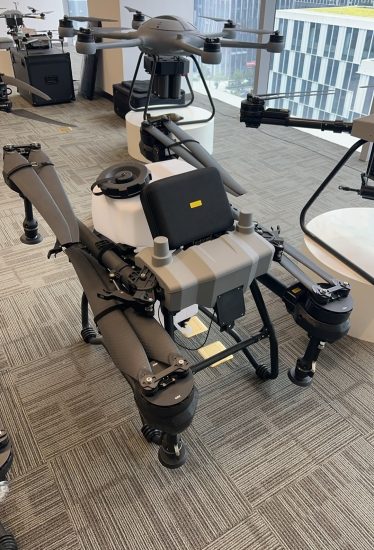



Yes. Some Chinese agricultural spraying drone manufacturers can provide OEM, private-label, and customized solutions for international distributors, agricultural equipment companies, importers, and large commercial buyers.
However, the level of customization varies significantly between manufacturers. Some factories mainly provide logo and packaging customization, while manufacturers with stronger engineering capabilities may be able to modify hardware, spraying configurations, software interfaces, batteries, accessories, and other product details.
For buyers planning to build their own agricultural drone brand, understanding the difference between standard products, OEM products, and genuine custom development is essential.
1. What Does OEM Mean for Agricultural Spraying Drones?
OEM generally means that a manufacturer produces a product according to the buyer’s specifications or brand requirements.
For agricultural spraying drones, OEM may involve:
-
Buyer branding
-
Customized packaging
-
Product labels
-
User manuals
-
Color options
-
Accessories
-
Spare-parts packaging
-
Remote-controller branding
The exact scope depends on the manufacturer’s production and engineering capabilities.
Before placing an OEM order, ask the factory to provide a detailed list of available customization options.
2. OEM vs. Private Label
OEM and private label are sometimes used interchangeably, but buyers should clarify exactly what they need.
Private Label
Private-label projects often involve an existing drone model with the buyer’s:
-
Logo
-
Packaging
-
Labels
-
Manuals
-
Branding
This is usually simpler and faster than developing a new product.
OEM Customization
OEM can involve more substantial changes to:
-
Hardware
-
Components
-
Configuration
-
Product appearance
-
Accessories
-
Software
-
Packaging
The more significant the modification, the more likely the project will require additional engineering work and a higher MOQ.
3. What Can Usually Be Customized?
Depending on the factory, common customization options include the following.
Logo
The manufacturer’s standard drone can be branded with the buyer’s company logo.
Possible locations include:
-
Drone body
-
Battery
-
Remote controller
-
Packaging
-
Spare-parts boxes
The factory should confirm the available printing or labeling methods.
Packaging
International distributors may want packaging that matches their own brand.
Customization may include:
-
Outer carton
-
Protective packaging
-
Product labels
-
Instruction manuals
-
Warning labels
-
Spare-parts packaging
Packaging requirements should be confirmed before mass production.
User Manuals
A manufacturer may be able to provide manuals in:
-
English
-
Spanish
-
Portuguese
-
Arabic
-
French
-
Other languages
The exact options depend on the factory.
For distributors, localized manuals can make product training and after-sales support easier.
4. Can the Drone Tank Be Customized?
In some cases, manufacturers can offer different tank capacities or configurations.
For example, buyers may require a specific balance between:
-
Payload
-
Flight endurance
-
Aircraft weight
-
Spraying efficiency
However, changing the tank capacity can affect the aircraft’s overall design.
A larger tank may require changes to:
-
Frame structure
-
Motors
-
Propellers
-
Battery
-
Flight control
-
Pump system
Therefore, tank customization should be evaluated as part of the complete aircraft system.
5. Can the Spraying System Be Customized?
This is an important area for agricultural buyers.
Depending on the manufacturer, customization may involve:
-
Pumps
-
Nozzles
-
Filters
-
Pipes
-
Flow-control systems
-
Spray outlets
-
Tank configuration
Different crops and applications may require different spraying configurations.
A professional manufacturer should be able to explain how a proposed modification affects:
-
Flow rate
-
Droplet distribution
-
Payload
-
Battery consumption
-
Operating efficiency
6. Can Battery Configurations Be Customized?
Battery configuration can sometimes be adjusted according to the drone’s design.
Potential requirements may include:
-
Different capacity
-
Different quantity
-
Different charging configuration
-
Additional battery packages
-
Local-language battery labels
However, battery modifications should not be treated as a simple cosmetic change.
The battery must be compatible with:
-
Motors
-
Electronic systems
-
Flight controller
-
Power management
-
Charger
-
Aircraft weight
For safety and reliability, buyers should use manufacturer-approved configurations.
7. Can the Charger Be Customized?
International buyers may need chargers compatible with their local electrical systems.
Confirm:
-
Input voltage
-
Frequency
-
Plug type
-
Charging capacity
-
Charging time
-
Safety functions
The charger should be tested with the specific battery configuration before mass production.
8. Can the Remote Controller Be Customized?
Depending on the manufacturer, customization may include:
-
Logo
-
Appearance
-
Packaging
-
Language
-
User interface
-
Product configuration
More advanced software changes may require engineering resources.
Ask the factory whether the requested modification is:
Standard customization, software customization, or new development.
These categories can have very different costs and lead times.
9. Can Software Be Customized?
Software customization is more complex than changing the product logo.
Potential requirements may include:
-
Language interface
-
Route-planning functions
-
Spraying controls
-
User permissions
-
Data display
-
Warning settings
-
Mapping functions
Software changes can require additional development and testing.
If software customization is important, discuss:
-
Development cost
-
Testing
-
Ownership
-
Update responsibilities
-
Long-term support
before signing the agreement.
10. Can the Drone Be Designed for Different Crops?
Manufacturers may be able to configure drones for different agricultural applications.
For example:
Open-Field Crops
Priorities may include:
-
Large operating areas
-
Stable flight
-
Efficient route planning
-
High productivity
Orchards
Priorities may include:
-
Maneuverability
-
Obstacle detection
-
Terrain following
-
Appropriate spraying configuration
Mountainous Agriculture
Priorities may include:
-
Stable altitude control
-
Terrain adaptation
-
Navigation
-
Obstacle awareness
The manufacturer should understand the application before recommending a customized solution.
11. OEM Does Not Always Mean a Completely New Drone
This is an important distinction.
A buyer may request a “custom drone” but actually need only:
-
New logo
-
Customized packaging
-
Local-language manual
-
Different accessories
In this case, modifying an existing platform can be faster and more economical than developing a completely new aircraft.
A new drone platform requires significantly more engineering, testing, tooling, certification, and production validation.
12. How Much Does OEM Customization Cost?
There is no universal OEM price.
Costs depend on the level of customization.
Basic Customization
Examples:
-
Logo
-
Labels
-
Packaging
-
Manual
These usually involve fewer engineering requirements.
Medium Customization
Examples:
-
Tank configuration
-
Battery package
-
Accessories
-
Spraying system
-
Product appearance
These may require additional engineering and testing.
Advanced Custom Development
Examples:
-
New aircraft structure
-
New flight-control system
-
New software
-
New navigation architecture
-
Major hardware changes
These projects can require significant development investment.
Therefore, buyers should request an itemized OEM quotation.
13. MOQ Is an Important OEM Factor
Manufacturers may accept small quantities for standard products but require larger quantities for customized products.
MOQ can depend on:
-
Packaging customization
-
Logo printing
-
Product modifications
-
Tooling
-
Software development
-
Component purchasing
Ask the manufacturer:
What is the MOQ for standard products?
and:
What is the MOQ for my customized configuration?
The two numbers may be very different.
14. OEM Development Time
Customization can increase production lead time.
A typical process may include:
-
Discuss requirements
-
Confirm specifications
-
Prepare design
-
Confirm branding
-
Produce sample
-
Test sample
-
Make revisions
-
Approve final sample
-
Begin mass production
-
Conduct quality inspection
-
Package and ship
Buyers should include this development time when planning inventory.
15. Always Approve a Sample Before Mass Production
For OEM projects, sample approval is extremely important.
Check:
-
Logo position
-
Product appearance
-
Tank configuration
-
Battery
-
Charger
-
Spraying system
-
Remote controller
-
Packaging
-
Labels
-
Manual
-
Software interface
Once the sample is approved, the final specifications should be documented.
16. Create a Detailed OEM Specification Sheet
A detailed specification sheet can prevent misunderstandings.
It should include:
Aircraft
-
Model
-
Dimensions
-
Weight
-
Tank capacity
-
Payload
-
Motors
-
Propellers
Spraying System
-
Pump
-
Flow rate
-
Nozzles
-
Filters
-
Pipes
Battery
-
Voltage
-
Capacity
-
Quantity
-
Charger
-
Charging time
Control System
-
Remote controller
-
Navigation
-
Software
-
Sensors
Branding
-
Logo
-
Position
-
Size
-
Color
-
Packaging
-
Manual
This document should be approved by both parties.
17. Protect Your Brand
If you are building a private-label agricultural drone business, brand protection should be considered early.
Clarify:
-
Who owns the logo?
-
Who owns customized packaging?
-
Can the manufacturer sell the same branded product to other customers?
-
Can the factory use your product images?
-
Who owns custom-developed software?
-
Who owns custom tooling?
These issues should be addressed in the commercial agreement.
18. Check Intellectual Property Ownership
For more advanced OEM projects, intellectual property can become important.
If you pay for a unique design or software development, clarify whether you receive:
-
Exclusive rights
-
Non-exclusive rights
-
Usage rights
-
Design files
-
Software rights
-
Tooling ownership
Do not assume that paying development costs automatically means you own all intellectual property.
The agreement should clearly define ownership and permitted use.
19. Quality Control for OEM Products
OEM products require quality control just like standard products.
Additional checks may include:
-
Logo accuracy
-
Packaging accuracy
-
Customized components
-
Software version
-
Product configuration
-
Battery labeling
-
User manual version
Before shipment, confirm that the delivered products match the approved sample.
20. Spare Parts for OEM Products
A private-label drone should have a long-term spare-parts plan.
Discuss:
-
Motor replacement
-
Propellers
-
Pumps
-
Nozzles
-
Filters
-
Batteries
-
Chargers
-
Electronic components
If you sell the product in another country, consider maintaining a local spare-parts inventory.
This can significantly improve customer service.
21. After-Sales Support for Distributors
If you sell customized agricultural drones under your own brand, customers will expect support from your company.
Therefore, ask the manufacturer whether it can provide:
-
Technical training
-
Troubleshooting guides
-
Installation instructions
-
Video tutorials
-
Software updates
-
Spare parts
-
Remote technical support
A strong OEM relationship should include after-sales support, not just product manufacturing.
22. Compliance Requirements Must Be Considered
Customized products can create additional compliance questions.
If the drone is sold internationally, check the requirements of the destination market.
Potential issues can include:
-
Drone registration
-
Radio-frequency requirements
-
Import regulations
-
Battery transportation
-
Product labeling
-
Operator requirements
-
Agricultural application regulations
Do not assume that compliance documents for a standard model automatically apply to a heavily customized version.
23. How to Choose an OEM Manufacturer
When comparing Chinese manufacturers, evaluate:
Factor |
Importance |
|---|---|
Engineering capability |
Very High |
Product quality |
Very High |
OEM experience |
High |
Quality control |
Very High |
Battery system |
High |
Spraying technology |
Very High |
Software capability |
High |
Spare parts |
High |
Technical support |
High |
Production capacity |
High |
Price |
Medium |
The best OEM partner is not necessarily the supplier with the lowest quotation.
24. Questions to Ask a Chinese OEM Manufacturer
Before starting an OEM project, ask:
-
What agricultural drone models can be customized?
-
What is the MOQ?
-
What branding options are available?
-
Can the tank capacity be customized?
-
Can the spraying system be customized?
-
Can the battery configuration be customized?
-
Can the remote controller interface be customized?
-
Can software be customized?
-
What is the sample development time?
-
What is the mass-production lead time?
-
What is the OEM development cost?
-
What is the warranty?
-
Can spare parts be supplied long term?
-
What technical support is included?
-
What are the intellectual-property terms?
Getting these answers before production can prevent many misunderstandings.
Frequently Asked Questions
Can Chinese agricultural drone manufacturers provide private-label products?
Yes. Some manufacturers can provide private-label agricultural spraying drones with customized logos, packaging, manuals, and accessories. More advanced customization depends on the manufacturer’s engineering capabilities.
Can I customize the tank capacity?
Some manufacturers can offer different tank configurations, but tank changes can affect aircraft weight, propulsion, battery requirements, and flight performance. The complete system should be evaluated together.
Can I customize the battery?
Battery configurations may be customizable within the manufacturer’s tested design range. Buyers should not independently substitute batteries without confirming compatibility and safety.
Can the software be customized?
Some manufacturers can provide language or interface customization, while deeper software development requires stronger engineering capabilities and may involve additional costs and longer development times.
What is the MOQ for OEM agricultural drones?
There is no universal MOQ. It depends on the manufacturer’s policies and the level of customization. Standard products generally require less commitment than heavily customized products.
Should I order a sample before mass production?
Yes. Sample approval is one of the most important steps in an OEM project. The sample should be tested and documented before mass production begins.
OEM Buying Checklist
Before starting an OEM agricultural drone project, confirm:
-
[ ] Manufacturer verified
-
[ ] OEM capability verified
-
[ ] Product model selected
-
[ ] Technical specifications confirmed
-
[ ] Tank capacity confirmed
-
[ ] Spraying system confirmed
-
[ ] Battery configuration confirmed
-
[ ] Charger confirmed
-
[ ] Remote controller confirmed
-
[ ] Software requirements confirmed
-
[ ] Logo confirmed
-
[ ] Packaging confirmed
-
[ ] Manual confirmed
-
[ ] MOQ confirmed
-
[ ] Development cost confirmed
-
[ ] Sample approved
-
[ ] Production lead time confirmed
-
[ ] Quality standards confirmed
-
[ ] Warranty confirmed
-
[ ] Spare-parts plan confirmed
-
[ ] IP ownership confirmed
-
[ ] Destination-market compliance checked
Conclusion
Chinese agricultural spraying drone manufacturers can provide a wide range of OEM and customized solutions, from simple private-label branding to more advanced hardware, spraying-system, battery, software, and product-development projects.
However, buyers should clearly distinguish between simple private labeling, standard OEM customization, and completely new product development.
For most distributors and importers, starting with a proven agricultural drone platform and customizing the branding, packaging, accessories, and selected specifications can provide a practical balance between cost, development time, and product reliability.
Before committing to a large OEM order, verify the manufacturer’s engineering capabilities, request a sample, document every specification, confirm MOQ and lead time, establish quality-control requirements, clarify intellectual-property ownership, and create a long-term spare-parts and technical-support plan.
A successful OEM relationship is not simply about putting a new logo on an agricultural drone. It requires a manufacturer capable of delivering consistent quality, reliable technology, stable production, customized solutions, and long-term support.
THE END


No comments yet