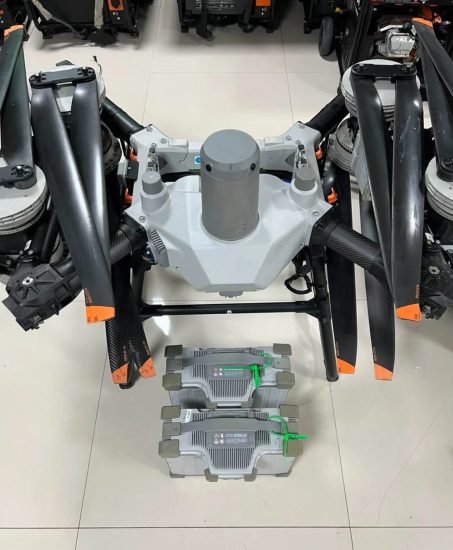



Agricultural drones are becoming an important tool for crop spraying, spreading, field monitoring, and other agricultural applications. For distributors, agricultural equipment companies, and established brands, selling a standard drone model is not always enough.
Different markets have different requirements for payload capacity, battery systems, spraying configurations, remote controllers, software, packaging, branding, and regulatory compliance.
This is where agricultural drone OEM and ODM services can provide an advantage.
Working with an experienced Chinese agricultural drone manufacturer can allow businesses to develop customized products without building an entire UAV production system from the ground up.
This guide explains how agricultural drone OEM and ODM projects work, what can be customized, how to control costs, and what buyers should check before starting a project.
1. What Is Agricultural Drone OEM?
OEM stands for Original Equipment Manufacturer.
In an agricultural drone OEM project, the manufacturer usually provides an existing or proven drone platform while the buyer customizes selected elements for its own brand or market.
Common OEM customization may include:
- Company logo
- Product name
- Product labels
- Packaging
- User manuals
- Color
- Remote-controller branding
- Accessories
- Spare-parts packages
OEM is generally faster and less expensive than developing a completely new agricultural drone.
For distributors entering a new market, OEM can be a practical way to build a private-label agricultural UAV product line.
2. What Is Agricultural Drone ODM?
ODM stands for Original Design Manufacturer.
An ODM project generally involves deeper product development or modification.
Instead of simply putting your logo on an existing product, the manufacturer may help develop a configuration specifically for your market.
ODM may involve:
- Mechanical modifications
- New frame design
- Different tank configuration
- Motor changes
- Battery-system modifications
- Spraying-system development
- Software customization
- Remote-controller changes
- New accessories
- Product testing
Because ODM requires more engineering work, development time and investment are usually higher than standard OEM.
3. OEM vs ODM: Which Is Better?
The right approach depends on your business objectives.
| Requirement | OEM | ODM |
|---|---|---|
| Logo customization | Yes | Yes |
| Packaging | Yes | Yes |
| Manuals | Yes | Yes |
| Color | Often | Yes |
| Standard product platform | Yes | Usually |
| Hardware modification | Limited | More flexible |
| Software modification | Limited/possible | More flexible |
| New product development | No/limited | Yes |
| Development cost | Lower | Higher |
| Development time | Shorter | Longer |
| Suitable for | Distributors/private labels | Brands/developers |
If you mainly need your own brand identity, OEM may be sufficient.
If you need a product designed around unique technical or market requirements, ODM may be more appropriate.
4. Why Customize Agricultural Drones for a Local Market?
Agricultural conditions differ significantly between countries.
A drone designed for one market may not be the ideal configuration for another.
Differences may include:
- Crop types
- Farm size
- Terrain
- Climate
- Wind conditions
- Spraying methods
- Agricultural chemicals
- Operator experience
- Local regulations
- Customer budget
For example, a distributor serving orchard operators may require a different configuration from a company serving large open-field farms.
Customization allows the product to better match the actual application.
5. What Can Be Customized?
The level of customization depends on the manufacturer.
Common areas include:
Exterior branding
- Logo
- Model name
- Product labels
- Color
- Brand markings
Packaging
- Carton design
- Protective case
- Printed instructions
- Product inserts
- Spare-parts packaging
Documentation
- User manual
- Quick-start guide
- Maintenance instructions
- Warranty card
- Safety information
Accessories
- Spare propellers
- Nozzles
- Pumps
- Filters
- Charging accessories
- Transport equipment
Hardware
More advanced projects may customize:
- Tank
- Frame
- Motors
- Pump
- Spray system
- Battery
- Controller
- Sensors
- Radar
Software
Depending on the manufacturer’s development capability, customization may include:
- Interface
- Language
- Flight settings
- Route planning
- Spraying parameters
- Data functions
Not every manufacturer supports every type of customization, so requirements should be confirmed before signing a development agreement.
6. Start With a Detailed Product Requirement Document
Before asking a Chinese manufacturer for an OEM or ODM quotation, prepare a product requirement document.
It should describe:
- Target country
- Target customers
- Crop types
- Expected payload
- Tank capacity
- Flight-time target
- Spray width
- Flow rate
- Battery requirements
- Controller requirements
- Radar requirements
- Branding
- Packaging
- Expected order quantity
- Regulatory requirements
The more precise the requirements, the easier it is for the manufacturer to estimate development costs.
7. Define the Target Customer
OEM and ODM projects should begin with the customer rather than the product.
Ask:
Who will use this agricultural drone?
Potential customers include:
- Large farms
- Agricultural contractors
- Crop-protection companies
- Agricultural cooperatives
- Equipment distributors
- Government projects
- Agricultural service providers
Each group may have different requirements.
For example, a professional spraying company may prioritize productivity and battery efficiency, while a distributor may prioritize price, reliability, spare parts, and easy maintenance.
8. Select the Right Base Drone
For OEM projects, choosing the correct base platform is extremely important.
Look at:
- Payload
- Flight performance
- Frame design
- Battery system
- Motor configuration
- Spray system
- Controller
- Radar
- Navigation
- Spare parts
If the base drone already meets most of your technical requirements, customization becomes easier and less expensive.
Trying to transform an unsuitable platform into a completely different product can increase development costs and lead time.
9. Understand OEM MOQ
OEM manufacturers often require a minimum order quantity.
MOQ may depend on:
- Logo printing
- Packaging
- Product color
- Custom components
- Development work
- Tooling
- Production setup
Basic branding may be possible at a lower quantity than deep hardware customization.
Ask the manufacturer for separate MOQs for:
- Sample
- Standard production
- Logo customization
- Custom packaging
- Hardware modification
- ODM development
This prevents misunderstandings during negotiations.
10. OEM Sample Development
Before mass production, request an OEM sample.
The sample should represent the final production configuration as closely as possible.
Check:
- Logo placement
- Product color
- Labels
- Packaging
- Remote controller
- Accessories
- Manuals
- Software
- Hardware configuration
Do not approve mass production based only on a digital rendering.
The physical sample should be inspected and approved.
11. ODM Product Development Process
A typical ODM agricultural drone project may involve several stages.
Stage 1: Requirements
Define the target market and product specifications.
Stage 2: Technical evaluation
The manufacturer evaluates whether the requirements are technically achievable.
Stage 3: Design
Mechanical, electronic, and software designs are developed or modified.
Stage 4: Prototype
A prototype is produced.
Stage 5: Testing
The prototype is tested for:
- Flight
- Payload
- Spraying
- Battery
- Communication
- Safety
Stage 6: Modification
Problems identified during testing are corrected.
Stage 7: Final sample
A final pre-production sample is approved.
Stage 8: Mass production
Production begins after final approval.
Stage 9: Quality inspection
Finished products are inspected before shipment.
This process can take considerably longer than standard OEM branding.
12. Hardware Customization
Hardware customization should be based on actual application requirements.
Potential modifications include:
Tank
Different tank capacities may be required for different farming operations.
Spray system
The pump, nozzle, pipe, and flow-control configuration can affect application performance.
Battery
Battery voltage and capacity must be matched with the aircraft’s electrical system.
Motors
Motor and propeller combinations affect lift, efficiency, and flight performance.
Frame
The frame must safely support the aircraft and payload under operating conditions.
Hardware changes should always be evaluated by qualified engineers.
13. Software Customization
Software can be an important part of agricultural drone OEM and ODM projects.
Potential requirements may include:
- Local language
- Customized user interface
- Flight settings
- Spraying parameters
- Route planning
- Data management
- Customer-specific functions
Software customization can require significantly more development work than changing a logo or package.
Before starting development, clarify:
- Which features are required?
- Who owns the software?
- Who owns the source code?
- Who maintains the software?
- How are updates provided?
- What happens if the supplier relationship ends?
These issues should be documented in the agreement.
14. Battery Customization
Battery customization requires particular attention.
The battery must be compatible with:
- Motors
- ESCs
- Flight controller
- Charger
- Power-management system
- Safety system
Changing battery specifications without complete system testing can affect flight performance and safety.
If a market requires a different battery configuration, the manufacturer should conduct appropriate engineering validation before mass production.
15. Branding and Packaging
For private-label agricultural drone businesses, branding can be one of the easiest ways to differentiate a product.
Branding may include:
- Aircraft logo
- Battery logo
- Remote-controller logo
- Charger branding
- Product labels
- Packaging
- Manuals
- Spare-parts packaging
However, branding should look professional and consistent.
A complete private-label product should have the same brand identity across the aircraft, accessories, packaging, documentation, and customer support materials.
16. Certification and Regulatory Compliance
OEM and ODM customization can affect regulatory requirements.
A certification associated with one configuration may not automatically apply to a significantly modified product.
Before changing:
- Radio systems
- Communication modules
- Batteries
- Controllers
- Electronic components
- Software
check whether additional testing or approval is required in the target market.
Do not wait until mass production is complete to discover that the customized product cannot legally be sold or operated.
17. Intellectual Property and Ownership
Intellectual property should be discussed before development begins.
For an ODM project, clarify ownership of:
- Product designs
- CAD files
- Software
- Firmware
- Customized components
- Branding
- Technical documents
- Tooling
If you are paying for custom development, the contract should clearly state what rights you receive.
Do not rely solely on verbal promises.
18. Tooling and Development Costs
Some customized products may require additional tooling.
Potential costs include:
- Mold development
- Mechanical tooling
- Packaging molds
- Custom components
- Prototype production
- Software development
- Testing
- Certification
Ask the manufacturer to separate these costs from the unit price.
A transparent quotation might show:
Development cost
Tooling cost
Sample cost
Unit production cost
Packaging cost
Certification cost
This makes it easier to calculate the real investment.
19. How to Control OEM Costs
Customization can become expensive if every component is modified.
A practical approach is to keep as much of the proven platform as possible.
For example:
Existing aircraft + customized logo + customized packaging + localized manual
may be much more economical than:
New aircraft + new battery + new controller + new software + new frame + new spray system.
Start with the most important differences.
Customize what your customers actually value.
20. Test the Customized Drone
Never skip testing because the base drone has already been tested.
A customized product must be evaluated again.
Testing can include:
Flight testing
- Takeoff
- Hover
- Turning
- Landing
- Return-to-home
Payload testing
- Empty tank
- Partial load
- Recommended operating load
Spraying testing
- Flow rate
- Spray width
- Nozzle performance
- Pump stability
Battery testing
- Charging
- Operating time
- Temperature
- Monitoring
Communication testing
- Remote controller
- Signal stability
- Safety functions
The exact test program should be based on the final product configuration.
21. Quality Control During Mass Production
Once the OEM or ODM product enters production, quality control becomes critical.
A suitable process may include:
- Incoming component inspection
- Assembly inspection
- Electrical testing
- Battery testing
- Software verification
- Flight testing
- Spraying-system testing
- Final inspection
- Packaging inspection
For larger orders, buyers may also use third-party inspection services.
The approved sample should be used as a reference for mass-production inspection.
22. Spare Parts for OEM Products
Private-label products still require long-term spare-parts support.
Create a spare-parts plan before launching the product.
Potential spare parts include:
- Propellers
- Motors
- Pumps
- Nozzles
- Filters
- Batteries
- Chargers
- Landing components
- Sensors
- Radar modules
- Electronic components
Your manufacturer should provide pricing and lead times for replacement parts.
For distributors, maintaining local stock of frequently replaced components can improve customer satisfaction.
23. After-Sales Support for Your Brand
When you sell an OEM agricultural drone under your own brand, customers will generally contact your company first.
Therefore, you need a clear technical-support structure.
Prepare:
- User manuals
- Installation instructions
- Troubleshooting guides
- Maintenance instructions
- Training videos
- Warranty procedures
- Spare-parts procedures
Your Chinese manufacturing partner should support your technical team when problems cannot be resolved locally.
24. Production Lead Time
OEM and ODM products generally require more planning than standard products.
Lead time may include:
- Design
- Sampling
- Testing
- Modification
- Packaging production
- Certification
- Mass production
Ask the manufacturer to provide a project schedule.
For example:
| Stage | Target |
|---|---|
| Requirement confirmation | Completed |
| Technical evaluation | Completed |
| Prototype | Scheduled |
| Testing | Scheduled |
| Final sample | Scheduled |
| Mass production | Scheduled |
| Inspection | Scheduled |
| Shipment | Scheduled |
A documented timeline makes project management easier.
25. How to Choose an Agricultural Drone OEM Manufacturer in China
When evaluating potential OEM/ODM partners, consider:
Manufacturing capability
Can the company produce the required volume?
Engineering capability
Can the company modify hardware and software?
Quality control
Does the factory have a consistent testing process?
Product experience
Does the manufacturer understand agricultural UAV applications?
Spare parts
Can replacement components be supplied over the long term?
Technical support
Can your team receive timely assistance?
Export experience
Does the manufacturer understand international shipping and documentation?
Communication
Can technical requirements be discussed clearly?
A low price should not be the main selection criterion.
26. Questions to Ask Before Starting an OEM Project
Ask the manufacturer:
- What OEM services do you provide?
- What is the MOQ?
- What is the sample cost?
- What is the development cost?
- What customization is possible?
- Can the hardware be modified?
- Can the software be customized?
- What is the production lead time?
- What is the warranty?
- Can you provide spare parts?
- Who owns the customized design?
- Who owns the software?
- Can you provide technical documentation?
- What certifications are available?
- Can you support our target market?
- Can you provide a factory audit or video tour?
- Can we perform pre-shipment inspection?
- What happens if components become unavailable?
- How long can you supply spare parts?
- What support is available after mass production?
The answers should be documented before development begins.
27. Common OEM Mistakes
Starting without clear specifications
Unclear requirements often result in repeated modifications.
Choosing only by price
Cheap development may result in expensive problems later.
Skipping sample testing
A physical sample is essential.
Ignoring local regulations
Customization can affect certification and market access.
Failing to define intellectual property
Ownership should be clearly documented.
Changing too many components
Excessive customization increases cost and development risk.
Ignoring after-sales support
Your customers will need technical assistance after purchase.
28. A Practical OEM/ODM Strategy for Distributors
If you are entering the agricultural drone market, consider a phased approach.
Phase 1: Market research
Identify customer requirements and competing products.
Phase 2: Select a proven platform
Choose an existing agricultural drone that already meets most technical requirements.
Phase 3: Basic OEM
Customize branding, packaging, manuals, and selected accessories.
Phase 4: Market testing
Sell a limited quantity and collect customer feedback.
Phase 5: Product optimization
Modify the product based on actual market requirements.
Phase 6: Advanced ODM
Develop deeper hardware or software customization if the market justifies the investment.
This approach can reduce the risk of investing heavily in a product before demand has been proven.
Conclusion
Agricultural drone OEM and ODM can help distributors, agricultural equipment companies, and established brands develop products tailored to their target markets without building a complete manufacturing operation themselves.
OEM is generally suitable for branding and selected product customization, while ODM is better suited to businesses that require deeper hardware, software, or structural modifications.
The key to a successful project is careful planning.
Start by defining the target market and customer requirements. Choose a proven base platform, agree on specifications, clarify development costs and MOQ, define intellectual-property ownership, test the customized product, establish quality-control procedures, and prepare a long-term spare-parts and after-sales plan.
For businesses sourcing agricultural drones from China, the best OEM/ODM relationship is not simply about obtaining a customized product. It is about building a reliable supply chain that can provide consistent quality, technical support, scalable production, spare parts, and continuous product development as the market grows.


No comments yet