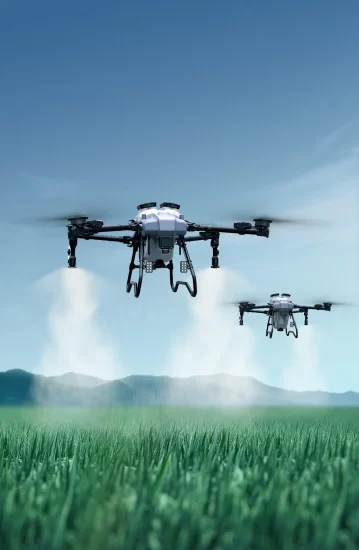


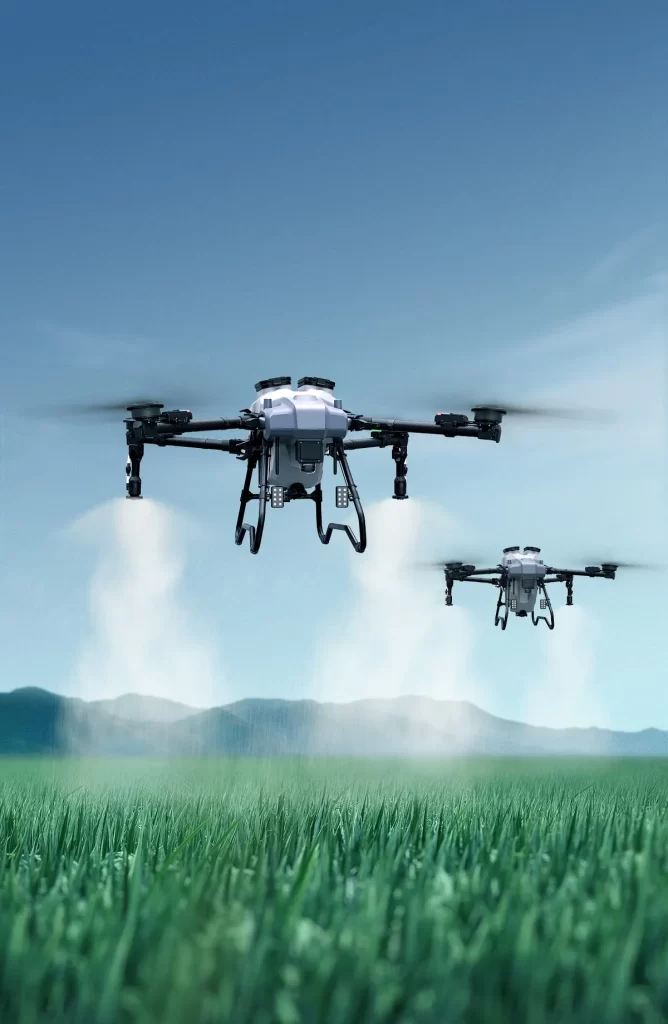
For a vegetable farmer managing 300 mu (approximately 20 hectares) of mixed crops, the annual spraying season is a logistical marathon. Under traditional manual methods, a crew of five workers using knapsack sprayers would need 10 to 14 days to complete a full coverage cycle. In that time, a pest outbreak can spread from a few isolated plants to an entire field.
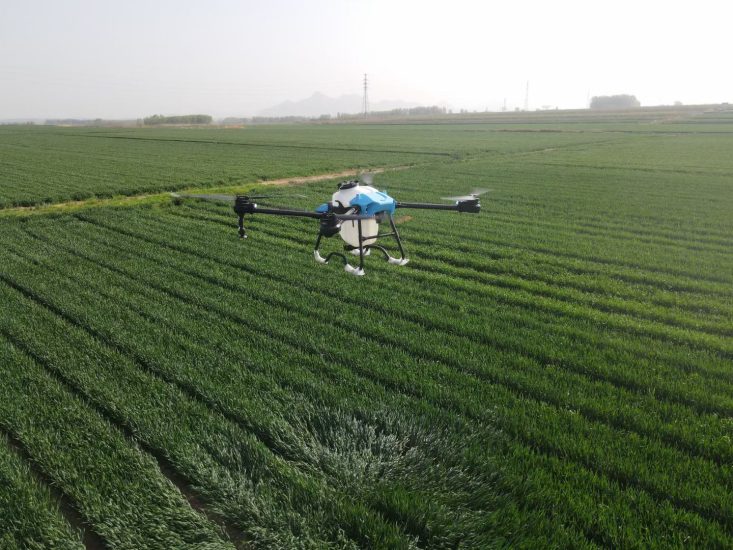
Today, a well-configured agricultural drone operation can spray those same 300 mu in just 3 days—with one machine, one pilot, and significantly less pesticide. This article breaks down exactly how this is possible, what equipment and workflow make it happen, and what farmers need to know before making the switch.
The Math Behind 300 Mu in 3 Days
To understand how a single drone achieves this, we need to look at real-world field performance rather than laboratory maximums.
A modern agricultural drone designed for vegetable farming typically operates with the following specifications:
Parameter |
Typical Performance |
|---|---|
Spray width per pass |
4–7 meters |
Flight speed |
3–6 m/s (10–22 km/h) |
Tank capacity |
30–50 liters |
Spray volume per hectare |
10–30 liters |
Coverage per full tank |
1.5–3 mu (0.1–0.2 ha) |
Flight time per tank |
6–10 minutes |
Battery swap + refill cycle |
2–3 minutes |
In a well-run operation, a pilot can complete 60–80 spray missions per day, covering 100–120 mu (6.7–8 hectares) of vegetable crops daily. Over three working days, that totals 300–360 mu—comfortably covering the target area.
The Workflow That Makes It Possible
Achieving 300 mu in 3 days is not just about the drone’s speed. It requires a coordinated ground operation. Here is the standard workflow used by professional drone spraying teams:
Day 1: Morning – Field Mapping and Setup
Before the drone leaves the ground, the pilot uses onboard mapping software to survey each field. The system generates an optimal flight path that accounts for field boundaries, no-spray zones (roads, water sources, residential areas), and crop row orientation. This process takes 20–40 minutes per field but eliminates wasted flight time and ensures complete coverage from the very first pass.
Day 1–3: Core Spraying Operation
A two-person team operates in a continuous cycle:
-
Pilot monitors the drone, manages the flight plan, and handles battery swaps.
-
Ground assistant prepares pesticide mixtures, refills the tank, and manages the charging station.
Each spray cycle follows this rhythm:
-
Drone lands at the refill point (30 seconds).
-
Tank is refilled with pre-mixed solution (60–90 seconds).
-
Battery is hot-swapped (30 seconds).
-
Drone takes off and resumes autonomous flight along the programmed route.
With two spare batteries rotating through a fast charger, downtime between flights is under 3 minutes. Over an 8-hour workday, this yields 6.5–7 hours of actual flight time—enough to cover 100+ mu.
Day 3: Afternoon – Final Fields and Quality Check
On the final afternoon, the pilot reviews the flight logs for all completed fields. Modern drone systems automatically record GPS tracks, spray volume, and flight altitude for every mission. This data serves as proof of application for farm records and can be cross-referenced to confirm that no areas were missed.
Why Vegetables Are Particularly Well-Suited
Vegetable crops—lettuce, cabbage, spinach, beans, peppers, and tomatoes—benefit from drone spraying in ways that row crops like corn or wheat do not.
Low canopy height: Most vegetables grow at heights of 30–80 cm. This allows the drone’s downwash airflow to penetrate the entire plant structure, pushing droplets onto leaf undersides where aphids, whiteflies, and fungal spores typically reside.
Frequent spraying cycles: Vegetables require spraying every 7–14 days during peak season. Manual crews struggle to maintain this frequency across large areas. A drone can complete a full 300-mu cycle in 3 days, then immediately begin the next cycle—maintaining consistent pest pressure control.
Irregular field shapes: Vegetable farms often use smaller, irregularly shaped plots with mixed crops. Modern drone route-planning software handles complex polygons and automatically adjusts spray rates for narrow strips or oddly shaped beds.
What Can Slow Things Down
To set realistic expectations, farmers should be aware of the factors that can extend the 3-day timeline:
-
Wind conditions: Sustained winds above 10–12 km/h make precision spraying unsafe and ineffective. In windy regions, scheduling flexibility is essential.
-
Battery degradation: After 200–300 charge cycles, battery capacity drops. Keeping fresh batteries in rotation prevents mid-day slowdowns.
-
Pesticide mixing errors: Incorrect dilution or clogged filters cause mid-flight interruptions. Pre-mixing 5–6 tanks of solution in advance keeps the operation moving.
-
Terrain obstacles: Power lines, trees, and irrigation structures require manual no-fly zones, which can add 10–15% to total flight time.
The Bottom Line
Spraying 300 mu of vegetables in 3 days with one drone is not a marketing claim—it is a standard operational benchmark achieved daily by professional teams worldwide. For farm owners, the implications are straightforward: faster spraying means tighter pest control, fewer crop losses, and the ability to manage larger areas without expanding the labor force.
For farms currently spending 10–14 days on each spray cycle, the transition to drone-based application does not just save money—it fundamentally changes what is possible in vegetable crop protection.
FAQ
Q: How many batteries do I need to spray 300 mu in 3 days?
A: A minimum of 4–6 intelligent flight batteries is recommended. With a fast-charging hub, 4 batteries can support continuous operation, while 6 batteries provide a comfortable buffer against unexpected delays or battery wear.
Q: Can one person operate the drone alone, or do I need a two-person team?
A: One certified pilot can operate the drone solo for smaller daily areas (50–70 mu). However, to achieve 100+ mu per day consistently, a two-person team is strongly recommended—one to fly and one to mix, refill, and manage batteries.
Q: What happens if it rains during the 3-day window?
A: Rain within 2–4 hours after spraying can wash pesticides off leaf surfaces, reducing effectiveness. Professional operators monitor weather forecasts closely and pause operations if rain is imminent. Most reschedule the affected fields within 24 hours.
Q: Do I need to calibrate the drone for different vegetable types?
A: Yes. Leafy greens with dense, low canopies require different droplet sizes and flow rates than taller crops like peppers or tomatoes. Most drone systems allow pilots to save crop-specific presets that adjust nozzle pressure, droplet size, and flight altitude with one tap.
Q: Is 300 mu in 3 days achievable for a first-time operator?
A: Not on day one. A new pilot typically covers 50–70 mu per day during the first week while learning battery management, mixing procedures, and route planning. By week three, 100+ mu per day is realistic with practice and a good ground assistant.
Q: How does drone spraying compare to tractor-mounted boom sprayers for vegetables?
A: Boom sprayers cover ground faster in large, open fields but cause soil compaction, require wide row spacing, and cannot access raised beds or hoop house perimeters. Drones avoid soil compaction entirely and can spray fields as narrow as 3–4 meters between access roads.
Q: What is the maintenance requirement after 300 mu of spraying?
A: After each 300-mu cycle, the drone should be thoroughly cleaned—especially the nozzles, pump, and frame. Nozzles should be inspected for wear (replace every 300–500 mu), and the filtration system should be flushed. A full service check is recommended every 1,000–1,500 mu.
THE END


No comments yet