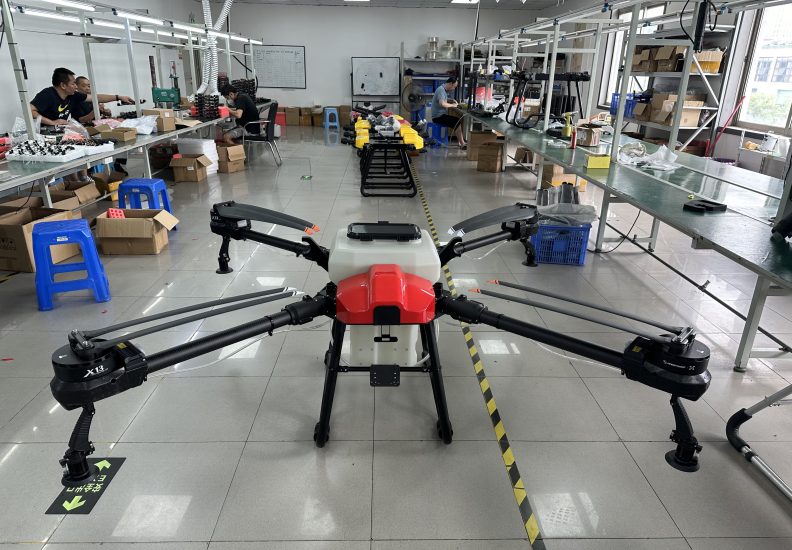


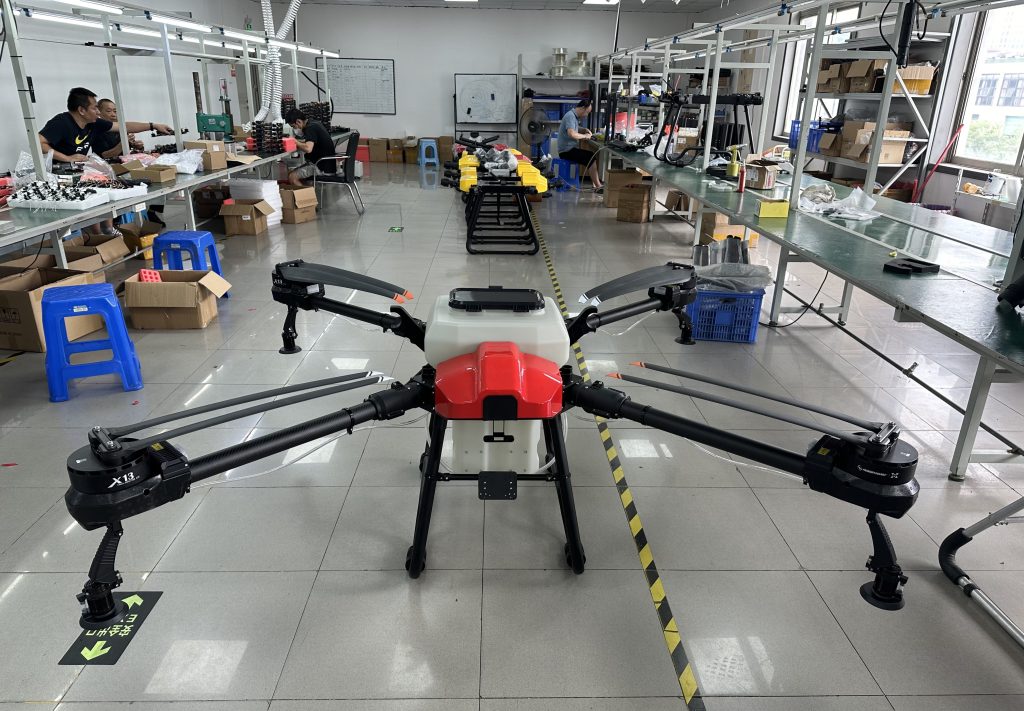
The demand for efficient agricultural spraying equipment is increasing as farmers and agricultural service companies look for ways to improve field productivity while reducing dependence on manual labor. 20L and 30L agricultural spraying drones are among the commercial drone configurations that buyers commonly consider because they can combine substantial liquid capacity with aerial mobility.
For importers, distributors, agricultural equipment dealers, and professional farming-service companies, choosing the right agricultural spraying drone manufacturer in China requires a detailed evaluation of payload capacity, spraying performance, battery systems, flight control, production quality, spare parts, OEM capabilities, and after-sales support.
This guide explains the key factors international buyers should consider when sourcing 20L and 30L agricultural spraying drones directly from a China factory.
20L vs. 30L Agricultural Spraying Drone
Tank capacity is one of the first specifications buyers usually compare.
However, a larger tank does not automatically mean a better drone. The complete aircraft needs to be designed to safely and efficiently carry the additional payload.
| Feature | 20L Agricultural Drone | 30L Agricultural Drone |
|---|---|---|
| Liquid capacity | 20L | 30L |
| Payload requirement | Lower | Higher |
| Battery demand | Generally lower | Generally higher |
| Aircraft size | Usually more compact | Usually larger |
| Refill frequency | Potentially higher | Potentially lower |
| Suitable buyers | Farms, distributors, service companies | Commercial operators, larger fleets |
| Transportation | Generally easier | May require more space |
The best option depends on the actual operating environment, crop type, field size, aircraft design, and local regulations.
Why Choose a China Agricultural Drone Factory?
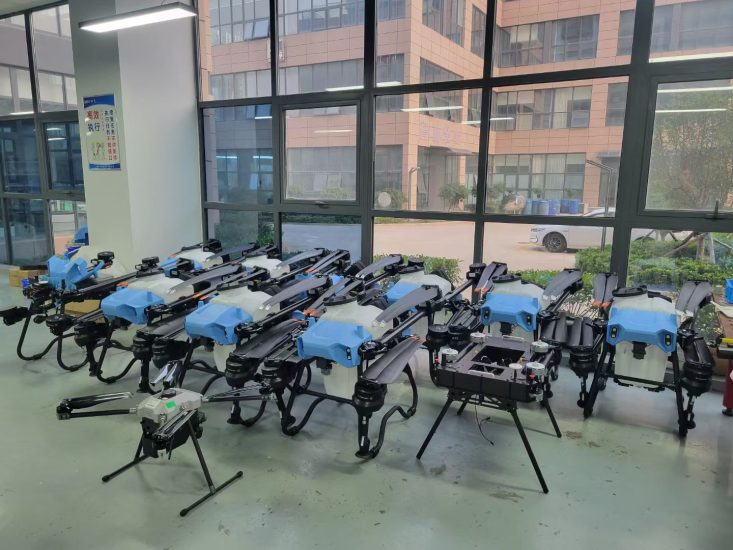
China has an established manufacturing supply chain for drones, motors, batteries, electronic components, pumps, spraying equipment, and related agricultural technology.
Working directly with a factory can provide several potential advantages for international buyers.
Factory-Direct Pricing
When purchasing directly from the manufacturer, buyers may be able to reduce intermediary costs, particularly for wholesale orders.
Pricing can depend on:
- Model
- Order quantity
- OEM requirements
- Battery quantity
- Charger configuration
- Spare parts
- Packaging
- Shipping terms
Therefore, buyers should request a complete quotation rather than comparing the aircraft price alone.
OEM Production
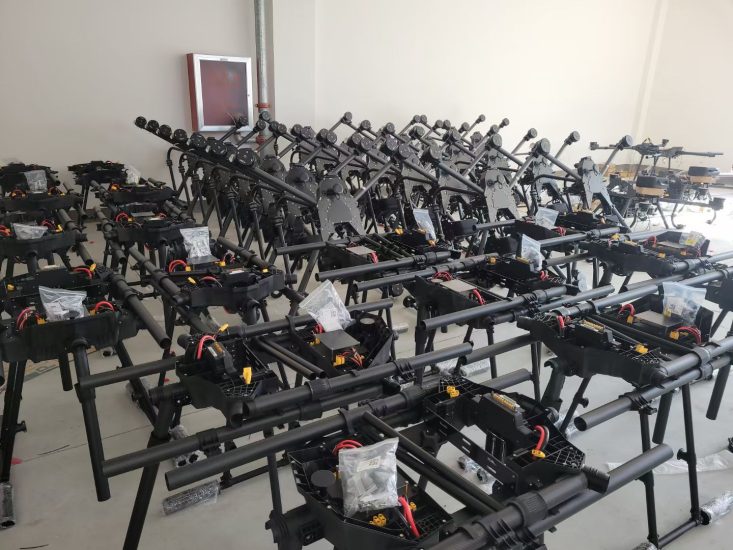
A China agricultural drone factory may support OEM requirements for international distributors.
Depending on the manufacturer, customization can include:
- Brand logo
- Product labels
- Packaging
- User manuals
- Accessories
- Color options
- Selected technical configurations
The exact OEM scope and MOQ should be confirmed before production.
20L Agricultural Spraying Drone
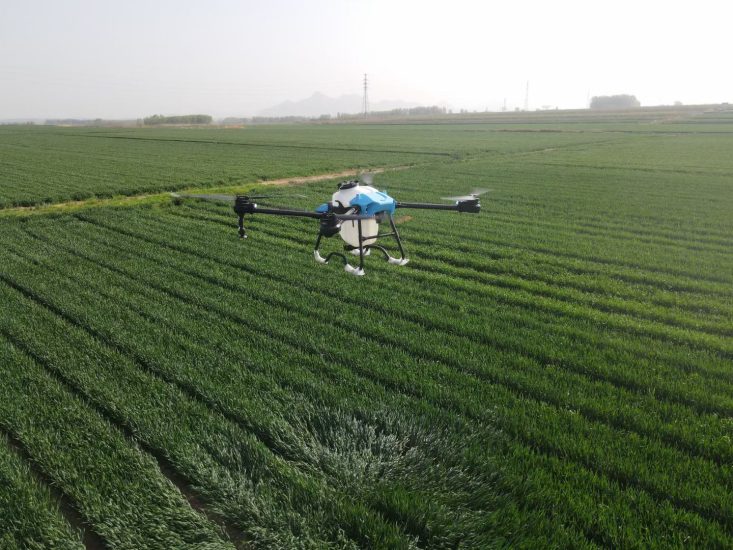
A 20L agricultural spraying drone can be a practical choice for buyers looking for a commercial platform that balances liquid capacity and aircraft size.
Potential applications can include suitable operations involving:
- Rice
- Wheat
- Corn
- Vegetables
- Orchards
- Other crops where aerial application is permitted
The important point is that 20L refers to tank capacity, not necessarily the maximum safe operating payload under every condition.
Buyers should request the manufacturer’s official specifications for:
- Empty aircraft weight
- Maximum takeoff weight
- Recommended payload
- Battery weight
- Maximum operating conditions
30L Agricultural Spraying Drone
A 30L agricultural spraying drone is designed around a larger liquid payload.
For professional agricultural service providers, a larger tank may reduce the number of refilling operations required during field work.
However, the additional payload increases the demands placed on:
- Motors
- Propellers
- Flight controller
- Frame
- Battery
- Pump
- Landing gear
A reliable manufacturer should clearly state the aircraft’s recommended operating payload and maximum takeoff weight.
Spraying System Is Critical
When comparing agricultural spraying drones, buyers should not focus only on tank capacity.
The spraying system directly affects application performance.
A typical system contains:
Tank → Filter → Pump → Pipes → Valves → Nozzles
Each component needs to work correctly as part of the complete system.
Pump Performance
The pump controls the movement of liquid from the tank to the nozzles.
Important specifications include:
- Flow rate
- Pressure
- Power consumption
- Control method
- Reliability
- Replacement availability
Nozzle Configuration
Nozzle configuration affects the spray pattern and droplet characteristics.
Different agricultural applications may require different nozzle types and operating parameters.
Buyers should ask the factory about:
- Number of nozzles
- Nozzle type
- Flow rate
- Spray pattern
- Replacement parts
- Recommended operating parameters
Spray Width and Field Coverage
Manufacturers may advertise a maximum spray width, but buyers should distinguish between theoretical coverage and practical field performance.
Actual coverage depends on:
- Flight altitude
- Flight speed
- Nozzle configuration
- Liquid characteristics
- Wind
- Crop height
- Terrain
For this reason, buyers should ask for recommended operating parameters rather than relying solely on the largest number shown in a product brochure.
Battery System for 20L and 30L Drones
Battery selection becomes increasingly important as payload increases.
A 30L drone generally requires a propulsion and battery system capable of handling a greater total takeoff weight than a smaller platform.
When purchasing a drone, ask the manufacturer:
- What battery capacity is required?
- How many batteries are included?
- What is the charging time?
- What is the recommended charging method?
- What is the expected battery cycle life?
- Is a spare battery package available?
- What charger is supplied?
For commercial operations, purchasing additional batteries may help reduce waiting time between flights.
Actual Flight Time vs. Advertised Flight Time
Flight-time figures need to be interpreted carefully.
A manufacturer’s stated flight time may be measured under specific conditions.
Actual flight time can change according to:
- Payload
- Wind
- Temperature
- Flight speed
- Battery condition
- Flight route
- Operating altitude
For a 20L or 30L agricultural spraying drone, ask whether the quoted flight time is measured with:
Empty tank or full tank?
This simple question can make comparisons between different manufacturers much more accurate.
Flight Control and Navigation
A commercial spraying drone should have a stable flight-control system.
Depending on the model, features may include:
- GPS positioning
- Automatic route planning
- Return-to-home
- Altitude control
- Obstacle detection
- Route memory
- Automatic flight functions
- Remote-control monitoring
The exact functions vary between manufacturers.
International buyers should request a detailed specification sheet and, when possible, evaluate the aircraft through sample testing.
Agricultural Drone Manufacturing Quality
The manufacturing quality of a spraying drone can have a direct impact on long-term operating costs.
A factory should have quality-control procedures covering major systems.
Motor Testing
The propulsion system should be inspected and tested for proper operation.
Battery Testing
Battery packs should undergo appropriate inspection and testing before shipment.
Pump Testing
The pump should be checked for stable operation and flow.
Spraying Testing
The manufacturer should inspect the liquid tank, pipes, valves, filters, and nozzles.
Flight Testing
Completed aircraft should undergo appropriate functional and flight tests before delivery.
For large wholesale orders, buyers can discuss sample approval and pre-shipment inspection procedures with the factory.
Spare Parts for 20L and 30L Agricultural Drones
Spare parts are particularly important for distributors.
Common components may include:
- Propellers
- Motors
- Pumps
- Nozzles
- Filters
- Pipes
- Valves
- Landing gear
- Chargers
- Batteries
- Electronic components
A distributor should establish a spare-parts strategy before selling the drones to local customers.
A factory that can provide replacement parts consistently can make after-sales service significantly easier.
OEM and Private Label Agricultural Drones
For distributors that want to develop their own agricultural drone brand, OEM production can provide a flexible sourcing model.
An OEM package may include:
Drone + Brand Logo + Packaging + Manual + Accessories + Spare Parts
The buyer should confirm:
- OEM MOQ
- Logo requirements
- Packaging requirements
- Artwork format
- Sample approval
- Production lead time
- Additional customization costs
For a new brand, it is generally better to approve the physical sample and branding details before starting large-scale production.
Who Buys 20L and 30L Agricultural Spraying Drones?
Potential customers include:
Agricultural Equipment Distributors
Distributors can purchase drones in bulk and sell them through local agricultural equipment networks.
Agricultural Service Companies
These businesses can operate drones as part of professional crop-service operations.
Large Farms
Large agricultural operations may purchase drones for internal crop management where permitted.
Drone Dealers
Existing drone dealers may add agricultural spraying drones to their product portfolio.
Regional Importers
Importers can source from Chinese factories and distribute products in their local markets.
Each customer type may have different requirements, so the manufacturer should provide flexible purchasing and support options.
How to Buy 20L and 30L Agricultural Spraying Drones From China
A professional sourcing process can follow these steps.
Step 1: Select the Capacity
Determine whether a 20L or 30L platform is more appropriate for your target market.
Step 2: Compare Manufacturers
Evaluate:
- Factory capability
- Product specifications
- Quality control
- OEM capability
- Spare parts
- Technical support
Step 3: Request a Sample
Test the aircraft before committing to a large wholesale order.
Step 4: Confirm OEM Requirements
If private labeling is required, finalize logo, packaging, manuals, and product specifications.
Step 5: Confirm the Commercial Terms
Discuss:
- Unit price
- MOQ
- Payment terms
- Production lead time
- Warranty
- Spare parts
Step 6: Arrange Shipping
Confirm transportation requirements, especially for lithium batteries and radio equipment.
Step 7: Verify Destination Regulations
Before importing or operating the drone, verify the applicable requirements in the target country.
How to Request a Wholesale Quote
Instead of asking a factory:
“How much is a 30L drone?”
send a detailed inquiry.
For example:
Product: Agricultural Spraying Drone
Capacity: 20L / 30L
Quantity: 20 units
Destination: [Country]
Brand: OEM
Battery: 2–3 per unit
Charger: Required
Spare Parts: Required
Packaging: Customized
Shipping: Air / Sea
Then request:
- Factory price
- MOQ
- OEM cost
- Battery price
- Charger price
- Spare-parts price
- Production lead time
- Warranty
- Shipping quotation
This makes it easier to compare different suppliers.
What Makes a Good Agricultural Drone Manufacturer?
A good manufacturer should be able to provide:
Reliable Product
The aircraft should meet the agreed specifications.
Stable Production
Bulk orders should maintain consistent quality.
OEM Capability
The factory should be able to meet agreed branding and customization requirements.
Spare Parts
Replacement components should be available for long-term operation.
Technical Support
International buyers should have access to technical assistance.
Transparent Communication
Product specifications, prices, lead times, warranty, and limitations should be clearly communicated.
Important Regulatory Considerations
Agricultural drones are regulated differently in different countries.
Before importing or operating a spraying drone, buyers should check applicable rules concerning:
- Drone registration
- Pilot/operator requirements
- Flight restrictions
- Radio-frequency equipment
- Agricultural spraying
- Pesticide application
- Insurance
- Import certification
A manufacturer can provide technical documents, but local regulatory compliance must be confirmed for the destination market.
FAQ
What is the difference between a 20L and 30L agricultural spraying drone?
The primary difference is liquid tank capacity, but the aircraft’s overall structure, propulsion system, battery, and maximum takeoff weight may also differ.
Is a 30L agricultural drone better than a 20L model?
Not necessarily. A 30L drone offers greater liquid capacity, while a 20L model may be more compact and easier to transport. The best choice depends on the intended application.
Can I order 20L agricultural drones wholesale from China?
Yes. Chinese manufacturers can supply wholesale orders, although MOQ and pricing vary by factory and product configuration.
Can a China factory manufacture agricultural drones with my brand?
Many manufacturers offer OEM services. Logo, packaging, manuals, accessories, and other requirements should be confirmed before production.
Should I purchase spare batteries?
For commercial operations, additional batteries can help reduce downtime. The appropriate number depends on the operating schedule and charging infrastructure.
What should I check before choosing a manufacturer?
Evaluate manufacturing capability, product specifications, spraying performance, battery system, quality control, OEM capability, spare parts, warranty, technical support, and production consistency.
Can I use the drone for pesticide spraying anywhere?
No. Agricultural drone and pesticide application regulations vary by country and sometimes by region. Operators must follow applicable local laws and product-label requirements.
Conclusion
For international buyers, 20L and 30L agricultural spraying drones can provide different combinations of payload capacity, mobility, and operating efficiency. The correct choice depends on the target crops, field conditions, operating model, regulations, and fleet requirements.
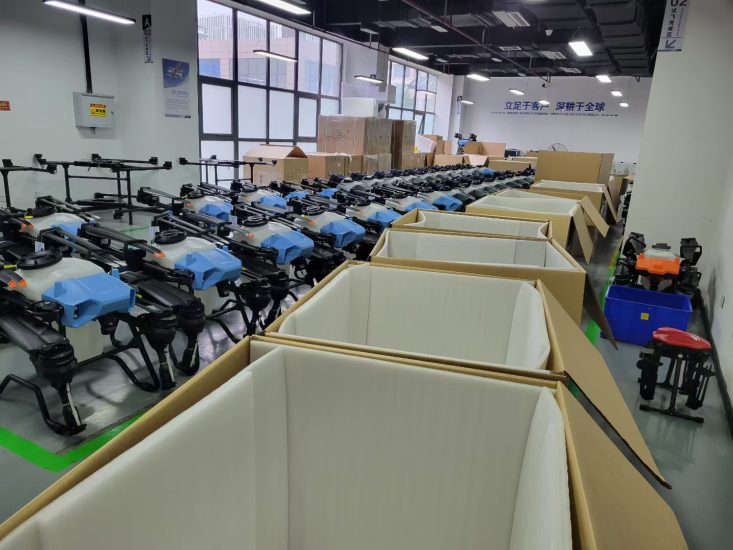
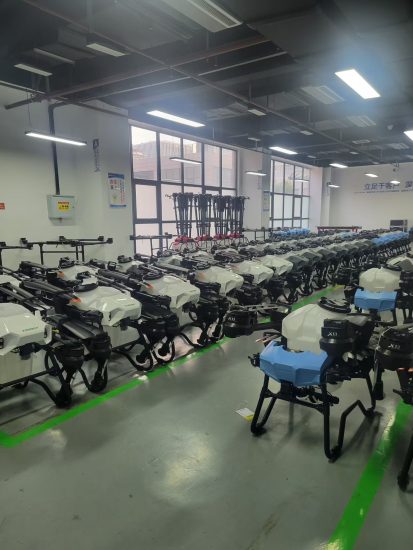
A reliable China agricultural drone factory should provide more than a competitive price. Buyers should look for a manufacturer capable of delivering consistent production, dependable spraying systems, suitable battery solutions, OEM customization, spare parts, technical support, and long-term cooperation.
For distributors and agricultural service companies, starting with a tested sample and clearly defining the required specifications before placing a large order is one of the most practical ways to build a reliable agricultural drone supply chain.


No comments yet